I used to buy bowls the way most people buy bowls: whatever the pet store had, whatever matched the kitchen, whatever was on the shelf. Then one of my cats started eating with her head turned sideways, flicking kibble across the floor with every bite. So I finally did the obvious thing and measured, not the height, not the capacity, but cat bowl diameter, and then I measured the cat. That one afternoon changed how I feed every animal in this house.
This is a cat bowl diameter guide for anyone who has watched a cat eat off the floor, or press a flat face into a deep narrow dish, or walk away from a full bowl for reasons that have nothing to do with the food. Bowl width is one of those specs nobody prints on the box, which is exactly why it causes so much trouble. Below are the four bowls and feeders that live in my rotation, what each one is actually good at, and how I decide which cat gets which dish.
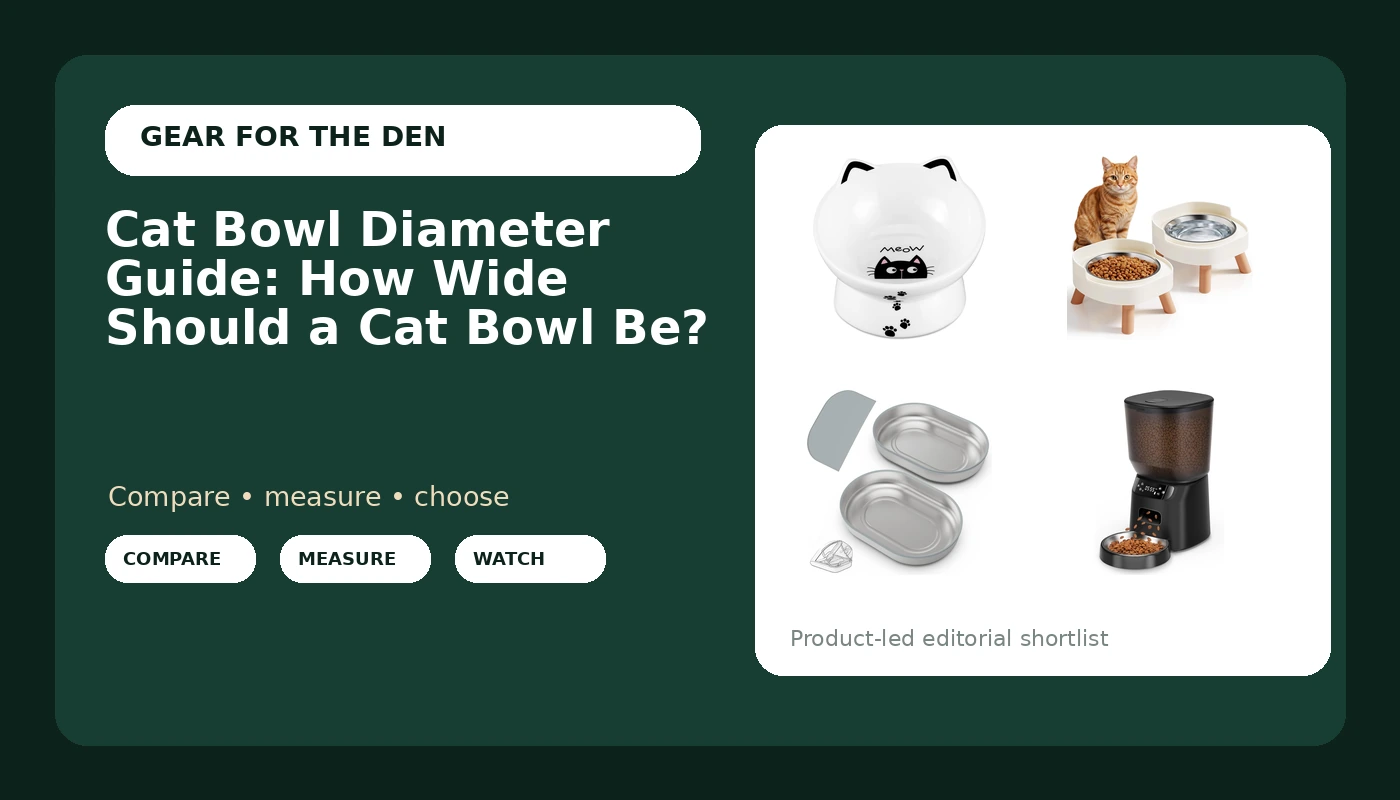
Best Overall: Yedio Porcelain Raised Cat Bowl, Tilted Cat Food Bowl with Anti Slip Band, Stress Free, Elevated Porcelain Pet Bowl Protect Pet's Spine, Backflow Prevention, Dishwasher Safe, White
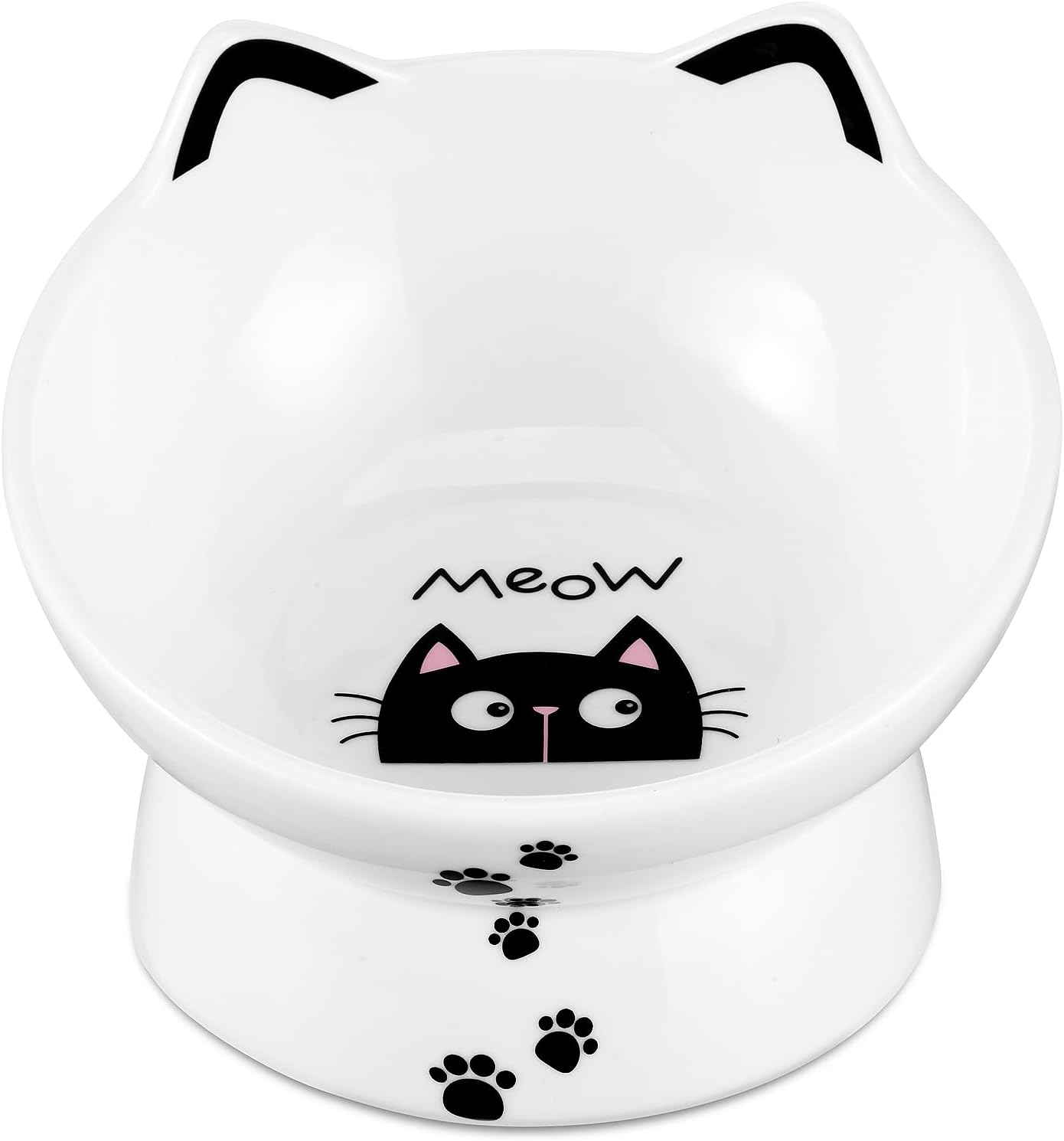
This is the bowl that fixed the sideways eating in my house. The porcelain is heavy enough that a determined cat cannot shove it across the floor, the anti slip band keeps it planted on tile, and the tilted face does two jobs at once. It lifts the food toward the cat instead of making her reach down for it, and it keeps the near rim low so whiskers are not crushed flat against the sides while she chews.
Width is the part that matters here. The bowl is wide and shallow relative to its footprint, which gives a cat room to lift food without dragging the sides of her face through it. If you are trying to picture the ideal cat bowl diameter, picture this: wide enough that the whiskers never touch the rim during a meal, and shallow enough that the nose never disappears into the dish.
Porcelain also ages well. It goes in the dishwasher, it does not hold onto fish smell the way plastic does, and it does not scratch into the kind of surface that traps oils and bacteria. The trade-offs are weight and fragility. This is not a bowl you toss in a tote bag, and tile will win if you drop it. For a bowl that stays in one spot, that is a fair trade. Check current Amazon price
Best Value: Elevated Cat Bowls, 2P Raised Cat Food and Water Bowl Set for Indoor Cats, Splash Proof with 2 Stainless Steel Pet Food Bowls for Cats & Puppies, Whisker Friendly and Dishwasher Safe – White
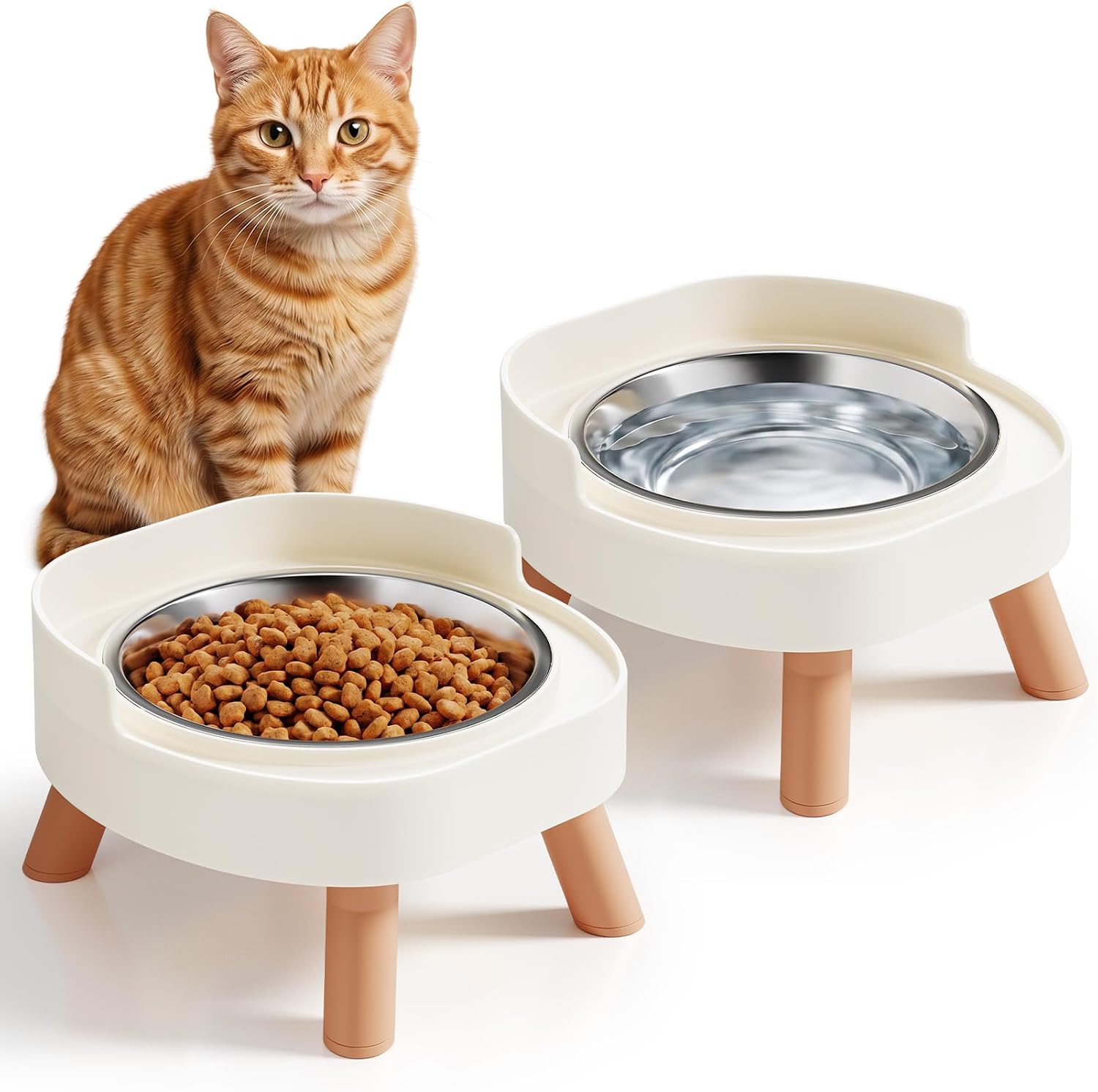
This is the set I recommend first to anyone feeding two cats, and the one I would buy if I were starting over. Two stainless inserts sit in a raised frame, one for food and one for water, so the height problem and the bowl width problem get solved by the same purchase.
The inserts are wide and shallow, which is the shape a cat wants. The rims are low enough that whiskers clear them on the way in and out, and stainless does not hold odor the way plastic does. The splash proof design matters more than it sounds, because a cat who drinks with her chin down tends to drip, and a puddle under the water bowl is how you end up with a warped floor.
Build quality is what you would expect at this end of the range. The frame is light, so a cat who charges the bowl can move it, and the stainless is thin. Neither has been a problem in daily use here, but if you have a cat who body checks the water dish, look at the porcelain option above instead. For everyone else, this is the simplest fix I know for a cat who has been eating at floor level. Check current Amazon price
How I tested
I keep a tape measure in the drawer with the cat supplies, and the first thing I do with any new bowl is measure the inside diameter at the food line, across the widest point. Not the outer rim, and not the number on the listing. The outside of a bowl can be generous while the usable eating surface inside is narrow, and the inside is the number that matters.
Then I watch a meal. Specifically, I watch four things. Does the cat's neck stay straight, or does she fold it down to reach the food? Do the whiskers bend against the rim, or do they clear it? Does food end up on the floor, which usually means the bowl is either too narrow or too deep? And does she walk away early, which is the quiet version of the same complaint?
On the water side, I look at water capacity, how easily the bowl tips, and how much ends up on the floor. For the tech items in this group, the questions change. A microchip feeder lives or dies on microchip range and on how cleanly the bowl seals. An automatic feeder lives or dies on portion size, on whether the schedule holds when the power blinks, and on whether the bowl underneath pulls out for washing.
I have run all four of these in a house with multiple cats and a small dog, which is a useful test in itself, because animals tell you quickly when a dish is wrong. I do not score a bowl I have not lived with through a month of meals and washes.
Analysis and test results
Three things decide whether a bowl works, and diameter is the one nobody talks about.
Bowl width is not a style choice, it is a comfort spec. A cat's whiskers are sensitive enough that pressing them flat against a rim while eating is genuinely unpleasant, which is why whisker clearance is the phrase you hear from people who have solved this problem. A bowl narrower than the cat's whisker span forces her to eat around the sides, and a bowl deep enough to touch her cheeks forces her to scoop. Both look like a picky cat. Neither is about the food.
There is no single correct cat bowl diameter for every cat, and anyone who hands you one number is guessing. What you want is a wide, shallow dish with a low rim, sized so the whiskers clear the edge with room to spare. A large cat needs more room than a small one, and a flat-faced cat needs more room than either, because the shape of the head decides how far the face has to travel to reach the bottom.
Elevation angle is the second variable. A raised bowl, roughly at chest height for the cat, keeps the neck straight and takes the fold out of the swallow. That is the entire reason the raised bowls in this roundup exist. The tilt on the porcelain bowl is the same idea taken one step further, because it angles the food toward the cat instead of straight up.
Material is the third. Stainless and porcelain both clean up properly and do not hold odor. Plastic is light and eventually scratches, and scratches hold onto oils and smell. If you are choosing between two bowls that are the same width, choose the one that will still look and smell clean after a year.
If you are shopping for a cat water fountain instead of a bowl, the width logic still applies to the drinking surface, but two new variables show up: pump noise and filter type. A fountain that hums in a quiet room is a fountain your cat may avoid, and a filter you cannot find replacements for is a fountain you will retire early.
Portion size and microchip range belong to the tech side of feeding, and both are covered below.
The cat bowl diameter reference table
Here is how the four products in this guide compare on the things that actually decide the purchase. Read it by column, not by row.
| Bowl | Best for | Bowl width and shape | Whisker clearance | Notes |
|---|---|---|---|---|
Yedio porcelain raised cat bowl | Wet food, flat-faced cats, cats who shove bowls | Wide and shallow, tilted face | Best of the four, low rim | Porcelain, dishwasher safe, heavy |
Elevated cat bowl set | Two-cat households, food and water together | Wide shallow stainless inserts, raised frame | Good, low rim | Splash proof, light frame |
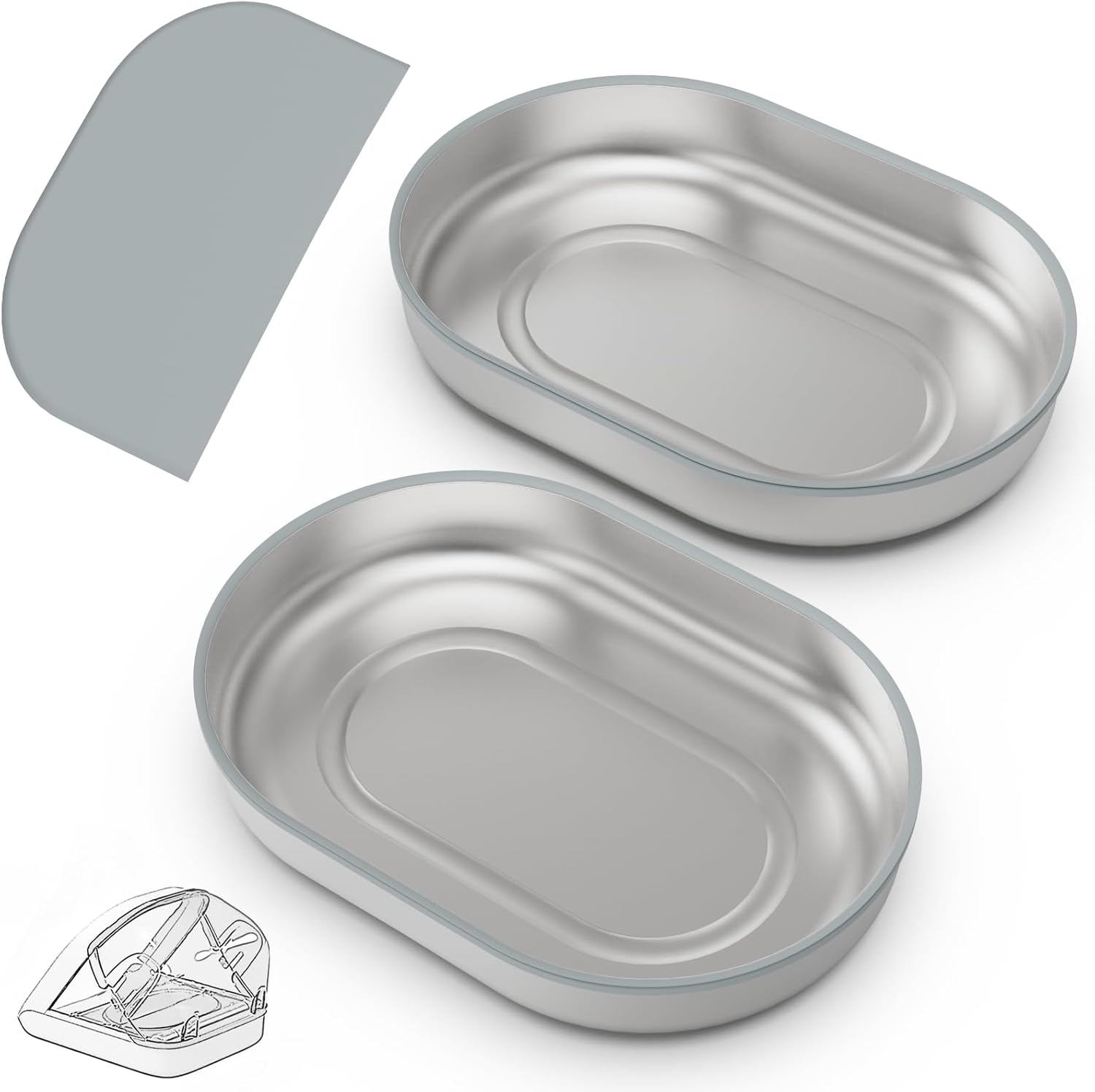 Stainless bowl for microchip feeder | Replacing a worn bowl in a microchip feeder | Sized to the feeder, sealing ring | Depends on the feeder hood | Two bowls and a mat, SUS 304 |
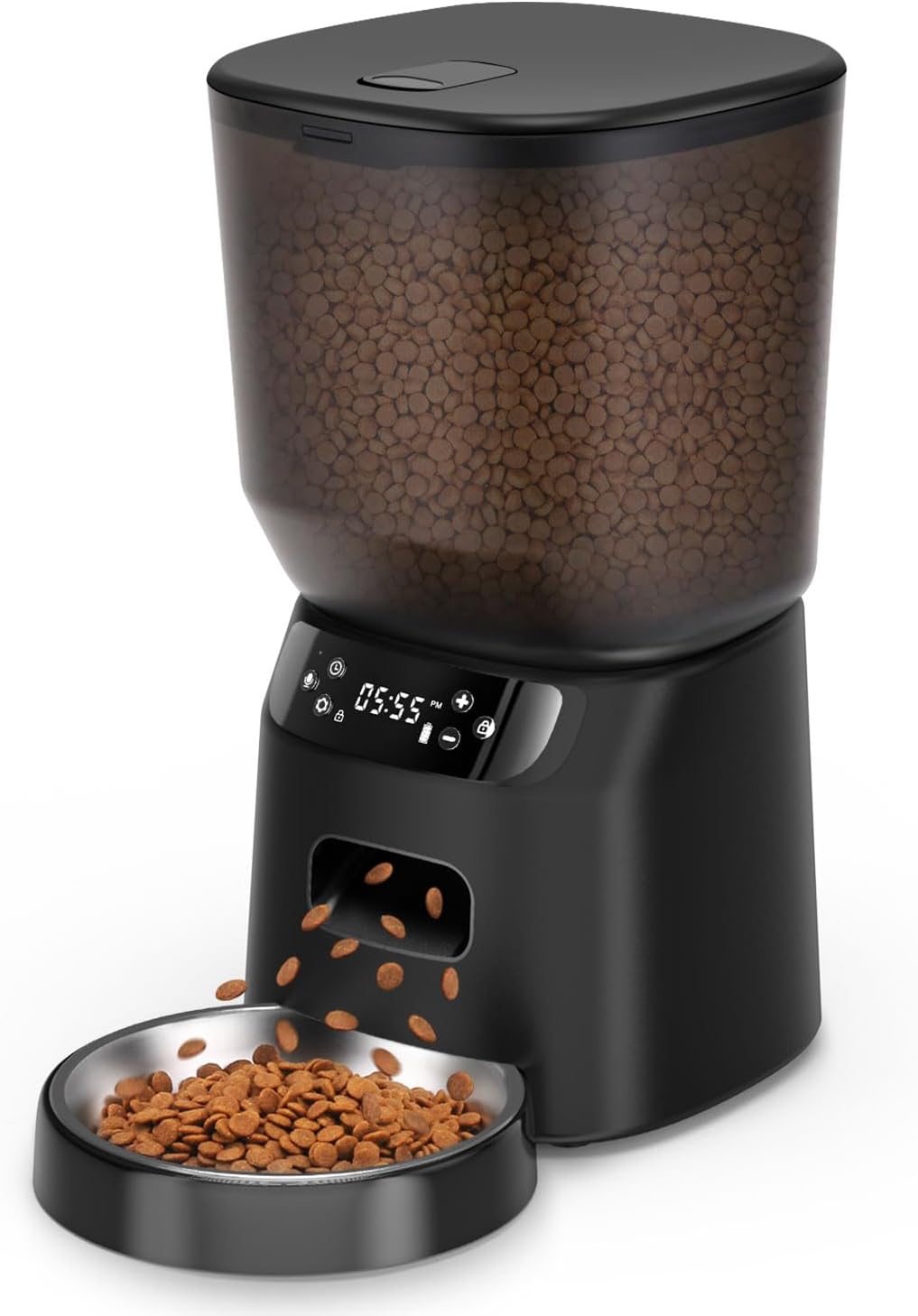 Automatic cat feeder | Scheduled meals, portion control | Bowl sits under the dispenser | Depends on the bowl | 6 meals a day, voice recorder, dual power |
If whisker clearance is your problem, only the first two rows are really in the conversation. The other two solve scheduling problems, which is a different job.
Microchip feeder bowls and the diameter question
If you already own a microchip feeder, you are not shopping for a bowl, you are shopping for a replacement insert, and the constraints are different. This stainless bowl is sized to drop into the feeder, it uses a sealing ring to keep food fresh and cut down on odor, and it is SUS 304 stainless, which is the grade you want around food. The set gives you two bowls and a mat, so one can be clean while the other is in the machine.
It belongs in a piece about cat bowl diameter for one reason: a microchip feeder only helps if the cat will actually use it. The opening in the hood is fixed, so the bowl inside has to be wide enough and shallow enough that the cat is comfortable eating in a confined space. Microchip range matters too, because a feeder that reads the chip late is a feeder that closes on a cat's head once, after which she never trusts it again. If your cat is hesitant, start her on a bowl she already likes and work up to the machine. Check current Amazon price
Automatic feeders: portion size before bowl width
An automatic feeder is a schedule, not a bowl, and the bowl is the least interesting part of it. What matters is portion size, how many meals it can hold, and what happens when the power goes out. This unit runs up to 6 meals a day across 20 portions, records your voice so the cat hears a familiar call at mealtime, and takes dual power so the schedule survives an outage.
The stainless bowl underneath is a genuine plus, because a plastic bowl on a feeder is the worst of both worlds: it scratches and it holds smell, and you are stuck washing it in place. A stainless bowl pulls out and goes in the dishwasher. Just do not expect the bowl in a feeder to be as wide as a freestanding dish. If whisker clearance is your cat's main issue, feed her wet food from a wide bowl and use the feeder for the meals you cannot be home for. Check current Amazon price
Should you buy the Yedio porcelain raised cat bowl?
Yes, if your cat eats wet food, has a flat face, or has ever pushed a bowl across the kitchen floor. The tilt and the low rim solve the two most common eating complaints at once, and the porcelain cleans up properly in the dishwasher. It is the bowl I reach for first and the one I would replace the same day if it broke. The weight is the point, and the weight is also the only real downside if you travel with your cat's dishes. Check current Amazon price
Should you buy the elevated cat bowl set?
Yes, if you are feeding two cats and want food and water raised without buying two separate things. The wide shallow inserts are the right shape, the stainless is easy to keep clean, and the splash proof design saves the floor. Skip it if you have a cat who slams into the water bowl, because the light frame will move, and go with the porcelain bowl instead. Check current Amazon price