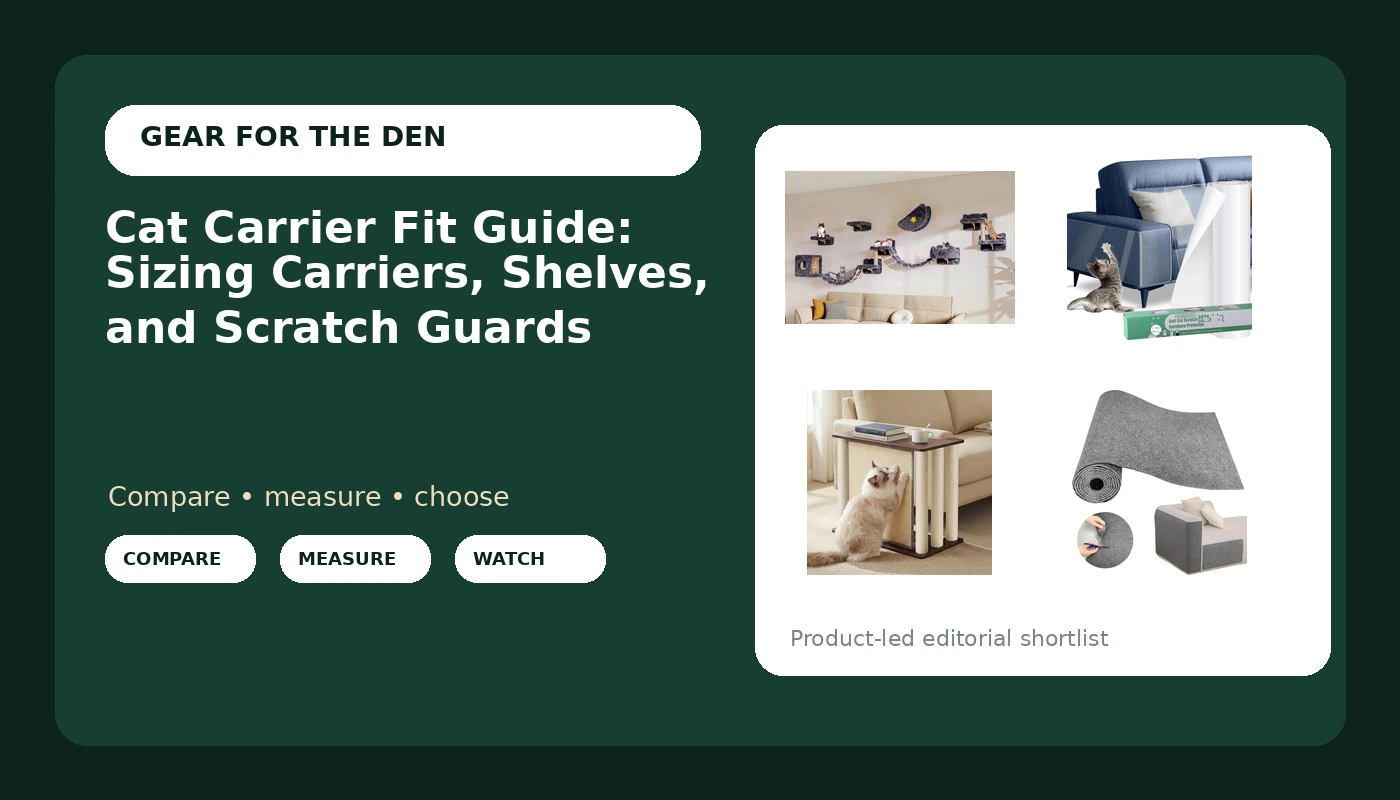
A cat carrier fit guide starts with a tape measure, not a product page. The cat carrier fit question is the same one behind every other cat furniture decision in the house: does the object match the animal standing next to it? A carrier that is an inch short in the wrong direction turns a vet visit into a wrestling match, and a wall shelf hung at the wrong platform height becomes a landing pad your cat simply refuses to use.
This cat carrier fit guide covers both halves of that problem. Two of the pieces below protect the furniture you already own, and two add territory your cat can claim for itself. I will walk through what to measure, which numbers actually change behavior, and how to tell an ideal cat carrier fit from one that only looks close enough in a product photo.
Best Overall: Homiflex 13-in-1 Cat Wall Shelves, Moon & Bridge Cat Wall Furniture, Grey
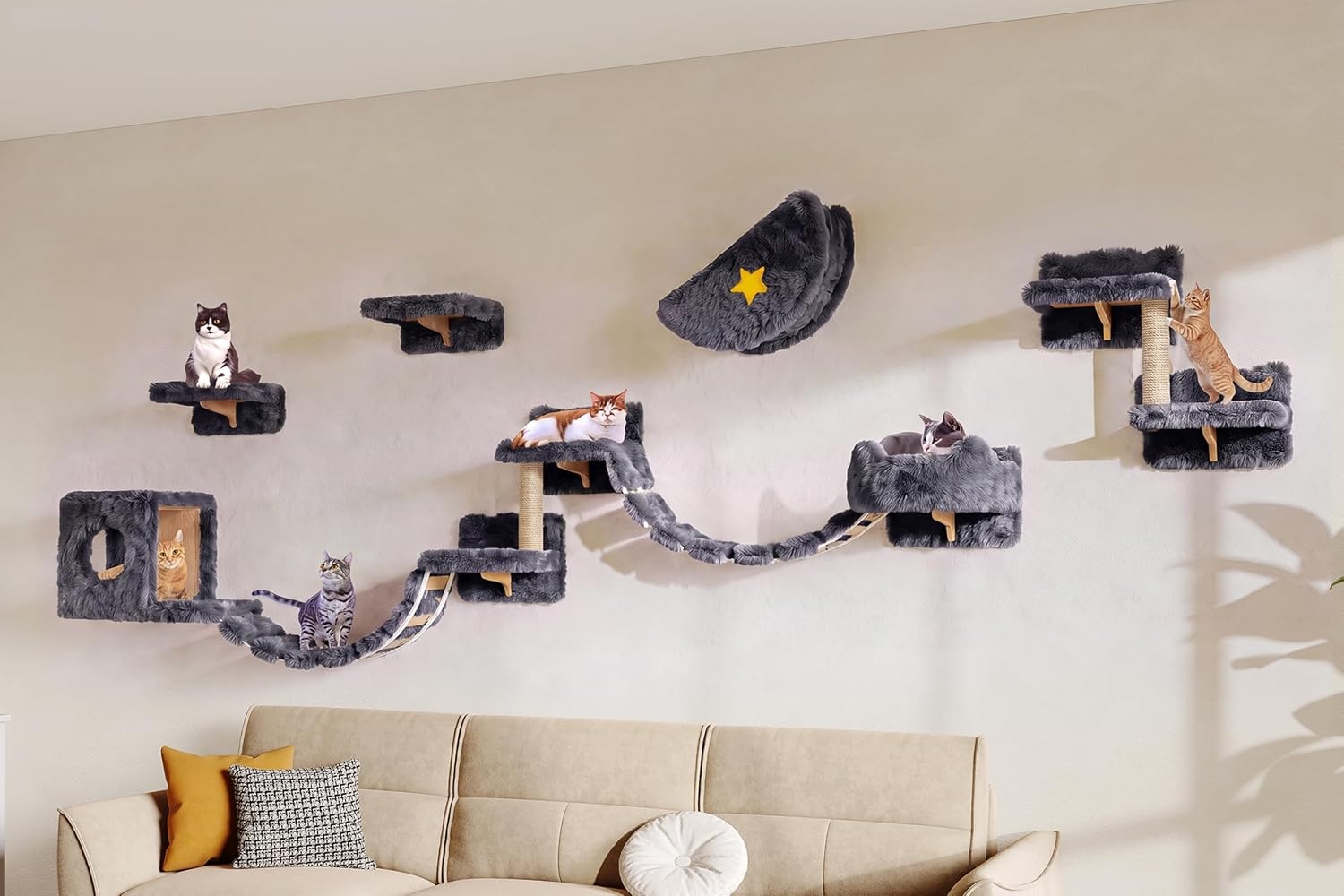
Vertical territory is the best single fix for a cat that scratches the couch, because a cat with somewhere to climb spends less time on the sofa. This set is thirteen pieces of grey wall furniture built around moon and bridge shapes, and the whole point of it is that you arrange it, rather than installing a fixed route your cat has to be talked into.
Three numbers decide whether a wall set works. Platform height is the gap between one landing spot and the next, and it has to be a jump your cat can make from a standstill or from a stable launch point like a couch back. Shelf depth is what the cat's body actually rests on, so a shelf deep enough for paws but not for the ribcage gets used once and then ignored. Perch width matters most at the top of the house, where the cat who wants to supervise everything ends up sitting.
Then there is the boring part that decides everything: the anchor type. A wall set is only as good as what holds it up, and the weight limit on a listing assumes the right hardware in the right wall. Find a stud, or use the anchor type rated for your wall material, and press down on each piece with your hand before you let a cat commit to it. Get that right and this becomes the cat furniture that gets used every single day. Get it wrong and you will hear the shelf pull out at 2 a.m.
Because the pieces are modular, you can start low and build upward, which is the correct order for an older cat or a nervous one. Add height as the cat asks for it. A set that grows with the cat beats a tower the cat never climbs.
Best Value: RLONECOCOGI Thicken Cat Scratch Furniture Protector, Extended Size 165"x15"
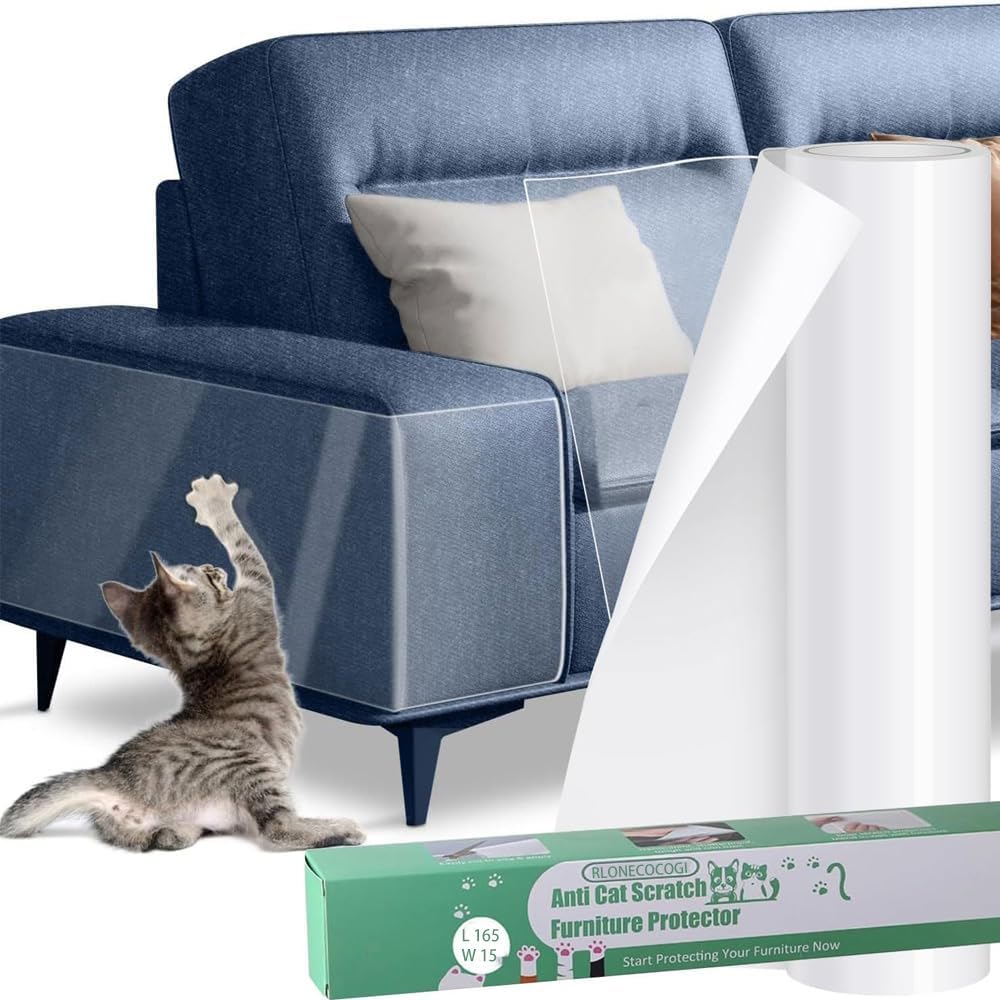
The math on scratch guards is simple: length is coverage, and coverage is what decides whether the couch survives. This protector comes in an extended size, 165 inches by 15 inches, and that length is the whole argument for it. A 165-inch run covers the front of a full sofa or wraps a corner without a seam in the middle, and 15 inches of width is enough to cover the spot where a cat stands up on its hind legs and pulls.
The thicker build is the other half of the value. A guard that is too thin gets punctured and looks shabby long before it stops working, and thin material also wrinkles, which is exactly what invites a cat to reach around it. Cut it longer than you think you need, wrap the edges past where the cat starts its reach, and check the surface after the first week.
Where does the cat carrier fit into a scratch guard review? Everywhere. The same measurement logic runs through both jobs: measure the animal, measure the object, then find the mismatch. A cat that scratches the corner of the couch at shoulder height is telling you exactly how tall the guard needs to be.
How I tested
Fit is measurable, and none of it requires a lab. I measure the cat first: nose to tail base for length, floor to shoulder for standing height, and floor to the top of the head for a cat that likes to sit upright and look around. Then I measure the object the cat has to use: interior length and interior height for a carrier, shelf depth and perch width for a wall piece, footprint for anything that sits on the floor.
Then I check the parts that are not dimensions. Anchor type for anything mounted to a wall. Post diameter for anything a cat wraps its paws around, because a post that flexes when a cat pushes off will not get used twice. Weight limit for anything that holds a cat off the ground, which includes every shelf and every carrier handle.
Hammock fabric gets its own check, because sag changes the fit. A hammock that stretches under a cat sits lower than the number in the listing, and a low hammock stops being a resting spot and starts being a trap.
The last check is the one no listing can answer. A correct cat carrier fit shows up as a cat that walks in on its own. A shelf at the right platform height gets used the first night. If you have to lift the cat into it, the fit is wrong, whatever the measurements say.
Analysis and test results
Across these four pieces, the problems I see are fit problems, not quality problems, and they show up in the same three places.
A carrier has to let a cat stand, turn around, and lie down. If a cat can stand but cannot turn, it rides the whole trip braced against the door, and a braced cat fights the carrier the next time. Interior height is the number most people skip, because exterior height includes the base and the roof, and the carrier size printed on a listing is usually measured on the outside. Measure the inside yourself, with the cat's own numbers in hand.
Wall furniture fails on shelf depth and anchor type. A shallow shelf is a shelf the cat steps onto and immediately steps off, and no amount of repositioning fixes a perch that is too narrow for the cat's shoulders. This is where the Homiflex set earns its place: thirteen pieces means you can rebuild the route instead of giving up on the wall.
Scratch protection fails on length. A guard that covers two thirds of the scratch zone trains the cat to start one paw length further along. That is the argument for the extended protector and for the side table: cover the whole run, or give the cat a legitimate target that is better than the couch.
The protectors and the wall set solve the same problem from opposite ends. One makes the couch less rewarding, the other makes the wall more rewarding, and a cat with a better option usually takes it. If you have more than one cat, the wall set matters more, because vertical space is how cats share a room without negotiating. There is a longer piece on that in my multi-cat household notes.
The cat carrier fit and cat furniture sizing reference table
This is the table I keep in my notes when I am matching a cat to a piece of cat furniture. Read the middle column first, because it is the one that decides whether a thing works in your house, and take your own measurements before you order anything.
| Product | Best for | What decides the fit | Amazon |
|---|---|---|---|
Homiflex 13-in-1 Cat Wall Shelves | Cats that need vertical territory | Wall material and anchor type, platform height, shelf depth, perch width, weight limit | Check current Amazon price |
RLONECOCOGI Thicken Cat Scratch Furniture Protector | Long runs of sofa front or a wrapped corner | Length of the run you need to cover, width of the surface, material thickness | Check current Amazon price |
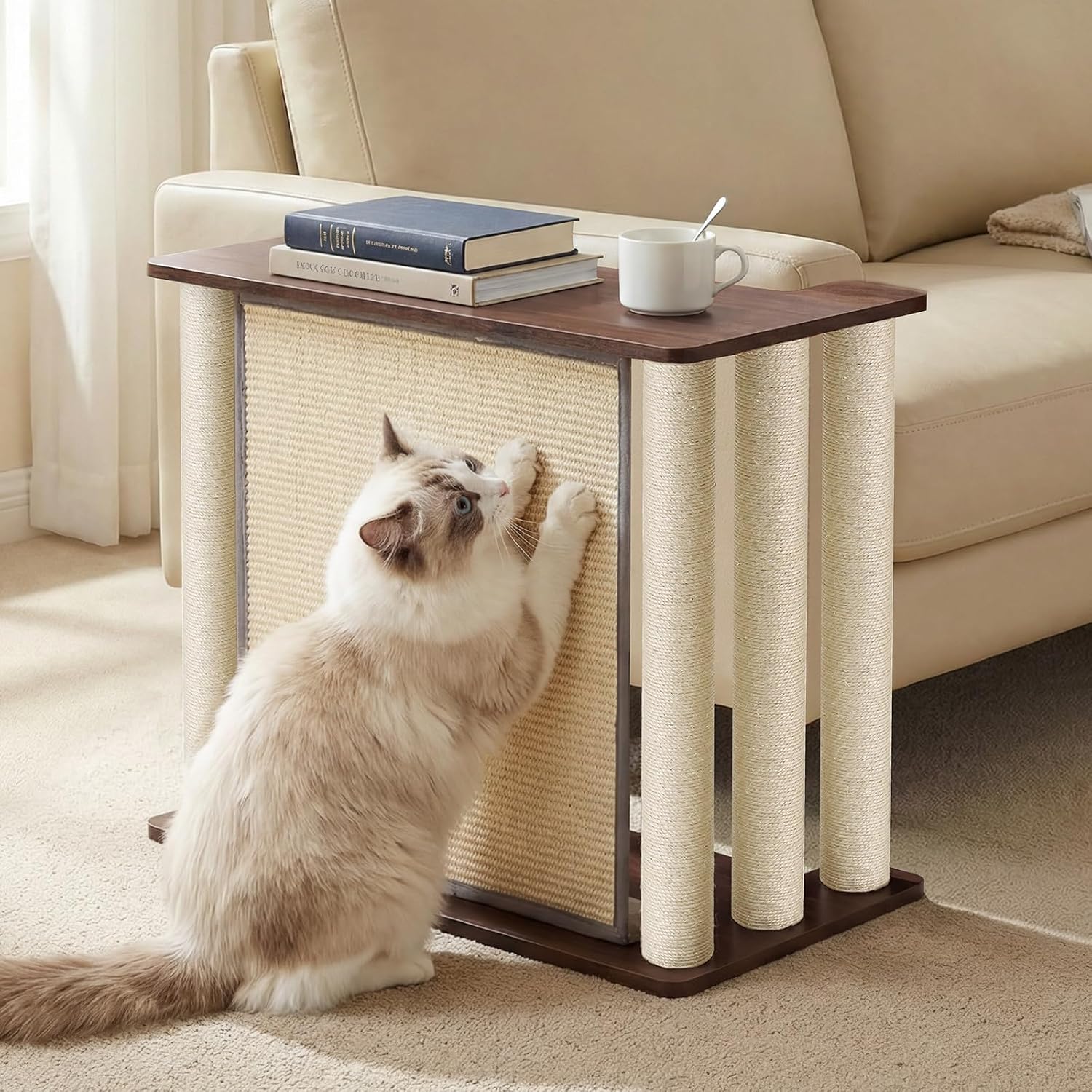 Veehoo Cat Scratcher Side Table for Couch | Homes where the couch arm is already the scratch spot | Footprint beside the couch, height against the couch arm, which face the cat attacks | Check current Amazon price |
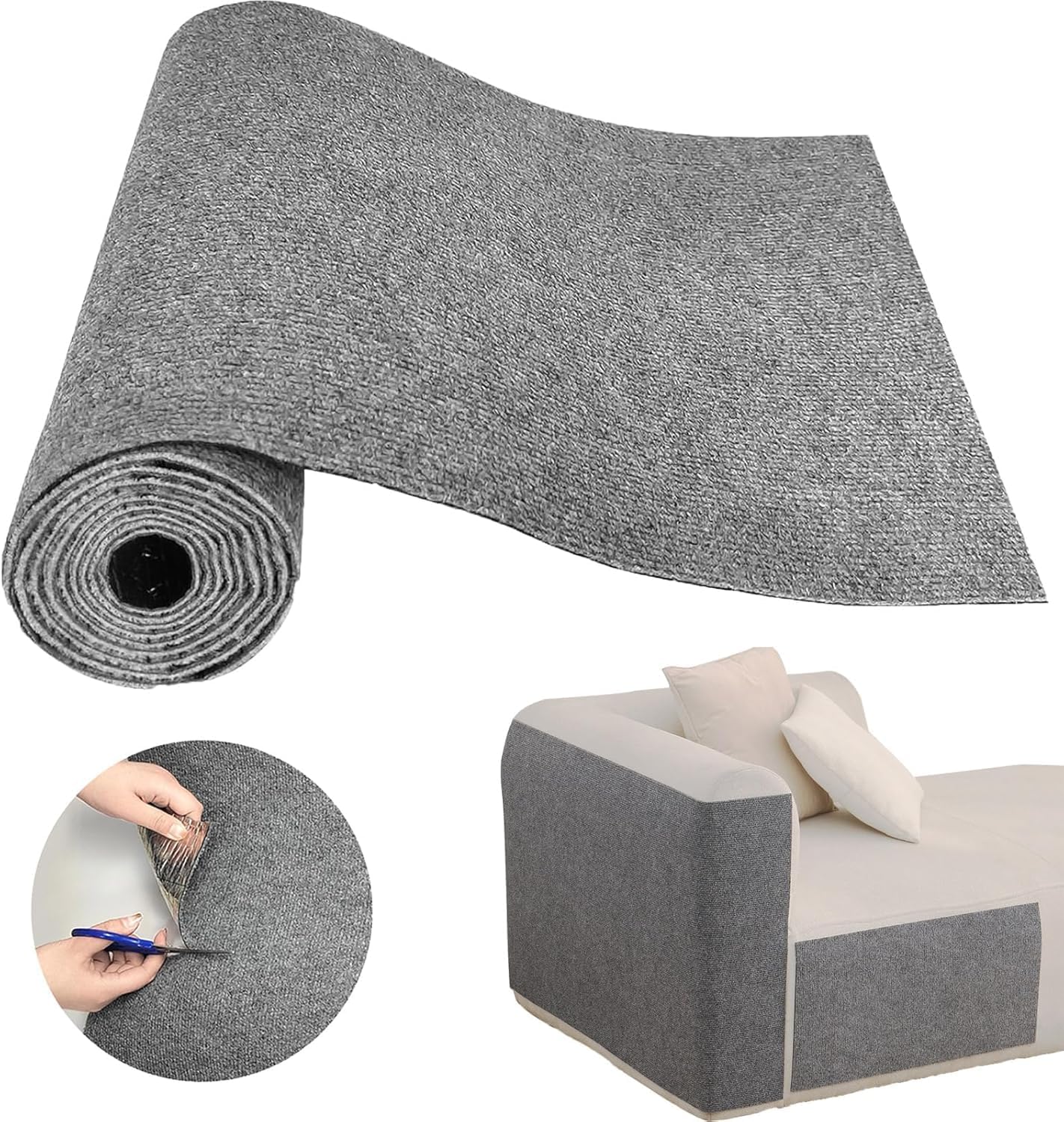 Cat Scratch Couch Furniture Protector | The one corner a cat has already claimed | Surface type for the adhesive, pad size against the scratch zone | Check current Amazon price |
Veehoo Cat Scratcher Side Table for Couch, Sofa Protector End Table
This is the hybrid answer: a side table that doubles as a scratch piece, so the cat gets a legitimate place to scratch and you get somewhere to put a drink. The fit question is different from a wall shelf, because floor space is the constraint. Measure the gap between the couch arm and the wall, or between the couch and the end of the room, before you commit.
Height matters here too. A cat scratching a couch arm is reaching at a height it chose for itself, and a scratch piece that puts its surface somewhere else may get ignored at first. Place it so the scratching face sits where the cat already reaches, and the switch tends to happen on its own. Anything that wobbles loses the argument, so set it on your floor and lean on it before you trust it with a cat that throws its weight into a scratch.
Self-adhesive pads versus freestanding scratch pieces
The Cat Scratch Couch Furniture Protector is the other end of the spectrum: a self-adhesive scratch pad that goes on the furniture you already own, right where the damage is happening. It is the least expensive fix in this group, and for a cat that has picked one corner and will not be talked out of it, it is often the only fix that works, because you are not redirecting the behavior, you are armoring the target.
The catch with any adhesive pad is the surface under it. Adhesive needs a clean, flat, non-oiled surface, and a loosely woven fabric couch is a different job from a leather sofa or a wooden frame. Press it down, give it a day before the cat tests it, and check the edges after a week, because the corner is where these pads lift first.
Should you buy the Homiflex 13-in-1 Cat Wall Shelves?
Yes, if your walls can take the anchor type the set calls for and you can give the cat a stable launch point for the first platform. It is the most flexible piece in this group: thirteen modular parts you arrange around your cat, not a fixed route you have to sell the cat on. Wall furniture done right changes the whole room, because a cat with a high perch watches the house from up there instead of redecorating the couch.
The honest caveat is installation. Every piece has to be level, anchored properly, and tested with your own hand weight before a cat commits. If you rent and cannot put holes in the wall, this is not the product for you, and the protectors below are the better spend.
Should you buy the RLONECOCOGI Thicken Cat Scratch Furniture Protector?
Yes, if you want one long run of protection instead of a patchwork of small pads. The extended size is the reason: 165 inches by 15 inches covers a full sofa front or wraps a corner without a seam in the middle, and the thicker material resists the puncturing that kills thinner guards. It is the cheapest way to stop the damage that is already happening.
Measure the run before you cut, wrap the edges past the cat's reach, and re-press the surface after the first week. Do that and the couch stops being the cat's favorite thing in the house.