Most people buy the mat last. The bowl, the fountain, and the automatic feeder are already on the floor, and the mat gets picked in a checkout cart by eyeballing a photo. That is backwards. This cat feeding mat size guide starts with a tape measure and the gear you already own, and the mat size falls out of two things: the footprint of the station and the radius of the mess your cat actually makes.
When it is right, kibble stops migrating under the fridge, the water bowl stops sliding, and the cord for a camera feeder is not lying on bare hardwood. When it is wrong, you have a wet floor and a mat you fold up and shove behind the door.
A mat that is too small is worse than no mat at all, because it teaches you to trust it. Water wicks over the edge and onto the floor. A feeder with a wide base overhangs the rim, so crumbs drop straight through the gap. A mat that is too big in a small kitchen is a trip hazard, and a trip hazard gets folded away, at which point you are back to bare floor. The goal is the smallest mat that still covers the whole station plus a splash zone around it. That is how I work out cat feeding floor mat size and cat feeding desk mat size, and the desk mat case is the one people get wrong most often, because a desk mat is sized for a laptop and a mug, not for a bowl of water with a cat standing in it.
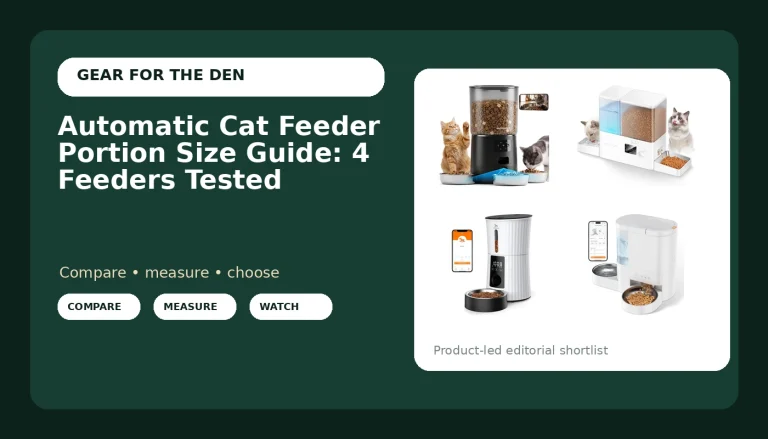
Best Overall: PETLIBRO Automatic Cat Feeder with Camera, 1080P HD Video & Night Vision
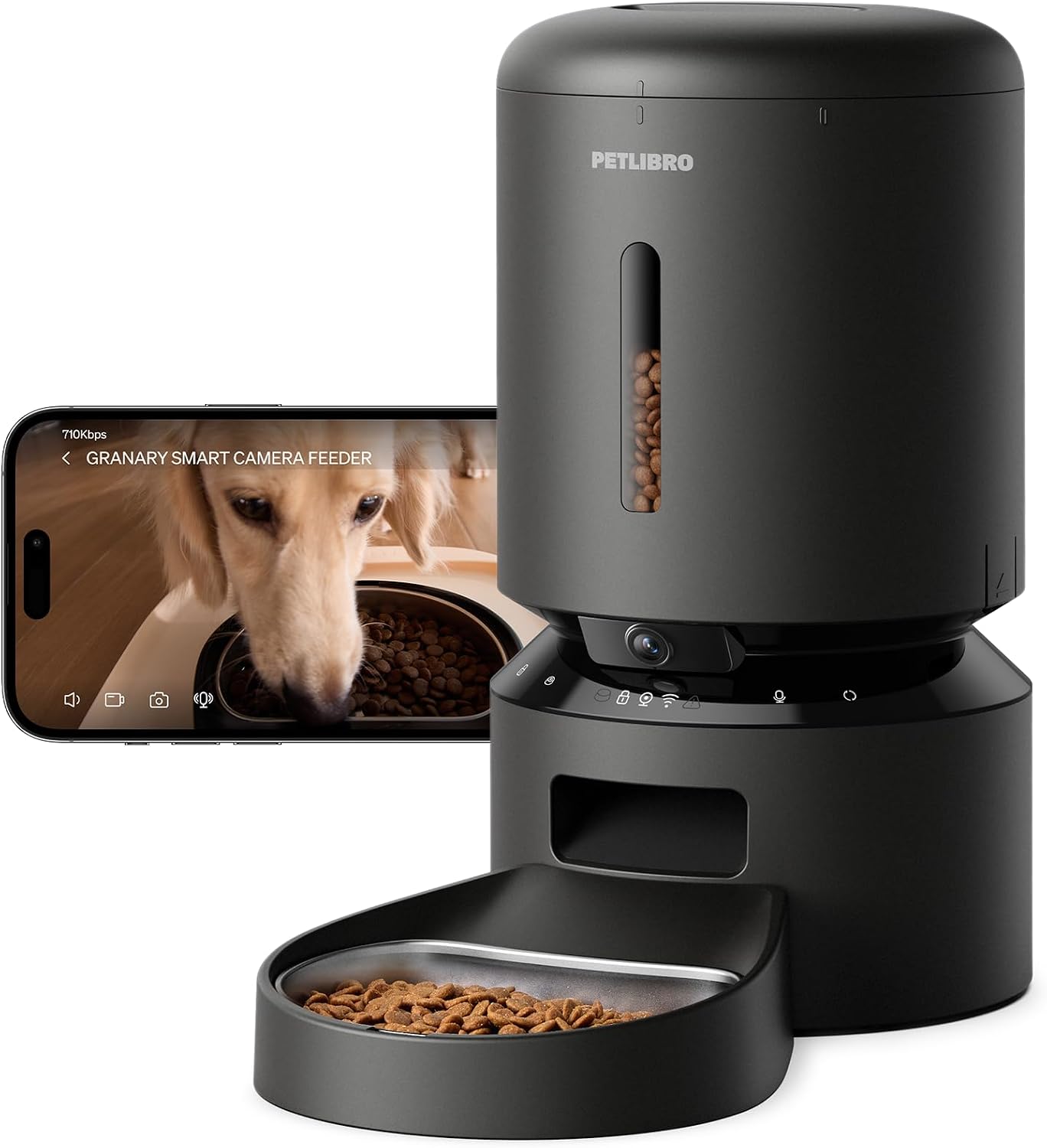
This is the unit I would build a feeding station around, and the camera is the reason. When you can see the bowl from your phone, you stop walking across the house to check whether the feeder dropped the portion size you set, and you stop crouching on the floor at 3 a.m. with a flashlight. Night vision means that check still works with the lights off.
A camera feeder also has more happening at the base than a gravity bowl: a housing, a chute, and a power cord that has to reach an outlet. The cord is the part people forget. If the mat stops at the back edge of the feeder, that cord runs across bare floor, and every spill and drip finds it. Give a unit like this one a mat that extends behind the base and to whichever side the outlet lives on, and route the cord along the wall instead of across the middle of the mat.
Size the mat off the widest part of the unit, not the narrow part. Bowl width matters too if you set a separate water bowl beside it, because a wide bowl on a narrow mat leaves the rim hanging over the edge, and a rim hanging over the edge is a drip line straight onto the floor. For this feeder I would plan a medium mat: enough for the base, the bowl, and a cat standing in front of both. A flat, wipeable surface with a rubberized back is enough. A raised lip is better if your cat is a digger.
The tradeoff is footprint. A camera unit is taller and deeper than a plain hopper, so it eats counter space if you put it up high, and on the floor it wants a mat with room behind it.
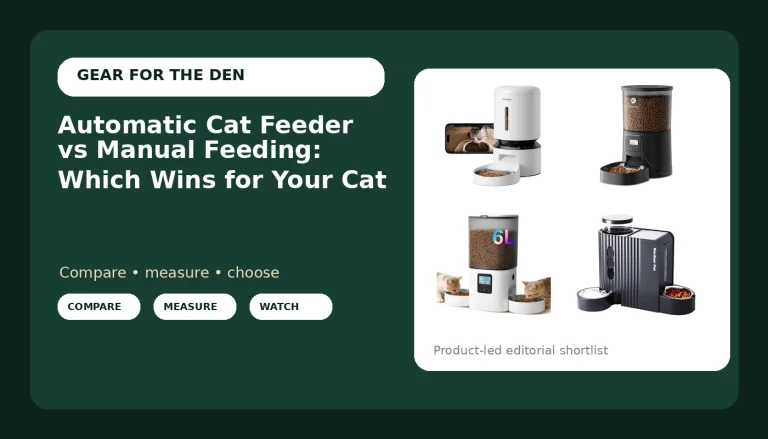
Best Value: Sweetcrispy Automatic Cat Feeder for 2 Cats, 6L Automatic Pet Feeder, Black
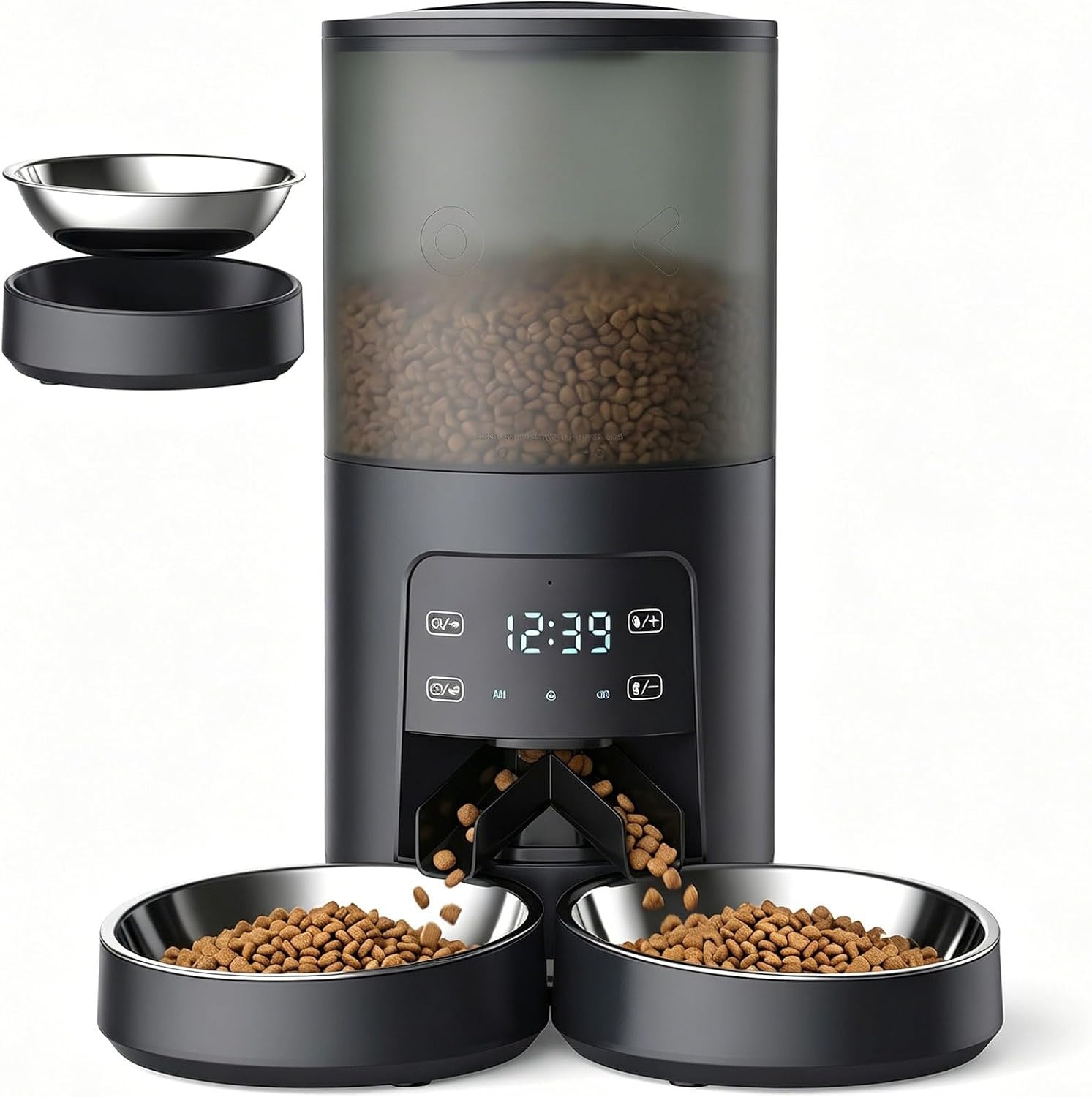
Two cats means two eaters, and two eaters means a wider station. This one sits at the budget end of the group, and the 6L hopper raises the interesting sizing question: a feeder built for two cats still puts food in one place, so the mat has to cover the feeding zone plus the spot where the second cat gets shouldered aside and eats anyway.
Watch a two-cat station for a week and you will see the pattern. One cat parks in the middle. The other approaches from the side, gets bumped, grabs a mouthful, and walks off with it. That is how kibble ends up two feet from the bowl. A mat with a lip catches most of it. A flat mat lets it roll, and a rolled piece of kibble always ends up under the baseboard.
So for a two-cat feeder I size up one class. Measure the footprint of the unit, then add enough mat for two cats to stand on at once, because they will, and they will do it from opposite sides. This is also where a floor mat clearly beats a desk mat: a 6L hopper is a floor object, and the mat under it needs the width of two cats, not the width of a keyboard. If you are laying out more than one station, multi-cat feeding station layout is its own puzzle.
Budget mats skimp in two places: the backing and the lip. A thin backing slides on tile the first time a cat launches off it, and a shallow lip does nothing once water pools. Neither costs much to fix, but you have to look for it.
How I tested
I do not start with mat sizes, because the cat feeding mat size answer changes with the gear. I start with a tape measure and the station itself.
Step one is the footprint. I measure the widest point of whatever is going on the mat, and that includes the rim of a wide bowl, the base of a fountain, and the housing of a camera feeder. The narrow spec on a listing is not the number I want.
Step two is the splash zone. I fill the water bowl to its full water capacity, set it on bare floor, and watch where a cat's paw sends the water when it drinks and then shakes. Water capacity matters here: a bigger reservoir means a heavier bowl and a bigger puddle if it tips.
Step three is the scatter test. I feed on bare floor for three days and mark where the kibble lands with painter's tape. The tape tells me the real mat size, not the one I guessed at in a cart.
Step four is the cord. I measure from the back of the unit to the outlet and decide whether the mat has to cover that run or whether the cord can go along the wall.
Then I live with it. I check whether the mat stays flat after washing, whether the backing still grips when it is wet, and whether the cat will stand on it at all. Some cats refuse a textured surface, and a mat the cat avoids is a mat that stays clean and useless.
Analysis and test results
Once you have measured, the cat feeding mat size question is simple: cover the station and the splash. Sort mats into four classes and the decisions get easier. Small is one bowl. Medium is a feeder or a fountain plus a bowl. Large is a full station with two units. A runner is a multi-cat setup along a wall. Two mats sold as large can differ by several inches, so shop by class and then check the listed dimensions against your own tape measure.
Backing is the first thing to fail. A mat without a rubberized back slides on tile and hardwood the moment a cat pushes off it, and a sliding mat drags the bowl with it. The second thing to fail is the lip. A lip under a quarter inch deep does nothing when a fountain overflows.
Whisker clearance is the detail people miss. Cats with sensitive whiskers eat better when the bowl is not jammed against a wall or tucked under the rim of a feeder, so leave a hand's width of mat in front of the bowl rather than pushing the station flush to the baseboard.
Elevation angle changes the footprint. An elevated stand has a smaller base than the bowl it holds, so a bumped bowl dumps further than a floor bowl would. Measure the stand, not the bowl, and give the stand enough mat that a cat cannot put a paw on the edge and tip the whole thing.
If the station includes a fountain, the mat has to handle two more variables. Pump noise decides whether the fountain stays where you put it, because a fountain that hums gets moved to another room, and the mat moves with it. Filter type decides how much water you carry across the floor at cleaning time, since a charcoal filter drips the whole way to the sink. A mat with a lip gives you somewhere to set the wet parts down.
If the station includes a microchip-reading feeder, remember that the mat is one more layer between the bowl and the reader. A thick mat with a deep lip puts the bowl a little further from the antenna than a flat one does, so test the microchip range with your own cat before you commit to a chunky mat.
Finally, washability. A mat you cannot rinse in the sink is a mat you wipe forever. Silicone and rubber mats rinse. Fabric-topped mats hold smell, and a wet food station will test that within a week.
The cat feeding mat size reference table
This is the table I keep when I am sizing a station. The classes are mine, not brand sizes, and they assume a standard adult cat. Scale up for a large cat and for any station that includes a fountain.
| Mat class | What it has to cover | Best for | Watch out for |
|---|---|---|---|
| Small | One bowl plus a few inches of splash zone on every side | One cat, one bowl, a wall or a counter | A rim overhanging the edge, which turns the mat into a funnel |
| Medium | A feeder or fountain base plus one bowl beside it, with room for a cat to stand in front | A single automatic feeder, a camera feeder, a lone fountain | Cords at the back edge, so leave mat behind the unit or route the cord along the wall |
| Large | A full station: feeder plus fountain, or two bowls plus a stand | Two cats, or one cat with wet and dry stations | Not fitting a small kitchen, so it gets folded away |
| Runner | Two or three units along a wall, with a walking lane in front | Multi-cat homes and litters that eat at different times | The lane gets blocked, so leave mat in front, not just under |
For a desk mat, drop one class. A desk mat is usually sized for a laptop, so a feeding desk mat needs to be the next size up from whatever you would buy for a computer, and it needs a lip, because a counter spill runs downhill and off the edge. If your cat eats on a counter or a windowsill, a desk mat is the right shape and a floor mat is the wrong one.
Two more rules. If the mat stops where the feeder stops, it is too small, because the spill happens in front of the unit, not under it. And if you cannot lift the whole station off the mat with one hand to wash it, the mat is too big for the way you clean.
Wet food feeders change the mat math
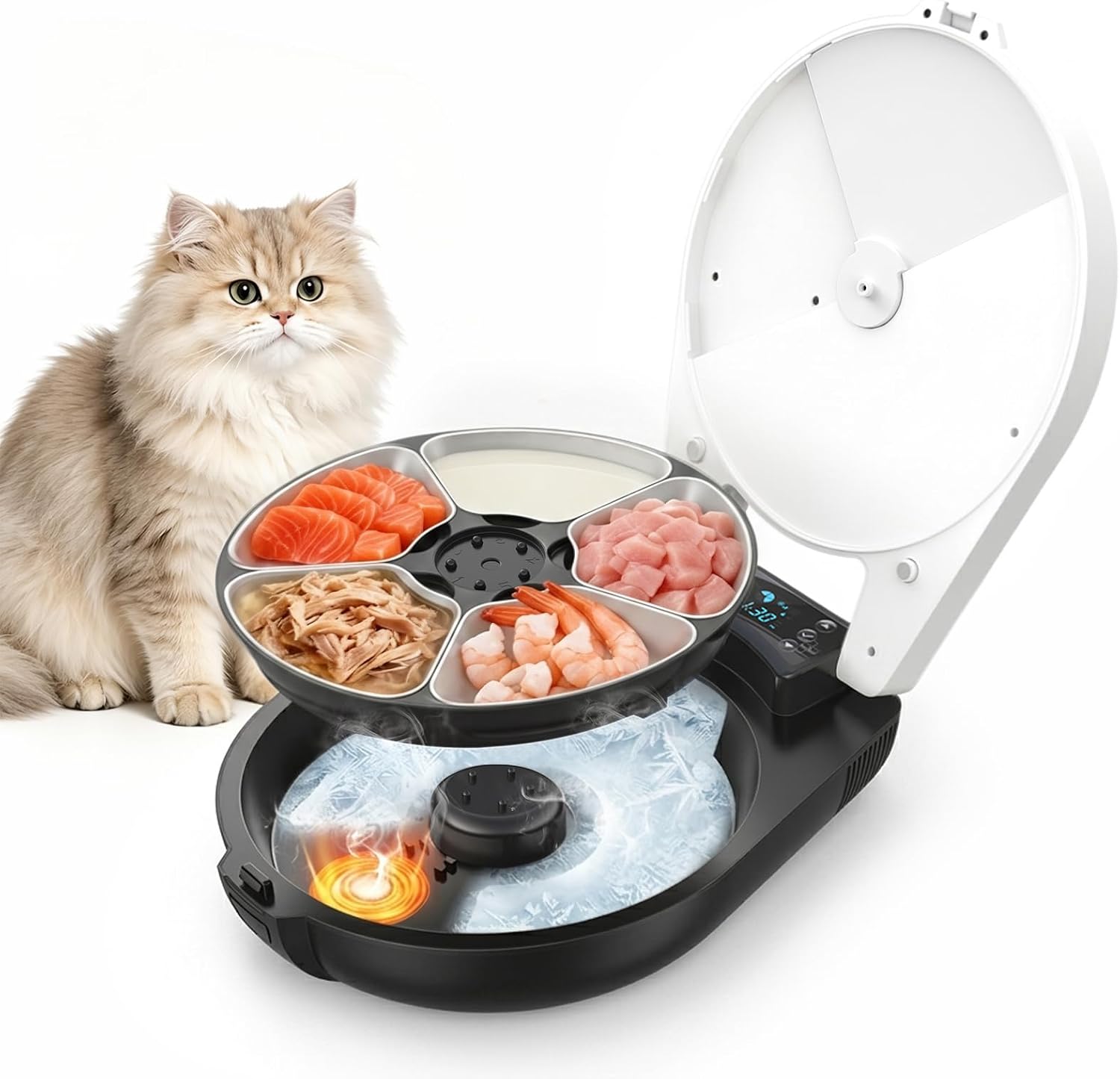
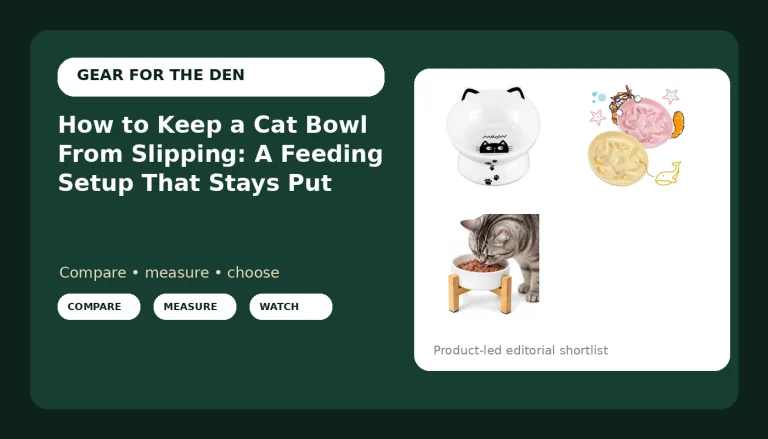
A wet food feeder is the one station where the mat is not optional. This one uses semiconductor cooling and heating to keep food fresh for up to three days, which means a tray, a lid, and a cooling element that all have to sit somewhere flat and stable.
Wet food drips. It also smells, which means cats lick the mat, drag pieces off it, and leave a residue you have to wash rather than wipe. Size this mat for the open lid, not just the closed unit, and leave a hand's width of clearance on the side the lid opens toward. A lip is mandatory here. So is a mat you can rinse in the sink every day, because that is the actual cleaning schedule for wet food.
If the unit lives on a counter, use a desk mat sized to the open footprint and add a lip. If it lives on the floor, use a large class mat and put it against a wall so the cat approaches from one side.
Camera feeders in a small floor plan
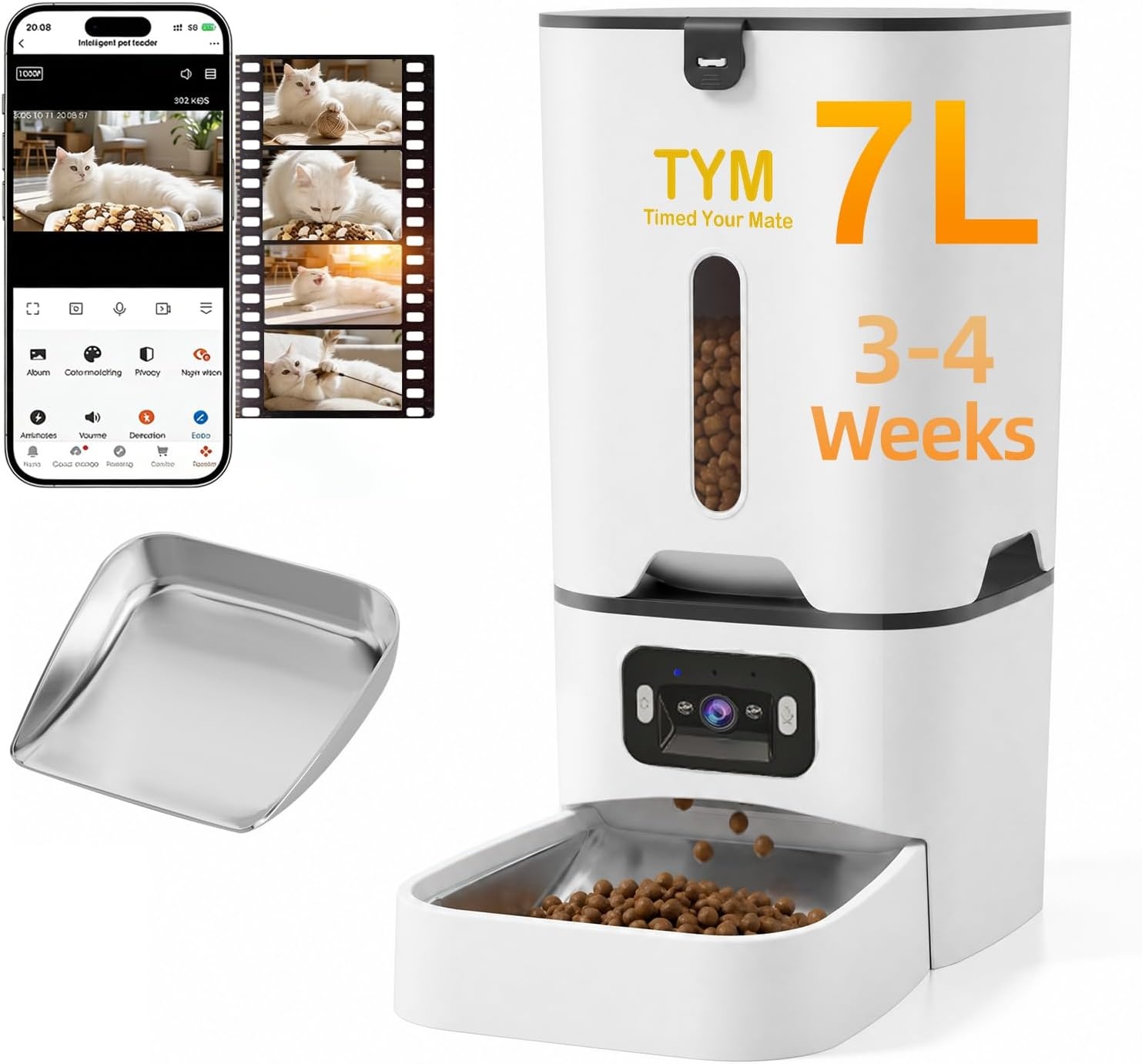
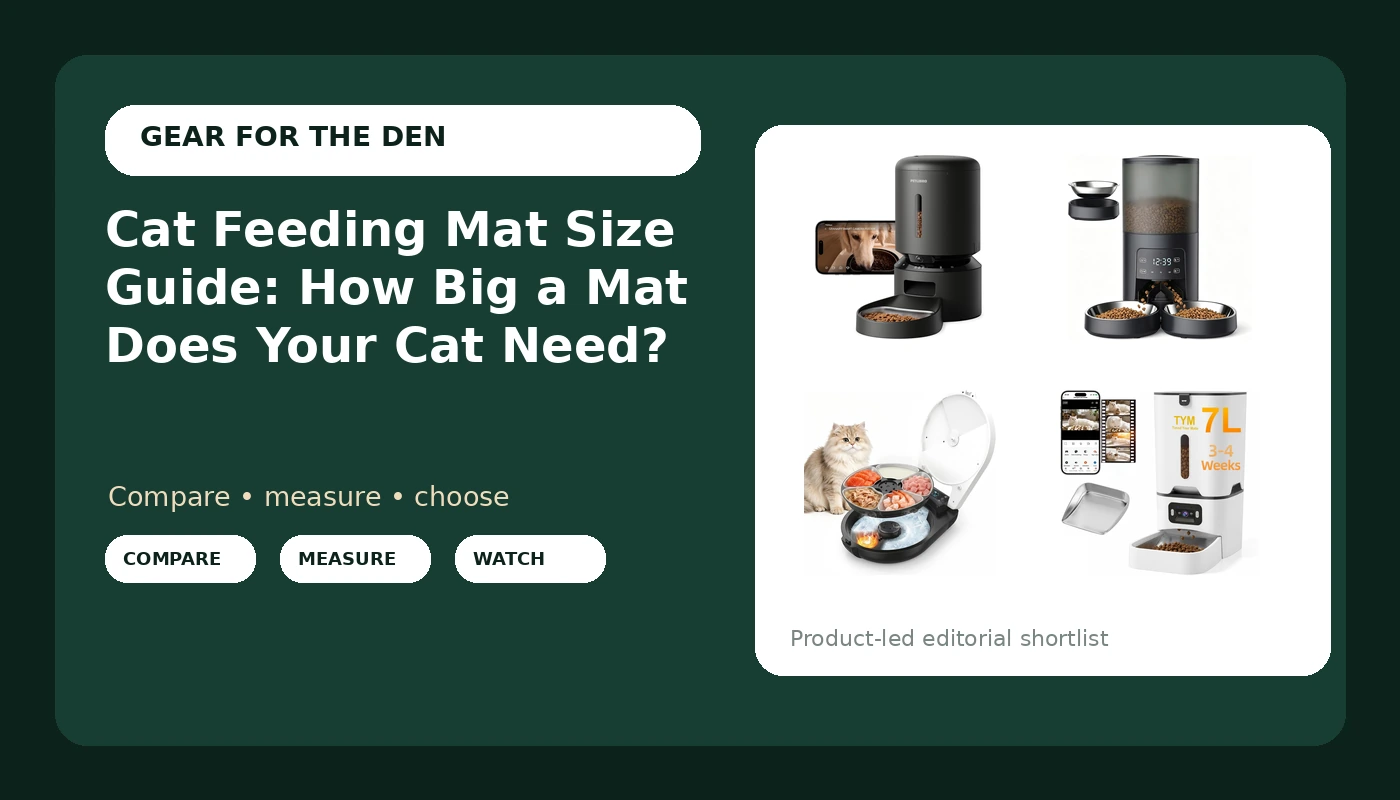
A camera feeder for small pets is the opposite problem: the unit is small, so it is tempting to buy a small mat and be done. Resist that. The base of a compact feeder is small, but the cat standing in front of it is not, and a cat with its front paws on the mat and its back half on bare floor will shuffle the whole station forward over a month.
This one runs on 5G WiFi with a camera, so plan for two things a plain hopper does not need: a cord to the outlet, and a spot where the signal is not fighting a metal appliance. Both push the station away from the wall, and both mean the mat has to be deeper than the base.
Medium class is right here. Enough for the unit, the eating spot in front of it, and a cat with its whole body on the mat. If you are feeding a small pet rather than a cat, measure the animal's body length and size the mat so it is fully on the mat at the bowl, because a pet that eats half off the mat is a pet that eats on the floor.
Should you buy the PETLIBRO Automatic Cat Feeder with Camera?
Yes, if you want to know what your cat eats without standing over the bowl. The camera and night vision turn a chore into a glance at your phone, and the unit is worth building a station around. Budget for the mat at the same time you buy the feeder, because a camera unit has a cord and a deeper base, and a small mat will leave both exposed.
If you have one cat, one bowl, and no interest in watching a video feed, a plain hopper and a small mat will do the same job for less. The camera is the reason to buy this one, and if you will not use it, you are paying for a feature and a bigger mat.
Should you buy the Sweetcrispy Automatic Cat Feeder for 2 Cats?
Yes, if you have two cats and you want one station instead of two. The 6L hopper is the budget pick of this group, and it is a sensible first automatic feeder for a two-cat house, provided you size the mat for two cats instead of one.
Plan on a large class mat, or a runner if you also keep a water bowl nearby. Two cats at one feeder will spread food, and the mat is what keeps that food off the floor. If you have three cats, or one cat that guards the bowl, two separate stations with two mats will work better than one bigger mat.