Cat litter tracking is the grit trail that runs from the box to the couch, and it is one of the few cat-keeping problems you can shrink without changing your cat's behavior. Litter clings to paws and fur, the cat leaves the box, and gravity finishes the job. What follows is cat litter tracking explained from the floor up: how box size, entry height, litter depth, clumping speed, mat texture, and odor control interact, plus four products that each handle a different part of the problem.
Quick answer
Cat litter tracking gets worse when litter leaves the box easily, when the floor at the exit gives paws nowhere to shed grit, and when scooped waste sits in an open container that keeps the whole corner smelling like a litter box. Attack all three. A trapping mat catches what falls off the paws, a press-lid or airtight waste container keeps scooped clumps sealed, and a clumping litter that holds together between scoops leaves less loose material for paws to pick up. If grit is your main complaint, start with the mat and the box geometry. If smell is your main complaint, start with the waste container.
4 useful options
| Model | Best fit | What stands out |
|---|---|---|
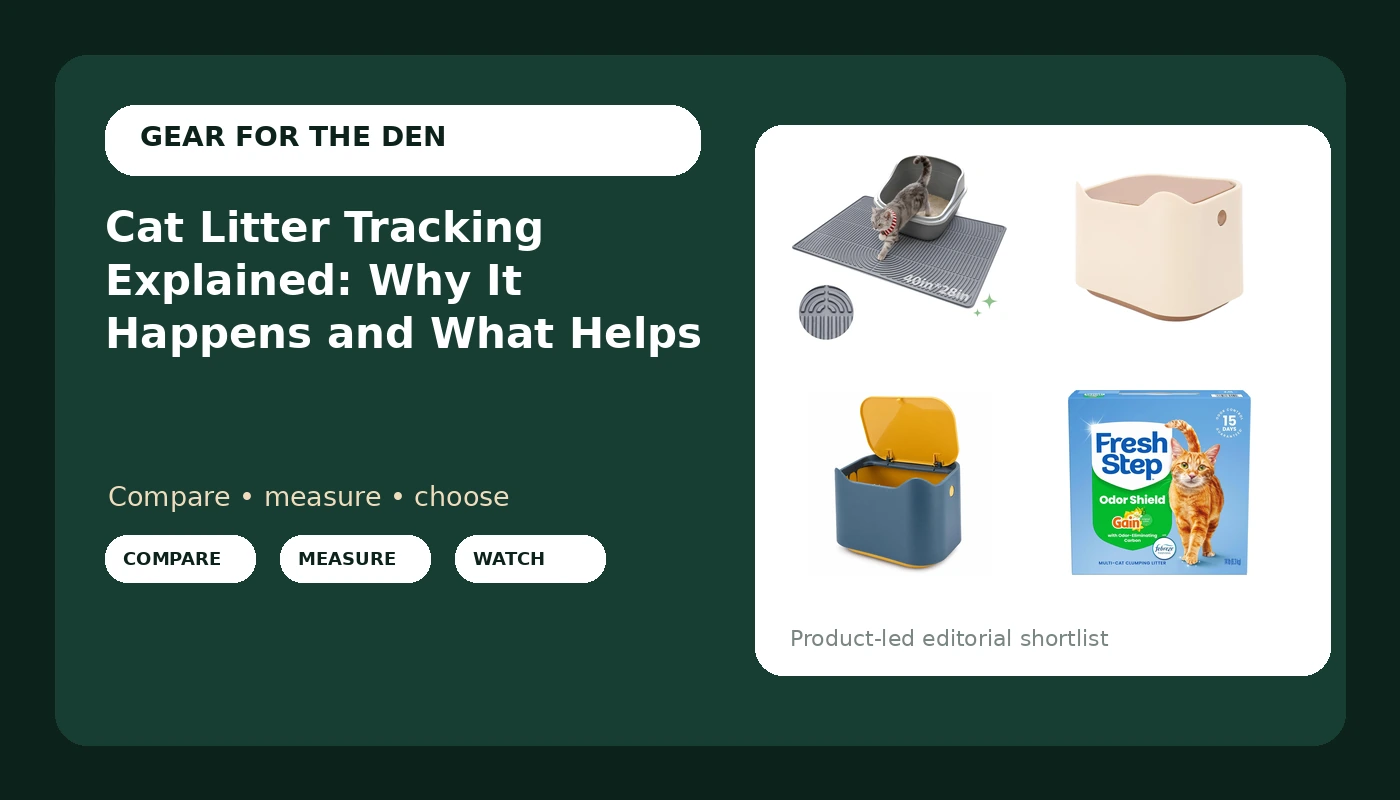
| Pawtasy Cat Litter Mat, 40" x 28" Extra Large Silicone Waterproof Litter Trapping Mat | Homes with grit spread over a wide radius | Extra-large silicone mat with a waterproof build, a non-slip base, and a surface made for trapping scatter |
| Saluaqui OdorResistant Cat Litter Trash Can with Press Lid | Scoop stations in a living space | Enclosed press-lid design in sturdy PP, sized as a compact multipurpose waste can |
| Jiawu Cat Litter Trash Can with Press Seal Lid | Small rooms, closets, and tight corners | Airtight press-seal lid on a compact disposal bin |
| Fresh Step Odor Shield Multi Cat Clumping Cat Litter with Gain, 14 lb. | Multi-cat boxes | Clumping litter with odor shield and a Gain scent |
The mat: Pawtasy Cat Litter Mat
Mat texture is the variable most people skip. A smooth, flat surface lets granules roll off the edge and back onto the floor; a textured surface gives grit somewhere to sit until you shake or rinse it out. Size matters for a different reason: cats rarely land exactly where you expect, so a mat that covers only a narrow strip in front of the box leaves the rest of the trail untouched. The trade-off is floor space and cleaning effort. A mat this large gives you a big target, but it also needs rinsing or vacuuming on a schedule, because a mat already full of grit stops trapping anything new. Place it where the cat lands, not where the box faces, and give it a week before you judge the trail.
The press-lid waste can: Saluaqui Cat Litter Trash Can
Scooped clumps are a second odor source, separate from the box itself. An open bucket or a bag on the floor lets ammonia and the litter's own scent drift into the room all day. An enclosed container with a press lid reduces that open surface area, which is why a waste can often changes how a room smells more than a litter swap does. The trade-offs are simple: a sealed container traps moisture along with odor, so it needs emptying on a schedule rather than when it becomes noticeable, and a compact bin fills faster in a multi-cat home. Look at where the container sits. A bin in a hallway or beside a couch should seal well; a bin in a garage or utility room can be simpler.
The airtight disposal bin: Jiawu Cat Litter Trash Can
Airtight sealing and capacity pull in opposite directions. A press-seal lid does a better job of holding odor in than a simple flap or an open bin, but a compact container means more frequent trips to the outside trash. If your scooping station is in a bedroom, a closet, or a small apartment bathroom, that trade is usually worth it. If you scoop once a week for several cats, a larger bin with a simpler lid may serve you better. Whichever you pick, line it and empty it before it is packed full, because an overfilled container props the lid open and gives back most of the sealing benefit you paid for.
The litter: Fresh Step Odor Shield Multi Cat Clumping Cat Litter
Litter choice drives tracking more than most people expect, and clumping behavior is the reason. A clumping litter that forms a firm clump lets you lift waste out in one piece; a crumbly clump breaks into small particles that stay in the box, dry out, and stick to paws. Multi-cat boxes are harder to keep ahead of, because more cats means more deposits and less time for each clump to set before the next one lands. Odor shield and a Gain scent address the room smell side of the same problem. A 14 lb. bag is a reasonable size for one box or a top-off in a multi-cat setup, but work out how much litter your box actually needs before you buy in bulk.
Prices and availability may change. Product images, names, and retailer links are matched to verified listings. No current price, rating, stock status, or measured result is stated here without current evidence.
How cat litter tracking actually works
Tracking starts before your cat leaves the box. Litter granules wedge between the paw pads and the toes, and finer, lighter granules sit higher in the fur around the paw and travel farther. Longer, heavier granules tend to drop off sooner, which is one reason litter texture matters as much as mat design. Once the cat is out, two more variables take over: how far it has to travel across the mat, and how much energy it puts into the exit. A cat that launches out of a high-sided box scatters grit further than one that steps down onto a mat.
Box geometry shapes the exit. Box size decides whether your cat can turn around and dig without hanging over the edge, and a cat that feels crowded tends to rush the exit. Entry height matters for the same reason: a low entry lets a cat step out slowly, while a high entry invites a hop that throws litter. Litter depth changes how much material gets kicked during digging, and deeper fill means more granules in motion at once.
Then there is the waste itself. Clumping speed, meaning how quickly a clump forms and how firm it is when you scoop it, decides how much broken litter ends up back in the box. Broken clumps mean more dust and more small particles, and small particles are the ones that stick. Odor control is the other half of the equation: an open waste container turns every scooped clump into a scent source, which is why a sealed bin often does more for a room than a change in litter.
If you use an automated box, add its own variables. Sensor range decides when the rake cycles, and waste drawer capacity decides how often you empty it. A full drawer means clumps sitting in the open, which undoes the odor work you did everywhere else.
Matching box, litter, and mat to your cat
The correct cat litter tracking fix is a sequence, not a purchase. Work through it in order and change one thing at a time, because two changes at once make it impossible to tell which one helped.
- Measure the box against your cat. Box size should let the cat stand, turn, and dig without its head or rear hanging over an edge; a box that is too small forces a fast exit.
- Set litter depth. Two to three inches of clumping litter is a common starting point; deeper fill kicks more granules, and shallower fill leads to sticking.
- Choose the litter texture deliberately. If tracking is the main complaint, compare a longer-granule clumping litter against a fine one and watch the trail on the floor rather than the packaging.
- Place the mat where the cat lands, not where you would like it. Entry height and your cat's own jump pattern tell you where the landing zone really is.
- Seal the waste. Scoop into a press-lid or airtight container, and empty it on a schedule rather than when it starts to smell.
If you are hunting for the ideal cat litter tracking setup, this order matters more than any single product, because a mat cannot catch what the box never let go of in the first place.
Practical habits that cut tracking
- Keep the litter level consistent between full changes; a box that has been topped off unevenly gives paws more loose material to carry.
- Sweep or vacuum the landing zone on a fixed day rather than when the trail becomes visible, since grit works its way into carpet fibers over time.
- Rinse a silicone mat instead of shaking it indoors, because shaking redistributes the grit you just collected.
- Empty the waste container before it is full, since a packed bin holds the lid slightly open and defeats the seal.
- Watch the box for changes in digging or exit speed; a cat that suddenly bolts out may be reacting to a dirty box, a urinary issue, or a crowded multi-cat setup, and no mat fixes any of those.
Which option should you choose?
Choose the Pawtasy Cat Litter Mat when grit is scattered across a wide area around the box and you want one large surface to catch it. Choose the Saluaqui OdorResistant Cat Litter Trash Can with Press Lid when your scooping station sits in a living space and you want an enclosed, compact container that hides the contents. Choose the Jiawu Cat Litter Trash Can when the waste container lives in a small room or closet and the priority is a press-seal lid on a compact bin. Choose the Fresh Step Odor Shield Multi Cat Clumping Cat Litter with Gain, 14 lb. when several cats share a box and you want a clumping litter with odor shield and a Gain scent.
None of these products comes with a measured tracking rate, and none of them can compensate for a box that is too small or litter that is too shallow. Treat every change as a two-week experiment, and judge it by what you sweep up rather than by what the packaging promises.
The bottom line
Cat litter tracking is a physics problem before it is a shopping problem. Litter leaves the box on paws, the exit decides how far it flies, and the mat decides how much of it you ever see. Fix the box geometry first, choose a litter texture on purpose, put a trapping mat in the landing zone, and seal the scooped waste so the corner stops smelling like a chore. The four products above cover those jobs, and the routine in the middle of this guide is what makes any of them work.