Cat furniture is one of those purchases where the sticker price tells you almost nothing about what you are getting. A short post and a small tower can sit in the same price bracket as a bag of food, while a modular cube system can cost more than a decent vacuum, and neither number explains whether your cat will actually use the thing. Cat tree value is about the parts a cat interacts with, not the parts that photograph well: platform height, post diameter, shelf depth, and how the whole structure behaves when a cat launches off the top.
The four cat trees below sit at very different points on that spectrum, from a 19 inch perch and post unit to a stackable six-cube tower. This guide explains what each one is built to do, which measurements decide whether a tower earns its floor space, and how to work out the ideal cat tree value for your own home rather than for a listing page.
Quick answer
Cat tree value is the amount of usable, cat-facing structure you get for your money, and it is rarely the same thing as the tallest number in a product title. What creates that value is stability and usable surfaces: a base wide and heavy enough to resist tipping, posts thick enough for a cat to grip, a perch wide enough to lie down on, and materials that survive daily scratching. A tall tower with a narrow base and a shallow top shelf has less real value than a shorter, more solid post that stays still while the cat works.
For most households, the correct cat tree value calculation comes down to the cat's size and scratching style, the floor space you can genuinely give up, and how many cats will share the structure. The four models below cover the common cases.
4 useful options
| Model | Best fit | What stands out |
|---|---|---|
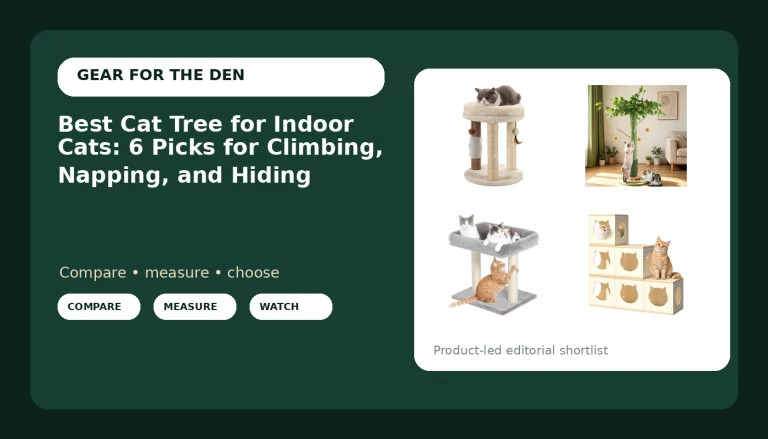
| KinoTail 19" Small Cat Tree with Scratching Post for Indoor Cats with Perch | Small rooms and single cats | Compact perch and post unit with a low platform height |
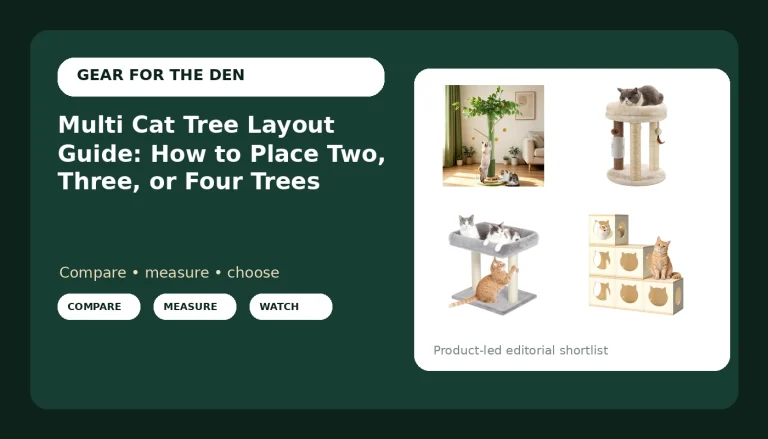
| 46" Tall Cat Scratching Post, Natural Sisal Cat Tree for Indoor Adult Cats | Adult cats that stretch tall | Full-height sisal post with a vertical scratching surface |
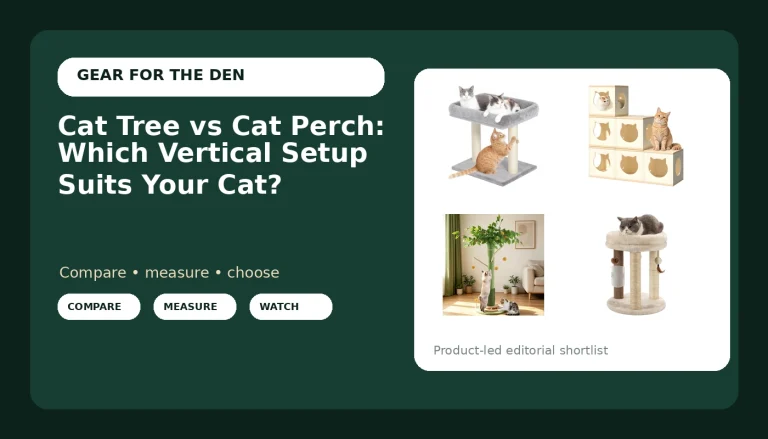
| MECOOL 4in1 Small Cat Tree,Scratching Post with Tower Soft Bed, Sisal Carpet Jute Posts with Three Hanging Ball Toys and Massage Brush for Indoor Cats | Kittens and playful cats | Bundles a tower bed, hanging toys, and a massage brush |
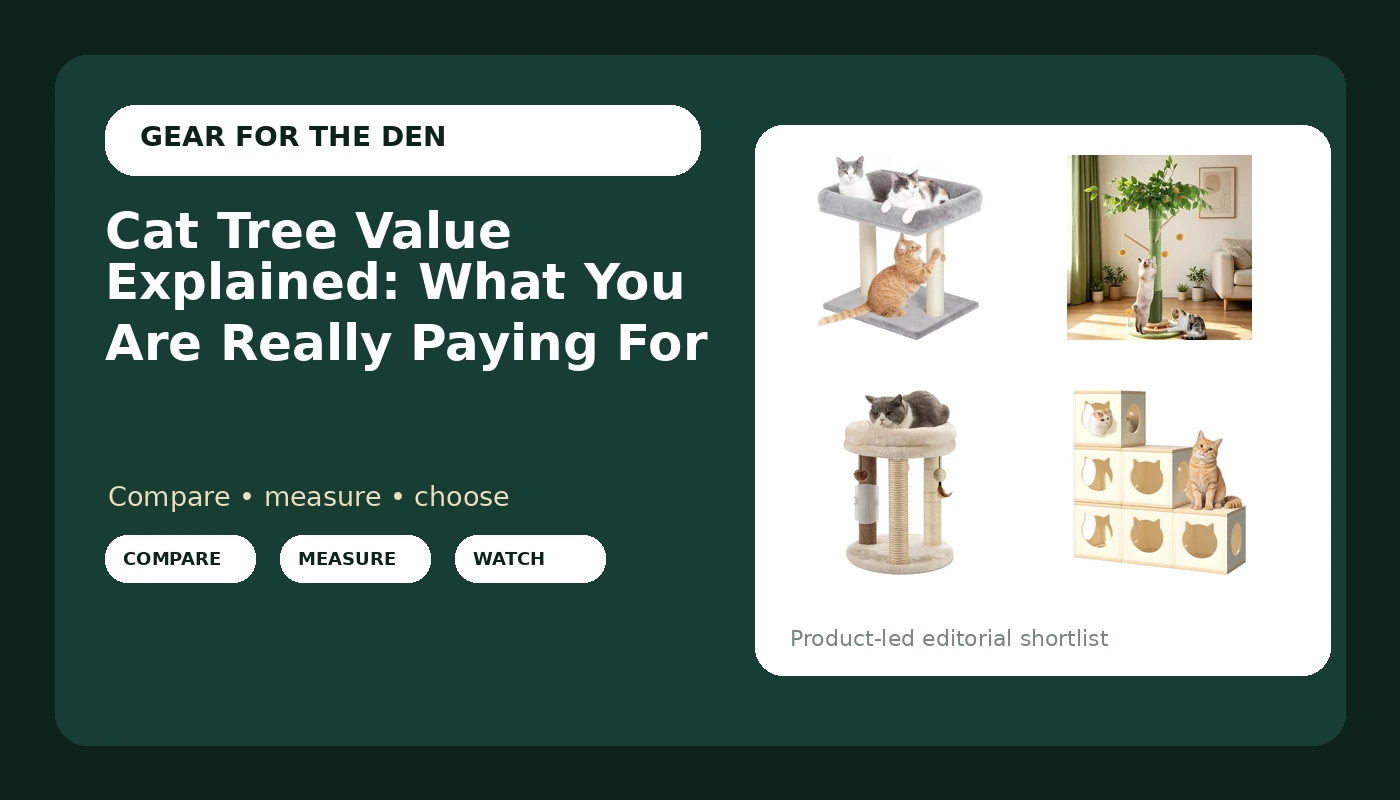
| 6-Cube Stackable Cat Tree Tower, Plastic Cat Tunnel for Indoor Cats | Multi-cat homes and reconfiguring | Six stackable cube modules plus a plastic tunnel section |
Compact pick: KinoTail 19" Small Cat Tree with Scratching Post for Indoor Cats with Perch
The case for a short unit is simple: it takes up less floor space and it is easier to tuck beside a sofa or under a window. The trade-off is vertical territory. A 19 inch platform height puts the perch at roughly knee level, which suits a cat that likes a low lookout but will not satisfy a cat that wants the top of a bookshelf. If your cat scratches at full stretch on door frames or the side of the couch, this height will not meet that urge, and a dedicated tall post is the better answer. For a small apartment, a kitten, or a second resting spot in a room where a full tower will not fit, the compact approach still makes sense.
Tall scratcher: 46" Tall Cat Scratching Post, Natural Sisal Cat Tree for Indoor Adult Cats
A single tall post is the least complicated form of cat furniture, and the most dependent on stability. Because there is no platform to widen the base, everything rests on how the post meets the floor and how the cat loads it. A 46 inch post gives an adult cat room to stretch to full length, which is the posture that does the most good for claws and shoulders, but a tall post with a small base can rock when a cat pulls hard. Check the base dimensions, the post diameter, and whether the maker expects wall anchoring before you place it in the middle of a room. Natural sisal is the material most cats take to, because it shreds into small fibers instead of snagging, though it does shed as it wears.
Toy and bed combo: MECOOL 4in1 Small Cat Tree,Scratching Post with Tower Soft Bed, Sisal Carpet Jute Posts with Three Hanging Ball Toys and Massage Brush for Indoor Cats
Bundled features are where value gets murky. Toys and a brush add play and grooming interest, but they are also the parts that wear out or get ignored first. A hanging ball on a cord is only useful while the cord holds, and a massage brush works only if the cat chooses to rub against it. The structural value of this unit is the tower soft bed and the sisal and jute posts, so judge those first and treat the toys as a bonus. Small multi-feature trees like this tend to suit kittens and young cats that still play hard, and they work well as a starter piece before you commit floor space to a full-height tower.
Modular tower: 6-Cube Stackable Cat Tree Tower, Plastic Cat Tunnel for Indoor Cats
Stackable cube systems trade a fixed silhouette for flexibility. You can build them tall, wide, or in an L shape, and you can add modules later if the household grows. That flexibility is the value proposition, and it also explains why these systems usually sit at the top of the price range. The plastic tunnel section is a different surface from the cubes, which makes it easier to wipe down but less useful as a scratching surface. Two things decide whether a stacked layout works: the weight limit of each module and how the stack anchors. Cubes stacked five or six high need a stable base and, in most homes, a wall anchor to stop the column shifting when a cat jumps between levels.
Prices and availability may change. Product images, names, and retailer links are matched to verified listings. No current price, rating, stock status, or measured result is stated here without current evidence.
How cat tree value is measured
Cat tree value is measured in four dimensions that never appear in the headline number: height, depth, diameter, and stability.
Platform height decides whether the tree competes with your furniture. Cats generally want to be at or above the level of the room's activity, so a platform that tops out below a sofa back gets used less than one that reaches a windowsill. That is why a 46 inch post and a 19 inch tree serve different cats even though both are sold as cat trees.
Post diameter decides whether the cat can grip. A post that is too thin flexes under a full-stretch scratch, which is exactly the feeling cats avoid. Thicker posts also last longer, because the sisal has more surface to wear through before the core shows.
Shelf depth and perch width decide whether the cat can actually rest. A perch has to fit the cat lying down, not sitting, and a shelf depth of a few inches is a step rather than a bed. If a listing mentions a hammock, check the hammock fabric too: closely woven fabric holds its shape, while loose mesh stretches into a sag that cats stop using.
Weight limit and anchor type decide whether the whole thing stays upright. A wide, heavy base helps, but the anchor type matters just as much once a cat launches from the top platform. Many tall units are designed to be fixed to a wall, and a tower that looks stable in a photo can still walk across the floor during a hard landing.
Finally, count the cats. In a multi-cat home, value comes from multiple usable levels and separate resting spots, not from one wide platform everyone has to share.
Cat tree value explained: five checks before you buy
Cat tree value explained in practice is a short checklist rather than a calculation. The goal is to match the structure to the cat in front of you, then confirm the unit will survive the way that cat uses it.
- Measure your cat from floor to shoulder while standing, then add a few inches for a full stretch. That number is the minimum post height worth buying.
- Measure the floor space you are willing to give up permanently, including the clearance needed to walk past the tree, and compare it with the base dimensions of the unit.
- Check the post diameter and the scratching material, and prefer sisal or jute over smooth carpet when scratching is the main job.
- Check the weight limit for each level and the anchor type, especially for anything stacked above chest height.
- Confirm the perch width or shelf depth fits your cat lying down, and check the hammock fabric if a hammock is part of the design.
Practical guidance for placing and keeping a cat tree
- Put the tree where the cat already spends time, near a window or beside the sofa, rather than in a spare room the cat rarely visits.
- Anchor tall units to a wall or use the supplied strap, and check the fixing again after the first week of use.
- Keep the base area clear of clutter so the cat has a clean landing zone on every level.
- Rotate or replace hanging toys when cords fray, and tighten any bolt you can reach during a monthly once-over.
- Vacuum sisal and carpeted posts and trim loose fibers instead of pulling them, which keeps the wrapping tight.
- In a multi-cat home, two modest trees in different rooms usually work better than one crowded tower.
- If you travel with your cat, carrier size and a familiar resting surface matter more than the tree itself, so keep a small perch or blanket that fits the carrier.
- Before buying a large modular system, think about moving day: doorway widths, stair turns, and how the stack comes apart.
Which option should you choose?
Choose the KinoTail 19" Small Cat Tree with Scratching Post for Indoor Cats with Perch when you have a small room or a cat that wants a low lookout, and you need one unit that covers both scratching and resting. Choose the 46" Tall Cat Scratching Post, Natural Sisal Cat Tree for Indoor Adult Cats when scratching is the main problem and your cat stretches to full height. Choose the MECOOL 4in1 Small Cat Tree,Scratching Post with Tower Soft Bed, Sisal Carpet Jute Posts with Three Hanging Ball Toys and Massage Brush for Indoor Cats when you want play and grooming features inside the same small footprint as a bed. Choose the 6-Cube Stackable Cat Tree Tower, Plastic Cat Tunnel for Indoor Cats when you have more than one cat, more space, and you want a structure you can rebuild as the household changes.
None of the listings behind this article include a rating or a measured test result, so the comparisons above describe design and stated dimensions rather than verified performance. Prices and availability change, and your cat's own preference is the final test.
The bottom line
Cat tree value comes down to whether the structure matches the cat and the room. Height gets a cat interested, but post diameter, perch width, shelf depth, and stability decide whether the tree gets used after the first week. Match the post height to your cat's full stretch, match the perch to the way your cat lies down, and match the anchor to the way your cat lands. Do that, and even a modest unit earns the floor space it takes.