Most people who start searching for a cheap aquarium hood are trying to fix one of three problems: the water level drops half an inch a week, the fish keep testing the carpet, or the tank looks like a cave after dark. A hood handles all three at once, but the budget versions fail in predictable ways, and the failure is almost never the plastic. It is the tank volume underneath it and the heater inside it. The cheap aquarium hood that actually works is the one sized to your tank, matched to the light your plants need, and vented well enough that it does not turn ten gallons of water into a warm bath.
I judge every hood and every piece of gear that sits under one against the same short list: tank volume, heater wattage, thermostat range, flow rate, filtration stage, and the gallons per hour your filter really moves. Those numbers decide whether a lid helps your tank or slowly cooks it. This cheap aquarium hood guide is the checklist I run before spending anything on a tank under 20 gallons, and it is the reason I stopped buying lids that looked right in the product photo and wrong on the glass.
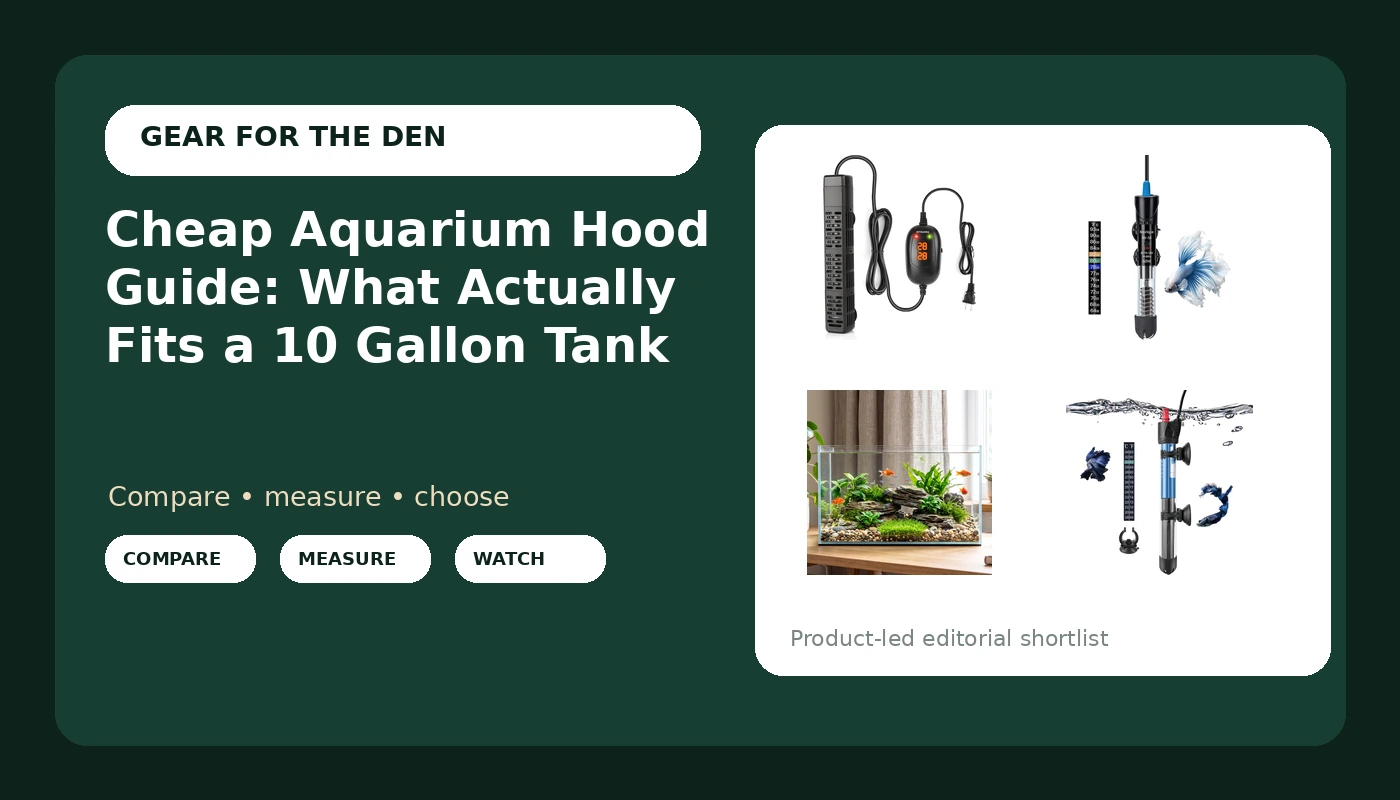
Best Overall: HiTauing Aquarium Heater, 50W/100W/200W/300W/500W Submersible Fish Tank Heater with Over-Temperature Protection and Automatic Power-Off When Leaving Water for Saltwater and Freshwater
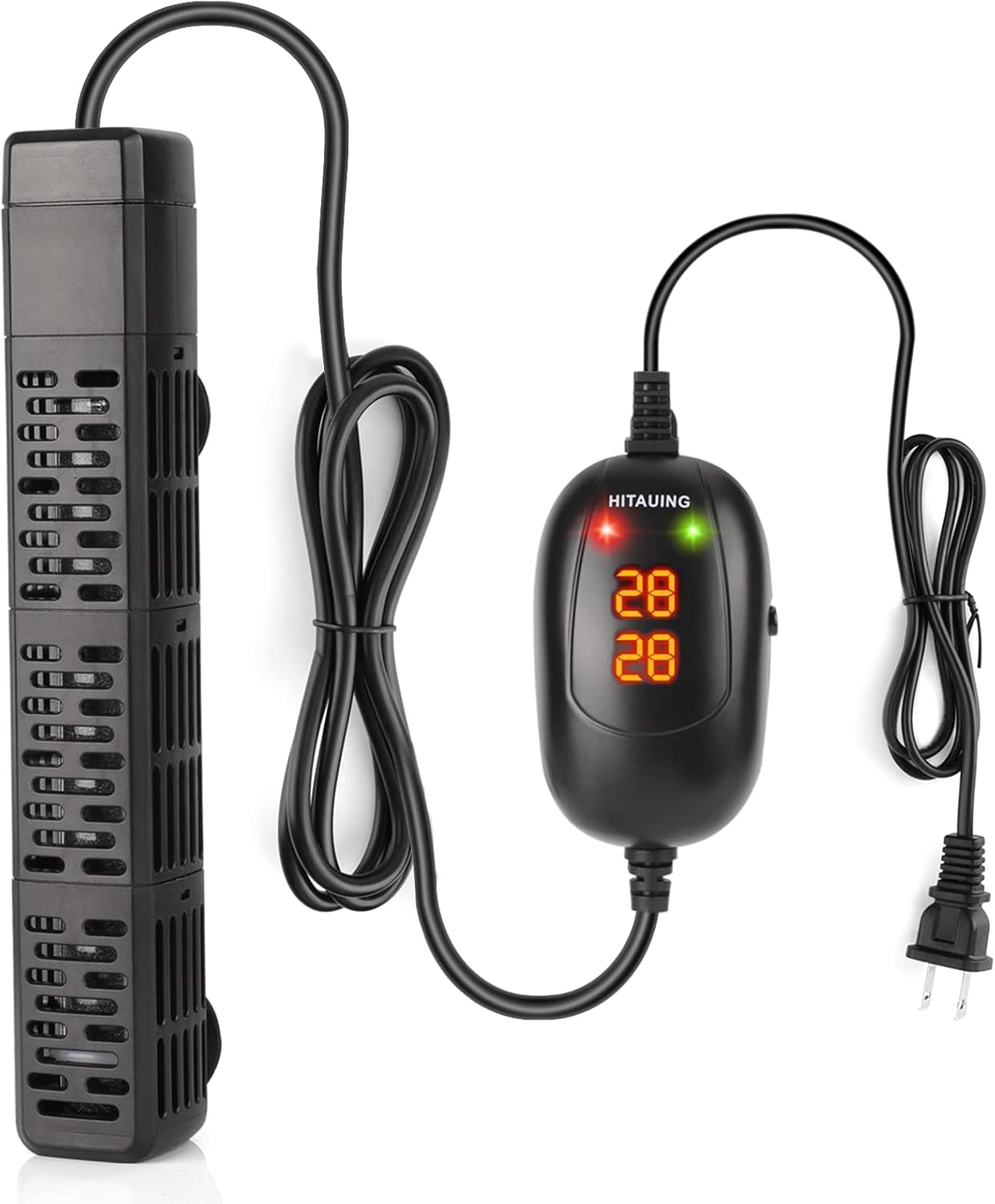
A hood traps heat, and that single fact is why the heater under a lid matters more than the heater in an open tank. This HiTauing unit is the one I would put under a hood because it is built to fail safe. It comes in five wattages, 50W through 500W, so you can match wattage to tank volume instead of guessing, and the two features that matter under glass are both here: over-temperature protection and automatic power-off when the heater leaves the water.
That second feature is the one people only appreciate after a water change goes wrong. A hood keeps the surface warm, so a heater that keeps running dry, or runs hot because trapped air slows heat loss, is how tanks get cooked. The adjustable thermostat range gives you room to set a temperature the fish actually want rather than whatever the factory picked.
For a 10 gallon tank under a lid, 50W or 100W is plenty. For a 55 gallon with a hood, the 300W or 500W makes more sense. Because it is rated for saltwater and freshwater both, the same heater survives a move to brackish or marine.
Best Value: Novique 50W Aquarium Heater Adjustable Temperature Submersible Fish Tank Heater Water Thermostat with Thermometer for Freshwater and Saltwater Tanks
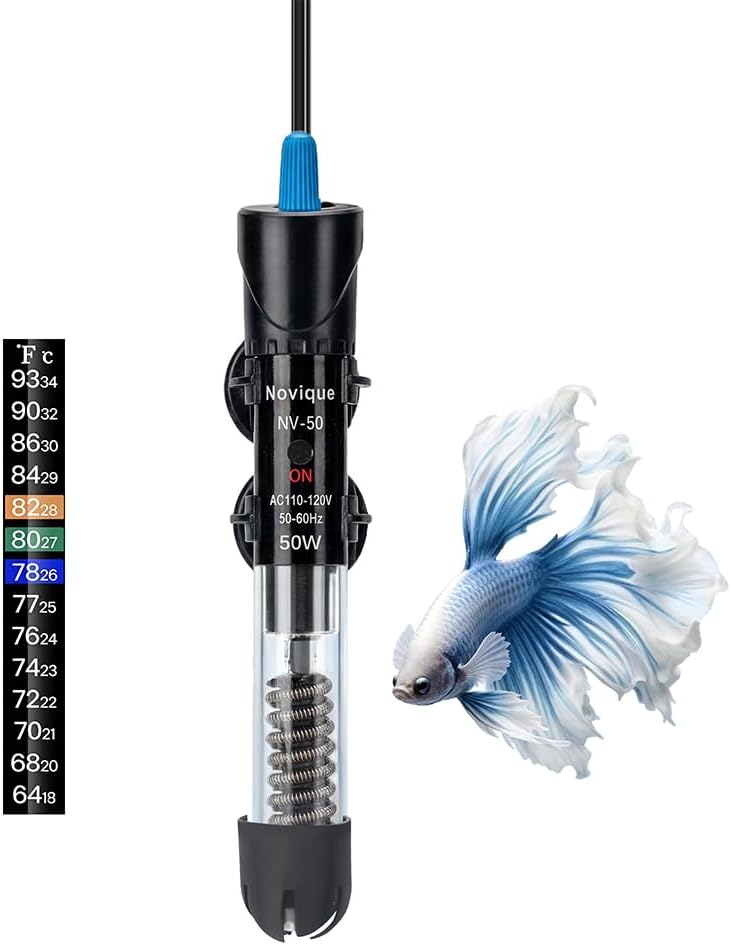
If you want the least expensive way to hold temperature under a hood, start here. The Novique is a 50W adjustable heater with a thermostat dial, and it ships with a thermometer, which is the part most cheap setups skip. A lid changes the temperature gradient in the tank, and a thermometer is how you find the warm layer instead of trusting the dial.
50W is the right size for a 5 to 15 gallon tank under a lid. It is submersible, rated for freshwater and saltwater, and the adjustable range means you are not stuck with one preset. For a small covered tank this is the ideal cheap aquarium hood companion: it handles the one job a lid makes harder, and it does it without a controller or a second power strip.
How I tested
I do not judge a hood by how it looks in a product photo. I judge it by what it does to the water.
The fit test comes first. A hood either rests on a rim or clips to the glass, and a rimless tank has no rim, so half the cheap lids on the market are out before you ever get to light quality.
The heat test is next. A lid holds warmth in, so the question is whether the heater underneath can hold a steady thermostat range and shut off when it should. I want over-temperature protection and a dry-run cut-off on anything that goes under glass, because the failure mode without them is a tank full of cooked fish.
The evaporation test is the simplest one. Mark the water line, wait a week, and see how far it drops. A hood that cuts evaporation in half also cuts how often you top off, and it cuts how much mineral crust builds along the glass.
The light test is about the kelvin rating. A cheap hood light with an unknown rating usually looks either yellow or blue, and plants want something closer to daylight. If the listing does not tell you, assume the fixture is a placeholder and plan to upgrade it later.
The access test is the one people skip. If you cannot open a feeding door without lifting the whole hood, you will stop feeding with the lid on, and the lid will live in a closet by week three. That is how you end up with the correct cheap aquarium hood sitting unused in a corner while the tank runs open and evaporates.
Analysis and test results
A hood changes three things: temperature, evaporation, and gas exchange. Everything else is detail.
Temperature first. A tight lid slows heat loss, so a heater that ran constantly in an open tank will cycle less often under a hood. That sounds like a win, and it usually is, but it also means an oversized heater has less margin for error. Match wattage to tank volume and let the thermostat do the rest. For a 10 gallon tank in a cool room, 50W to 100W is the range that works, and the old rule of thumb of roughly five watts per gallon is a ceiling rather than a target once a lid is involved.
Evaporation second. Less evaporation means a more stable water line, which means less mineral crust on the glass and steadier parameters if you ever run brackish. It also means less top-off water, and that is the reason most people buy a hood in the first place.
Gas exchange third, and this is where a cheap hood earns or loses its place. A lid that seals completely traps humidity and carbon dioxide against the surface. If your filtration stage depends on surface agitation, a fully sealed lid works against it. Look for a hood with a vent, or leave a gap at the back for the filter and the cords.
That gap also matters for your flow rate. A hang-on-back filter with a high gallons per hour rating splashes, and splash under a lid means water on the underside of the plastic and mineral stains on the outside. Give the filter its own cutout and the problem mostly disappears.
Two smaller things. Substrate grain matters more than people expect under a cheap hood, because a coarse gravel bed with a weak light grows algae on the top layer while the plants below it stretch toward the surface. And if you keep a rimless tank, the hood decision is really a lid decision: glass tops with clips sit on the edges, and nothing that needs a rim will fit.
The cheap aquarium hood reference table
This is the table I keep next to my notes. It maps each piece of gear to the spec that decides whether it belongs under a lid, and it is the fastest way to check that your hood, your tank, and your heater all agree with each other.
| Piece | Role under a hood | Spec that decides it | Notes |
|---|---|---|---|
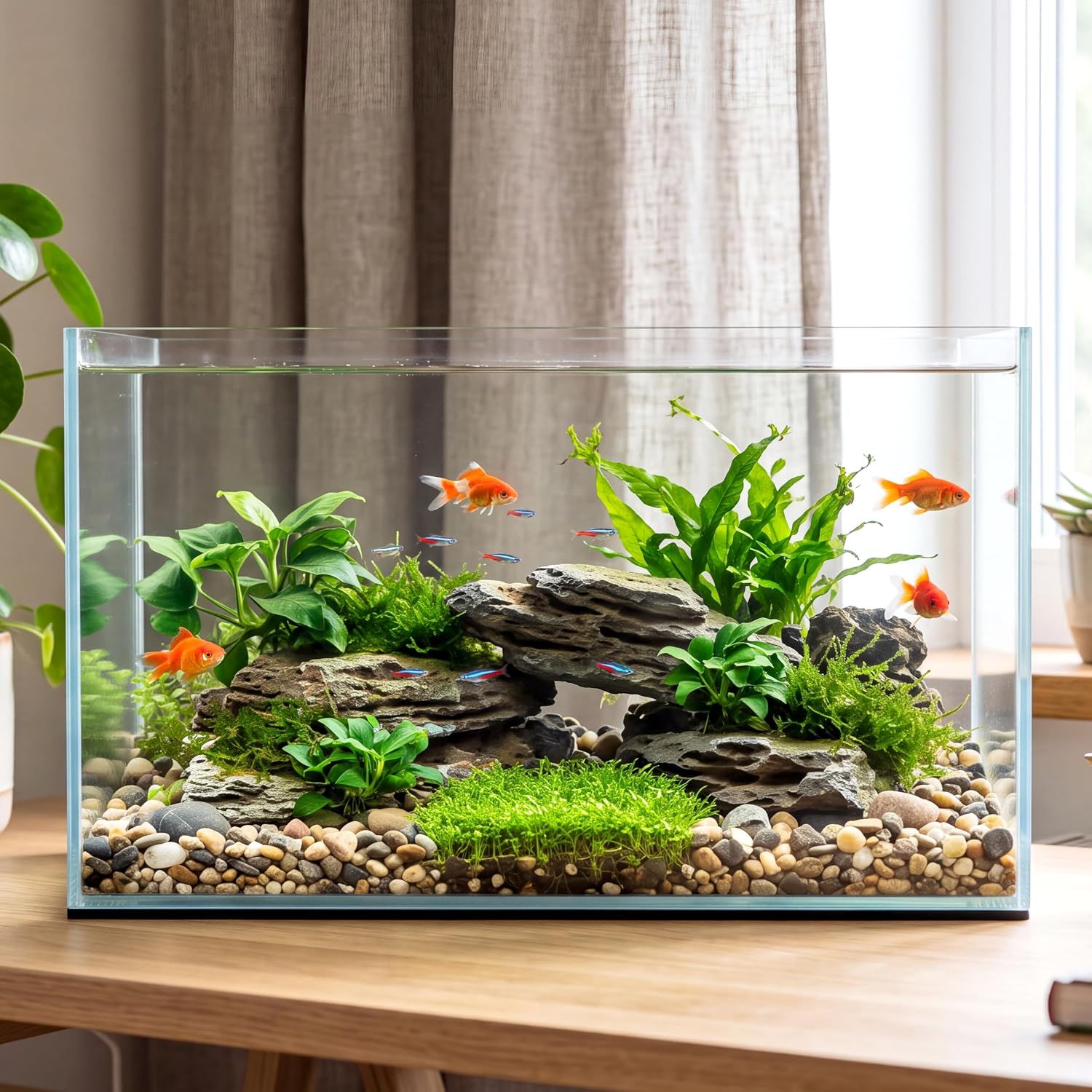 View on Amazon → Cirrsondy 10 gallon rimless tank | The tank the lid has to fit | Tank volume and rim style | Rimless, so clip-on hoods will not work |
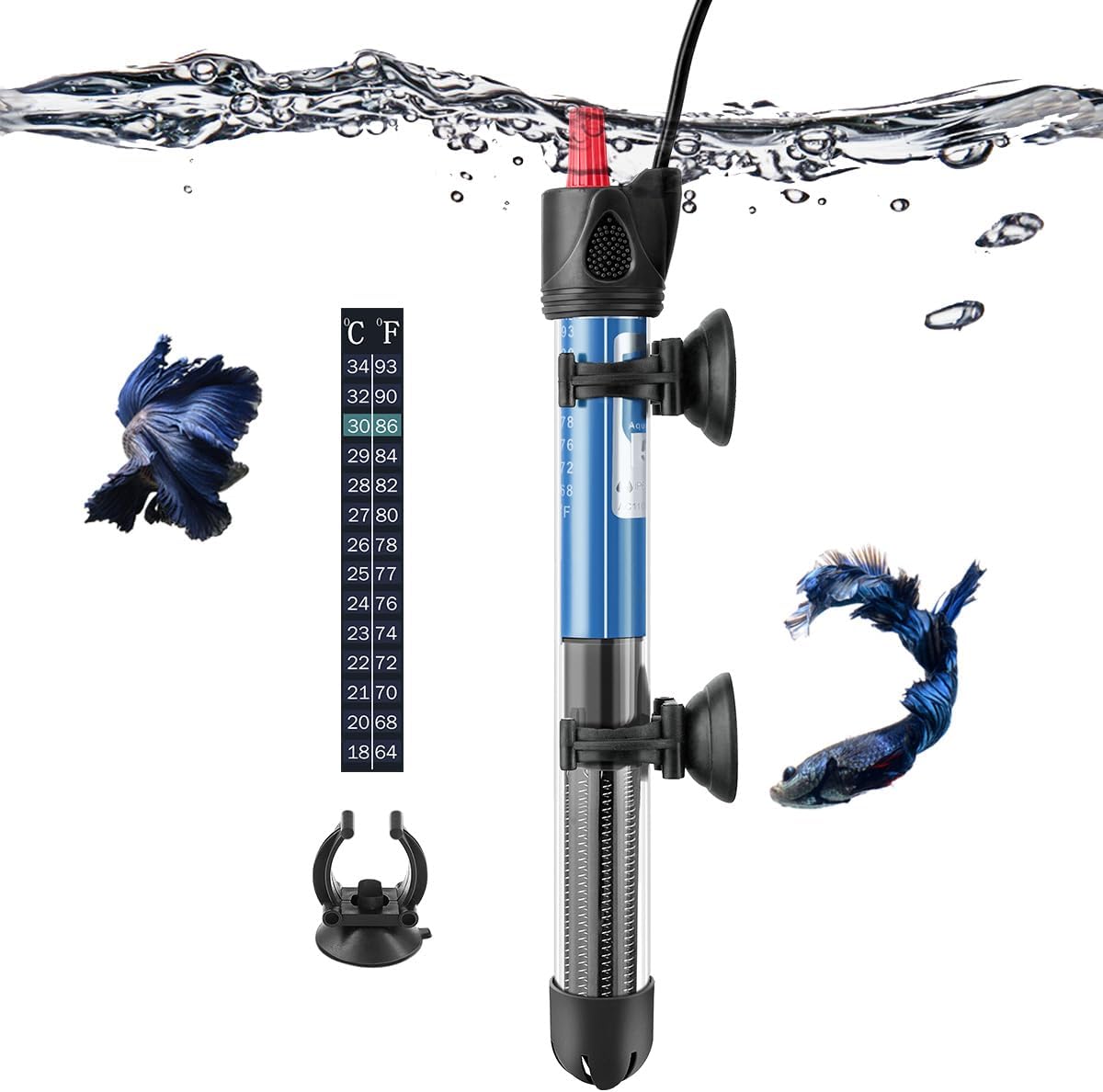 View on Amazon → FEDOUR adjustable heater | Heat source | Wattage for 5 to 70 gallons | Glass body, three wattages |
Novique 50W heater | Heat source for small tanks | 50W for 5 to 15 gallons | Ships with a thermometer |
HiTauing heater | Fail-safe heat source | 50W to 500W, over-temperature cut-off | Powers off out of water |
Read the table from the top down and you get the order of decisions: tank first, then the lid that fits it, then the heater sized to the volume that the lid is now keeping warm. Get that order backwards and you buy a hood for a tank you do not own yet.
FEDOUR 50W 100W 300W Submersible Aquarium Heater, Adjustable Glass Water Heater for 5-70 Gallon Fish and Turtle Tank (50W for 5-15 Gallon)
The FEDOUR is the middle option, and it is the one I would pick if the tank might grow. It comes in 50W, 100W, and 300W, and the listing covers 5 to 70 gallons, so the same heater line follows you from a small betta tank up to something much larger. The 50W version is the one that fits a 5 to 15 gallon tank under a lid.
The glass body is worth noting if you keep turtles or anything that bumps into things, and it is worth noting for a different reason under a hood: a glass heater left running in a drained tank is a cracked heater. Unplug it before water changes, every time. Adjustability is the other feature that matters here, because a hood changes how fast the tank loses heat overnight and you will want to nudge the setting as the seasons turn.
Cirrsondy 10 Gallon Ultra Clear Glass Fish Tank, Easy to Maintain Small Rimless Aquarium for Betta/Goldfish/Snails/Shrimp and Aquatic Planting
Ten gallons is the size where the hood decision matters most, and this tank makes part of that decision for you: it is rimless, so there is no rim for a cheap clip-on hood to grab. Plan on a glass top with clips or a lid that rests on the edges, and check that whatever you buy leaves room for the filter and the heater cord at the back.
Ultra clear glass is the other half of the story. A tank this transparent makes a weak hood light look weaker, because you can see every shadow the fixture throws. If you are planting it, budget for a light with a real kelvin rating and treat the stock hood as a cover rather than a light source.
For bettas, snails, and shrimp, a 10 gallon with a lid and a 50W heater is a genuinely easy setup. For goldfish, remember that one goldfish outgrows ten gallons quickly, and a hood does not change that math.
Should you buy HiTauing Aquarium Heater, 50W/100W/200W/300W/500W Submersible Fish Tank Heater with Over-Temperature Protection and Automatic Power-Off When Leaving Water for Saltwater and Freshwater?
Yes, if you want a heater that behaves under a lid. The wattage range covers small tanks through large ones, the over-temperature protection and dry-run shutoff are the two safety features that matter most in a covered tank, and the saltwater rating means it does not become useless if your stocking changes.
It costs more than the budget heaters in this guide, and for a 5 gallon tank that is money you do not strictly need to spend. But a hood raises the stakes on temperature, and this is the one in the group built to shut itself down when something goes wrong.
Should you buy Novique 50W Aquarium Heater Adjustable Temperature Submersible Fish Tank Heater Water Thermostat with Thermometer for Freshwater and Saltwater Tanks?
Yes, if you are heating 5 to 15 gallons on a small budget. It is the least expensive way to get an adjustable thermostat and a thermometer in one box, and for a covered 10 gallon tank that is most of what you need.
The limit is the wattage. 50W will not hold a 40 gallon tank, and it will struggle in a cold room with big overnight swings. Buy it for the tank you have rather than the tank you might buy later, and it will do its job quietly under whatever hood you settle on.