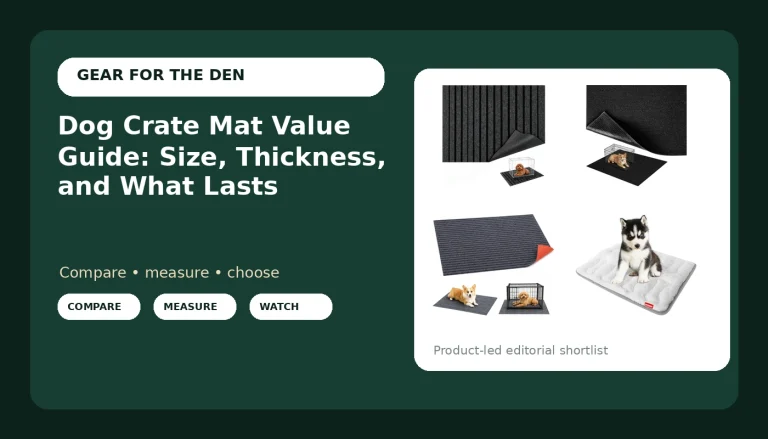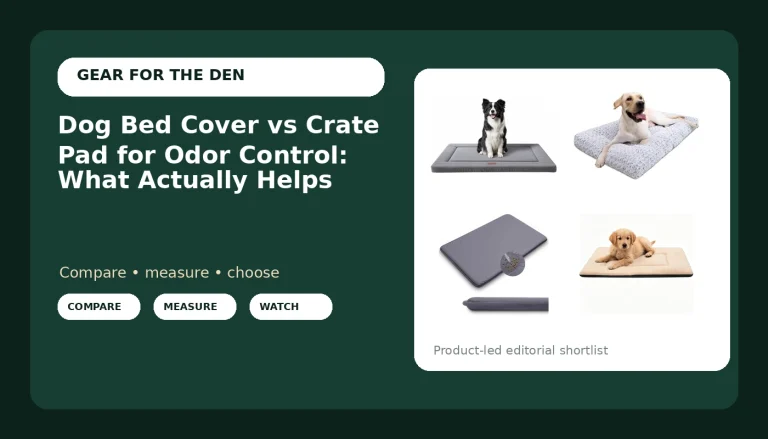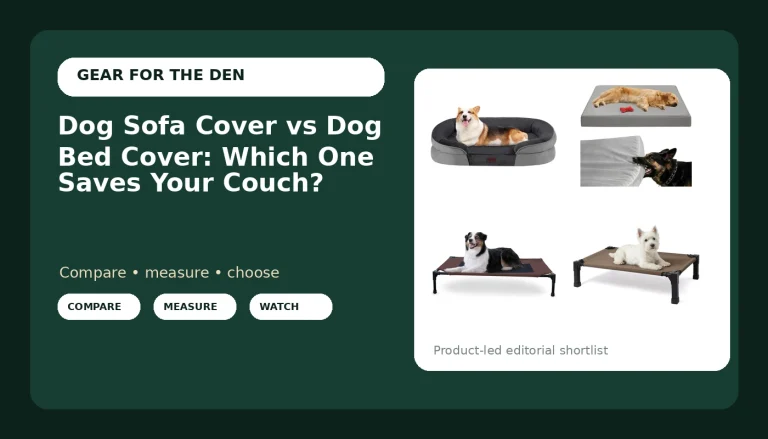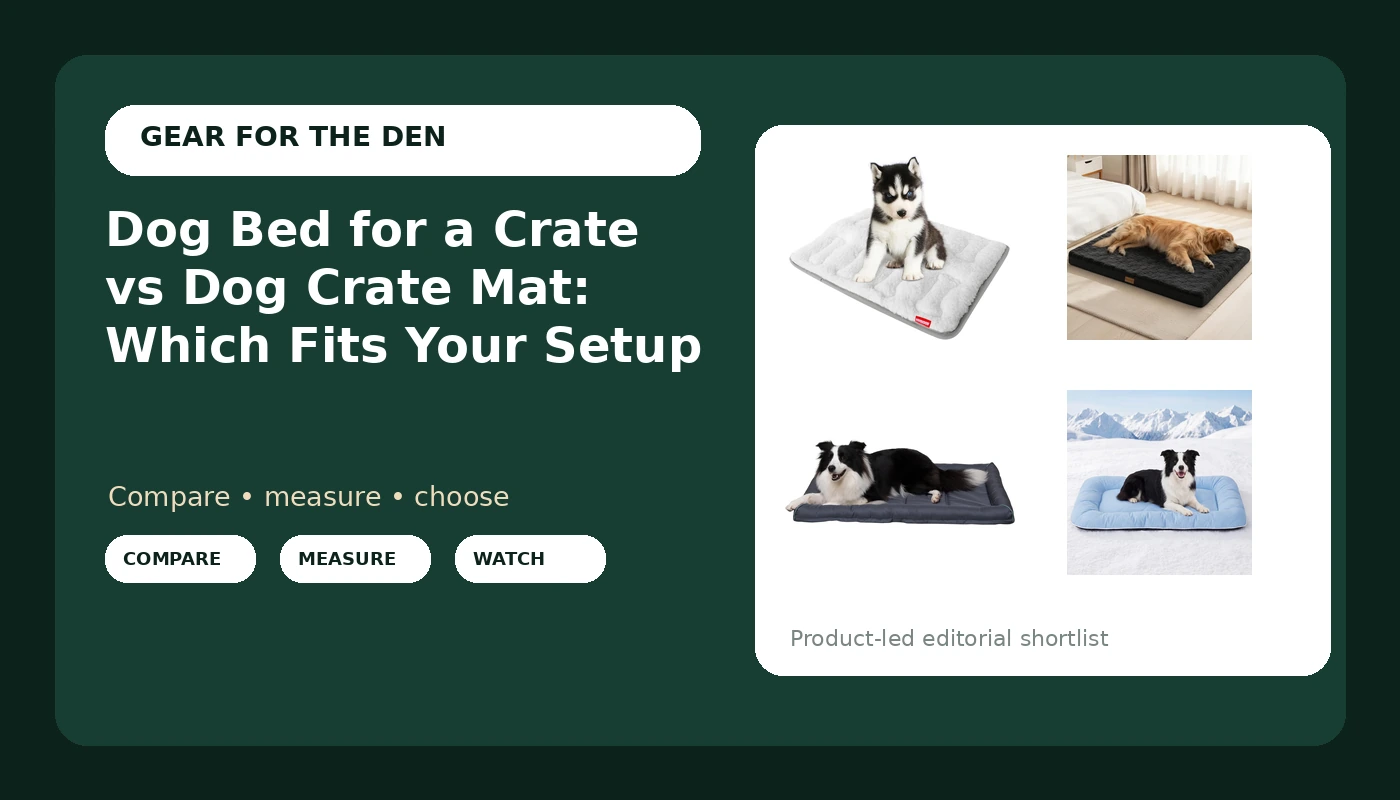
The dog bed for a crate vs dog crate mat question sounds like a distinction without a difference until you are standing in a pet aisle with a tape measure, a tired puppy, and a crate pan that measures exactly 24 by 18 inches. They are not the same product. They are not priced the same, and they do not fail in the same way. A crate mat is a low, flat pad cut to sit on the crate floor and stay there. A dog bed for a crate is a cushioned bed that happens to fit inside one. The choice comes down to four things: how long your dog spends in the crate, whether the dog chews or digs, how often the pad gets soiled, and how much vertical room the crate actually leaves.
For most adult dogs, a crate mat that matches the crate pan is the better daily answer, and a thicker bed belongs in the room the crate sits in. The exceptions are real, though. A senior dog with stiff joints, a dog recovering from surgery, or a dog that sleeps in the crate overnight rather than napping in it will do better with an orthopedic bed that fits the crate with an inch to spare. The four pads below span both ends of that range, from a budget pad for a small kennel to a cooling mat built for an extra-large one.
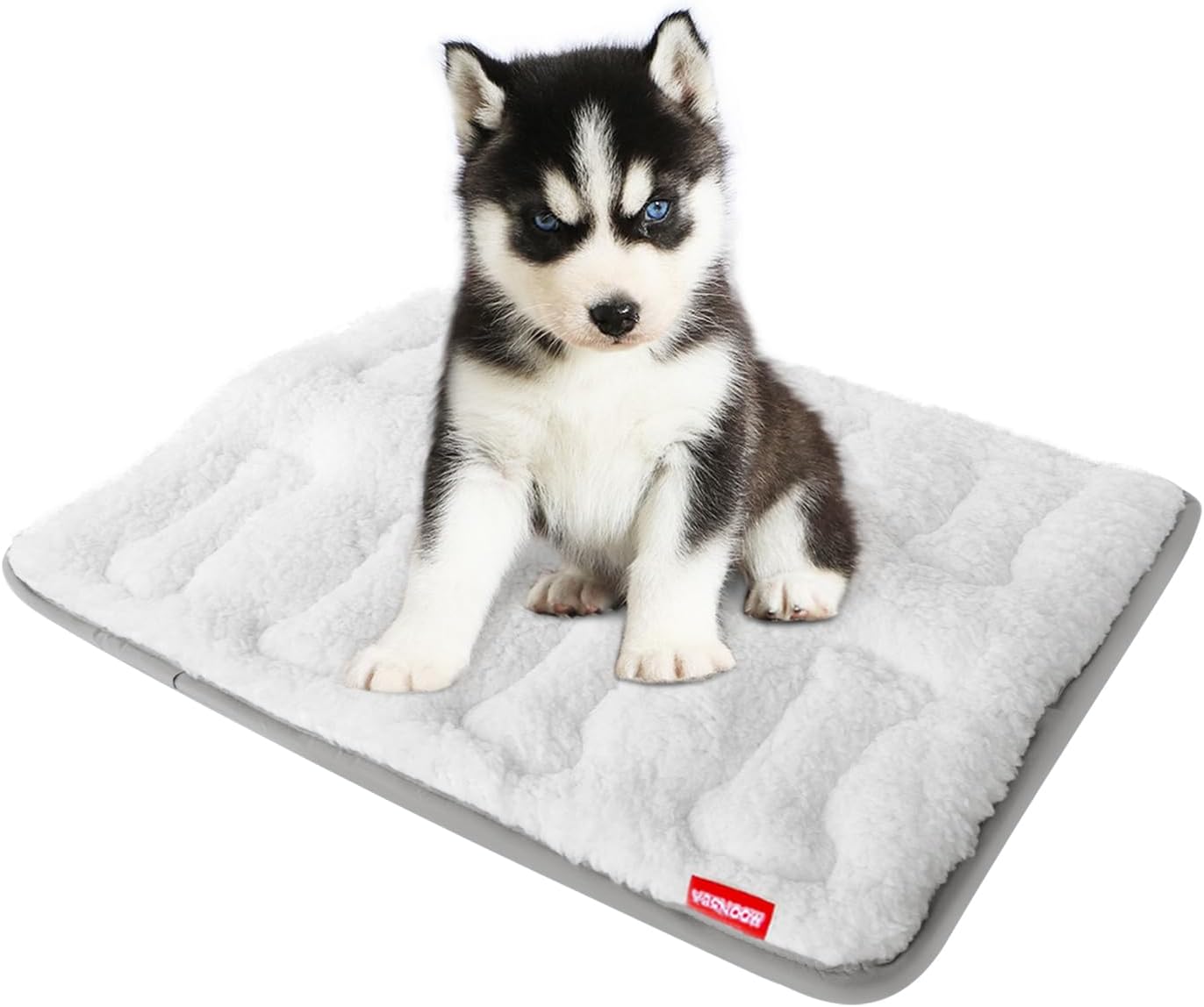
Dog Crate Mat(24" X 18"), Small Dog Bed Pad for Crate
Lowest-profile pad here, so it never lifts a divider or catches a gate, and it is the easiest one to replace
Small only, and there is very little cushioning for a dog that sleeps in the crate all night
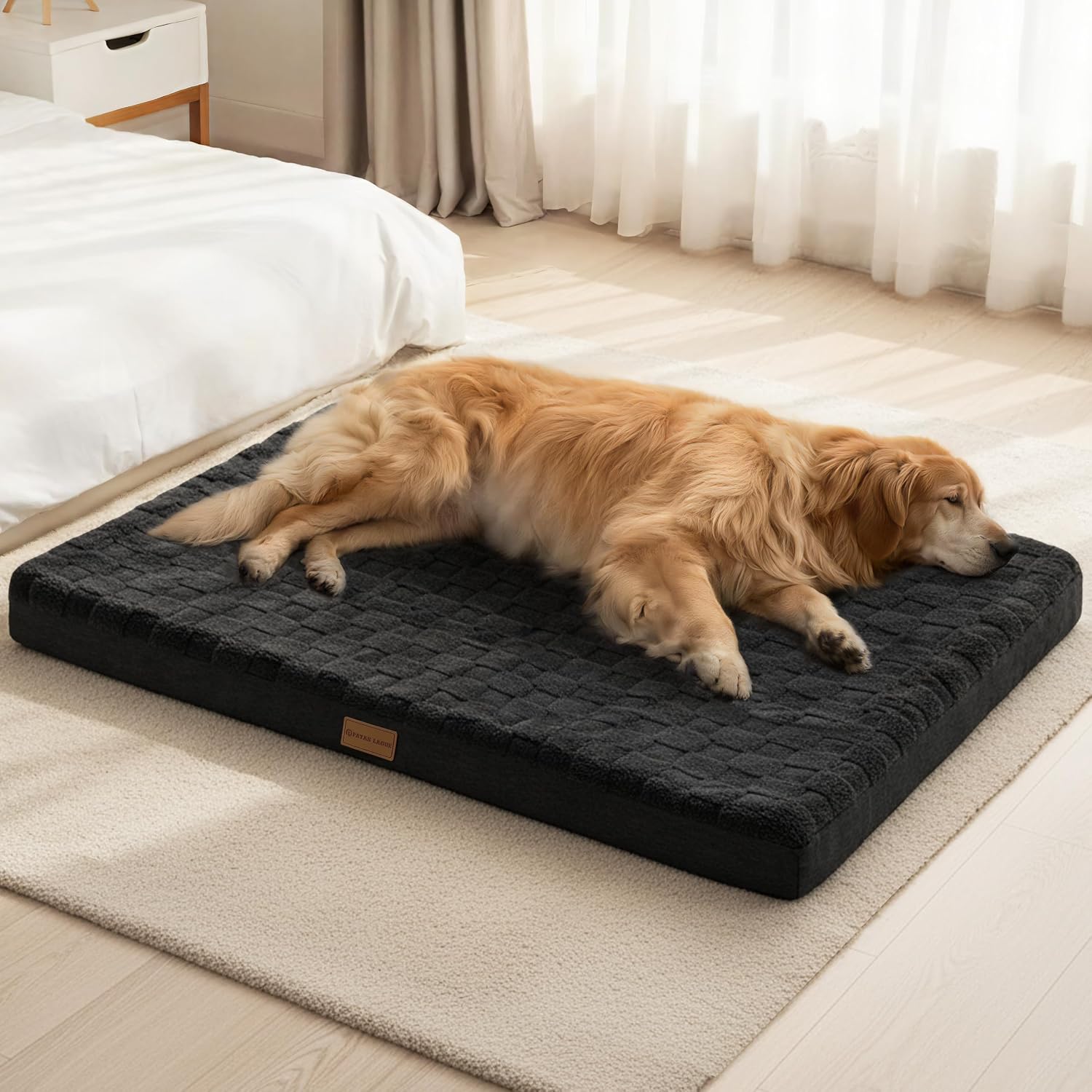
Patas Lague Orthopedic Large Dog Bed Washable Pet Crate Mat 36''X24'' Black
Orthopedic fill that holds shape, washable cover, and a 36 by 24 footprint that fits the most common large crate
Deeper loft eats vertical room, and the black shell shows light hair and dust
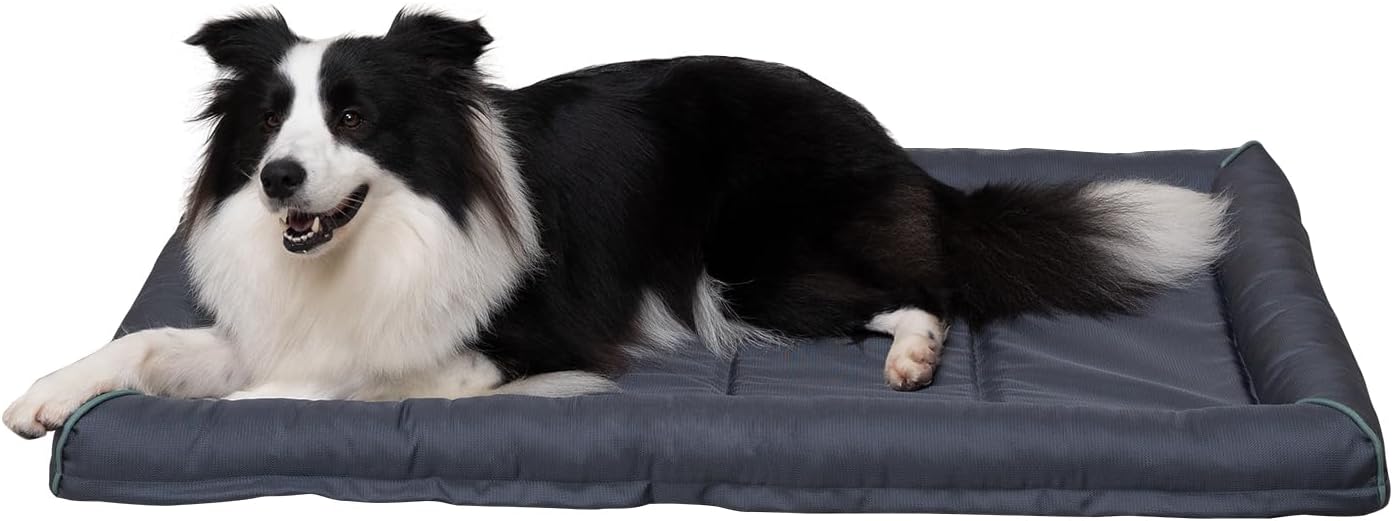
BALANCE Oxford Dog Bed for Large Dogs, Waterproof Dogs Crates Pad Outdoor Dog Crate Mat, 36 inch
Wipe clean and rinse instead of machine wash, which suits porch crates, cars, and wet dogs
Oxford shell is less cozy than fabric, and it is a flat pad rather than a supportive bed
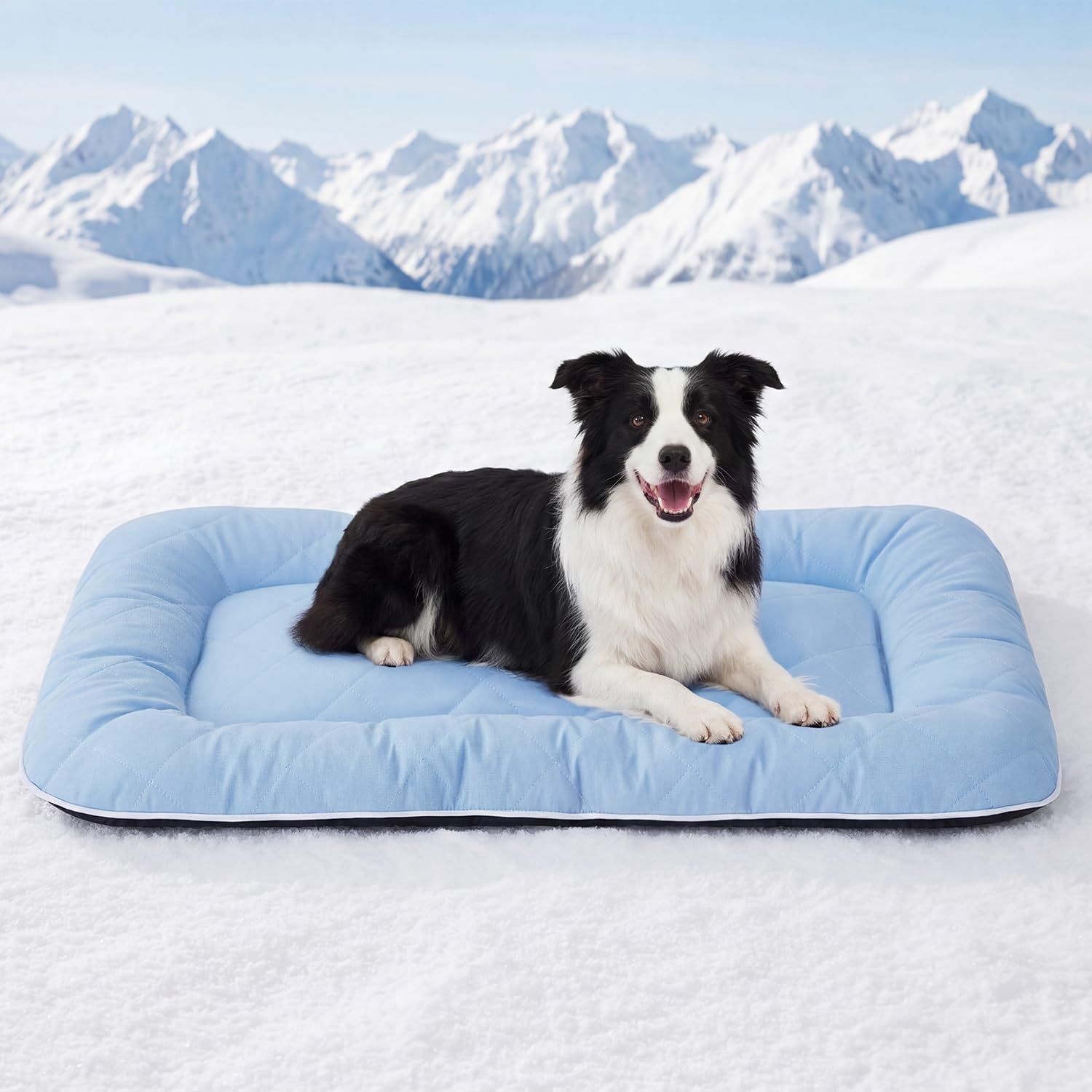
ZOMISA Cooling Dog Bed Q-MAX >0.5, Cooling Crate Mat for Extra Large Dogs, Cold Kennel Pad with Chill Washable Fabric for Summer, 41x27x2'', Blue
Extra-large footprint, a heat-pulling Q-MAX surface, and a washable chill fabric cover
Cooling performance matters most in warm months, and a light blue pad shows dirt fast
Prices and availability may change.
What dog bed for a crate vs dog crate mat Means in Practice
Strip the marketing away and the two categories differ in three measurable ways: loft, footprint, and how each handles moisture. The dog bed for a crate vs dog crate mat split is not about quality. It is about geometry.
A crate mat is usually 1 to 2 inches thick at most, often less, and it is cut to the interior dimensions of a standard crate pan. It slides under a divider panel without lifting it, it does not change where the gate closes, and it can be rolled or folded when the crate folds flat. A dog bed for a crate carries 3 to 4 inches of fill, sometimes bolsters, and it takes up volume inside the crate rather than simply covering the floor.
That volume matters more than most buyers expect. A crate should let your dog stand up, turn around, and lie flat without ducking. Add 4 inches of bedding and you have removed 4 inches from the height your dog has to work with. On a 24-inch-tall crate holding a 20-inch-tall dog, that math leaves nothing. On a 30-inch crate, the same bed is fine. This is the most common fit mistake in crate setups, and it has nothing to do with brand or price.
Mat Thickness Is the Spec That Decides the Fit
Mat thickness is the number to check before anything else. If you are comparing a dog crate mat vs dog bed for a crate, measure the interior height first, subtract your dog's standing height, then decide how much of what is left you are willing to spend on padding.
Thin mats win for puppies because a crate sized for the adult dog needs a divider, and a divider needs a flat floor to slide into position. A thick bed lifts the divider or blocks the channel it slides through, which forces you to choose between using the divider and using the bed. Thin mats also win for dogs that run hot, dogs that dig at bedding, and dogs that chew, because there is less loose fill to pull out.
Thick beds win for dogs crated for long stretches, dogs with hip or elbow issues, and dogs past the chewing stage. If your dog is crated eight hours overnight and the crate is tall enough, the extra loft is not a luxury. It is the difference between a dog that settles and a dog that paces.
Washable Fabric and the Waterproof Layer
A crate pad lives where accidents happen. Puppies, seniors, dogs with sensitive stomachs, and dogs that come in from the rain all put bedding through more than a bedroom floor ever sees. Washable fabric is the baseline requirement, and a waterproof layer is the upgrade that saves you from replacing the pad every few months.
The BALANCE Oxford pad is the clearest example of that trade in this group. It is built around an Oxford shell that wipes clean and rinses rather than a cover that has to go through the machine, which makes it the one to reach for if the crate lives on a porch, in a garage, in a truck, or anywhere a wet dog arrives. It is 36 inches across, so it fits a large crate, and it is the pad I would hand someone who asks for something they can hose off.
The ZOMISA cooling mat sits at the opposite end of the material conversation. Its reason to exist is the Q-MAX rating above 0.5, a measure of how quickly a surface pulls heat off skin, paired with a chill fabric that stays washable. If your dog sprawls on tile in July and avoids the bed in August, this is the shape of product that fixes that.
Crate Size, Panel Count, and Bar Spacing
Crate size is not the exterior box on the spec sheet. It is the interior pan. Measure the pan at its narrowest point, front to back and side to side, then subtract an inch. A pad that is exactly pan-sized will bunch at the corners when the dog turns, and a pad that is oversized will not sit flat at all.
Standard pan sizes cover most of the market. A 24 by 18 pan is a small crate. A 36 by 24 pan is a large crate and the most common size for a 50 to 70 pound dog. A 41 by 27 pan is extra large, the size that suits a giant breed or a large dog that likes to stretch out. The four pads here map onto those three sizes almost exactly, which makes the sizing decision easier than the feature comparison.
Bar spacing and panel count matter mostly for how the pad interacts with the crate itself. If a pad is thick enough to raise your dog a few inches, a nose or a paw that used to sit against a bar can end up between bars instead, and a determined dog can work a corner of a pad through a gap. Panel count matters when the crate folds. A two-panel crate folds flat, and a stiff orthopedic bed will not fold with it, so a rollable mat is the better travel companion.
Cover Ventilation and Gate Height
Two details get skipped: cover ventilation and gate height. If you use a crate cover to darken the space, bedding that holds heat will turn the crate into an oven by mid-afternoon. A cooling mat, a thin mat, or a mat with a breathable shell keeps air moving under the dog. If the crate sits in a car or a sunny room, this stops being a comfort question and becomes a safety one.
Gate height is the other one. A thick bed can lift a dog just enough that the crate door catches on the pad lip when it swings, and it can put a small dog's paws at latch level on a crate with a low slide bolt. Both are easy to miss until the dog is inside. Set the pad in the crate, close the gate, and watch it swing before you cut the tags off.
Orthopedic, Cooling, or Plain: Matching the Pad to the Dog
The Patas Lague orthopedic crate mat is the one to pick when the dog is the reason you are shopping rather than the crate. It is a washable orthopedic pad in a 36 by 24 size, which covers large crates and older dogs that need support under a hip or an elbow rather than just a soft surface. Orthopedic fill also holds its shape better than loose fiberfill, which matters for a dog that spends the night in one spot.
The small Dog Crate Mat is the plain option, and plain is not a criticism. At 24 by 18 it fits a small crate, a cat carrier, or a puppy crate with a divider, and its low profile means it never interferes with a divider or a gate. It is the pad I would buy for a foster puppy before I knew whether the dog was a chewer, because there is not much to destroy and it costs less than a bag of treats.
Cooling pads like the ZOMISA are seasonal but not gimmicks. Dogs do not sweat, they pant, and a surface that pulls heat away gives them a second way to dump it. The 41 by 27 size makes it a genuine extra-large option rather than a pad that looks big in photos and small in a kennel.
Summing Up the Difference
If you want the short version of the difference between dog bed for a crate and dog crate mat, it is this: a mat covers the floor, and a bed fills the crate. Mats are thin, inexpensive, washable, and invisible to the crate's other parts. Beds are thicker, pricier, more supportive, and they change how the crate fits your dog.
That difference shows up in replacement cost and in how the crate functions day to day. A mat that gets chewed, soaked, or lost is a small loss. A bed that gets chewed is a bigger one, and a bed that is too thick for the crate is a problem no amount of money fixes. For more on picking the right container before you pick the padding, see our guide to choosing a crate for a growing puppy.
Should You Buy a Dog Bed for a Crate or Dog Crate Mat?
Posed as dog bed for a crate or dog crate mat, the question has a simple answer: buy both if the budget allows, and put each one where it does the most good. A thin mat stays in the crate, where fit, washability, and low loft matter most. A thicker bed goes in the room the crate opens into, so the dog has a soft place to land outside the kennel and the crate keeps its clear floor and working divider.
If you can only buy one, buy the mat first. It is the one that has to fit the pan, survive the washer, and stay out of the way of the divider and the gate. Upgrade to a bed inside the crate only after you have measured the interior height, confirmed your dog has 2 to 3 inches of clearance above its head while standing, and accepted that the pad will need washing more often than a bedroom bed.
How I Would Shop This List Today
Whichever side of the dog bed for a crate vs dog crate mat question you land on, the measurements come first. Start with the pan measurement, then pick the pad that matches it: the 24 by 18 mat for a small crate, the 36 by 24 orthopedic pad or the 36-inch Oxford pad for a large one, and the 41 by 27 cooling pad for an extra-large kennel or a dog that runs hot.
Then check thickness against crate height, confirm the cover is washable, and decide whether you need a waterproof layer for accidents or outdoor use. Only after those four checks does anything else matter, because a pad that fits wrong is a pad you will replace.
What to Watch Next in Crate Bedding
Cooling fabrics are the most active corner of this category right now, and Q-MAX ratings are starting to appear on pads that are not marketed as cooling at all. That is a good trend, because a measurable heat-transfer number tells you more than the word "breathable" on a hang tag.
The other thing worth watching is orthopedic foam that survives a washing machine without clumping. Several pads now claim it, and if the claim holds up it removes the main reason people buy a cheap mat for the crate and a good bed for the floor. Until then, match the pad to the pan, keep the loft low if the crate is tight, and let your dog's sleeping position tell you when it is time to upgrade.