A dog that plants its feet, tucks a paw, or refuses to step off the porch the moment something touches its toes is not being stubborn. It is treating a new sensation as a risk. Dog booties for nervous dogs are therefore a fit problem before they are a gear problem: the dog has to accept the weight, the strap pressure, and the sound of a sole on a hard floor before any of the outdoor benefits matter. This explainer covers what separates a pair a nervous dog will tolerate from one that stays in a drawer, how to read a listing without a fitting room, and four current options that differ mainly in shaft height, closure design, and the surface they were built for.
Quick answer
Start with the least boot the weather allows, and let closure count and shaft height drive the choice. A short, light bootie with fewer straps is usually easier to introduce than a tall winter boot, because there is less material for the dog to notice and less to adjust on every walk. Measure the paw while the dog is standing, match the widest point, and expect that a nervous dog may need several short sessions wearing one boot before it will accept four. A waterproof tall-shaft pair makes sense once your dog is already comfortable in something smaller, otherwise you are teaching two new skills at the same time. Nothing here is ranked as best, because the right answer depends on your dog, the surface, and the season.
Four useful options
The four options below are not ranked from best to worst. Each one fits a different job for dog booties for nervous dogs, and only the listing details are repeated here.
| Model | Best fit | What stands out |
|---|---|---|
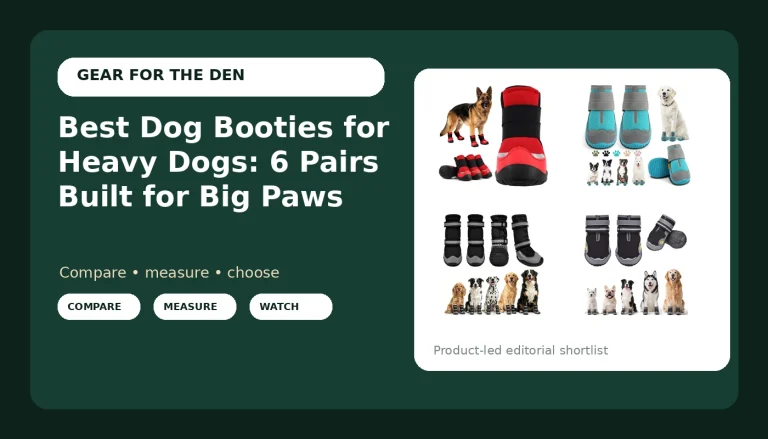
| Dimicoo Water-Resistant Dog Boots for Medium Large Dogs,Non-Slip Dog Shoes for Winter Snow,Lightweight Paw Protector for Cold Pavement,Soft Dog Booties for Outdoor Walking Indoor Hardfloors | A dog that needs a light, low-effort first pair | Described as water-resistant, non-slip, lightweight and soft, with indoor hard floors named in the listing |
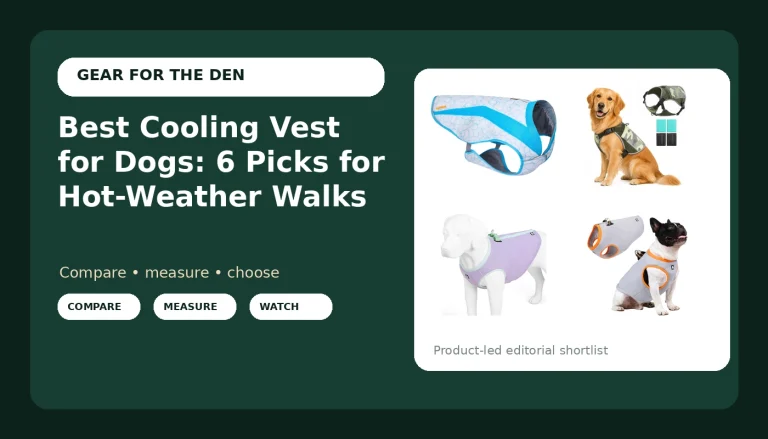
| XSY&G Dog Shoes for Hot Pavement, Dog Snow Booties for Medium to Large Dogs | Warm-weather walks where pavement heat is the issue | Sold specifically for hot pavement and listed for medium to large dogs |
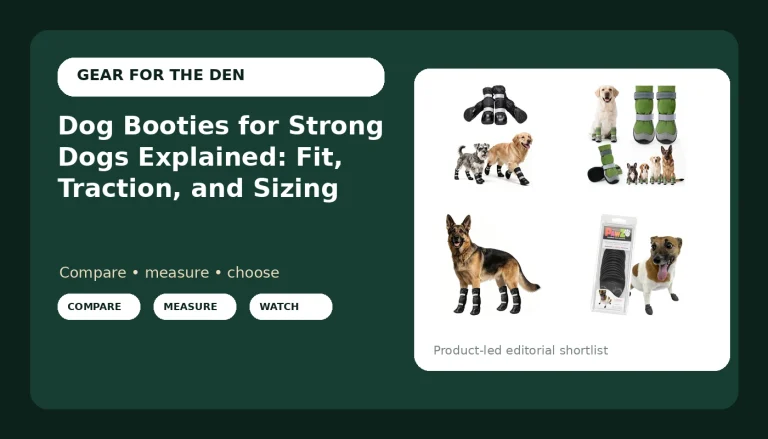
| Dog Boots for Large Dogs, Medium Dog Boots & Paw Protectors for Hardwood Floors, Outdoor Dog Booties for Hot Pavement Winter Snow Hiking, Dog Shoes with Reflective Strips | Owners who want one set to cover floors, pavement, snow and hiking | Reflective strips plus a listing that spans hardwood floors, hot pavement and winter snow |
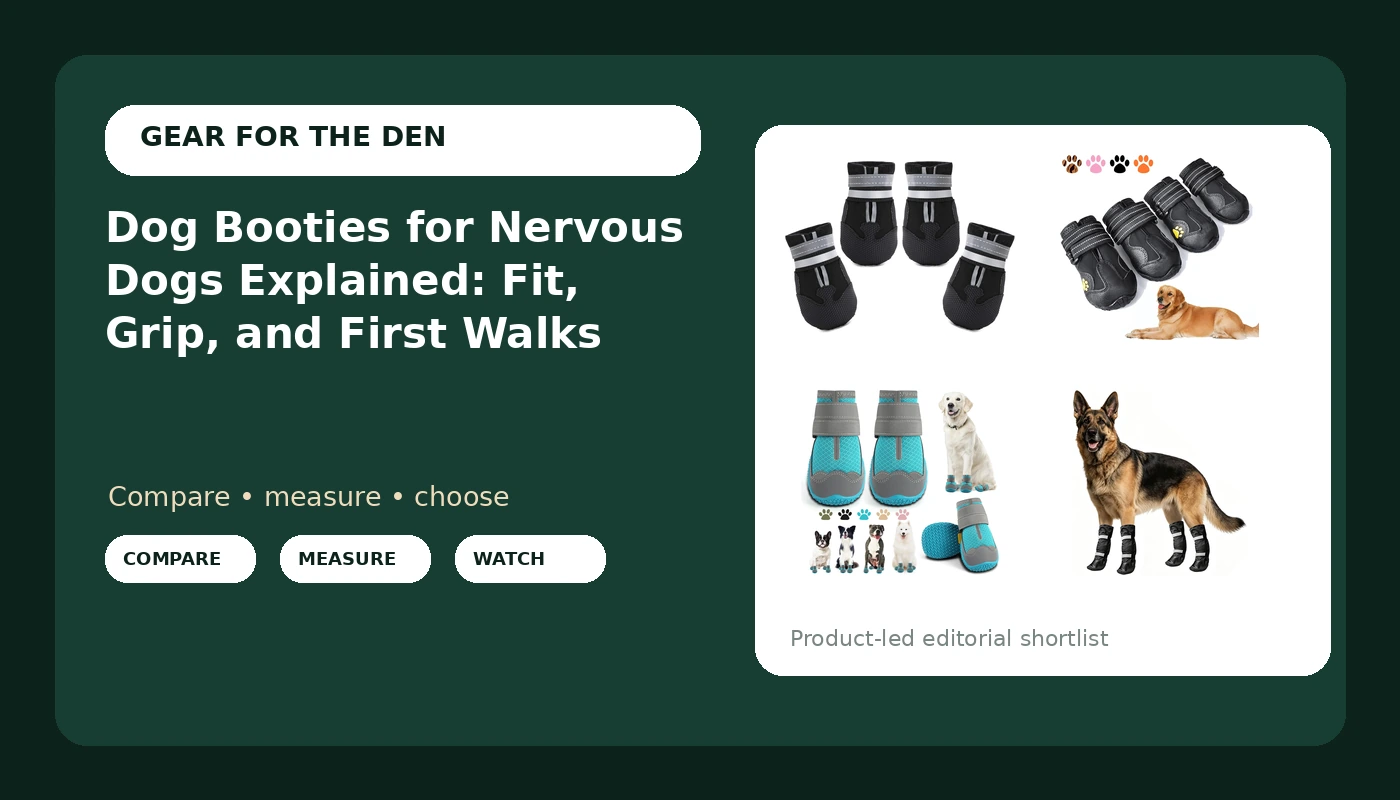
| NAMSAN Winter Dog Boots for Large Dogs, 4 PCS Size #5(XL), Long Legged Anti-Slip Dog Rain Booties with Reflective Magic Strips, Waterproof Outdoor Warm Dog Shoes for Snowfield Paw Protection, Black | Deep winter and wet snow with a large dog | Long-legged waterproof build, reflective magic strips, and a four-piece set in a size listed as #5 (XL) |
The gentle starter pair: Dimicoo Water-Resistant Dog Boots
The trade-off with a light, flexible bootie is protection depth. Water-resistant fabric handles wet grass, slush and a rinsed-off paw, but that is not the same as a fully waterproof tall boot standing in snowdrift. The upside for a nervous dog is real: soft material folds easily and the boot is light enough that a dog picking up its feet for the first time is less likely to shake it off mid-step. The listing also mentions indoor hard floors, which is a detail worth using. A dog that slips on hardwood can learn that foot coverings mean better grip rather than a strange weight, and you can teach that lesson in a hallway where nothing is at stake. If your dog is already confident outdoors, you may not need this first step at all.
The hot-pavement pair: XSY&G Dog Shoes
Hot pavement is a surface problem before it is a shoe problem, and it is worth testing the ground with the back of your hand before you commit to any boot. This listing sits in the roundup because it is sold for exactly that job, so the description, the sizing and the sole are aimed at warm-weather walking rather than snow. The trade-off is the obvious one: a warm-weather shoe gives up the shaft height and insulation you would want in deep winter. If your walks are on asphalt in July, that is the right compromise. If your concern is January slush, it is the wrong tool, and no amount of strap adjusting will change that.
The all-season set: Dog Boots for Large Dogs with Reflective Strips
This is the option that tries to cover the most ground in one purchase, and reflective strips are a genuinely useful detail for dawn walks when drivers are least likely to notice a dog at the curb. The trade-off is that a boot marketed across every season is rarely the specialist for one of them. It is a reasonable pick if you want a single set to learn on rather than buying a warm-weather pair now and a snow pair in three months, but check the closure design against your dog's tolerance before you commit. A nervous dog still cares far more about how many straps it has to hold still for than about how many seasons the box promises.
The deep-winter pair: NAMSAN Winter Dog Boots
Long shafts and waterproof construction are exactly what you want in wet snow, and they are also the hardest thing to introduce to a dog that dislikes having its legs handled. The reflective magic strip closure is a practical choice for a wriggling dog, since a hook-and-loop style strip can be opened and reseated quickly instead of threaded. The honest trade-off is that this is a winter specialist, not a first pair for a dog that has never worn anything on its feet. If your dog already tolerates a smaller bootie, the extra coverage in snow and slush is worth the taller profile. If it does not, start smaller and come back to this one next season.
Prices and availability may change. Product images, names, and retailer links are matched to verified listings. No current price, rating, stock status, or measured result is stated here without current evidence.
What dog booties for nervous dogs actually need from a pair
A dog notices four things about a boot before it notices anything else: the weight on the paw, the pressure of the closure around the ankle, the stiffness of the sole under the pad, and the sound the sole makes when it lands on a hard floor. Marketing talks about weather. A nervous dog is usually reacting to one of those four.
Closure count is the first filter. One wide strap, or a single magic strip, is a smaller ask than three or four points of contact. If a listing shows a strap crossing the top of the foot and a second circling the ankle, that is a standard layout and it is manageable with practice. If it shows laces plus two straps plus a drawcord, budget a longer introduction.
Shaft height is the second. A short cuff that clears the dewclaw is easier to pull on and less likely to rub. A tall, long-legged boot protects more of the leg in rain and snow, and it also takes more handling to seat correctly, which matters when the dog is already unsure.
Sole stiffness is the third. A flexible sole bends with the paw, which feels more like walking and less like standing on a platform. A stiffer traction sole with deeper lugs grips better on ice and slick rock, but it changes the dog's stride more, and some dogs notice that immediately.
The fourth is boot sizing. Charts differ between brands, and a measurement taken on a standing paw can sit half a size away from one taken on a lifted paw. Measure on two different days before ordering, and treat the listed size as a starting point rather than a promise.
There is no universal ideal dog booties for nervous dogs design, but the pairs that actually get worn tend to share a pattern: fewer closures, a shaft that clears the dewclaw, and a sole the dog can still feel the ground through. Everything else is a weather decision.
One more variable sits outside the boot entirely. A harness with a front clip and a chest strap reduces forward pull, which keeps a dog from loading its front feet hard, and a shorter leash length in the early sessions keeps the dog close enough that you can steady it when a boot starts to twist. Those are not boot features, but they change how a first walk goes. You can read more about fitting a front-clip harness if pulling is part of the picture.
How to introduce booties: a five-step plan
The goal of the first week is not a full walk in four boots. It is a dog that stands still while you handle its feet. Work at the dog's pace, keep sessions short, and stop while the dog is still relaxed rather than pushing until it pulls away.
- Measure both front paws while the dog is standing on a hard floor, and write the numbers down before you order anything.
- Order one set in the size that matches the wider paw, and read the listing's return terms before the first outdoor walk.
- Put a single boot on indoors, pair it immediately with a treat or a favourite toy, and take it off after a few seconds.
- Repeat over three or four short sessions, then add a second boot and let the dog take a few steps on carpet.
- Build to all four boots indoors, then a driveway, then a short familiar route before you attempt a full walk.
First-walk routine for a dog that dislikes handling
- Keep the first outdoor session to a few minutes and end it while the dog is still calm, even if that means turning around at the end of the driveway.
- Use a shorter leash length at first so you can reach down and straighten a twisted boot without a tug-of-war.
- Check under every strap after each walk for rubbing, red marks or trapped grit, and adjust the closure rather than ignoring it.
- Test the pavement yourself by holding the back of your hand against it for five seconds, and shift the walk to grass or shade if it is uncomfortable for you.
- For hot-weather walking, look for a breathable upper or a cooling fabric option in the listing, since heat build-up inside a closed boot is a real concern.
- If you use a tracker, remember that gps range and battery life vary by model and by the mode you run it in, so check the current listing instead of assuming a figure.
Which option should you choose?
Choose the Dimicoo Water-Resistant Dog Boots for Medium Large Dogs,Non-Slip Dog Shoes for Winter Snow,Lightweight Paw Protector for Cold Pavement,Soft Dog Booties for Outdoor Walking Indoor Hardfloors when your dog has never worn foot coverings and you want the lightest, softest starting point for cold pavement and indoor floors. Choose the XSY&G Dog Shoes for Hot Pavement, Dog Snow Booties for Medium to Large Dogs when summer asphalt is the specific problem you are solving. Choose the Dog Boots for Large Dogs, Medium Dog Boots & Paw Protectors for Hardwood Floors, Outdoor Dog Booties for Hot Pavement Winter Snow Hiking, Dog Shoes with Reflective Strips when you want one set that can handle floors, pavement, snow and low-light walks without buying twice. Choose the NAMSAN Winter Dog Boots for Large Dogs, 4 PCS Size #5(XL), Long Legged Anti-Slip Dog Rain Booties with Reflective Magic Strips, Waterproof Outdoor Warm Dog Shoes for Snowfield Paw Protection, Black when your dog is already comfortable in booties and you need tall, waterproof coverage for wet snow.
Choosing the correct dog booties for nervous dogs is really about choosing the smallest change your dog will accept, and then matching that to the surface under its paws. The listings here tell you what each product is for and how it closes. They do not tell you how your individual dog will react, and no product page can.
The bottom line
The short version: dog booties for nervous dogs are a comfort and fit exercise first and a weather purchase second. Count the closures, check the shaft height against the dewclaw, measure a standing paw twice, and introduce one boot at a time with something good attached to it. If you get that sequence right, the season-specific choice becomes easy: a light starter pair for the first lessons, a hot-pavement pair for summer walks, an all-season set for mixed surfaces and low light, and a tall waterproof pair once your dog already trusts the idea of wearing anything at all. This dog booties for nervous dogs explained walkthrough deliberately avoids ranking products as best, because the dog in front of you is the only test that counts.