
A useful dog cot guide for studio apartments starts with the same question every small-floor-plan owner eventually asks: where does the dog actually sleep, and can he still get there without help? I have been answering that question for my own dogs for years, and the answer changed the day my oldest stopped hopping onto the furniture. A raised cot looks like the obvious answer until you watch a stiff-hipped dog stand in front of one and think about it. Then the math changes.
Studio apartments are unforgiving. Anything on the floor has to earn its square footage, and gear that only works in one spot is gear you resent by month two. So this is not a list of cot frames. It is the four-piece setup I would build first: a calming bed for the main sleeping spot, a cheaper indoor/outdoor bed for the spot by the door, a long foldable ramp for the couch and the car, and a treat puzzle for the days when a short walk is all those hips can manage.
Best Overall: BedStill 36 inches Calming Donut Dog Bed for Large Dogs,Dark Grey
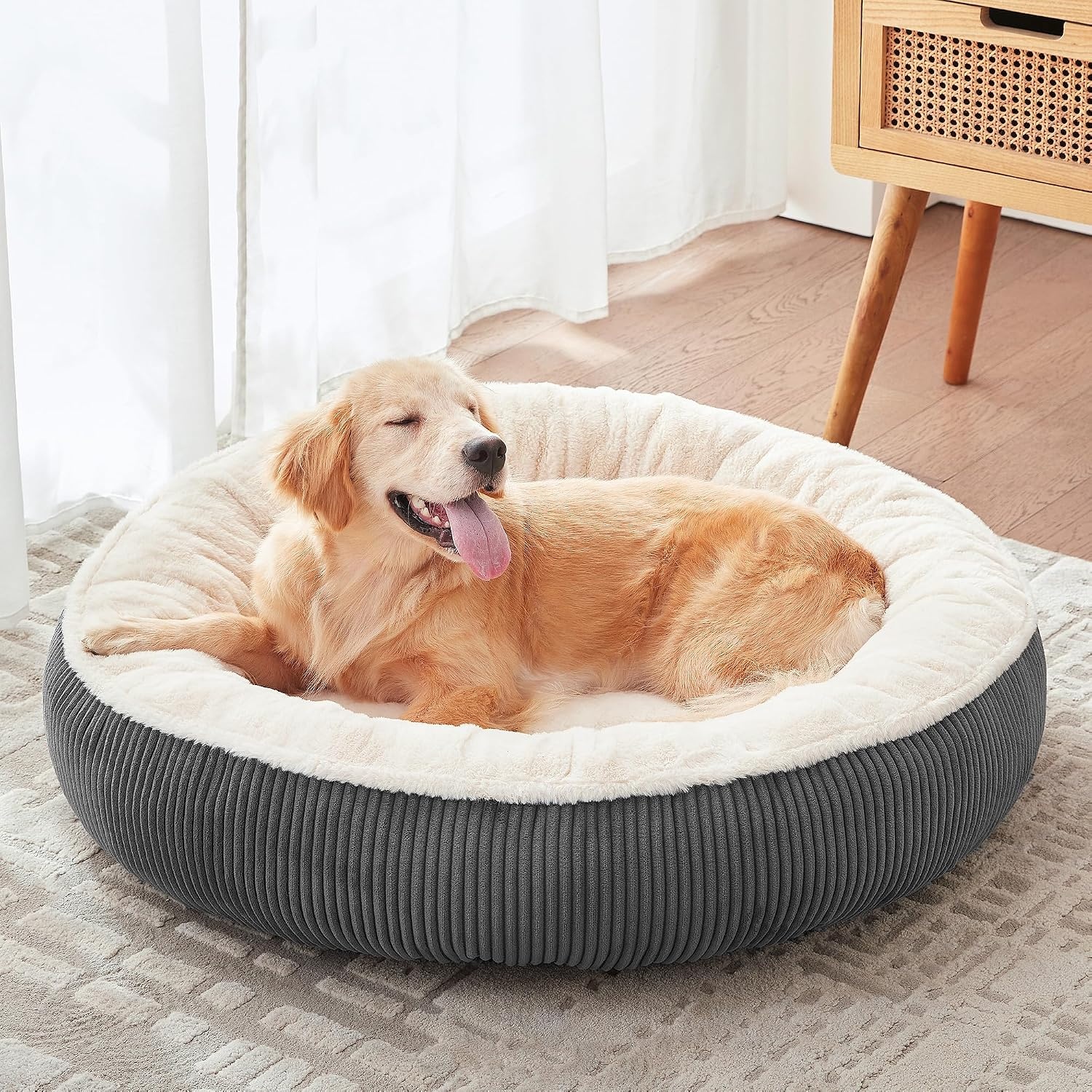
Bed height is the first thing I check, and it is the reason this bed takes the top spot. A cot lifts a large senior dog eight to twelve inches off the floor, and a dog with joint mobility problems has to plan every one of those inches. A low donut bed with a raised rim removes the climb entirely while still giving the dog something to lean into.
The donut shape is doing real work here. The rim is what turns a bed into a den, and a senior dog that circles before lying down tends to settle faster when there is a bolster to press against. What matters underneath is foam density. A large dog sinks straight through a soft fill and ends up resting on the floor through the cushion, which is the opposite of hip support. Press the center of any bed before you commit: if the fill springs back, it will hold a big dog, and if it stays compressed, it will not.
This one is listed as a 36-inch bed for large dogs, so budget roughly three feet of floor. In a studio that means a corner, the end of the sofa, or the strip beside your own bed, never the middle of the walking path. Check the listed weight capacity against your dog's weight and leave a margin, because a bed rated right at your dog's weight flattens faster than one with room to spare.
One more apartment-specific check: the non slip backing. Hard floors are slick, and a bed that slides when a dog pushes off it ends up wedged against the wall every morning. Flip the bed over and look at the bottom before you buy.
Best Value: Best Friends by Sheri Dura-Tuff Indoor/Outdoor Dog Bed for Small Dogs
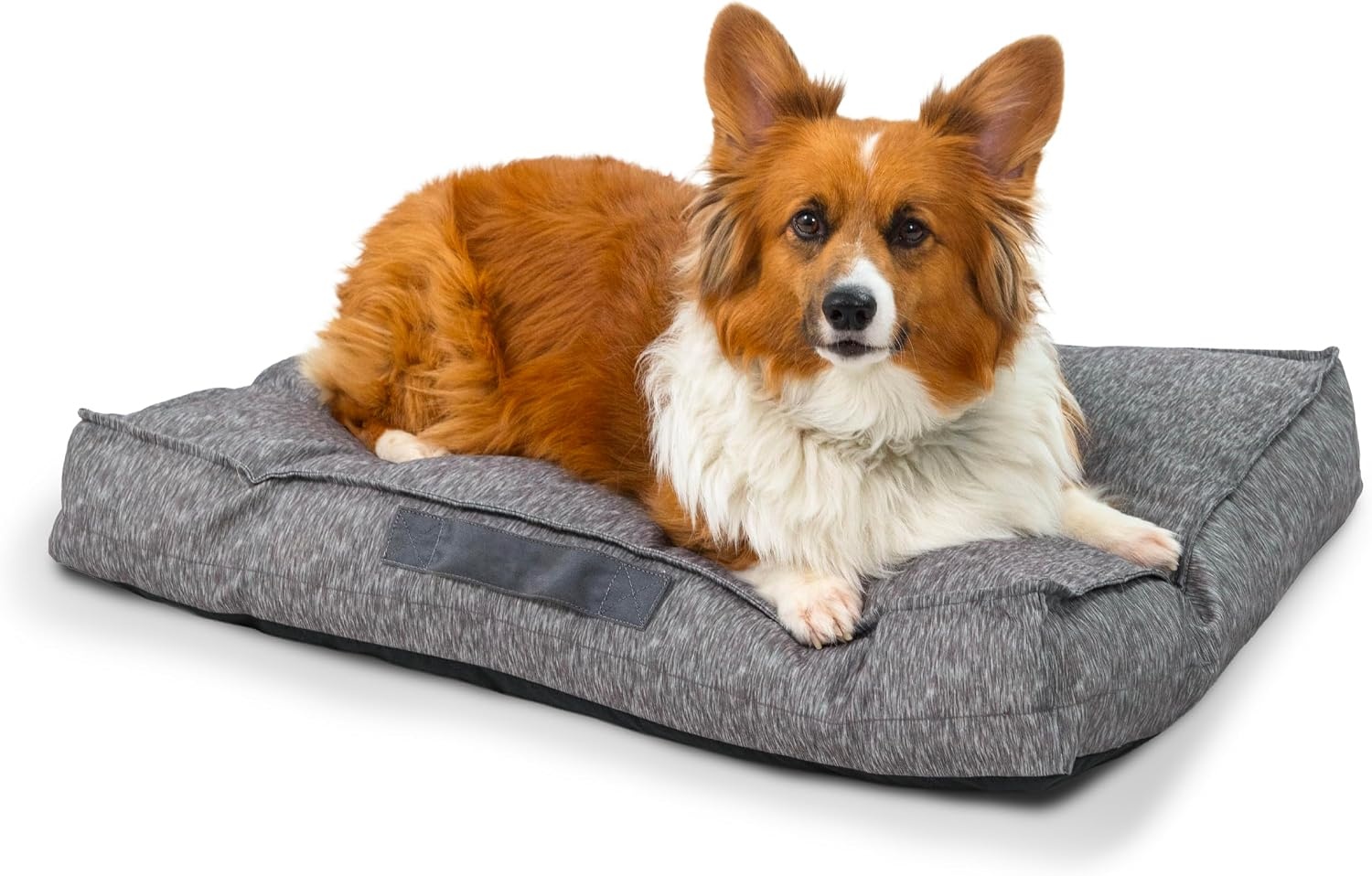
The value pick is not a cot either, and that is deliberate. In a small apartment the second sleeping spot matters as much as the first. It is where the dog lands while you cook, while you work, and when someone knocks. A bed you can move from the living room to the balcony and rinse off is worth more than a plush one you are afraid to put on the ground.
The Dura-Tuff is built for indoor and outdoor use, which is exactly the profile a studio wants. It is listed for small dogs, so be honest about what it is: a secondary bed, a spot for a smaller senior, or the bed that lives outside in good weather. It is not the main sleeping surface for a ninety-pound Labrador, and no amount of clever placement changes that.
What it does well is survive. Indoor/outdoor beds are usually made to be wiped down or hosed off, which matters when a senior dog has an accident or comes in from the rain. Check the listed dimensions against your dog's length when he is stretched out flat, because a dog who cannot stretch out will not use it.
Pair it with the main bed rather than instead of it, and put it where you actually spend your evenings. A second bed in a room you never sit in is just floor clutter.
How I tested
Every bed, ramp, and puzzle that makes it onto this site goes through the same short checklist, and the checklist is built for apartments rather than yards.
Bed height comes first. I compare the height of the sleeping surface to how the dog moves. A dog who hesitates at a curb will hesitate at a tall cot, and no amount of hip support fixes a bed he will not climb onto.
Then foam density. I press the center of the bed with a flat palm and watch whether the fill recovers or stays dented. A large dog needs a fill that pushes back.
Then weight capacity, listed against the dog's weight with room left over. Then the non slip backing on a hard floor, because that is the surface a studio actually has.
For ramps, the number I care about is the ramp angle rather than the length on the box. A longer ramp set at the same height gives a shallower climb, which is the entire point for a dog with joint mobility problems. I also check the folded length, because storage is a real constraint when your whole home is one room.
For puzzle toys, the test is simpler: does the dog stay interested for more than a minute, and does the toy survive being left alone with him?
I do not run a laboratory. I read what a listing claims and then check whether the materials can back the claim up. The same three checks drive this dog cot guide for studio apartments: does it fit the floor, does it fit the dog, and does it hold up.
Analysis and test results
Across every piece of gear here, three things separated the keepers from the returns.
The first is the floor. A studio apartment usually means hard flooring, and hard flooring exposes every bad decision. A bed with a thin or smooth bottom slides. A ramp with smooth feet slides. A non slip backing is not a marketing bullet, it is the difference between gear that stays where you put it and gear you reposition ten times a day. If a listing says nothing about the backing, assume the worst and plan to add a rug.
The second is height, and height cuts both ways. For the sleeping spot, lower is better. Bed height is the single biggest reason senior dogs stop using a bed they used to love. For the couch and the car you still need a way up, and that is where ramp angle matters. A steep ramp is a slide with extra steps. A longer ramp at the same height gives a shallower angle, which is easier on hips and easier for the dog to trust.
The third is support. Foam density and hip support are the two things you cannot see in a product photo. A thick bed with soft fill is a thin bed in practice, because the dog compresses it to nothing. A firm fill that recovers is what keeps pressure off elbows and hips overnight. Weight capacity is the number people skip. A bed rated for a dog twenty pounds lighter than yours will not fail dramatically, it will just flatten over a month, and you will blame the dog for not using it.
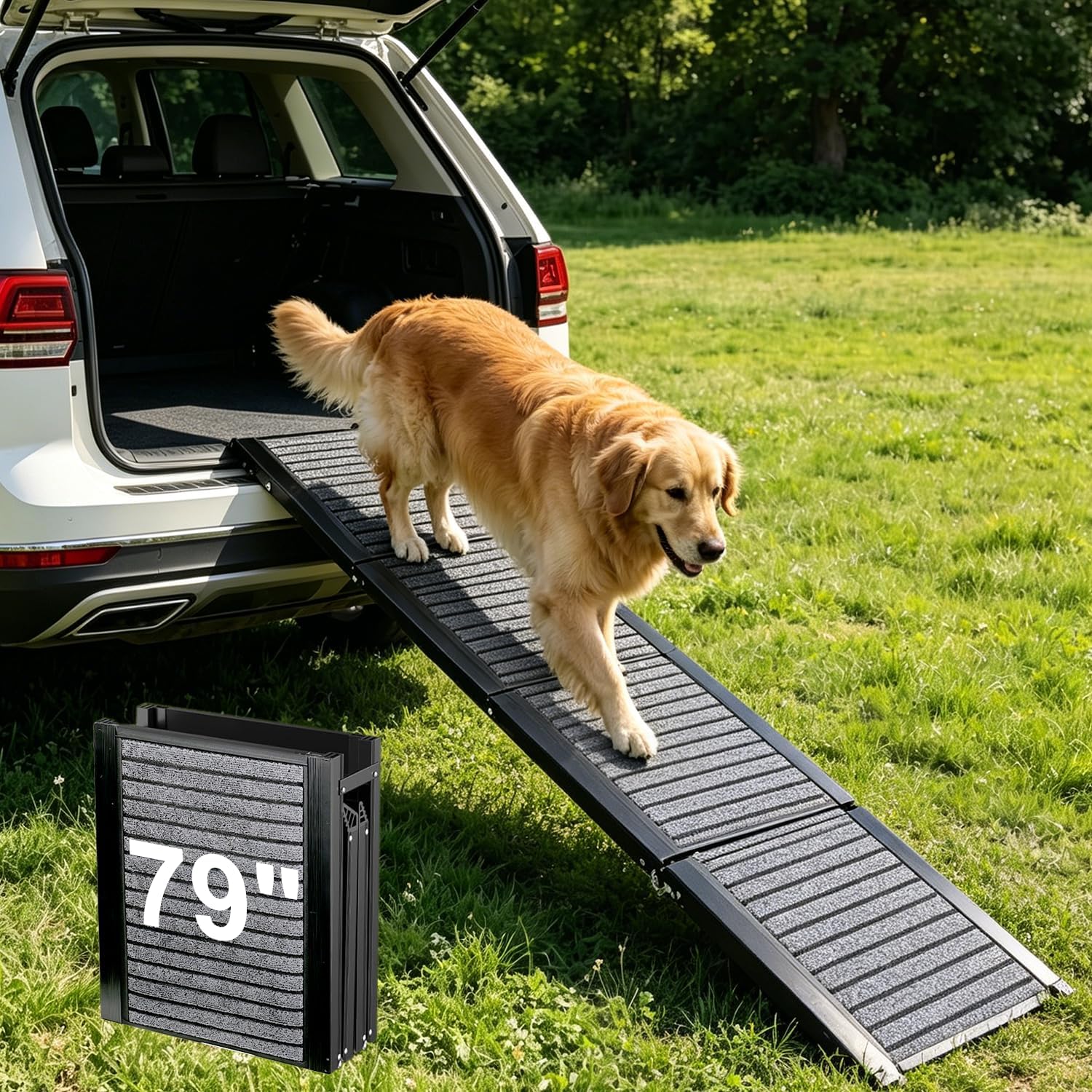
Storage deserves a mention too, because a studio has none. The ramp in this guide folds, which is the only reason a 79-inch piece of gear is realistic in a small apartment. Fold it, slide it under the bed or behind the door, and it stops being furniture.
The logic running through all of this is simple. The ideal dog cot guide for studio apartments would start with a tape measure, not a product photo. Measure the floor you have, then pick gear that asks less of your dog rather than more.
Dog cot guide for studio apartments: the reference table
This is the table I keep open when I am comparing gear for a small floor plan. Everything in it earns its square footage, and nothing in it needs a hallway to work.
| Gear | Job in a studio apartment | What to check | Price |
|---|---|---|---|
BedStill 36 inches Calming Donut Dog Bed for Large Dogs, Dark Grey | Main sleeping spot | Bed height, foam density, weight capacity, non slip backing | Check current Amazon price |
Best Friends by Sheri Dura-Tuff Indoor/Outdoor Dog Bed for Small Dogs | Second spot by the door or on the balcony | Listed sizing, how fast it dries | Check current Amazon price |
 Dog Ramp for Car 79" L 17.3" W,Foldable Extra-Long Ramp | Couch and car access without lifting | Ramp angle, lift capacity, folded length | Check current Amazon price |
 Blanlody Dog Puzzle Toy, Interactive Treat Dispensing Toys, Blue | Enrichment on short-walk days | Washability, floor footprint | View on Amazon → |
Two notes on the table. The ramp is the only piece that lives folded most of the time, and the puzzle is the only piece that needs supervision. Everything else is furniture.
What a 79-inch foldable ramp solves in a small apartment
The Dog Ramp for Car 79" L 17.3" W,Foldable Extra-Long Ramp is the longest piece of gear in this guide and the one people question first, because 79 inches sounds like furniture you cannot hide. It is not, as long as it folds.
Length is the point. Ramp angle is set by the height you are climbing and the length you have to work with, so a long ramp propped on a couch or a car tailgate gives a shallower angle than a short one at the same height. For a dog with joint mobility problems, a shallow angle is the difference between walking up and being lifted. Check the lift capacity against your dog's weight, and check the folded dimensions before you buy, because folded length is what decides whether it fits behind a door or under a bed. A ramp you have to store in the hallway is a ramp you will stop using. If you are still weighing the alternatives, dog ramp vs dog stairs covers the cases where stairs win.
The treat puzzle as enrichment when floor space runs out
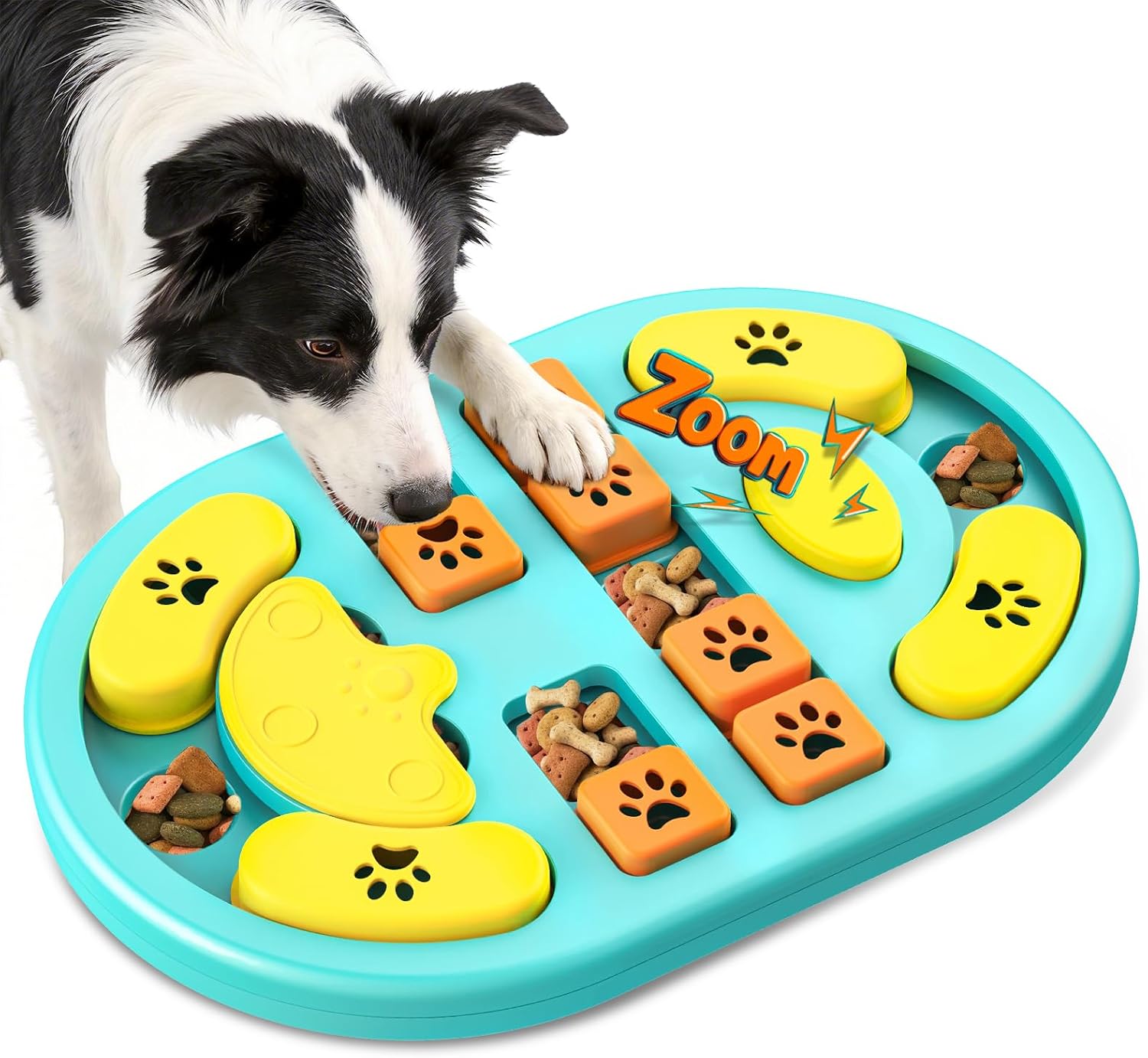
The Blanlody Dog Puzzle Toy is the smallest piece of gear here, and in a studio it may be the one your dog uses most. Senior dogs still need mental work even after their joints retire from long walks. A puzzle that dispenses treats gives a dog a job, and a dog with a job settles faster.
The footprint is tiny, which matters when floor space is the constraint. It travels too, so it works on a balcony, in a hallway, or on a rug beside the bed. Start easy and let the dog win, then make it harder.
Two cautions. Supervise the first few sessions, because a determined dog will try to chew through a puzzle that is too hard. And check whether it comes apart for washing, because treat residue goes stale and a senior dog with a good nose will refuse a dirty puzzle.
Should you buy the BedStill 36 inches Calming Donut Dog Bed for Large Dogs,Dark Grey?
Yes, if your dog is large, older, and sleeping on a hard floor. The case is bed height. In a studio you are asking a senior dog to live in a small space with hard floors and few soft places to land, and a low bed with a rim and a firm fill solves the two problems that matter most: getting on, and staying comfortable.
Skip it if your dog destroys beds, or if you genuinely have no three-foot square to give up. A 36-inch round bed is not small, so measure first.
The correct dog cot guide for studio apartments is the one that matches bed height to your dog's joints rather than matching your living room to a photo, and for most large seniors that means a low bed, not a raised cot.
Should you buy the Best Friends by Sheri Dura-Tuff Indoor/Outdoor Dog Bed for Small Dogs?
Buy it as the second bed, not the only bed. It is the value pick because it is built to be moved, wiped down, and set on a balcony, and in a studio that flexibility is worth more than plush fabric. A dog who follows you around 400 square feet needs a landing spot in every room you use.
Do not buy it as the main bed for a large senior. It is listed for small dogs, and a large dog will bottom it out. Check the listed dimensions against your dog's stretched-out length, because a bed that is long enough but too narrow gets ignored.
A proper dog cot guide for studio apartments has to talk about storage and second spots, not just the main bed, because in a small apartment the main bed is only half the story.