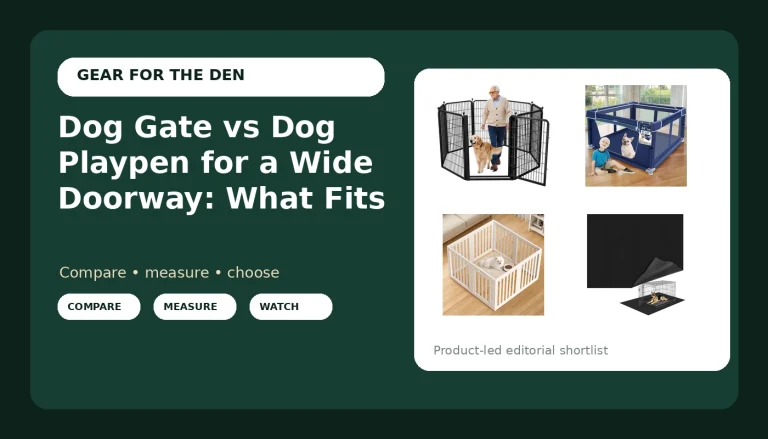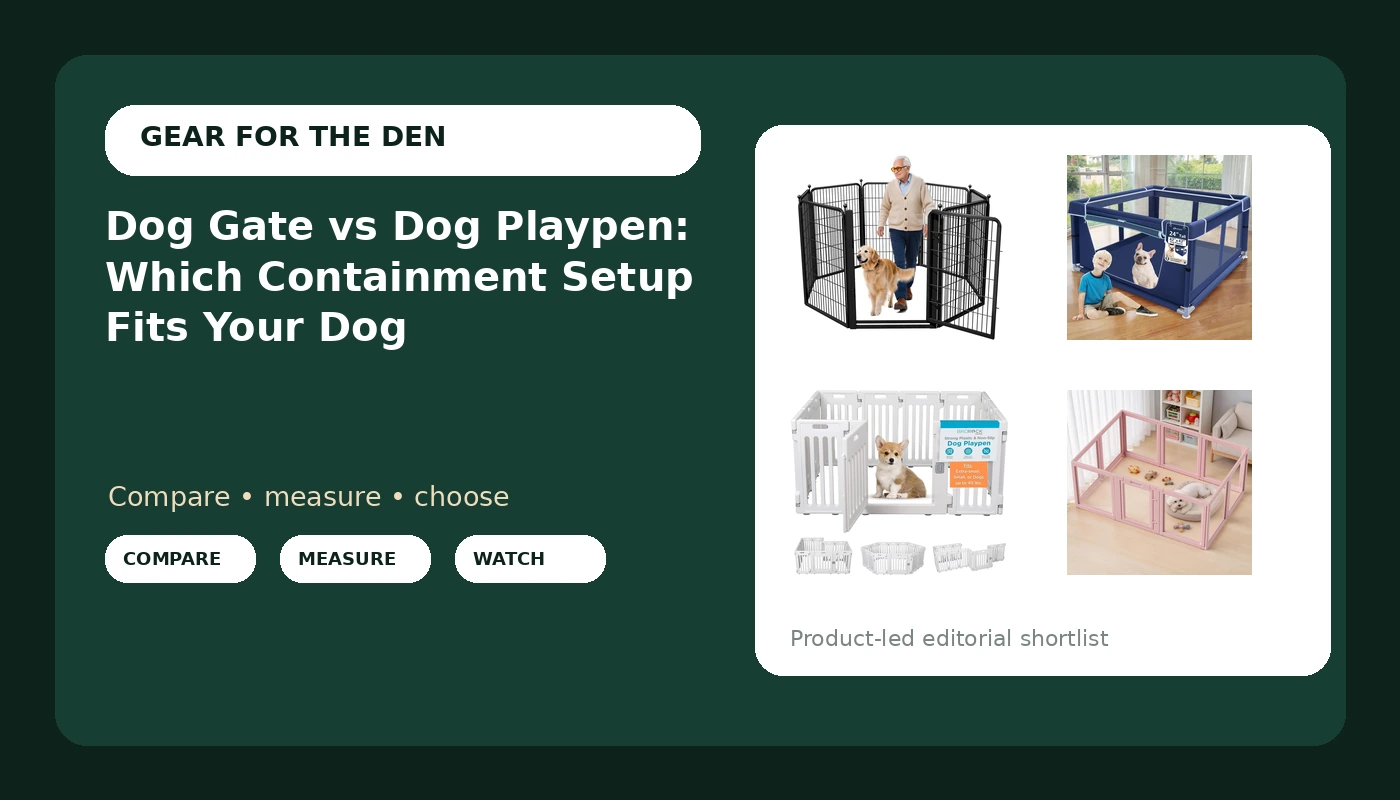
The question of dog gate vs dog playpen shows up in every containment conversation I have, and it usually arrives with a photo of a chewed baseboard attached. The two products sit on the same shelf, they cost similar money, and they solve genuinely different problems. A gate divides the house you already have. A pen builds a small room inside it. Choose the wrong one and you spend the next six months stepping around hardware that does not match your floor plan, your dog's climbing habits, or the way you actually use the room. The choice is not about which product is better. It is about which job you are hiring for.
For most homes the honest answer is that you want a pen for the dog and a gate for the house, because they do different jobs. If you only want to buy once, the Jhsomdr 8-panel pen with its extra-wide gate is the closest thing here to a hybrid, while the XVISHX fabric pen is the value pick for puppies and small dogs who mainly need a soft-sided boundary indoors.
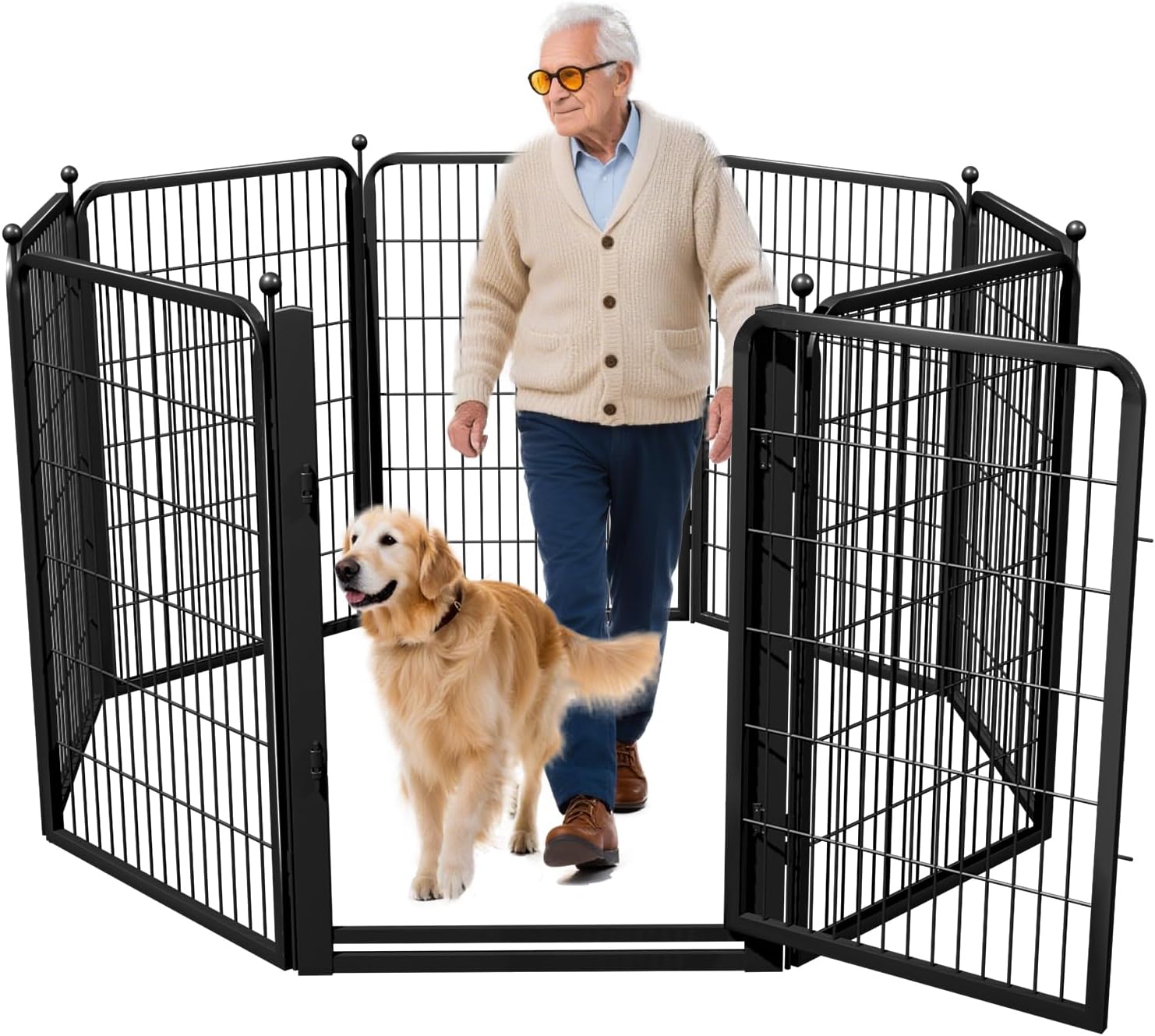
Jhsomdr Dog Playpen, 40 inch 8 Panels Dog Fence with Extra Wide Gate
Tall panels, eight of them, plus a gate wide enough to walk through with a laundry basket
Heavier and more industrial looking than fabric or acrylic
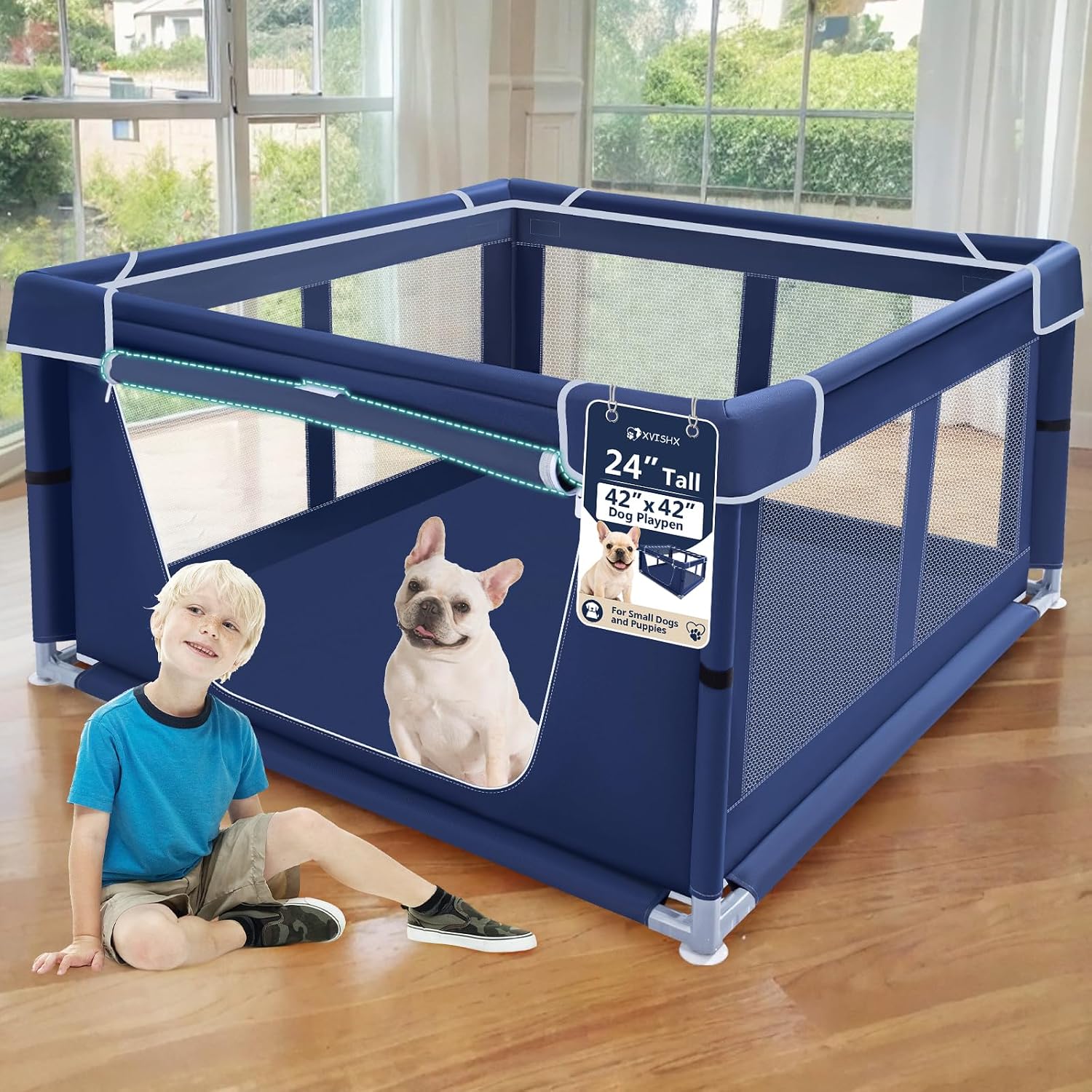
XVISHX 42×42 Inches Puppy Playpen with Gate
Soft fabric walls with nylon mesh, folds flat, sized for puppies and small dogs
Not a barrier for a determined chewer or a climber
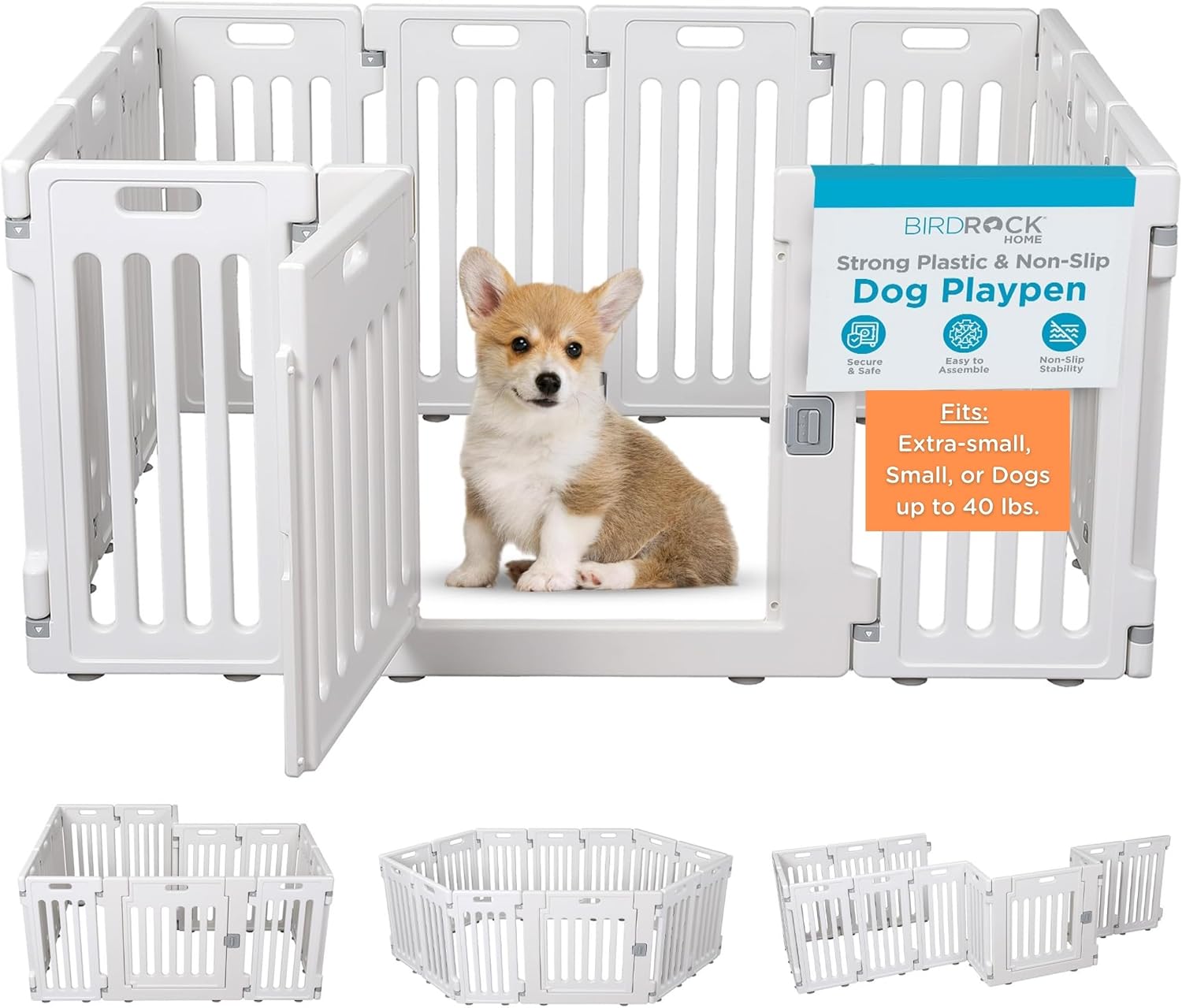
Internet's Best Dog Playpen with Lockable Door, White
Long 190-inch run and a lockable door that stays shut
The low 25.6-inch dimension limits which dogs it holds
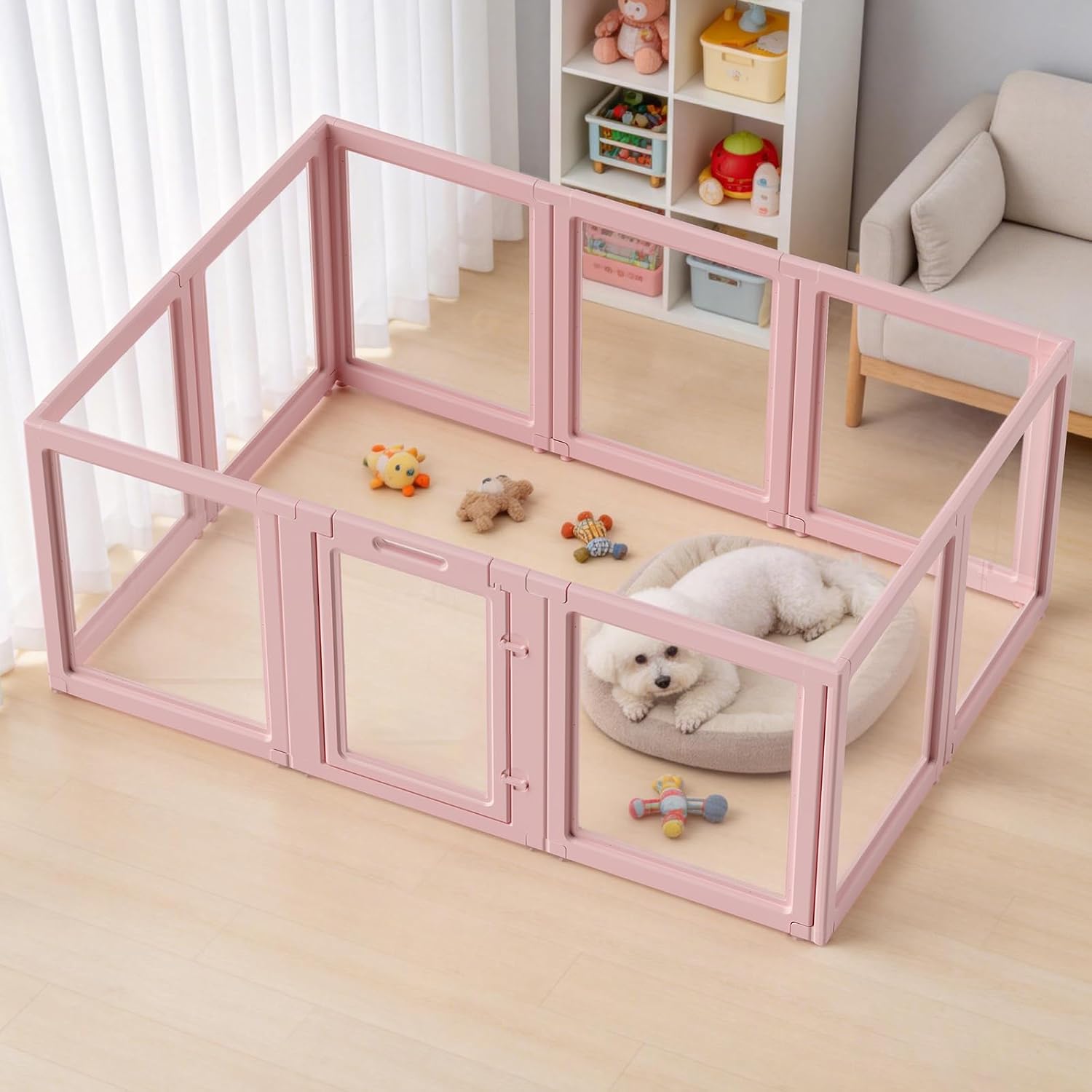
LoveTail Acrylic Dog Playpen Indoor, Pink, 10 Panels
Clear acrylic panels that look like furniture and wipe clean
Ten panels take real floor space, and solid walls cut airflow
Prices and availability may change.
What actually changes in dog gate vs dog playpen setups
The difference between dog gate and dog playpen is structural, not cosmetic. A gate is fixed hardware. It mounts in a doorway, at the top or bottom of a staircase, or between two walls, and it controls movement from one zone of the house to another. A pen is freestanding. It sits on the floor, its panel count and shape determine its footprint, and it creates an enclosure that exists whether or not there is a doorway nearby.
That one difference drives everything else. Gates are semi-permanent, so they need a mounting surface that survives hardware and an opening width that matches the frame. Pens are portable, so they need floor space and a dog who accepts a boundary they can see. A gate keeps a dog out of the kitchen while you cook. A pen keeps a puppy in one place while you shower. Most homes with a dog under two years old eventually want both, and the dog gate vs dog playpen question is really a question about which one you buy first.
There is also a safety angle that gets buried in listings. A gate at the top of stairs is a fall-prevention device, and a pen is not. No pen, however well built, does the job of a properly mounted stair gate, and no gate does the job of a pen in the middle of an open-plan living room. If you have stairs and a puppy, the gate comes first.
The measurements that decide it
If you have been reading dog playpen vs dog gate listings and they all sound identical, that is because the useful specs are buried under adjectives. Four numbers matter, and they matter more than color or brand.
Gate height is the first. A gate shorter than your dog's shoulder height at a full stretch is a suggestion rather than a barrier, and a dog who has learned to clear one gate will clear the next one. Bar spacing is the second. Wide spacing lets a determined small dog push through and lets a puppy wedge a head, so narrow spacing is the safer default for anything under about twenty pounds. Panel count is the third, and it decides whether a pen becomes a square, a rectangle, or a hallway-shaped run along a wall. Crate size is the fourth, because a pen meant to stand in for a crate for an hour at a time has to offer at least the room a crate would.
Then there is the footprint math nobody does before ordering. Eight panels at 40 inches tall do not fit the same corner as ten acrylic panels, and a 190-inch run is a wall-sized commitment. Measure the floor space you are willing to give up, subtract the furniture you cannot move, and buy for the space that is left rather than the space you wish you had.
The four pens in this comparison
Jhsomdr Dog Playpen, 40 inch 8 Panels Dog Fence with Extra Wide Gate
This is the pen in the group built like fencing rather than furniture. The listing describes 40-inch panels, eight of them, in a rustproof finish with an extra-wide gate and a no-trip design, and it is aimed at temporary containment and RV camping as much as at a living room corner. Eight panels at that height give you a footprint you can reshape into a square for a puppy or a long run across a patio, and the wide gate means you are not squeezing through a gap built for a terrier. The trade-offs are weight and visibility. Coated wire panels are heavier to shift around than fabric, and they do nothing to soften noise or sightlines in an apartment. Visit on Amazon
XVISHX 42×42 Inches Puppy Playpen with Gate
This one is 42 by 42 inches with a gate, thickened fabric walls, and high-strength nylon wire mesh, rated for indoor and outdoor use and sized for puppies or small dogs. The appeal is the soft wall. There are no bars to rattle and no exposed metal at nose height, and the footprint fits a corner of a bedroom. Fabric also means the pen folds flat and moves from room to room without a second person. What it does not do is stop a determined chewer or a jumper, and the mesh is the part that takes the abuse over time. Visit on Amazon
Internet's Best Dog Playpen with Lockable Door, White
White, listed at 190 by 25.6 inches, with a lockable door. The long dimension suggests a run you can shape along a wall, and the lockable door is the feature worth noting here, because a pen door that pops open under a shoulder is worse than no door at all. The 25.6-inch dimension is the one to check against your dog's shoulder height before you order. A low pen works beautifully for a young puppy and not at all for an adolescent husky. Visit on Amazon
LoveTail Acrylic Dog Playpen Indoor, Pink, 10 Panels
Ten acrylic panels in pink, for indoor use. Acrylic is the material that changed pens in the last few years. It gives clear sightlines, wipes clean, and reads as furniture rather than as a cage, which matters if the pen is going in a living room where a wire pen would be an eyesore. Ten panels is a lot of footprint, so this suits a dedicated puppy zone rather than a hallway. The trade-off is airflow and surface care. Solid panels block more air than mesh, and acrylic scratches, so a cover over this pen needs thought. Visit on Amazon
Fabric, acrylic, and coated wire: what the material changes
Material changes the daily experience more than panel count does, and it is the spec most buyers skim past.
Fabric pens are the ones you can wipe or unzip. The versions worth buying pair a washable fabric wall with a waterproof layer at the base, because puppies and accidents are the same conversation. Fabric is quiet, it folds flat, and it is light enough to carry up stairs. It is also the easiest material for a chewer to defeat.
Acrylic pens give you sightlines and a clean surface. Your dog can watch the room, which can reduce whining in a puppy who hates being alone and can increase it in a dog who wants to join the party. Acrylic is also the material most likely to be paired with a top panel, and if you go that route, cover ventilation stops being a detail and starts being the difference between a shaded den and a stuffy box.
Coated wire pens, like the tall panel option here, are the sturdiest of the three and the least pleasant to look at. They breathe well, they resist a leaner, and they take up the most visual space. Under any of them, mat thickness matters more than most people expect. A thin mat bunches at the corners and slides, while a thicker one stays put and gives an older dog something softer to stand on.
Trade-offs nobody mentions
Gates stay where you put them. That is the whole point and also the whole problem, because a gate you cannot remove in five seconds is a gate you will resent when you are carrying groceries. Pens fold, but they also collapse if a dog leans on them, and the cheap ones walk across a hard floor.
Line of sight cuts both ways. Acrylic and mesh let your dog see you, which is calming for some dogs and agitating for others. Wire panels give the most airflow and the least privacy. There is no universally right answer here, only a right answer for your dog's temperament.
Climbing is the failure mode that catches people off guard. Pens are climbable at the corners, and a pen with a low panel is a launch pad. Gates with vertical bars are harder to climb than pens with horizontal rails, which is one more reason the two products are not interchangeable.
Potty training is a management problem, not a hardware problem. A pen buys you a safe place to put a puppy between trips outside. It does not teach the puppy anything on its own, and a pen that is too large for a young puppy works against you, because the dog can soil one end and sleep in the other.
Storage is the quiet cost. A gate that is mounted is out of the way forever. A pen that comes down has to go somewhere, and a ten-panel acrylic pen does not tuck behind a sofa.
Deciding between a dog gate or dog playpen for your floor plan
Whether you choose a dog gate or dog playpen comes down to three questions, and most people can answer them in a minute.
Is there an opening that needs controlling, such as a doorway, a staircase, or the gap between a kitchen and a hallway? If yes, you need a gate, and no pen will substitute for it. Do you need to contain a dog in an open area while you work, shower, or answer the door? If yes, you need a pen, and no gate will substitute for that either. Is there a puppy under six months old in the house? If yes, buy the pen first, because the puppy needs a safe zone more than the house needs a barrier, then add a stair gate before the puppy figures out stairs.
For a single purchase that covers the most ground, the tall eight-panel pen with the wide gate is the most flexible item in this set. For a small dog and a small apartment, the fabric pen does the same job with less visual weight. For a dedicated indoor zone where looks matter, the acrylic pen is the one people actually leave up.
What to check before you order
Measure the opening before you buy a gate, and measure the corner before you buy a pen. A gate that is half an inch too narrow is a return, and a pen that is one panel too short leaves a gap a puppy will find.
Check bar spacing and gate height against your dog's current size and the size you expect in six months. Puppies grow into everything, and the pen that contains a ten-pound puppy in October may not contain the same dog in April. If the pen is standing in for a crate during the day, compare the interior space to the crate size your dog already uses, and size up rather than down.
Check the door width for your own body, not just the dog's. A gate you have to step over is a gate you will stop latching. Check the return window and the folded dimensions, because a pen that does not fit your storage closet becomes a permanent piece of furniture whether you want it or not.
What I'm watching next
Acrylic pens are the category to watch into 2027. The material solved the appearance problem that kept pens out of living rooms, and the next question is whether the price premium holds once more brands ship ten-panel sets. I am also watching fabric pens get taller walls, which would close the gap between the soft-sided pens that suit puppies and the taller wire pens that suit adolescents.
The one thing I do not expect to change is the split at the center of this comparison. Gates control the house. Pens control the dog. Buy for the job you actually have, and the dog gate vs dog playpen argument stops being an argument at all.