Ask ten pet owners what belongs under the sink and you will get ten different answers. The one argument that never settles is enzyme cleaner vs regular pet cleaner, and the reason it never settles is that each bottle is usually being asked to do a job the other one was built for. A regular cleaner lifts the dirt you can see. An enzyme product goes after the organic residue you cannot see but can smell three days later, when the humidity comes back and the spot starts announcing itself again. Confuse the two and you end up scrubbing the same square of carpet twice a week for a month.
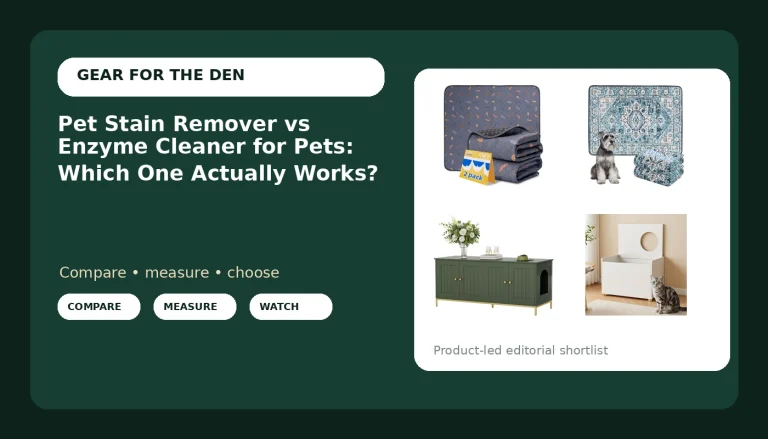
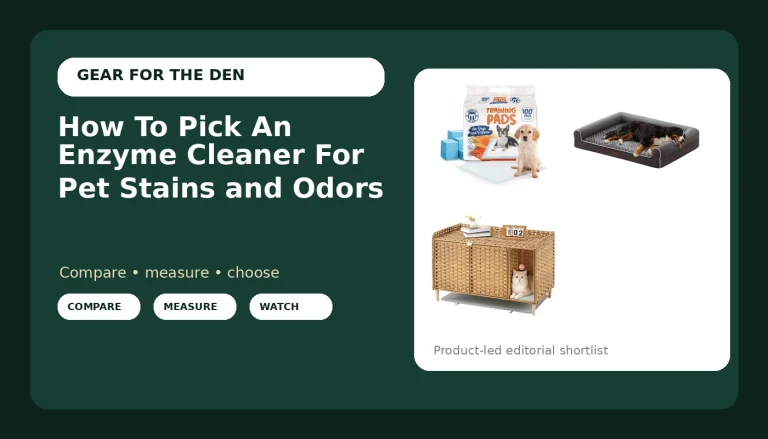
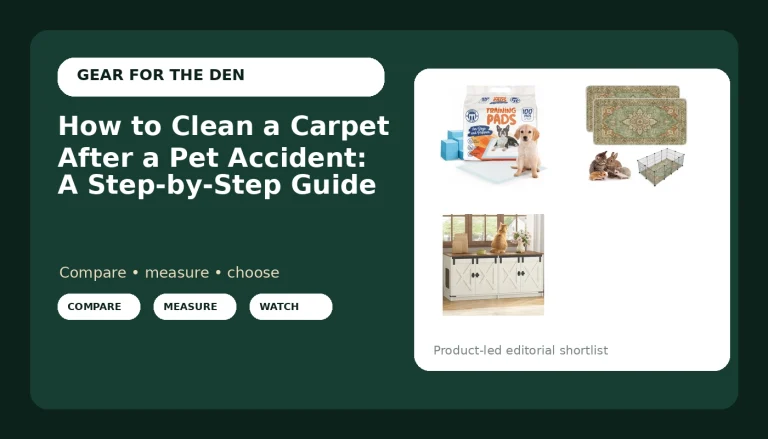
The hard part is rarely the scrubbing. It is the containment and the timing. A litter box that throws granules across a bathroom floor, a pad that leaks through to the carpet, a set of paws that crosses the kitchen before anyone notices: each one turns a five minute job into an hour of work. The four products below are the gear layer of that routine. None of them replaces a cleaner, and each one decides how much surface you have to clean in the first place.
The short version: reach for an enzyme product on anything porous that has already absorbed urine, and a regular cleaner on hard surfaces and fresh messes, because a detergent cannot break down the uric acid crystals that keep reactivating every time the air gets damp.
Here is the gear side of the same problem, compared on what it actually does for cleanup rather than what the label promises.
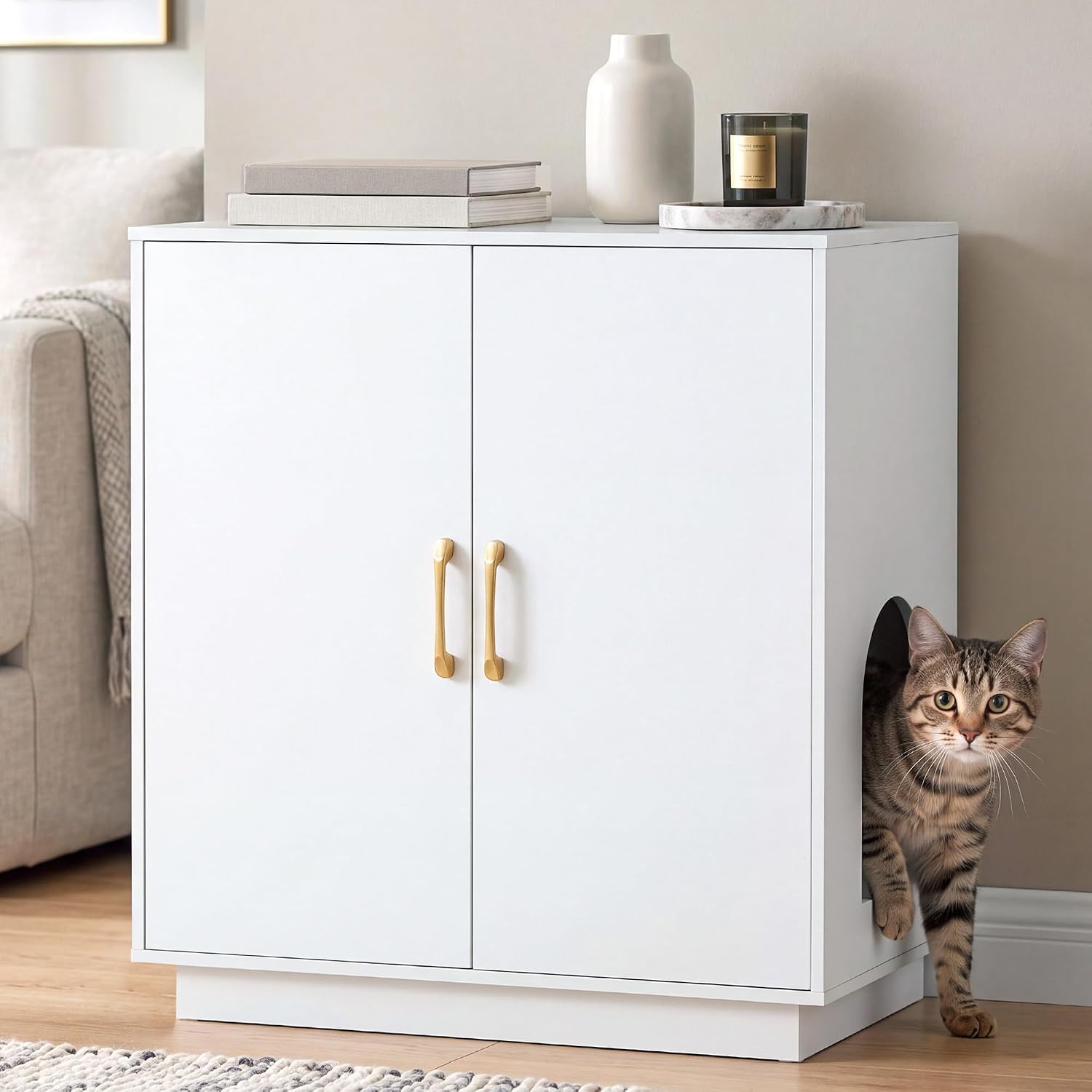
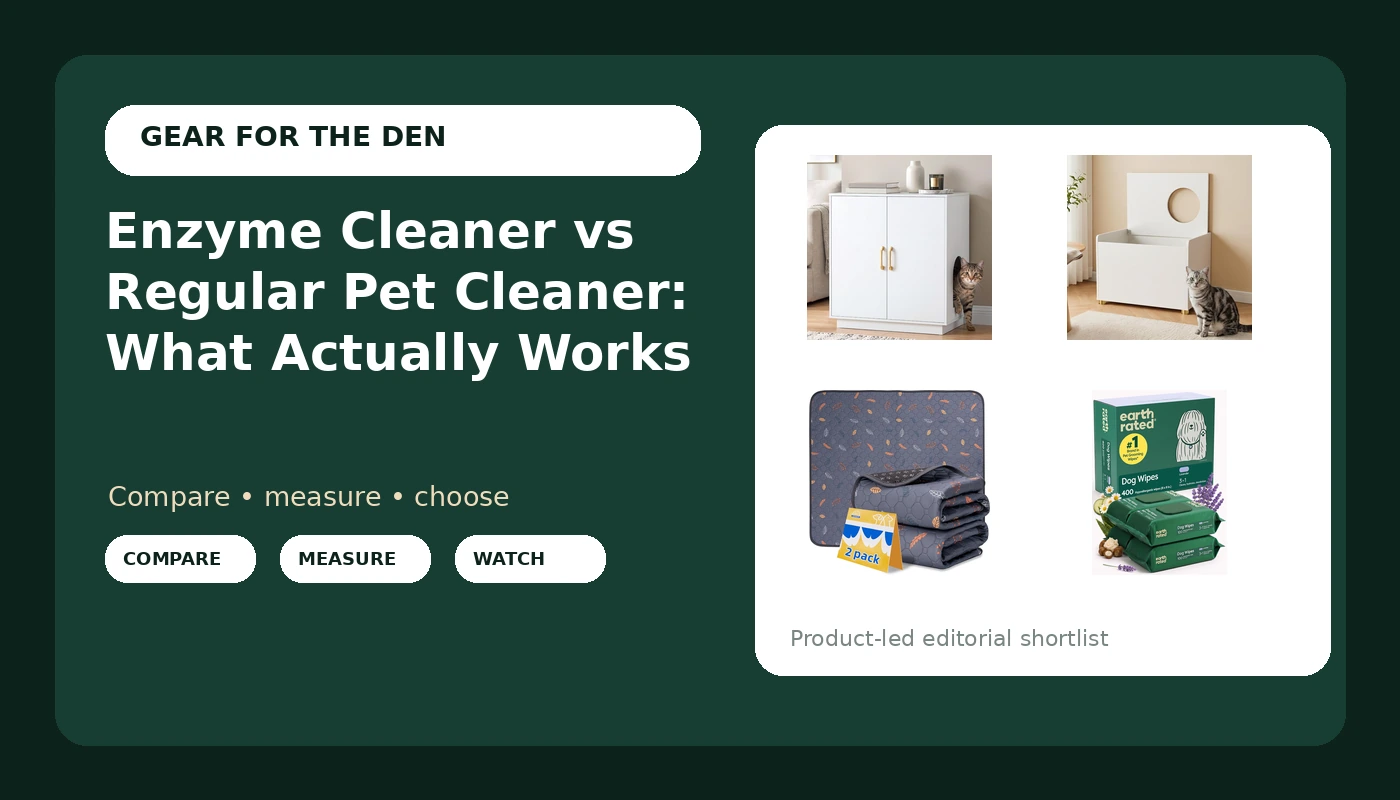
Gitelsnour 30.9'' Litter Box Enclosure Furniture, Hidden Storage, CLB003WT
Puts a physical boundary around the litter zone and hides the box behind furniture, so scatter stays in one room and the cleanup happens on a schedule you set
It hides the smell from you as well as from guests; if the box inside is not scooped often, the cabinet holds the odor instead of solving it
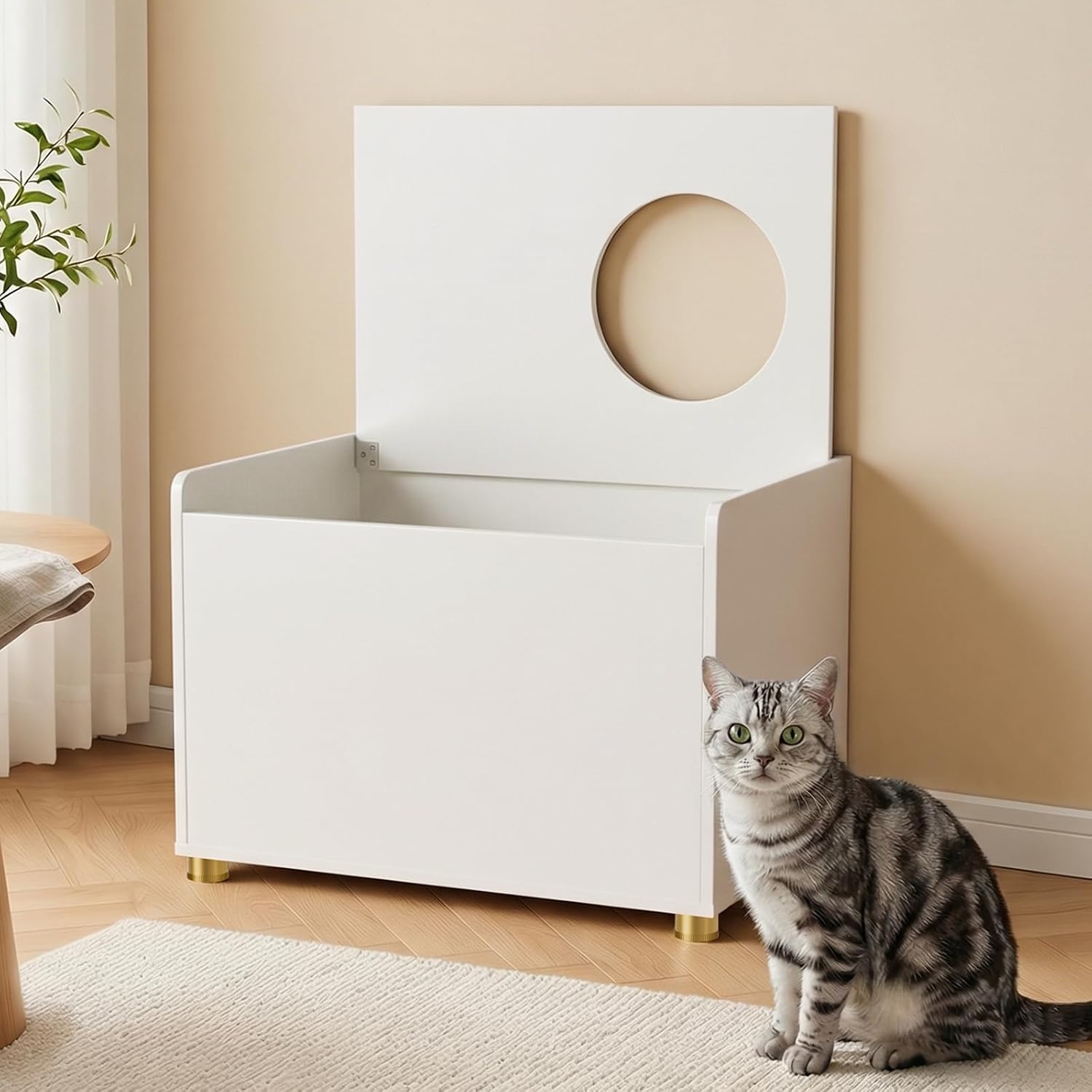
Amunrbrek Top Entry Litter Box Enclosure, Flip Top with Scratch Mat, White
Top entry makes the cat leave upward, which cuts how much litter reaches the floor, and the scratch mat catches what the paws carry out
Top entry is a real obstacle for senior cats, arthritic cats, and small kittens, so it only works if every cat in the house will use it
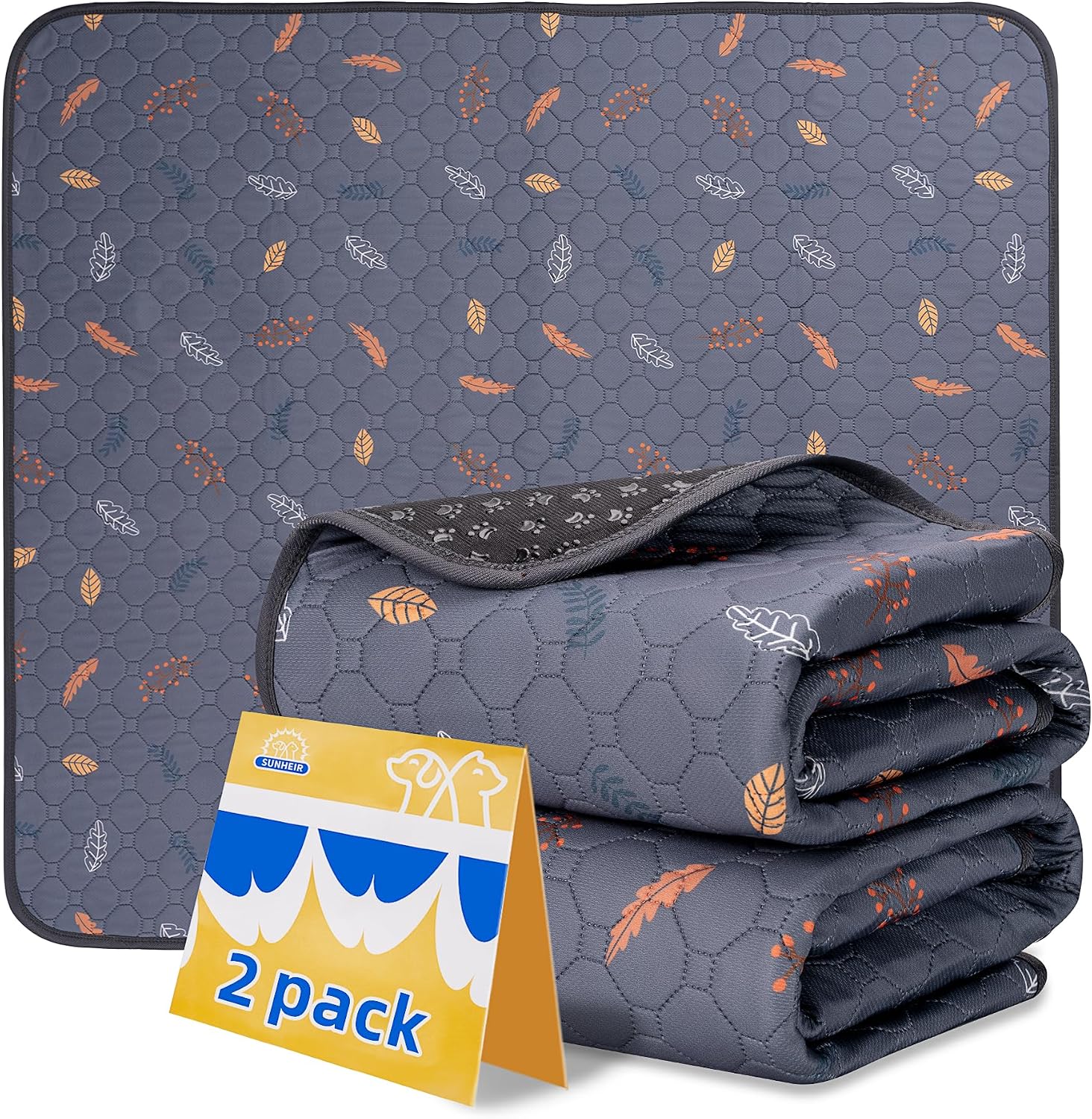
Sunheir Washable Pee Pads for Dogs, Reusable Puppy Pads for Dog Playpen 2PC
Catches overflow under a playpen or in front of the box before it reaches carpet, and being reusable means the pad does not become a weekly disposable purchase
A reusable pad is only clean after a wash cycle; leave it damp in a pile and the pad becomes the odor source you were trying to remove
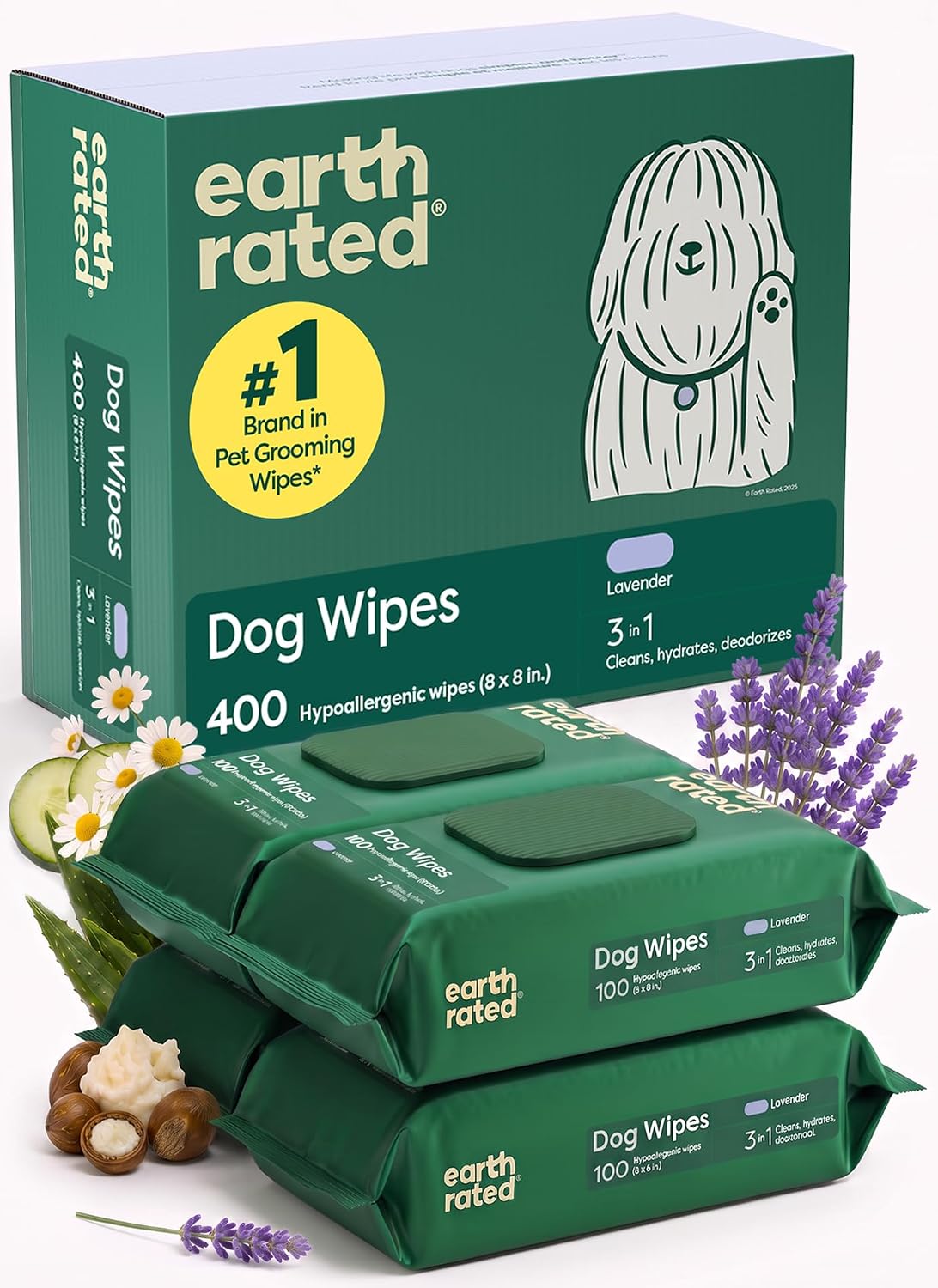
Earth Rated Dog Wipes for Paws & Butt, Deodorizing, Lavender, 400ct
A quick wipe of paws and rear stops the mess from being walked into carpet at all, which is the cheapest cleanup there is
Wipes only handle surface residue; they cannot reach urine that has already soaked into a pad, a rug backing, or a grout line
Prices and availability may change.
What enzyme cleaner vs regular pet cleaner means in practice
The difference between enzyme cleaner and regular pet cleaner is not a marketing story. It is what the liquid does after it soaks in. A regular cleaner is a detergent: surfactants pull grease and soil off a surface so you can wipe it away, and if the bottle claims disinfecting, it also kills bacteria on contact. That is genuinely useful on tile, on a food bowl, and on a countertop.
An enzyme cleaner is a different tool. It carries enzymes such as protease, amylase, and lipase, sometimes alongside a bacterial culture, and those enzymes act as catalysts. They break the chemical bonds in proteins, fats, and uric acid, the compound in urine that forms crystals. Those crystals are the reason a spot that looked clean smells again after a humid day. Detergent does not dissolve them. Water reactivates them. Enzymes digest them.
That single difference explains the whole argument. The regular pet cleaner vs enzyme cleaner question usually starts with a smell that comes back after a rainy week, and the return is the tell. If a spot keeps announcing itself, the surface is porous and the residue is still down there.
One practical note on enzyme concentration: stronger is not automatically better. A heavily concentrated bottle that you spray and immediately wipe does less than a moderate one that sits on the surface for the full contact time printed on the label. Contact time is the variable most people skip.
The plain language chemistry, and why dwell time is the whole game
Enzymes are not alive, but they are fragile. They need water, a reasonable temperature, and time. Spray an enzyme product on carpet, wait sixty seconds, and blot it dry, and you have mostly applied a lightly scented liquid. Labels usually ask for several minutes of contact, and that is not a manufacturer trick to sell more product. It is how the reaction works.
Three things ruin the process. The first is mixing. Many enzyme products are killed by bleach, by ammonia, and by some quaternary disinfectants, so spraying a disinfectant first and an enzyme product second can cancel the second step entirely. Clean the surface, let it dry, then give the enzyme product its time, or use the two on different days.
The second is over-wetting. Soaking a carpet to the backing pushes liquid into the pad underneath, where it dries slowly and feeds the same odor problem. Light, repeated applications beat one flood, especially on a rug that cannot go into a machine.
The third is a label that says odor neutralizer and means nothing specific. Some products with that phrase contain enzymes. Some contain a fragrance or a compound that traps odor molecules temporarily. Neither is dishonest, but only one of them removes the source. Read the ingredient line and look for the enzyme names.
Enzyme products also have their own smell while they work, usually a faint fermented or yeasty note. It fades as the surface dries. If it is still there a day later, the product did not reach the residue, or the residue is deeper than you thought.
Containment first: the two enclosures
Litter tracking is a volume problem. A cat kicks granules out of the box, walks through them, then carries them down a hallway. A mat catches some of it. A box with high walls catches more. An enclosure catches most of it and gives you one zone to vacuum instead of four.
The Gitelsnour 30.9'' Litter Box Enclosure Furniture is the furniture approach: a cabinet with hidden storage that closes the litter zone behind a door. The win is containment plus a place to keep the scoop, the bags, and a spare liner, so the cleanup tools live where the mess is. The trade-off is air. A closed cabinet holds odor, so the box inside needs daily scooping and the interior needs a wipe on a schedule. A 30.9 inch footprint also means measuring your space and your cat's box before you commit, which is where litter box sizing for large cats becomes relevant.
The Amunrbrek Top Entry Litter Box Enclosure takes the other route: the cat enters from the top through a flip lid and exits the same way, and the scratch mat gives the paws somewhere to shed granules before the cat walks off. Top entry is one of the more effective ways to cut tracking, because a cat cannot kick litter straight out of a box it climbs into. The caveat is the cat. Senior cats, cats with joint trouble, and very small kittens often will not use a top entry box, and a box a cat refuses is worse than no enclosure at all.
Either way, the enclosure is a containment tool, not an odor tool. You can Visit on Amazon for the cabinet version or Visit on Amazon for the top entry version, and plan on cleaning inside it either way.
Absorption and surface cleanup: pads and wipes
Pads handle the accidents that happen before the box, after the box, or inside a playpen where a puppy is still learning. The Sunheir Washable Pee Pads for Dogs arrive as a two pack of reusable pads sized for a dog playpen. Pad absorbency is the spec that matters most: a pad with a thin top layer holds a small accident, while a pad with more layers holds a larger one without wicking to the edges. Liner waterproofing is what keeps liquid off your floor, and it is the first thing to suspect when a pad starts leaking after a year of washing. Machine washable construction is why a reusable pad beats disposables over time, but it also means you want a second set on the floor while the first one dries.
Placement matters as much as the pad. A pad in front of a litter box catches scattered granules and the occasional miss. A pad under an exercise pen keeps a puppy's accidents off the carpet. Two pads mean one can be in the wash while the other works, and the pad is doing its job even when you are not home.
Wipes are the front line. The Earth Rated Dog Wipes for Paws & Butt are a 400 count deodorizing wipe in lavender, and the value is speed: a wipe of the paws at the door and the rear after a walk removes residue before it reaches a rug or a couch cushion. You can Visit on Amazon for the wipes and Visit on Amazon for the pads. Wipes do not replace a cleaner. They reduce how often you need one, which is the cheaper half of the equation.
Sizing, absorbency, and the details that decide
Pad size is the first decision and the one people get wrong most often. Measure the playpen, the crate tray, or the strip of floor in front of the box, then buy a pad that covers it with a little overlap. A pad smaller than the area leaves a gap, and a gap is where liquid reaches the carpet. If your dog is still growing, size for the adult.
Pad absorbency is a layered spec, not a single number. The top layer wicks, the middle layers hold, and the liner stops the liquid. When a pad starts feeling damp on the bottom after washing, the liner has broken down and it is time to replace it.
Carpet safe and fabric safe are phrases worth reading carefully on any cleaner bottle. Enzyme products can leave a residue that attracts new soil on hard surfaces if they are not rinsed, and some fabrics, including wool, silk, and leather, do not tolerate repeated wetting. Test any product on a hidden corner first, let it dry fully, and check for discoloration the next day. On a washable pad, the same logic applies to the dryer: high heat is what shortens the life of a waterproof liner.
The boring detail that saves the most money is a second set. Two pads, or a spare liner for the enclosure, mean you are never choosing between a wet floor and a wet pad.
The trade-offs, honestly
Enzyme products are slower, they smell faintly of their own chemistry while they work, and they usually cost more per use than a general purpose spray. They also have storage limits, since heat and time degrade the enzymes, which is why a bottle that sat in a hot garage for two summers underperforms. The payoff is that they remove the source instead of masking it.
Regular cleaners are fast, cheap, and easy to find, and a disinfecting formula does something an enzyme product cannot: it kills germs on a hard surface in one pass. The limitation is that the smell comes back the next time the air is damp, because the crystals are still there.
The gear carries its own trade-offs. A closed enclosure hides odor from you as well as from guests, so it demands discipline. A reusable pad costs more upfront and requires a wash routine. A pack of 400 wipes is convenience with a waste stream attached. None of those are reasons to skip the gear, but they are reasons to buy it with your actual habits in mind rather than the version of yourself that scoops twice a day.
Do you need both bottles?
Choosing between enzyme cleaner or regular pet cleaner is really a question about the surface, not about brand loyalty. Hard floors, food bowls, crates, and litter boxes get a regular cleaner, because you can wipe the surface completely and there is nothing left to soak in. Carpet, upholstery, grout, mattress covers, car seats, and anything else porous get an enzyme product with real contact time.
Households with a senior pet, a puppy, or more than one cat usually end up needing both. Households with only hard flooring and a healthy adult cat can often get by with one good regular cleaner plus a rinse, and that is a legitimate way to run a house.
That is the practical answer to enzyme cleaner vs regular pet cleaner: own both, learn which surface gets which, and let the gear handle the mess before it spreads. A top entry box, a cabinet, a pair of washable pads, and a tub of wipes will not clean anything by themselves, but they decide how much there is to clean.
What I am watching next
Concentrated enzyme refills are getting better, and a refillable bottle cuts both cost and plastic, though the dilution instructions are where most people go wrong. Enzyme laundry additives for washable pads are another category worth tracking, since they address the liner odor that a standard detergent cycle leaves behind.
On the gear side, I am watching enclosure designs with better airflow, because the biggest complaint about any cabinet style box is trapped odor. Washable pad systems with replaceable liners are also improving, and if the liners get cheap enough, the disposable pad stops making sense for anyone with a washing machine.