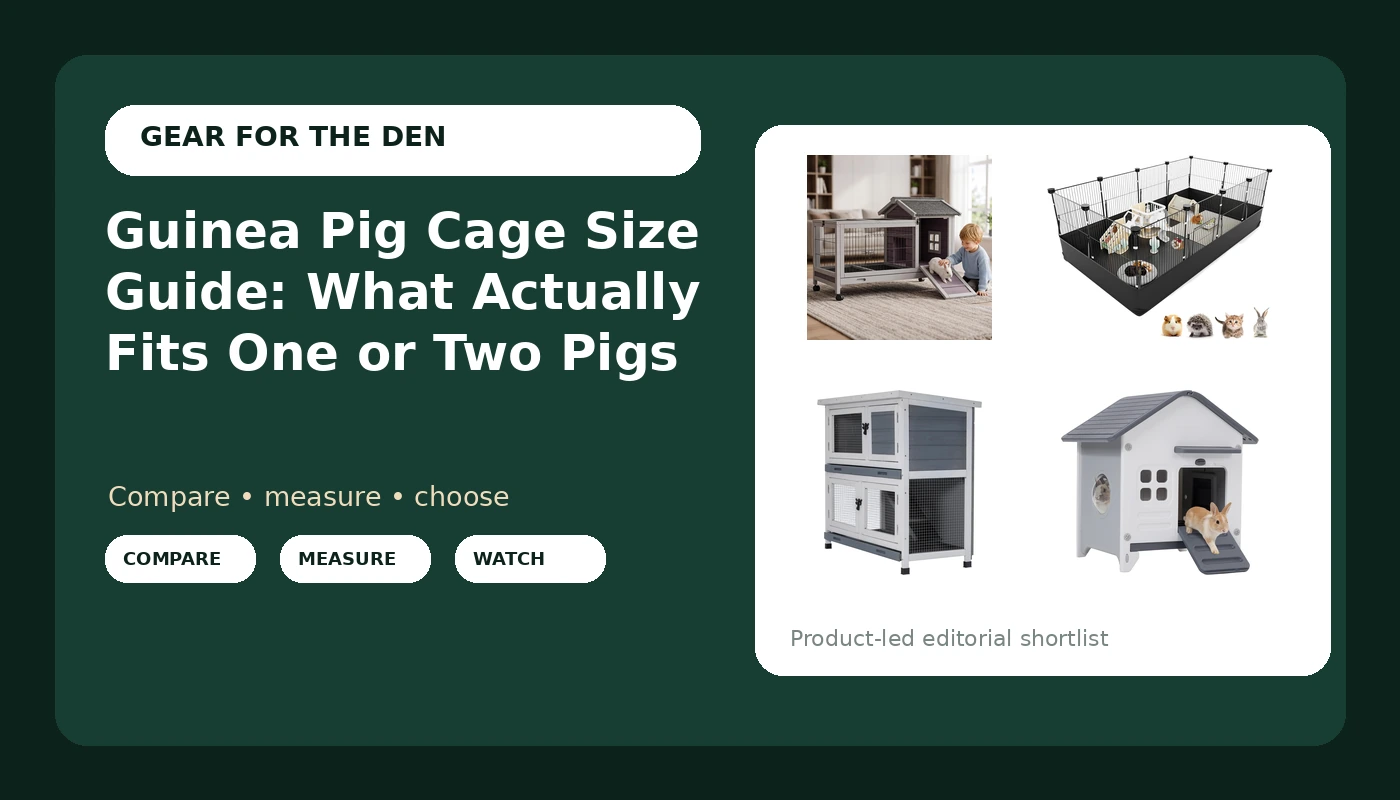
The guinea pig cage size printed on the box is almost never the floor area a pig actually gets. I keep a tape measure with the cleaning supplies, and the first thing I do with any new enclosure is measure the flat, walkable surface before I read another line of the listing. This guinea pig cage size guide is what that habit has taught me: how much room a pair really needs, where advertised dimensions quietly cheat, and which of the four cages here I would build a setup around.
Every enclosure gets the same checklist. I measure usable floor area by hand, because the stated number often includes the tray lip, the ramp footprint, or the outside edge of the whole unit. I check bar spacing with a ruler at the narrowest gap. I size the hideout against the pig rather than against the shelf label. I move the hay rack and the bottle to see whether a pig can eat and drink without standing in the toilet corner, and I pull the tray out one-handed to find out how bad the weekly clean really is. Then I live with the setup long enough to learn what the photos leave out.
Best Overall: Aivituvin Rabbit Cage Indoor
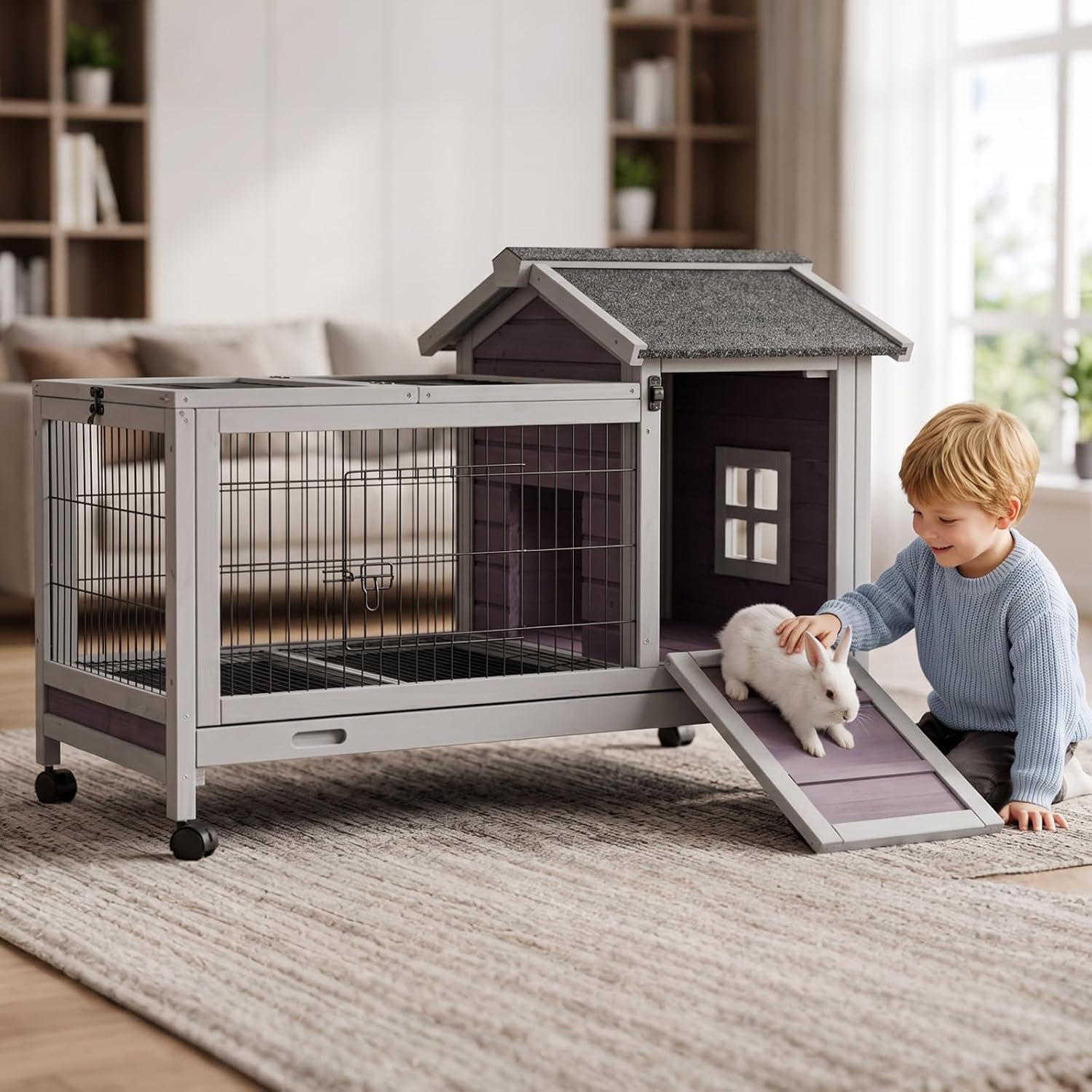
This is the cage I would put in a den first, and the stated 6.6 square feet of floor area is the number I check by hand before anything else. The wooden walls keep bedding and loose hay inside the enclosure instead of across the carpet, and the leakproof pull-out tray is the reason I keep coming back to it. There is no liner to scrub and no far corner to reach into with a sponge. The tray slides out, you tip it, and you are done.
The four wheels matter more than they sound. I can roll the whole hutch away from the wall, vacuum behind it, and roll it back without lifting a pig out of the way. The ventilation door gives airflow on warm days, and the removable wire floor grid comes out on day one, which is the first thing I do, because a guinea pig should stand on a solid surface rather than on wire.
Two things I would change. The stated 6.6 square feet clears a single pig comfortably and works for a pair that gets daily floor time, but if the cage is the only space those pigs ever see, you want more room than this, and the value pick below gives it to you. The wood also needs a wipe-down routine. It is a good-looking piece of furniture that happens to be a cage, and it asks to be treated like both.
Best Value: Tresbro Guinea Pig Cage
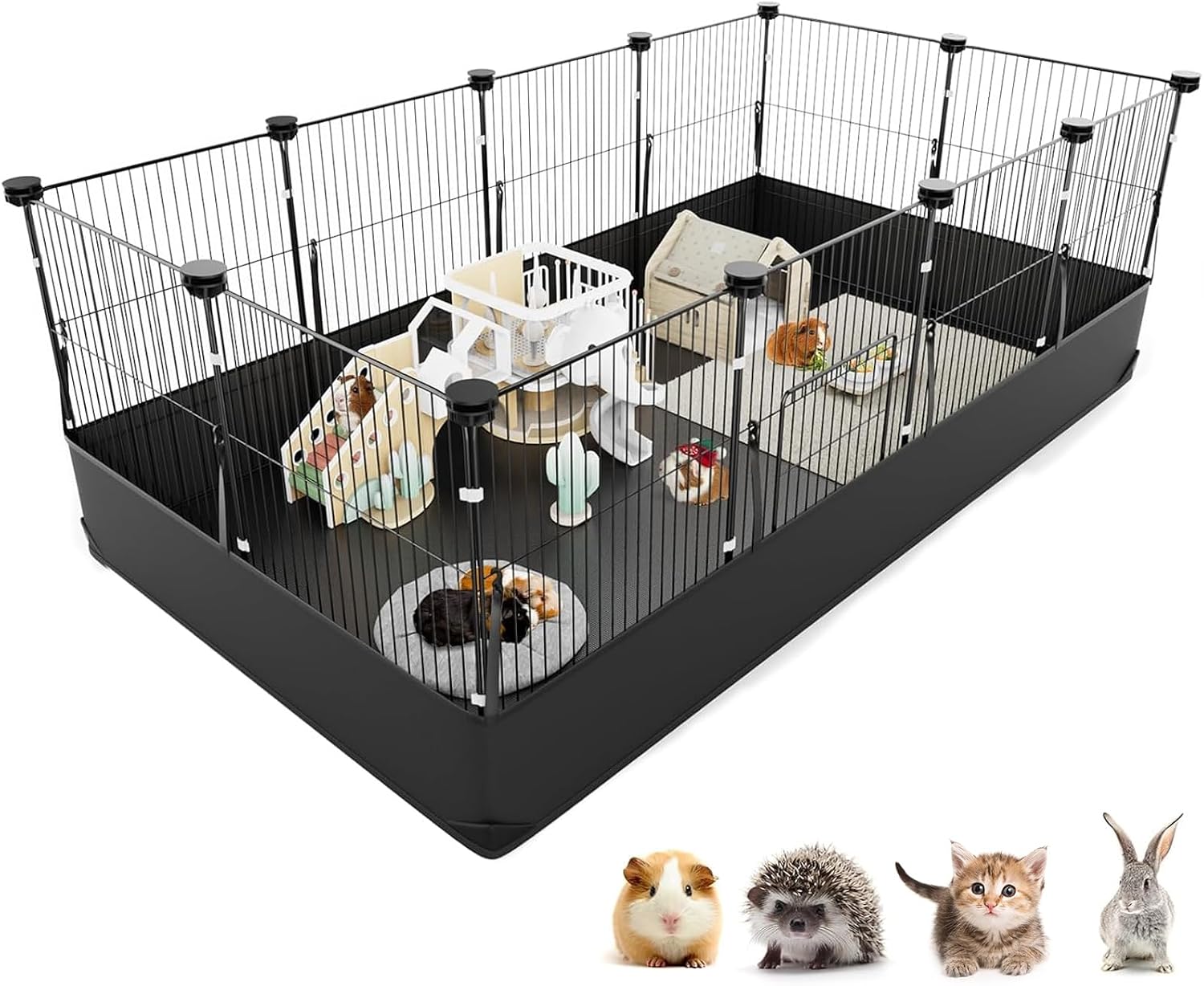
The Tresbro is the pick when floor area is the priority and you do not want to pay for wood. The listing gives 48 inches long by 24 inches wide by 16 inches high. Multiply the length by the width, divide by 144, and you land at roughly 8 square feet of flat floor, which is more running room than the other three cages here. For a pair of guinea pigs that is close to the correct guinea pig cage size you would choose on purpose rather than settle for, and it arrives that way without you buying a playpen to bolt on.
The waterproof PVC bottom liner is the piece that makes a panel style cage livable. Panels alone leave gaps and a bare floor underneath. This liner sits inside the frame and wipes clean, so bedding changes stay short. The one-hand release hook earns its name during a full clean, because you can open the panel with one hand while the other hand holds a pig. The triple fixing keeps the panels square, which matters once a determined boar decides to lean on the walls.
What it does not have is furniture looks, storage, or a lid. It is a panel cage with a liner, so you need a cover if you have a cat, and bar spacing is the usual C and C concern, so hold a ruler against the grid and compare it with your smallest pig before you commit. If floor area is your whole decision, this is the one.
How I tested
Every enclosure in this guide went through the same routine, and the routine starts with a tape measure rather than the product page.
I measure the flat floor a pig can actually walk on, leaving out the ramp footprint, the tray lip, and the patch a hideout swallows. I write down the gap between that number and the stated figure, because guinea pig cage size claims are usually measured at the widest point of the entire unit. Then the practical checks. Bar spacing gets measured at the narrowest gap, since that is where a nose wedges. Tray removal gets done one-handed, because the other hand is usually holding a pig. Hideout size gets judged by whether an adult can turn around inside without pushing the walls outward. Tunnel diameter gets checked against the widest pig in the room, because a tunnel that only fits a youngster is a tunnel that gets ignored within a month.
I also weigh bedding dust, which is the quiet reason so many good cages end up half empty. If every hop throws dust into the air, the enclosure gets cleaned less often than it should, and that is a floor area problem in disguise. Hay rack placement gets checked against the corner pigs actually toilet in, not the corner that looks tidy in photos. Bottle capacity gets checked against the number of drinkers, and a two-pig cage with a small bottle means refills twice a day.
Analysis and test results
Floor area is the number that decides whether an enclosure works, and it is the number listings are least honest about. Do the arithmetic yourself. Length times width, divided by 144, gives you square feet, and that is the only figure worth comparing.
The Tresbro lists 48 inches by 24 inches, which is about 8 square feet. The Aivituvin lists 6.6 square feet. The gap between those two numbers is roughly the footprint of a large hideout, and that is not a rounding error. The widely used minimum for a pair of guinea pigs sits around 7.5 square feet of flat, unobstructed floor, with more being better, so the ideal guinea pig cage size for two animals is at or above the larger of those two cages, not below it. A single pig can live well in the smaller one. Two pigs in the smaller one need daily floor time to make up the difference.
Levels do not fix a small footprint. The two-story hutch here lists two large main rooms, and those rooms are genuinely useful for separating pigs during introductions or giving a bullied pig its own space. But a second level is a second room, not a longer run. Guinea pigs sprint in straight lines, and a ramp does not count as running distance. When you compare cages, compare only the ground-level floor.
Watch the details that eat floor area. A hideout that is too big takes a quarter of a small cage, and a hideout that is too small makes pigs squabble over it, so pick one they can turn around in and give it two exits if you can. Mount the hay rack over a washable patch near the toilet corner. Keep the bottle reachable without a climb. Choose a tunnel diameter that fits the widest pig. None of those choices change the stated cage size, and all of them change how big the cage feels from the inside.
One more comparison point: the plastic enclosure here lists no dimensions in its name at all, and that silence is the whole review. The cages I can plan around are the ones that put a floor area in writing.
Guinea pig cage size reference table
This is the table I keep on my phone when I am standing in a store aisle. Stated numbers come straight from the listings. Usable floor area is what I check once the cage is standing up in front of me.
| Cage | Stated size | Style | Notes |
|---|---|---|---|
Aivituvin Rabbit Cage Indoor for 1-2 Bunnies | 6.6 square feet | Wooden hutch with leakproof pull-out tray, four wheels, ventilation door, removable wire floor grid | Best overall. Solid surface once the grid comes out. Wipe the wood down. |
Tresbro Guinea Pig Cage with Waterproof PVC Bottom Liner | 48 in L x 24 in W x 16 in H, about 8 square feet | Panel cage with PVC liner, one-hand release hook, triple fixing | Best value. Most flat floor area here. Add a lid if you have a cat. |
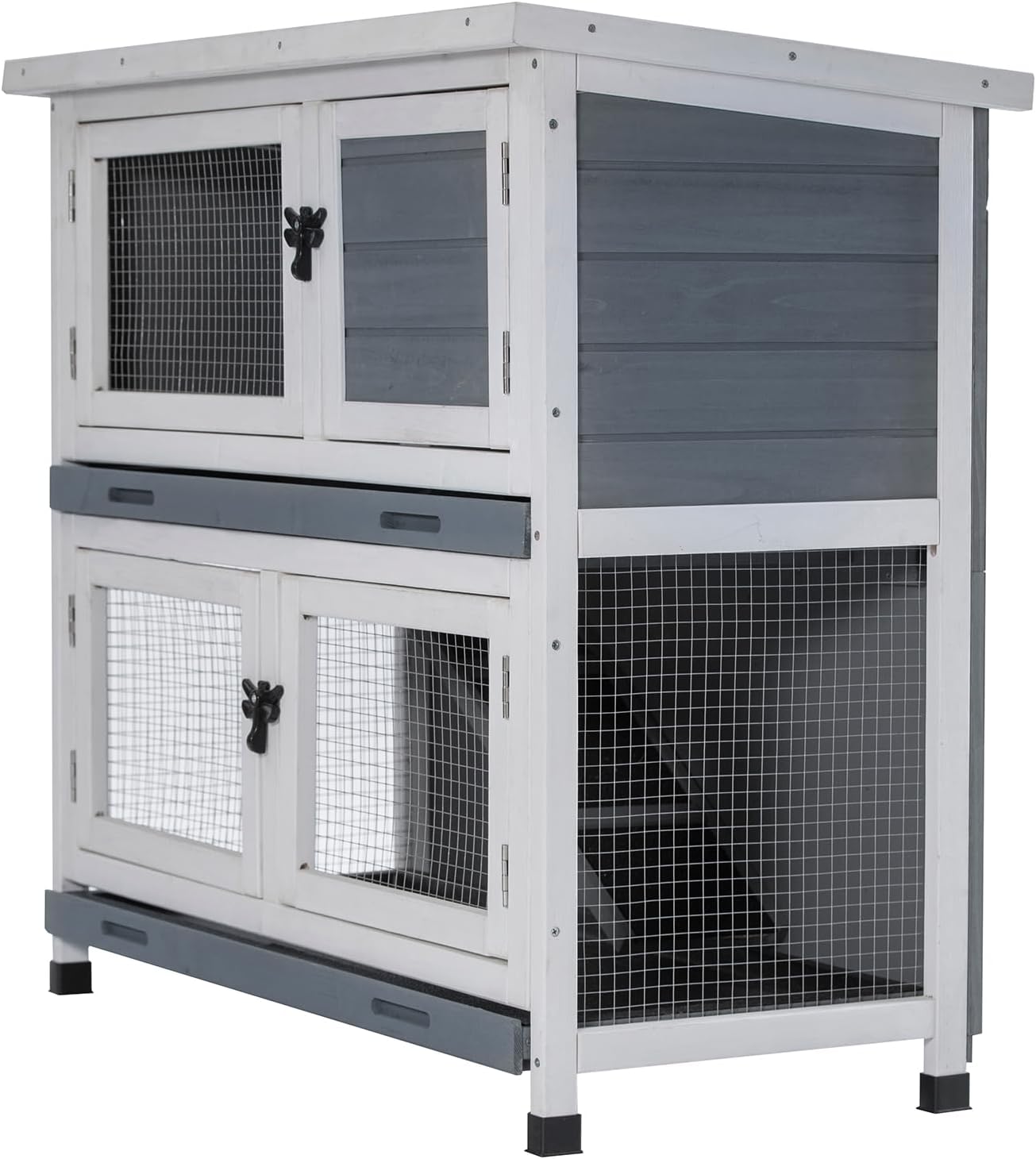 View on Amazon → 2 Story Solid Wood Rabbit/Bunny Hutch with 2 Large Main Rooms | Not stated as a single floor area | Two-level wooden hutch with ventilation door, removable tray, waterproof roof | Levels add rooms, not running distance. |
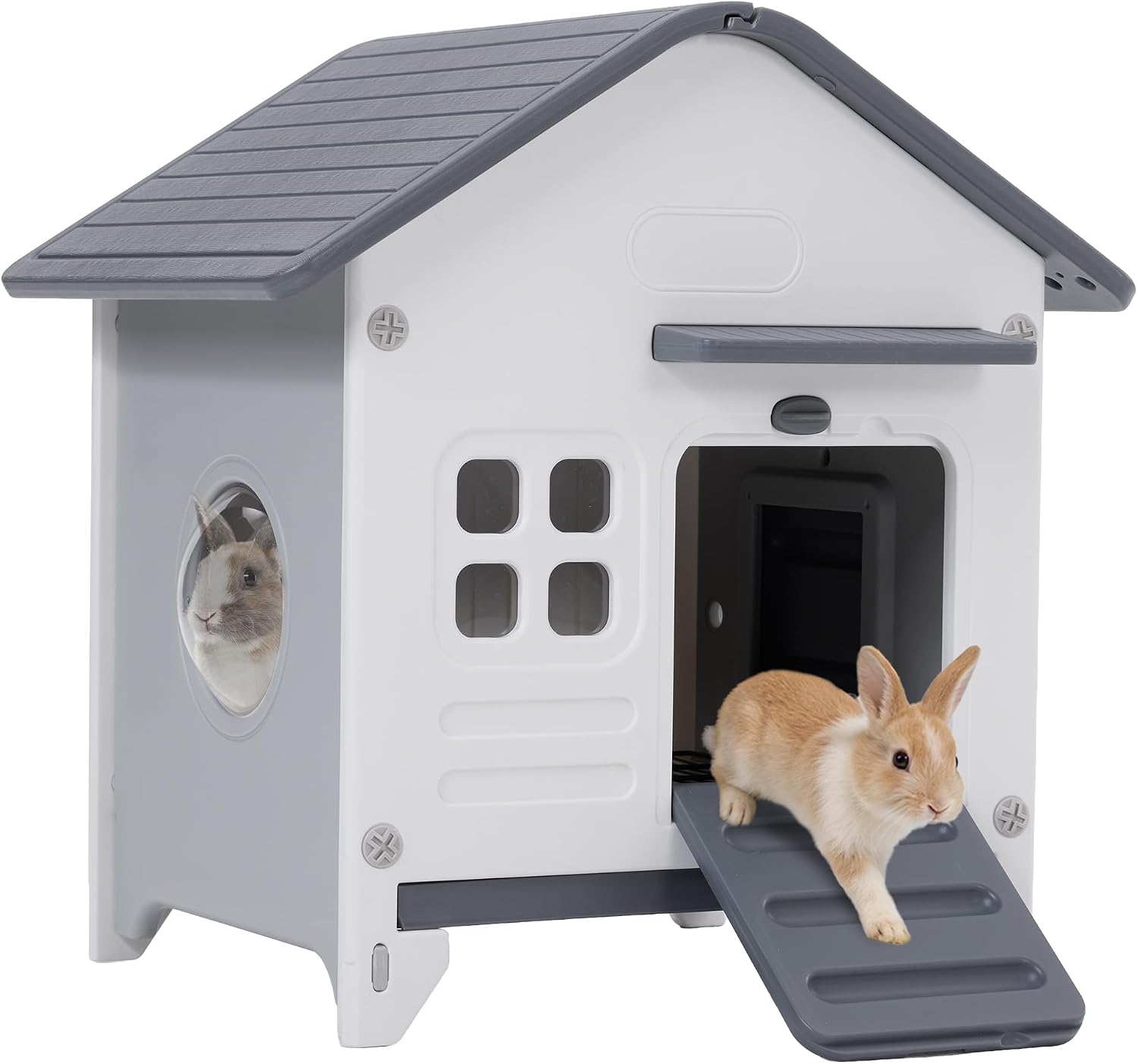 View on Amazon → Plastic Rabbit Cage Outdoor Indoor | Not stated | Plastic enclosure for indoor or outdoor use | Ask the seller for interior length and width before you buy. |
Two patterns jump out of that table. The cages that put a floor area in writing are the ones you can plan a setup around, and the number that matters is the flat ground-level run, not the two-story total and not the outside footprint. If a listing will not give you length and width, that silence is your answer.
2 Story Solid Wood Rabbit/Bunny Hutch with 2 Large Main Rooms
Two main rooms at that size is a specific tool, not a general upgrade. It is the hutch I would pick if you are bonding pigs and need a way to separate them without buying a second cage, or if you have one pig that keeps getting pushed off the food. The ventilation door and the removable tray keep daily care simple, and the waterproof roof makes it a real option for supervised outdoor time on a lawn.
What it does not do is give two pigs more ground to run on. The second story is a room upstairs. If your goal is the ideal guinea pig cage size for an active pair, spend the money on a longer ground floor instead, and come back to a two-level design when you actually need the division.
Plastic rabbit cages: the size claim problem
A plastic enclosure is not automatically wrong. For a hospital setup after a spay, for a few days of quarantine, or for a carrier that doubles as a travel box, plastic is easy to hose out and easy to move. The problem is the listings that never state an interior length and width, which is exactly the trap here. You cannot compare a cage to a requirement if nobody will give you the measurement.
If you are considering a plastic enclosure as a permanent home, ask the seller for interior dimensions first, then run the same arithmetic you run on everything else. Length times width, divided by 144. If the answer comes back under the minimum for one pig, it is a hospital cage, not a home.
Should you buy the Aivituvin Rabbit Cage Indoor?
Yes, for one pig, or for a pair that gets floor time every day. The stated 6.6 square feet is honest, the leakproof pull-out tray turns a twenty-minute clean into a five-minute one, and the wheels let you move the whole thing without a second pair of hands. Pull the removable wire floor grid out before the pigs go in, and put a solid surface under the bedding.
The wood is the trade-off. It looks better than any panel cage in this guide and it asks for more care than one, because spills soak in if you leave them. The size is also the honest limit. If you want two pigs in a cage that never gets a daily playpen session, skip this and take the larger floor area instead. If you want one well-built enclosure that fits a den, cleans fast, and rolls out of the way, this is the one.
Should you buy the Tresbro Guinea Pig Cage?
Yes, if flat floor area is the whole decision and you would rather spend the difference on a bigger hay rack and a better hideout. About 8 square feet of ground-level run beats everything else here, the waterproof PVC liner means bedding changes do not involve scrubbing a wooden tray, and the one-hand release hook is the kind of small design choice you notice every single cleaning day.
The catches are real and worth saying plainly. There is no lid, so a cat in the house means adding one. There are no wheels, so you slide it rather than roll it. The bar spacing on any panel cage deserves a ruler and a comparison against your smallest pig before you buy. None of that changes the floor area, and floor area is what your pigs spend their day inside.
If you want to compare bedding and cleaning setups for these cages, the bedding guide covers the dust problem in more detail.