The hamster bedding you pick does more work in the cage than anything else you buy. It is the floor, the burrow, the nest, and the odor filter all at once, and a hamster that cannot dig a tunnel is a hamster that chews the bars instead. This hamster bedding guide is about getting that one purchase right, because most bedding problems in a cage trace back to the bag rather than to the animal.
There is no single bag that suits every setup. The ideal hamster bedding for a Syrian in a big tank is not the same as what works for a dwarf in a smaller enclosure, and the difference usually comes down to dust, how well the paper holds a burrow, and how much material you need to cover the floor area. Volume matters more than brand loyalty here. You want enough bedding to lay down a deep layer, and you want it plain rather than scented or dyed. Cage size decides the bag, not the other way around.
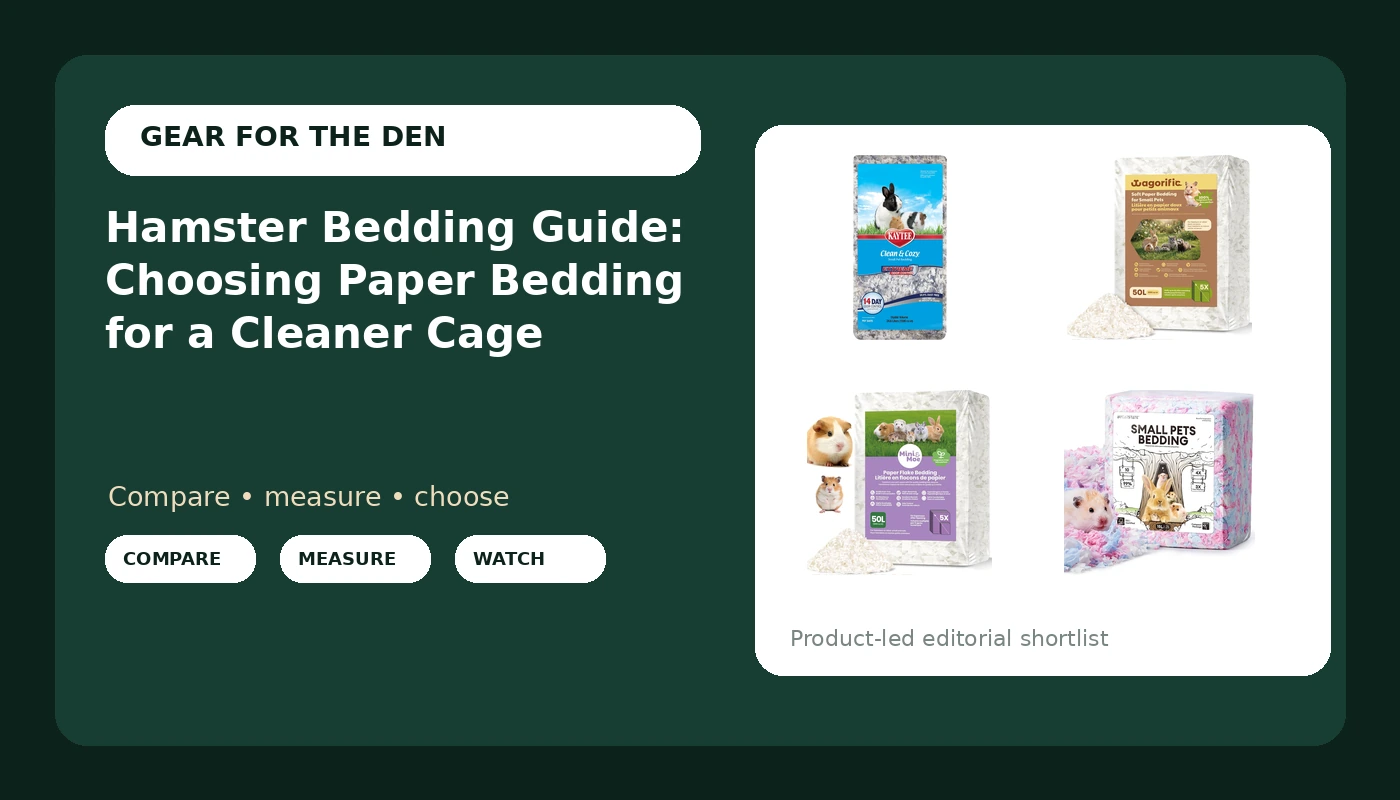
Best Overall: Kaytee Clean & Cozy Classic Hamster Bedding, 24.6 Liters
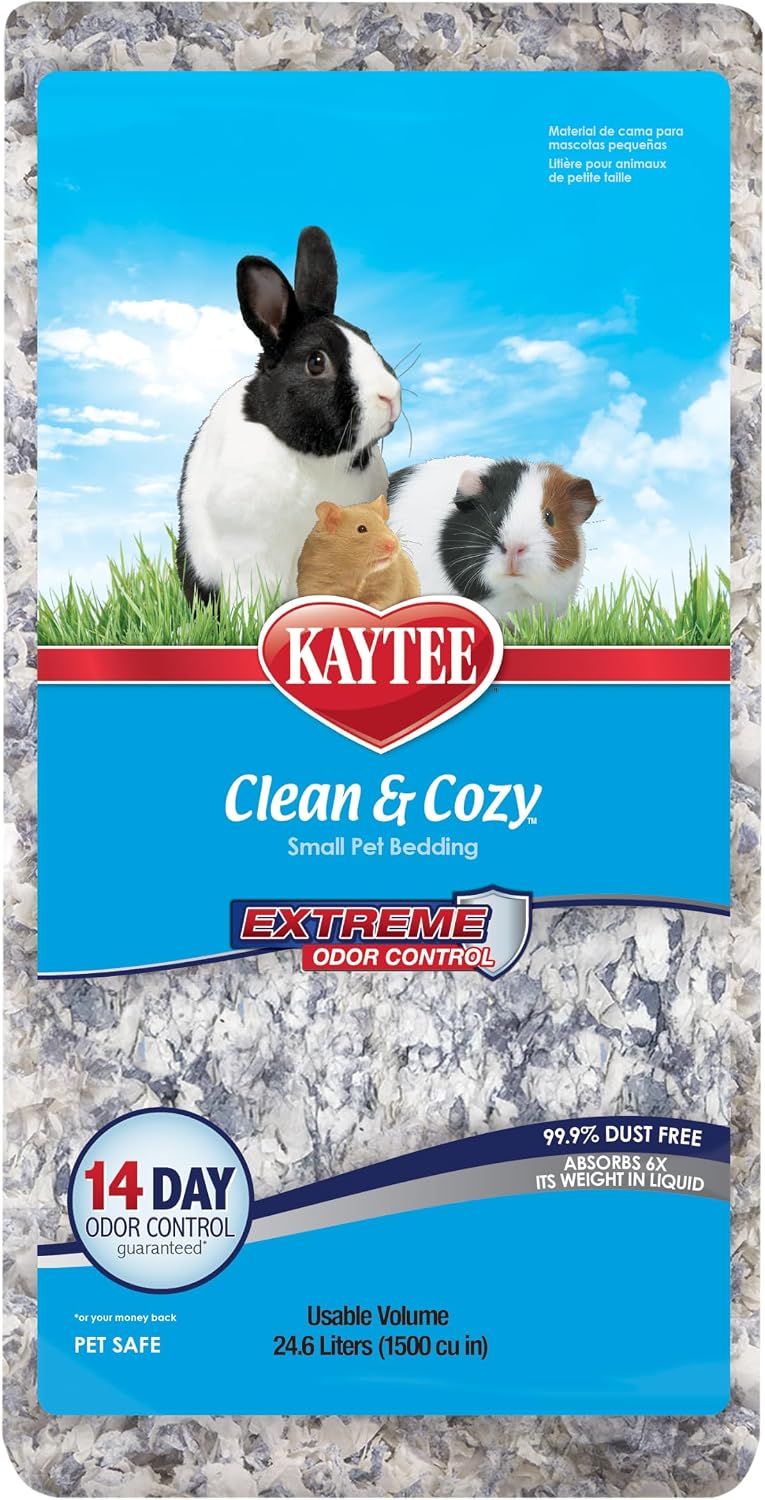
This is the bag I would hand a first-time hamster owner without a second thought. It is plain paper bedding in a 24.6-liter bag, which is a sensible middle size: enough to lay a deep layer in a standard tank or a large bin cage, not so much that you are storing a bale in a closet. Paper is the right material for a hamster because it holds a burrow without collapsing, and it does not carry the aromatic oils that wood shavings can.
Look for the Classic version specifically rather than a scented or dyed variant of the same brand. Scent is added for the human nose, not for the hamster, and in a small enclosed space a perfumed bag works against you. You are trying to remove odor, not cover it up with something else.
What I like most is how predictable it is. It is soft enough that a hamster will drag it into a hideout, it packs down well enough that spot-cleaning is quick, and the pieces are long enough to hold a tunnel wall when you press them together. The trade-off is volume. In a large tank with a genuinely deep bedding layer, 24.6 liters disappears faster than you expect, and you will be ordering a second bag before the month is out. If your floor area is generous, the 50-liter bags below are the better economics.
Best Value: Wagorific Hamster Bedding Odor Control, Small Animal Paper Bedding 50L
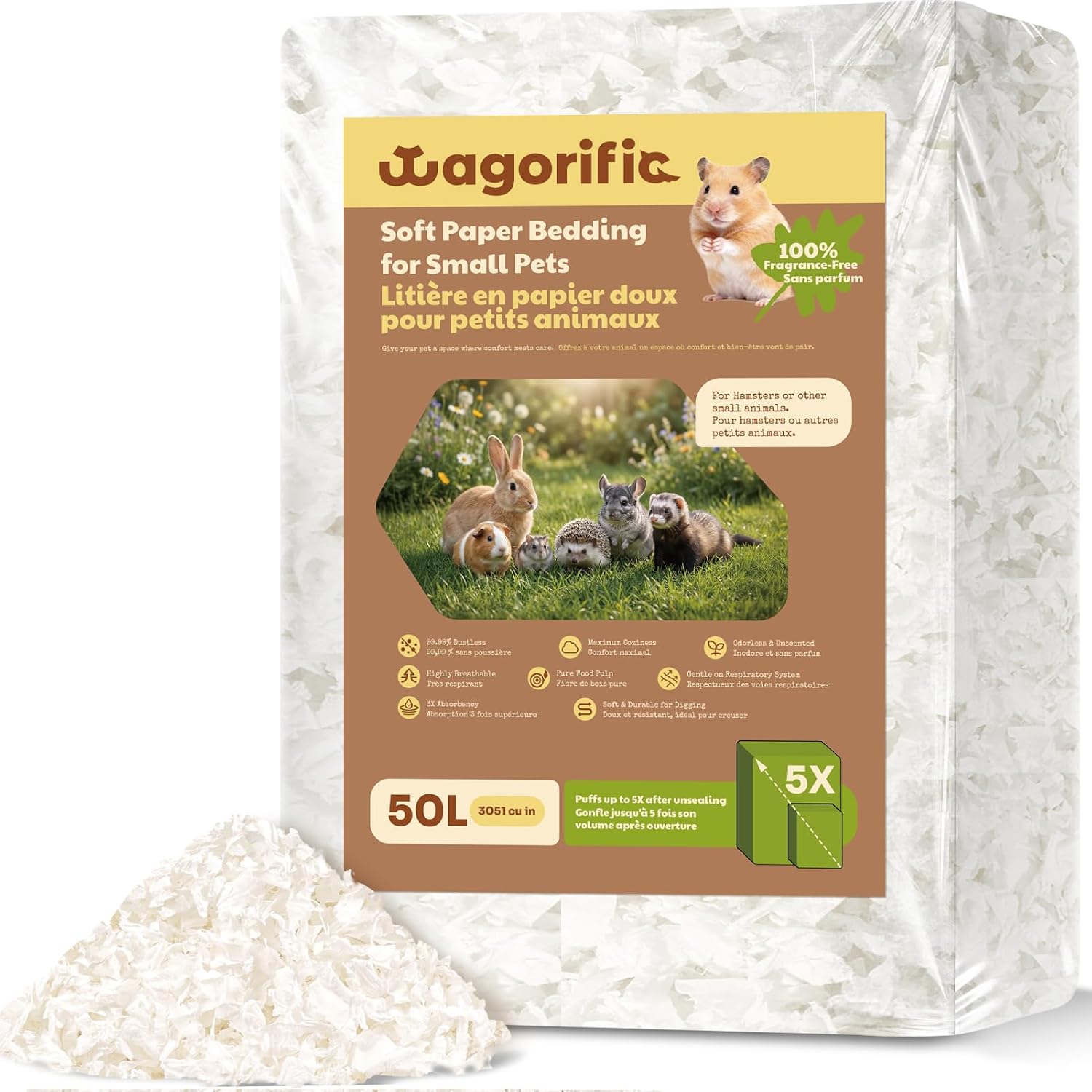
This is the value pick for one simple reason: 50 liters in a single bag. That is roughly twice the material of the Kaytee bag, which means you can actually build the deep layer a hamster needs instead of rationing it out. If you have a large floor area to cover, or you keep a guinea pig or a rabbit alongside the hamster, this is the size that stops the constant reordering.
It is paper bedding with an odor-control claim, and that is the claim that matters most in a small pet cage. Odor control in paper bedding comes from absorption and airflow rather than perfume, so a plain paper product with no added scent is doing the right kind of work. Avoid anything that leans on fragrance to make the point.
The compromise is storage and handling. A 50-liter bag is bulky, and once it is open you need somewhere dry to keep it. The pieces can also vary more than a premium bag, so you may want to fluff and pick through it before packing a burrow layer. Neither is a dealbreaker at this size, and for most owners with more than one small pet, this is the bag that makes sense.
How I tested
Every bag of bedding gets the same four checks, and they are checks you can run yourself in a shop or at home before you commit to a brand.
Dust. Bedding dust is the first thing that matters in a small pet cage, because the animal lives with its nose an inch from the floor. Shake a handful over a dark surface and watch what settles. Fine powder that hangs in the air is a fail. Two of the bags here make an explicit 99% dust-free claim, and that is the number to look for if respiratory irritation is a worry for you.
Absorbency. Pour a small splash of water onto a packed layer and watch how far it spreads sideways. Good paper bedding pulls moisture down and holds it in one spot, which is what lets you lift a wet corner out instead of stripping the entire cage.
Structure. Bedding has to hold a burrow. Pack it into a corner and see whether the tunnel walls stay up or slump back into a pile. Longer paper fibers hold. Short, dusty shreds do not, no matter how soft they feel in the hand.
Odor after a week. This is the real test, and it is not something a label can tell you. A bedding that smells neutral on day one and still smells neutral on day seven is doing its job. That comes down to how much you put in and how often you spot-clean as much as to the brand.
I apply the same checks to every bag in this guide, and I would rather tell you what to look at than pretend one bag wins everywhere.
Analysis and test results
In practice the four bags split into two groups: a mid-size bag for a single hamster, and 50-liter bags for deep bedding or multiple pets.
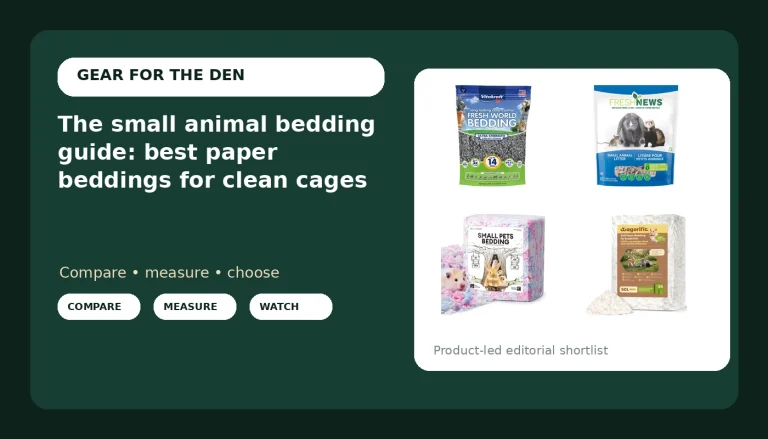
Dust is where the field separates. The 15-liter Cotton Candy bag and the 50-liter guinea pig bag both carry a 99% dust-free claim, and that is the single most useful line on either label. The Kaytee bag does not advertise a dust figure, and paper bedding from any brand varies bag to bag. If your hamster sneezes, or the cage lives in a bedroom, buy the bag that makes the dust claim.
Volume decides the rest. A hamster needs enough bedding to burrow, and burrowing depth is tied to floor area. A bigger footprint means you need more liters to reach the same depth. The 15-liter bag suits a smaller enclosure, a travel setup, or a second cage you clean less often. The 24.6-liter Kaytee bag covers a standard tank. The two 50-liter bags are for large bins, multi-pet households, or anyone tired of reordering every few weeks.
Odor control is the claim to treat carefully. Paper bedding controls odor by absorbing liquid and letting air move through it, not by adding fragrance. Correct hamster bedding is plain, unscented paper, replaced often enough that the cage never reaches the point where you can smell it from the doorway.
Fit matters as much as the material. In a wire cage with wide bar spacing, loose bedding gets pushed through the bars and ends up on the floor, so a solid-bottom tank or a bin cage holds a deep layer better. Hideout size and tunnel diameter should match the bedding depth you can actually provide, because a deep hideout half-buried in bedding is what a hamster wants, while a shallow one sitting in a thin layer is just a box. Keep bottle capacity in mind too, since a bottle mounted low will sit in the bedding and wick moisture into it.
For guinea pigs and rabbits, the 50-liter bags do double duty and pair well with a hay rack, which keeps hay off the bedding and stretches the time between full changes.
The hamster bedding comparison chart
These are the four bags in this guide, with the format and volume each one actually offers. Use the volume column as your starting point, match it to your floor area, then pick the dust and odor claims you need.
| Bedding | Volume | Format | Dust claim | Odor control | Best for |
|---|---|---|---|---|---|
Kaytee Clean & Cozy Classic | 24.6 L | Paper | Not stated | Not claimed | One hamster in a standard tank |
Wagorific Odor Control | 50 L | Paper | Not stated | Yes | Deep bedding, multi-pet homes |
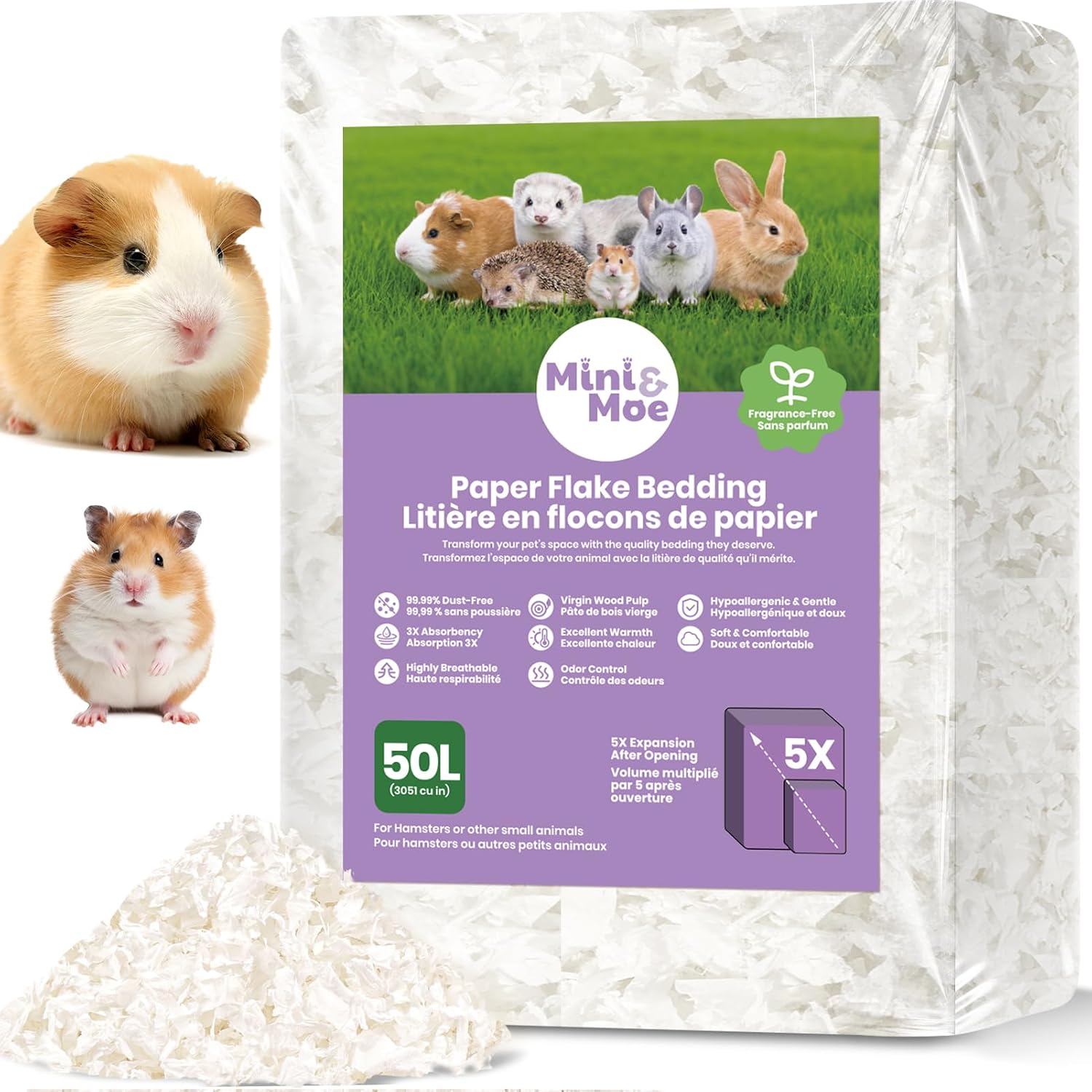 View on Amazon → 50L guinea pig and hamster paper bedding | 50 L | Paper | 99% dust-free | Yes | Large bins, guinea pigs, rabbits |
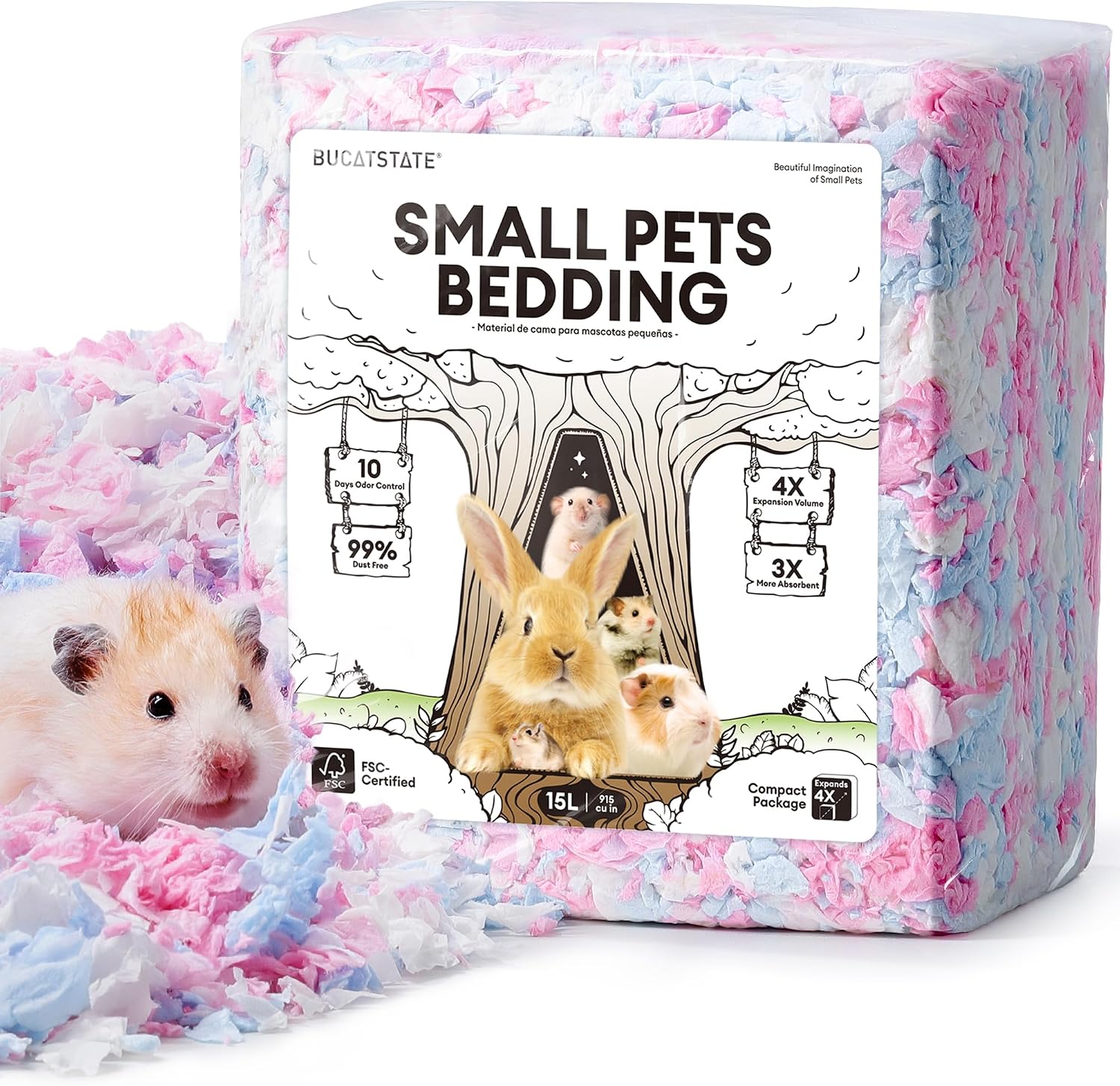 View on Amazon → 15L dust-free paper bedding (Cotton Candy) | 15 L | Paper | 99% dust-free | Yes | Small cages, travel setups, top-ups |
How deep should the bedding layer be?
Depth is the number most owners get wrong, and it is the one that changes hamster behavior fastest. A thin scattering of bedding gives a hamster nothing to dig into, so the burrowing instinct goes into the bars, the water bottle, or the hideout roof instead. Aim for a layer deep enough that your hamster can disappear into it completely, and deep enough that you can half-bury the hideout.
The practical limit is the cage itself. In a wire cage, bedding piled against the bars spills out onto the floor, so a tank or bin with solid sides is the easier place to go deep. That is also why the 50-liter bags exist in this category: once you decide on depth, the volume you need stops being a small number. If you are topping up a shallow layer every few days, you are not bedding the cage, you are dusting it.
Match depth to what you can maintain. A deep layer with proper spot-cleaning lasts longer between full changes than a thin layer replaced constantly, which is the argument for buying the bigger bag even if the smaller one looks tidier on the shelf.
Dust, scent, and wood shavings: what to avoid
Three things to avoid: fine dust, added scent, and aromatic wood shavings. Bedding dust is the one you can test yourself, and it is the one that matters most for an animal living at floor level. Shake a handful. If a cloud hangs in the air, put the bag back.
Added scent is a marketing feature, not a cleaning feature. A hamster's sense of smell is far better than yours, and a perfumed bag in a small enclosed cage is an irritant rather than a freshener. Plain paper does the same job.
Pine and cedar shavings are widely avoided in the small pet hobby because of the oils in the wood, and that caution applies to hamsters, rats, and gerbils alike. Paper bedding sidesteps the question entirely, which is why every bag in this guide is paper. If you want the safety margin without thinking about it, stay with paper and change it often.
Should you buy the Kaytee Clean & Cozy Classic Hamster Bedding?
Yes, if you want one bag that handles a standard cage without a decision. It is plain paper in a 24.6-liter size, the Classic line is the unscented version to look for, and it behaves the way bedding should: soft enough to nest in, firm enough to hold a tunnel, and quick to spot-clean.
The catch is volume. In a large tank with a proper deep layer, this bag runs out fast, and the cost per liter climbs once you are buying two or three at a time. If your cage has a big floor area, or you keep more than one small pet, skip straight to the 50-liter bags. If you have a single hamster in a standard setup, this is the one to start with.
Should you buy the Wagorific Hamster Bedding?
Yes, if you are filling a large bin cage or bedding more than one animal. Fifty liters of paper bedding with an odor-control claim is the better buy when you need real depth, and it works for guinea pigs and rabbits as well as hamsters, which makes it the practical choice for a household with mixed small pets.
The catch is handling. A 50-liter bag is bulky to store once open, and the pieces vary more than a premium bag, so fluff it and pick through it before you pack a burrow. Neither problem is serious at this size. If you have ever run out of bedding halfway through a cage change, buy this one and stop worrying about it.