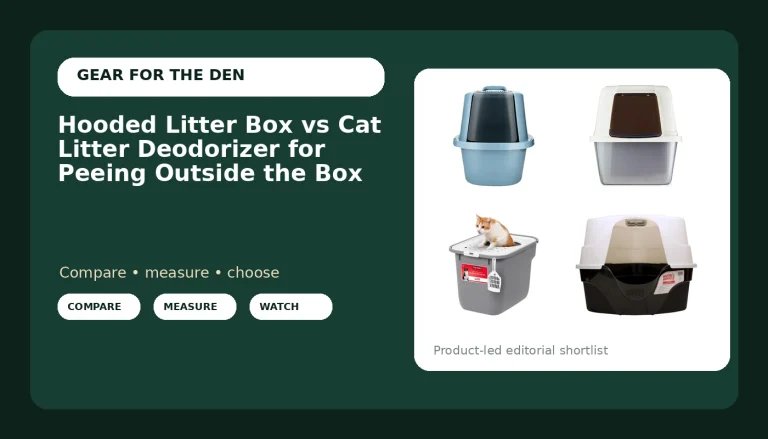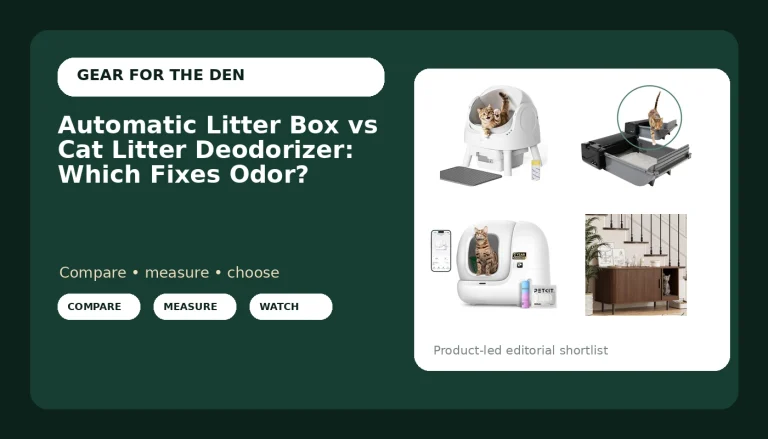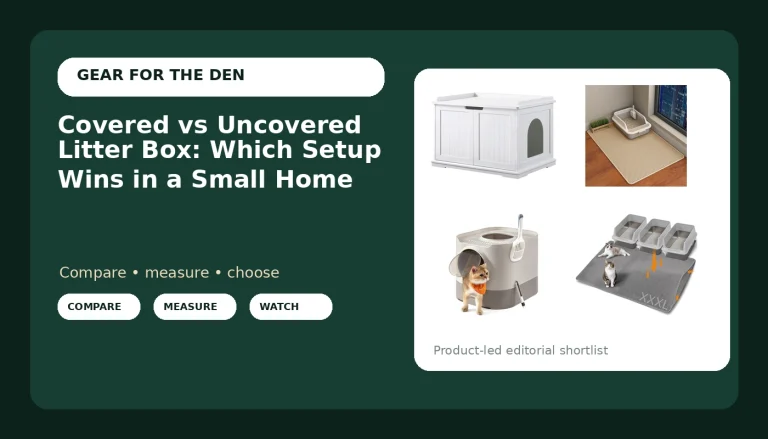
A kitten rearranges your apartment faster than any other pet. Within a week the litter corner has become a study in airflow, tracking, and smell, and most owners end up comparing two very different purchases: a hooded litter box vs cat litter deodorizer for kittens. Both are sold in the same aisle and marketed with the same words, which is exactly why the confusion exists. One is a container that changes where waste sits, how air moves around it, and how far litter travels on small paws. The other is an additive that changes what the air smells like after the fact. Buy the wrong one first and you spend three months patching a problem you could have designed out of the room.
The difference between hooded litter box and cat litter deodorizer for kittens is the difference between an object and a habit. The box is a one-time purchase that decides entry height, litter depth, airflow, and how much litter ends up on your floor. The deodorizer is a recurring purchase that decides nothing about the box and everything about how the air smells between scoops. Owners who buy the additive first usually buy the box second, and the additive turns out to have been optional the whole time.
For a kitten household, buy the box first. The Nature's Miracle Hooded Flip Top Cat Litter Box with Charcoal Filter is the easiest covered pan to live with while a kitten is still learning, and the Van Ness Pets Odor Control Large Enclosed Cat Litter Box is the better long-term pick once your cat has finished growing. Add a deodorizer only for a specific, identified smell problem.
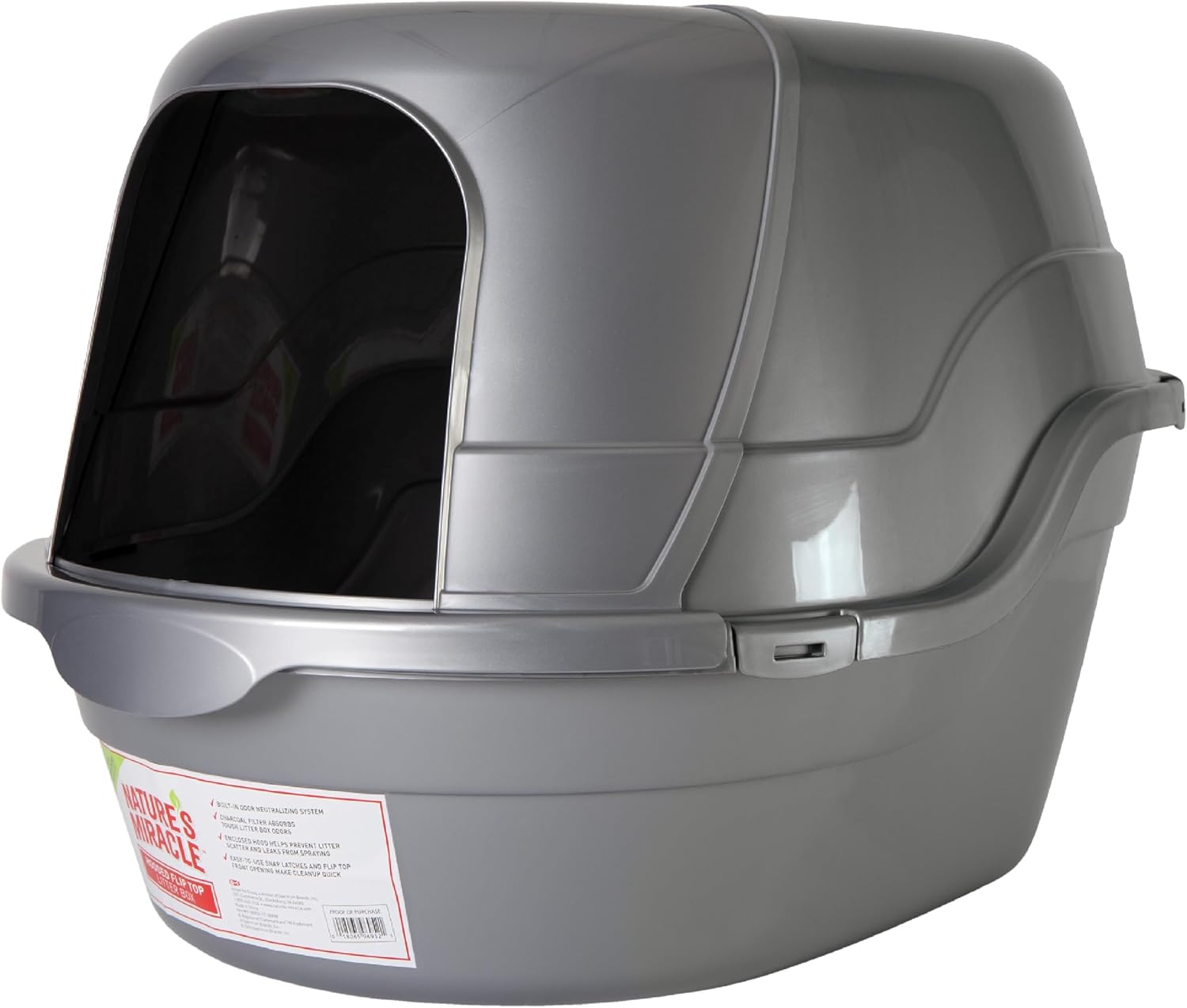
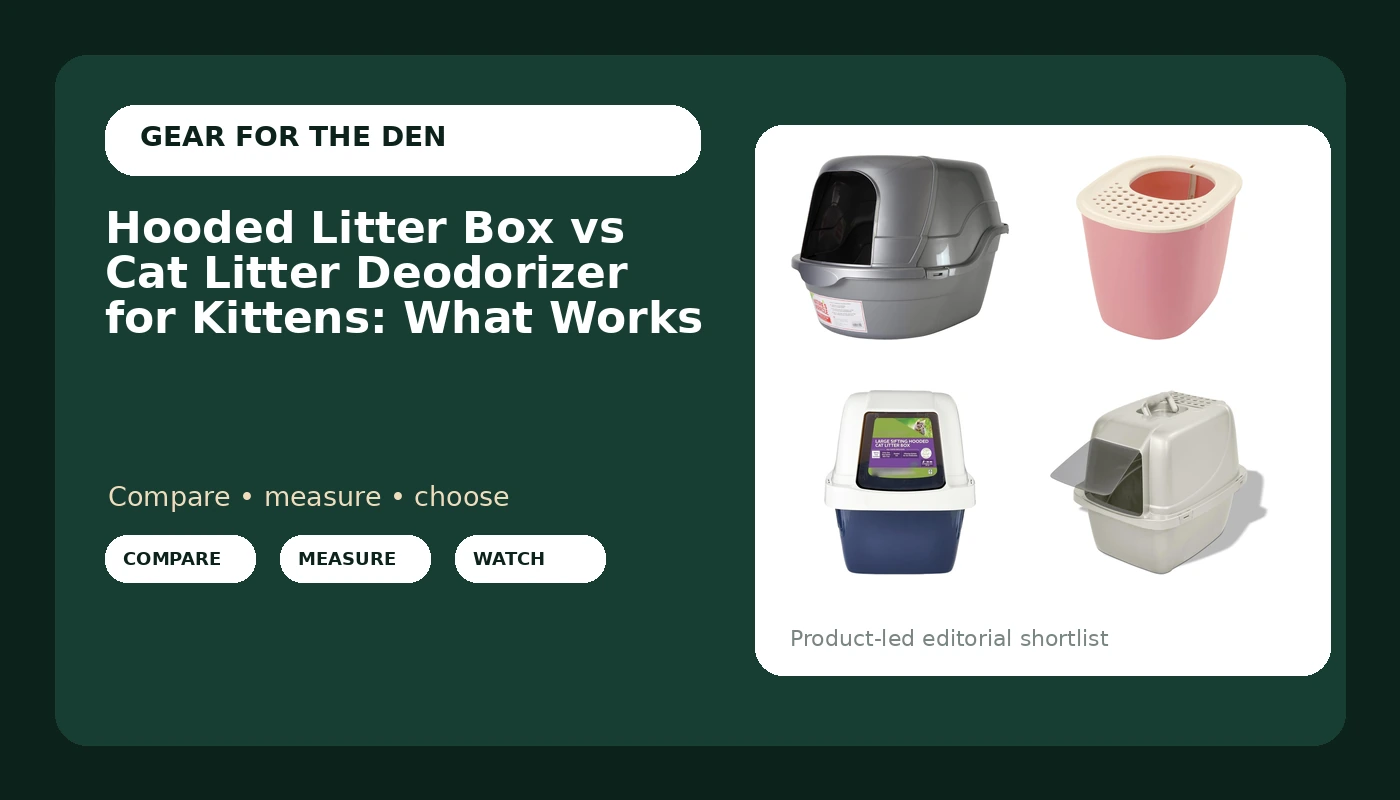
Nature's Miracle Hooded Flip Top Cat Litter Box with Charcoal Filter
Flip top opens fully for fast scooping, and the charcoal filter works on odor at the hood
Filter pads are a recurring cost, and a neglected pad becomes the smell source
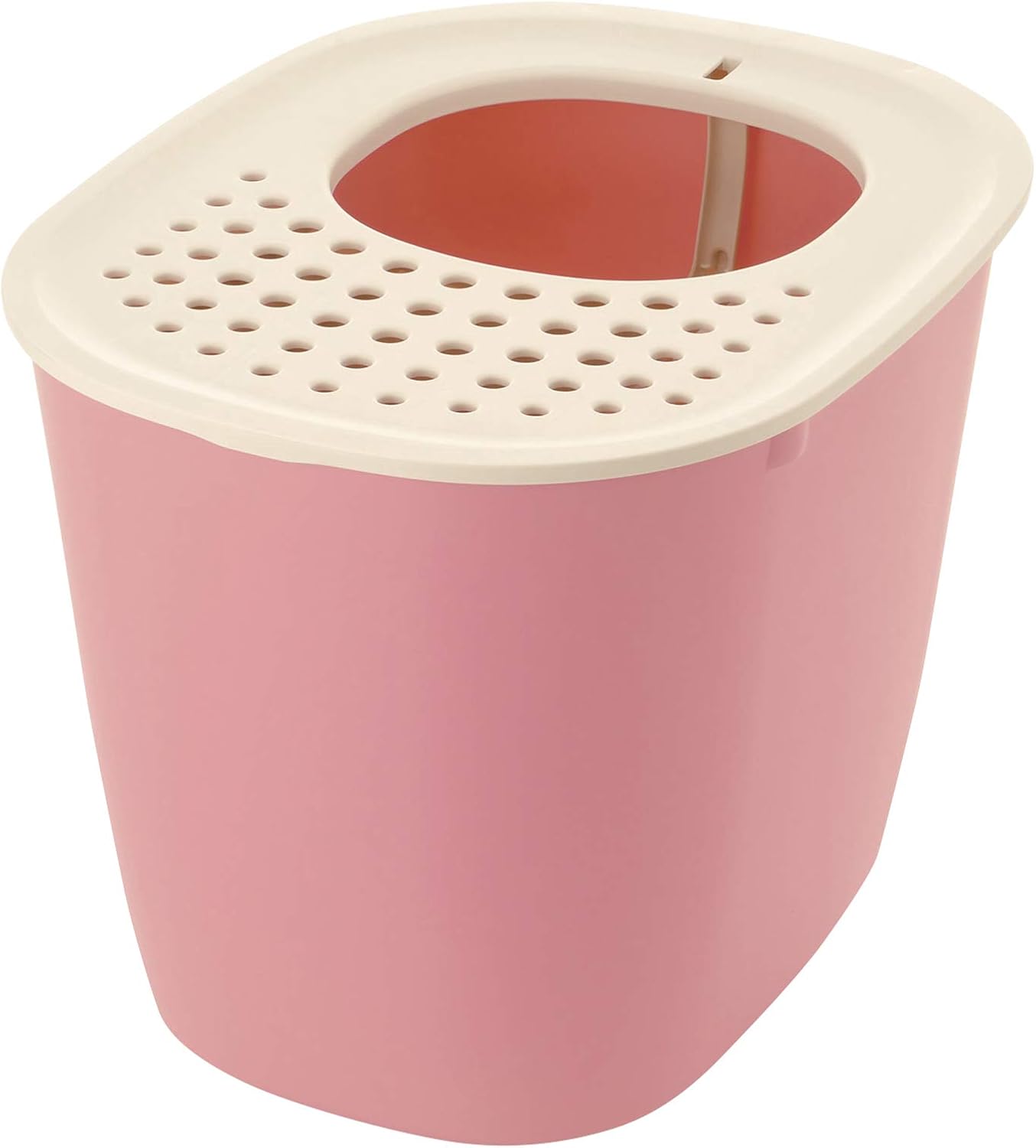
Richell PAW TRAX Top Entry Cat Litter Box, Hooded Cat Litter Pan, Enclosed Litter Box, Salmon Pink
Top entry keeps scatter on the lid, which acts like a built-in mat
High entry height rules out kittens, seniors, and cats with joint trouble
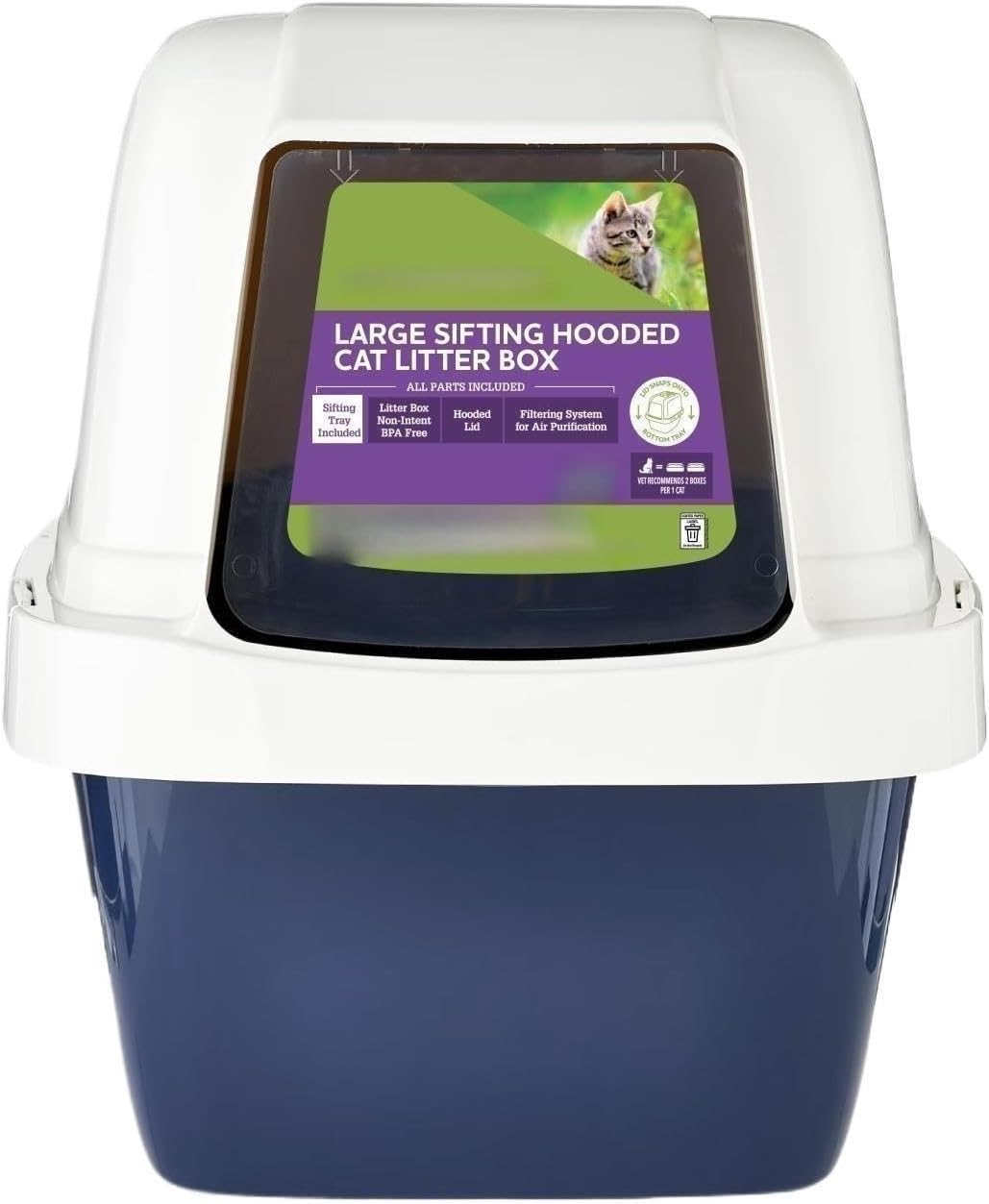
Large Sifting Hooded Enclosed Cat Litter Box, Blue Private Toilet with Pan & Odor Filter System, Easy-Clean Pet Container for Cats of All Life Stages
Large interior, sifting pan, and an odor filter system in one box
Sifting tray adds a rinse-and-dry step to every deep clean
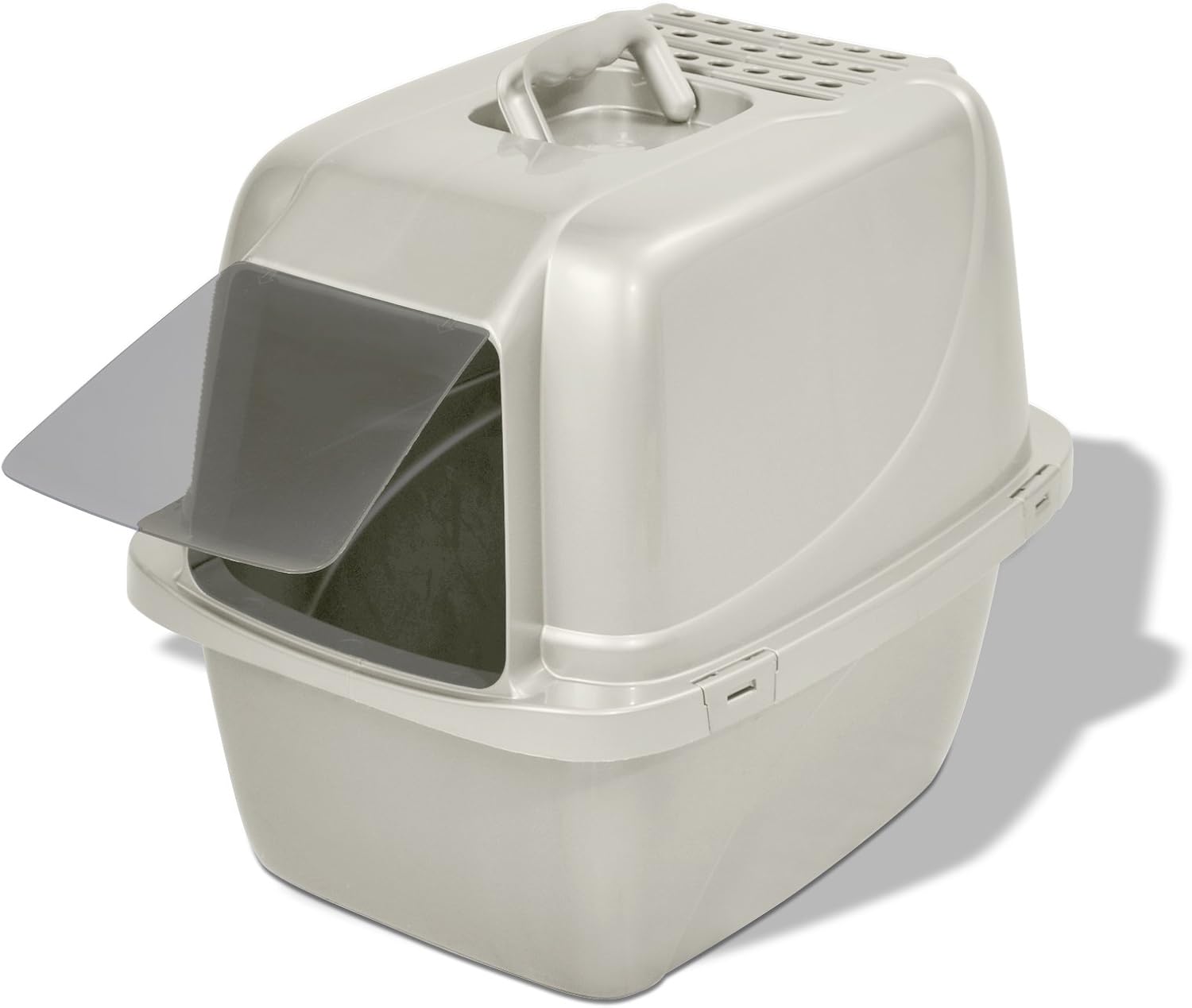
Van Ness Pets Odor Control Large Enclosed Cat Litter Box, Hooded, Pearl, CP6
Roomy enclosed pan with nothing extra to buy or replace
No sifting tray and no filter, so odor control is all on your scooping
Prices and availability may change.
The hooded litter box vs cat litter deodorizer for kittens question, answered
If you searched this phrase, you are probably holding one of each in a store aisle and trying to work out which one your kitten needs first. The pairing is a little misleading, because the two products are not really competitors. A hooded box is infrastructure. It sets the size of the pan, the height a kitten has to climb, the litter depth you can maintain, and how much odor stays inside the plastic instead of drifting into the room. A deodorizer is maintenance. It changes the smell of what is already there.
For a kitten, infrastructure wins almost every time. Kittens are small, they eliminate often, and they are still learning to dig and cover. A box that is easy to walk into, deep enough to dig in, and roomy enough to turn around in prevents more mess than any additive can clean up. The honest answer to the hooded litter box vs cat litter deodorizer for kittens question is that you buy the box first, live with it for a month, and only then decide whether the air still needs help.
What a hooded box changes, and what it cannot
Covering a pan does three things at once. It blocks the sight line, which matters more to you than to the cat. It slows airflow across the litter surface, so odor control depends on how often you scoop rather than on how the plastic smells when new. And it contains scatter, because most litter leaves a box when a cat launches out of it rather than when it digs.
What a hood cannot do is neutralize ammonia. A charcoal filter, like the one built into the Nature's Miracle flip top, or the odor filter system on the sifting box further down this page, traps some of the smell that passes through it. Neither filter does anything about the source. Skip a day of scooping and a covered box concentrates that smell, then releases it the moment the lid comes off.
Box size is the other thing a hood changes. A covered pan feels smaller inside than it looks on the shelf, because the hood takes up headroom and the entry cuts off one side. A rule of thumb that works for most cats: the pan should be about one and a half times the length of the cat, measured from nose to base of tail. A kitten in a large covered box has room to grow into it. A kitten in a small one learns to hang its rear over the edge, and you spend the next year cleaning the seam where the hood meets the base.
Where a deodorizer fits, and where it does not
Comparing cat litter deodorizer for kittens vs hooded litter box is really comparing a recurring cost to a one-time one, and the recurring cost only pays off in specific situations: a multi-cat home, a kitten whose urine is unusually pungent, a box in a small bathroom with no window, or a household that scoops once a day instead of twice. In those cases an additive earns its shelf space.
Unscented is the safer default around kittens. Their noses are far more sensitive than ours, and a heavily perfumed additive can push a cat to eliminate beside the box instead of inside it. If you try one, add it to a box your kitten already uses, change nothing else for a week, and watch for avoidance. Baking soda based products are the mildest option and the least likely to bother a cat.
Whether you are shopping for a hooded litter box or cat litter deodorizer for kittens, keep the sequence straight: fix the box, then fix the air, then fix the tracking. Additives are the last step, not the first, and they never substitute for scooping. A deodorizer that hides the smell of a dirty box is worse than no deodorizer at all, because it lets you skip the one chore that actually solves the problem.
Entry height, box size, and litter depth for a cat that keeps growing
Entry height is the spec that decides whether a kitten uses the box at all. A young kitten that has to climb into a covered pan will sometimes choose the floor instead, and once that habit forms it is hard to break. The compromise that works: start with the hood off, or with a box whose entry sits low, and add the cover once your kitten is using the pan reliably. The Richell PAW TRAX top entry box is a good example of a design that is excellent for an adult cat and a poor fit for a two-pound kitten, because the cat has to jump onto the lid and drop in.
Box size and litter depth go together. Two to three inches of litter is enough for a kitten to dig and cover without sinking to the floor of the pan. Too little litter and urine pools on the plastic, which is where most of the smell in a covered box actually comes from. Too much litter and a small cat kicks half of it through the entry every time.
Clumping speed matters more in a covered box than in an open one, because the hood stops you from seeing the pan at a glance. A litter that clumps fast lets you lift urine out in one piece instead of scraping a wet patch. If you are still choosing a litter, our comparison of clumping and crystal litters covers how each type behaves in an enclosed pan.
Filters, waste drawer, and the weekly cleaning rhythm
Every feature on a covered box adds a cleaning step, and the feature is worth it only if you will actually do that step. A charcoal filter is the cheapest example. It is a small pad that sits in the hood, it traps some odor as air moves through, and it stops working after a few weeks. A box with a filter that never gets replaced smells worse than a box with no filter, because the pad itself becomes the source.
A sifting pan does the same thing for scooping. The sifting box in this comparison pairs a pan with an odor filter system, so you lift solid waste out with less scraping, which is a real convenience on a busy morning. The trade is that the sifting tray needs rinsing, and a rinsed tray needs to dry before the litter goes back in.
A waste drawer on a self-cleaning box removes the daily scoop entirely, and it brings its own maintenance list: the drawer, the rake, the litter level that keeps the cycle working, and the sensor range that tells the box the cat has left. If you are considering an automatic box, treat the sensor range as the first spec to check, because a box that cycles while a kitten is still inside is a problem you cannot patch later.
Mat texture is the last piece of the rhythm. A textured mat outside the entry catches more granules than a flat towel, and with a top entry box, the lid itself does part of that job.
The four boxes here, and who each one suits
Nature’s Miracle Hooded Flip Top Cat Litter Box with Charcoal Filter is the friendliest first covered box of the four. The flip top hinges open so you can scoop without unclipping anything, and the charcoal filter sits in the hood to catch what the air carries out. You can leave the top open while a kitten adjusts and close it later.
Richell PAW TRAX Top Entry Cat Litter Box changes the traffic pattern instead of hiding it. The cat drops in from above and steps out onto the lid, which works like a built-in litter mat. It is the strongest answer to tracking in this group and the weakest answer for a kitten that cannot jump yet.
Large Sifting Hooded Enclosed Cat Litter Box with Pan and Odor Filter System is the largest and most feature heavy option. The sifting pan cuts down on scraping, the filter system handles the air, and the size suits a cat of any age. It is the pick if you want the least friction at scoop time and have the floor space for it.
Van Ness Pets Odor Control Large Enclosed Cat Litter Box is the straightforward one. A large enclosed pan, no sifting tray, no filter to buy, and a hood that lifts off for deep cleaning. It suits a growing cat and a household that wants a roomy covered box without a parts list.
Trade-offs to accept before you buy
Hoods hide problems as easily as they hide smell. A covered box in a warm room, a filter you forgot to replace, a litter depth that has gotten too shallow: none of it is visible until someone lifts the lid. Check the pan once a day, not once a week.
Floor space is the second trade. A large enclosed box is furniture, and the sifting model here needs even more room because the tray has to come out. Measure the corner before you buy, and leave enough clearance to swing a hood open.
Top entry excludes some cats. Kittens, seniors, and cats with joint trouble may never accept a box they have to jump into, and no amount of training changes that.
Sifting and self-cleaning parts need rinsing. Plastic holds odor over time, so a box that comes apart easily gets cleaned more often, which is the only maintenance habit that actually matters.
Finally, a deodorizer can mask a health change. If the smell of the box shifts suddenly, that is a vet question, not a litter question.
How to decide
Framed as hooded litter box vs cat litter deodorizer for kittens, the order of operations is simple. If your kitten is young or small, start with a low entry box and add a hood later, because the box is what decides whether the cat uses it at all. If the box is already working and the room still smells between scoops, try a filter replacement or a mild unscented additive before you buy anything bigger.
If tracking is the complaint, look at entry style and mat texture before you look at litter. If smell is the complaint, look at litter depth and scooping frequency before you look at additives. And if you are replacing a box anyway, buy for the adult cat your kitten will become, then make the first few months easy with the hood off. The box is the purchase that lasts. The deodorizer is the one you can add next month.