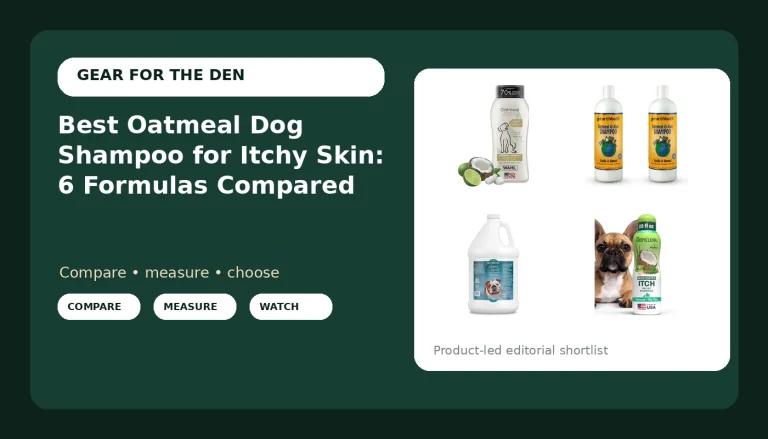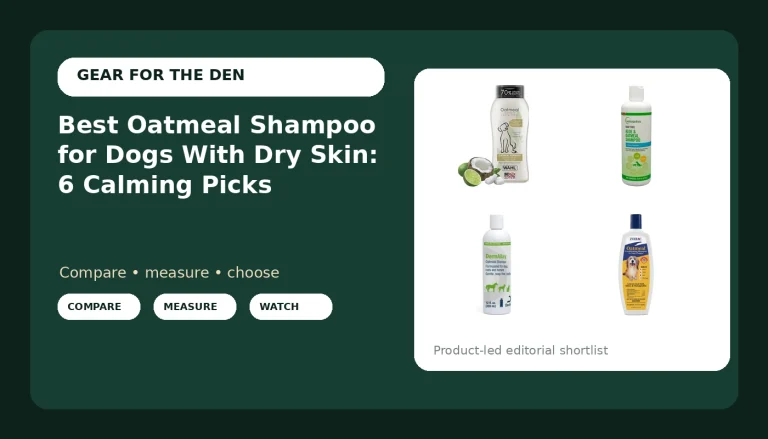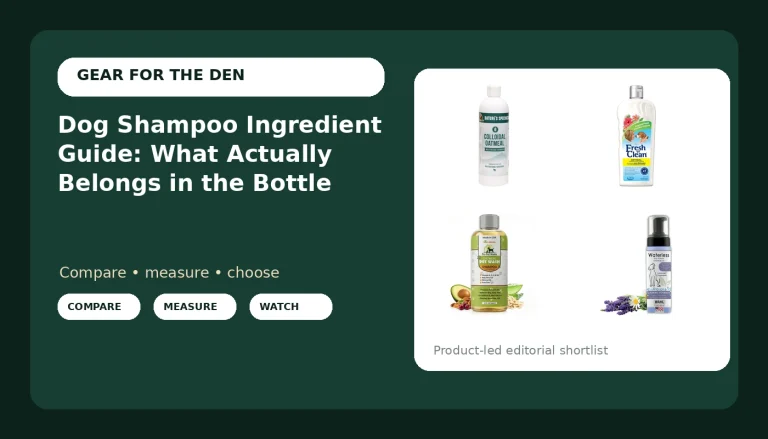
A dog with dry skin does not need a stronger shampoo. It needs a gentler one, and the difference between the two lives almost entirely in the first five ingredients on the back of the bottle. That is the whole trick to how to choose a shampoo for a dog with dry skin: stop shopping by scent, and start shopping by what the formula does to the lipid layer sitting on top of your dog's skin.
Harsh cleansers strip that layer. When the barrier goes, water escapes, allergens walk in, and the dog scratches. The scratching damages the skin further, which makes the itch worse, and a dry, flaky coat is usually the visible end of that loop rather than the beginning of it. The bottle that smells like a tropical vacation and lathers like dish soap is often the bottle making the problem worse.
This guide covers the three shampoos worth putting on a dry-skinned dog, the criteria that put them there, and the eight-step wash routine that keeps a bath from undoing itself two days later. It is written for the owner of a dog with flaking along the spine and a thin patch near the tail, not for a show groomer chasing a perfect topknot.
Why you should trust me
I have spent years washing dogs that other people gave up on: foster seniors with thin coats, a terrier mix with a grass allergy, and one very patient Labrador who hated baths and taught me to dilute shampoo before it ever touched her skin. The lesson from all of them was the same. The grooming aisle is mostly marketing, and the ingredient list on the back is where the truth is.
You cannot pick a shampoo for a dog with dry skin from the front of the bottle. The front is a scent and a promise. The back tells you whether the oatmeal is doing work or decorating a fragrance.
I read those labels the way other people read nutrition facts. If oatmeal shows up after the perfume, it is a scent product with a decorative oat. If colloidal oat protein sits near the front and the base skips sulfates and soap, the formula is doing real work on a dry coat. I also keep notes on which formulas rinse clean, because residue on a dog with dry skin is its own problem, and I ask groomers what they reach for when a raw, itchy dog comes through the door.
What I will not do is tell you a bottle cured a dog. Skin takes weeks to turn around. A good shampoo stops making things worse while the rest of your routine catches up.
How I picked and how I tested
Once you know how to pick a shampoo for a dog with dry skin, the shopping trip gets short. I started with formulas that describe themselves as being for sensitive skin, then filtered for four things: oatmeal concentration or colloidal oat protein, a soap-free or sulfate-free base, a short ingredient list, and a bottle size that matches how often you actually bathe.
Then I looked at the practical side. A gallon is a different purchase than a 16 ounce bottle, even when the labels read alike, because a dog with dry skin often gets bathed every one to two weeks during a flare. A 128 ounce jug keeps a two-dog household in shampoo for most of a year at that pace. A 16 ounce bottle lasts a month or two on a medium dog.
For the wash itself, the test is one you can run at home. Patch test a dime-sized amount on the inside of a back leg, wait 24 hours, and look for redness or new scratching. If the skin stays quiet, wash the dog with the diluted formula and watch the coat for three days. A shampoo that leaves the coat greasy, dull, or itchier on day three failed, no matter how good the label looked. Coat type matters here as well. A double coat holds more residue than a short single coat, and a curly coat needs the conditioner step far more than a smooth one does.
How to choose a shampoo for a dog with dry skin
Three bottles cover almost every dry-skin household, and the criteria for all three are the same ones you would use to choose a shampoo for a dog with dry skin: oat content, base, ingredient list, and bottle size. That means a mild tearless one for maintenance and faces, an oatmeal formula for the actual flare-ups, and a bulk soap-free option for multi-dog homes and big dogs who need a lot of lather.
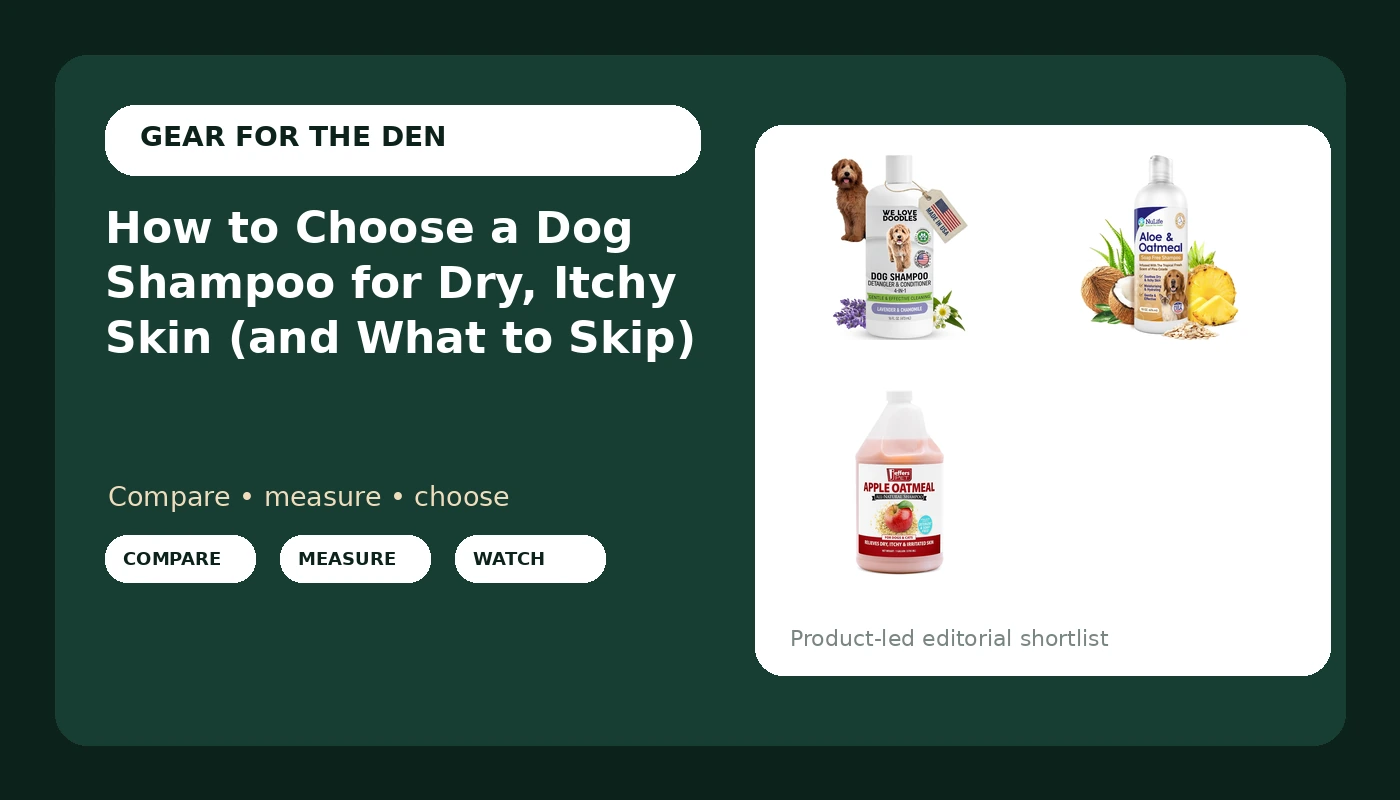
Budget pick: Dog Shampoo, Conditioner & Detangler, Hypoallergenic Tearless Lavender 16OZ
Budget pick
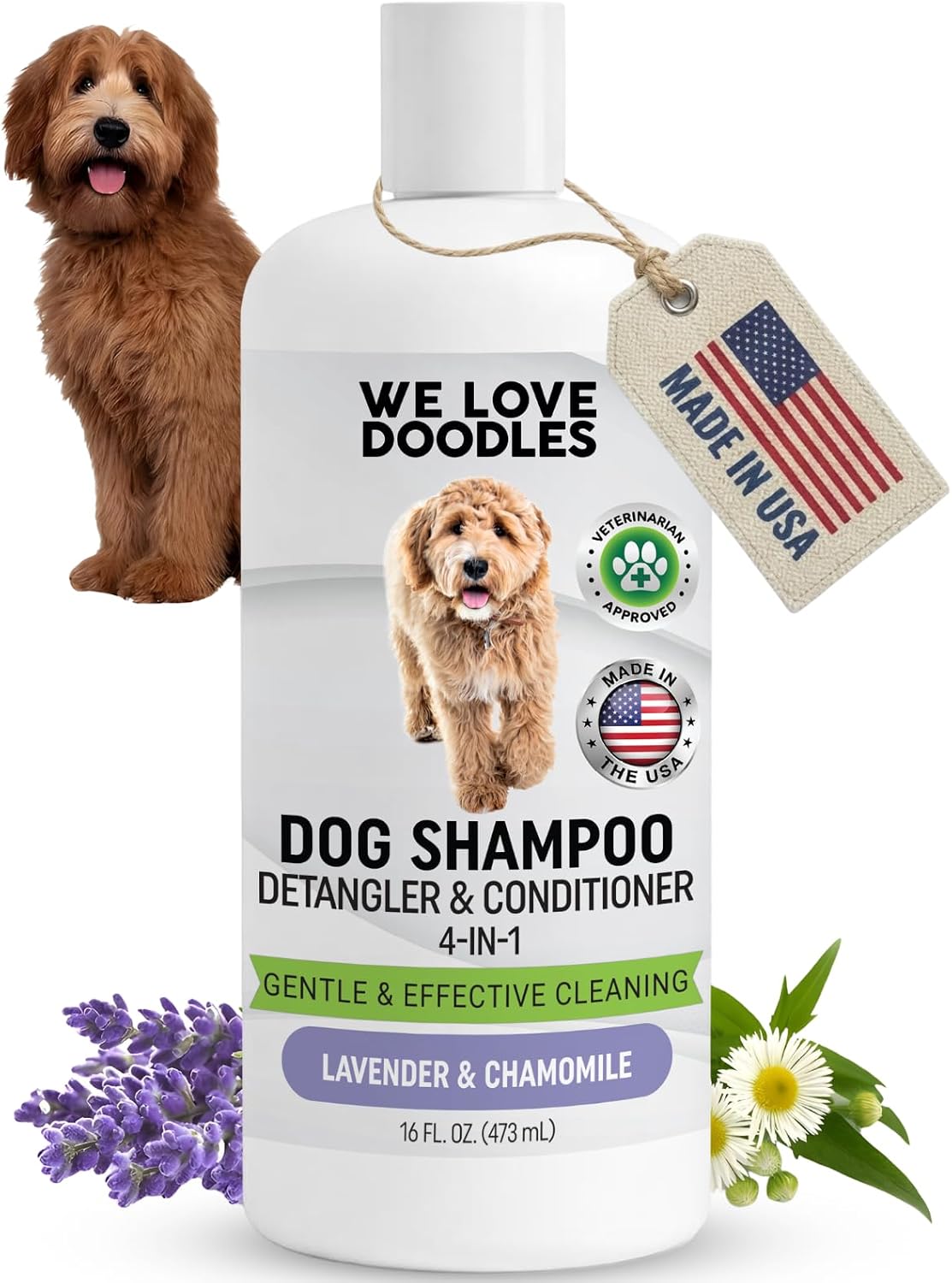
Dog Shampoo, Conditioner & Detangler, Hypoallergenic Tearless Lavender 16OZ
Check current Amazon price
This is the bottle to hand someone who is not sure the shampoo is the problem at all. It is hypoallergenic and tearless, which matters more than it sounds. Tearless formulas are mild enough to wash a muzzle and a face without a wrestling match, and mild surfactants are exactly what a dry coat wants between oatmeal treatments.
The three-in-one label is worth reading carefully. Shampoo, conditioner, and detangler in one bottle means the rinse leaves something behind on the coat, which helps on a rough or curly coat and helps less if your dog has a greasy patch near the tail. On a short, smooth coat, one pass is usually plenty.
Flaws but not dealbreakers: Lavender is a fragrance, and fragrance is a risk on genuinely reactive skin, so patch test this one before you commit to a full bath. Sixteen ounces is also small for a large dog, so expect to reorder, or dilute carefully to stretch it.
Good for puppies, first baths, faces, and gentle maintenance washes between treatments.
Our pick: Oatmeal Dog Shampoo with Soothing Aloe Vera, Sensitive Skin Dog Shampoo for All Pets, with Tropical Fresh Pina Colada Scent, Hypoallergenic Formula Provides Relief from Allergies & Dry Itchy Skin
Our pick
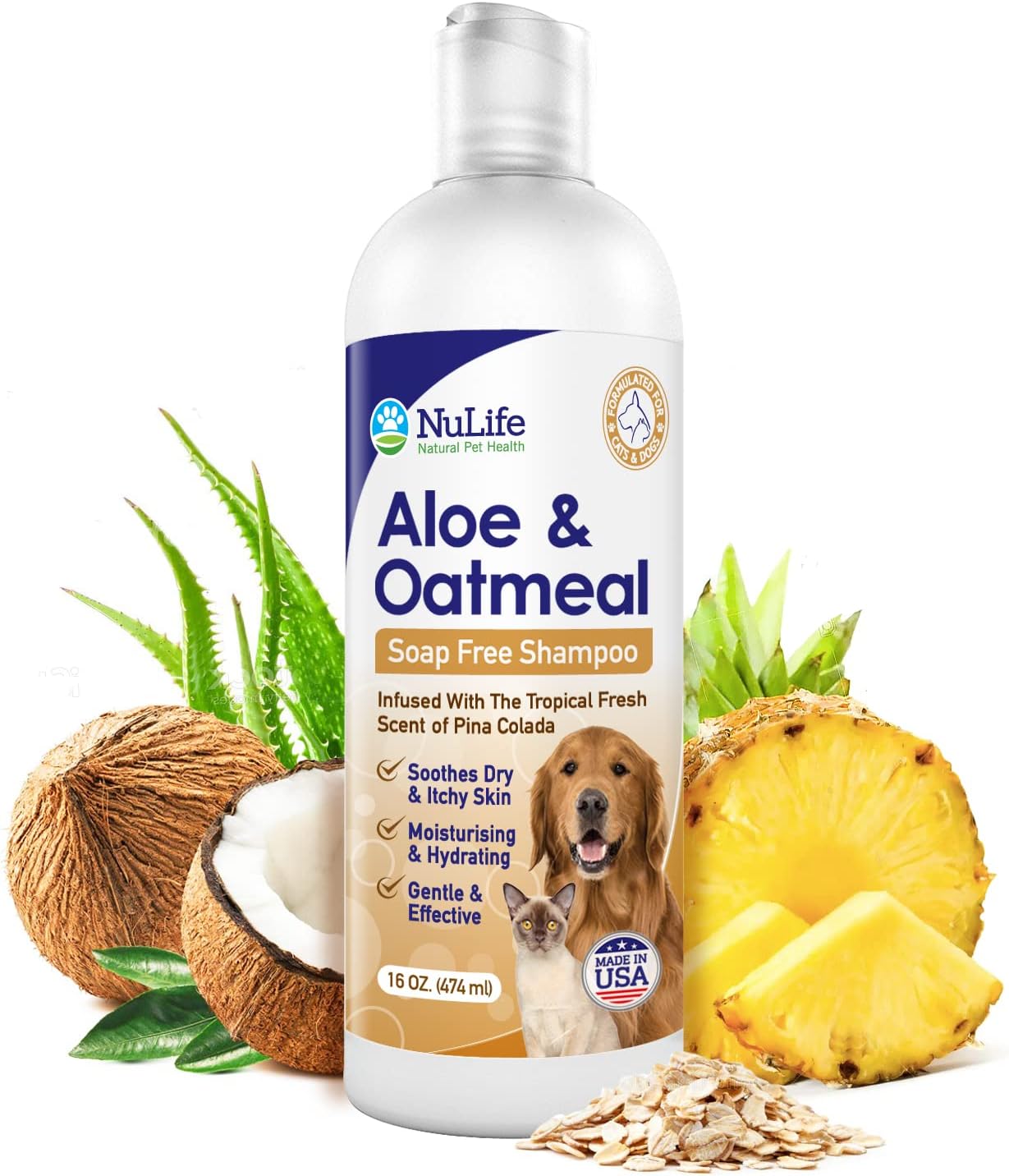
Oatmeal Dog Shampoo with Soothing Aloe Vera, Sensitive Skin Dog Shampoo for All Pets, with Tropical Fresh Pina Colada Scent, Hypoallergenic Formula Provides Relief from Allergies & Dry Itchy Skin
Check current Amazon price
Oatmeal and aloe is the pairing most vets mention when an owner asks about a dry, itchy coat, and this formula puts both near the front of the label instead of burying them behind the fragrance. Oatmeal concentration is the number to watch. A formula that lists oat early and thickens in the cup is doing more for the skin than one where oats appear after the perfume.
Aloe adds a second soothing layer, and the hypoallergenic framing means the base is built to be less likely to provoke a reaction than a salon-style shampoo. That is the whole job on a dry coat: clean the skin without stripping the lipids underneath it.
Flaws but not dealbreakers: Pina colada is a strong scent for a sensitive dog, pleasant in the tub and less pleasant if the skin is already inflamed, so this is the first bottle to patch test. Oatmeal shampoos also need dwell time to do anything, which means five to ten minutes of wet dog standing in a tub.
Good for the dog whose flaking is the main complaint, and for anyone who wants one bottle that does the treatment work instead of a shelf of half-used ones.
Upgrade pick: Jeffers Pet Apple Oatmeal Shampoo for Dogs & Cats, 128 oz – Gentle Coconut Based Formula w/Colloidal Oat Protein, Soap Free, Deodorizing Apple Scent, Sensitive Skin, Puppies Kittens Grooming Care
Upgrade pick
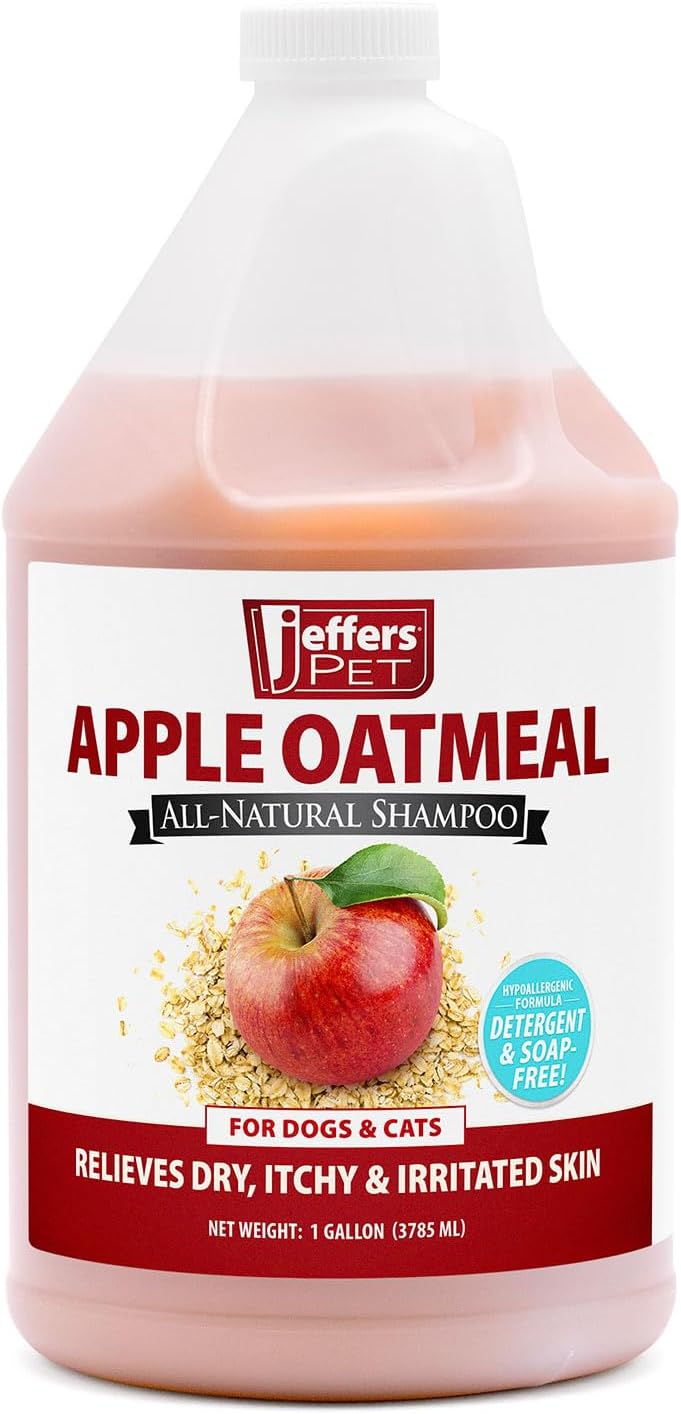
Jeffers Pet Apple Oatmeal Shampoo for Dogs & Cats, 128 oz – Gentle Coconut Based Formula w/Colloidal Oat Protein, Soap Free, Deodorizing Apple Scent, Sensitive Skin, Puppies Kittens Grooming Care
Check current Amazon price
This is the bottle that makes sense the moment you own more than one animal. It is a gallon, it is soap free, and it uses a coconut-based surfactant system with colloidal oat protein, which is the same family of ingredient as the oatmeal pick above in a size that lets you dilute without flinching.
Soap free matters on dry skin because soap leaves residue that shifts the skin's pH. A coconut-based cleanser rinses cleaner and leaves less behind, and the apple scent is milder than the tropical one, which some dogs tolerate better. It is labeled for cats as well, which is handy in a mixed household where one bottle has to cover everybody.
Flaws but not dealbreakers: A gallon jug is heavy and awkward to pour, so decant it into a smaller pump bottle and keep the bulk under the sink. It is not a leave-on conditioner either, so a curly or long coat still wants a separate detangler step.
Good for multi-dog homes, big dogs, foster households, and anyone who has accepted that bath day is now a monthly event.
A shampoo is only half the job. The wash itself is where most dry-skin dogs get worse, so run the routine in this order.
Step one: Rule out the medical causes first. Flaking and itching can come from parasites, a thyroid problem, or a food allergy, and no shampoo fixes any of those. If the itching never stops, the skin is broken, or the coat is thinning in patches, see your vet before you buy another bottle.
Step two: Brush before you wet the dog. A deshedding brush or grooming mitt pulls loose coat and dander so the shampoo reaches skin instead of hair. Brushing first also cuts down on mats, and mats hold moisture against the skin long after the bath is over.
Step three: Dilute the shampoo. Most oatmeal formulas are concentrated. Mix a capful into a cup of lukewarm water and pour it over the dog, or keep a foaming pump bottle in the tub. Diluted shampoo spreads evenly, rinses out faster, and gets used up more slowly, which is how a gallon stretches across a year.
Step four: Use lukewarm water only. Hot water feels good on your hands and strips the coat. Test it on the inside of your wrist. If it is comfortable there, it is comfortable on a dog.
Step five: Work the lather into the skin, not the hair. Use fingertips rather than nails, going with the coat direction on the legs and against it on the back and flanks. Skip the face and ears unless the formula is tearless, and use a damp cloth on the muzzle instead.
Step six: Let it sit. This is the step everyone skips. Oatmeal needs five to ten minutes of contact to do anything at all. Set a timer, keep the dog warm, and rinse when it goes off.
Step seven: Rinse twice as long as you think you need to. Residue is the most common reason a dog is itchier after a bath than before it. Rinse until the water runs clear and the coat squeaks between your fingers. If you use a conditioner or detangler, apply it after the first rinse and rinse it out of the body again, keeping it off the skin where you can.
Step eight: Dry the dog, then work on the inside. Towel dry, then use a low-heat dryer or let the dog air dry in a warm room, because a damp coat against dry skin invites yeast. Between baths, look at the diet: omega 3 fatty acids with EPA and DHA, a limited ingredient treat rotation, and a fish oil supplement if your vet approves one. Anything that stays on the coat should be lick safe, because your dog will groom it off within the hour.
The competition and why it lost
A few formula types did not make the list, and it helps to know why before you buy one on impulse.
Medicated tar and sulfur shampoos work on specific diagnosed conditions, and they are harsh by design. They dry the coat, they smell like a garage, and they are a treatment rather than a maintenance wash. If your vet prescribes one, use it exactly as directed and keep a gentle oatmeal formula for the days in between.
Flea and tick shampoos are insecticides first. They strip the coat, and if the itching is really flea bites, treating the bedding and the yard matters more than the bath does.
High-fragrance salon shampoos smell wonderful and often list perfume in the first few ingredients. On a dog with a healthy coat, that is fine. On a dog with dry skin, fragrance is one more irritant on skin that is already struggling.
Human baby shampoo is the classic mistake. Human skin sits at a different pH than dog skin, and a shampoo built for a baby's scalp is not built for a dog's lipid barrier, no matter how mild the marketing makes it sound.
Dry shampoos and foams are a decent stopgap between baths, but they leave product sitting on the skin. On a dry, flaky coat, that is usually the opposite of what you want.
What this all costs
Nobody should spend real money on an imported shampoo for a dog with dry skin before trying an inexpensive oatmeal formula and a patch test. When you choose a shampoo for a dog with dry skin, the formula matters far more than the brand on the label.
The budget pick is the cheapest way into a gentle wash, and it is where I would start if the flaking is mild. The oatmeal pick sits a few dollars above it and is the one that actually targets dry skin, so if you are only buying one bottle, buy that one. The gallon is the best value per bath by a wide margin, since 128 ounces is eight times the volume of a 16 ounce bottle, and it dilutes.
Frequency is the other half of the math. A dog with dry skin usually gets bathed every one to two weeks during a flare, then every four to six weeks once the coat settles. At two baths a month, a 16 ounce bottle covers a medium dog for a couple of months at a 1:4 dilution, and the gallon covers most of a year, which is why the bulk bottle wins for anyone with two animals.
The real cost is not the bottle at all. It is the six to eight weeks it takes for skin to turn over and for the coat to come back. Shampoo is the part you control today: a gentle formula, diluted, worked into the skin, rinsed twice, and left on long enough to matter. Do that for a month, and the flakes on the bedding will tell you whether it worked.
That is the job. Your dog's skin does the rest.