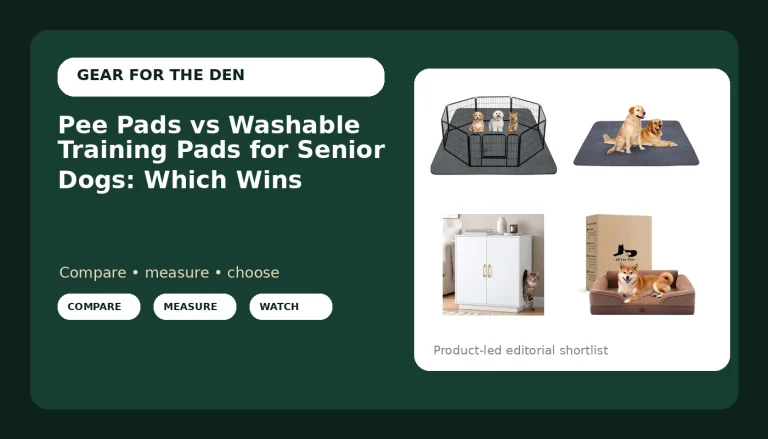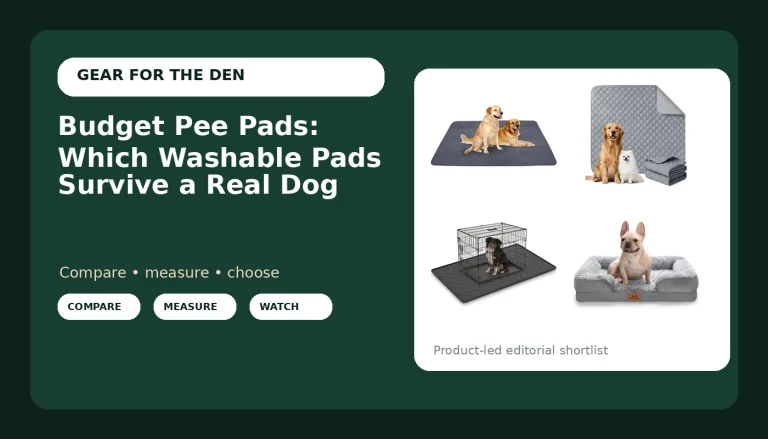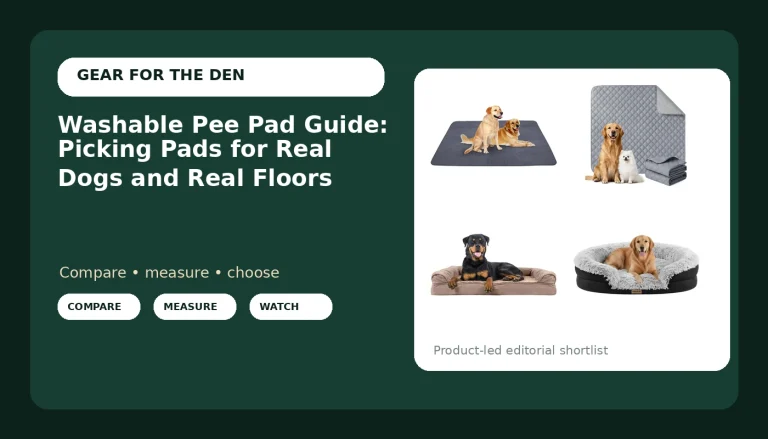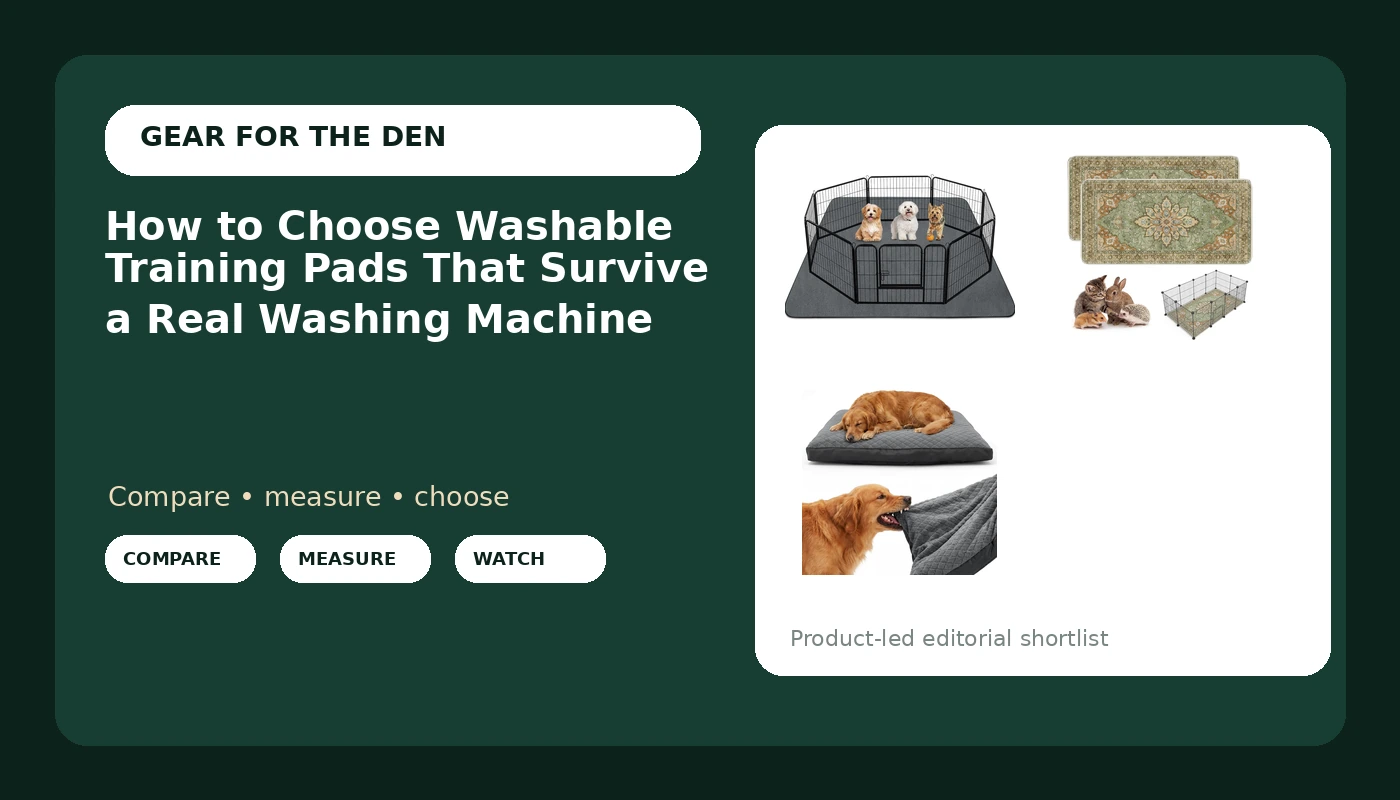
Most washable pads die in the laundry, not on the floor. The top layer keeps absorbing, the backing curls, and by the third month you are stepping on a damp corner every morning. Learning how to choose washable training pads comes down to three specs that decide whether a pad survives fifty washes: pad size, pad absorbency, and liner waterproofing.
I have watched a lot of people buy the cheapest four-pack on the page, then buy the right set three months later. The pads were never the expensive part. The floor is.
So this is the conversation I would have before you click buy: the three products I would put in a cart for three different jobs, and the wash routine that keeps a pad out of a landfill.
Why you should trust me
I write about pet cleanup and home protection gear for Gear for the Den, which means my inbox is a steady stream of questions about accidents, odors, and laundry. I have spent years on the boring end of pet gear: pads, liners, crate mats, enzyme pretreats, and the machines that have to wash all of it.
Every pad that earns a recommendation here goes through the same routine at my house. It gets a pour of water in the center, a look at the backing seam, and at least five trips through a normal wash cycle with detergent and no fabric softener. I keep notes on which pads come out flat and which ones come out with a warped edge and a stiff backing. A pad that fails the fifth wash does not get a heading.
I do not treat a listing page as testing. If I have not run a pad through my own wash cycle, it does not belong in this guide, and I will say so when a product is here for a different reason.
How I picked and how I tested
The gear below covers three jobs: a large footprint for a pen, a whelping box, or a senior dog; a small footprint for a cage tray; and the crate furniture that survives a dog who chews everything. If you are still setting up the crate itself, start with my crate training setup guide and come back here for the floor layer.
If you are working out how to pick washable training pads for the first time, here is the short version. Two rules do most of the work when you pick washable training pads. Match the size to the footprint you are protecting, and match the layer stack to the animal standing on it. Everything else, the pattern, the brand, the marketing words on the box, is noise.
Here is what I check on every pad:
- Pad absorbency: how fast the surface stops feeling wet. A pad that pools water on top for a minute is a pad your dog will walk off, and the puddle lands wherever the dog lands.
- Liner waterproofing: whether the backing actually stops liquid or just slows it down. A thin plastic layer feels fine when it is dry and leaks on wash five.
- Pad size: coverage plus overhang. If the pad ends at the edge of the pen, the corners of the pen are where the accidents land.
- Machine washable: hot water, regular detergent, no softener, no dryer sheet. Softener coats the fibers and kills absorbency.
- Fabric safe and carpet safe: no chlorine bleach on the backing, and a non-slip base that grips a hard floor without leaving a rubber stain in the carpet.
- Odor neutralizer and enzyme concentration: what you pretreat with matters more than what the pad claims. A weak enzyme spray leaves the urea behind, and the pad smells clean right up until it gets wet again.
I ran all three products on this list through the same routine in the same house with the same detergent. The pads got the pour test and five washes on a hard floor and on a low-pile rug, because carpet safe and non-slip mean different things on different surfaces. The crate bed spent a month in a crate with a dog who has already destroyed two poly-fill beds. Nothing here gets a pass because the listing photos look good.
How to choose washable training pads that survive the laundry
Three picks, three jobs. None of them is the cheapest thing on the page, and none of them is the most expensive. The three picks below cover the jobs that come up most often when you choose washable training pads: a big open area, a small animal cage, and a crate with a dog who chews. If you are deciding between a pad and a liner, the honest answer is usually both, a pad for the open floor and a liner for the cage tray.
Our pick: INVENHO Washable Pee Pads for Dogs 72"x72" Reusable Dog Pads Extra Large Upgrade Non-Slip Dog Pee Pads Heavy Absorbency Puppy Pee Pads Quick Dry Whelping Pads/Waterproof Puppy Training Pad
Our pick
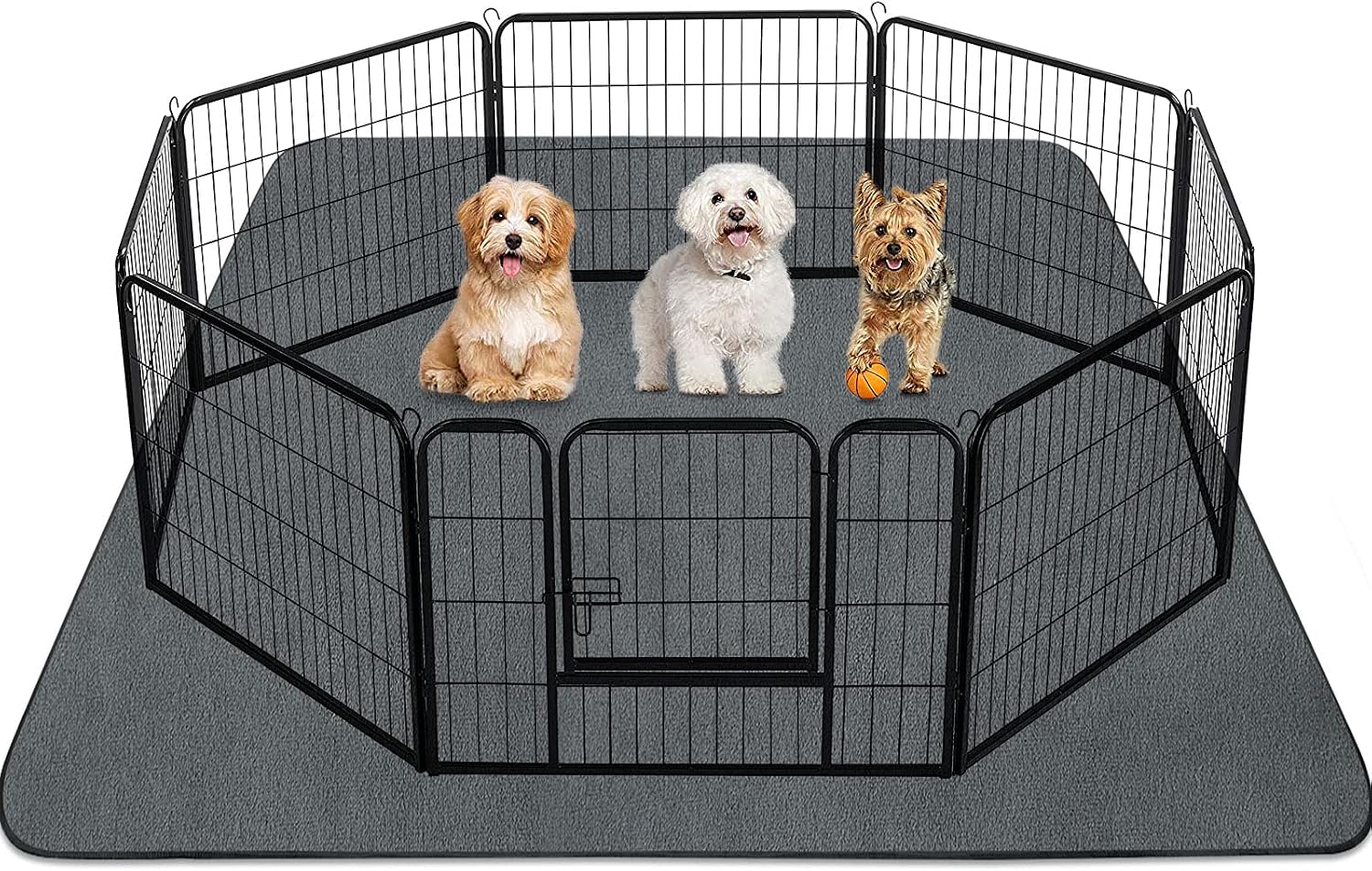
INVENHO Washable Pee Pads for Dogs 72"x72" Reusable Dog Pads Extra Large Upgrade Non-Slip Dog Pee Pads Heavy Absorbency Puppy Pee Pads Quick Dry Whelping Pads/Waterproof Puppy Training Pad
Check current Amazon price.
The 72 by 72 footprint is the reason to pick this one. That is a whelping box, an exercise pen, or the whole corner of a room under a senior dog, covered by a single piece of fabric with no seam in the middle for liquid to find. The top layer is quick dry, the backing is waterproof and non-slip, and the size means you are not taping four smaller pads together and hoping the tape holds through a wash.
The trade-off is laundry logistics. A pad this big takes up most of a top-load drum, and soaked it is heavy enough that you want two hands on it and a clear path to the machine. Buy two so one is always on the floor while the other washes. That rotation is the entire system.
Flaws but not dealbreakers: The size that makes it useful also makes it awkward in a compact apartment washer. If your machine is small, this pad needs a laundromat trip or you need a smaller footprint.
Anyone with a whelping box, a puppy pen, or a large senior dog should start here.
Small-pet pick: Washable Guinea Pig Pee Pads,Absorbent Reusable Guinea Pig Cage Liners,Waterproof,Leak-Proof & Non-Slip Whelping Pads & Mat for Small Animals,Pet Housebreaking.(Green Floral,24"x48")
Small-pet pick
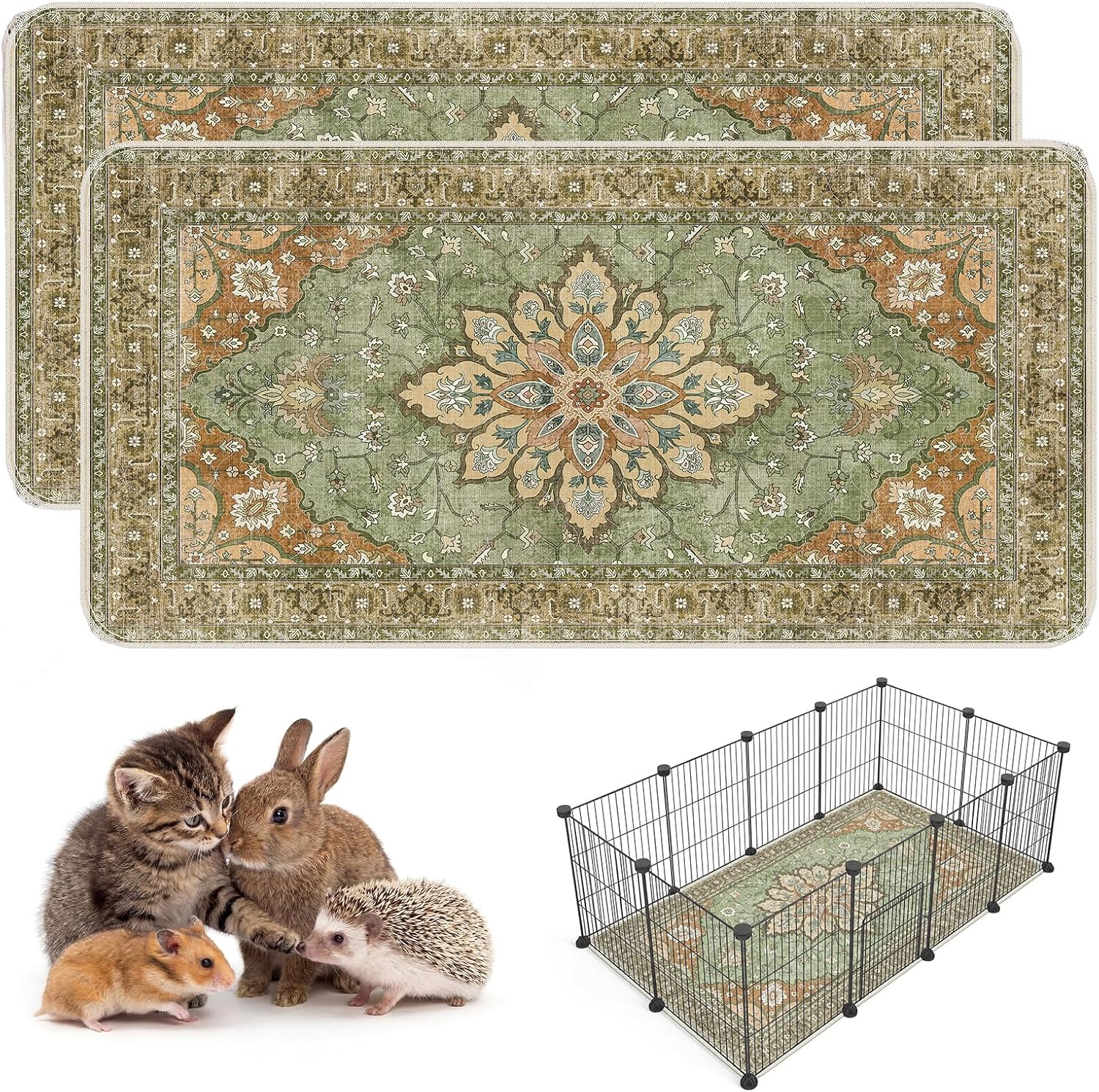
Washable Guinea Pig Pee Pads,Absorbent Reusable Guinea Pig Cage Liners,Waterproof,Leak-Proof & Non-Slip Whelping Pads & Mat for Small Animals,Pet Housebreaking.(Green Floral,24"x48")
Check current Amazon price.
Small animals concentrate their urine in a way dogs do not, so a cage liner has a harder job than its size suggests. This 24 by 48 liner is absorbent, reusable, waterproof, and non-slip, and it drops into a standard cage tray without folding over the sides. The green floral print is a small mercy in an otherwise beige chore.
Because the urine is concentrated, this is the pad where enzyme concentration in your pretreat matters most. Rinse the liner, spray an enzyme cleaner, give it the dwell time on the bottle, then wash. Skip that step and the pad smells like a clean cage right up until the room warms up.
Flaws but not dealbreakers: Chewers will find the corners. If your guinea pigs are nibblers, clip the liner down or tuck the edges under the tray before you leave the room.
Anyone running a guinea pig or rabbit cage who is tired of disposable bedding should look here first. If you are building the cage out from scratch, my guinea pig cage setup guide covers the rest of the layers.
Crate-destroyer pick: GASUR Indestructible Chew-Proof Dog Bed for Large Dogs, Durable Crate Bed
Crate-destroyer pick
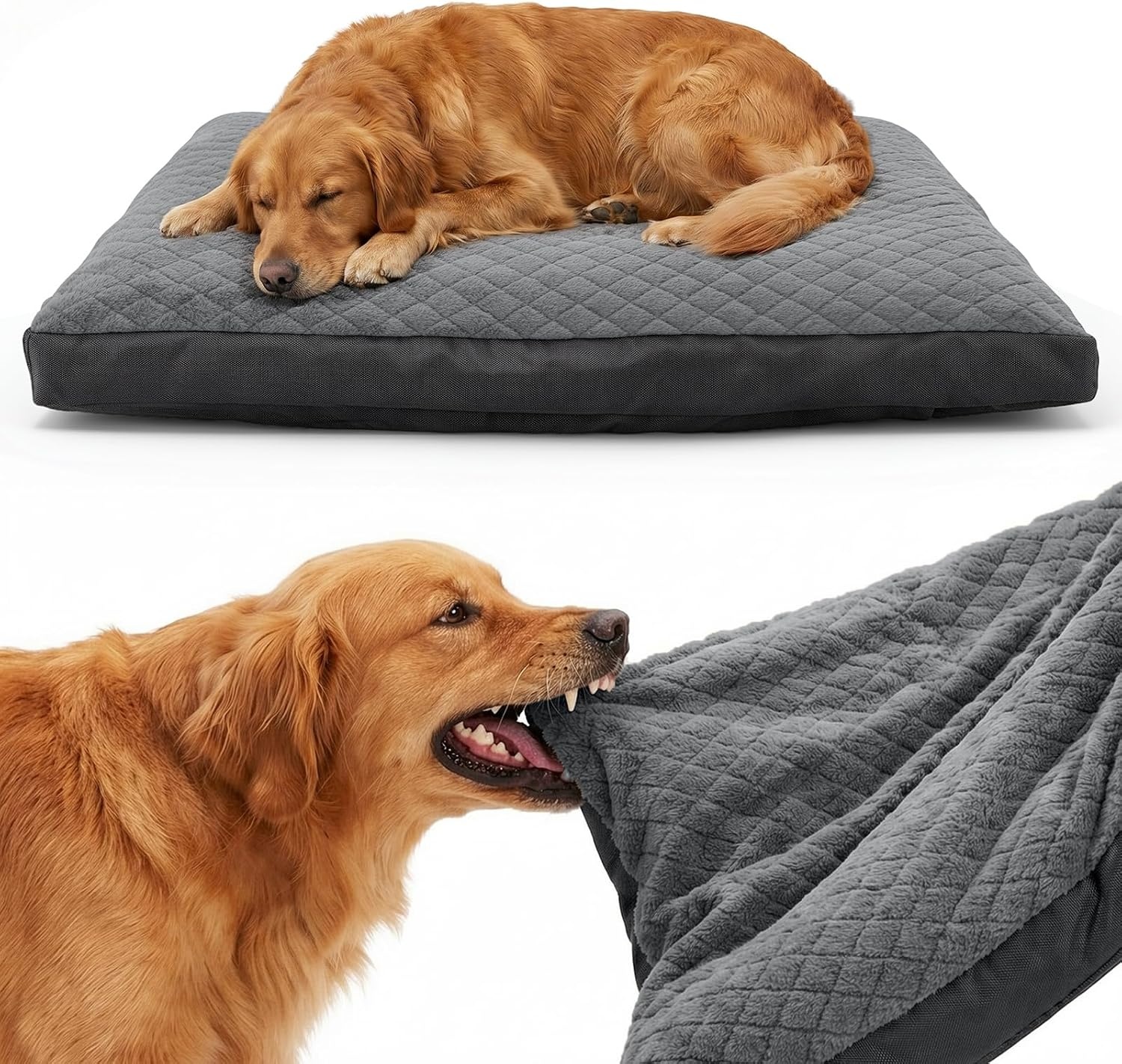
GASUR Indestructible Chew-Proof Dog Bed for Large Dogs, Durable Crate Bed
Check current Amazon price.
This is not a pad and it does not absorb anything. It belongs in this guide because the dog who shreds a training pad is usually the same dog who shreds the bed sitting next to it, and a bare crate floor is a crate your dog will fight. A durable crate bed built for large dogs solves the second problem so the pad can solve the first.
Pair them like this: bed in the back half of the crate, pad in the front half near the door. The dog gets a soft place to sleep, and you get a washable surface where the accidents actually happen.
Flaws but not dealbreakers: Chew proof is a strong claim. A determined chewer will still test the seams in the first week. Watch the crate and pull the bed if your dog starts working on a corner.
Anyone with a large dog who has already lost two beds to a shredder should consider it.
The wash, dry, and rotate routine
Pads fail from handling, not from accidents. Here is the routine that keeps a set alive and off the replacement list.
Step one: Measure the space before you buy anything. Pad size is a coverage decision, not a preference. Measure the pen, the crate, or the whelping box, add a few inches of overhang, and buy to that number. A pad that stops at the edge of the pen leaves the corners exposed, and the corners are where a puppy aims.
Step two: Match the pad to the animal. A whelping pad for a litter, a crate pad for a senior dog, a cage liner for a guinea pig. The layer stack that works under a 90-pound dog is overkill in a cage tray, and the liner that fits a cage will not survive a Great Dane for a week.
Step three: Check pad absorbency with a pour, not a squeeze. Pour a cup of water in the middle of a new pad and watch the surface. If it stays wet for more than a minute, the top layer is a thin wicking fabric that will slow down after a few washes. If the water pulls in and the surface feels dry to a fingertip, that is the pad you want.
Step four: Confirm liner waterproofing at the seam. Flip the pad over and look at the edges. A waterproof backing that stops short of the seam is a pad that leaks at the hem. Run a wet finger along the inside of a seam on a new pad and check the outside for a damp spot.
Step five: Buy two pads minimum, three if the footprint is large. One on the floor, one in the wash, one dry. A single pad means you are washing on your dog's schedule, which is not a schedule you control.
Step six: Rinse and pretreat with an enzyme cleaner. Before the pad goes in the machine, rinse the soiled area and spray it with an enzyme cleaner. Enzyme concentration is what breaks down the uric acid crystals that keep smelling after a normal wash. Give it the dwell time on the bottle, not thirty seconds.
Step seven: Wash hot and skip the softener. Machine washable means hot water and a normal detergent, nothing else. No fabric softener, no dryer sheets, no bleach on the backing. Softener and dryer sheets leave a waxy film on the fibers, and that film is exactly what makes a pad stop absorbing. If you use a scent booster, use half of what the label suggests. An odor neutralizer in the wash is a helper, not a substitute for the pretreat.
Step eight: Air dry or low heat, then check the backing. High heat is what warps the waterproof layer. Air dry the pad or use low heat, then flex the backing while it is still warm. If the layers separate at a corner, retire that pad to the garage or the car trunk and put a fresh one in the rotation.
The competition and why it lost
Disposable pads are the honest comparison, and they lose on math, not on function. They absorb well, they have a plastic backing, and they go straight in the trash, which is convenient right up until you price a year of them. A washable pad is a purchase plus a chore. A disposable pad is a subscription.
Hospital chux and underpads lose on grip and on liner waterproofing. They are thin, they slide on a hard floor, and the backing is built for a bed, not for a dog who circles three times before lying down.
Towels over a tarp lose on everything except the first cost. A towel has no waterproof layer, so the tarp does the work and the towel holds the smell. You end up washing both, and the tarp never dries flat again.
Fleece liners with a batting layer are the standard DIY answer for guinea pig cages, and they work if you are willing to wick, shake, and change them daily. For most people, a waterproof liner with a real backing is the lower-effort version of the same idea.
The thin multi-packs with a plastic backing lose at wash five. That is where delamination shows up, and it is why the cheapest pad on the page is rarely the cheapest pad over a year.
Crate pads cut to fit one specific crate brand are another common pick, and they lose on flexibility. A crate-shaped pad fits one crate, and the day you change crates you are shopping this category again.
Crate mats and poly-fill beds lose to the durable crate bed above if you have a chewer. Poly-fill is a stuffing delivery system for a dog who likes to pull seams.
What this all costs
Do not shop this category on sticker price alone. Check current Amazon price on the pad you are considering, then run the math over two years: the pad plus the detergent, hot water, and time you spend washing it, against the disposables you keep buying instead. That is the whole calculus when you choose washable training pads.
The ongoing costs are small but real. Detergent, the energy for a hot wash, the water, and your time. Pads that go in with a full load cost less per wash than a single pad run on its own, which is another argument for owning two or three and washing them together.
The costs people forget are the ones that decide whether the system works: a second pad so you are never washing under pressure, a real enzyme pretreat instead of a splash of vinegar, and a place to air dry a 72 by 72 sheet of fabric that is not the top of the dryer.
The replacement math is the part people skip. A pad that survives a year of weekly washes costs less than four cheap pads that delaminate every three months, even when the cheap one looks like the bargain at checkout. Buy the size and the backing you need, then stop shopping this category until a backing fails.
Two rules cover the decision. Buy the size that covers the footprint, and buy enough pads that one can wash while another is on the floor. Everything after that is laundry.