Most cloudy aquarium water is not a filter failure. It is a bloom: bacteria, algae, or dust that multiplied because something in the tank changed faster than the tank could adjust. Search for how to clear cloudy aquarium water and you will find a dozen bottles promising a one-hour fix. Almost none of them deliver, and a couple of them make the next bloom worse by killing off the bacteria you spent three weeks growing.
The three clouds are easy to tell apart once you know what you are looking at. Milky white, especially in a tank that has been running a week or two, is a bacterial bloom, a normal part of a cycle that has not settled. Green is algae suspended in the water column, which usually means the light runs too long or the tank catches indirect sun. Gray-brown, often within a day of adding new gravel, is dust from substrate grain that was never rinsed.
I keep freshwater tanks, and the routine below is the one I run when my own water goes hazy. It is eight steps, no bottle required, and it works because it fixes the cause instead of hiding the symptom.
Why you should trust me
I have kept freshwater tanks, planted nanos, and a quarantine tank for years, and I have killed more fish with impatience than with bad gear. Cloudy water is the most common panic question in the hobby and the one with the most predictable answer, because the same three blooms show up in the same three situations in almost every tank.
What I bring is not a lab. It is the habit of writing down what changed before the water went cloudy: a new bag of gravel, a filter media swap, a longer light period, a heater that drifted. Nine times out of ten the cause is on that list. The tenth time it is a dead snail behind a rock.
I do not sell clarifiers, and I do not get paid to recommend them. If a bottle solved this, the article would be one sentence long.
How I picked and how I tested
The gear here is not a shopping list for a new hobbyist. It is the three pieces that do real work while you wait out a bloom: the tank that holds the water, the heater that keeps the bacteria and the fish stable, and the light that decides whether you grow green water or plants.
I compared each item against that job. For the tank, that meant tank volume and glass clarity, because a rimless ultra-clear panel makes a mild haze look dramatic and then makes it obvious when the water snaps back to clear. For the heater, I looked at wattage against volume, the thermostat range, and whether the unit is fully submersible, since an adjustable dial is worth more during a bloom than a fixed setting. For the light, I looked at wattage and the tank size it is rated for, and whether it runs on a timer, because photoperiod is the lever that controls green water. A kelvin rating is worth checking if you keep live plants, but it matters far less than the timer when the water is green.
There is no single ideal clear cloudy aquarium water product, because the cloud is a symptom and the cause changes from tank to tank.
The numbers worth knowing: a bacterial bloom typically clears in three to seven days once the food source drops, a green tank clears when the photoperiod falls to six to eight hours, and a cycled filter processes waste at a rate you measure in gallons per hour through the filtration stage. That last number is why the filter matters more than the polish.
Gear that helps clear cloudy aquarium water
None of this gear clears the water for you. What it does is remove the variables that keep a bloom going, so the eight steps below can finish the job. If you are starting from nothing, the freshwater aquarium setup list covers the rest of the kit.
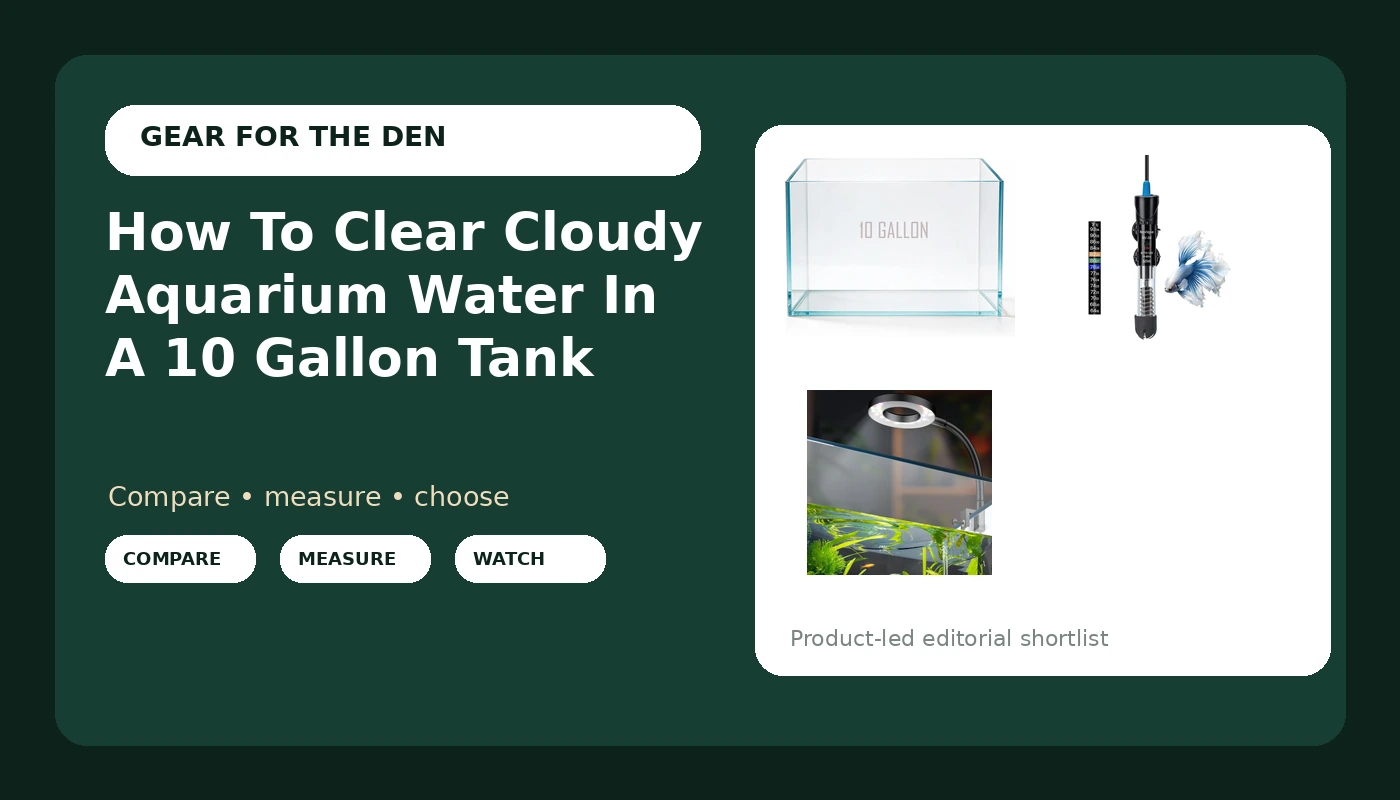
Our pick: AQUA DAREN 10 Gallon Rimless Aquarium Fish Tank, Ultra-Clear Nano Glass Rectangular Fish Tank L17.7"×W11"×H11.8" Thickness 6mm Glass Aquarium (M 10 Gallons)
Our pick
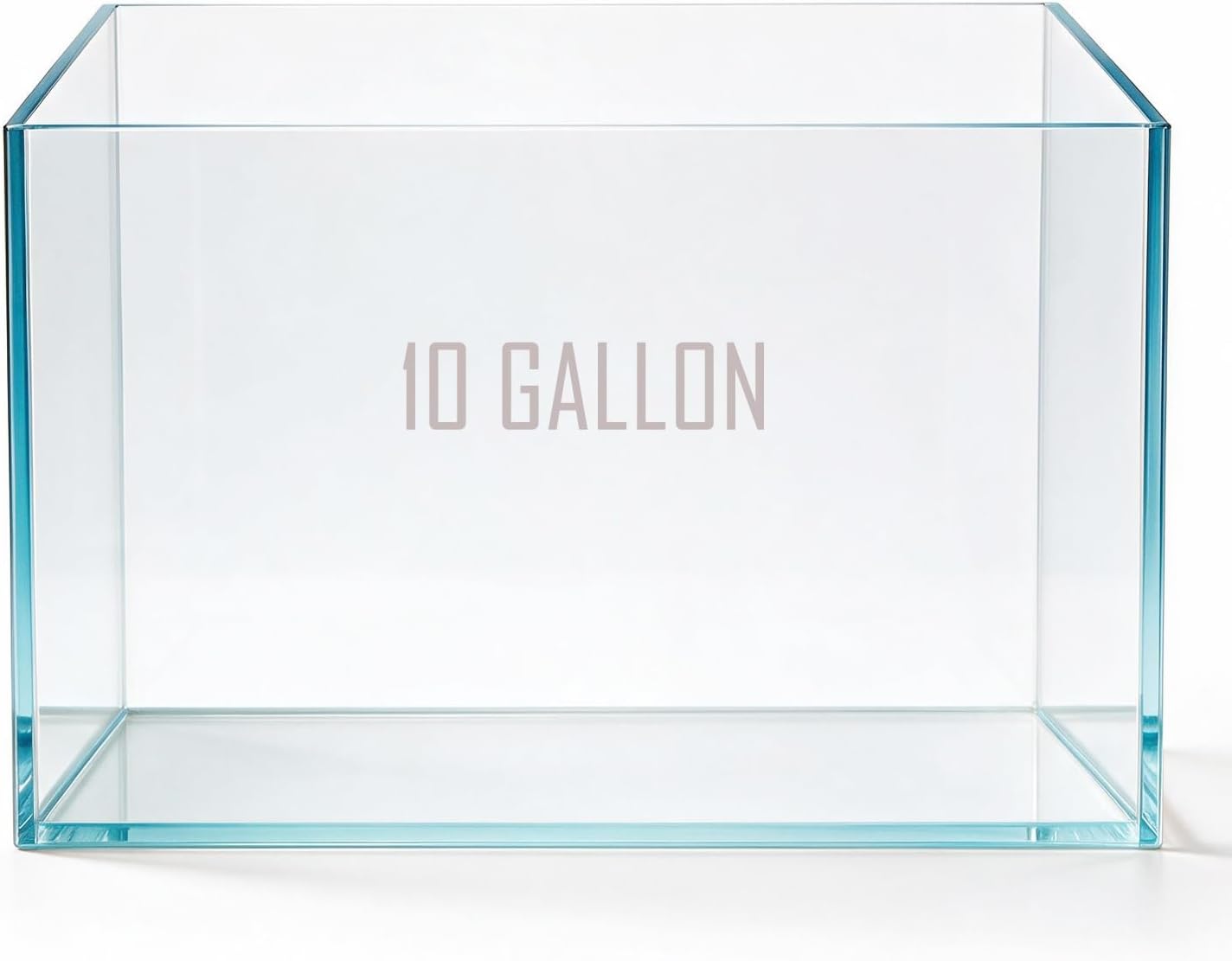
AQUA DAREN 10 Gallon Rimless Aquarium Fish Tank, Ultra-Clear Nano Glass Rectangular Fish Tank L17.7"×W11"×H11.8" Thickness 6mm Glass Aquarium (M 10 Gallons)
A 10-gallon rimless tank is the right size for this problem. Ten gallons is big enough to hold a stable cycle and small enough that a 25 percent water change is two and a half gallons and ten minutes of your evening. The footprint, roughly 17.7 by 11 by 11.8 inches, fits a desk or a counter, and the 6mm glass is thick enough that you stop worrying about a chip every time you set something down on the rim.
The ultra-clear glass cuts both ways during a bloom. It shows every bit of haze, which is annoying for a week and then wonderful, because you can see the exact moment the water turns.
Check current Amazon price before you commit, because rimless glass moves around with shipping and sales.
Flaws but not dealbreakers: Rimless means no trim to hide the water line, so evaporation rings show if you let the level drop. It also means no lid, which is fine for most bettas and not fine for a known jumper.
Budget pick: Novique 50W Aquarium Heater Adjustable Temperature Submersible Fish Tank Heater Water Thermostat with Thermometer for Freshwater and Saltwater Tanks
Budget pick
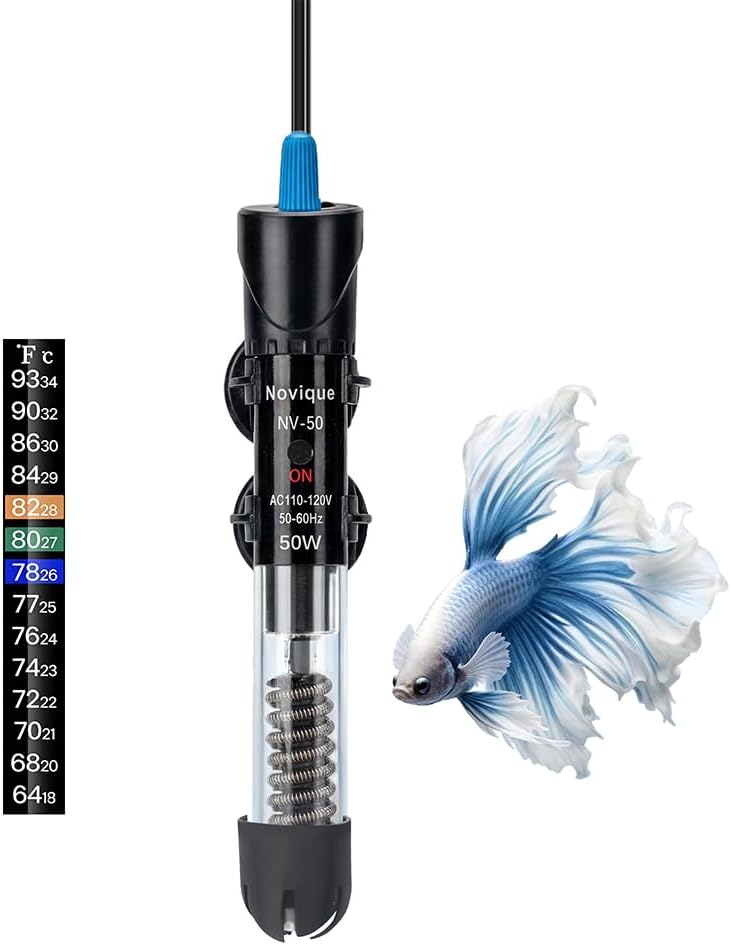
Novique 50W Aquarium Heater Adjustable Temperature Submersible Fish Tank Heater Water Thermostat with Thermometer for Freshwater and Saltwater Tanks
Temperature swings are one of the quiet causes of a bloom that will not quit. Every time the water drops a few degrees, the bacteria slow down, the fish get stressed, and stressed fish produce more waste, which feeds the cloud. A 50W heater is the standard match for a 10-gallon tank, and the adjustable thermostat lets you park the setting and leave it.
The included thermometer is the useful part. You cannot trust a dial until you have checked it against a second reading, and having one in the box means you verify the thermostat range on day one instead of guessing. It is rated for freshwater and saltwater, so it follows you to the next tank.
Check current Amazon price, and buy two if you keep a spare tank, because heaters fail at the worst possible hour.
Flaws but not dealbreakers: At 50W this is sized for a 10-gallon tank and smaller. Do not drop it in a 40-gallon breeder and expect it to hold temperature in a cold room.
Runner-up: Pawfly 6 W LED Aquarium Light for 1 to 5 Gallon Fish Tanks Clip On Fish Tank Light USB Moving Aquarium Lamp with Full Spectrum Dimmable White Blue Red Green Lights with Timer (Adapter Not Included)
Runner-up
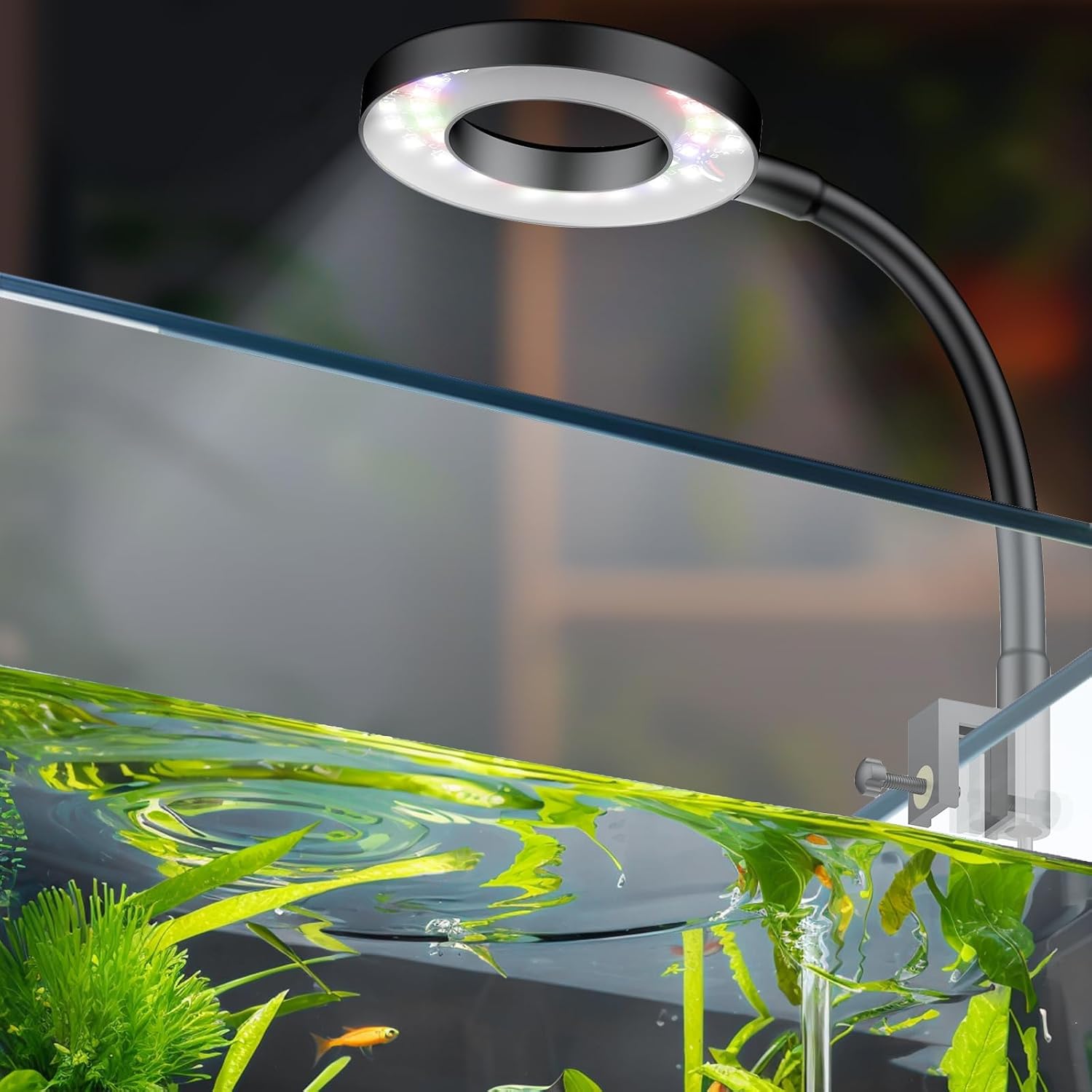
Pawfly 6 W LED Aquarium Light for 1 to 5 Gallon Fish Tanks Clip On Fish Tank Light USB Moving Aquarium Lamp with Full Spectrum Dimmable White Blue Red Green Lights with Timer (Adapter Not Included)
Green water is a light problem, and this clip-on is the cheapest way to control one. The timer is the feature that matters: set it for six to eight hours and walk away, instead of switching the lamp on when you feed the fish and off when you go to bed. The dimmable full spectrum output gives you white, blue, red, and green channels, which is more control than most nano tanks need.
Be honest about the size. It is rated for 1 to 5 gallons, so on the 10-gallon tank above it lights one end and leaves the other dim. That makes it a fit for a quarantine tank, a shrimp nano, or a hospital setup, not a replacement for a full-length fixture.
Check current Amazon price. The adapter is not included, so budget for a USB power block if you do not have a spare.
Flaws but not dealbreakers: The clamp is light-duty and the USB cable is short. Plan where the outlet lives before you clip it on.
The actual workflow, step by step
Now the part you came for. This order matters, and the waiting at the end matters more than any step before it.
Step one: Identify the cloud. White, green, or brown. Look at the water against a white card in daylight. If it is white and the tank is new, read step eight before you do anything else, because you may be about to fix a bloom that was going to fix itself.
Step two: Test the water. Ammonia and nitrite first, nitrate second. A bloom in a cycling tank usually comes with a readable ammonia number. If ammonia and nitrite read zero and the water is still milky, you have a bloom with no food source, and it will starve out on its own.
Step three: Change 25 to 30 percent of the water. Two and a half gallons on a 10. Match the temperature, treat the new water with a dechlorinator, and pour it in against a plate or your hand so you do not kick up substrate grain. Do not do a 90 percent change. A big change resets the cycle and starts the bloom over.
Step four: Cut the food. Feed half of what you normally feed for a week, or skip a day entirely. Uneaten food and the waste it becomes are the fuel. Most tanks get two to three times more food than they need, and a bloom is how the tank tells you so.
Step five: Rinse the filter media, do not replace it. Pull the sponge or the floss and rinse it in a bucket of tank water, never under the tap. Chlorinated tap water kills the bacteria in the media, and a media swap during a bloom is the single best way to make it last another two weeks. Keep the same filtration stage and just clean it.
Step six: Set the photoperiod. Six to eight hours, on a timer, off before the room lights come on for the evening. If the tank sits near a window, close the blind or move the tank. Green water needs light to live, and cutting the photoperiod is the closest thing this hobby has to a guaranteed fix for a green tank.
Step seven: Hold the temperature steady. Check the heater setting against the thermometer, and stop opening the window next to the tank at night. Stable temperature keeps the bacteria working and the fish out of stress, and a stressed fish is a waste factory.
Step eight: Wait, then polish. Give it three to seven days. If the water is still hazy after that, add a layer of fine filter floss or a polishing pad to the filter for 48 hours and change it out. A clumping clarifier can help with the last 10 percent, but it does not replace steps three through six.
Then re-test, and if the numbers are where they should be, return to your normal feeding schedule over a week. If you rushed the cycle when you set the tank up, the bloom will keep coming back until the filter catches up, which is why how to cycle a new fish tank matters more than anything on the shelf.
The competition and why it lost
Bottled clarifiers are the first thing most people buy and the least useful thing on this list. A clarifier makes small particles stick together so the filter can catch them, which works on dust and does nothing for a bacterial bloom, because the bacteria are alive and reproducing faster than you can clump them. Some of them also pull oxygen out of the water, which is the last thing a cycling tank needs.
UV sterilizers are the real fix for green water, and I will not pretend otherwise. A UV unit kills algae cells as they pass through it, and on a tank that cannot shake a green bloom, it is worth the money. It is not in this guide because it is a different purchase with its own flow rate math, and because a timer and six hours of darkness solve most green tanks first.
Diatom filters and canister filters with polishing cartridges do a beautiful job on dust and fine haze. They are also overkill on a 10-gallon tank, and a canister on a 10 is a flow rate mismatch that blows your fish around the glass.
Bacteria-in-a-bottle starters and slime coat tonics are not competition at all. A starter helps a brand new tank, and I use one when I set up a filter from scratch. It will not clear water that is already cloudy, and it will not save you from step four.
Aquarium salt sold as a cure-all is the last one. Salt has real uses, mostly for parasites and nitrite emergencies. It does not clear a bloom, and in a planted tank it kills plants.
What this all costs
The gear is three line items. The tank is the big one, the heater is the smallest, and the light sits in the middle. Check current Amazon price on each before you decide, because the tank especially moves with shipping and sales.
Then there is the part that costs nothing. Dechlorinator runs pennies per water change. Filter floss is a few dollars for a roll that lasts a year. The eight steps cost you time: about twenty minutes on day one and five minutes a day for the rest of the week.
Compare that to the alternative, which is buying a clarifier, then a UV sterilizer, then a new filter, and still staring at cloudy water on day ten. The math on doing it in order is not close.
The correct clear cloudy aquarium water routine for your tank is the one you will run again next month without thinking about it. Write the steps on a card, tape it inside the stand, and check the water against a white cup once a week. Blooms get a lot less scary when you already know which of the three you are looking at.
That is the job. Your filter was built to do this. Let it.