A dog bed that slides across the floor is not a bed. It is a sled. If you want to know how to keep a dog bed from slipping, the answer is almost never a new bed. It comes down to three things: what the bed sits on, how heavy the bed is, and how your dog gets in and out of it.
Most beds fail the same way. A light bed with a slick nylon or oxford base sits on tile, hardwood, or vinyl plank. The dog launches in, the whole thing scoots two inches, and by the end of the week the bed is wedged under the coffee table and the cover is twisted around the foam.
This guide fixes that in two parts. First, three beds that solve the problem in three different ways, with the trade-offs spelled out. Then an eight-step workflow you can run this afternoon on whatever bed you already own.
Why you should trust me
Dog comfort is the beat I spend the most time on at Gear for the Den: crate setup, bedding, floor protection, and the small fixes that keep a house from smelling like a kennel. I have also spent enough time around foster dogs to know that a sliding bed is a behavior problem as much as a hardware problem. A dog that cannot get settled will pace, and a dog that paces will not stay on a bed that moves under them.
What I will not do is hand you lab numbers I did not measure. What I can tell you is what actually moves a bed, what stops it, and which of the fixes hold up to a large dog with a running start. I also keep a running list of the failure modes that show up most in reader mail: covers that shrink, dot backing that peels, beds that fit the crate pan on day one and do not fit after a wash. That list shaped this piece far more than any spec sheet.
If you are rethinking the sleeping setup itself, our guide to the best orthopedic dog beds for senior dogs covers the foam side of that decision.
How I picked and how I tested
I picked these three beds on four criteria: the base material and how much of it touches the floor, the weight of the whole unit, how the cover attaches, and whether the cover is a washable fabric sitting over a waterproof layer. Those four things decide whether a bed stays put far more than any wording on the box. I ignored the marketing extras that do nothing for grip, including air-channel counts, "orthopedic" used as a decoration, and cover thread count.
For the test, I used the same three checks you can run in a store aisle or your own living room:
- The push test. Set the bed down and push it with one flat hand, the way a dog's chest would. If it slides under light pressure, it will slide.
- The launch test. Watch your dog get in. A dog that jumps and lands hard is a different problem from a dog that steps in and circles three times.
- The creep test. Mark the floor with painter's tape, then check the tape line a week later. More than an inch of creep means the bed needs a grip layer.
Then there is fit, which matters as much as grip. Crate size decides whether a bed can be a full mat or has to be a thin pad, mat thickness decides whether the crate door still closes, and cover ventilation decides whether an elevated bed traps heat in summer.
The gear that helps keep a dog bed from slipping
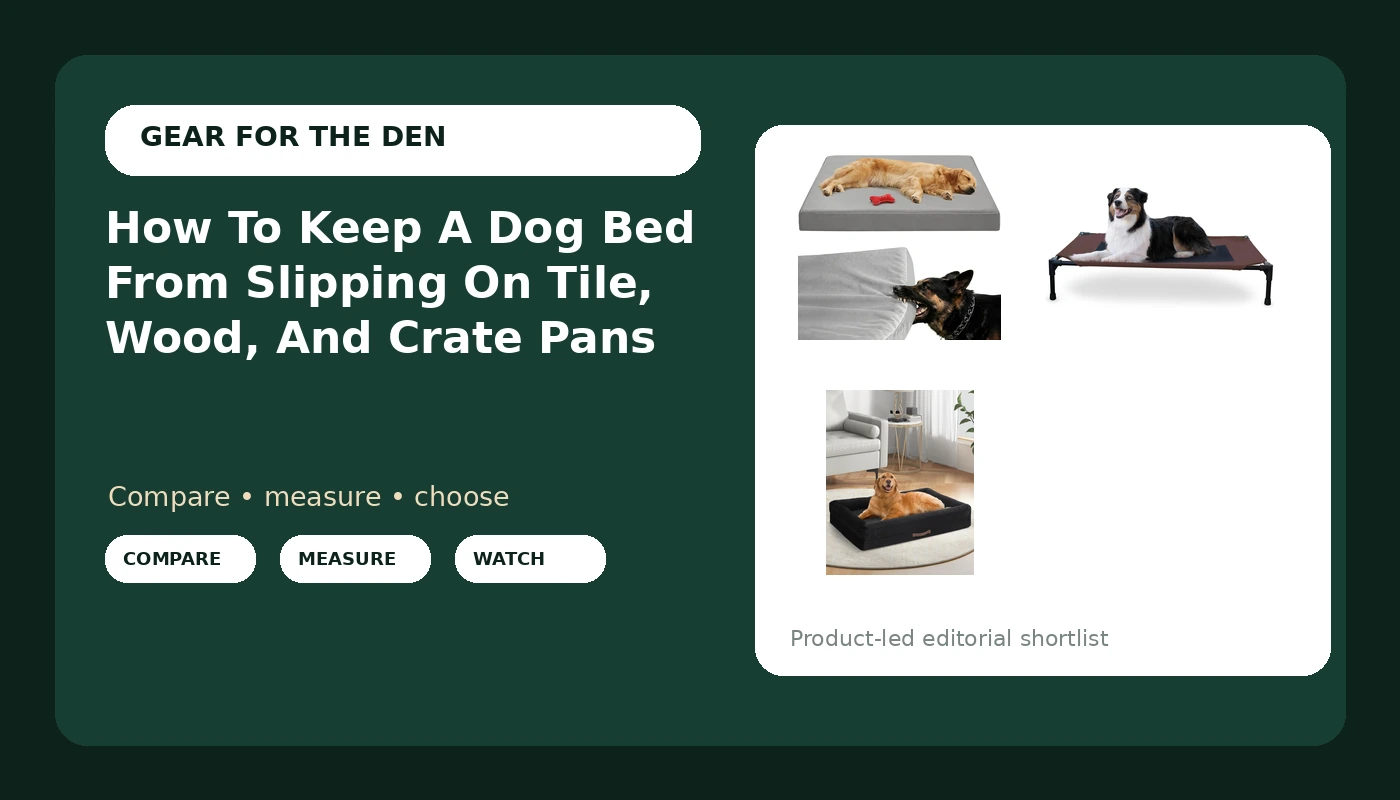
Three beds, three approaches. One is low and flat with almost no sail area for a paw to catch. One lifts the dog off the floor entirely. One is heavy enough, and shaped well enough, that the dog pushes against it instead of pushing it across the room.
Budget pick: LEXTRO Indestructible Chew Proof Dog Bed for Aggressive Chewers, 36x27x3
Budget pick
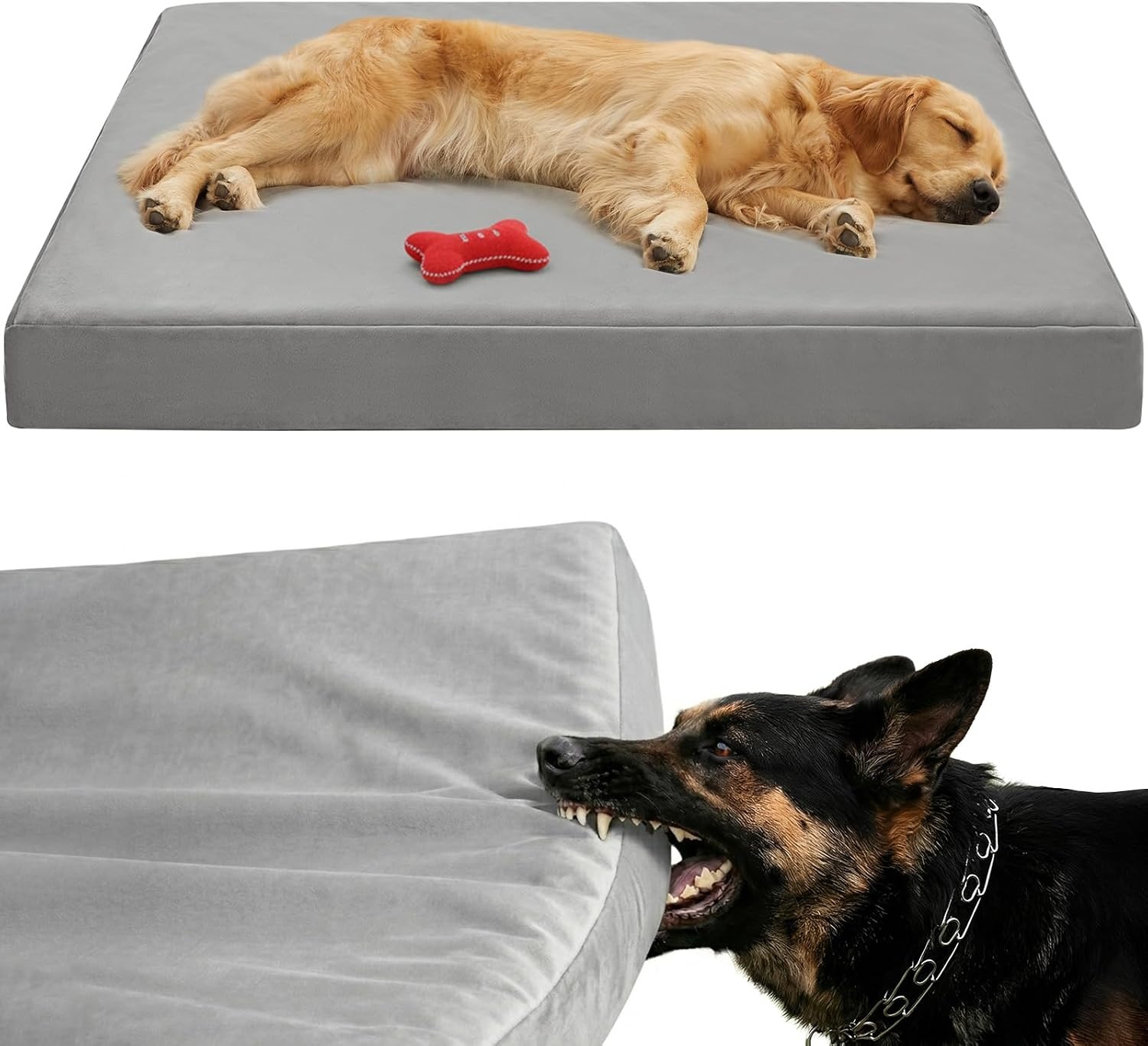
LEXTRO Indestructible Chew Proof Dog Bed for Aggressive Chewers, 36x27x3
Flat and low is the underrated anti-slip design. This LEXTRO mat measures 36x27x3, so there is very little height for a chest or a paw to catch, and a bed with no height has no lever arm to work with. It also solves the other half of the problem: a chewed cover is a bed that loses its shape, and a bed that loses its shape bunches up and starts to walk. Check current Amazon price.
Flaws but not dealbreakers: Three inches is thin. This is a floor mat, not an orthopedic bed for a senior dog with hip trouble, so if you need real joint support, this is the wrong tool for that job.
Anyone with a determined chewer, a crate mat that keeps getting dragged out of the crate, or a dog that likes to sprawl flat will get the most out of it.
Our pick: K&H Outdoor Elevated Dog Bed for Medium & Large Pets, Chocolate, 42x30in
Our pick
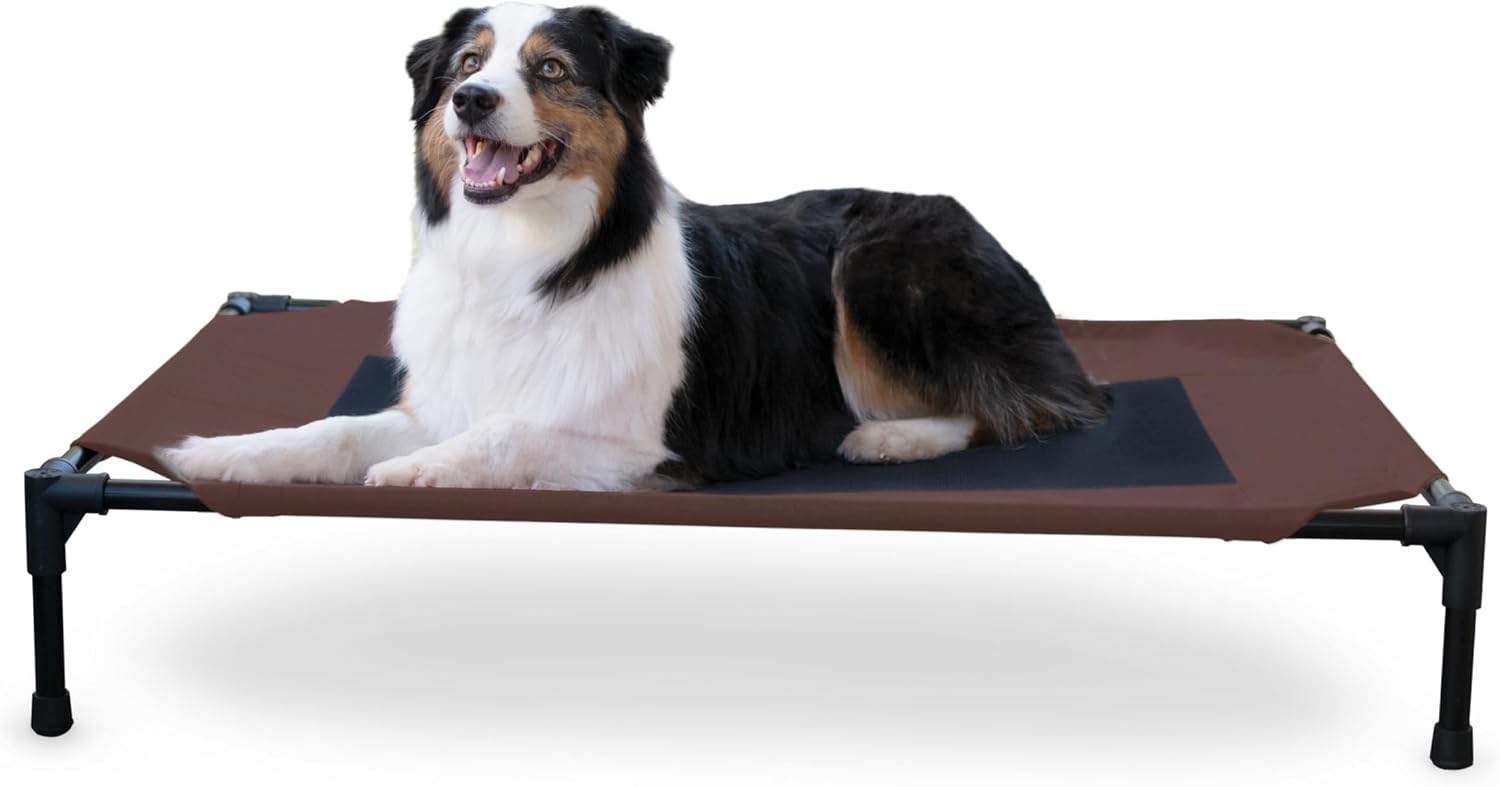
K&H Outdoor Elevated Dog Bed for Medium & Large Pets, Chocolate, 42x30in
An elevated bed sidesteps most of the problem, because the dog climbs onto a suspended surface instead of launching into a pile of fabric on a slick floor. The 42x30in footprint is sized for medium and large dogs, and the open underside is why these beds stay cleaner and cooler: cover ventilation keeps the sleeping surface from trapping heat and damp underneath it. Check current Amazon price.
Flaws but not dealbreakers: Four hard feet on polished tile can skate when a big dog hops in. A rubber furniture cup under each leg, or a small rug, kills that in one move.
Anyone who wants a bed for a patio, a garage, or a dog that runs hot should start here.
Upgrade pick: Upvilla Orthopedic Dog Bed XL, Four-Sided Dog Sofa, Washable Cover, Black
Upgrade pick
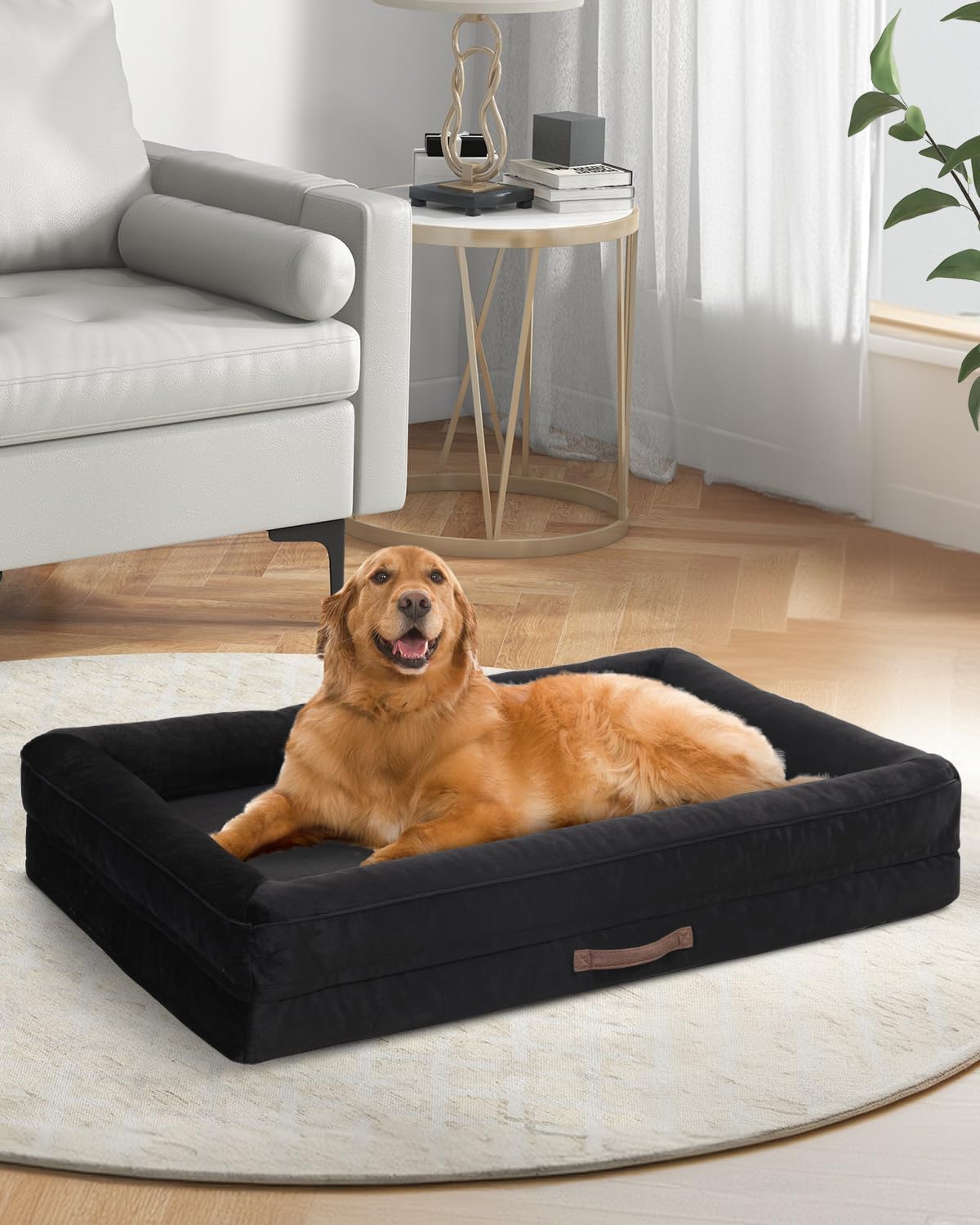
Upvilla Orthopedic Dog Bed XL, Four-Sided Dog Sofa, Washable Cover, Black
Mass is the anti-slip feature nobody advertises. A big four-sided sofa bed carries enough weight and enough contact area to stay where you put it, and the bolsters give the dog something to push against, so the energy of lying down goes into the walls instead of into sliding the whole bed across the room. The washable cover matters more than people expect: a bed you can wash is a bed you keep, and a bed you keep is a bed you only have to anchor once. Look for a waterproof layer under that cover so an accident does not soak the foam. Check current Amazon price.
Flaws but not dealbreakers: XL means XL. Measure the corner before you commit, because this bed wants a wall behind it and a wall beside it. It also will not fit most crates.
Anyone with a senior dog, a large dog, or hardwood floors that show every scratch will do best here.
The actual anti-slip workflow
Now the part that matters, because you can run all eight steps on the bed you already own. There is a correct keep a dog bed from slipping order of operations, and it starts with the floor, not with the bed.
Step one: Find out what is actually moving. Get on the floor and push the bed with one flat hand. Then watch your dog get in. There are only three suspects: a smooth floor, a light bed, or a dog with a running start. Most sliding beds have two of the three, and naming them tells you which step below actually matters.
Step two: Measure the footprint and the crate size. Write down the bed's length and width and the clearance on all four sides. If the bed lives in a crate, measure the crate pan and the interior width. Crate size decides whether you can use a full mat or a thin pad, and mat thickness decides whether the door still closes. A bed crammed into a crate cannot sit flat, and a bed that cannot sit flat will slide.
Step three: Fix the floor before you fix the bed. A rug, a rug pad, or interlocking foam tiles under the bed does more than any anti-slip claim printed on a label. The goal is a surface with grip. On tile, laminate, or vinyl plank, a small rug with a rubber-backed pad is the highest-value fix in this whole list.
Step four: Add a grip layer under the bed. Cut a piece of shelf liner or a non-slip rug pad to the size of the bed base, and put it between the bed and the floor. Hook-and-loop strips work well on a crate pan. If the bed sits on concrete or outdoors, keep the waterproof layer between the foam and the floor so a damp base does not turn into a mold problem.
Step five: Anchor it to the crate or a wall. Inside a crate, a bed stays put when it fills the pan with no gap to slide into. Check the bar spacing so a corner of the bed cannot poke through the wires, and if you are using an exercise pen, count the panel count and check the gate height so the bed cannot be shoved under the gate. Out in the room, push the bed into a corner and let two walls do the work. Our crate setup guide covers the sizing side of that.
Step six: Change how your dog gets in. A dog that launches is a dog that moves furniture. A step or a low ramp takes the launch out of the equation, and a lower bed helps a dog that has started to hesitate about jumping at all. Reward the dog for lying down quietly instead of bouncing in, and you change the physics over time.
Step seven: Keep the grip clean. Grip layers stop gripping when they are full of hair and dust, so vacuum the pad every couple of weeks. Wash the washable fabric cover on the label's schedule and check the waterproof layer for cracks while it is off. Then re-check mat thickness, because foam compresses, and a compressed mat sits lower and starts to creep again.
Step eight: Check it after a week. Tape line, seven days, one measurement. If the bed has moved less than an inch, you are done. If it has moved more, add the next layer: grip pad first, then a corner, then a heavier bed. Do not buy a new bed until you have tried steps three through five.
The competition and why it lost
Not everything that claims to solve this deserves a place on the list.
Memory foam beds with slick nylon bases lost immediately. The foam is comfortable and the base is a sled, and no amount of cushioning fixes a base that has no grip.
Beds with a printed "non-slip" dot backing lost on durability. Those dots are applied to the fabric, and two or three wash cycles later they peel away in a sheet and leave you with the same slick base you started with.
Thin crate mats lost on shape. A pad that folds and bunches in the crate pan gives the dog nothing flat to lie on, and a bunched pad slides.
Round bolster beds lost on footprint. A round bed on tile has one small contact patch and a lot of leverage when a dog pushes off the side of it.
Elevated beds with hard plastic feet lost on polished concrete. Great bed, wrong floor, unless you add a rubber cup under each leg.
And any bed sized four inches larger than the crate pan lost, because a bed that cannot sit flat will never sit still.
What this all costs
The ideal keep a dog bed from slipping setup is the one you stop thinking about, and it is rarely the most expensive one.
The grip layer is the cheapest part of the whole job: a rug pad or a roll of shelf liner costs less than a bag of treats and does most of the work. The bed is the bigger line item, and the three above sit at three different points, so check current Amazon price on each before you decide which problem you are actually solving.
What you are really buying is not grip. It is a cover you can wash, a waterproof layer that keeps the foam from souring, and a base that does not need to be re-engineered every six months. A bed that survives three years of a large dog costs less per day than one you replace twice a year, and a bed that stays in one place is a bed your dog will actually sleep in.
Add a rug pad, push the bed into a corner, and measure the creep after a week. That is how to keep a dog bed from slipping without buying anything new. Your floor was never the problem. The base was.