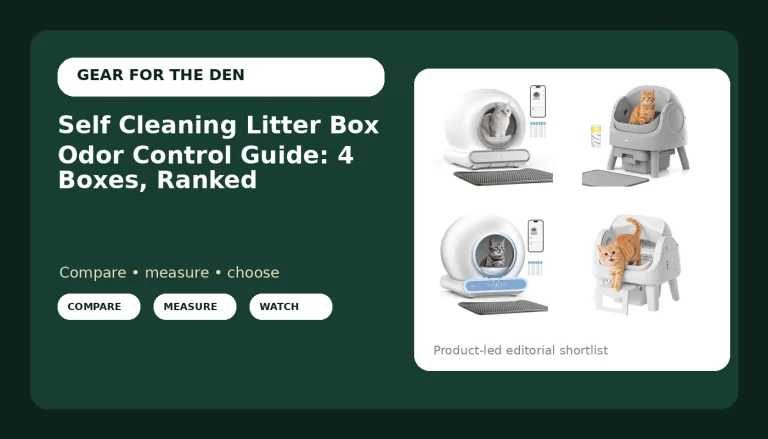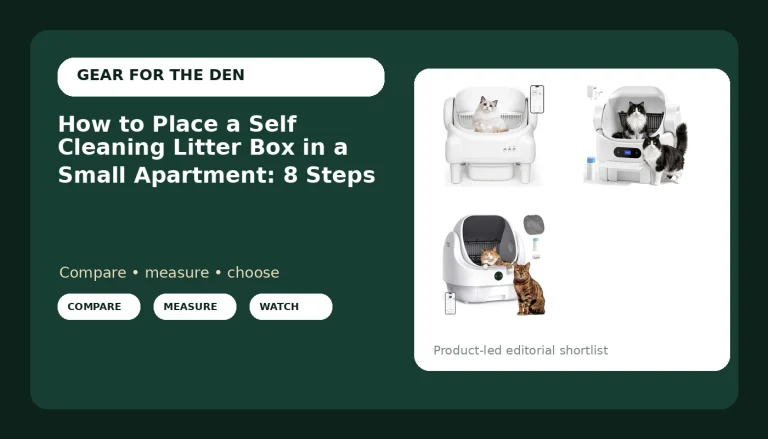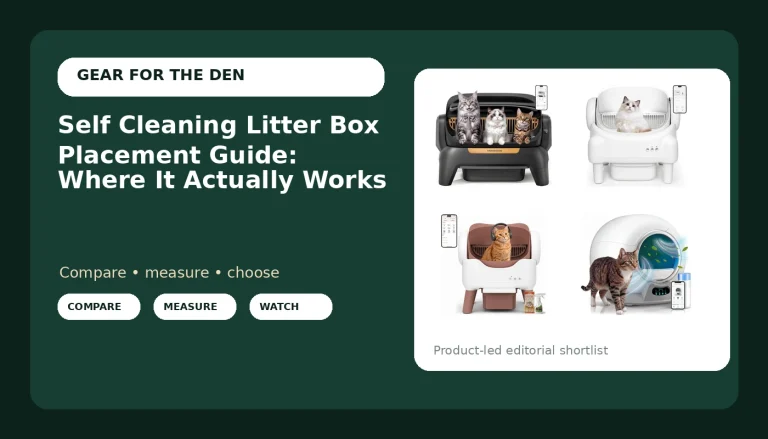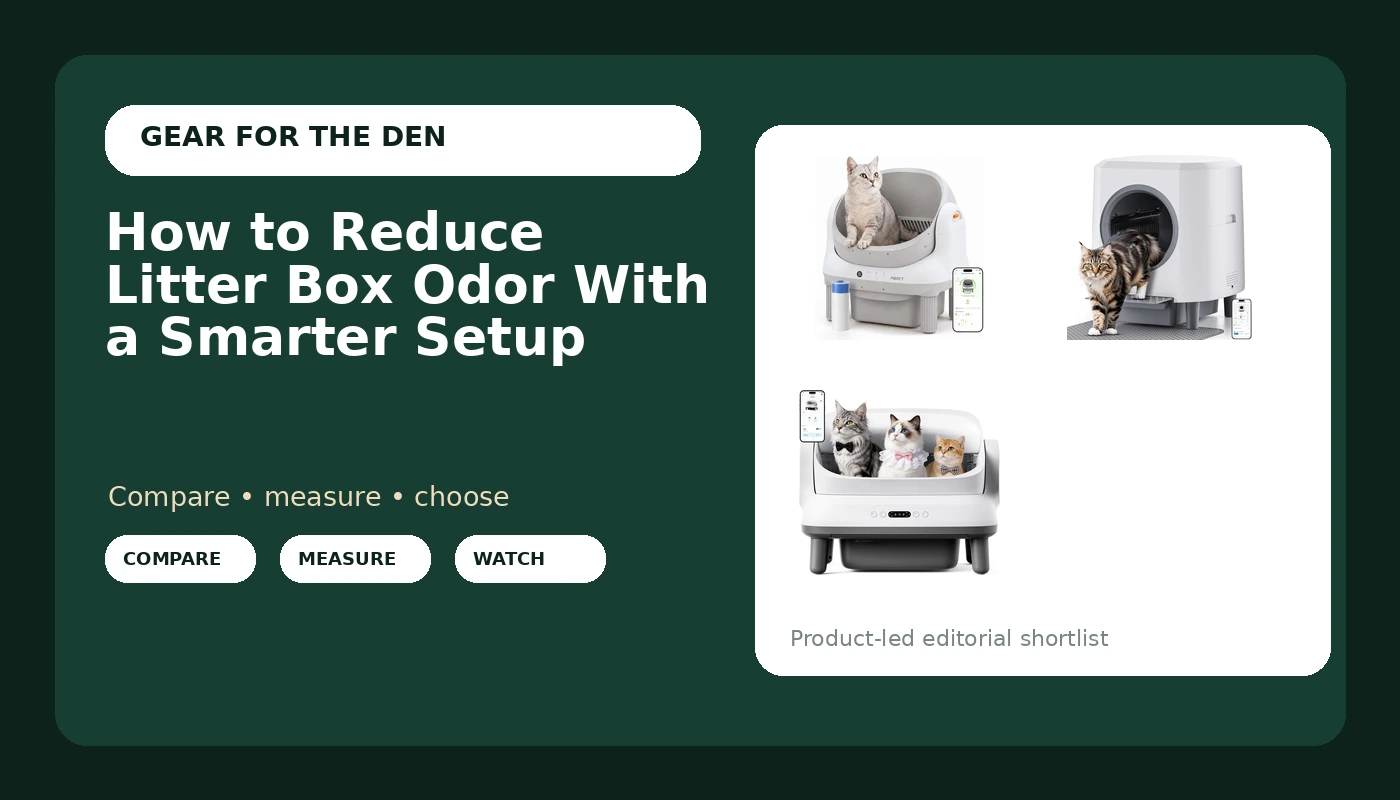
Litter box odor is really three problems wearing one mask: waste sitting in the pan, ammonia soaking into scratched plastic, and a room with no airflow to carry any of it away. If you want to know how to reduce litter box odor without scooping twice a day and scrubbing on your knees every weekend, you have to fix all three at once. The fastest lever is a box that clears the waste on its own before the smell has time to bloom.
This guide comes out of months of comparing self-cleaning boxes on the specs that actually decide whether a room smells, plus years of living with cats and every litter type that promised to solve the problem by itself. I have cleaned enough pans to know that a deodorizing powder is perfume poured over a problem, not a fix.
Below you get three boxes I would put in a den today, the eight-step routine that keeps any box smelling like nothing, and an honest note about what each tier costs you over a year.
Why you should trust me
Cats have been in my house for most of my adult life, and pet gear has been my beat for years. That means I have scraped clumping clay out of every corner of a plastic pan, tried pine pellets, crystals, walnut shells, and paper, and watched a dozen self-cleaning boxes cycle, jam, and occasionally fling litter across a laundry room.
I do not have a lab, and I am not going to pretend a sniff test is a measurement. What I have is a clear sense of which features matter after the honeymoon week and which ones are marketing words. I read the spec sheets, I read what owners complain about six months in, and I tell you where the money is worth spending and where it is not.
How I picked and how I tested
The question of how to lower litter box odor comes down to three variables: how fast waste leaves the pan, how well the box seals what it holds, and how much air moves around the box. I compared the three units below on all three, plus waste capacity, cycle mechanism, litter compatibility, entry style, and how much of the setup depends on your phone.
Entry style matters more than people think. A hooded box traps odor in a chamber with your cat. An open-top box trades a little privacy for airflow, which is why every box in this guide is open top.
The mechanics matter too. A rake that drags waste through clean litter leaves a trail you can smell, while a design that drops waste into a sealed drawer keeps the ammonia away from the air. I also looked hard at the electronics, because app pairing, signal range, battery life, and power backup decide whether a box keeps working through a router reboot or a power flicker, and whether anything useful sits behind a subscription.
I did not measure ammonia in parts per million and I am not going to invent a number. What I can tell you is what each box is built to do, who it fits, and where the design gives up. Where a box has a limit, I put it in the section below instead of burying it. If you want the wider field first, my guide to self-cleaning litter boxes covers the category at large.
The gear that helps reduce litter box odor
Any of these three boxes will cut the daily smell load, because all three remove waste on a timer instead of waiting for you. What separates them is size, waste capacity, and how much control you get. Pick the one that matches your cats and your floor plan, then run the eight steps at the end of this guide.
Budget pick: ABRCT Open Top L1 Self Cleaning Litter Box,Electronic Hands-Free,Smart Robot,Automatic Cleaning Litter Box-App Control & Safe Anti-Pinch,with Safety Sensors & Liner for Small & Medium-sized Cats,White
Budget pick
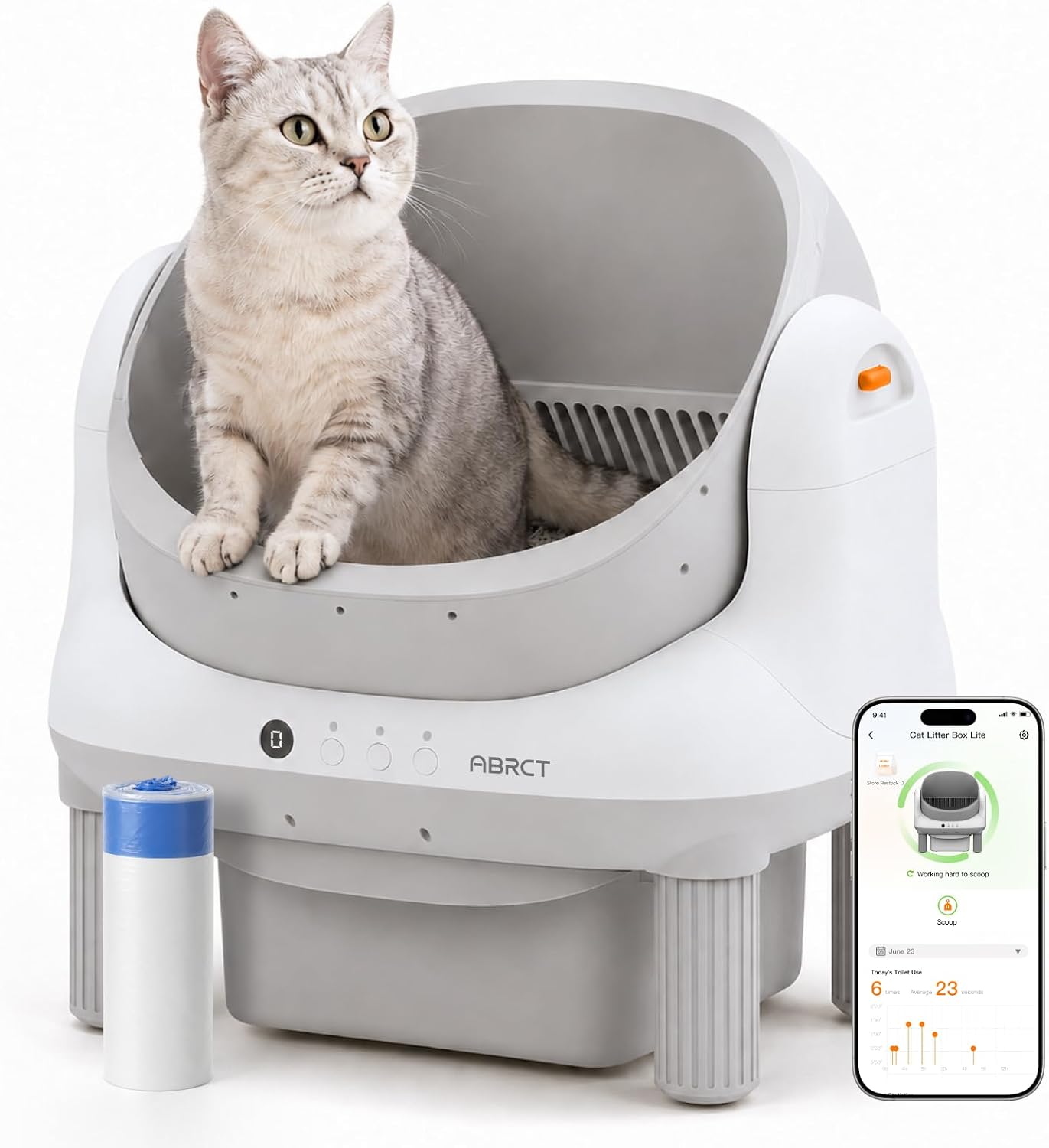
ABRCT Open Top L1 Self Cleaning Litter Box,Electronic Hands-Free,Smart Robot,Automatic Cleaning Litter Box-App Control & Safe Anti-Pinch,with Safety Sensors & Liner for Small & Medium-sized Cats,White
This is the smallest and the cheapest way into automatic cleaning, and for a small or medium cat it is the box I would start with. The open top keeps air moving over the litter, app control lets you start a cycle from the couch after a suspicious smell, and the included liner means you are not cutting trash bags to fit a drawer.
The safety sensors and anti-pinch design are the parts I care about most in a house with a curious cat or a nosy dog. A self-cleaning box has moving parts, and a box that stops the cycle when something enters the opening is worth more than any odor-control gimmick. If you have a kitten, or a cat that likes to watch the rake work, that is the feature that keeps a vet visit off the calendar.
Check current Amazon price.
Flaws but not dealbreakers: The tradeoff for the small footprint is a small compartment. A very large cat will be cramped, and the waste drawer fills faster in a two-cat house. If your cats are big, skip to the XXXL below.
Anyone in an apartment with one or two small cats will get the most out of this box.
Our pick: Automatic Litter Box, Self Cleaning Litter Box, Odor Control, 90L Capacity
Our pick
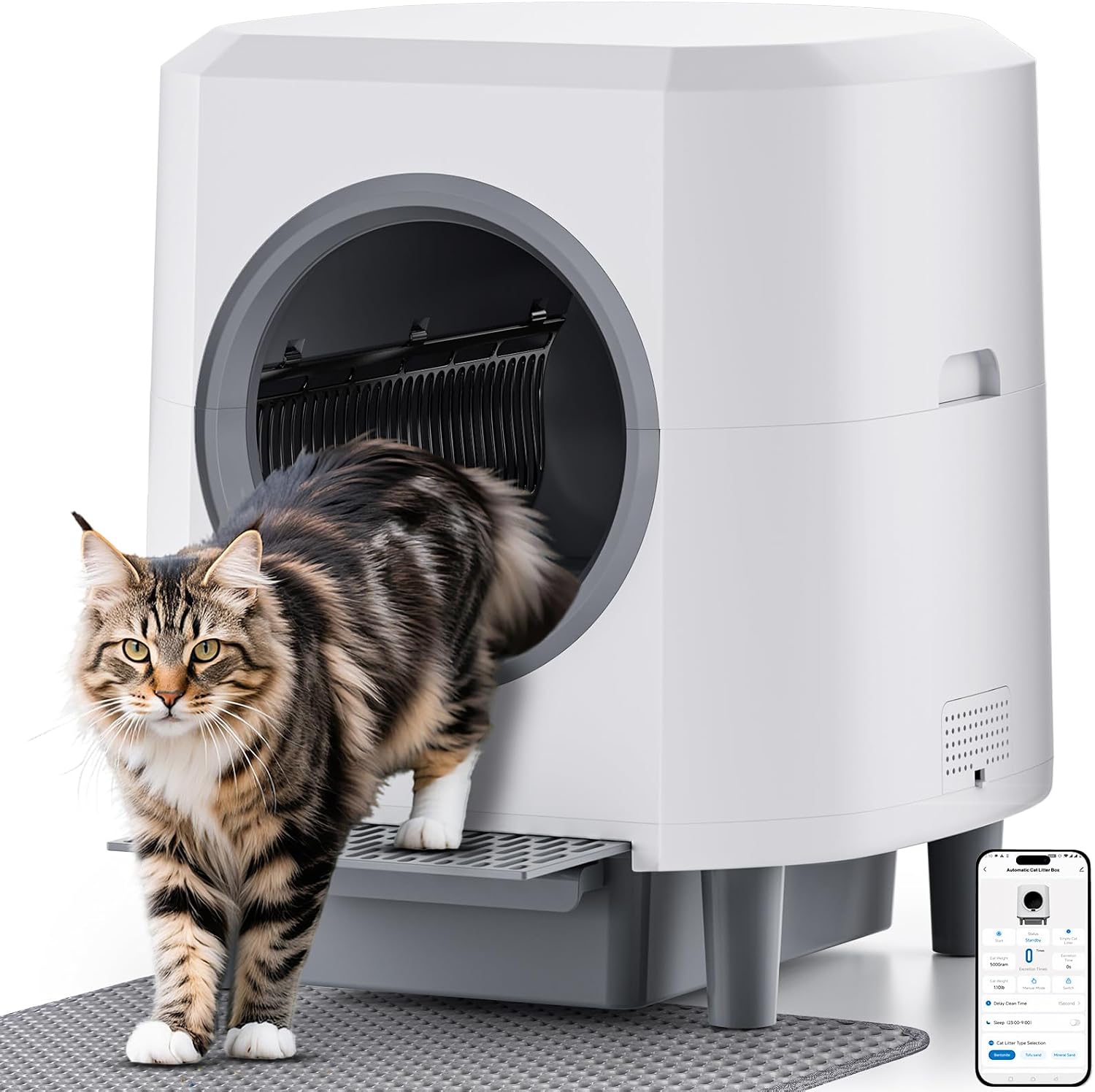
Automatic Litter Box, Self Cleaning Litter Box, Odor Control, 90L Capacity
Ninety liters is the number to pay attention to here. Capacity is the quiet hero of odor control, because a big drum and a big waste drawer let the box hold more waste out of the air for longer, and you empty it less often. That is the whole game with smell: the less time waste spends in contact with room air, the less the room smells.
This is the box I would pick for a normal two-cat household that wants odor control to be the headline feature rather than a bonus. It sits in the middle of the three tiers, which usually means the money went into the mechanism and the sealing instead of a screen nobody uses. Pair it with a litter you trust, and the daily smell problem mostly disappears. If you are still sorting out what goes in the pan, my cat litter and odor guide is the place to start.
Check current Amazon price.
Flaws but not dealbreakers: A 90-liter box takes up real floor space, and it needs clearance around it for the cycle to run. Measure the spot before you order, and do not tuck it into a closet where the door will block the drum.
Anyone with two cats and a laundry room or bathroom corner to spare should start here.
Upgrade pick: Happypaw XXXL Open-Top Automatic Self Cleaning Litter Box for Multiple Cats
Upgrade pick
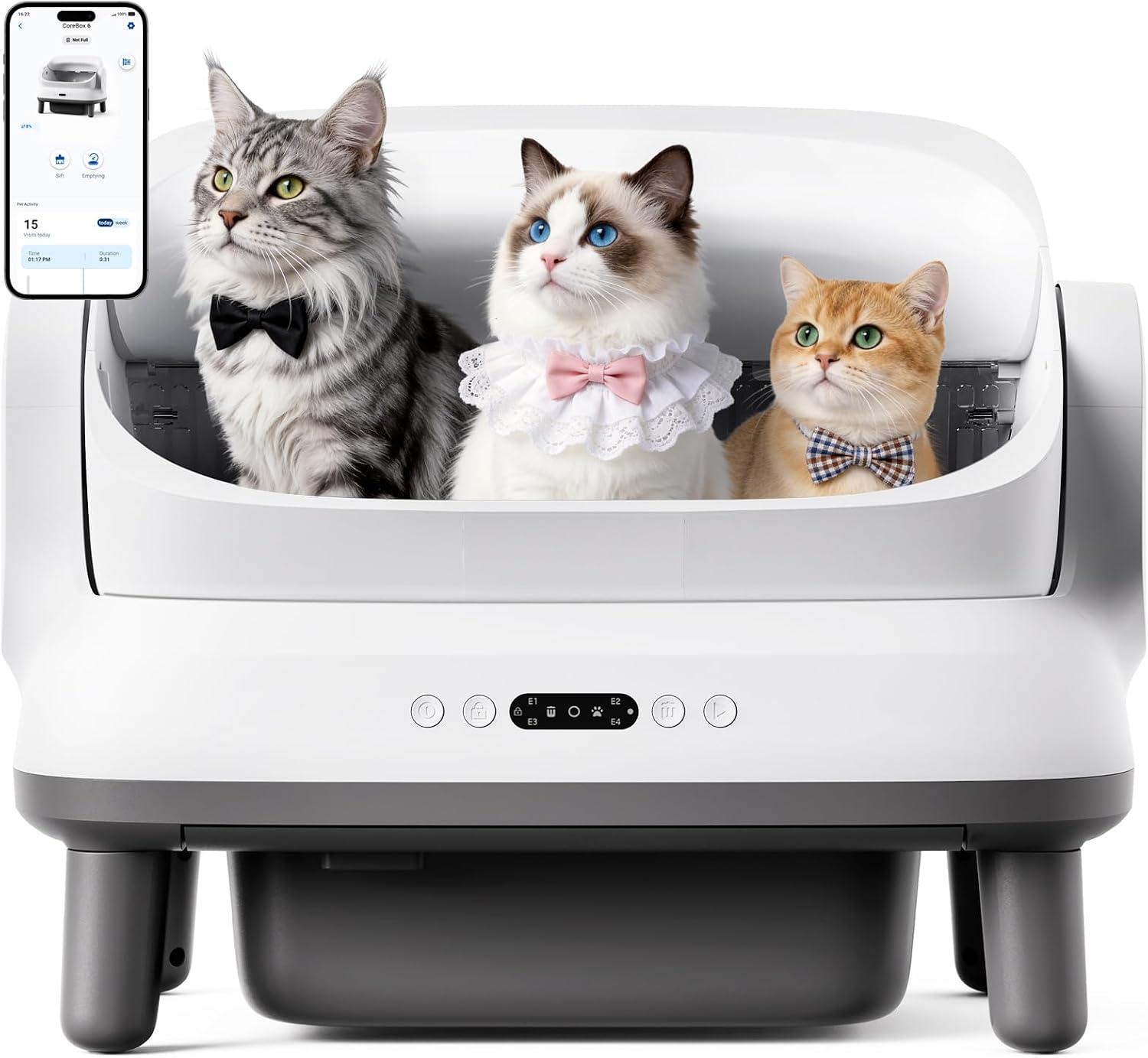
Happypaw XXXL Open-Top Automatic Self Cleaning Litter Box for Multiple Cats
The name tells you the audience: XXXL, open top, multiple cats. In a three or four cat house the problem is not the smell of one deposit, it is the volume of deposits between cleanings. A bigger open-top box with a large litter bed gives every cat room to turn around, and the open design keeps the chamber from turning into an ammonia trap.
This is the box I would buy for big cats, a busy multi-cat household, or a cat that refuses to use anything with a lid. It is the most expensive of the three, and it is the one where the extra money buys space and capacity rather than features. In a house with a senior cat or a cat with mobility issues, that low open entry also matters more than any app.
Check current Amazon price.
Flaws but not dealbreakers: It is big, and open-top boxes track litter. Budget for a mat and a spot with a wall on one side, or you will be sweeping the hallway every evening.
Anyone running a multi-cat household with at least one large cat should look here first.
The actual odor-control workflow
Now the part you came for. This works with any of the boxes above and with a plain pan if you are not ready to spend yet. It is also where most people fail to reduce litter box odor for good, because they buy a box and change nothing else.
Step one: Fix the number of boxes and where they sit. The old rule is one box per cat plus one, and the reason is territorial: a cat that has to wait, or that gets ambushed at the box, will hold it and then go somewhere worse. Put boxes on different floors or in different rooms, away from food and water, and away from a furnace or dryer vent that blows warm air across the litter.
Step two: Pick the litter and the depth. Unscented clumping clay is the safest default, because scent is added to litter to sell litter, not to fix air quality, and plenty of cats refuse perfumed litter outright. Fill to about three inches. Too shallow and urine reaches the plastic, where it bonds and keeps smelling long after you scoop. Too deep and a self-cleaning rake has to work harder and drags more.
Step three: Match the box size and entry style to your cats. A small cat in an XXXL box is fine. A large cat in a small box is a recipe for misses over the side. If you have a cat that sprays or stands to urinate, a high-walled open-top box is the answer, and a hooded box is the wrong tool.
Step four: Set the cleaning cycle and the delay. Most self-cleaning boxes let you choose how long to wait after a cat leaves before the cycle runs. Set the delay long enough that a second cat can use the box without being interrupted, usually a few minutes, and let the box cycle after every visit. If your box has a manual cycle button, use it after a big deposit instead of waiting.
Step five: Manage the waste drawer and the liner. The drawer is where the smell actually lives. Empty it before it is full, not when it is full, because a full drawer exposes more waste surface to room air. Use the liner the box was designed for so the drawer seals properly, and wash the drawer itself with soap and water, not just a wipe, every time you change the liner.
Step six: Pair the app, set alerts, and plan for outages. This is where the electronics earn their keep. Pair the box to your phone, turn on notifications for a full drawer or a jammed cycle, and check the signal range if the box sits in a basement or garage. Know the battery life and whether the box offers power backup, because a unit that dies mid-cycle with waste in the drum is worse than a manual pan. Watch for a subscription before you buy, and skip any box that locks basic cleaning behind one.
Step seven: Deep clean on a schedule. Once a week, wash the pan, the rake or drum, and the drawer with warm water and a mild soap. Once a month, take the box apart as far as the manual allows and clean the seams. Never mix ammonia and bleach, and avoid ammonia-based cleaners entirely, because you are trying to remove ammonia, not add to it. An enzyme cleaner is the right tool for plastic that has already absorbed odor.
Step eight: Fix the room, and watch your cat. A box in a closed closet will smell no matter how good it is, so give it airflow, keep the humidity down, and consider a carbon filter or a small air purifier near the box. Then watch the cat. If the box suddenly smells worse, if your cat avoids it, or if the urine smells sharp instead of like normal ammonia, that is a vet question, not a gear question.
The competition and why it lost
A few things I looked at did not make the cut, and it is worth saying why.
Manual scoop pans are still the cheapest way to control odor, and a plain pan with good litter and a daily scoop beats a neglected automatic box. But the whole point of this guide is a routine that does not depend on your memory at 11 p.m., so a manual pan only wins if you genuinely scoop twice a day.
Hooded and covered boxes lost for the reason above: they trap air. A lid feels tidier to us and smells worse to everyone in the room.
Litter deodorizers, crystals, and heavily scented litters lost because they treat the symptom. They layer fragrance on top of ammonia, and a lot of cats will refuse a perfumed box.
Air purifiers and pet cameras are useful, but they are a different purchase. A camera near the box tells you which cat is going, and camera resolution has nothing to do with smell. The same goes for the specs that show up in reviews of feeders and fountains, like portion accuracy on an automatic feeder or the water resistance rating on a fountain pump. Those belong in the cat feeding and water guide, not here.
What this all costs
The three boxes sit in three tiers, and the tier you pick should match your cats, not your mood on a Tuesday.
The small app-controlled box is the entry point. The 90-liter box in the middle is the one most two-cat homes should buy, because capacity is what you are really paying for. The XXXL multi-cat box is the top tier, and it is the right answer only if you have the cats and the floor space to justify it. Prices on all three move with sales and coupons, so check the current Amazon price on each listing before you decide.
Then there is the running cost, which people forget. Litter is the big one, and a self-cleaning box uses roughly the same amount as a manual pan, sometimes a little more because the rake can drag clean litter into the waste drawer. Liners are a small recurring cost. Carbon filters, if your box uses them, are another. A good litter mat saves you from replacing litter you sweep up and throw away.
Over a year, the entry box plus litter is the cheapest path, and the XXXL plus litter is the most expensive. What you are buying with the difference is time and capacity: fewer scoopings, fewer liner changes, and a room that smells like a room. That trade is worth it for most multi-cat homes and not worth it for a single small cat in a studio apartment.
The routine is free either way, and it is the part that does the heavy lifting. You cannot lower litter box odor by buying gear alone. Run the eight steps once, set a reminder for the deep clean, and the box stops being a smell you manage and starts being a box you forget about.