Most pet urine problems start the same way: the accident is found hours later, after the liquid has bonded to the carpet fibers and wicked down into the backing. That is why the standard recipe for how to remove pet stains from carpet (blot, spray, walk away) fails on anything that sat overnight. The stain you can see is the easy part. The residue underneath keeps pulling moisture out of the air and reminding you that it is still there.
By the time most people look up how to remove pet stains from carpet a second time, they have already pushed the mess deeper with a scrubbing brush and a wet vacuum. Carpet is a sponge with a memory, and every pass with too much liquid drives the contamination into the pad, where a household fan cannot reach it.
What follows is the order that actually works: what to do in the first five minutes, what to do when the stain has already dried, and the gear that keeps the next accident off the carpet. No steam on fresh urine. No bleach on wool.
Why you should trust me
I have cleaned up after cats, dogs, and two guinea pigs in a house with beige carpet, which is either a hobby or a punishment depending on the week. I have made the classic mistakes myself: scrubbing with a stiff brush, reaching for a hot steam cleaner on a fresh accident, and letting a spot air dry until the smell came back three days later.
I do not run a chemistry lab, and I am not going to pretend otherwise. What I do is read every label before I recommend anything. I check the pH, whether a cleaner is a real enzyme formula or a perfume with a picture of a puppy on the bottle, the contact time the manufacturer actually asks for, and whether the product is carpet safe on wool and on synthetic fiber. When I compare pads and liners for this site, I read the care instructions the same way, because a pad that cannot survive a normal wash cycle is a pad you will quietly stop using.
How I picked and how I tested
The products below are not cleaners. They are the containment layer, and they matter at least as much as the bottle when the goal is to remove pet stains from carpeted floors. A cat that misses the box or a puppy that piddles in a pen will eventually soak the carpet. The only question is whether something waterproof was sitting under it. (I covered the smell half of that problem in how to keep a litter box from smelling up a small apartment.)
I picked three items and judged them on the things that decide whether they actually protect carpet: pad absorbency, pad size measured against the footprint they are meant to cover, liner waterproofing on the reusable option, and whether the whole thing is machine washable. For the litter box enclosure I looked at how the entry sits relative to the pan, whether liquid can run out at the seams, and whether the finish would survive being wiped down with an enzyme cleaner or an odor neutralizer.
I am not going to hand you invented numbers about millilitres absorbed. What I can tell you is what the care labels say, what materials each item is built from, and how each one fits into a cleanup routine. The test that matters is simple: after an accident, is the carpet dry or is the pad dry? Only one of those answers means you win.
The containment gear worth buying
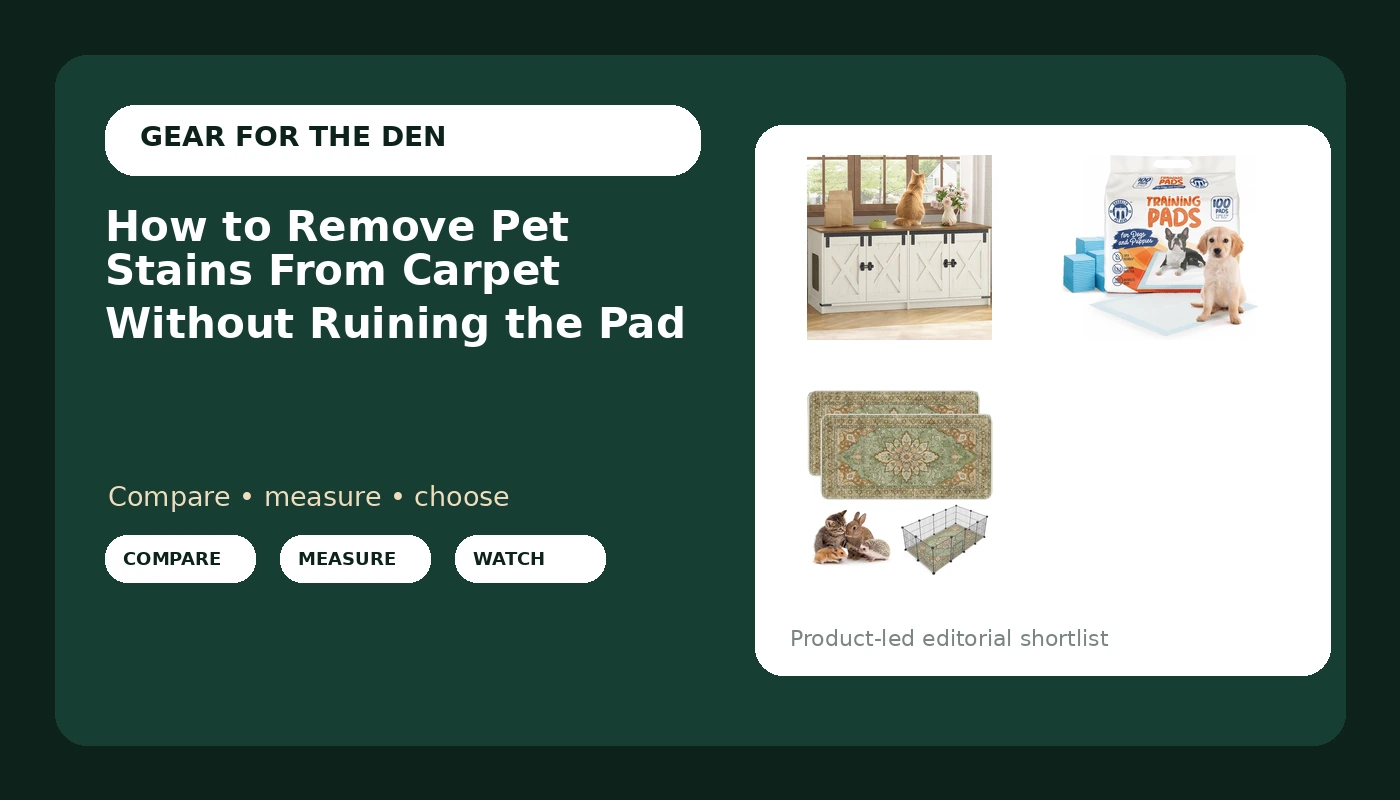
Best for the litter box corner: Hzuaneri Cat Litter Box Enclosure for 2 Cats, Hidden Litter Box Furniture
Best for the litter box corner
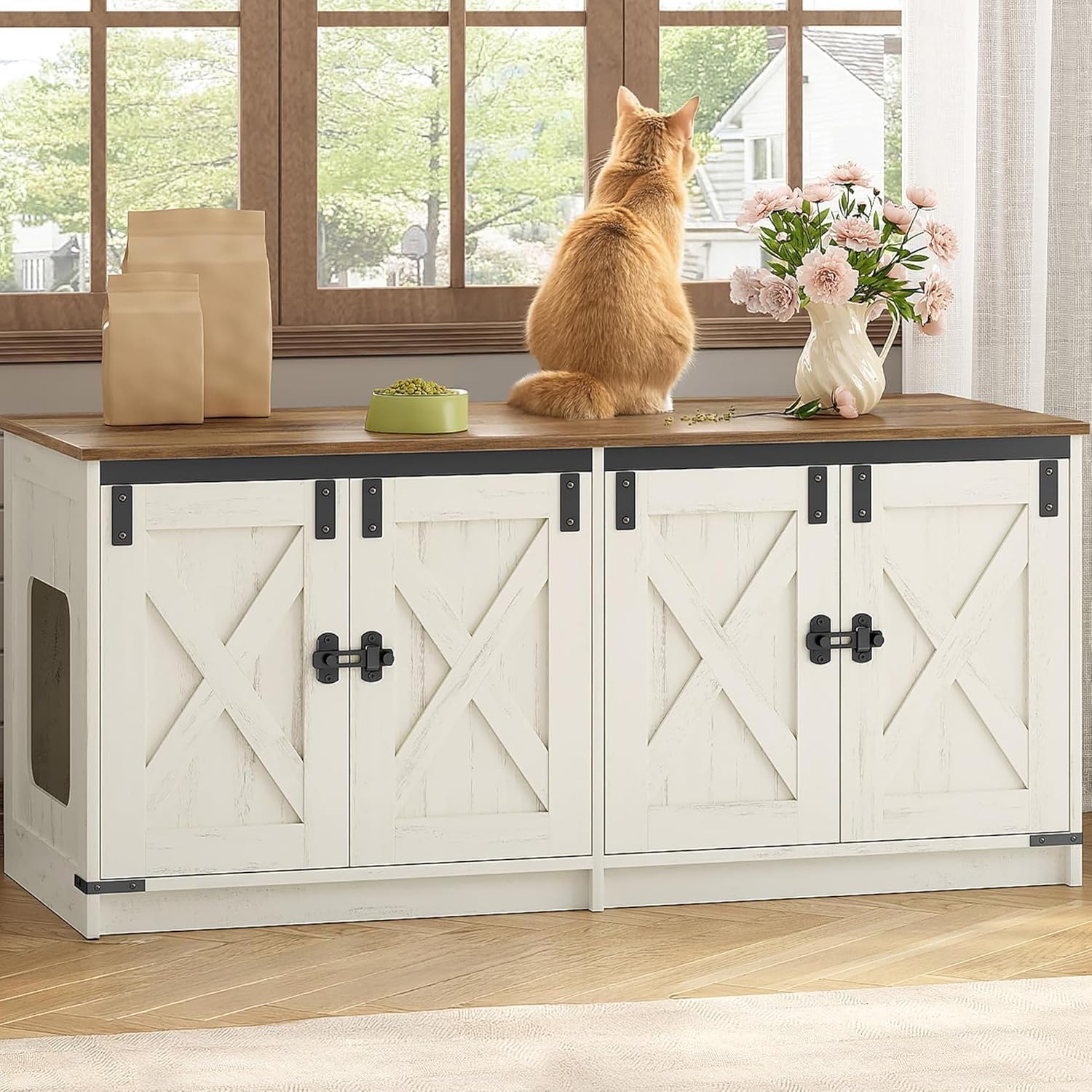
Hzuaneri Cat Litter Box Enclosure for 2 Cats, Hidden Litter Box Furniture
Cat urine on carpet is usually not a behavior problem. It is a geometry problem. A cat in an open pan backs up to the wall or the rim, and the miss lands a few inches outside the box, in the same corner, every time. An enclosure puts walls on three sides, which contains spray and scatter and stops the pan from being the first thing you see in the room. The two-cat capacity matters more than it sounds, because a household with one box and two cats is a household where somebody is holding it while the other cat is busy.
Check current Amazon price before you commit to a cabinet, since this is the one item here you will live with for years.
Flaws but not dealbreakers: It is furniture, not a liner. Urine that runs out of the pan still lands inside or under the cabinet, so put a washable pad or a couple of disposable pads under the pan itself. Some cats refuse a covered box, and if yours is one of them, a high-sided pan and a waterproof mat do most of the same work. Wipe the inside with an enzyme cleaner rather than a citrus furniture polish.
Best for crates and pens: BPG Ultra Absorbent Pet & Puppy Pads, 100 Count 22"x22" Pee Pads for Dogs, Disposable Leak Proof Dog Training Pads, Quick Drying Underpads, Puppy Essentials for House Training – Brooklyn Pet Gear
Best for crates and pens
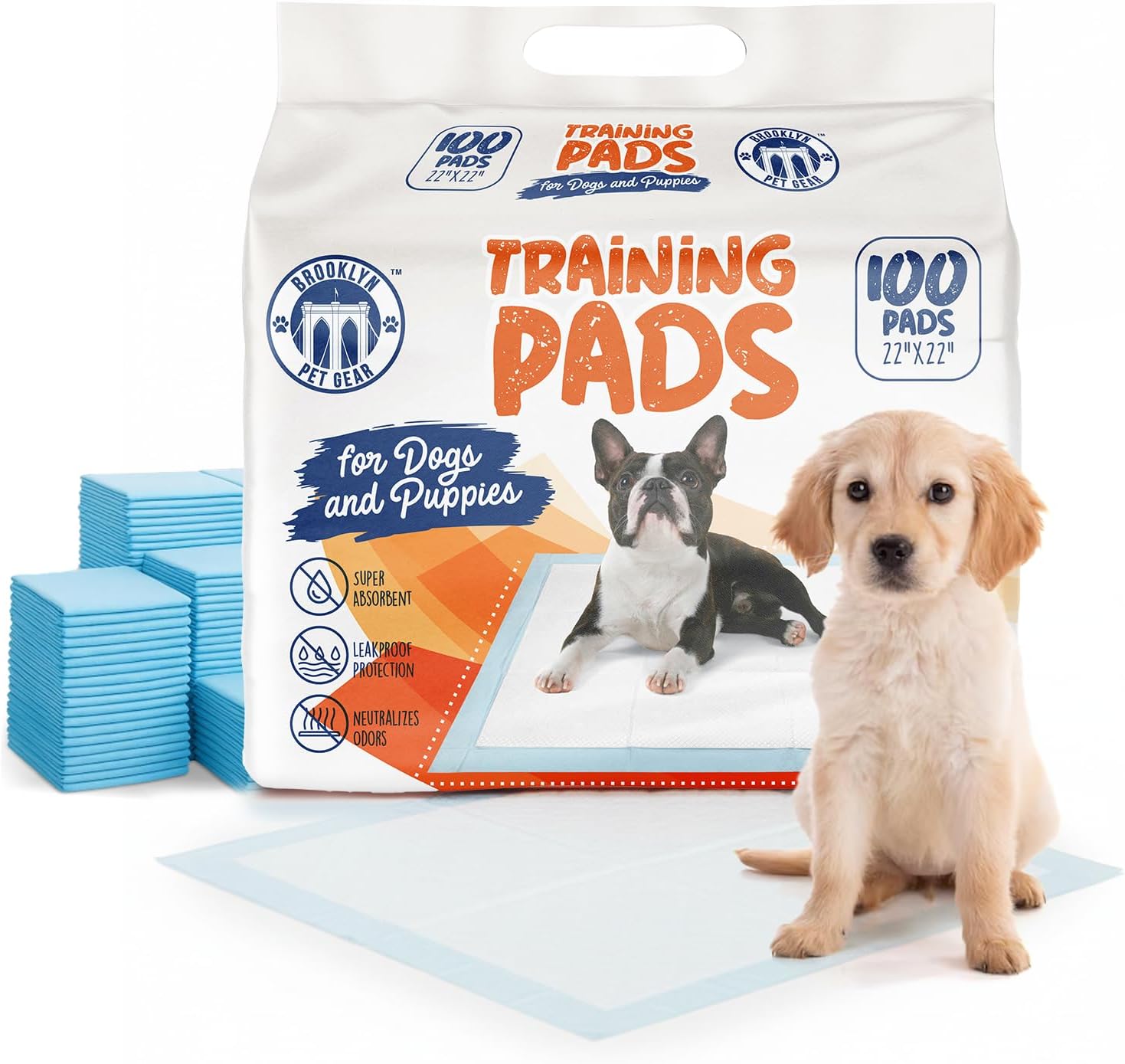
BPG Ultra Absorbent Pet & Puppy Pads, 100 Count 22"x22" Pee Pads for Dogs, Disposable Leak Proof Dog Training Pads, Quick Drying Underpads, Puppy Essentials for House Training – Brooklyn Pet Gear
Every puppy owner ends up buying these, but the reason they belong in a stain article is different. A square pad with a leak-proof backing is a better blotting tool than a roll of paper towels: press two or three over a fresh accident, put a book or your knee on top, and the pad absorbency and quick-drying top layer will pull liquid out of the pile while the backing keeps it from dripping back into the carpet you are trying to save.
Under a crate, across the doorway of a puppy pen, in front of a litter box for a cat that overshoots, and under the food and water bowls, they are the difference between a stained carpet and a stained pad. A 100 count box covers a house-training season if you use them only where accidents actually happen.
Check current Amazon price, then decide whether you want one box or two.
Flaws but not dealbreakers: Disposable means a running cost and a bin full of soggy pads. A determined chewer will shred one in under a minute, so put them under a tray or a grate if your dog treats everything as a toy. They are thin enough that a full bladder can outrun a single pad, so double up overnight and under a young puppy.
Best for reusable coverage: Washable Guinea Pig Pee Pads,Absorbent Reusable Guinea Pig Cage Liners,Waterproof,Leak-Proof & Non-Slip Whelping Pads & Mat for Small Animals,Pet Housebreaking.(Green Floral,24"x48")
Best for reusable coverage
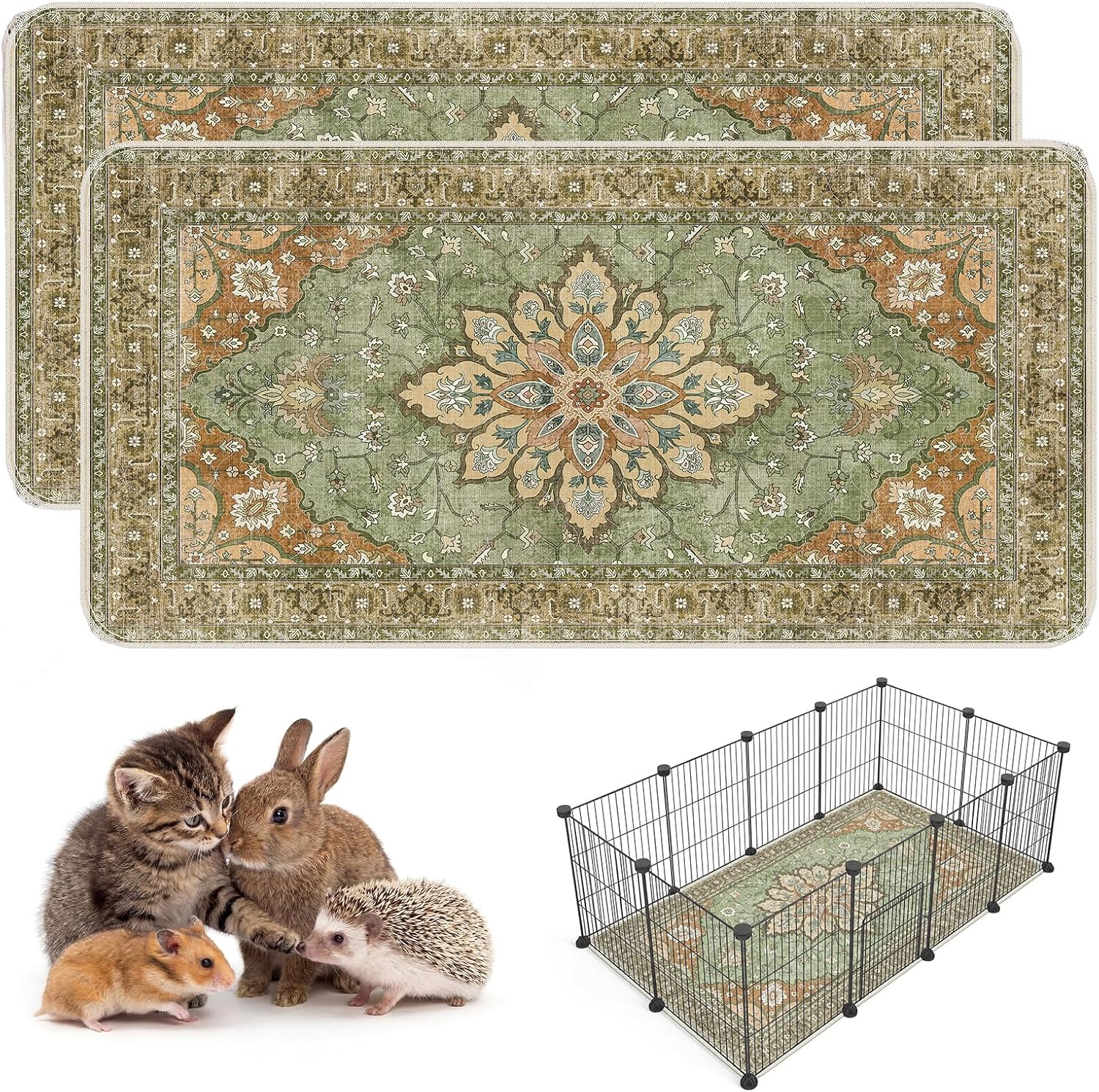
Washable Guinea Pig Pee Pads,Absorbent Reusable Guinea Pig Cage Liners,Waterproof,Leak-Proof & Non-Slip Whelping Pads & Mat for Small Animals,Pet Housebreaking.(Green Floral,24"x48")
Reusable pads are the other half of the same idea, and for small pets they are the better buy. The care instructions tell you most of what you need to know here: absorbent top, waterproof liner underneath, non-slip backing so the mat stays where you put it, and a footprint that covers a cage base, a whelping box, or the strip of carpet in front of a litter box.
For cats, the liner waterproofing is the whole point. A pad that wets through on the second accident is just a sponge you have to wash. This one is machine washable, which is what makes it worth owning: keep two, one on the floor and one in the wash, and you stop buying disposables every month. Use it fabric side up under a pan, a bowl, or a small animal cage, and shake it out before it goes in the drum.
Check current Amazon price for the pair, because two is the number you actually need.
Flaws but not dealbreakers: It is a fabric product, so a rabbit or a bored dog can chew through the top layer faster than you would like. Wash it warm with a normal amount of detergent and no fabric softener, which coats the fibers and kills absorbency. Urine smell can linger if you wash cold, so add a second rinse in a multi-cat house.
How to remove pet stains from carpet in eight steps
Step one: Read the stain and the fiber before you touch anything. Fresh urine is light and acidic. Old urine has turned alkaline and darker, and it has spread into a circle under the surface. Find the carpet cleaning code, usually on a tag under a cushion or in the manufacturer's care notes: W means water-based cleaners are fine, S means solvent only, WS means either. Test whatever you plan to use on a hidden corner first. If the carpet feels wet all the way through, the pad underneath is wet too, and the job gets longer.
Step two: Blot, never scrub. Fold a white cloth or a thick stack of paper towels, press it into the spot, and stand on it for a minute. Scrubbing abrades the fiber and spreads the stain sideways, which is how a quarter-sized accident becomes a dinner plate. Rotate to a dry section and repeat until the cloth comes up nearly clean.
Step three: Lift the solids first. Vomit, hairballs, and diarrhea come up with a plastic bag over your hand or a stiff card, working from the outside of the pile toward the middle so you do not smear the center outward. Bag it and take it outside. Water and cleaner only touch the spot after the solids are gone, or you turn a pile into a puddle.
Step four: Match the cleaner to the soil, and give enzymes time to work. Urine, vomit, and blood are protein stains, and enzyme concentration plus dwell time is what breaks them down, not the smell of the bottle. Keep the spot damp, cover it with plastic wrap or a saucer, and leave it for the full contact time on the label. Skip ammonia, which reads as urine to a pet and invites a repeat, and skip bleach on wool. Diluted white vinegar handles the salt residue that old urine leaves behind.
Step five: Apply from the outside in, and do not flood the spot. Pour cleaner onto a cloth and dab, or mist lightly, starting at the edge and working toward the center. Flooding sends contamination straight into the pad and the subfloor, where nothing you own can reach it. The method to remove pet stains from thick carpet is the same method with slower hands: thick pile holds liquid above the backing and hides how far the spread has gone, so treat a ring several inches past the visible mark.
Step six: Pull the liquid back out with pressure, not heat. A stack of dry towels with a book on top, or a wet vacuum on the water-only setting, lifts what the cleaner loosened. Heat sets protein, so steam on a fresh urine stain is a mistake you only make once. This is the step where a leak-proof disposable pad earns its keep: press one over the spot, stand on it, and it will hold more than a paper towel ever will. Repeat until a clean white cloth barely dampens.
Step seven: Rinse, neutralize, and smell the carpet. Vinegar left in the pile attracts dirt, so rinse with clean water and blot again. Use only products that are carpet safe and fabric safe if the stain reaches upholstery or a rug edge. Once the spot is dry, put your nose against it. If you can still smell anything, the enzyme job is unfinished, and a fragrance-based odor neutralizer is only a mask at this point. Re-treat, cover, and wait.
Step eight: Dry it fast and deep, then change what sits on the floor. Airflow from a fan with a window open, plus weight on dry towels for the first hour. A damp pad is why the smell returns a week later. Then break the cycle: pads under the pen, a washable liner under the litter box, an enclosure around the pan. The only reliable way to remove pet stains from carpet for good is to stop the next accident from reaching it.
The competition and why it lost
It is easier to list what I ruled out. A rented carpet shampooer is the right tool for a whole room and the wrong tool for one accident, because it puts far more water into the pad than you can pull back out. A hot-water extractor used on fresh urine can bake the protein in place. A steam mop belongs on tile and hardwood, not on carpet.
Then there are the sprays. Most supermarket pet stain sprays are odor neutralizers with a floral top note. They smell fine for a day and do nothing to the uric acid crystals that keep triggering your pet's nose. Ammonia-based glass cleaner is worse, because to a cat it smells like a note that says urinate here again. Paper towels alone are too thin, and rubbing alcohol dries the fiber without lifting the salt.
An open litter pan with no mat and no enclosure in a carpeted corner is the most reliable stain generator in a cat household. None of these things remove pet stains from carpet on their own, which is why the three products above carry the containment job and the eight steps carry the cleaning.
What this all costs
The disposable pads are the running cost. A 100 count box lasts a house-training season if you use them only where accidents actually happen, and you replace it when the box empties. The washable pads are the upfront cost: buy two, keep one on the floor and one in the wash, and the per-use cost drops every month you own them. The litter box enclosure is the one-time cost, and it is the item that prevents work rather than absorbing it.
Set against that, the alternative is a professional carpet cleaning priced by the room, plus the risk to a rental deposit if the pad underneath has to come out. Spending on containment is money spent once. Cleaning a soaked pad is money spent repeatedly, and the stain usually comes back while you are waiting for the second visit.
The order of operations matters more than the budget. Blot before you spray. Give the enzyme the full dwell time instead of the thirty seconds you feel like waiting. Pull the liquid out with weight, not heat. Dry the area hard before you let anyone walk on it again. Do it once, properly, and put the gear down before the next accident happens. That is the whole job, and your carpet was built to survive it.