Most people learn how to save money on cat furniture the expensive way. They buy a tower, the cat ignores it, the sofa arm gets shredded anyway, and then they buy a second tower. Eighteen months later the corner of the couch is a fringe of loose fiber and the tower has become a place to hang laundry.
The real save money on cat furniture move is not shopping harder or waiting for a better sale. It is spending in the right order: block the damage you already have, then buy the one scratcher your cat will actually use, then walk away from the rest of the catalog. Most households do it backward, which is why the same people replace the same couch twice.
This guide is the order I use. Three items, eight steps, and a short list of the things I stopped buying. Nothing here depends on a coupon or a clearance event, because the biggest discount on cat furniture is a couch you do not have to replace.
Why you should trust me
I write about pet gear for a living, and the cat half of that job has taught me one thing: the furniture is rarely the problem. The placement is. I have walked through enough apartments with shredded couch corners to know that the damage almost always happens in the same three spots, and that the fix is almost never a bigger tower.
What I do instead of reviewing by vibe is compare a product against the animal using it. A cat scratches to mark territory and to shed the outer sheath of its claws, and it does that standing at full stretch or lying flat, not at the polite 45 degree angle most posts are built for. I read the dimensions, the material, and the mounting hardware, and I check whether a thing will still be in one piece after six months of a twelve pound cat launching off it. I have returned more cat products than I have kept, and the ones that survive are usually the boring ones.
How I picked and how I tested
Every product below passed the same filter, and the filter is dimensional. For anything a cat stands, sits, or scratches on, I start with platform height, post diameter, shelf depth, weight limit, anchor type, perch width, and hammock fabric, because those seven numbers decide whether a cat uses the thing or ignores it. For anything that has to travel with the cat, I add carrier size to the list.
Then I ask the month-six questions. Does the scratch surface still have material left on it? Does the hardware still hold? Does the fabric still look like fabric? Anything that fails a month-six question gets cut, no matter how good the listing photos are.
I also weigh price against replacement interval rather than against the sticker. A scratcher that lasts three times as long as a cheap one is cheaper even when it costs more, and a protector that saves a couch arm is free money the first time it takes a claw. That is the whole method: dimensions first, durability second, price last.
The three picks cover three different jobs: stop the damage, cover the long run, and give the cat something better to destroy. If your scratching problem is already solved and you are shopping for height instead, pair these with a cat tree that fits a big cat.
The three buys that save money on cat furniture
You do not need all three on day one. Buying them in this order is the ideal save money on cat furniture strategy, and it is the difference between spending once and spending every year. Here is what each one does and who it is for.
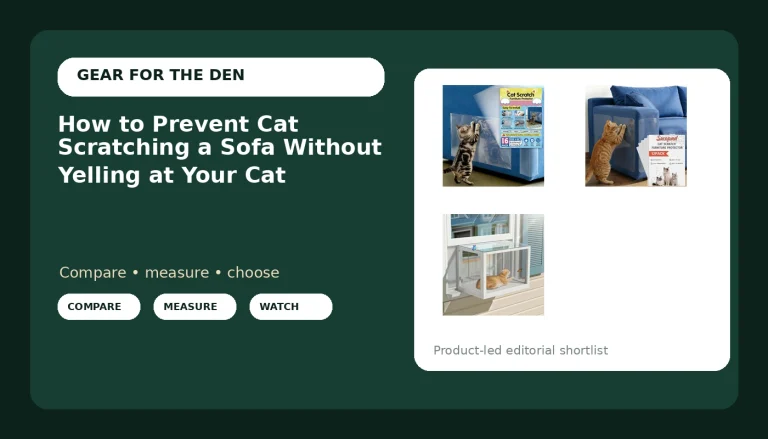
Budget pick: Secopad 18 PCS Cat Scratch Furniture Protector, Couch Protector, 17IN
Budget pick
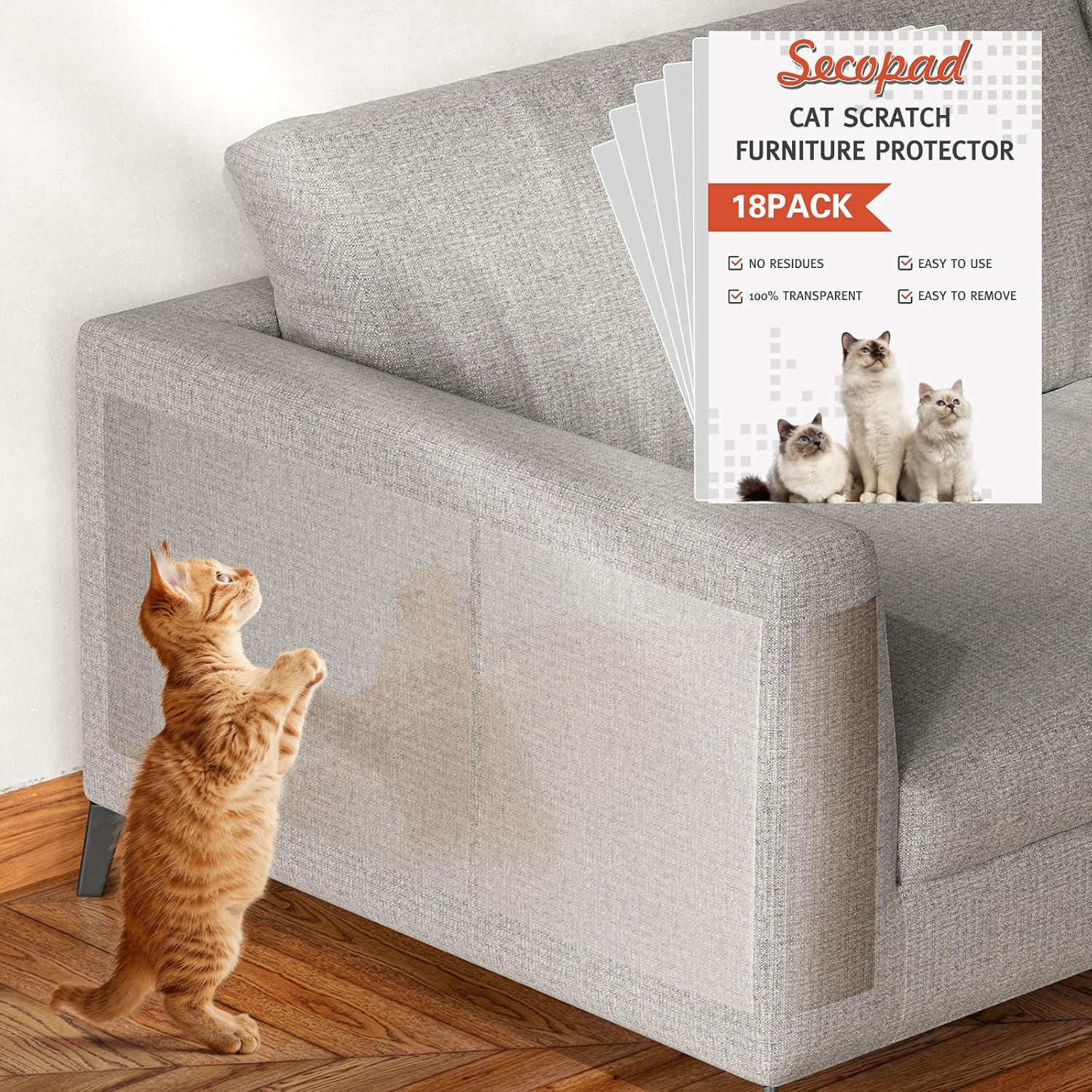
Secopad 18 PCS Cat Scratch Furniture Protector, Couch Protector, 17IN
Check current Amazon price.
This is the first thing I would buy, and it is the cheapest line item in the whole plan. Eighteen clear pads at 17 inches each give you enough coverage for the corners of a sofa, the arms, and the spots where a cat reaches up to stretch. They go on with adhesive, they are transparent, and they are removable, which matters if you rent.
The job here is not decoration. It is triage. A couch corner that is already fraying will keep fraying, because loose threads are more fun to pull than a fresh surface. Covering that corner does two things at once: it stops the damage from growing, and it makes the surface unsatisfying enough that the cat goes looking elsewhere for a scratch.
Flaws but not dealbreakers: Adhesive pads are only as good as the surface under them. On bonded leather or a loose-weave fabric, test one pad in a hidden spot first. Trim pads to fit the shape of the corner, and re-press the edges when you vacuum.
Renters, anyone with a couch they actually like, and anyone whose cat has already picked a favorite corner should start here.
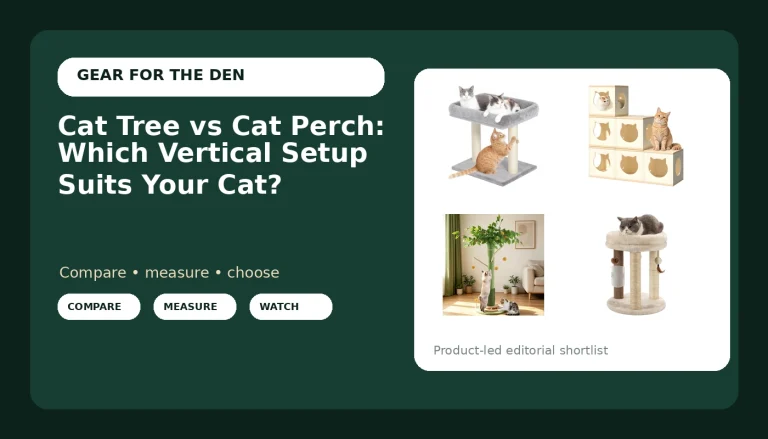
Runner-up: Cat Scratching Mat, 118" × 15.8" Cat Scratch Couch Furniture Protector
Runner-up
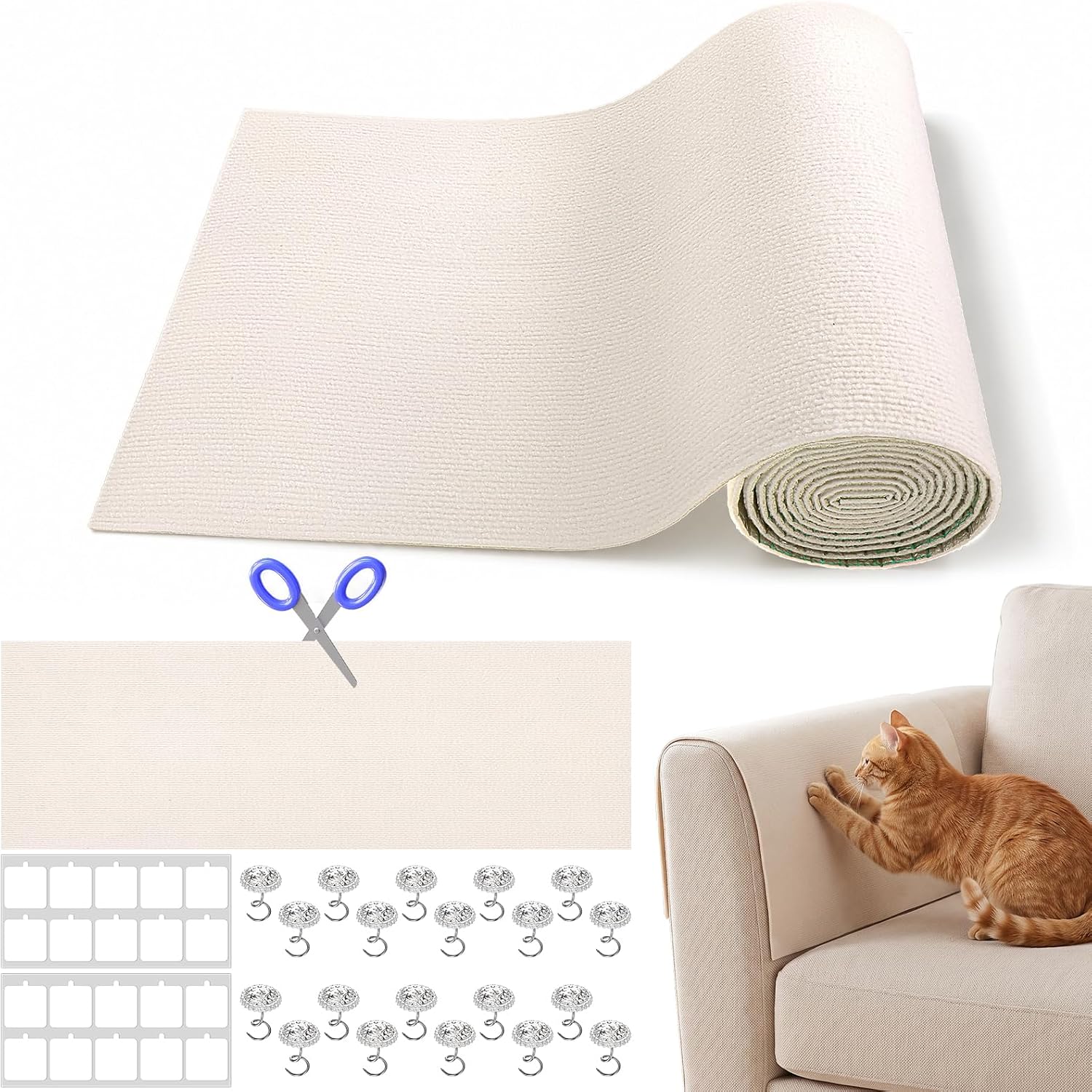
Cat Scratching Mat, 118" × 15.8" Cat Scratch Couch Furniture Protector
Check current Amazon price.
The pads handle corners. This handles distance. At 118 inches long and 15.8 inches wide, this mat covers the long vertical run of a sofa back, the side of a bed frame, or the stretch of wall a cat uses as a ladder. If your cat has a route rather than a single spot, this is the piece that closes it.
Coverage per dollar is the reason it is here. One long mat does the work of a half dozen small pads, and there are fewer edges for a determined cat to pick at. It also survives being repositioned, which the small pads do not always do once their adhesive has been used up.
Flaws but not dealbreakers: A long mat needs a long, clean, flat surface. If your couch back is curved or has a wooden trim rail, plan on cutting it into two runs rather than fighting the shape. Measure before you order, because the width is fixed.
Anyone with an open-plan room, a cat that patrols a circuit, or a piece of furniture with a long exposed side will get more out of this than out of another pack of pads.
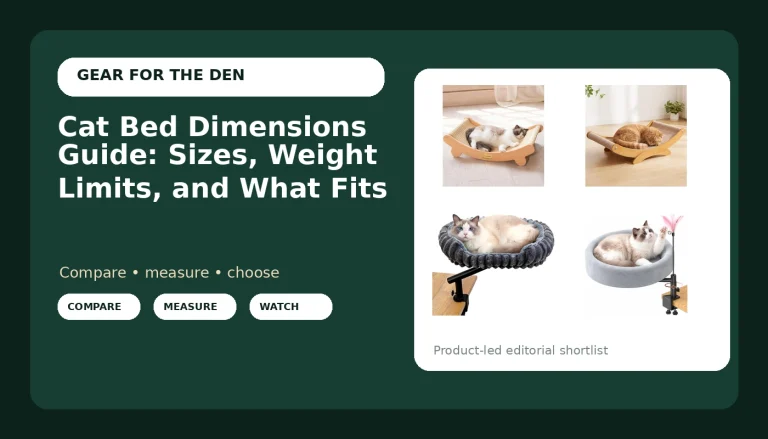
Upgrade pick: PetFusion Jumbo Cat Scratcher Lounge (99 x 28 x 36 cm, Cloud White)
Upgrade pick
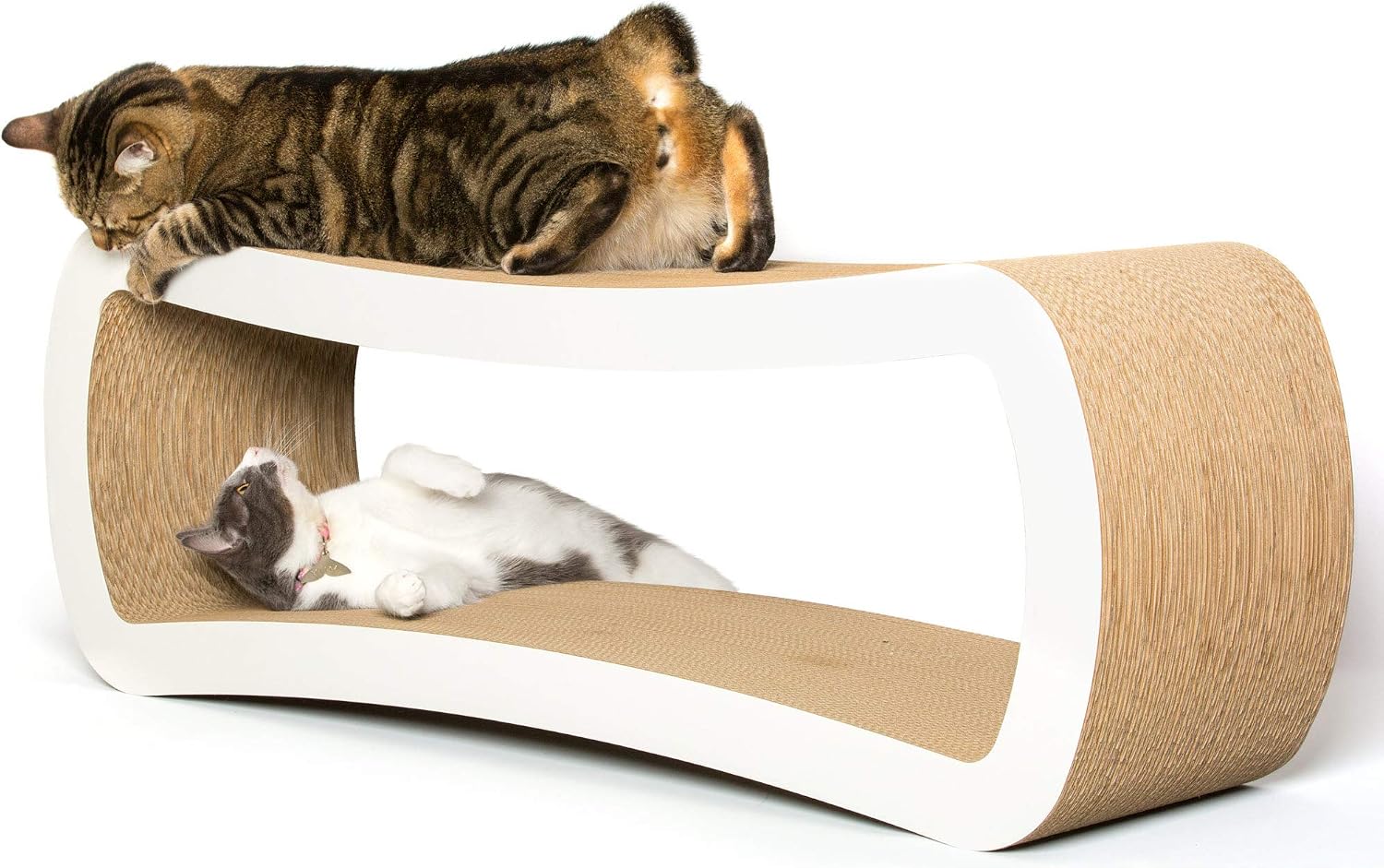
PetFusion Jumbo Cat Scratcher Lounge (99 x 28 x 36 cm, Cloud White)
Check current Amazon price.
This is the one purchase in this guide that replaces other purchases. It is a jumbo corrugated scratcher built as a lounge, so it works as a bed and a scratching surface at the same time, and the construction is a clear step up from the flat corrugated pads that shed a pile of cardboard dust every week.
The money logic is simple. Cheap corrugated scratchers are cheap because there is less material in them, and they fail fast: they go soft in the middle, the cat loses interest, and you buy another one. The PetFusion is the buy-once version of the same idea. It is also big enough at 99 by 28 by 36 centimeters that a cat can stretch out full length on it, which is exactly the posture most cats want when they scratch.
Flaws but not dealbreakers: Corrugated is not forever, even good corrugated. Expect to replace it eventually, and expect to sweep up some cardboard debris along the way. It is also a floor object, so it takes up real square footage.
Anyone who has already bought three cheap scratchers in a year should buy this instead of the fourth one.
The workflow: how to save money on cat furniture step by step
Order matters more than the shopping list. Work through these eight steps and you will spend less than the person who buys the same products in a different sequence.
Step one: Audit the damage you already have. Walk the house with a phone and photograph every scratch, pull, and frayed corner. This takes ten minutes and it tells you where the cat actually works, which is not always where you think it works. Do this before you open a single product page.
Step two: Measure the scratch zone. Height from the floor, width of the run, and how far the damage wraps around a corner. Write the numbers down. Those three measurements decide whether you need corner pads, a long mat, or both, and they stop you from buying coverage you do not need.
Step three: Buy the barrier before the furniture. The protector is the cheapest thing in this article and the only one that prevents a cost instead of adding one. Every week a shredded corner stays exposed, the repair gets more expensive. That is the correct save money on cat furniture order of operations, and almost nobody follows it.
Step four: Put the scratcher where the cat already scratches. Cats do not relocate their scratching to suit your floor plan. If the damage is on the left arm of the couch, the scratcher goes next to the left arm of the couch, not in the hallway where it looks better. A scratcher in the wrong room is a scratcher you paid for twice.
Step five: Match the surface to the cat's posture. Watch how your cat scratches. A cat that stretches up to full height wants a vertical surface with some height to it. A cat that crouches and rakes wants a horizontal one like the PetFusion lounge. Buying the wrong orientation is the most common way people waste money on cat furniture.
Step six: If you add a tower, check the dimensions before the photos. Platform height tells you whether a cat can jump up without a stopover. Perch width tells you whether it can actually lie down at the top. Shelf depth decides whether a big cat fits without hanging off the edge. Weight limit and post diameter decide whether the whole thing wobbles. If you are buying a tower secondhand, check hammock fabric for sag and smell, and confirm the anchor type before you drill anything into a wall. A tower that fails any of these is a donation to the shelter, not a purchase.
Step seven: Anchor what you buy. A scratcher that slides across the floor or a tower that sways when the cat lands gets abandoned, and an abandoned purchase is the most expensive kind. Use the anchor type the manufacturer specifies, put the anchor into a stud where you can, and test it with your hand before the cat tests it with twenty pounds of momentum.
Step eight: Set a ninety day review. Put a reminder on your phone. At ninety days, check whether the protectors are still stuck, whether the corrugated surface still has texture, and whether the cat is still using the scratcher you bought. If something has failed, replace the component rather than the whole setup. If something was never used, move it before you replace it.
The competition and why it lost
Three categories of cat furniture did not make this list, and the reasons are worth knowing, because they are the same reasons your last purchase failed.
The flat corrugated scratcher that costs a few dollars. It is not a bad product, it is a disposable one. The material is thin, it goes soft quickly, and the cat stops using it before you have finished vacuuming up the first week of debris. It is the reason a lot of people think their cat does not like scratchers. If you are going to buy corrugated, buy the version with enough material in it to survive a season.
The cheap sisal rope post. A good sisal post is a fine thing, but the inexpensive ones are wound loose, and a loose wrap unravels into a string that cats chew and owners untangle. Post diameter matters more than height here: a thin post flexes, and a flexing post feels unstable to a cat that is mid-stretch.
The plush multi-level tower. This is the purchase that starts the whole problem. A tall tower with small perches, a thin base, and a hammock that sags is a lot of money for something a cat will use once. Towers are not a bad idea, they are just a different article: a climbing guide, not a damage-control guide. Get the scratching under control first, then shop for height.
I also left out the peel-and-stick furniture tape that comes in a narrow roll. It is the same idea as the pads above with a fraction of the coverage and a habit of curling at the edges. If you are going to put adhesive on your couch, put enough of it on to actually cover the damage zone.
What this all costs
Here is the order I would spend in, cheapest first:
- The barrier pads. The smallest line item, and the one that pays for itself the first time a claw lands on a pad instead of a cushion.
- The long mat. More coverage per dollar than another pack of pads, and it handles the furniture with a long exposed side.
- The scratcher lounge. The largest single purchase here, and the one that replaces the repeat buys. If you have bought three cheap scratchers this year, this is the fourth purchase you do not make.
Check current Amazon price on all three before you commit, because the gap between them moves with sales, and the math only works if you buy them in order rather than all at once.
The number that actually matters is not the total. It is the cost per day over the life of the item. A couch you keep for another five years, a protector that costs less than a single repair, a scratcher that outlasts three cheap ones: that is the whole equation, and it does not need a spreadsheet.
The hard part is not the shopping. It is accepting that the tower was never the answer. Protect what you own, give the cat something better to scratch, and the money you were going to spend on replacing furniture stays in your pocket.