Litter on the floor is not a character flaw in your cat. It is a physics problem, and you can solve most of it without buying a bigger broom. The trick is to stop the litter before it leaves the box: a box the cat fits inside, litter shallow enough that a digging paw does not hit the bottom, and a mat that actually grabs what flies. If you want to know how to stop a cat kicking litter out safely, start with those three things and leave the box where it is.
Most of the advice online says buy a bigger box or a covered one. Both can help, and both can backfire. A hood traps odor, and a cat that dislikes the smell of its own box will dig harder and fling more litter trying to reach a clean layer at the bottom. A box that is too big for the room also ends up pushed into a corner where the cat has no room to turn around, which is how you get a cat that exits at a run.
The checklist below is the same whether your cat is a delicate digger or a backhoe. Three products cover the hardware side, and eight steps cover everything else.
Why you should trust me
I have shared a house with cats for two decades, including a big tabby who treated his box like a construction site and a senior who needed a low entry after his joints stiffened. Every box that comes through the door gets the same short checklist: box size, entry height, litter depth, clumping speed, mat texture, odor control, waste drawer access, and sensor range on the automatic units. I do not take free units in exchange for a review, and I will tell you when the cheapest item on the page is the one that fixes the problem. That is the whole editorial policy.
How I picked and how I tested
I ran the same eight-point checklist against every unit here, and I weighted the things that decide whether litter ends up on the floor. For the automatic boxes, that meant looking hard at sensor range and anti-pinch behavior, because a box that pauses when a cat walks in is safer than one that keeps turning. I also looked at how each box handles a full load of clumping litter and where the waste drawer sits, since a drawer you have to kneel to open is a drawer that gets emptied late.
Two things I did not do: I did not put a sound meter on the cycle noise, and I have not lived with these three long enough to promise years of service. What I can tell you is how each one fits the checklist, where it will fight you, and which cat it suits. If you want the wider field, my self-cleaning litter box guide covers the category in more depth.
Gear that helps you stop a cat kicking litter out safely
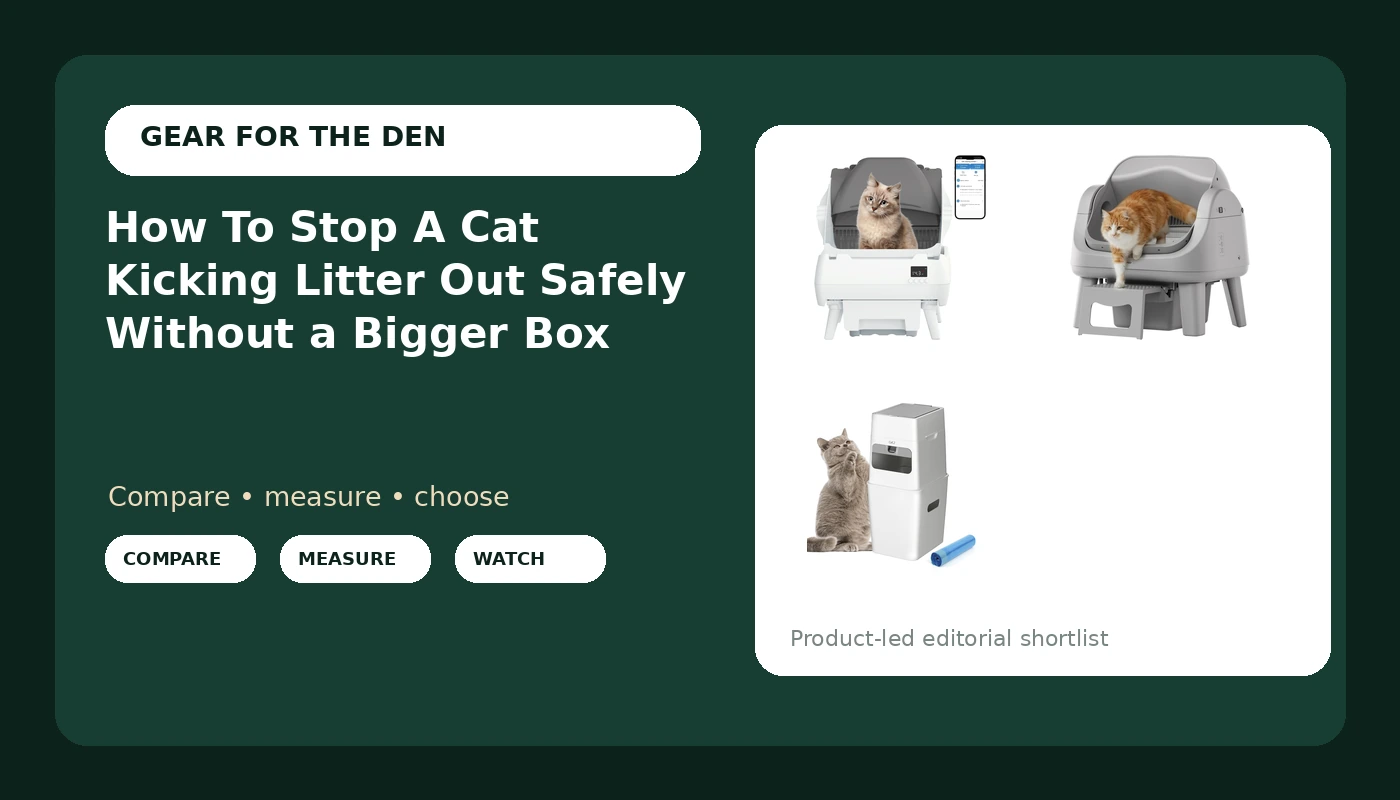
Three products do the heavy lifting: an open box that does not trap odor, a second automatic box for a multi-cat home or a stiff senior, and a sealed container for the scooped waste so the smell does not send your cat digging harder.
Our pick: Lohhuby Automatic Cat Litter Box Self Cleaning – App Control, Open-Design, Smart Health Monitor, Suitable for Medium Cats and Kittens, Anti-Pinch Safety, Quiet Operation – White
Our pick
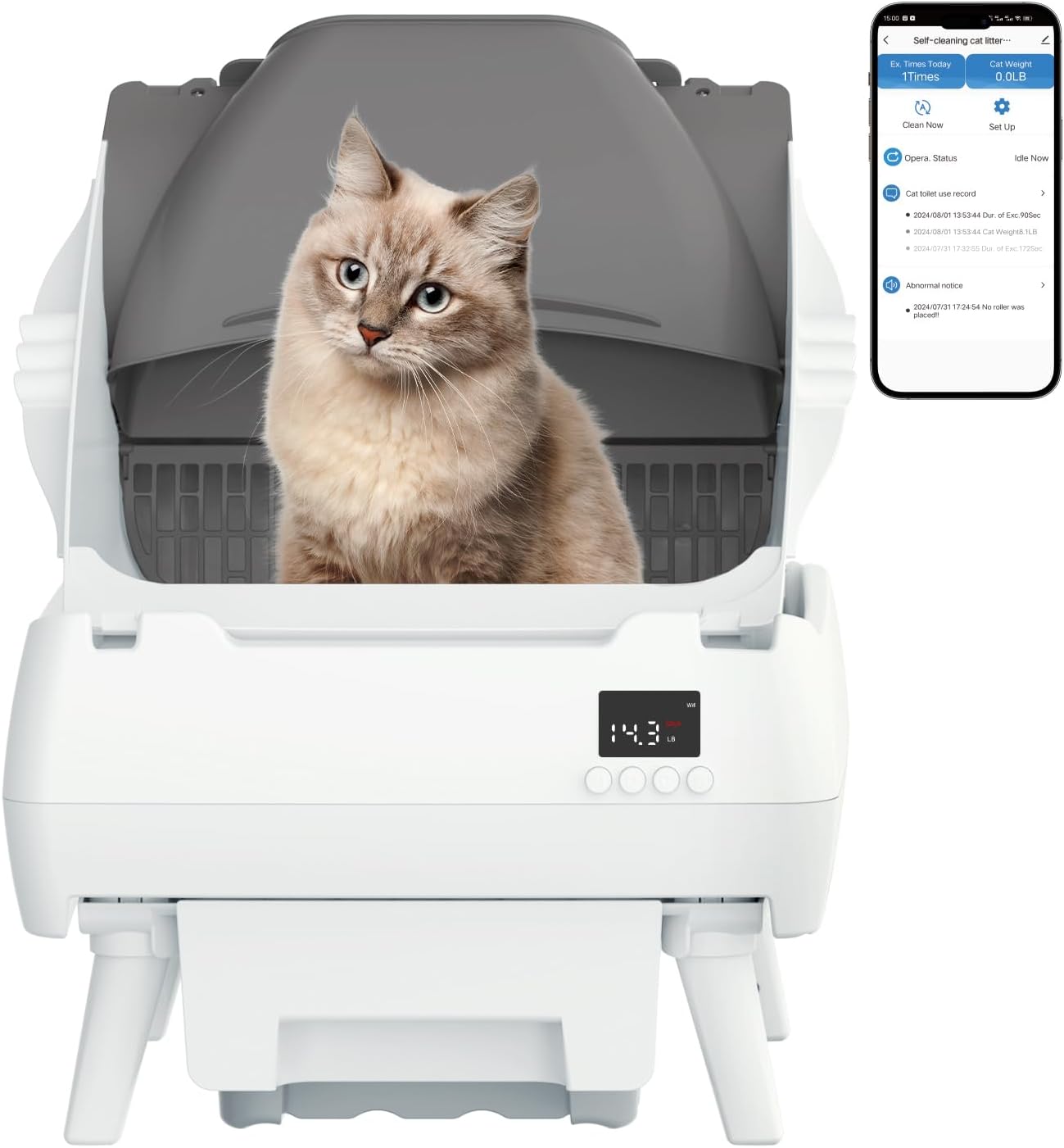
Lohhuby Automatic Cat Litter Box Self Cleaning – App Control, Open-Design, Smart Health Monitor, Suitable for Medium Cats and Kittens, Anti-Pinch Safety, Quiet Operation – White
Check current Amazon price.
The open design is the reason this is my pick for a scatter problem. There is no hood to hold odor in, and odor is the number one reason a cat digs to the bottom of the pan instead of using the clean layer on top. The app control and the smart health monitor give you a record of how often the box is used, which is genuinely useful here: if your cat starts visiting more often and kicking harder, that pattern is worth a vet call.
Anti-pinch safety and quiet operation matter for a nervous cat. A box that sounds like a blender every time it cycles gets avoided, and an avoided box gets used in a hurry, which is when litter flies. It is sized for medium cats and kittens, so measure your cat from nose to tail base before you assume it fits. A large cat in a tight box will hang over the edge and rake litter onto the floor.
Flaws but not dealbreakers: The open design means nothing blocks a determined kick. Pair it with a mat and keep the litter depth in the shallow range. Anyone with one cat or a pair of medium cats who wants a clean box and a usage log will be happy here.
Runner-up: PetPivot Open Top Self Cleaning Cat Litter Box, Automatic Litter Box with 7 Pairs of Safety Sensors, Anti-Pinch Protection and Easy Access Step for Senior Cats, Dark Grey
Runner-up
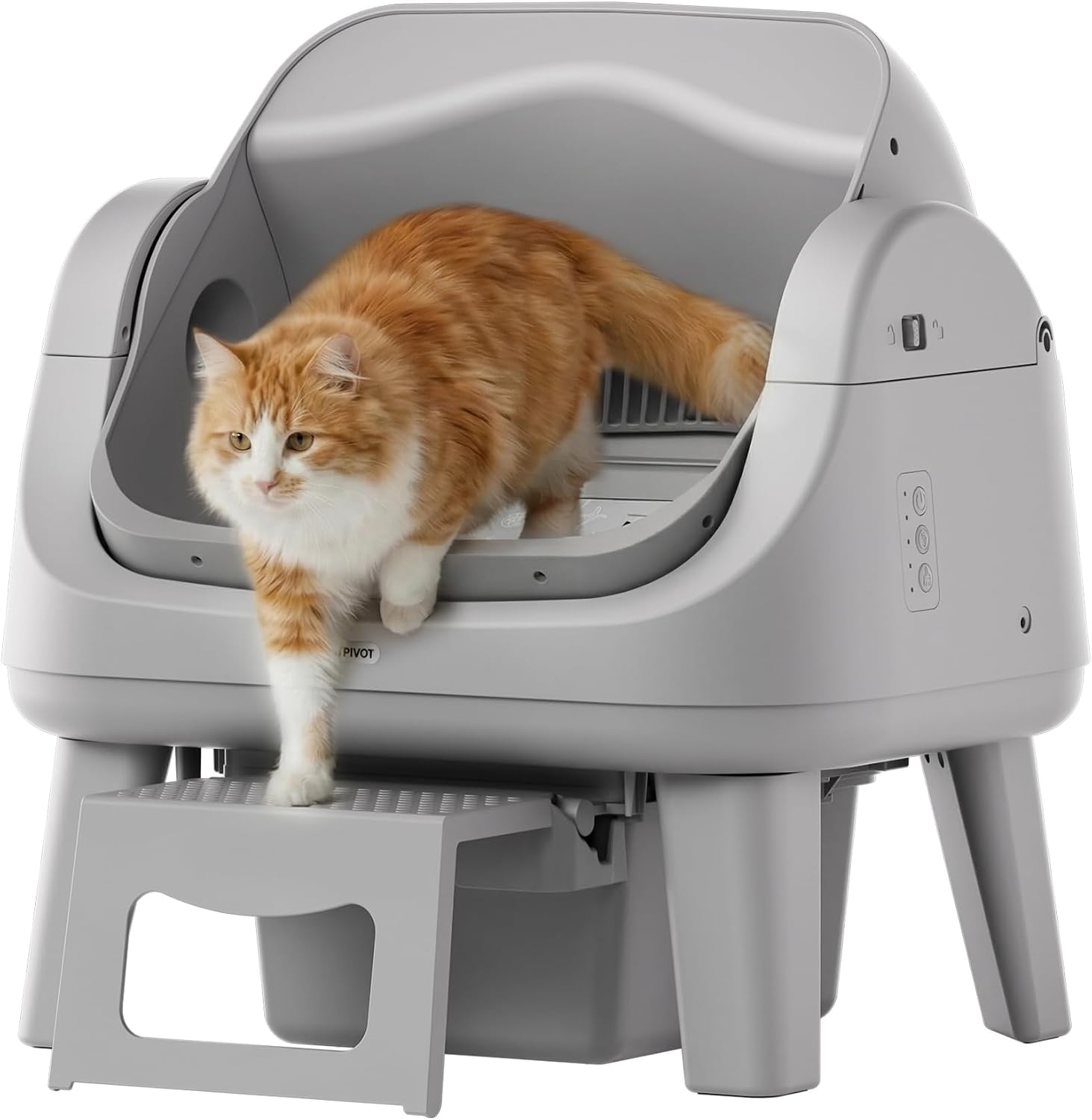
PetPivot Open Top Self Cleaning Cat Litter Box, Automatic Litter Box with 7 Pairs of Safety Sensors, Anti-Pinch Protection and Easy Access Step for Senior Cats, Dark Grey
Check current Amazon price.
The easy access step is the feature that earns this one a spot. Senior cats and kittens do not want to hurdle a wall to get to the litter, and a cat that has to jump in and out scatters more on the way out. The step gives a flat landing, which cuts the launch angle.
Seven pairs of safety sensors plus anti-pinch protection cover the sensor range question well. The box should know a cat is in or near the drum before it moves, and that is the safety feature that actually matters in a home with a curious second cat or a dog that pokes its nose where it does not belong. The dark grey shell hides dust between wipe-downs, which is a small thing that adds up.
Flaws but not dealbreakers: An open top with a step means the step is a landing strip for tracked litter. Check litter depth and clumping speed before you fill it, because a rake dragging through overfilled litter will push granules out the front. Best for a home with a senior cat or a multi-cat household that needs a second station.
The odor-control pick: GKJ Cat Litter Box Waste Disposal System for Odor Control Cat Litter Trash Can | Includes 1 roll of 16 Easy Tear-Off Bags | Diaper Trash Can
The odor-control pick
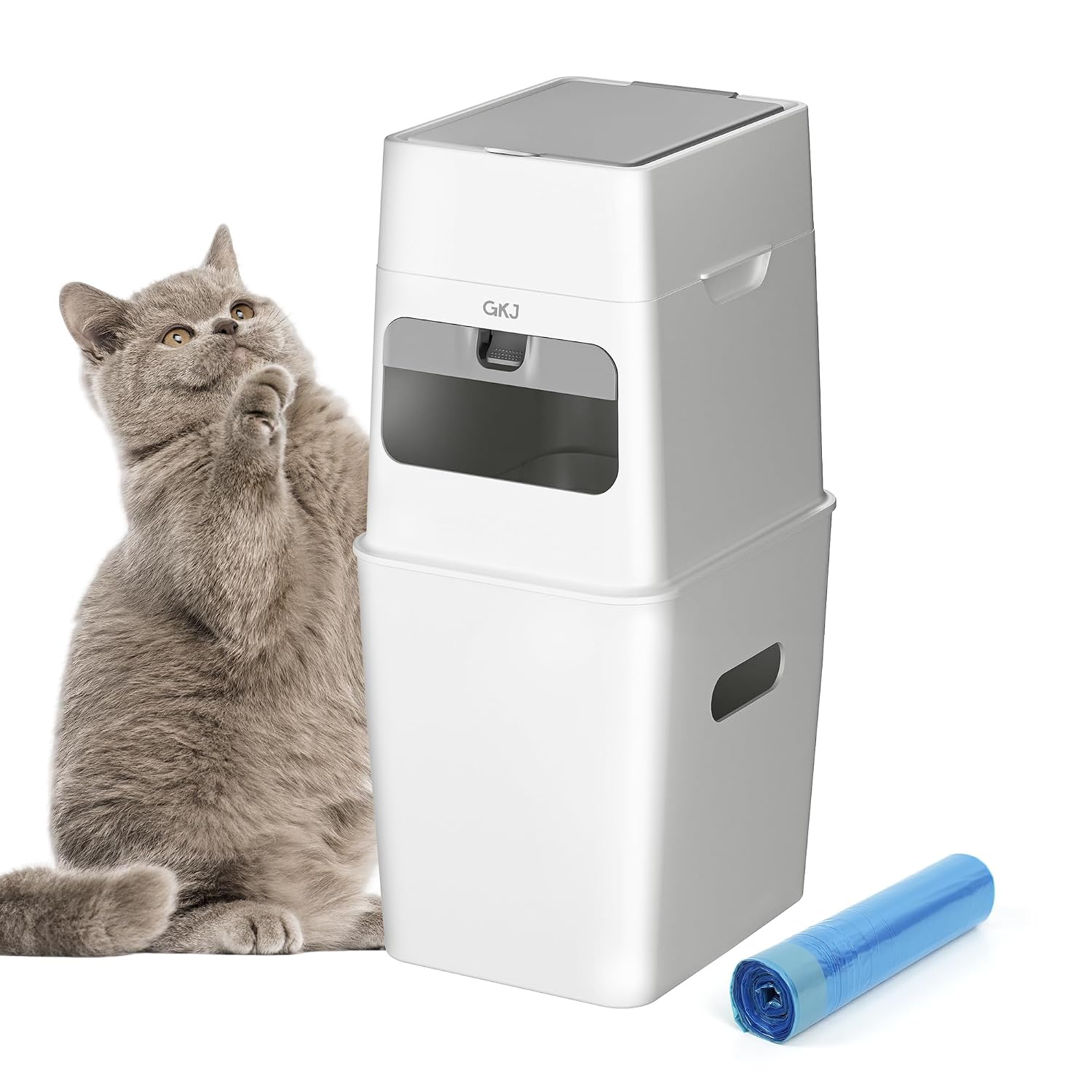
GKJ Cat Litter Box Waste Disposal System for Odor Control Cat Litter Trash Can | Includes 1 roll of 16 Easy Tear-Off Bags | Diaper Trash Can
Check current Amazon price.
This is the item most people skip and then wonder why the box still smells. A sealed waste container with tear-off bags keeps the scooped clumps out of the open air, and the odor control angle is tied directly to the litter kicking problem. A box that smells sharp gets dug through, and a cat digging through litter is a cat throwing litter.
It also works as a diaper pail, which tells you the seal is built for worse smells than cat waste. The easy tear-off bags are the part that decides whether you actually keep up with it. A container that is annoying to empty becomes a container you stop emptying.
Flaws but not dealbreakers: The bags are consumable, so this carries a running cost beyond the unit itself. If you let the container fill past the seal line, it stops doing its job. Anyone with a small apartment, a laundry room box, or a multi-cat setup should put this next to the box before anything else.
The actual litter workflow
Now the part that does the work. None of it costs money, and all of it matters more than which box you buy if you want to stop a cat kicking litter out safely. Do the steps in order and give each change a week before you judge it.
Step one: Check the box size against the cat. Measure your cat from the base of the tail to the tip of the nose, then add a few inches. That is the length the pan needs to be. A cat that cannot turn around comfortably will stand with its rear at the edge and rake litter straight over the side. If your cat's nose-to-tail length is close to the pan length, the pan is too small.
Step two: Set the entry height for the cat you actually have. Kittens, seniors, and cats with arthritis need a low entry, and an easy access step does the same job as a cut-down side. A high wall only helps if the cat can clear it without a running start. Watch your cat get in and out once. If it jumps in and jumps out, lower the entry or add a step.
Step three: Get the litter depth right. Most scatter problems are overfilled boxes. Two to three inches of clumping litter is the working range for most cats, and a deep fill gives a backhoe more material to move while burying the clean layer the cat is hunting for. Mark the fill line with a strip of tape on the outside of the pan and hold yourself to it.
Step four: Choose a litter with a fast clumping speed. Clumping speed decides how much loose grit stays in the pan. A litter that forms a firm clump in seconds leaves less dust and fewer loose granules for a paw to flick. Slow clumping litter breaks apart on the way out of the box, and those fragments are what you find six feet away.
Step five: Put a mat with the right texture at the exit. Mat texture is the whole game, and it is the cheapest way to prevent a cat kicking litter out safely. A smooth mat lets litter roll off the paws and across the floor. You want a deep, woven or honeycomb surface that traps granules, and it needs to be long enough that the cat takes three or four steps on it. A mat the size of a placemat catches almost nothing.
Step six: Fix the entry path, the traffic, and the sensor range. The box needs a clear approach from two sides, away from a washing machine that kicks on mid-use and away from the dog's food bowl. In a multi-cat home, add a second station instead of one box in a high-traffic hallway. On an automatic box, confirm the sensor range covers the entry so the drum cannot start while a cat is stepping in.
Step seven: Build a waste drawer and odor routine. Empty the waste drawer or the sealed container every two or three days, and wipe the pan with a mild, unscented cleaner weekly. Skip scented litter and scented liners. Cats have a far better sense of smell than we do, and a perfumed box reads as a dirty box, which means more digging and more litter on the floor.
Step eight: Recheck in two weeks, and rule out a medical cause. If a cat suddenly kicks and digs far more than usual, or cries while using the box, that is a vet visit, not a shopping problem. Pain and urinary issues change litter box behavior fast. Once health is ruled out, give your changes two weeks, then adjust one variable at a time: litter depth first, then mat, then box.
The competition and why it lost
A few popular fixes did not make the list. Covered boxes with a hood and a swinging door lose here because they trap odor and force a cat to push through a flap, which is the opposite of what you want in a home with a scatter problem. The hood also hides the pan, so you notice the litter on the floor before you notice the box is overdue. If you have read other guides on how to prevent a cat kicking litter out safely, you have probably been told to buy a hooded box. I would spend that money on a mat and a sealed waste bin instead.
Top-entry boxes are a real option for some cats, but they lose for seniors, kittens, and any cat with a stiff joint, and the jump out of a top entry is exactly the move that flings litter. A high-sided storage bin from the hardware store can work in a pinch, but the plastic is thin, the corners are hard to scoop, and the sides are often too high for a cat that wants to step in.
Litter mats with a smooth rubber surface lose to a woven texture, and small mats lose to large ones. Scented litters and crystal litters lose for the same reason: they cover odor instead of removing it, and a cat that can smell its own waste digs to get away from it. Fully enclosed automatic drums lose for a different reason. They control odor well, but in a small apartment the footprint and the cost put them out of reach, and the enclosed design gives a nervous cat nowhere to watch the room from.
What this all costs
The waste disposal system is the smallest line item here and the one with the clearest payoff. The two automatic boxes sit in a similar bracket to each other, and both cost more than a plain pan, so the question is whether the app control, the safety sensors, and the self-cleaning cycle save you enough scooping time to justify it. Check current Amazon price on each listing before you decide, because these move with sales.
Then there is the part that costs nothing. The eight steps above are free, and steps one through three, box size, entry height, and litter depth, fix more scatter complaints than any product on this page. Do those first. If litter still lands six feet from the box, buy the mat before you buy a new box, and buy the sealed waste container before you buy anything automatic.
Over a year, the math is simple. A box that gets avoided costs you a rug, a mop, and a vet visit for a urinary problem you caught late. A box that gets used properly costs you litter, bags, and a few minutes a week. The eight steps are the difference between those two bills, and they take one afternoon to work through.
That is the job. Your cat is not doing this to spite you. Give it a box that fits, litter it can dig in, and a clean place to put the waste, and the floor stays clean.