Most dogs do not chew the grooming brush because they hate being brushed. They chew it because the brush is the most interesting object within reach at the exact moment they are bored, itchy, or uncomfortable, and because mouthing it works. The session stops, the tool goes back in the drawer, and the behavior gets reinforced. If you want to stop a dog chewing its brush, you have to change three things: the tool, the timing, and what the dog gets out of grabbing it.
I write the dog grooming coverage for Gear for the Den, which means I handle a lot of brushes, combs, de-shedders, and paw tools, and I hear from readers whose dogs treat every one of them like a tug toy. The pattern is almost always the same. A dog with a coat type the tool does not match, a session that runs longer than the dog can tolerate, and a brush left on the floor afterward where it quietly becomes a chew toy. My own two dogs sit at opposite ends of the shedding spectrum, one short-coated and one with a dense undercoat, and the undercoat dog is the one who taught me all of this.
The fix is not punishment, and it is not a louder voice. It is a shorter session, the right bristle type for the coat in front of you, and a chew that is genuinely better than the brush. Here is the whole routine for how to stop a dog chewing its brush, plus the three tools I would start with.
Why you should trust me
I have been writing pet gear coverage for years, and grooming tools are the category that generates the most mail, because grooming is where equipment and behavior collide. A slicker that snags an undercoat turns a calm dog into a mouthy one, and a de-shedder with no blade guard turns a nervous dog into a dog that never wants to see the drawer open again. I read the one and two star reviews on every tool before I recommend it, I look at how the grip handle holds up when your hands are wet, and I ask the same question about all of them: does this shorten the session or lengthen it? Everything in this guide answers that question the right way.
How I picked and how I tested
The three tools below are not a full grooming kit. They are the specific pieces that make the brushing part of grooming short enough that a dog stops fighting it. I chose them on four criteria.
First, coat type. A rubber curry and a de-shedding blade do completely different jobs, and using the wrong one is one of the most common reasons a dog starts mouthing the tool. Second, bristle type and blade guard. Rounded pins glide, sharp pins scrape, and a guarded blade stays off the skin. Third, the grip handle, because a tool that slips when your dog shifts its weight is a tool you will yank, and a yank starts the game of tug. Fourth, how fast the tool clears hair, because every extra minute is another minute your dog has to decide the brush is a chew toy.
I ran each of these through a normal grooming week here: short sessions, one short-coated dog and one double-coated dog, and the same treat and release routine at the end of every pass. Anything powered also got the motor noise and airflow check before it went near a coat, because a loud tool spooks a dog long before the bristles ever touch it. If you want the wider field, my guide to de-shedding tools for double coats covers the tools that did not make this list.
Grooming tools you'll need before you start
You cannot train a dog out of chewing a tool that hurts. Fix the tool first, then work on the behavior, because a comfortable session that lasts three minutes is the fastest way to stop a dog chewing its brush. All three of these sit in the same price band as a bag of good treats, and each listing shows the current price.
Our pick: Hartz Groomer's Best Fur Fetcher De-Shedder Dog Brush,Black
Our pick
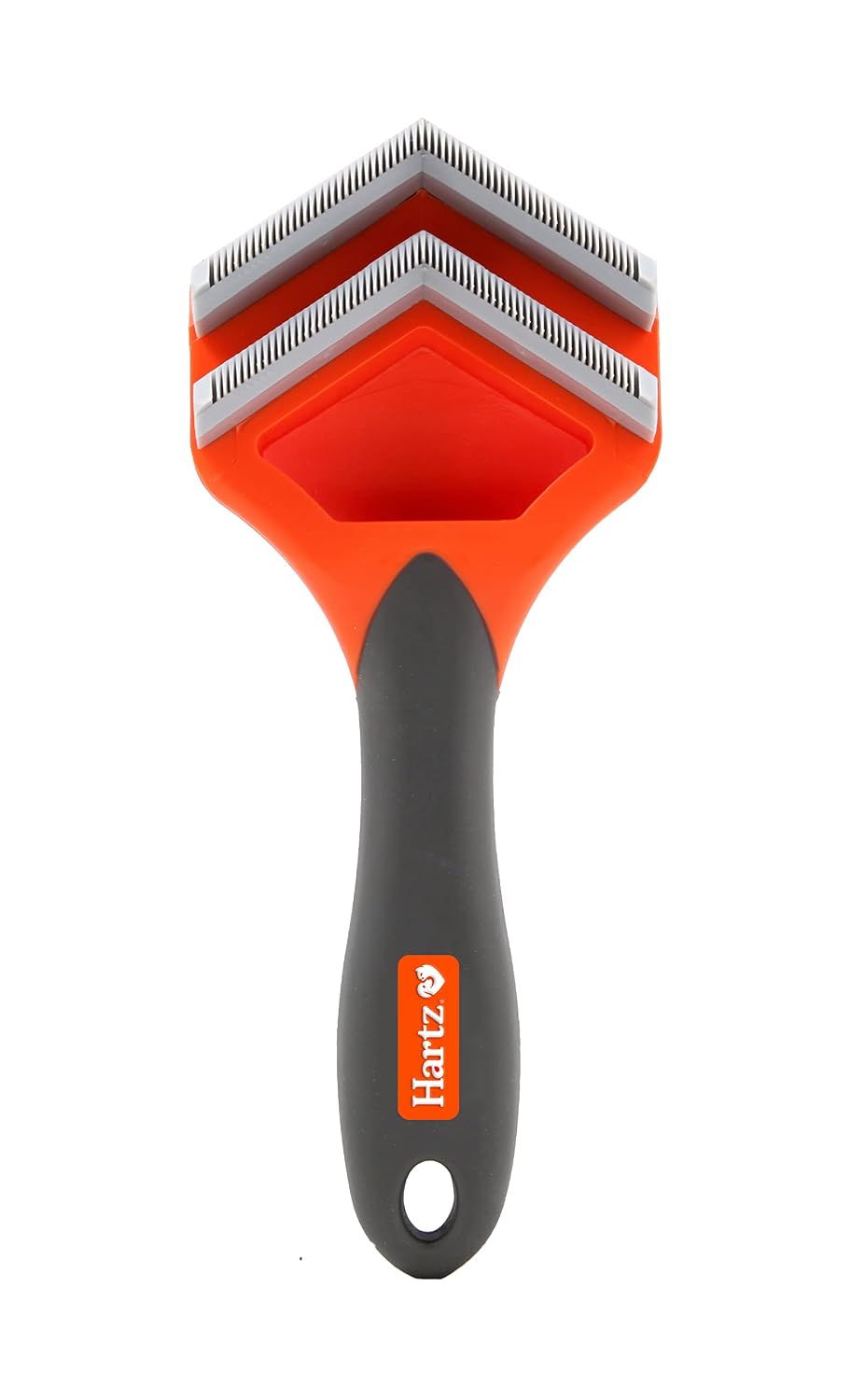
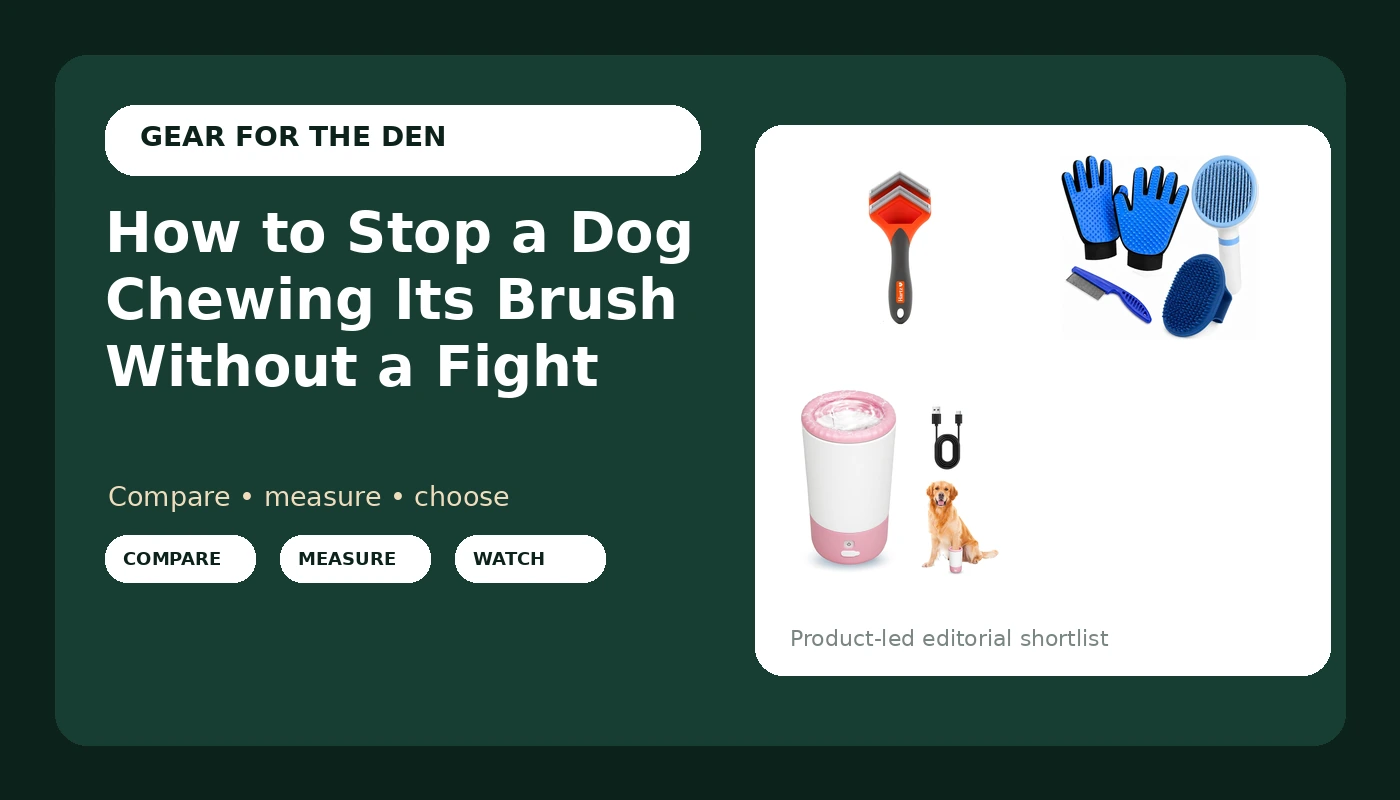
Hartz Groomer's Best Fur Fetcher De-Shedder Dog Brush,Black
Check current Amazon price. This is the tool I reach for first on a double-coated dog, and it is the one that most often ends the chewing by itself. The blade guard sits between the teeth and the skin, so you can pull through a dense undercoat without scraping. A dog that is not being scraped has far less reason to turn its head and grab the handle.
The head is a de-shedding blade rather than a bristle brush, which means it clears loose undercoat in a few passes instead of twenty. That matters more than it sounds. A dog that gets three comfortable passes and a treat is a dog that never gets bored enough to start mouthing the tool. The grip handle is wide enough to hold with wet hands, which is where most of these sessions happen anyway.
Flaws but not dealbreakers: On a short-coated dog there is almost nothing for the blade to grab, and pressing hard on a dog with sensitive skin undoes the good. Use light pressure and let the blade do the work.
Who it is for: anyone with a shedding double coat, husky, shepherd, or golden, whose dog starts mouthing the brush two minutes in.
Budget pick: NVNAN 5-Piece Dog Grooming Brush Set with Grooming Gloves
Budget pick
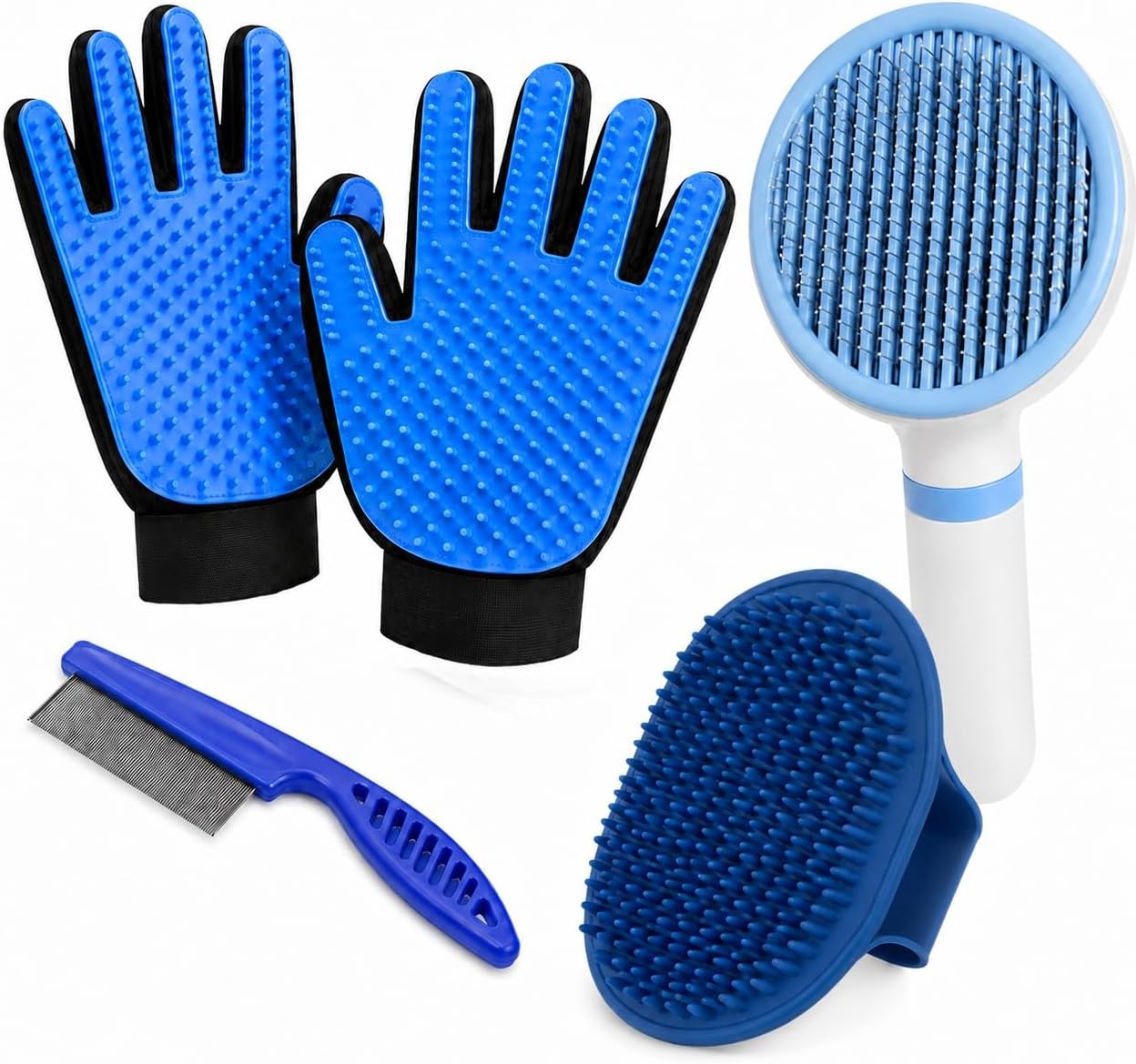
NVNAN 5-Piece Dog Grooming Brush Set with Grooming Gloves
Check current Amazon price. Five pieces for the price of one decent slicker is the pitch, and the reason this set earns a place here is the grooming gloves. A glove is the one grooming tool a mouthy dog usually will not grab, because there is no handle to grab. There is just your hand doing something that feels a lot like petting.
The set covers what a beginner actually needs: a bristle brush for the topcoat, a pin brush for the undercoat, a comb for the face and paws, and the gloves for the dog that hates everything else. For a puppy in the middle of teething, the glove is often the only tool you can use for a month without a wrestling match, and it keeps you in the habit of daily handling.
Flaws but not dealbreakers: The individual pieces are not as sturdy as a dedicated tool, and the pin brush will not clear a heavy undercoat on its own. Treat it as a starter kit and add the de-shedder when the coat demands one.
Who it is for: new puppy owners, and anyone whose dog is fine with hands but hostile to anything with a handle.
Also useful: Pink Electric Dog Paw Cleaner Cup, Rechargeable 360° Washer with Brush
Also useful
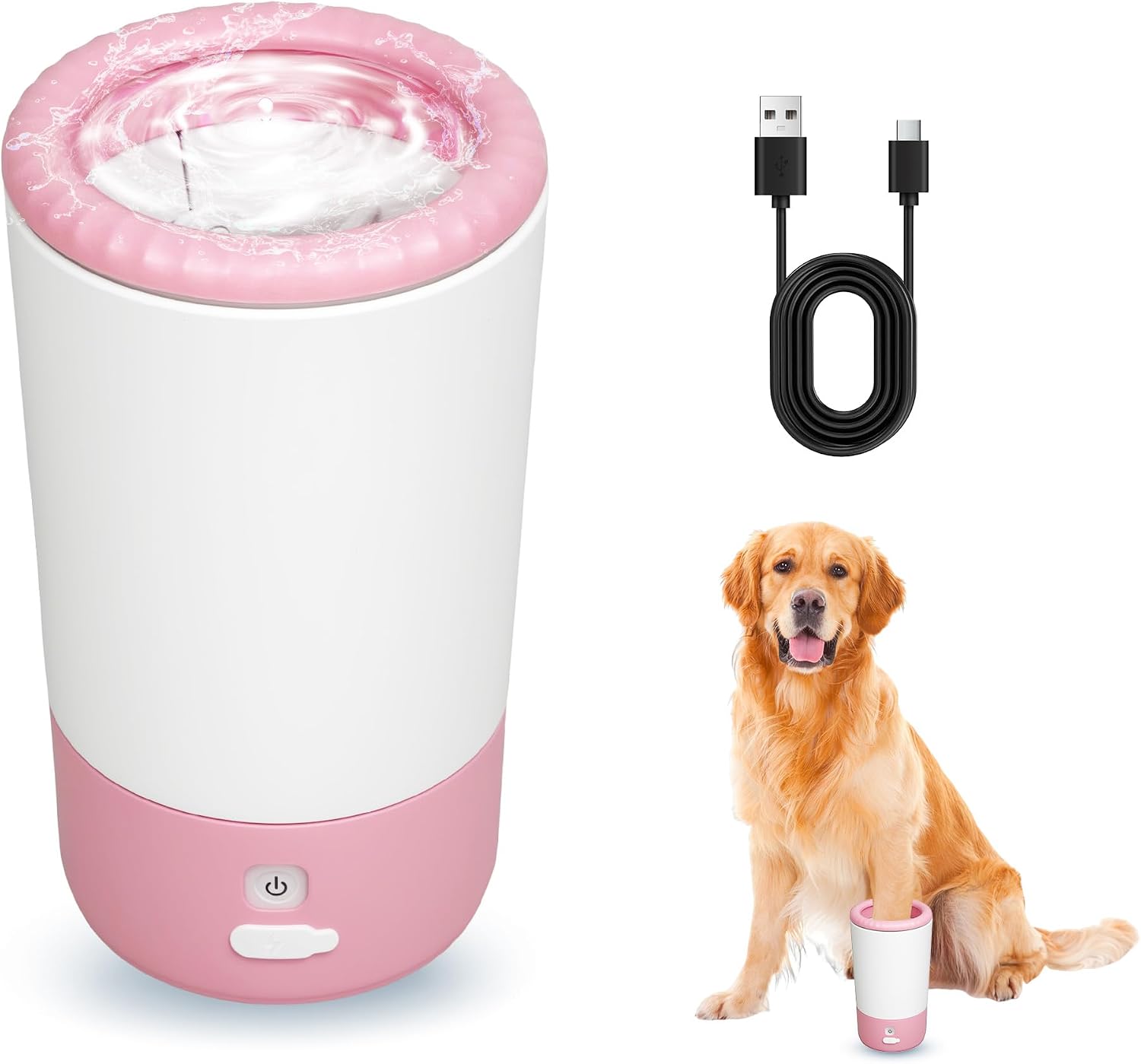
Pink Electric Dog Paw Cleaner Cup, Rechargeable 360° Washer with Brush
Check current Amazon price. This is the one powered tool in the guide where the brush is hidden inside a cup, which means there is nothing for a dog to mouth. For a dog that chews because its paws itch, mud and trapped grit are part of the problem, and a 360 degree wash after every walk does more for that than any training drill.
It is rechargeable, so there is no cord to chew either. Introduce it with the motor off, let the dog stand with a dry paw in the cup, and add water once that has become boring. The 360 degree brush does the scrubbing while you hold the cup, so your hands stay out of the mouth zone entirely.
Flaws but not dealbreakers: It only fits a certain paw size, and the motor noise needs a slow introduction with treats. A dog that hates the sound will hate the cup.
Who it is for: dogs with itchy or dirty paws, and owners who want a grooming routine that never puts a brush near a set of teeth.
The workflow to stop a dog chewing its brush
Eight steps, in order. The first three are setup, the next three are training, and the last two are the habits that keep it from coming back.
Step one: Find the real reason. Mouthing a brush has four common causes: a teething puppy, discomfort during the session, boredom and energy, or a learned habit that works. Work out which one you have before you change anything. If the dog only chews the brush and nothing else in the house, it is almost always the session. If it chews the brush, the leash, the rug, and the furniture, you are dealing with an enrichment problem, not a grooming problem.
Step two: Put the tools out of reach. A brush on the floor is a chew toy with a handle. Keep everything in a closed drawer or a tote the dog cannot open, and never leave a brush on the couch between passes. If your dog has already claimed one, replace it, because a chewed brush has ragged pins that scratch, and a scratching brush makes the behavior worse.
Step three: Trade, do not tug. When the mouth closes on the brush, hold the brush still instead of pulling it away. Pulling turns it into a tug toy and hands the dog exactly the game it wanted. Offer a high-value chew with your other hand, let the dog choose it, and praise the choice. To prevent a dog chewing its brush in the first place, the chew has to be more interesting than the tool, and that is a trade, not a punishment.
Step four: Pair the brush with food before it touches the coat. Run a desensitization ladder. Show the brush, treat. Touch the shoulder with the back of the brush, treat. One stroke, treat. Two strokes, treat. Keep each session under a minute for the first week. The goal is a brush that predicts chicken instead of a fight, and that only happens if the food arrives before the mouthing starts.
Step five: Match the bristle type and blade guard to the coat type. The right tool means fewer passes, and fewer passes means less time to get bored. A short coat needs a rubber curry or a bristle brush. A double coat needs a guarded de-shedding blade, then a pin brush to lift the undercoat. A long silky coat needs a comb and a slicker with rounded pins. Mats never come out dry with a de-shedder, and trying is how dogs learn to hate the drawer.
Step six: Stop early, every single time. The two minute rule: end the session while the dog is still relaxed, even if you are not finished. A dog that always gets three calm passes and a treat learns that the brush comes and goes quickly. Knowing how to prevent a dog chewing its brush from becoming a habit is really just knowing when to quit while you are ahead.
Step seven: Keep the coat and skin in good shape between sessions. A lot of brush chewing is really itch chewing. Bathe with an oatmeal shampoo when the skin is irritated, and pay attention to the oatmeal concentration on the label, because a shampoo that lists colloidal oatmeal near the top does more than one that mentions it last. Dry with airflow rather than heat, keep the undercoat from matting, and clean muddy paws after walks. Calm skin means a dog with less reason to put its mouth on anything.
Step eight: End with a release cue, then put the tool away. Say "all done," hand over a chew, and put the brush in the drawer before the dog stands up. The order matters. If the brush disappears before the fun starts, there is nothing to guard and nothing to chase. Do this ten times and the end of grooming stops being the exciting part.
The competition and why it lost
A few tools people ask about did not make this list, and it is worth knowing why.
A full-size slicker brush with sharp pins is the right tool for some coats, but it is the wrong first tool for a dog that is already mouthing the brush. Sharp pins are usually the reason the mouthing started.
An undercoat rake with no blade guard strips undercoat fast, and on a thick-coated dog it is genuinely useful. It also scrapes if you are not careful, and a dog that has been scraped once will watch the drawer for weeks.
A rubber curry mitt is cheap, gentle, and great in the bath, but it does not clear undercoat, so the session stays long and the dog stays bored.
A human hairbrush has the wrong bristle type for a dog coat, builds static, and puts a handle the exact size of a dog's mouth in front of a dog. Nothing on that list will stop a dog chewing its brush on its own, which is why none of them are here.
Powered clippers and force dryers are real grooming tools and they matter for matted or double coats, but motor noise is its own desensitization project. That is a different article.
What this all costs
Everything in this guide sits in the same band as a bag of good treats, and each listing above shows the current price when you click through. Compare that to a professional grooming appointment every few weeks, and the three tools pay for themselves in a couple of months, especially if you keep the sessions short and the coat maintained between visits.
Add the cost of a replacement, because a chewed brush is a thrown-away brush. A ragged pin brush that scratches is worse than no brush at all, and it sets the training back. Budget for one spare if you have a puppy in the house.
The real cost is time. Five minutes a day on a coat that is kept up, or forty five minutes on a coat that has been ignored for a month, and the dog pays for the second one with its patience. The training itself costs nothing but treats.
One more note on the vet. If your dog chews the brush, its paws, and its bedding, and the skin looks red or smells, that is a skin problem, not a training problem. Get it looked at, treat the itch, and the mouthing usually fades on its own. If it is a puppy, remember that teething ends and the chewing mostly does too, provided the brush is not the most fun thing in the room. That is the job. Short sessions, the right tool, and a chew that beats the handle.