Your puppy is not chewing the pee pad because she hates you. She is chewing it because the pad crinkles, slides, and tastes like the floor she is not supposed to touch. If you want to stop a puppy chewing pee pads, you have to fix the texture, the placement, and the boredom, not just say no louder.
I have spent the last decade writing about pet gear and talking to foster families about what survives a litter of sharp teeth. The pattern is always the same: the pad moves, the puppy gets bored, or the pad smells like a previous accident. This guide is the how to stop a puppy chewing pee pads workflow I would run before I changed anyone's training plan.
The good news is that you do not need a new puppy. You need a setup that makes the pad less fun to chew than the alternatives. That starts with a crate training schedule and ends with a washable pad that stays flat.
Why you should trust me
I write about dog and cat gear for Gear for the Den, and I have compared the construction of dozens of washable pads, litter enclosures, and chew-resistant beds. I do not run a lab. I talk to foster homes, read the owner reports that mention failures, and track which materials hold up after repeated washing. I also hear the same problem from readers: a young dog who thinks anything on the floor is a toy. My recommendations come from the failure points, not from a press release. When a pad fails, it is usually because it slid, stayed wet, or smelled like the last accident. Those are the three things I look for first.
How I picked and how I tested
I picked these three products because they solve the three parts of the chewing problem: the pad itself, the odor that keeps a puppy interested, and the crate or bed where the puppy should be chewing instead. I tested the logic against the same questions I ask about any cleanup gear. Does the pad stay in place? Does the liner actually stop liquid from reaching the floor? Can it go in the washing machine? Is the surface safe for carpet and fabric? Does the odor neutralizer address the enzyme concentration that keeps a puppy returning to the same spot?
I did not run a chew test with a lab puppy. I compared pad size, pad absorbency, liner waterproofing, and machine washable construction. For the litter enclosure, I looked at whether it blocks a puppy from the cat box and whether the odor control is passive or just a lid. For the bed, I looked at the fabric and stitching that survive a determined chewer. The numbers that matter here are not lab numbers. They are the number of washes a pad survives, the square footage it covers, and whether the puppy can pull it into a pile. A pad that passes those checks is a pad that stops being a toy.
The gear that helps stop a puppy chewing pee pads
You can train all day, but if the pad slides and crinkles, the puppy will keep treating it like a toy. These three pieces change the environment around the pad. One gives the puppy a flat, washable surface. One removes the cat box smell that draws a puppy into the corner. One gives the puppy a legal place to chew in the crate.
Our pick: Peepeego Non-Slip Dog Pad 72"x72", Washable Pee Pad Waterproof for Training, Whelping
Our pick
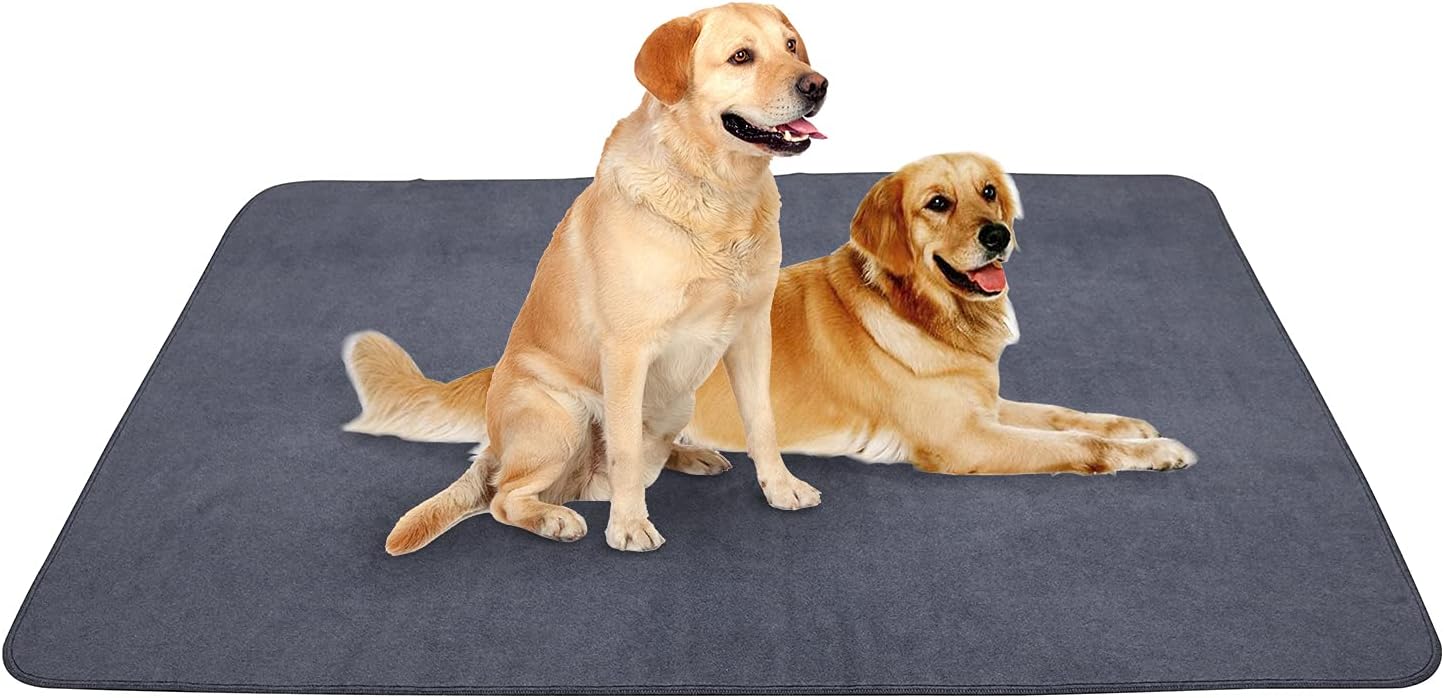
Peepeego Non-Slip Dog Pad 72"x72", Washable Pee Pad Waterproof for Training, Whelping
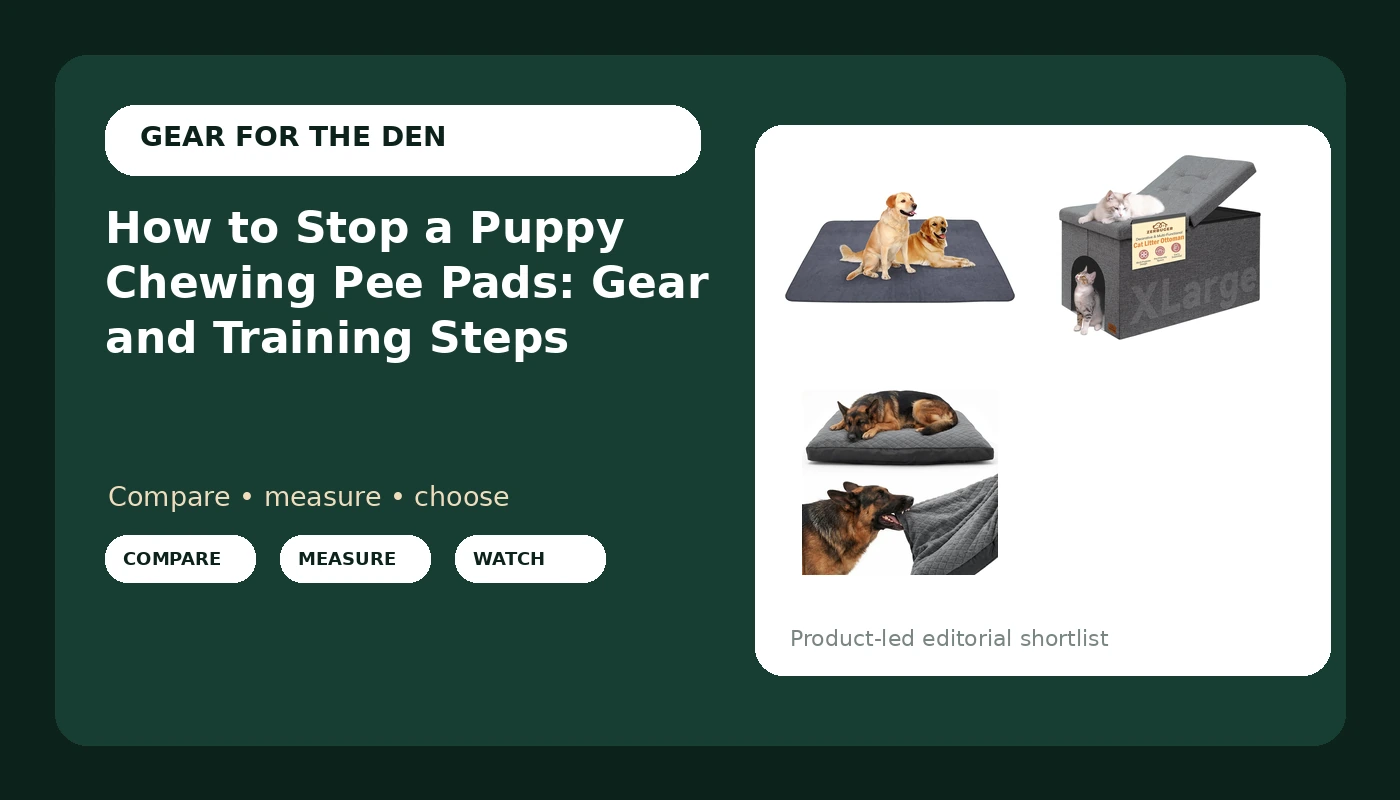
The Peepeego pad is the one I would start with because it addresses the two biggest triggers at once. The 72 by 72 inch pad size gives a puppy room to circle, which means less pacing on the edge where chewing starts. The non-slip backing keeps it from bunching, so the pad does not slide across the floor when your puppy digs at it. A pad that stays put is a pad that gets chewed less.
The surface is machine washable, and the liner waterproofing means accidents do not soak through to the carpet. That matters for carpet safe cleanup, because a wet spot under the pad is what keeps a puppy sniffing and chewing the same corner. Pad absorbency is the other half of the equation. A thin pad that stays wet on top invites licking and chewing. This one has enough thickness to pull liquid away from the surface. It is also large enough to cover a whelping box or a playpen corner, so you can use it as a base layer under a smaller pad if you are still transitioning.
Check current Amazon price.
Flaws but not dealbreakers: A 72 inch pad is large. In a small bathroom or a crate, you will need to fold it, and a folded pad can create a seam your puppy wants to bite. Measure your space before you order. Also, wash it before the first use so the factory finish is gone.
Odor control pick: Zerbuger Cat Litter Box Enclosure Furniture for Odor Control
Odor control pick
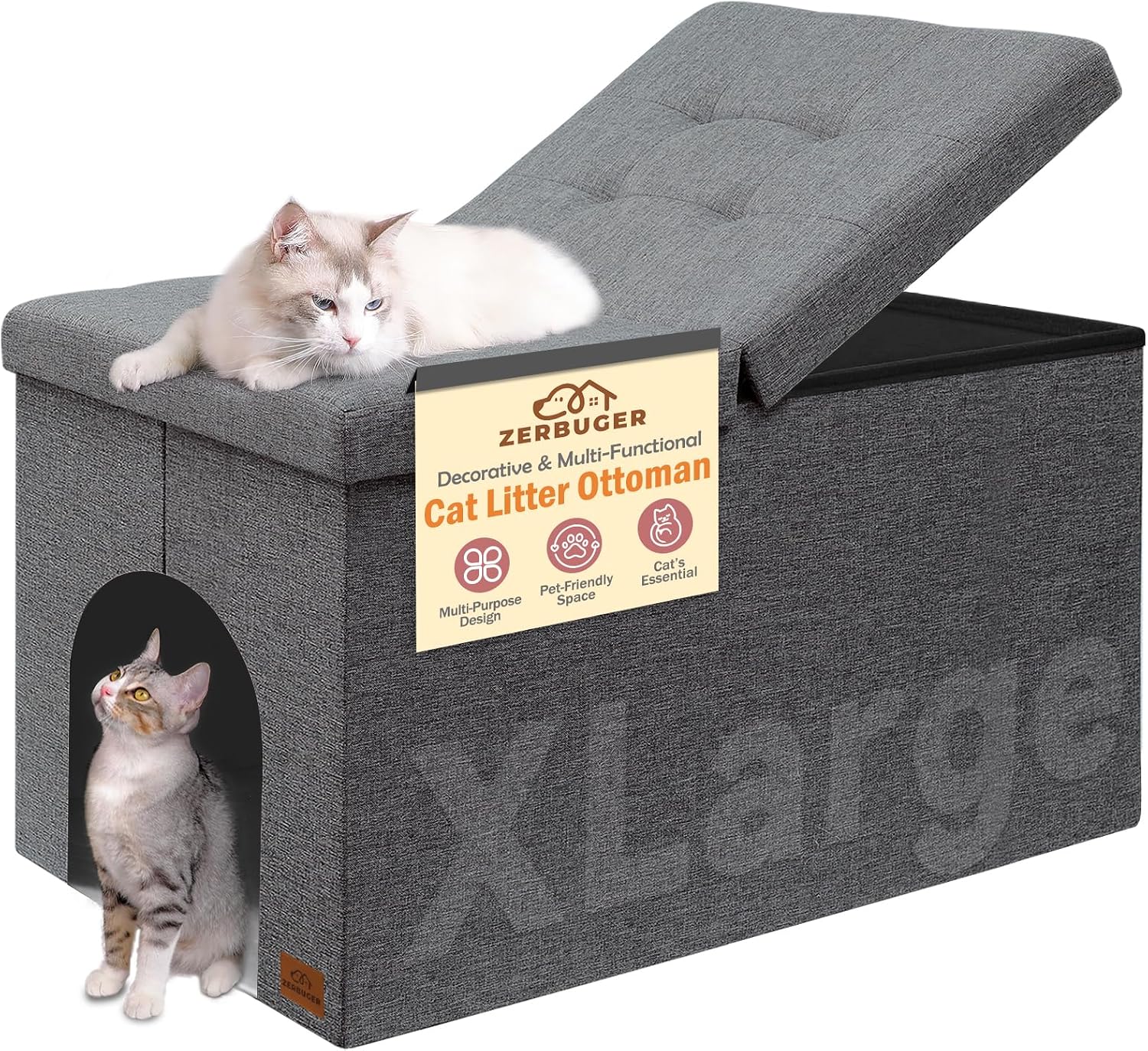
Zerbuger Cat Litter Box Enclosure Furniture for Odor Control
This is the product that sounds off topic until you live with a puppy and a cat. Puppies chew pee pads for many reasons, but one of the most common is that the pad shares a room with the litter box. The puppy smells the box, investigates, and finds a crinkly pad nearby. The Zerbuger enclosure gives the cat a private bathroom and puts a physical barrier between the puppy and the litter.
It also helps with odor neutralizer duty. If the room smells like ammonia, the puppy keeps coming back to that spot. The enclosure contains the litter scatter and reduces the visual invitation. It is not a chew toy, and it is not a pee pad, but it removes one reason a puppy stays interested in that corner. If your puppy is already fixated on the cat box, this is the piece that breaks the cycle without locking the cat out of its own bathroom. Check current Amazon price.
Flaws but not dealbreakers: Assembly takes time, and the enclosure is furniture, not a crate. A determined puppy can still scratch at the opening. Pair it with a baby gate if your puppy is already obsessed with the cat box.
Chew-proof pick: GASUR Indestructible Chew-Proof Dog Bed for Medium Dogs, Durable Crate Bed
Chew-proof pick
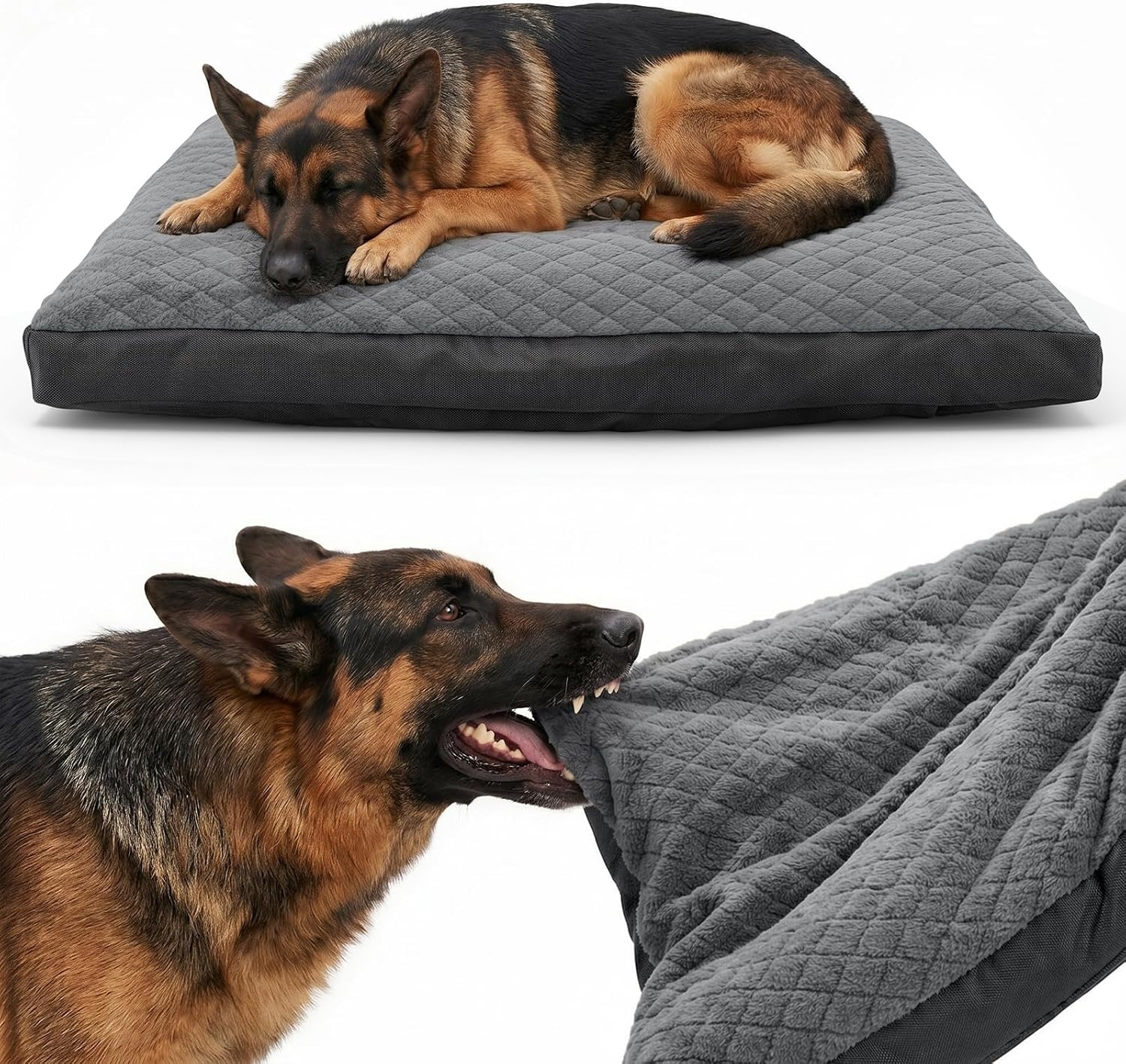
GASUR Indestructible Chew-Proof Dog Bed for Medium Dogs, Durable Crate Bed
If your puppy is chewing the pad because she has nothing else to chew in the crate, the fix is not more correction. It is a better target. The GASUR bed is built for medium dogs who treat fabric like a challenge. The durable crate bed gives your puppy a legal place to dig, mouth, and settle. It is not indestructible in the literal sense, because no soft bed is, but it is a step up from a thin fleece mat that comes apart in minutes.
Fabric safe materials matter here. A bed that shreds into strings is a swallowing hazard. This one is stitched for crate use, and it fits the standard medium crate footprint. When the puppy has a bed to chew and a pad that stays flat, the pad becomes boring. Check current Amazon price.
Flaws but not dealbreakers: No soft bed survives every puppy. If your dog has already destroyed a "chew-proof" bed, supervise the first few sessions and remove the bed if you see seams opening. Also, the bed is not a replacement for exercise. A tired puppy chews less.
Here is the sequence I would run, in order, before I changed the training plan.
Step one: Rule out teething and medical issues. A puppy between three and seven months is teething, and chewing is how she relieves gum pain. If the chewing is sudden and frantic, call your vet before you change the setup. A urinary tract infection can also make a puppy lick and chew at pads. Once health is off the table, the rest is environment and training.
Step two: Change the pad placement. Put the pad in a corner, against a wall, or inside a holder. A pad in the middle of the room is an invitation to run, slide, and chew. If you use a washable pad like the Peepeego, make sure the non-slip side faces down and the pad is flat. If it bunches, your puppy will bite the fold.
Step three: Increase potty breaks. A puppy who is chewing the pad may be trying to tell you she needs to go more often. Take her out every hour during the day, and after every nap, meal, and play session. The less time she spends on the pad, the less opportunity she has to chew it. This is the simplest way to prevent a puppy chewing pee pads.
Step four: Add a legal chew alternative. Put a durable chew toy in the crate or pen, not just the bed. A frozen carrot, a rubber chew, or a stuffed food toy gives her something to do. Rotate the toys so they stay new. If the only interesting object in the pen is the pad, the pad loses.
Step five: Clean accidents with an enzyme cleaner. Regular soap does not remove the enzyme concentration that tells a puppy "this is the bathroom." Use an enzymatic cleaner on the floor, the baseboard, and the pad if it is washable. If the pad is disposable, throw it away and wipe the floor underneath. A clean surface is a boring surface.
Step six: Limit access when you cannot supervise. A puppy who chews pads is not ready for free run of the house. Use a crate, a pen, or a baby gate. The goal is to stop a puppy chewing pee pads by making the pad inaccessible when you are not watching. This is not punishment. It is management.
Step seven: Exercise and mental work. A bored puppy chews. A tired puppy sleeps. Add a walk, a sniff session, or a training game before crate time. Five minutes of sit, down, and touch can do more than an hour of correction. If you are learning how to prevent a puppy chewing pee pads, start with the brain, not the spray bottle.
Step eight: Reward the right choice. When your puppy chews the toy instead of the pad, mark it and treat it. When she potties on the pad or outside, reward that too. If you only correct the wrong choice, the puppy learns to hide the chewing. If you reward the right choice, she learns what to do instead.
The competition and why it lost
The first loser is the standard disposable pad. It is thin, it crinkles, and it slides. A puppy can pull it into a pile in seconds. It is fine for a single accident, but it is not a training surface for a puppy who already thinks pads are toys. The second loser is the scented pad. Odor neutralizer sounds helpful, but a scented pad can attract a puppy who wants to investigate the smell. The third loser is the plastic pee pad tray with a grate. It keeps the pad down, but the grate itself becomes a chew target, and the gaps can pinch small paws.
I also left out the extra-large wire crate with a divider. It is a great tool for house training, but it does not solve the chewing problem on its own. A crate without a bed or a chew toy just gives the puppy a smaller space to be bored in. The same goes for the basic fleece crate mat. It is soft, but it is not durable, and a puppy can shred it in one afternoon. These products are not bad. They are just not the answer to this specific problem.
The washable pad that is too small also lost. A 24 by 24 inch pad looks tidy, but a puppy who is learning to circle will step off the edge and chew the border. Pad size matters more than most people think. A pad that is too small creates the exact frustration that leads to chewing. The same is true for a pad without liner waterproofing. If urine soaks through, the carpet underneath becomes the real target, and no amount of correction will fix that.
What this all costs
Costs vary by size and seller, so check current Amazon price on each listing before you buy. The washable pad has a higher upfront cost than a pack of disposables, but it replaces months of disposable pads. If you already buy disposables every week, the washable pad pays for itself over a few months. The litter enclosure is a one-time purchase that protects the cat box and reduces odor. The chew-proof bed is another one-time cost, and it may save you from replacing a shredded mat every few weeks.
The real cost is your time. Eight steps sound like a lot, but most of them take seconds. Changing the pad placement takes one minute. Adding a chew toy takes five seconds. Cleaning with an enzyme cleaner takes two minutes. The training is the part that takes weeks, not dollars. Do the setup first, because no amount of correction will stop a puppy chewing pee pads if the pad still slides and crinkles under her feet.
If you want to compare this with the rest of your cleanup gear, the math is simple. A washable pad, a crate bed, and an odor control station are all reusable. Disposable pads, paper towels, and carpet cleaner are not. Over a year, the reusable setup usually wins, and it produces less trash. The cost per day drops every time you wash the pad instead of throwing one away.
That's the job. Your puppy is not bad. She is bored, teething, or standing on a toy that happens to absorb pee. Fix the setup, reward the right chew, and the pad becomes just another boring part of the floor.