Most dogs that scratch are not allergic to their food. They are itchy because the skin barrier is compromised, and the fastest way to stop dog scratching is to treat the skin itself before you spend money on a new diet. The chew toys, the grain-free bag, the new orthopedic bed: none of them touch an inflamed dermis.
I write the skin and coat coverage here at Gear for the Den, and the emails follow the same script. The dog scratches at night. The dog chews a hot spot by the tail. The dog licks the front paws raw. And the advice waiting for that owner online is a three month elimination diet that may or may not be the actual answer.
The short version is a routine, not a product. Wash the dog with the right medicated shampoo. Read the label the way you read a food label. Add joint support if the scratching is really licking at the hips and elbows. Hold all of it for four to six weeks.
If you have been searching for how to stop dog scratching and drowning in conflicting answers, here is the whole routine in one place, in the order I would actually do it.
Why you should trust me
I run the skin and coat section at Gear for the Den, and I have spent the past six years reading dog product labels the way I read the label on a loaf of bread: front to back, in order, with an eye on which items are doing the work and which are there to make the bottle look busy. I fostered senior dogs for a local rescue for four years, mostly shepherds and terriers whose skin had been ignored for a decade, and I learned fast that the biggest word on the front of a shampoo bottle rarely matches what is inside it.
I am not a veterinarian and I do not play one on this site. What I have is a habit of comparing ingredient lists, oatmeal concentration claims, bottle size against the dilution a label calls for, and the fine print on whether a product is lick safe for a dog that grooms itself the moment you turn around. If a formula does not survive that comparison, it does not get a link here. When I want a second opinion on tools rather than formulas, I start with our dog grooming tools coverage.
How I picked and how I tested
The three products below are not a shopping spree for a skin problem. They are the two halves of a routine. The shampoo treats the skin, and the joint support covers the dog that is not scratching so much as licking and chewing at the same two spots on the hips and elbows. That difference matters, because the question of how to stop dog scratching is really two questions, and a medicated bath will never help a dog whose real complaint is a stiff joint.
For the shampoo, I worked from the label outward. I looked at where oatmeal sits in the ingredient list, because a soothing claim means nothing if the colloidal oatmeal is item fifteen and the fragrance is item three. I looked at the oatmeal concentration the brand actually states rather than the concentration the marketing implies. I compared bottle size against the dilution the label calls for, since a 20 ounce bottle that dilutes ten to one is a very different purchase from a 20 ounce bottle you pour on straight. I checked the coat type notes, because a formula built for a thick double coat behaves differently on a short single coat, and the rinse time changes with the coat.
For the chews, I looked for a real ingredient list with a stated amount of glucosamine and a supporting cast that tends to matter: green lipped mussel, collagen, and a fat source that brings omega 3 with usable epa dha instead of a token sprinkle of fish oil at the bottom of the panel. I also checked whether a formula is positioned as limited ingredient, because a dog with itchy skin is often a dog with a sensitive gut, and a chew full of artificial flavors is a bad trade.
What I did not do is run a lab panel or measure a dog's skin with an instrument. I read labels, compared them side by side, and kept the products that survived. That is the honest version of how this page got built, and it is why a short list beat a long one. For the wider field, our medicated dog shampoo roundup covers options that did not make this routine.
The gear that helps stop dog scratching
Start with the bath. Add the joint side only if your dog's scratching is really licking and chewing at the hips and elbows, because those two problems look identical from across the room and are not the same thing.
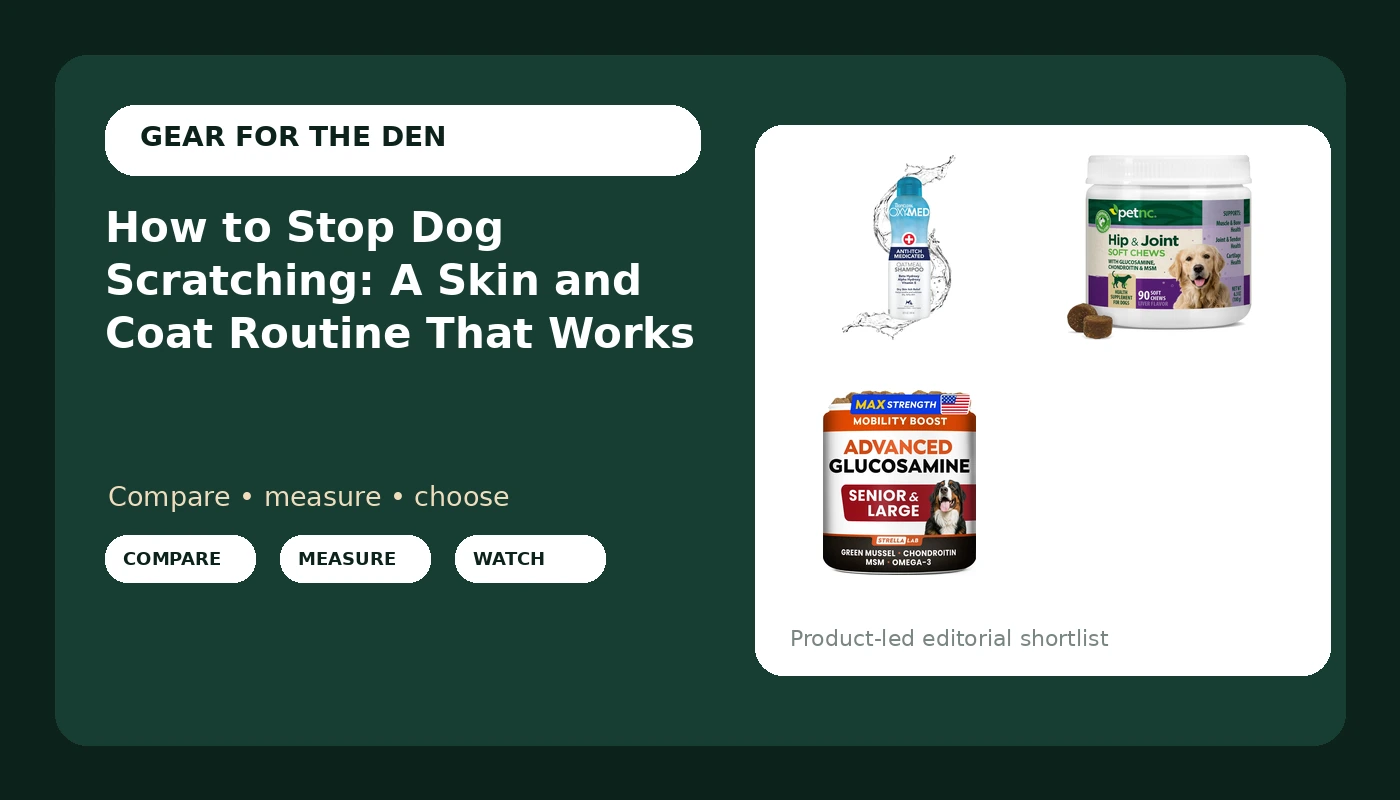
The skin-side pick: TropiClean OxyMed Medicated Dog Shampoo, Soothing Oatmeal Formula, 20oz
The skin-side pick
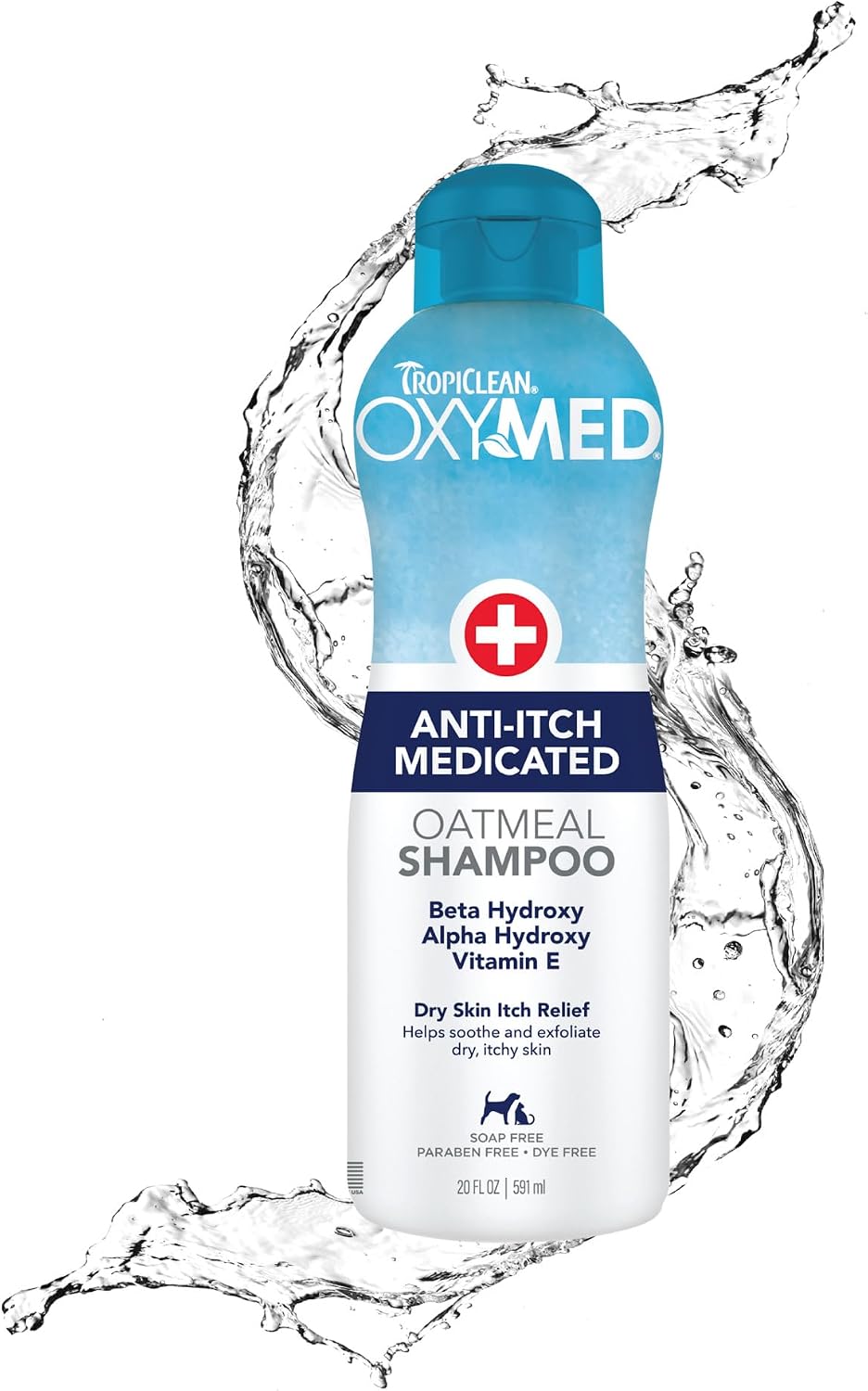
TropiClean OxyMed Medicated Dog Shampoo, Soothing Oatmeal Formula, 20oz
Check current Amazon price. This is the bottle I reach for first when the scratching is skin deep: dandruff along the back, a hot spot near the tail, a dog that smells yeasty two days after a bath. The oatmeal sits high enough in the ingredient list to matter, and the formula is built for contact time, which is where most home baths fall apart.
The 20 ounce bottle is a real advantage when you dilute to the label, because bottle size is a cost-per-bath question, not a shelf space question. It rinses out of a thick double coat if you give it the time, and it works on short single coats without stripping them bare.
Whatever you leave on the coat has to be lick safe, because a dog will groom itself the moment it is out of the tub. This one rinses clean enough that the dog is not eating a film of shampoo for the next hour.
Flaws but not dealbreakers: The medicated scent is strong straight from the bottle, and any medicated wash will dry out a coat if you use it more often than the label allows. Stay on the interval and follow with a conditioner on long coats.
If the scratching lives on the flanks, chest, and belly, start here before you change a single thing about the food.
Budget pick: PetNC Natural Care Hip and Joint Soft Chews for Dogs, 90 Count – 27591
Budget pick
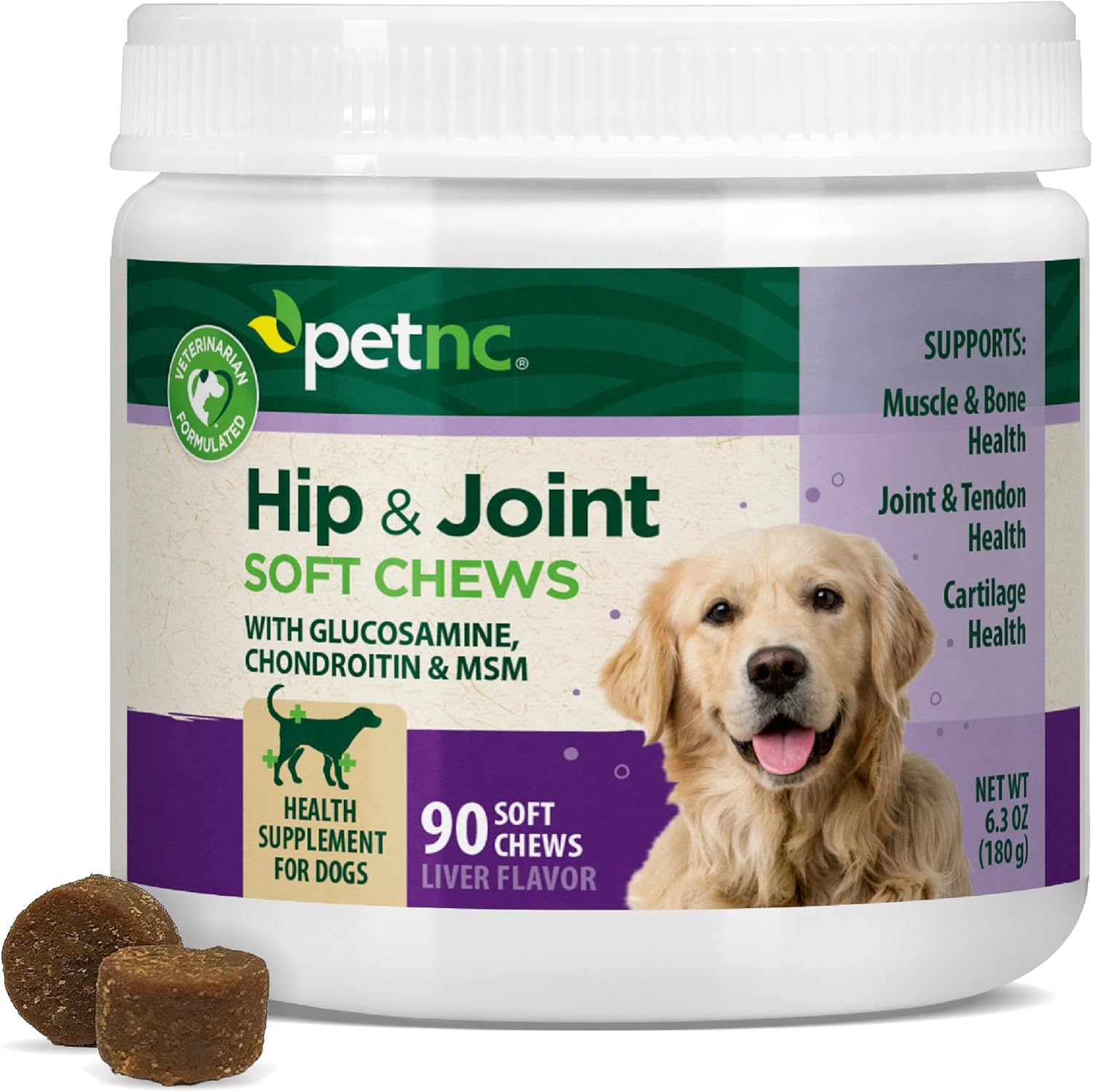
PetNC Natural Care Hip and Joint Soft Chews for Dogs, 90 Count – 27591
Check current Amazon price. This is the entry point to the joint side of the routine, and the format is the reason it earns a spot: a soft chew is the difference between a supplement your dog actually takes and a tablet you find under the couch three weeks later.
The 90 count tub covers the four to six week run this routine asks for with room to spare on a medium dog, so you are not reordering mid-test and wondering whether the first tub was working. Soft chews also break over food or go straight from the hand, which matters for the picky dogs that started this whole conversation.
It is the lowest cost per day of the two joint options here, so it is the sensible first move when you are not sure the licking is joint related at all. Give it the full four weeks before you decide anything.
Flaws but not dealbreakers: Soft chews are not tablets, so a dog with a known beef or chicken sensitivity should have the ingredient list checked before you commit to a full tub.
Anyone starting joint support for the first time, or anyone with a dog that spits out tablets, should try this one first.
Upgrade pick: STRELLALAB Advanced Glucosamine for Dogs, Collagen&Green Lipped Mussel
Upgrade pick
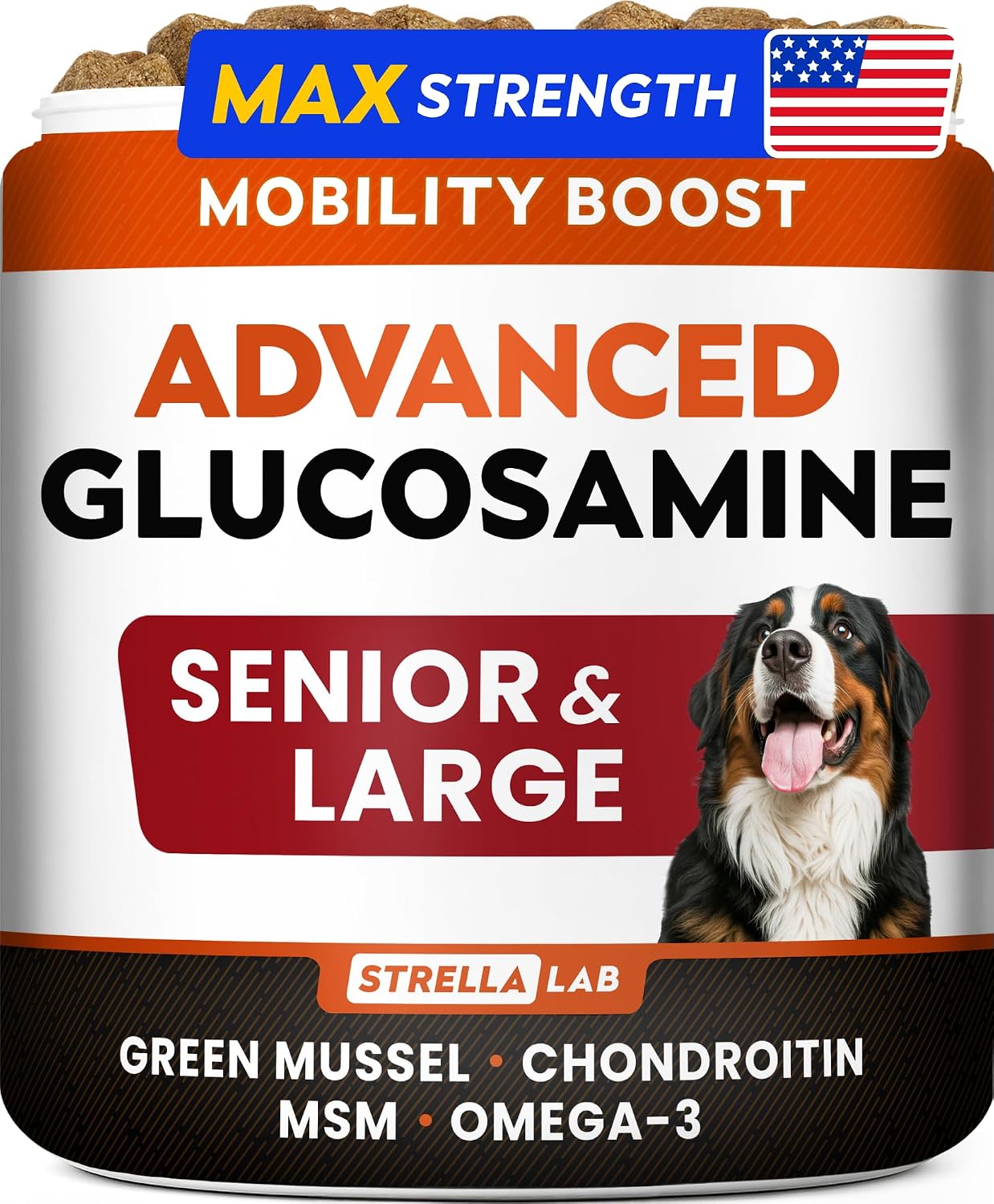
STRELLALAB Advanced Glucosamine for Dogs, Collagen&Green Lipped Mussel
Check current Amazon price. This is the formula for the dog that has been licking the same hip for months, the one where the scratching turned out to be a mobility problem wearing an itch costume. It brings glucosamine, collagen, and green lipped mussel into one chew, which is the combination I look for when a senior dog needs more than a single pathway covered.
Collagen and green lipped mussel are the two items I check for after glucosamine, because they address connective tissue and joint comfort instead of one narrow target. If your dog is already on a fish oil for the omega 3 and epa dha side of the skin, this is the chew that sits next to it without duplicating the whole panel.
Flaws but not dealbreakers: It costs more per day than the budget chew, and a dog with a shellfish sensitivity should have the label checked before the first dose.
Senior dogs, large breeds, and any dog whose scratching is really chewing at the hips and elbows are the right fit here.
The actual routine, step by step
Now the part you came for. None of this requires a vet visit for a mild seasonal itch, and all of it works better when you do the steps in order instead of buying a product and hoping.
Step one: Rule out the cheap causes first. Run a fine flea comb along the tail base, check the ears for redness, and think back to whether the scratching started after a new detergent, a new floor cleaner, or a new bag of food. If the itch came on suddenly and covers the whole body, that is a vet conversation, not a shampoo conversation. A routine only works on the itch you can actually treat at home.
Step two: Match the wash to the coat type. A thick double coat needs more dilution and a much longer rinse than a short single coat, and a long coat needs a conditioner after a medicated wash. Read the coat type notes on the bottle before you buy, not after the first bath has gone sideways and the dog is hiding under the table.
Step three: Read the oatmeal concentration and the ingredient list. A soothing claim means nothing without a position in the list or a stated number. If colloidal oatmeal sits near the bottom and fragrance sits near the top, put the bottle back on the shelf. The same rule applies to chews: check where the active ingredients land, not just the words on the front.
Step four: Dilute, lather, and let it sit. Most labels call for contact time, usually around ten minutes. Lather, work the shampoo down to the skin rather than across the top of the coat, and set a timer. This one step does more for a scratching dog than any supplement on this page, and it is the step almost everyone skips.
Step five: Rinse until the water runs clear, then rinse again. Leftover shampoo residue is one of the most common reasons a dog scratches harder after a bath than before it. If the coat still feels slick at the skin, keep rinsing. Pay attention to the armpits, the groin, and under the collar, where soap likes to hide.
Step six: Dry the dog properly and keep the skin dry between baths. Towel dry, then keep the coat dry, and dry the paws after every wet walk. A damp coat and damp paw pads are an invitation for yeast, and yeast itches. This is also the habit that helps you prevent dog scratching between baths instead of waiting for the next flare.
Step seven: Add joint support if the scratching is really licking. Watch where the mouth actually goes. If it is the hips, elbows, and hocks, start the budget chew and give it time. If it is the flanks, chest, and paws, stay on the skin side of the routine and leave the joint chews on the shelf.
Step eight: Hold the routine for four to six weeks and write it down. Note the bath dates, the chew dates, and whether the scratching got better, worse, or simply moved. Four to six weeks is the minimum before you judge anything, and notes beat memory every time. Once the itch is quiet, the same steps are how to prevent dog scratching from coming back.
The competition and why it lost
Chlorhexidine-only medicated shampoos were the first thing I crossed off. They have a place for a diagnosed bacterial infection, but they are harsh, they dry the coat, and they do nothing for the itch that started the problem.
Hydrocortisone sprays and anti-itch wipes are next. They calm a spot for a few hours and then the dog is back at it, and they address neither the barrier nor the joint. Short-term relief with no plan behind it is not a routine.
Single-ingredient fish oil pumps lose on the same logic. Omega 3 matters, but a bottle that lists fish oil with no stated epa dha is a coin flip, and it is not a substitute for treating the skin itself.
On the joint side, plain glucosamine tablets lose on delivery. The dog spits them out, you wrap them in cheese, and the whole thing collapses by week two. Grain-free diets as a first move also lose, because most itchy dogs are not food allergic, and switching foods delays the bath that would have helped in the first place.
What this all costs
The routine has three price tiers and no hidden fourth. The shampoo is the cheapest single purchase and it lasts several baths on a medium dog when you dilute to the label. The budget chew is the lowest cost per day and the sensible first step on the joint side. The collagen and green lipped mussel formula is the highest cost per day of the three, and it earns that only if the licking is actually a mobility issue. Check current Amazon price on each before you commit.
Over a six week run you are buying one bottle and one tub. Compare that to the next step up, which is a vet visit with a skin scrape and a prescription diet trial, and the math gets easy. The expensive path is not wrong when the itch is severe or the dog is losing hair, but it should not be the first thing you try.
The part people skip is the cheapest part: the ten minutes of contact time and the extra rinse. Do that once a week for six weeks, keep notes, and you will know whether your dog needed the wash, the chew, or both. That is the whole job. Most itchy dogs do not need a new food. They need a better bath and a label you actually read.