Most of the advice about how to stop litter box odor on trips is written for a house with a garage and three outlets. A car is a different problem: a sealed cabin, a warm afternoon, and a cat who is already annoyed about the entire arrangement. Knowing how to stop litter box odor on trips comes down to three things, and only one of them is the litter itself. Where the waste goes. How air moves through the box and out of the car. How calm the cat stays while all of it happens.
Ammonia is the smell you actually notice, and it builds fast in a hot car. Urine hits litter, bacteria go to work, and the concentration in a closed cabin climbs with the temperature. Add tracked litter dust and a carrier that has absorbed a few trips' worth of it, and you have a car that smells like a box no matter how clean the box is. Every one of those inputs is something you control with a routine and a couple of inexpensive items, not with an air freshener.
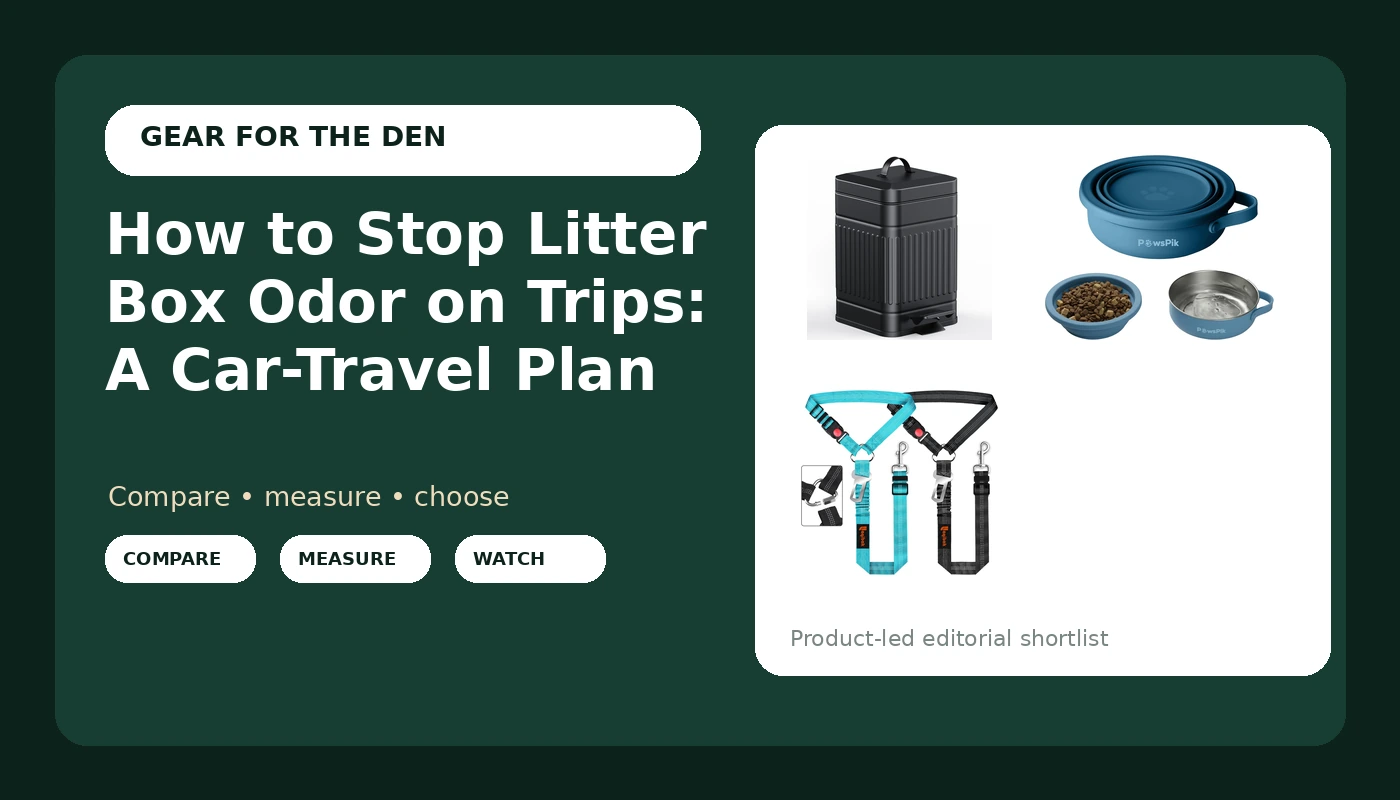
Here is the plan: a sealed waste container so nothing sits open, a collapsible bowl so the cat keeps drinking and the litter keeps clumping the way it should, and a way to keep the dog out of the box while you drive. None of it is complicated. All of it has to be packed before you leave, because there is no fixing a litter box odor problem from the shoulder of the interstate.
Why you should trust me
I write about pet gear, and most of that writing is about the unglamorous half of pet ownership: the bins, the mats, the boxes, the cleanup. There are no brand deals and no sponsored picks in this guide. Every product below is here because it solves one specific failure point in a car, and I have said plainly where each one falls short. If an item only works in a house, it does not belong in a travel guide, and those items are not in this one.
How I picked and how I tested
I judged every item against the same three questions. Does it stop waste or odor from sitting open? Does it survive being folded, stacked, and shoved into a footwell? And does it work in a space as small as a car cabin, where carrier dimensions and cabin size decide what actually fits? For the bin, that meant looking at lid gasket design, how the liner is held, and whether the footprint stays put in a back-seat footwell. For the bowl, it meant checking whether it collapses flat enough to live in a door pocket and whether the silicone holds water without tipping. For the harness, it meant checking the clips, the adjustment range, and how it behaves when a dog decides to lunge. I also read the buyer reviews on each listing to see which complaints repeat, because the repeated complaints are the real spec sheet. You can see the same space-first approach in my guide to litter boxes for small apartments, where footprint is the whole argument.
The gear that helps stop litter box odor on trips
Three items do the heavy lifting. The bin matters most, because open waste is the source of almost every odor complaint on a road trip.
Our pick: CEROELDA Small Trash Can with Lid-1.3 Gal-Dog Poop Trash Can Outside-Black
Our pick
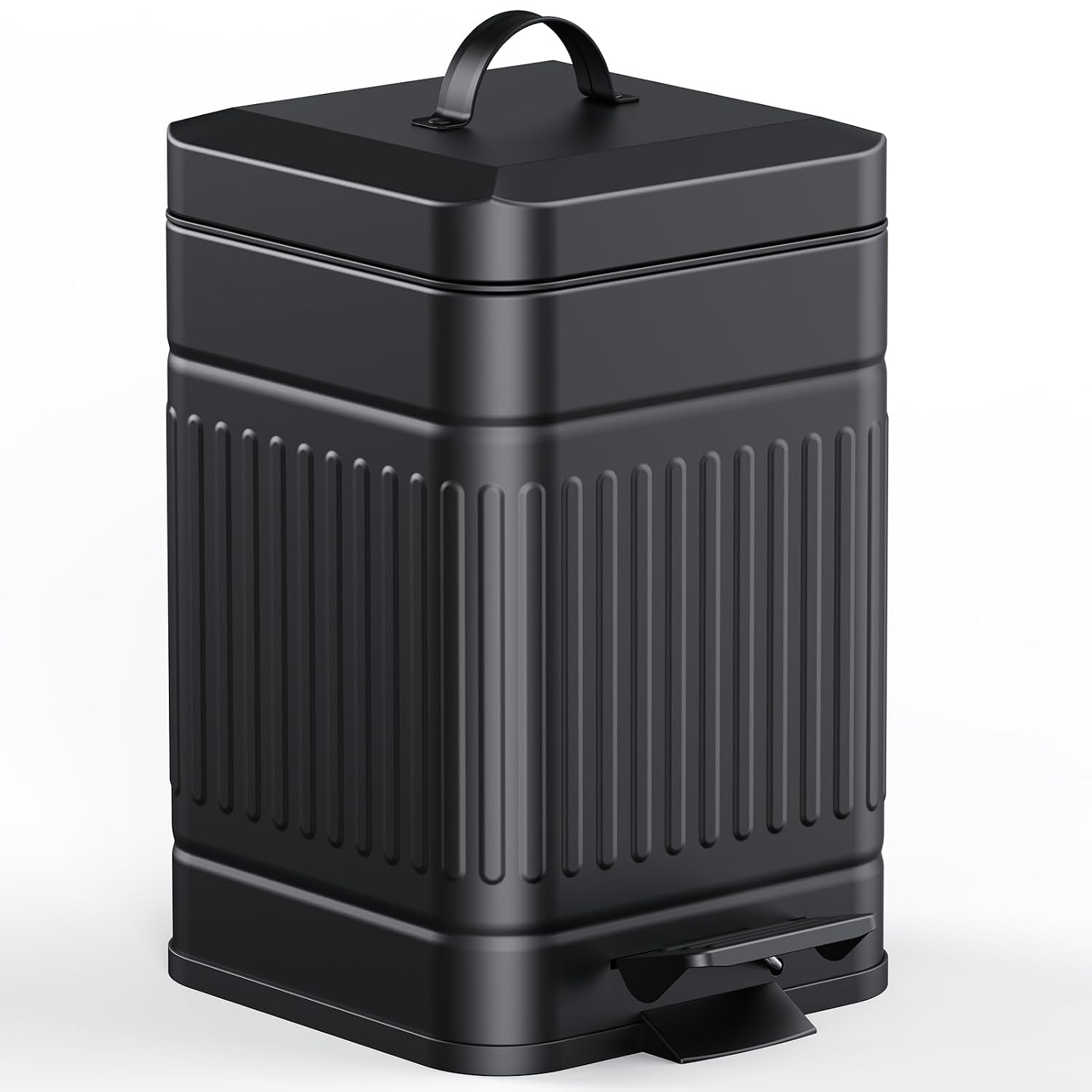
CEROELDA Small Trash Can with Lid-1.3 Gal-Dog Poop Trash Can Outside-Black
The single biggest fix for litter box odor on a trip is a bin with a lid that actually closes, and this is the one I would pack. Check current Amazon price. The 1.3 gallon size is the point: small enough to sit in a footwell or strap behind a seat, big enough to hold a couple of days of scooped waste plus the bag it came in. A lidded bin turns a continuous smell into a short puff every time you open it, and that difference is the whole game in a car.
The lid is what you are paying for. A lid that closes flush keeps ammonia from drifting through the cabin while you drive, and the rigid body means a full bag does not slump over and leak in a hot trunk. Line it with a small bag, scoop into it, tie the bag, close the lid. When you stop for the night, the whole thing goes into a bathroom or a dumpster, not into the room where you are sleeping.
Flaws but not dealbreakers: It is a small bin, so a multi-cat household on a two week trip will fill it faster than they expect. Bring spare bags. The black finish also shows every scratch and every bit of tracked litter, which is cosmetic only but worth knowing if you care how the back seat looks.
Anyone who scoops into a grocery bag and leaves it in the car should start here.
Budget pick: PawsPik 2-in-1 Travel Dog & Cat Bowl, Collapsible BPA-Free Silicone
Budget pick
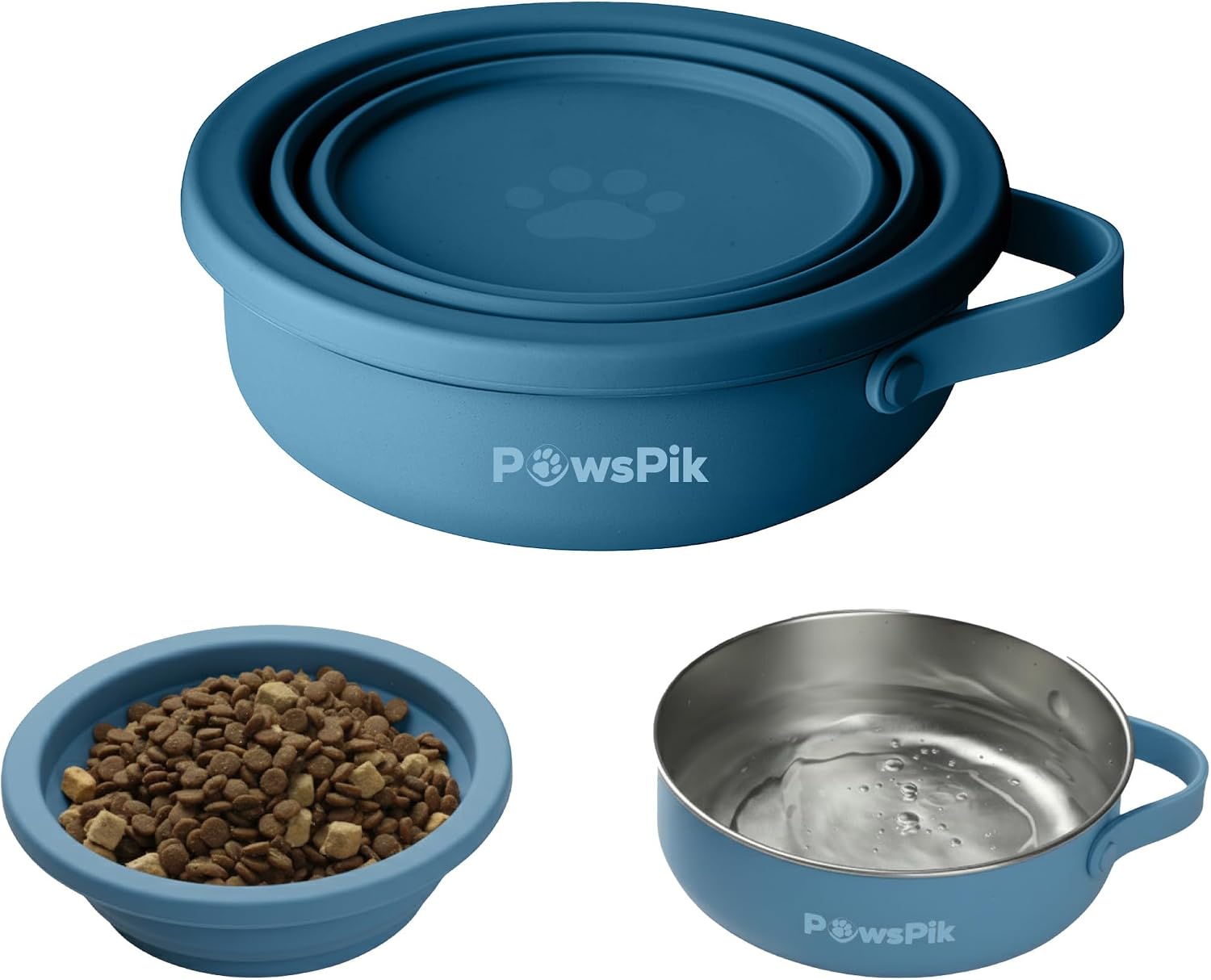
PawsPik 2-in-1 Travel Dog & Cat Bowl, Collapsible BPA-Free Silicone
A dehydrated cat produces more concentrated urine, which means more ammonia for the litter to hold. Check current Amazon price. That is why the collapsible bowl belongs in this guide even though it has nothing to do with litter: keeping water available at every stop is one of the least expensive odor controls you have. The PawsPik folds flat into a door pocket or the side of a carrier, and the silicone walls hold their shape when you fill them, which is more than you can say for fabric bowls that collapse onto your hand mid-pour.
The 2-in-1 design gives you two depths, so it works as a water bowl for a cat and a food bowl for a dog on the same trip. Silicone is also the right material here because it does not hold odor the way a hard plastic bowl does, and it rinses clean at a rest-stop sink in seconds.
Flaws but not dealbreakers: Silicone picks up lint and hair, and it needs a real wash at the end of the trip, not just a rinse. Fill it only partway while you are driving. A full bowl in a moving car is a lap full of water.
Anyone traveling with a cat, a dog, or both should have one of these in the car.
For the dog in the same car: Laqibak Removable Dog Seat Belt Harness for Car, 3 in 1 Pet Seatbelt Leash
For the dog in the same car
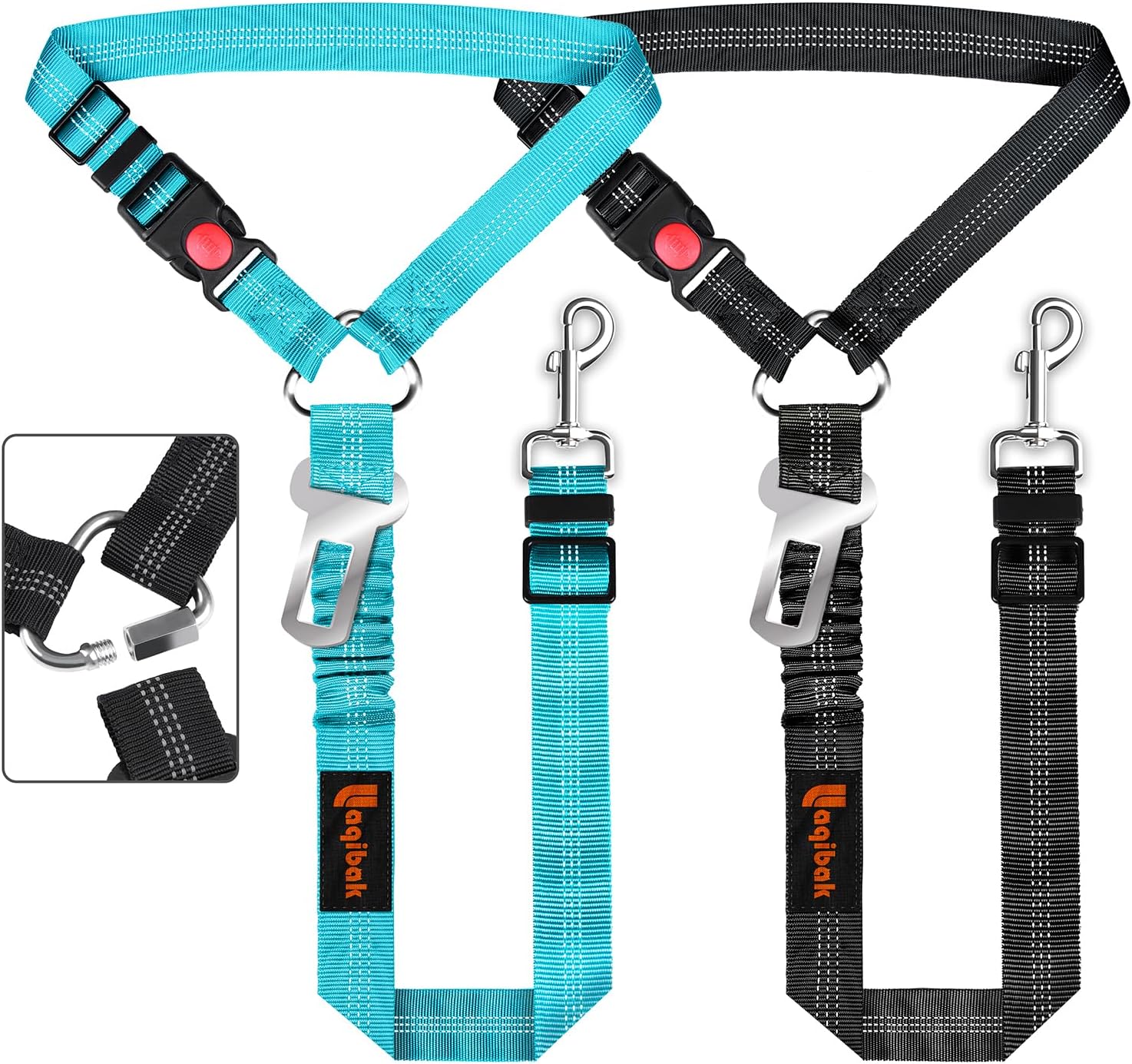
Laqibak Removable Dog Seat Belt Harness for Car, 3 in 1 Pet Seatbelt Leash
If you travel with a cat and a dog, the dog is an odor problem in a completely different way. A loose dog will find the litter box, and a dog that has been in the box is a dog you have to smell for the rest of the drive. Check current Amazon price. This harness clips a dog to a seat belt so it stays in its own seat, which keeps it out of the box and keeps the box from tipping.
Three in one means it works as a walking harness, a seat belt tether, and a leash attachment, so you are not packing three separate straps. The removable tether is the part that matters in the car. Clip it to the seat belt, adjust it so the dog can sit and lie down but not reach the next row, and check the booster height if your dog rides in a booster, because a tether that pulls sideways instead of back will make the dog fight it.
Flaws but not dealbreakers: The hardware is light duty, which is fine for a small or medium dog and not enough for a determined large dog. If your dog rides in the back with a hammock, run the tether through the hammock anchor points instead of around the headrest, or the hammock will bunch up every time the dog shifts.
Anyone driving with a dog and a cat in the same vehicle should secure the dog before the car moves.
The actual litter-box travel workflow
Gear does half the work. The routine does the rest. This is the order that keeps a car from smelling like a box after four hours on the road, and it is the short answer to how to prevent litter box odor on trips.
Step one: Empty and reset the box before you pack it. Scoop everything, dump the old litter, and wash the box with mild soap and water in the driveway, not in the car. A box that goes into the car already carrying a day of waste will smell before you leave the neighborhood.
Step two: Choose a box that fits the car, not the house. Measure the space you actually have and match the box to it. Carrier dimensions, cabin size, and the width of the seat or footwell decide this. A box that has to be wedged in at an angle will spill litter on every turn. If you are buying new, a low-sided travel litter box is easier to slide under a seat.
Step three: Line the bin before anything goes in it. Put a bag in the lidded bin and keep a spare roll in the car. Every scoop goes into the bag, the bag gets tied, the lid gets closed. Waste never sits open, not even for a ten minute stop.
Step four: Control ventilation, not just odor. Crack the rear window a finger's width and run the rear vents on low. Moving air keeps ammonia from pooling in the cabin. Skip the ozone gadgets and the vent clips. Ozone is a lung irritant, and a cat in a small space is exactly the wrong audience for it.
Step five: Keep the cat's stress down. Stress plus a strange box is how you get a cat that holds it for ten hours and then lets go the moment you arrive. Put a familiar towel in the carrier, keep the carrier level, and cover it so the cat has a dark place to hide. If you use a backpack carrier, check the backpack frame so it does not fold in on the cat when you set it down.
Step six: Feed on a schedule, water on demand. Feed the last full meal a few hours before you leave, and offer water at every stop in the collapsible bowl. Do not withhold water to reduce litter box use. That trade makes the odor worse and it is bad for the cat.
Step seven: Stop every two to three hours. At each stop, offer the cat a few minutes of access to the box if you can do it safely, scoop anything new into the bin, reseal it, and refresh the water bowl. Ten minutes of maintenance at a rest stop beats an hour of driving with the windows down.
Step eight: Reset at the hotel or the campsite. Unpack the box first, set it in a bathroom or a corner away from where you sleep, and wash the bin and bowl before you settle in. Do not leave a full bin in a warm room overnight.
The competition and why it lost
The fixes below are what people try when they want to stop litter box odor on trips without changing the routine. None of them works.
Covered litter boxes are the most common mistake. A hood traps ammonia in a small, warm, enclosed space, and every time the cat digs, that concentrated air comes out. In a car, a covered box is a smell generator with a lid on it.
Scented litters lose for the same reason. Perfume over ammonia is two smells, not one, and many cats refuse a scented box, which leads to accidents outside the box. Those accidents are worse than anything the litter was doing.
Charcoal bags and baking soda boxes absorb some odor in a closed container, but they do not stop the source. In a moving car, air moves too fast for a passive absorber to keep up. They are a supplement at best.
Ozone generators are a hard no. Cats are small, a car cabin is a small space, and ozone is a lung irritant. Nothing about that math works.
Air fresheners and vent clips mask the smell for the driver and do nothing for the cat riding three feet from the source.
A second, larger bin in the trunk sounds smart until you try to scoop into it at a rest stop. The bin has to be within reach of the box or you will not use it, and an unused bin is just cargo.
A full-size dog crate in the back of an SUV is the other thing people try, and it takes up the space the box needs. A seat belt harness does the same job in less room.
What this all costs
The three items in this guide sit in different tiers, and none of them is the expensive part of the trip.
- The lidded bin is the largest single line item and the one that does the most work. Check current Amazon price on the listing before you commit, since these sell in and out of stock.
- The collapsible bowl is the smallest purchase of the three and the one you will use on every trip, not just the ones with a cat.
- The seat belt harness is priced in the same range as the bowl. If you already own a walking harness your dog cannot back out of, you can skip it and use a plain seat belt tether instead.
The recurring cost is litter and bags, and that does not change because you are traveling. What changes is the back end: a detailing job to pull ammonia out of upholstery, or a hotel room you have to apologize for. The cheapest way to prevent litter box odor on trips is to never let waste sit open in the first place.
Run the routine once and it becomes automatic. Scoop into the bin, tie the bag, close the lid, crack the window, water at every stop. The gear is the easy part. The habit is the fix.