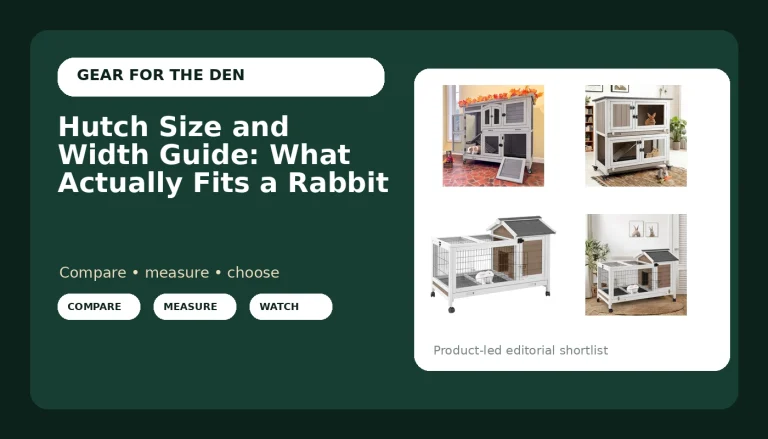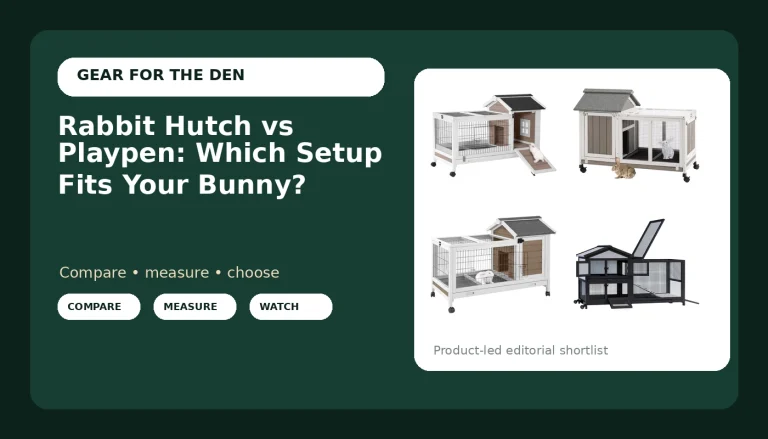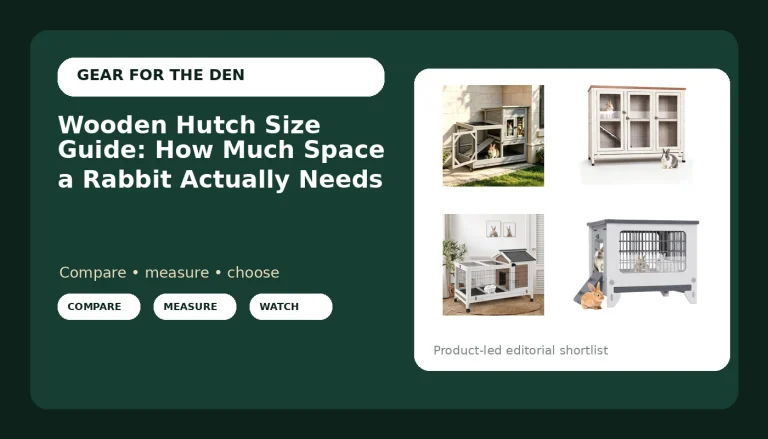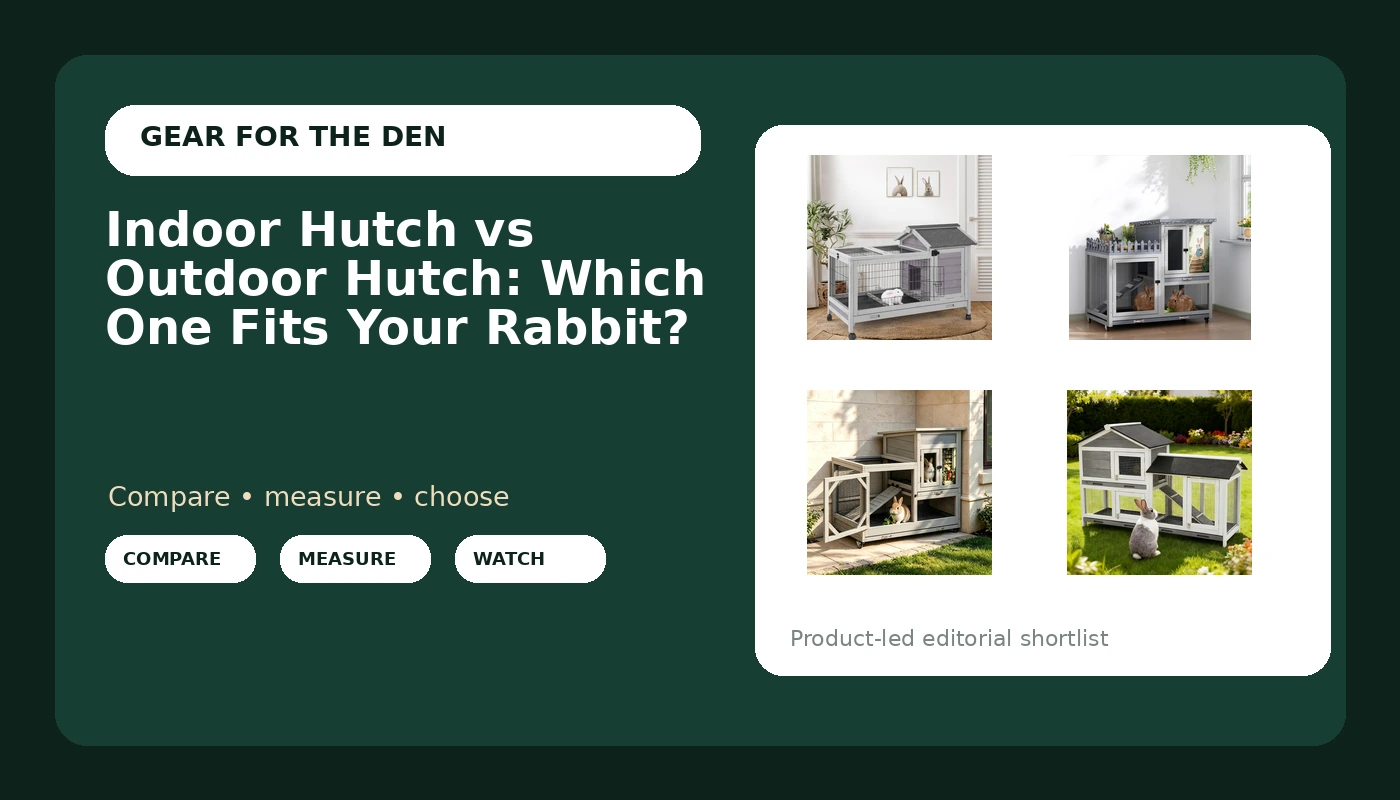
Choosing an indoor hutch vs outdoor hutch is the first real decision most new rabbit owners run into, and it is really two decisions wearing one coat: where the animal spends most of its day, and how much weather you are willing to design around. A hutch in a spare bedroom answers to different rules than a hutch against a fence in the yard, and this indoor hutch vs outdoor hutch comparison treats the choice as what it is, a question about climate, floor area, and how often you want to handle your rabbit.
For most households, an indoor hutch with a solid floor and a removable tray is the better default, and an outdoor hutch only makes sense as a sheltered daytime setup with a hideout inside it, not as a full-time home in a yard.
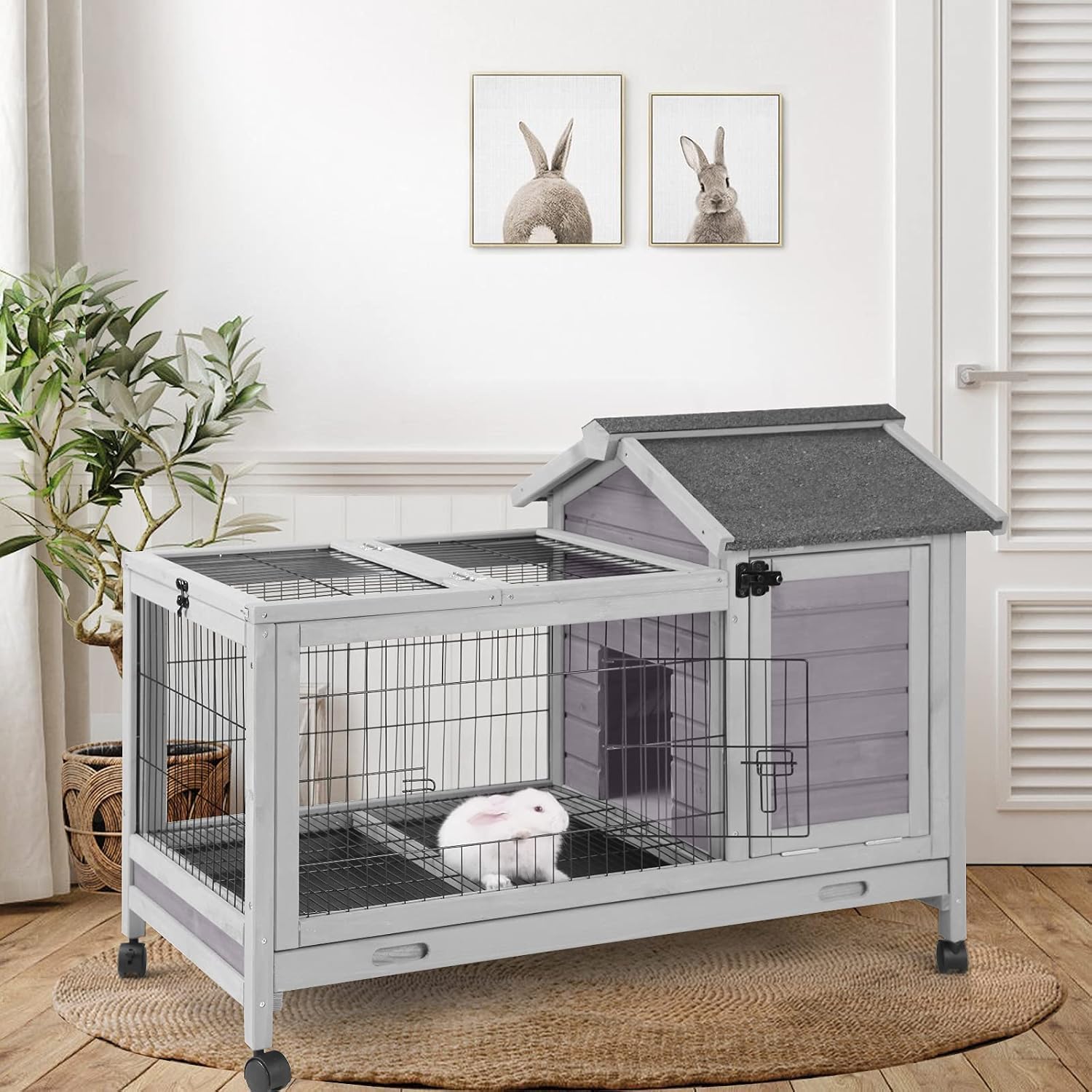
Rabbit Hutch Indoor Bunny Cage Outdoor Wood House with Wire Mesh, Grey
The most flexible shell of the four, a wood house with wire mesh panels sold for indoor or outdoor use, so one purchase covers a spare room and a covered patio
Mesh panels are a path for drafts and dust, so cold-weather use needs a windbreak and more frequent bedding changes
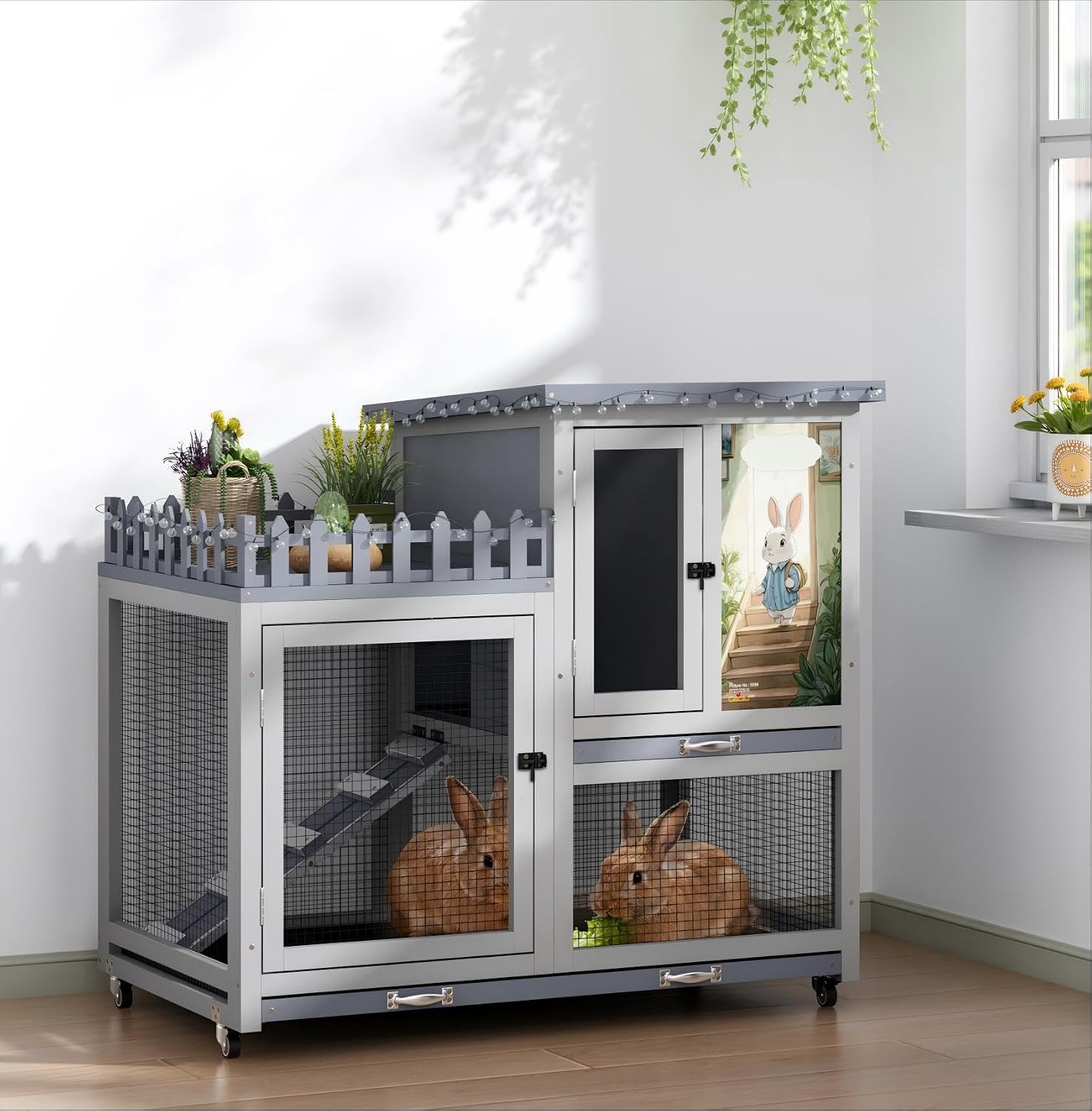
Rabbit Hutch with Balcony Wood Small Animal House Bunny Cage on Wheel, Gray
Wheels and a balcony make it the easiest of the four to reposition during the day, which matters when you are chasing shade
The wheels and raised level eat into the outline, so usable floor area is smaller than the footprint suggests
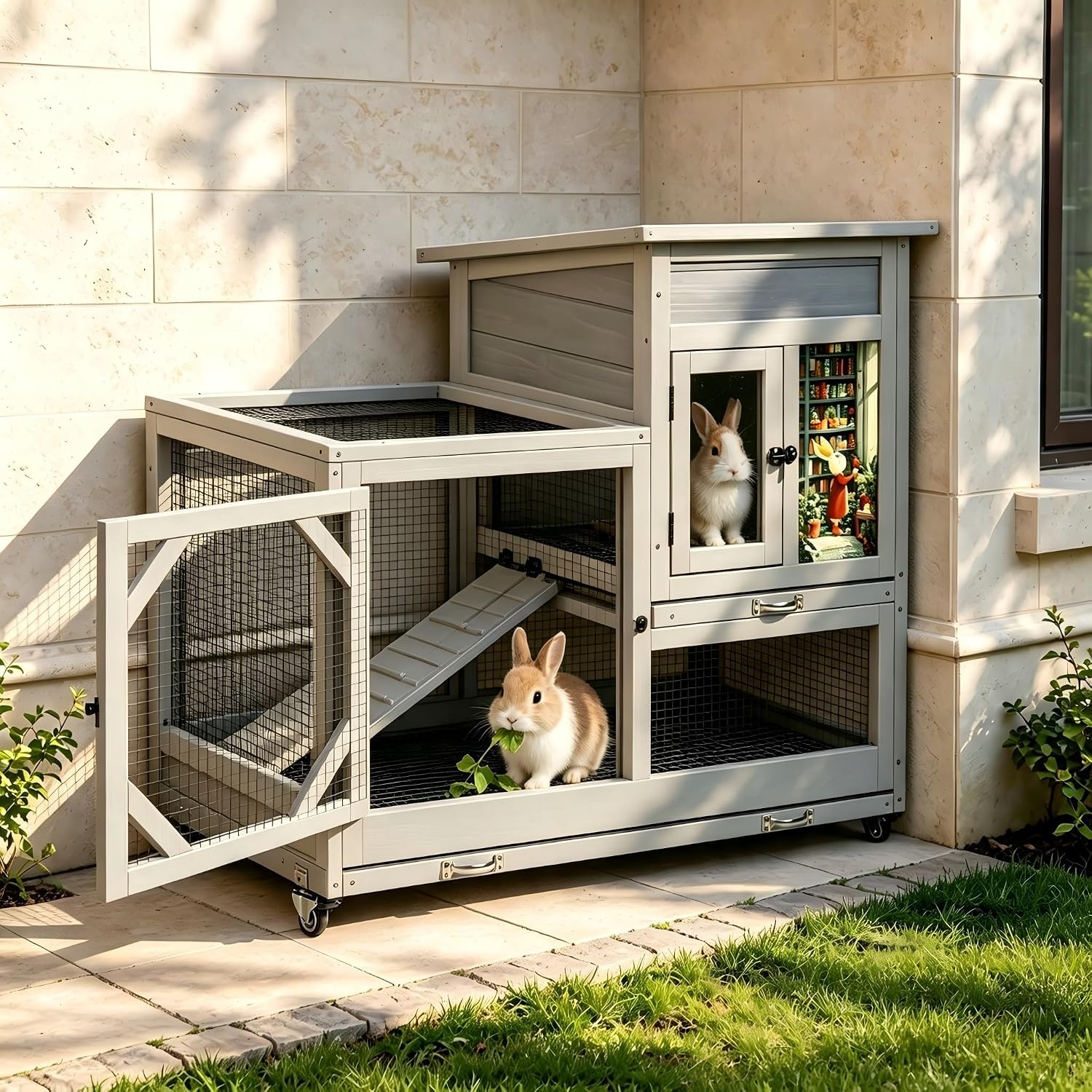
COZIWOW Rabbit Hutch Indoor Outdoor Bunny Cage with No-Spill Design, Gray
The no-spill design targets the mess that ends most hutch setups, water and food kicked through the bedding
Indoor and outdoor labeling still leaves the winter shelter decisions to you
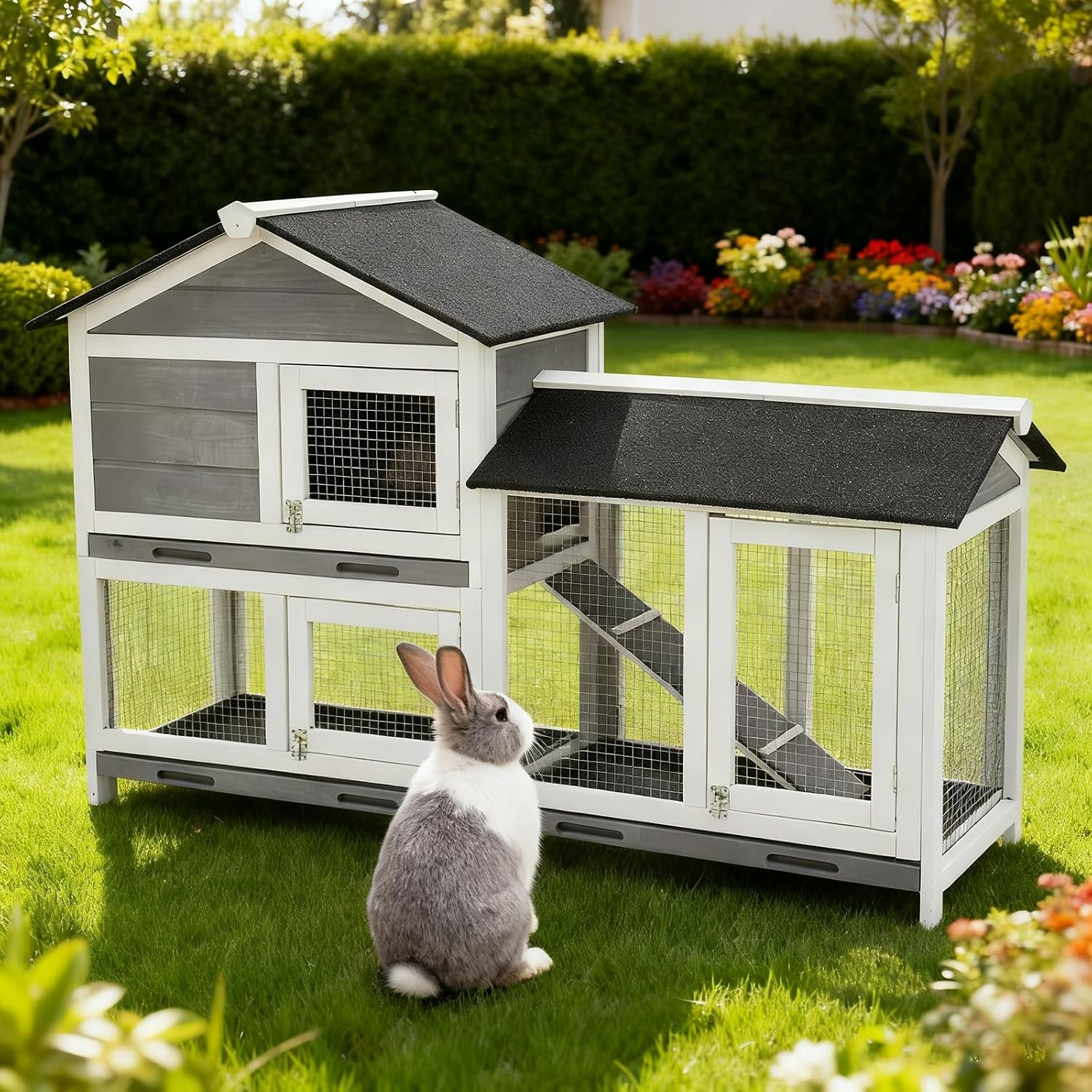
Garvee 58'' Bunny Hutch Indoor Bunny Cage, Rabbit Hutch, 2-Tier Bunny House
Two tiers and a 58 inch footprint give the most vertical separation of the four, which suits a rabbit that wants a hideout off the main floor
A two-tier indoor hutch is heavier and slower to strip for a full clean than a single-level box
Prices and availability may change.
Indoor hutch vs outdoor hutch: what actually changes
The difference between indoor hutch and outdoor hutch designs comes down to four variables: how much weather the shell has to shrug off, how much floor area you can spare in the room, how much bedding dust you are willing to live with, and how often you want to walk over and handle the animal. Everything else, including the color and the brand badge, is decoration.
Weather. An outdoor hutch is a structure, not furniture. It has to shed rain, block wind, and stay dry underneath, which is why most outdoor designs are wood with a roof and some mix of wire mesh and solid panels. Mesh gives ventilation, which rabbits need, and it also gives rain and drafts a way in. If you go outdoor, plan on a cover over the roofline and a windbreak on the side the weather comes from, and plan on moving the hutch under a porch or into a shed when the temperature drops. An indoor hutch skips all of this. Its job is to contain bedding and give the rabbit somewhere to retreat, not to survive a storm.
Floor area. Indoors, the hutch competes with furniture, so people buy smaller. That is backwards. Cage size should be driven by the animal, not by the gap between the sofa and the wall, and a small hutch in a warm room is still a small hutch. Outdoors you often have more room to work with, but a bigger footprint brings its own problem: a large outdoor hutch is heavy, and heavy means you clean it less often. The honest test is whether you can reach every corner of the interior without taking anything apart.
Bedding dust. This is the variable nobody mentions until they have lived with it. Loose bedding and hay throw dust, and an indoor hutch puts that dust in your air. Wire mesh panels help because air moves through them, but they also let dust settle on whatever sits beside the hutch. Solid panels keep dust inside, which means it comes out when you open the door. Either way, plan on a mat under the hutch and a weekly change rather than a monthly one.
Handling. An indoor hutch keeps the rabbit in the middle of household traffic. You see it, it sees you, and small health changes get noticed early. An outdoor hutch adds a walk and a weather check to every interaction, and in a wet winter that walk is the reason a rabbit gets handled twice a week instead of twice a day. That is the strongest argument for an indoor setup, and it has nothing to do with comfort.
The four hutches in this comparison
Four hutches cover most of the ground here, and each one leans toward a different answer.
Rabbit Hutch Indoor Bunny Cage Outdoor Wood House with Wire Mesh, Grey. This is the dual-purpose option, a wood house with wire mesh panels sold for indoor or outdoor use. It is the pick if you want one hutch that can live in a spare room in January and on a covered patio in May. Visit on Amazon. The trade-off is the mesh. Mesh means ventilation, and ventilation means you are managing drafts and dust in a way a solid indoor box never asks you to.
Rabbit Hutch with Balcony Wood Small Animal House Bunny Cage on Wheel, Gray. The balcony and the wheels are the whole story. Wheels let you roll the hutch out of direct sun or into a garage without lifting it, and the balcony adds a raised level the rabbit can use. Visit on Amazon. The catch is that wheels and a balcony consume part of the outline, so the interior floor area is smaller than the exterior suggests. Measure the inside, not the outside.
COZIWOW Rabbit Hutch Indoor Outdoor Bunny Cage with No-Spill Design, Gray. The no-spill design targets the most common daily annoyance in a hutch, water and food knocked through the bedding. If you have ever pulled a soaked layer of bedding out of a hutch, you know why that matters. Visit on Amazon. It is labeled for indoor and outdoor use, which means the shelter decisions are still yours to make.
Garvee 58'' Bunny Hutch Indoor Bunny Cage, Rabbit Hutch, 2-Tier Bunny House. Two tiers and a 58 inch footprint make this the largest and most vertical of the four, and the second level works as a hideout that stays out of the main traffic path. Visit on Amazon. The cost is weight and cleaning effort. A two-tier hutch takes longer to strip and reset than a single-level box, and that extra time is the difference between a hutch that gets cleaned and one that starts to smell.
Cage size, bar spacing, and floor area
Cage size is the number that matters most, and it is also the number sellers are least precise about. Advertised dimensions are usually exterior dimensions, and they usually include the roof overhang, the wheels, and the balcony. Before you commit, find the interior floor area: the flat surface the rabbit can actually stand on, measured wall to wall. A hutch that reads as generous on the listing page can lose a third of that figure once the raised level and the frame are subtracted.
Bar spacing matters for the smallest residents. A rabbit's head should never fit through a gap, and if you keep guinea pigs or a young rabbit, tight spacing is not negotiable. Wide decorative lattice looks good in a photo and is a risk in practice.
Floor area also shapes how the hutch gets used. A single-level hutch with a large open floor area encourages movement. A hutch with less floor area and a second level encourages hiding. Both are legitimate, but they suit different animals, and a nervous rabbit will spend most of its time on the upper level while a confident one will spend it on the floor. When you weigh an outdoor hutch vs indoor hutch layout, look at how the interior is divided, not just how big the box is.
Hideout size, hay rack, and bottle capacity
Hideout size decides whether the hutch works for a rabbit that wants to disappear. A hideout needs to be big enough for the animal to turn around and lie down flat, and it needs to sit on the level the rabbit actually uses. A two-tier hutch with a cramped upper cubby is worse than a single-level hutch with a proper hide box, because the rabbit will pick one spot and ignore the rest.
A hay rack keeps hay off the floor, which keeps it out of the bedding and out of the water. If a hutch does not include one, budget for a wall-mounted rack. Bottle capacity decides how often you refill, and a bigger bottle is not automatically better. A bottle that is hard to remove is a bottle you will not clean, and a bottle you do not clean grows biofilm. Look for one that lifts off the wire without tools.
Bedding ties all of this together, and the choice of bedding affects dust, odor, and how often the tray has to come out. Whatever you use, keep it consistent so you can tell when something changes.
Wheels, balconies, and the rest of the kit
Wheels are the most underrated feature on this list. A hutch you can roll is a hutch you can move into shade at noon, roll into a garage before a storm, and pull away from the wall to clean behind. A hutch you cannot move gets cleaned in place, and cleaning in place always leaves something behind.
Balconies and second levels add usable space without adding footprint, but they only help if the ramp or the opening is wide enough for the animal to use with confidence. Watch the access route, not just the platform.
Anything you add later should be sized to the animal. A play tunnel with the wrong tunnel diameter is either a tight squeeze or a piece of furniture the rabbit ignores, and a tunnel that is too narrow is a genuine hazard. The same logic applies to hide boxes and litter trays: measure the rabbit, then buy.
Trade-offs: what you give up either way
Indoors, you give up space in the house and you take on dust, odor management, and the job of rabbit-proofing a room for the hours the animal spends outside the hutch. In return you get daily contact, early detection of problems, and no weather risk.
Outdoors, you gain floor area and separation, and you take on weather, predators, and a routine that has to hold up in February. An outdoor hutch that is not secured is a liability, and one that is not checked twice a day is a welfare problem rather than a convenience.
The hybrid answer, which is what several of these hutches are built for, is to treat the outdoor position as a daytime run and the indoor position as the overnight home. That works if you are willing to move the hutch or the animal twice a day, and it stops working the moment you skip a day. The indoor hutch vs outdoor hutch decision is not settled by a product photo. The real difference between indoor hutch and outdoor hutch living is the routine, and the routine is the part you have to be honest about before you buy.
Verdict: indoor hutch or outdoor hutch?
If you are deciding between an indoor hutch or outdoor hutch for a single rabbit in a house with a spare corner, buy for indoors and treat outdoor time as supervised. The Rabbit Hutch Indoor Bunny Cage Outdoor Wood House with Wire Mesh, Grey is the most adaptable of the four when the hutch has to do both jobs. Visit on Amazon
If you have the space and the routine for a covered outdoor position, the COZIWOW hutch is the one designed around the daily mess, and the Garvee two-tier is the pick when floor area and vertical separation matter more than portability. Visit on Amazon
If you expect to move the hutch often, the balcony model on wheels is the only one of the four built for that. Visit on Amazon
None of these four solves the routine problem, and that is the whole indoor hutch vs outdoor hutch question in one sentence. Whichever one you buy, the hutch is the easy part, and the daily check is what keeps a rabbit healthy.