I moved a litter box four times in one week before I understood that the box was never the problem. The location was. Correct litter box placement is the cheapest fix in cat ownership: no new litter, no new pan, no vet bill, just a slow walk through your own home with a critical eye. It is also the first thing I check when someone tells me their cat has started peeing on the rug.
This litter box placement guide is about the spots that work and the spots that quietly fail, and about the four boxes I would actually spend money on for each of them. Cats are honest about location. They vote with their paws every day and they never explain their reasoning, which is why the box has to be right before anything else is.
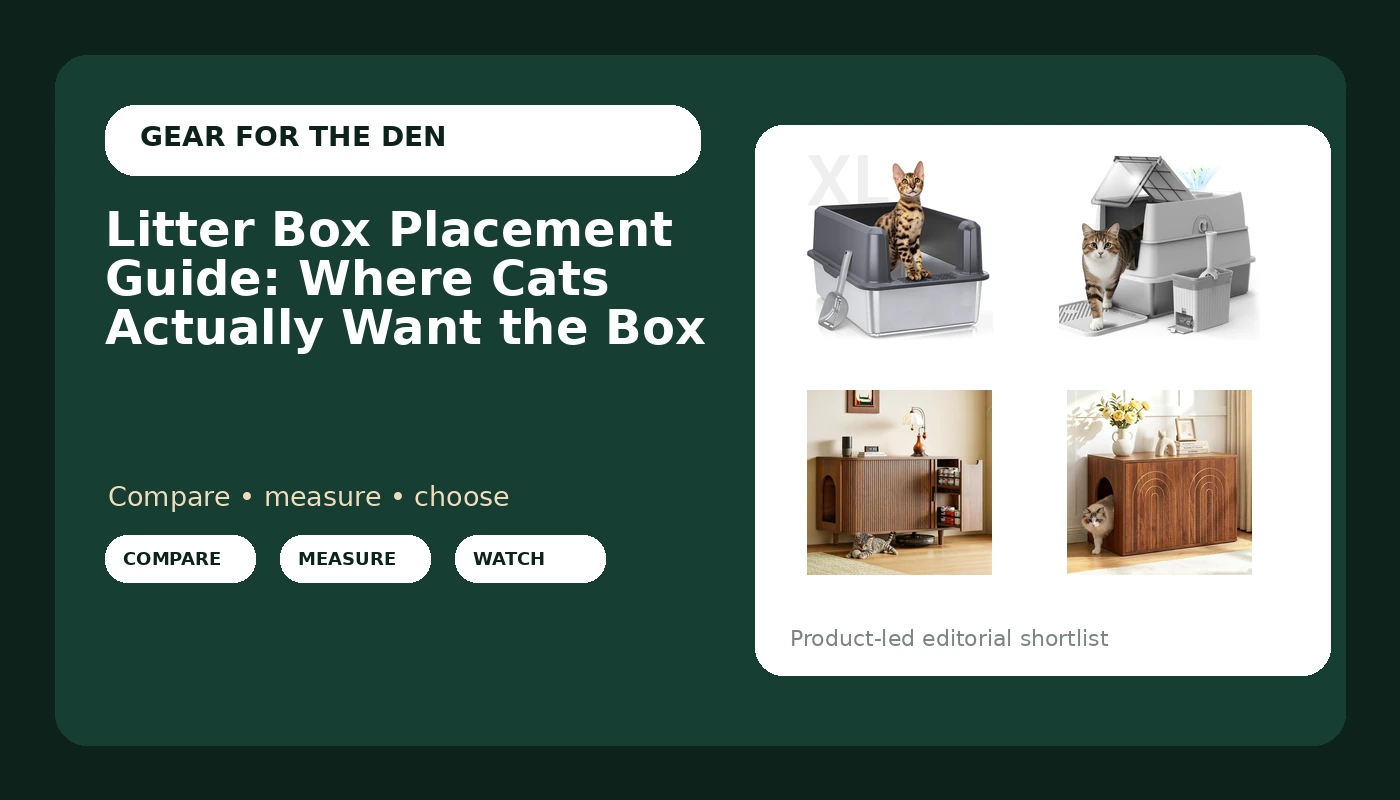
Best Overall: Stainless Steel Cat Litter Box, XL High Sided Open Top Litter Pan, 1 Scoop
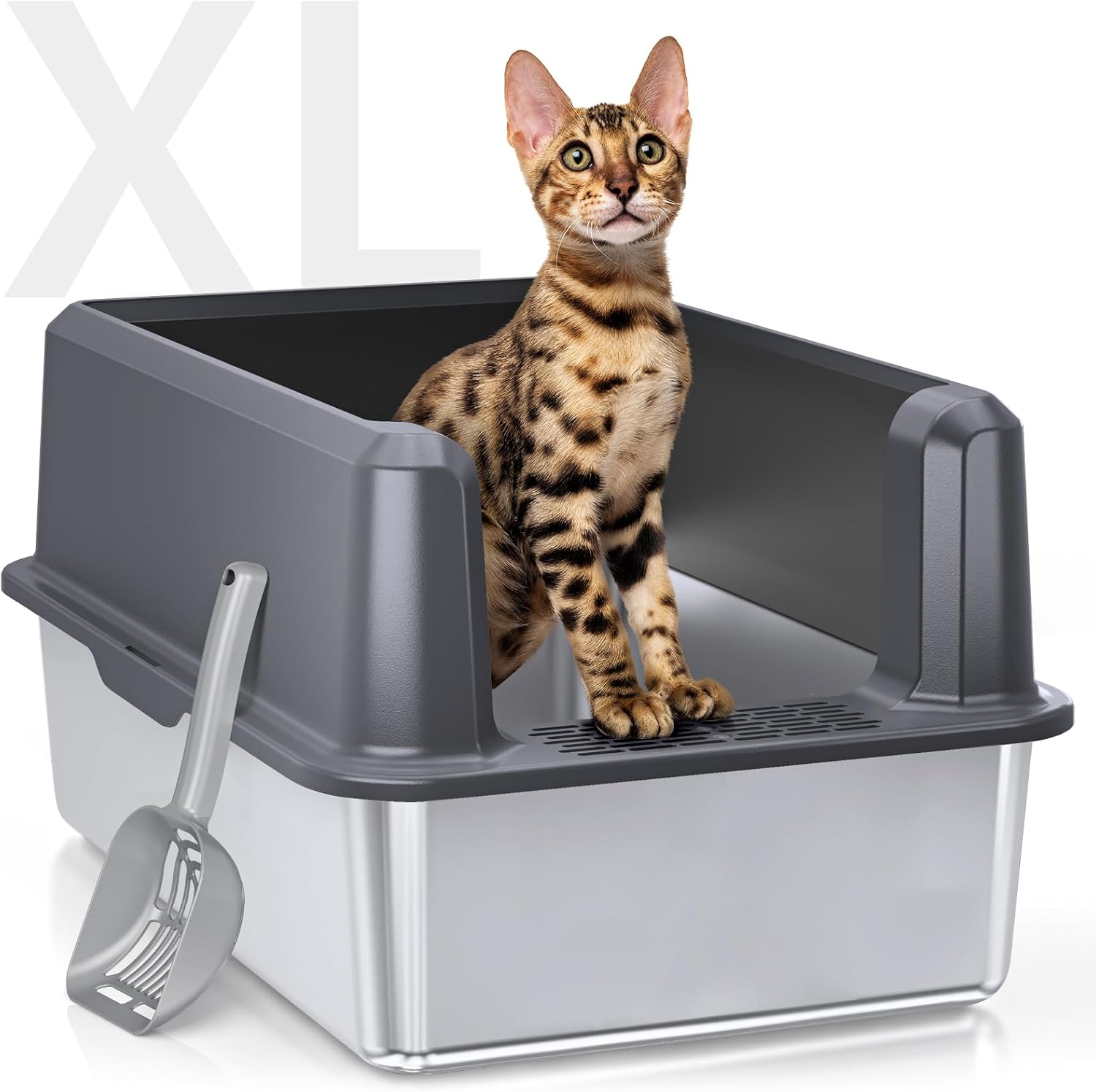
If I could only recommend one box for the widest range of placements, it is this one. Open top means no lid trapping odor and no door to negotiate, which matters because a covered box in a low traffic corner is where most litter box avoidance starts. The XL footprint gives a full grown cat room to turn around, and the high sides do the unglamorous work of keeping litter inside the pan instead of across your floor.
Stainless steel is the part people underestimate. Plastic scratches, and scratched plastic holds odor no matter how often you scrub it. Stainless wipes clean, does not absorb smell, and does not need replacing every year the way a plastic pan does. The pan ships with a scoop, which is a small thing until you realize how many boxes do not.
Placement wise, this is the box I put in hallways and bathrooms, where the pan has to sit against a wall and cannot rely on a cabinet to hide it. High sides mean you can push it flush to a wall on one side and still leave a clean entry on the other. It is not pretty, and it is not hidden, and that is the point: a cat standing inside it can see the whole room, which is what makes a cat comfortable enough to use it twice a day.
If you have a senior cat or a very small kitten, look at the entry height before you commit. A high sided pan is a wall to a cat with arthritis, and no amount of good placement fixes a box the cat cannot climb into.
Best Value: Stainless Steel Litter Box with Lid | XL Enclosed Covered Cat Litter Box
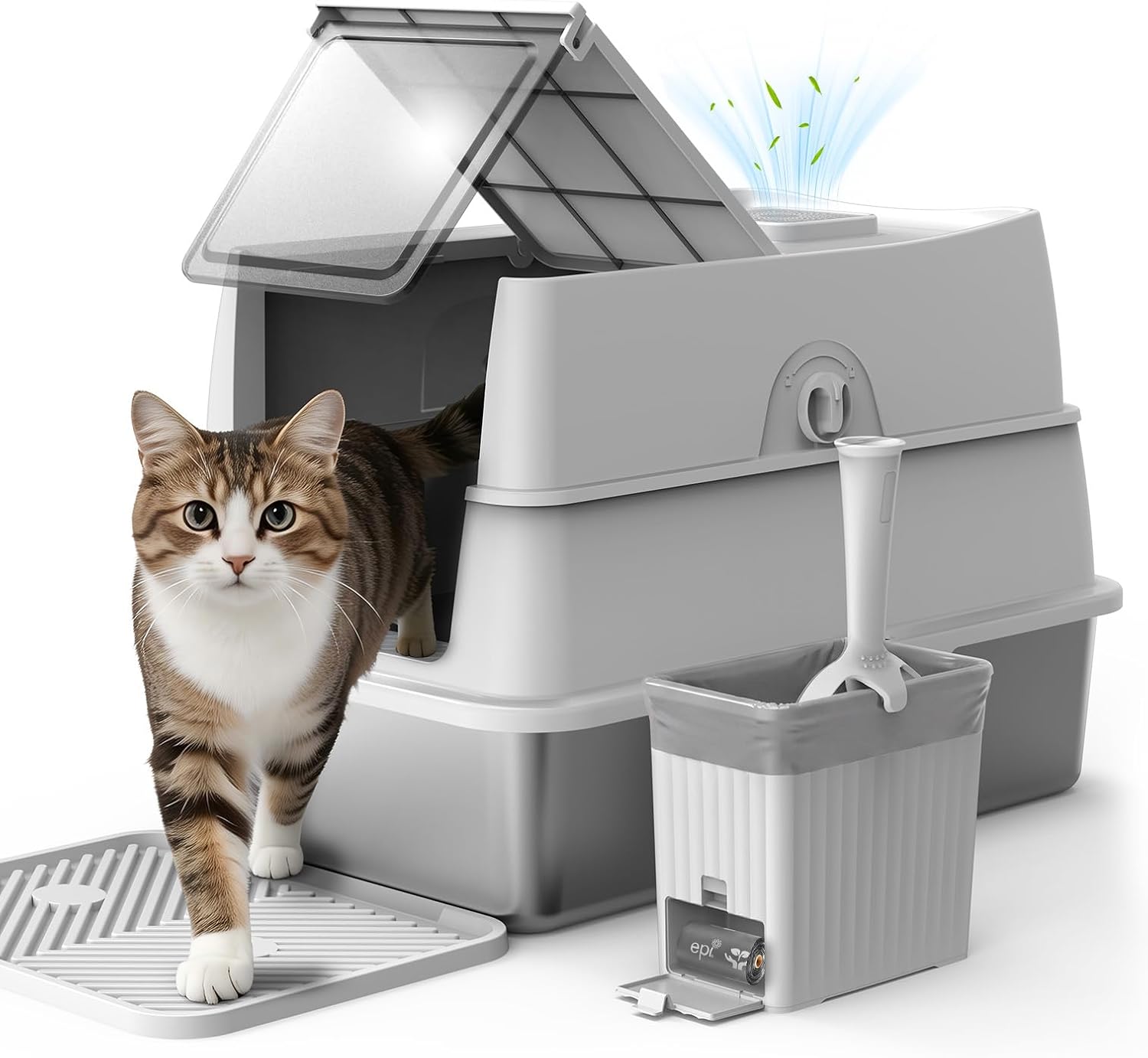
If your only workable spot is a bedroom, a shared bathroom, or anywhere a guest will see the box, the covered version of the same idea costs less and solves a different problem. The lid contains scatter, it gives you somewhere to park the scoop, and the XL interior keeps the enclosed footprint from turning into a phone booth.
Covered boxes get blamed for a lot, and most of that blame belongs to placement rather than the lid. A covered box in a dead end corner with one exit is a trap. A covered box against a wall in a room the cat already hangs out in, with the opening facing the middle of the room, is fine for most cats and preferable for plenty of them.
The stainless body is the reason I would pick this over a plastic covered box at the same size. Odor control comes down to surface, litter depth, and how often you scoop, roughly in that order. A scratched plastic box works against you on all three. This one rinses, dries, and does not keep a memory of last week.
It is the cheaper of the two stainless options here. For a household that wants one box, one spot, and no further conversation about it, that is the whole pitch.
How I tested
I do not test litter boxes with a stopwatch. I test them the way a cat does, which means watching whether the box gets used and whether it gets used without drama.
The routine is simple. Set the box in a candidate spot. Keep the litter depth the same across every setup so I am judging the placement and not the fill. Then watch for three things over the first few days. Does the cat approach the box without stopping to stare at the room? Does the cat leave the box in one motion, or does it bolt out? Does anyone else in the house start avoiding that hallway?
Then the boring part. I scoop it, I slide it aside to vacuum, and I see whether it rocks, walks across the floor, or dumps litter over the edge. I check whether the lid traps smell when I lift it, and whether the included scoop is usable or a joke. A box that is annoying to maintain gets scooped less often, and a box that gets scooped less often becomes a placement problem even when the placement was right.
I also check the escape route. Stand where the box sits and look around. If there is only one way out and it faces a wall, a washing machine, or a dog bed, the box is in a bad spot no matter how convenient it is for you.
And I check the mat. Mat texture matters more than most people think. A deep lidded mat catches tracking at the source. A flat, smooth mat just moves the litter from one part of the floor to another.
Analysis and test results
Four boxes, four placements, and the same conclusion every time: the room matters more than the box, but the box decides whether a good room stays good.
Traffic is the first variable. A box in a room the cat already walks through gets used. A box in a room the cat only enters to use the box is a box on borrowed time. The ideal litter box placement puts the pan in a space with two exits, a clear line of sight, and enough distance from the food and water bowls that nobody is eating next to a bathroom.
The second variable is floor level. In a two story home, one box per floor at minimum. Cats do not do stairs at 3 a.m. when there is a rug closer. If you have more than one cat, one box per cat plus one is not a myth, it is the fastest way to stop a hallway standoff, and our notes on multi cat households go deeper on that.
The third variable is the surface under the box. Box size and litter depth get all the attention, but a pan that slides when a cat jumps out of it teaches the cat to dislike the spot. The open stainless pan is heavy enough to stay put on tile and does not walk across hardwood. The enclosures are heavier still, which is one reason people like them.
Odor control is where stainless separates from plastic. Plastic scratches hold onto ammonia and no amount of scrubbing brings it back. Stainless does not scratch the same way and does not absorb. Pair that with a litter whose clumping speed is fast enough that urine never reaches the bottom of the pan, and the box stops announcing itself from the next room.
Entry height is the last variable and the most often ignored. A high sided pan in a hallway is fine for a young cat. For an older cat it is a hurdle. If your cat is twelve, put the low entry in the spot the cat already loves and keep the tall sides somewhere else in the house.
The litter box placement reference table
This is the table I run through when I walk a room, minus the clipboard. Placement first, box second. If a spot fails the middle column, no box rescues it.
| Placement | Why it works or fails | Box I would use | Notes |
|---|---|---|---|
| Hallway wall, opening facing the room | Two escape routes, steady traffic, easy to scoop | Stainless open top XL | The easiest fix in the house |
| Living room corner behind the sofa | Works if the cat can see the room, fails if the box is boxed in | 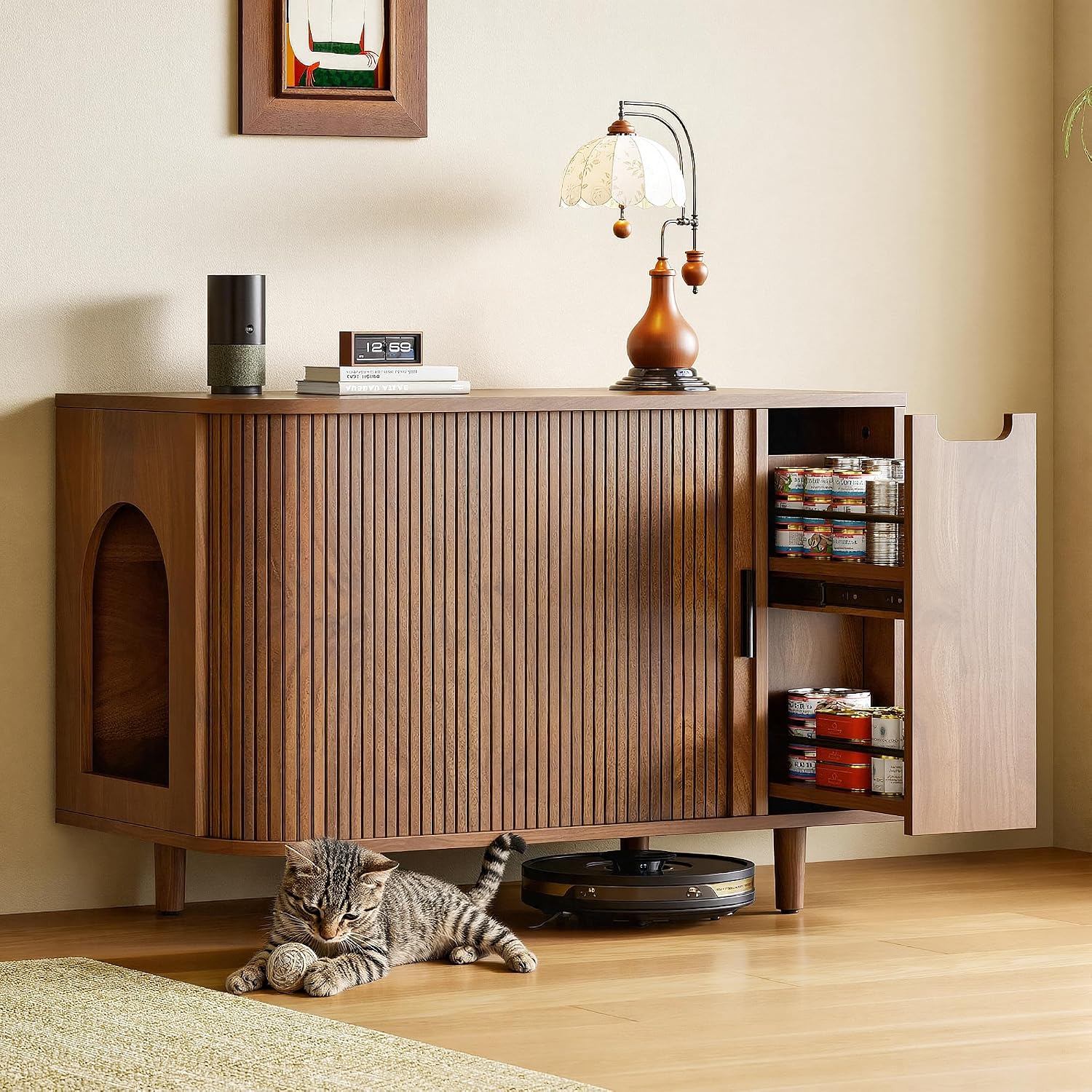 IRONCK tambour enclosure | Doubles as an end table |
| Bedroom, foot of the bed | Fine for one cat, fails if the door is shut at night | 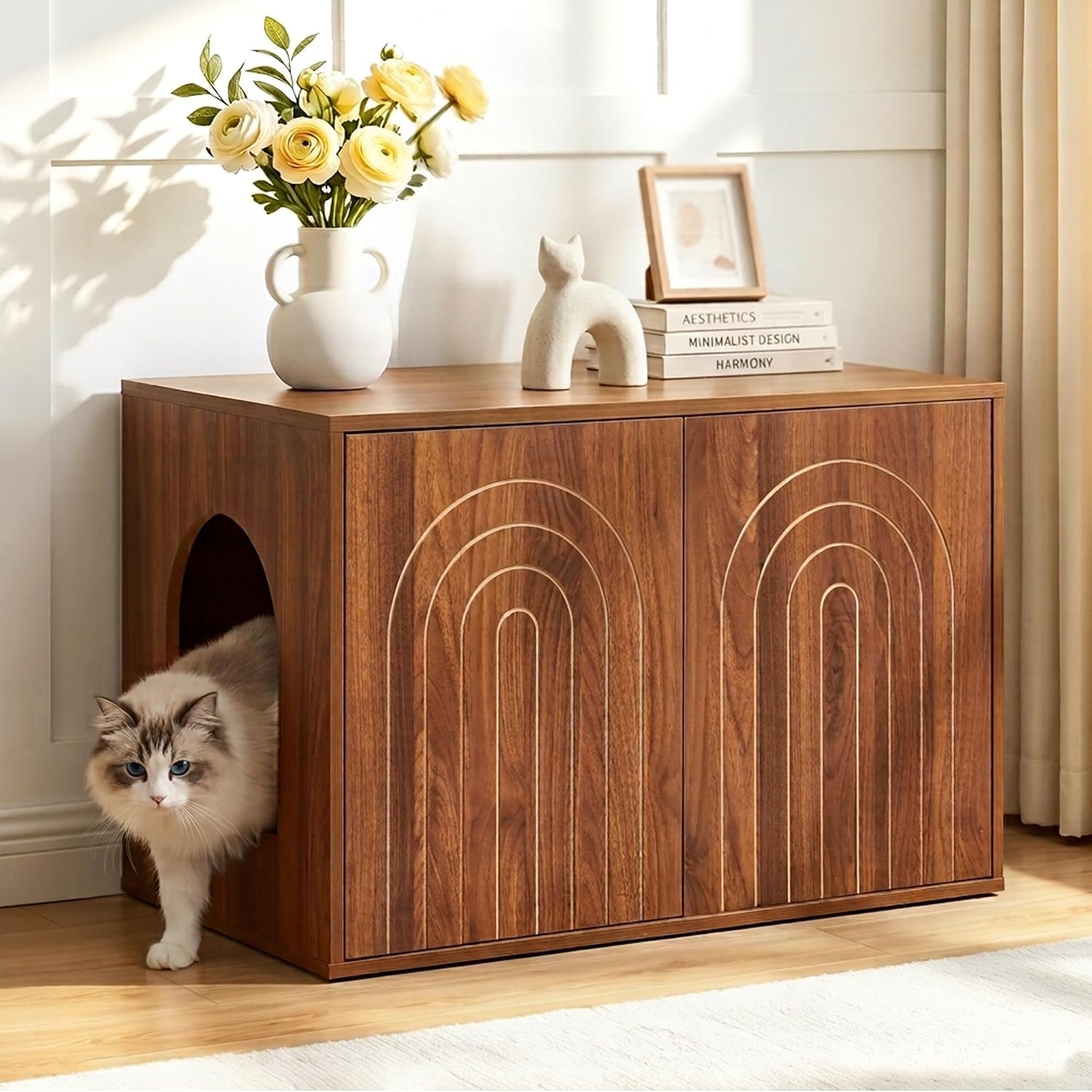 Walnut cabinet enclosure | Leave the door open |
| Bathroom, beside the tub | Good traffic and easy cleanup, but humidity works against clumping litter | Covered stainless XL | Scoop daily in damp rooms |
| Next to the food and water bowls | Fails. Every time. | None | Move the bowls |
| Beside the furnace, washer, or dryer | Fails on noise and vibration | None | Cats avoid loud rooms |
| Dead end closet, door cracked | Fails unless the door comes off entirely | None | One exit, no sightline |
| Top floor only, in a two story home | Fails at night | None | One box per floor |
| Against a wall, opening toward the middle of the room | Works | Any of the four | The single easiest fix |
| On a deep lidded mat | Works | Any of the four | Mat texture controls tracking |
IRONCK Cat Litter Box Enclosure with Sliding Tambour Door
The tambour door is the feature that makes this one work in a living room. It rolls back instead of swinging open, so you do not need a clear arc of floor in front of the cabinet, and you can scoop without rearranging furniture. The two layer drawer gives you somewhere to keep bags, wipes, and the scoop.
As furniture it reads as a side table or a small console. As a litter box enclosure it is a compromise: the interior is smaller than an open XL pan, and the cat has to walk in through an opening. That is fine for a confident cat in a good room. It is not fine in a dead end corner. Put it where the cat already spends time, keep the door open, and it earns its footprint.
Cat Litter Box Enclosure, 31.5" Hidden Litter Box Cabinet Furniture, Walnut
The walnut cabinet is the same idea with a different finish and a taller footprint. It hides the box in plain sight, which is the entire reason people buy furniture enclosures, and the walnut blends into a bedroom or hallway better than a plastic pan ever will.
Two things to check before you buy any enclosure. First, the interior dimensions against your actual box, because a cabinet that forces a small pan undoes the placement work you just did. Second, the opening, because a cat that has to duck and turn at the same time will find a rug instead. If both check out, this is the version I would put in a bedroom, opening facing the middle of the room, door left open. If you later add an automatic box, check its sensor range against the cabinet interior before you buy, since a unit that trips on the walls will not help you.
Should you buy Stainless Steel Cat Litter Box, XL High Sided Open Top Litter Pan, 1 Scoop?
Yes, if you have a spot with a wall, a sightline, and a cat who is not a senior. It is the box I recommend first because it removes two of the most common problems at once: a lid that traps odor, and a pan too small for a cat to turn around in. Stainless does not hold smell, the high sides keep litter in the pan, and the scoop is included.
What it will not do is hide. If your only workable spot is the middle of your living room, an open pan is a visual commitment, and an enclosure is the honest answer. But if the spot is a hallway, a bathroom, or a corner the cat already patrols, this is the box that makes that spot work.
Should you buy Stainless Steel Litter Box with Lid | XL Enclosed Covered Cat Litter Box?
Buy it if you need the box to disappear, or if your cat already uses a covered box without complaint. It is the cheaper stainless option here, it contains scatter better than an open pan, and it gives you a place to keep the scoop. For a bedroom or a shared bathroom, that combination is hard to beat.
Skip it if your cat is a door hater. Some cats will use a covered box forever and others will use the floor next to it forever. Test it with the lid on, in a room the cat likes, opening facing out. If your cat stops using it, the lid is the variable, not the location, and you already own the fix.