Two cats, one bowl, and a grey tabby who has worked out that the fastest route to a second breakfast is a shoulder to his brother's ribs. That is the scene that turns the microchip cat feeder vs motion sensor feeder question from a spec sheet argument into a kitchen problem. Both designs promise to feed one cat and not the other, but they get there in completely different ways, and only one of them checks which cat is standing at the bowl.
The short version, before the table. A microchip feeder reads an ID tag on a collar or the chip your vet implanted, and it opens only for the cat it recognizes. A motion sensor feeder does not check identity at all. It opens when something moves in front of it, holds for a timer, then closes. In a single-cat home those two behaviors look nearly identical at breakfast. In a two-cat home they are not close at all.
For most multi-cat homes the better answer is a microchip feeder, because identity is the exact problem you are trying to solve. A motion lid solves a different problem: it keeps kibble covered, keeps ants and dust out, and delays a dog long enough for a cat to eat in peace. If that is your situation, you can skip the complexity. If your situation is a cat who eats everyone else's dinner, a sensor lid is a bowl with a door your thief already knows how to open.
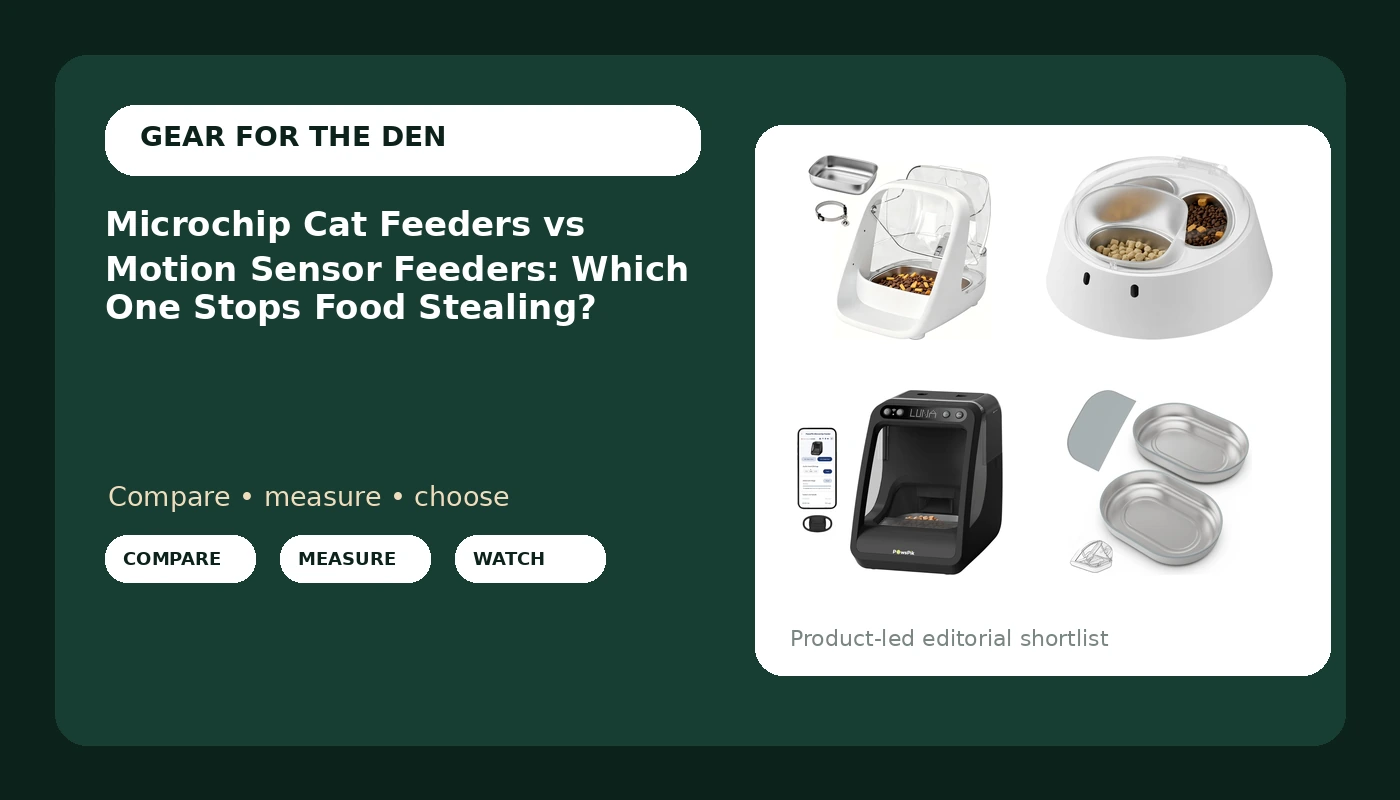
Four products here, one accessory and three feeders, all built around recognition rather than motion:
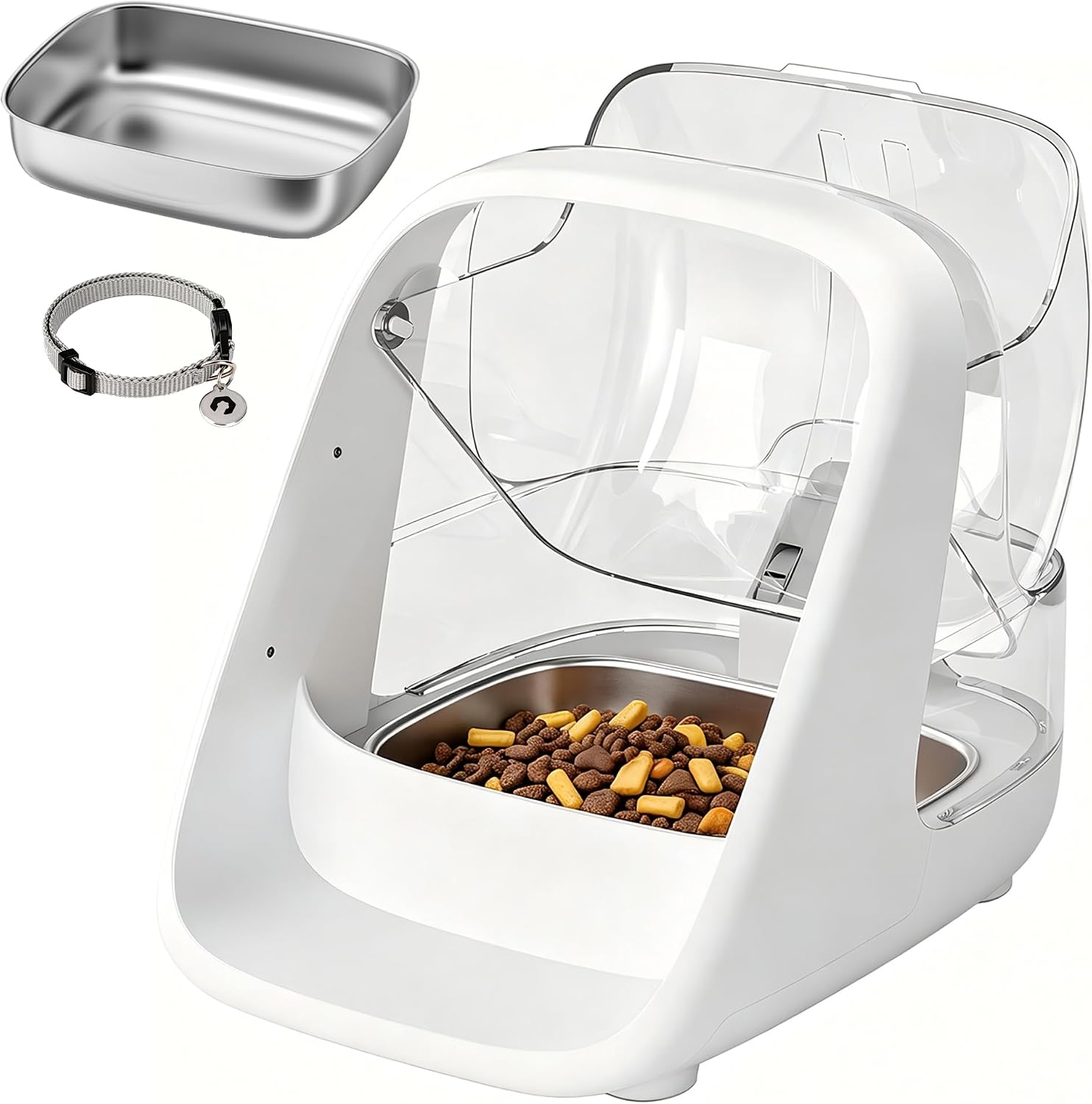
ePawDen Microchip Pet Feeder – Rechargeable Selective-Automatic Cat Feeder with RFID & Microchip Recognition – Stainless Steel Bowl – Prevents Food Stealing in Multi-Cat Homes – for Wet and Dry Food
Rechargeable, so there is no cable stretched across the kitchen, and it is built for wet and dry food, which matters if your cat ignores kibble
One cat per unit, and every cat in the house needs a tag or an enrolled chip before the lid does anything
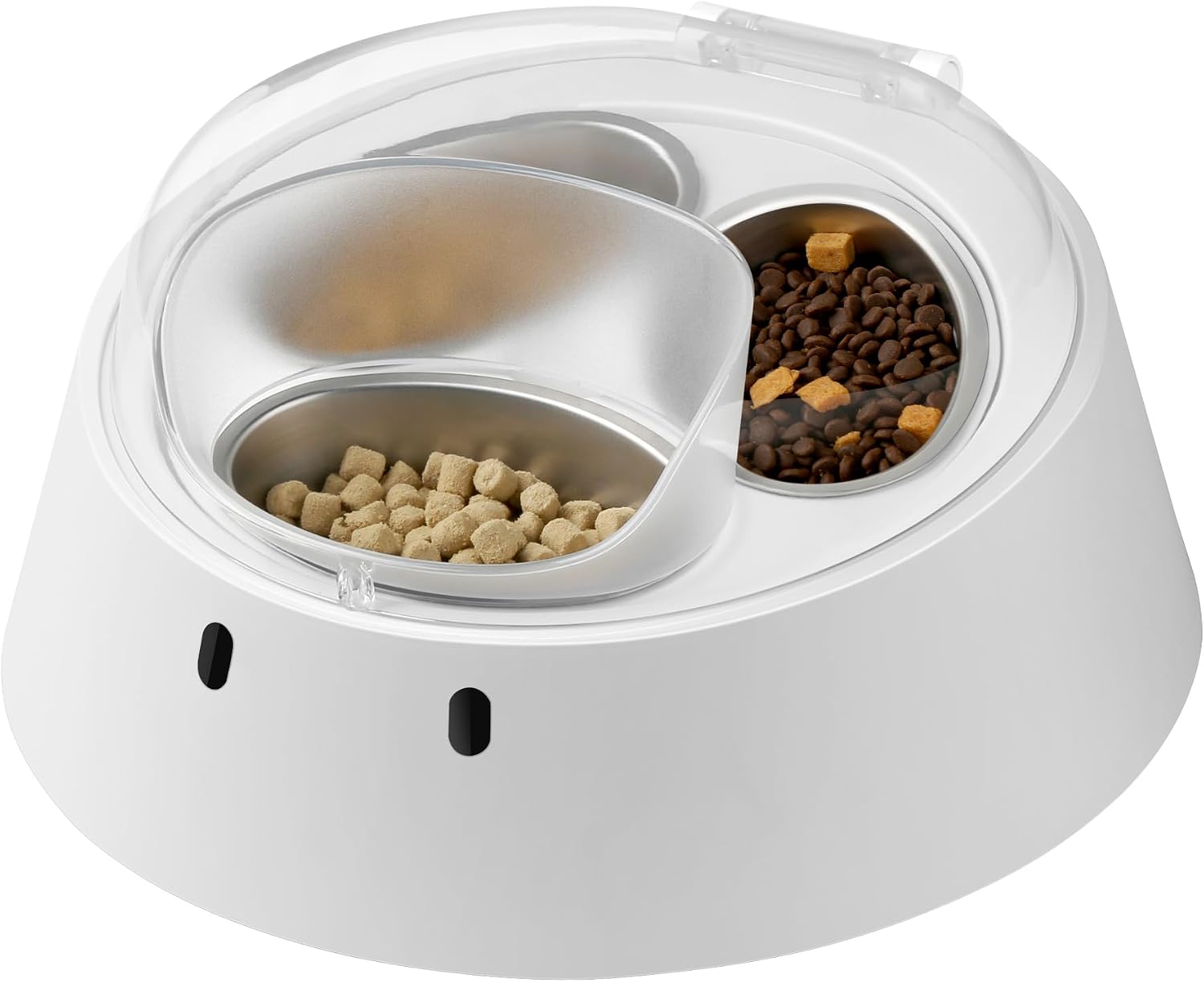
Adolug RFID Microchip Cat Feeder, 1 Tag Opens 2 Hidden Bowls, Anti-Theft
One tag opens two hidden bowls, so a wet portion and a dry portion can share a footprint and stay covered between meals
Both bowls answer to the same tag, so a second cat still needs a second unit of her own
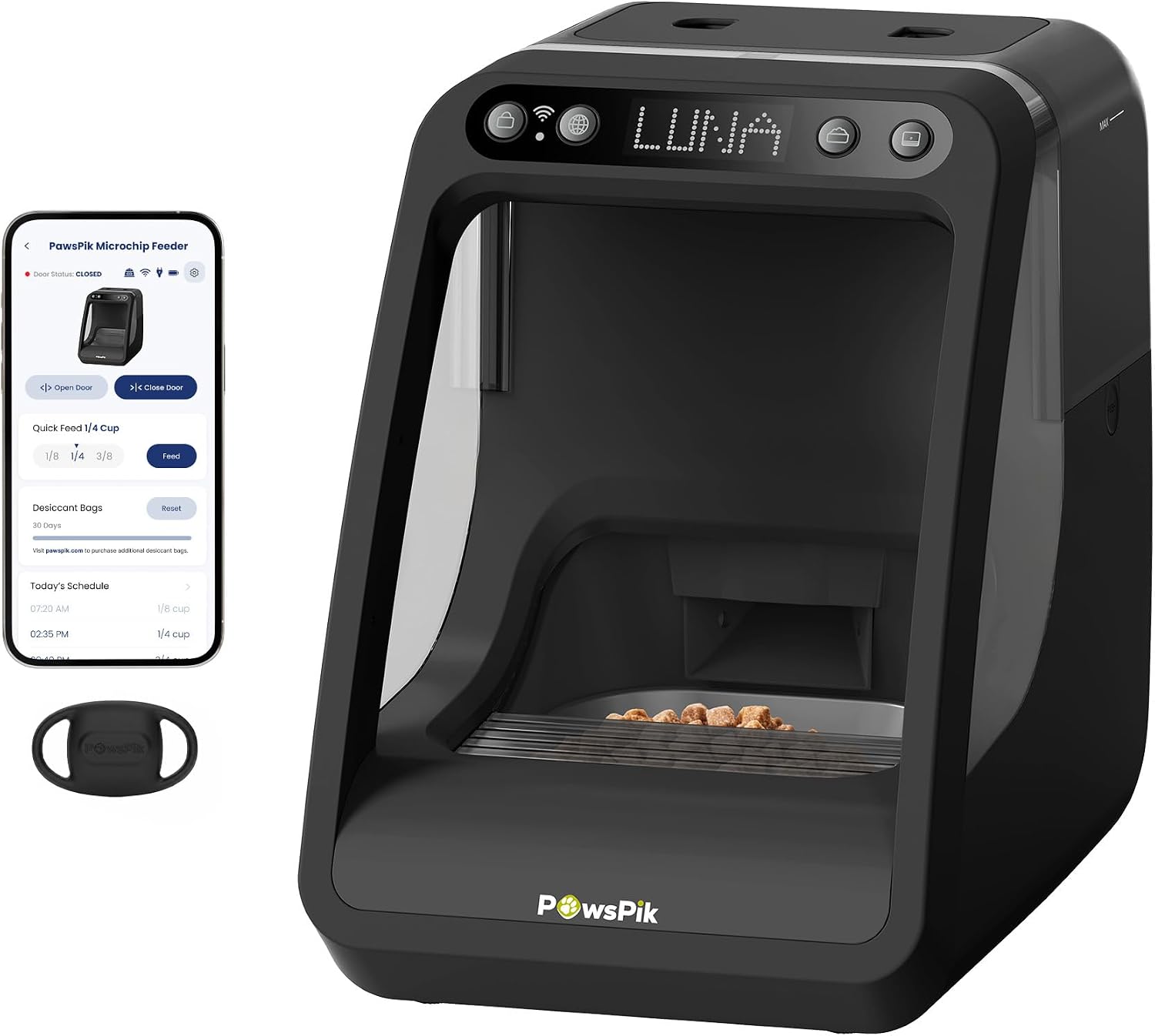
PawsPik Automatic Microchip RFID Cat Feeder, 16-Cup, Black
A 16-cup hopper means refills measured in weeks, and the black housing disappears under a dark cabinet
The hopper and housing ask for more floor space than a bowl-style selective feeder, so it wants a dedicated corner
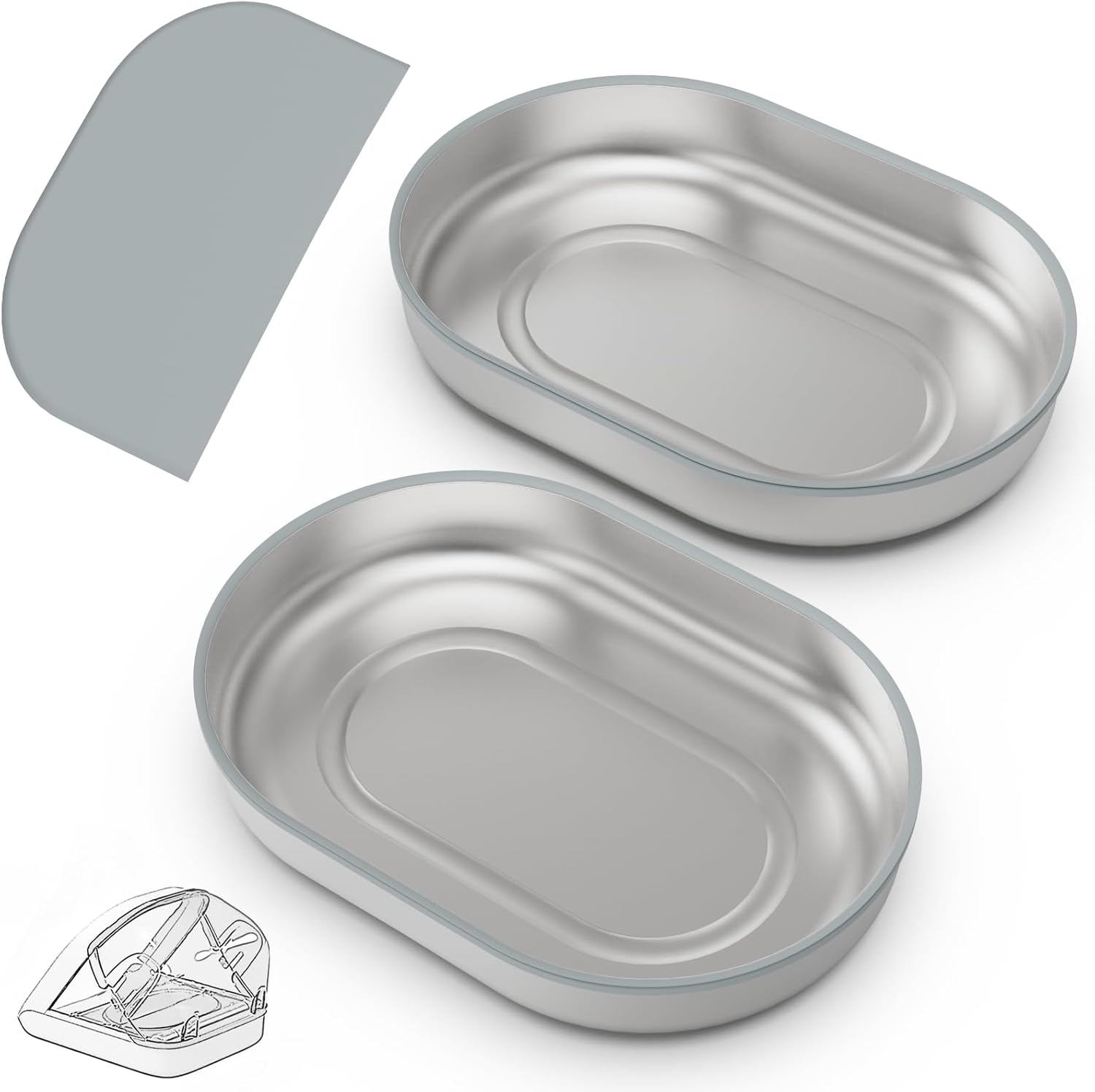
Stainless Steel Bowl for Automatic Microchip Cat Pet Feeder, Sealing Ring Design for Keeping Food Fresh and Reducing Odor, SUS 304, Easy to Clean, 2 Bowl & 1 Mat Set
A spare stainless bowl and a mat, so one bowl can soak while the other waits in the fridge
It is an accessory, not a feeder. On its own it stops nothing
Prices and availability may change.
The real difference between microchip cat feeder and motion sensor feeder designs
Recognition feeders work on a short read. The antenna sits in the base or under the hood and looks for a passive tag, either the chip a vet implants between the shoulder blades or a fob on a breakaway collar. Microchip range is deliberately short, often just a couple of centimeters, so a cat has to commit its head to the bowl before the lid moves. That is a feature, not a limitation. A second cat walking past the unit triggers nothing.
Motion designs use a different signal entirely: passive infrared, a weight plate, or a beam across the opening. They open on approach, and nothing in the circuit asks who is approaching. A twelve-pound tabby and a seven-pound kitten trip the same sensor in the same way.
The second difference shows up when the cat walks away. A recognition feeder closes as soon as the tag leaves the read zone, so the food is covered again right away. A motion feeder runs a timer, and during that window anything with a nose can help itself. If you have ever watched a determined cat sprint to a bowl the moment another cat finishes, you already know how long thirty seconds is.
There is a mechanical difference too. Many motion feeders use a single lid that swings up and over the food. Selective feeders tend to use a hooded bowl, a rotating carousel, or two hidden compartments that only expose food for the recognized tag. Hooded and hidden designs control odor better, because the food is enclosed rather than merely covered, and they are harder for a paw to pry at from the side.
How microchip recognition behaves in a multi-cat kitchen
Three feeders and one accessory cover the range here, from a two-bowl selective unit to a hopper that holds sixteen cups.
ePawDen Microchip Pet Feeder. This is the one I would start with in a two or three cat house. It reads RFID tags and implanted chips, it runs on a rechargeable battery rather than a wall adapter, and it is built for wet and dry food. That combination matters more than it sounds. A corded feeder has to live within reach of an outlet, which usually means a corner nobody wants to eat in, and a wet food feeder has to be washable at the bowl level or dinner becomes a chore.
Adolug RFID Microchip Cat Feeder. One tag opens two hidden bowls. If your cat gets a wet portion and a dry portion, or if you split a meal into two smaller servings to slow down a gulper, that is genuinely useful, because both bowls stay covered under one hood and one read. The catch is that the second bowl is not a second cat's bowl. One tag opens both compartments, so a two cat house still needs two units, one tag each.
PawsPik Automatic Microchip RFID Cat Feeder. The bulk option, with a 16-cup hopper in a black housing. Sixteen cups buys refill intervals measured in weeks rather than days, and it asks for more floor space and a taller reach in return. If you have a senior cat with a stiff neck, measure the bowl height against the cat before you commit.
Stainless Steel Bowl set. Not a feeder. It is a two-bowl and mat accessory for an automatic microchip feeder, SUS 304 stainless, with a sealing ring to keep food fresh and reduce odor. Buy it for a spare bowl in the dishwasher rotation, or for a second bowl dedicated to a wet portion. On its own it stops nothing.
How to choose: microchip cat feeder vs motion sensor feeder
Three questions settle this faster than any spec sheet.
First, who is stealing? If the thief is another cat, you need identity, and identity means recognition. If the thief is a dog, a raccoon, or a toddler, a lid that opens on approach and closes on a timer buys your cat enough time, and you can spend the difference on something else.
Second, will your cat wear a collar? Collar tags are lighter than they used to be, and most cats tolerate a breakaway collar without complaint. But a cat who has lost three collars in a year is a cat who needs a feeder that reads an implanted chip instead. Confirm the unit reads the chip your cat already has before you order, because a feeder that only reads its own tag stops working the day the tag disappears under the sofa.
Third, what is in the bowl? Dry kibble is easy: any hopper works and portion size is the only dial that matters. Wet food is harder, because it has to be refrigerated between meals, the bowl has to come out for washing, and the hood has to seal well enough that the smell does not call every other animal in the house. If you feed wet, pay attention to the sealing design and the bowl material, and expect to buy a spare.
Answer those three and the choice is usually obvious.
Bowl width, whisker clearance, and portion size
Bowl width and whisker clearance are the two specs nobody advertises and every cat notices. A narrow bowl forces the whiskers to brush the sides, and whisker fatigue is real: cats will eat less, or drag food onto the floor, rather than put up with it. Look for a bowl wide enough for the muzzle plus whiskers, and shallow enough that the nose is not buried.
Portion size is the other half. Most automatic units let you set a portion size per meal in small increments, and the useful range depends on your cat's weight and how many meals you split the day into. A feeder that only offers large portions is a feeder you will not use for a cat on a diet.
Elevation angle matters for older cats. A bowl sitting at floor level forces a senior cat with a stiff neck to crouch and reach, while a raised or tilted bowl lets food fall toward the mouth. The stainless bowl set in this comparison is flat, so if your cat needs elevation, plan for a stand rather than expecting the feeder itself to provide it.
Where motion sensing still makes sense
The motion sensor feeder vs microchip cat feeder argument usually starts with the wrong question, which is which one is better. The better question is which failure you can live with.
Motion sensing wins in a few honest situations. A single-cat household where the point is keeping kibble fresh, covered, and free of ants. A home with a dog who eats anything, where a lid that closes on a timer is enough of a speed bump. A cat who refuses collars and has no implanted chip. A budget that will not stretch to a recognition unit. In each of those cases a sensor lid is a reasonable, simple answer, and tag enrollment buys you nothing.
It loses in exactly one situation, and that situation is why most people search for a selective feeder in the first place: more than one animal in the house who eats cat food. A sensor lid cannot tell a resident cat from a visiting cat, from a dog, or from a raccoon on the porch. If your problem is theft by another pet, motion sensing is not a partial solution. It is no solution at all.
Water capacity, pump noise, and filter type: the fountain question
Feeding and water overlap more than people expect. A cat on wet food drinks less from a bowl and more from a fountain, and a cat on dry food drinks more than either. If you are already shopping for the feeding side of the kitchen, the fountain side is worth planning at the same time.
Water capacity sets how often you refill. Pump noise decides whether the fountain lives in the kitchen or gets exiled to a bathroom. Filter type decides what you are buying every month, and a cartridge that is hard to find is a fountain you will stop cleaning. A wide basin, a quiet pump, and an easy filter are what keep a fountain plugged in past the first month.
Trade-offs worth naming before you buy
Recognition feeders carry costs beyond the purchase. Every cat needs a tag or an enrolled chip, and enrollment is the step people skip until the first meal fails. Power is another: a rechargeable unit needs a charging rhythm, and a corded unit needs an outlet near the bowl, which is rarely where you want the bowl.
The bowl itself is a wear item. Stainless is the right material because it does not hold odor and it survives the dishwasher, but the sealing rings and gaskets that keep wet food fresh do wear out and do need replacing. Budget for spares.
Then there is the learning curve. A cat who has eaten from the same dish for nine years may ignore a hooded feeder for a few days. Most adjust, and the adjustment is easier if you start with the lid propped open and let the cat eat with the mechanism visible and silent for a meal or two.
If you are still weighing a microchip cat feeder or motion sensor feeder for one cat, the sensor lid is simpler and has fewer parts to break. The microchip cat feeder vs motion sensor feeder contest only becomes a real fight in a house with more than one mouth at the bowl.
What I would check before ordering
Measure the space first. The ePawDen and the Adolug both sit low and wide, while the PawsPik hopper wants a corner of its own. Check the bowl height against your oldest cat, check whether the unit runs on a battery or a cord, and check whether the maker lists wet food as supported.
Then check the chips. If your cat already has an implanted microchip, confirm the feeder reads that chip, and keep a collar tag as a backup for a cat who slips a collar. Enrollment takes minutes when the tag is in hand and considerably longer when it is lost under the sofa.
Finally, buy the spare bowl at the same time as the feeder. It is the cheapest part of the setup and the one that keeps the whole thing running through a busy week.