Large breed dogs are hard on floors. A 90-pound shepherd does not lie down so much as collapse, and whatever is under it either holds or skates across the room. That is why the non slip dog mat vs dog cot for large breed dogs question keeps landing in my inbox: one option sits flat on the floor, the other lifts the dog off it, and the right answer depends on hips, heat, and how much mud comes through the door. This is a comparison of what is actually available right now on the mat side of that argument, plus one product that does not belong on a floor at all but keeps showing up in the same shopping cart.
For most large breed dogs, a non slip mat is the better first buy, and the JoicyCo 42 inch crate pad is where I would start, because it gives a big dog a stable, washable landing zone for a fraction of what an elevated cot costs. That is the short answer. The longer answer involves non slip backing, foam density, weight capacity, and the reason a cot that is perfect for a young Labrador can be a genuine trap for a senior with sore hips.
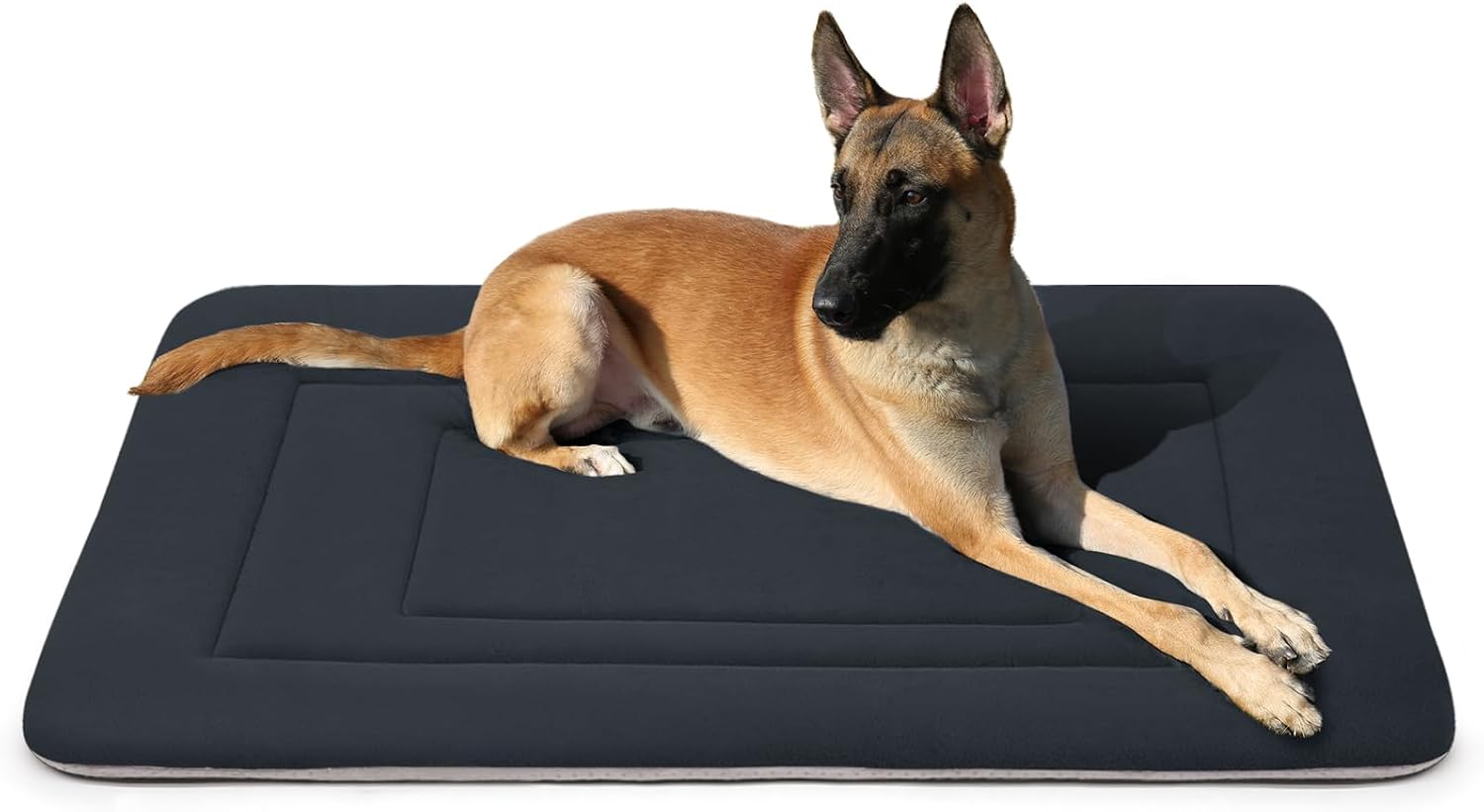
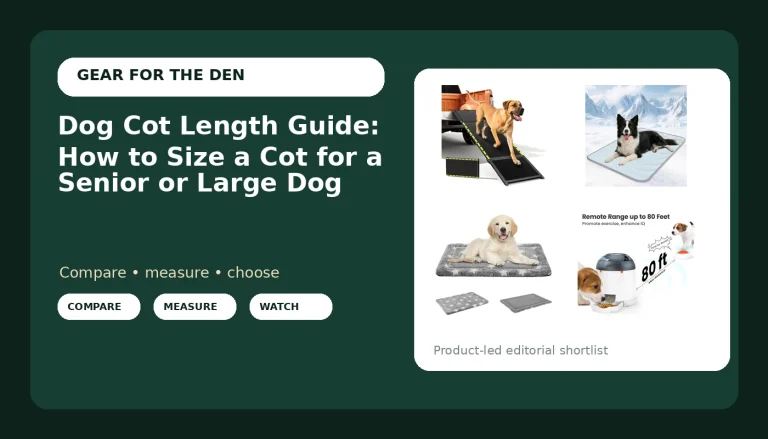
JoicyCo Dog Bed Soft Dog Crate Bed Pad Mat, 42 in
Long enough for a large crate or a floor corner, non slip bottom, machine washable, dark blue gray hides dirt
No elevation, so no airflow under the dog, and no published foam density for hip support
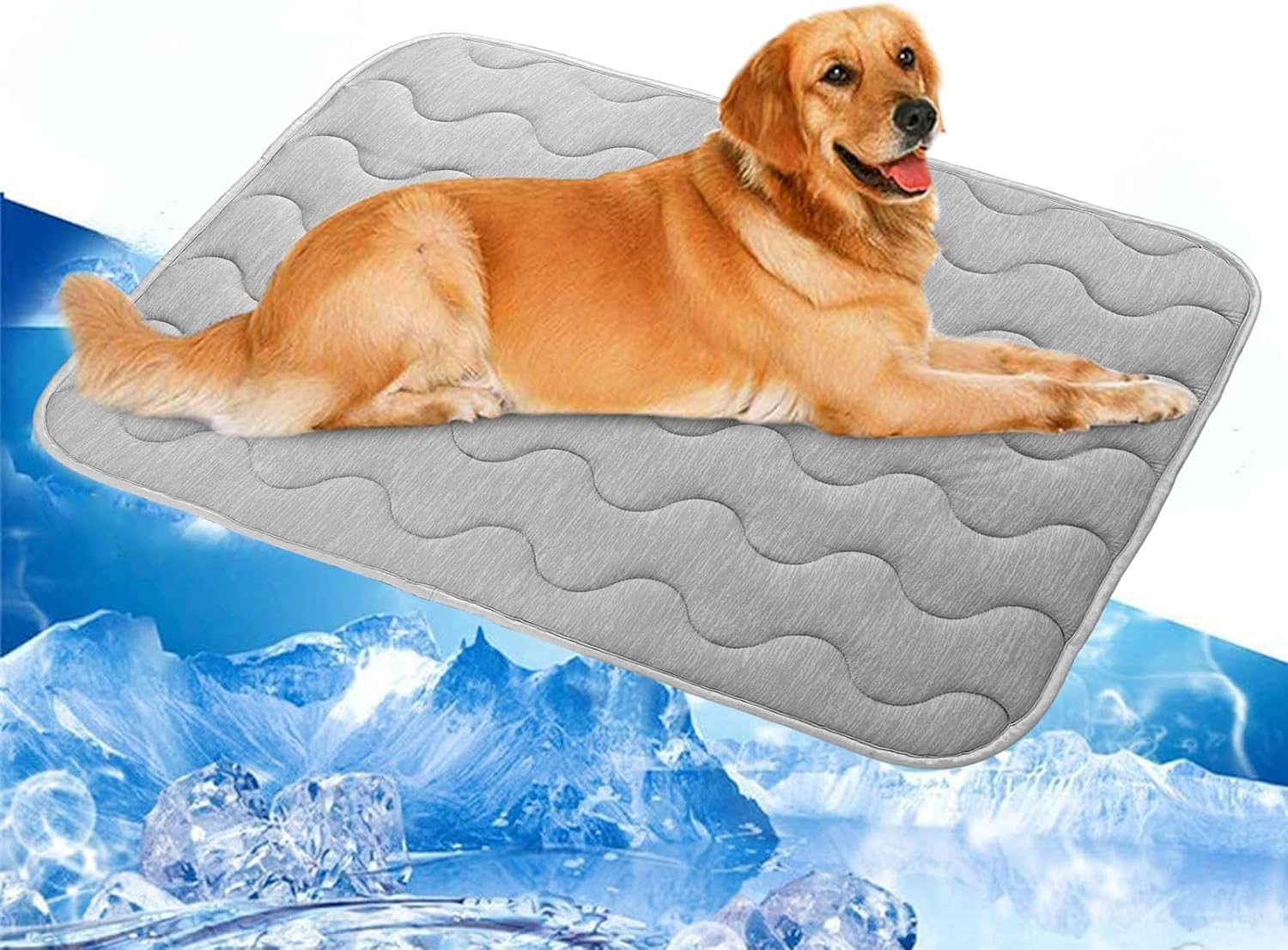
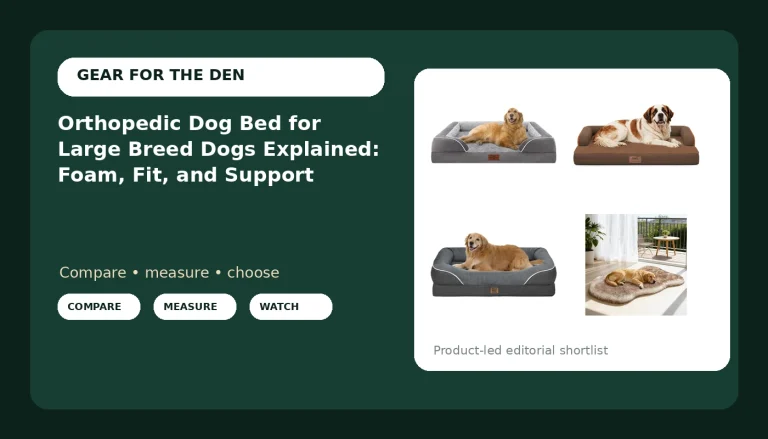
Nacaro Extra Large Dog Cooling Mat, 39.4 x 27.6 in
Big enough for a large breed dog to sprawl on, Q-MAX above 0.45, washable, non slip base, packs flat
Cooling pads feel cold rather than supportive, and they do not cushion a hard floor
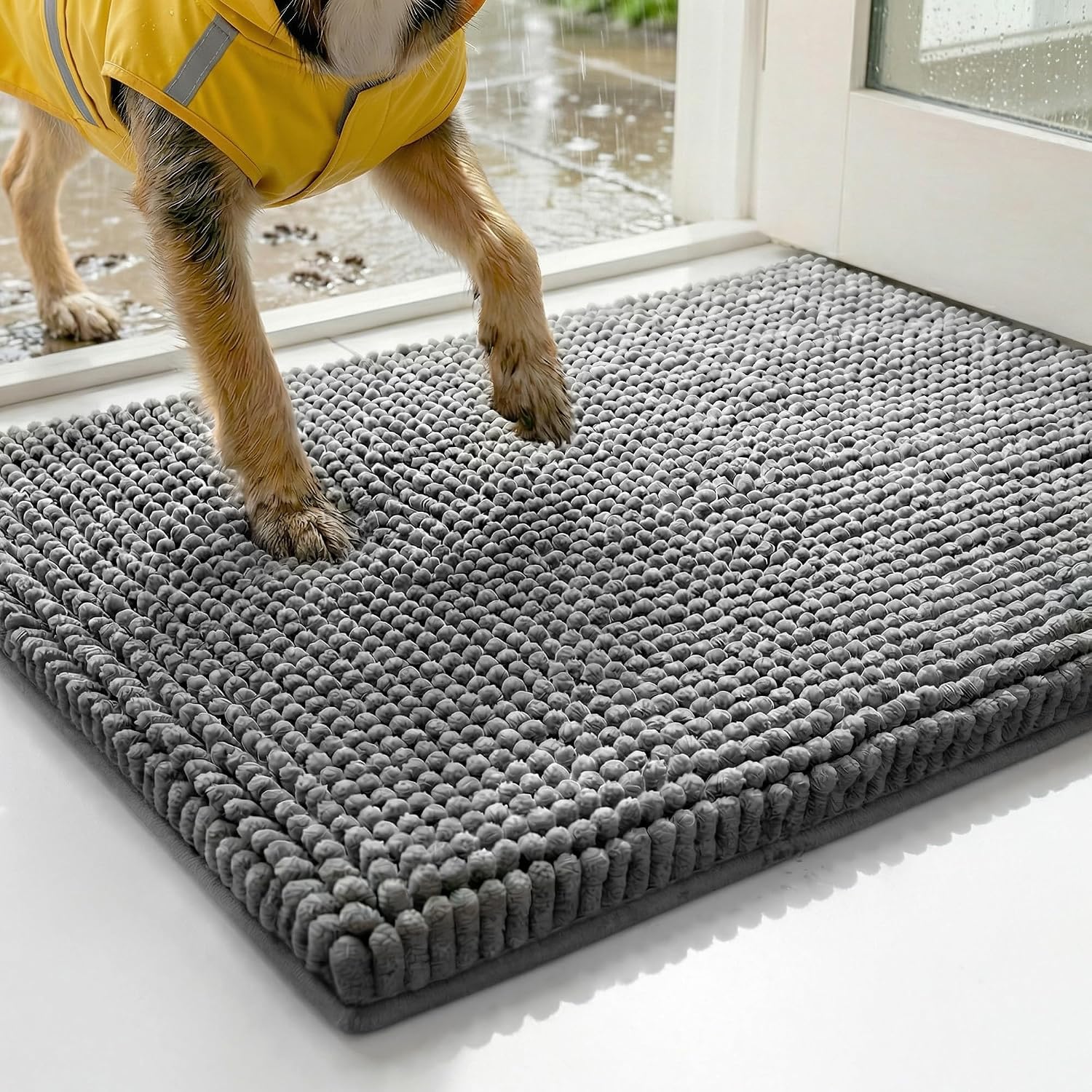
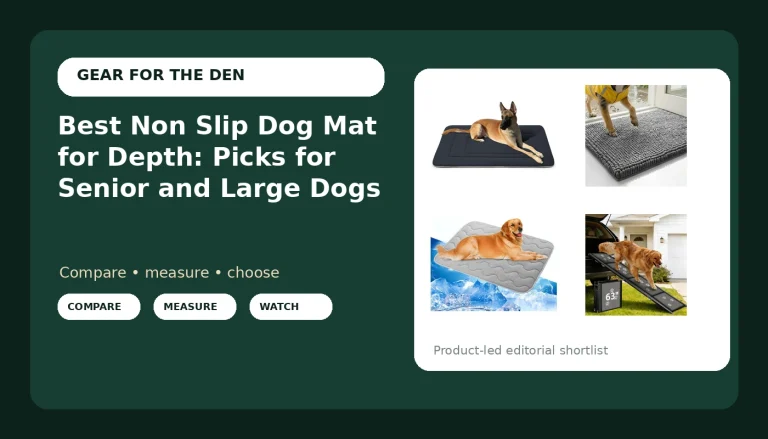
Deconovo Absorbent Chenille Dog Mat for Muddy Paws, Non Slip, TPR Backing
Chenille traps wet paw prints, TPR backing grips a hard floor, small enough to live by the door
Thin by design, so it is an entryway mat and not a bed
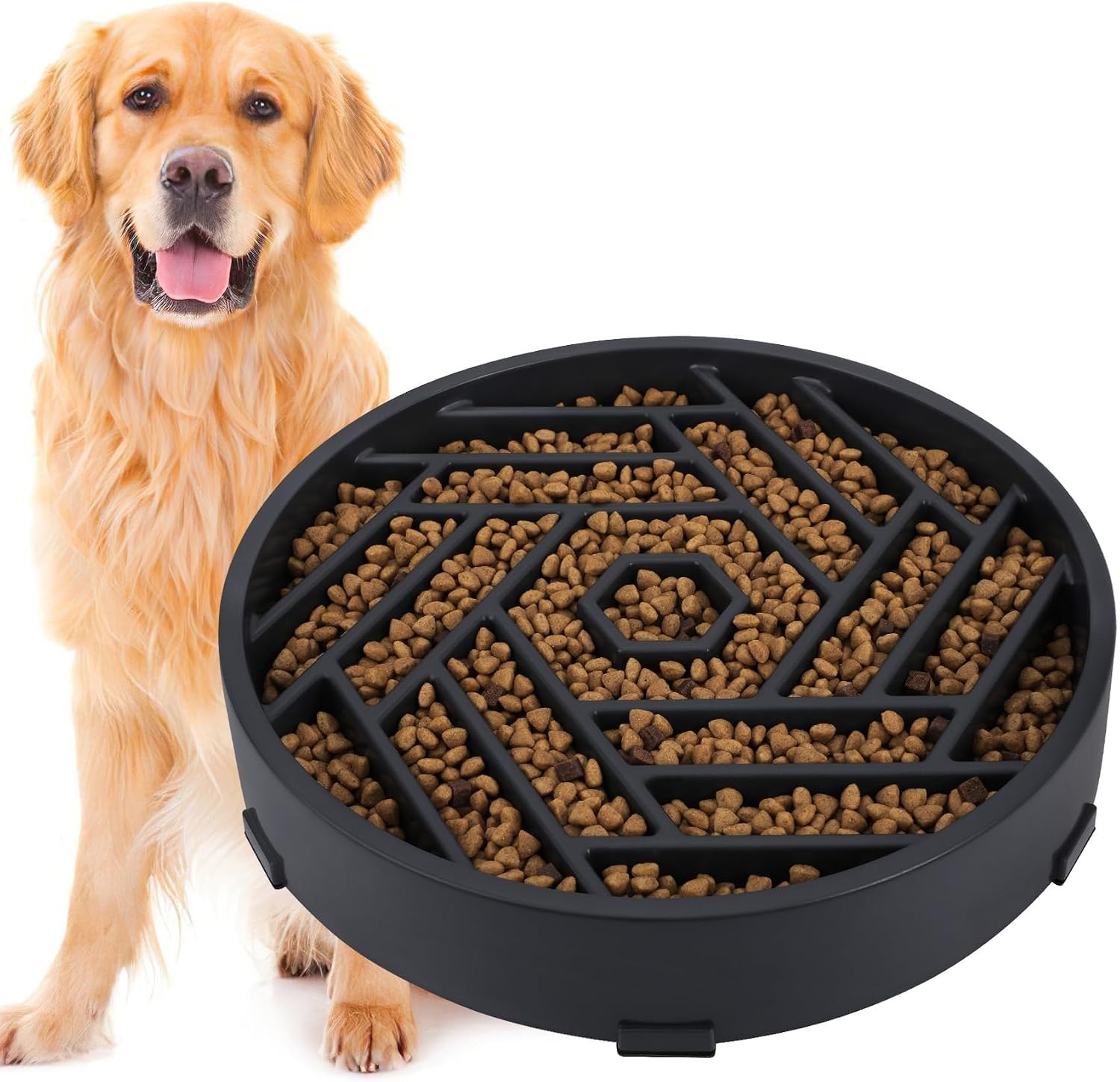
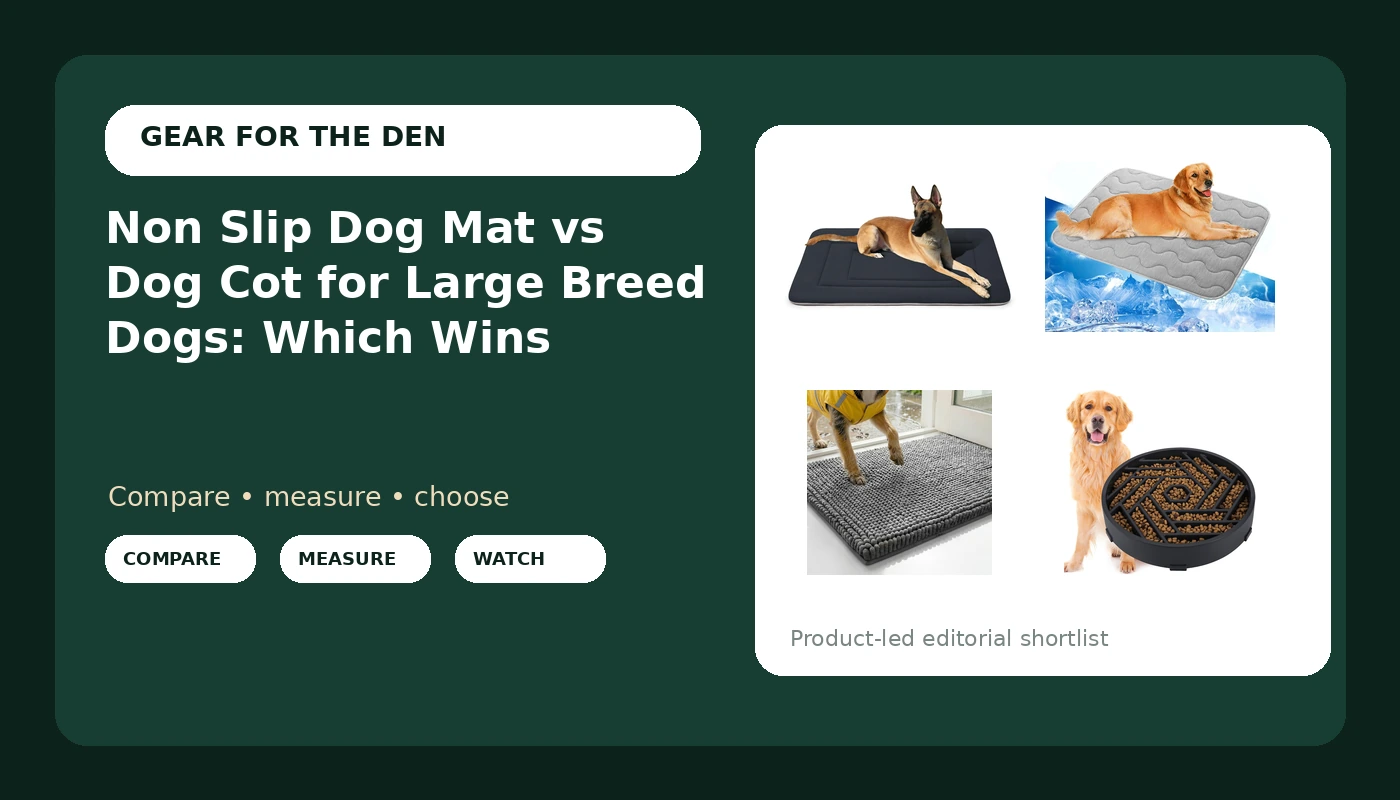
TOBYTO Slow Feeder Dog Bowl for Large and Medium Breeds, Non Slip
Maze slows a dog that inhales its food, non slip base stops a big dog pushing the bowl around, cheap insurance
It is feeding gear, not a sleeping surface, so it only belongs here as part of the same daily routine
Prices and availability may change.
How I judge a mat for a large breed dog
I do not start with the marketing panel on the listing. I start with what a big dog does to a mat in a week: it slides, it bunches, it gets a wet paw print on it, and then 90 pounds of dog lies on it and compresses whatever is inside. Four things matter most. Whether the base actually grips on hardwood, tile, or vinyl plank. Whether the cover survives a wash without the filling balling up. Whether the size matches the dog at full stretch, not curled up politely. And whether there is enough substance under the elbows and hips to keep pressure off the bony spots.
It is just as important to be clear about what a mat cannot do. It cannot raise bed height. It cannot get air moving under a dog in July. It cannot help a dog whose real problem is getting up off the floor in the first place, because a flat pad gives a stiff dog nothing to push against. Those are cot jobs. A mat is the foundation layer, the thing that stops the sliding and the scratching, and it is the cheapest meaningful upgrade you can make to a senior dog's day.
The real difference: non slip dog mat vs dog cot for large breed dogs
The difference between non slip dog mat and dog cot for large breed dogs comes down to elevation and how the dog gets on and off. A cot is fabric stretched on a frame. Air moves underneath, the surface gives slightly, and the dog sleeps above the cold slab. A mat is a pad. It sits where the floor is, it is trivially easy to step onto, and it does nothing at all for airflow.
The non slip dog mat vs dog cot for large breed dogs comparison is really a question about your dog's hips, not your dog's weight. For a young, healthy large breed dog the trade is simple: cots are cooler in summer and keep a dog off hard surfaces. For a senior with joint mobility problems the math flips. A cot has a bed height, often eight to twelve inches, and a dog that cannot clear that height will either abandon the bed or start launching onto it, which is exactly the motion you are trying to avoid. That is where ramp angle enters the conversation. If the cot needs a ramp, the ramp needs a shallow angle and enough lift capacity for the dog's weight, and suddenly you are shopping for three things instead of one.
The dog cot for large breed dogs vs non slip dog mat argument usually turns into a fight about whether elevation is worth the step. My answer: it depends on the dog, not the size of the dog. A 110-pound dog with good hips can use a cot for years. A 70-pound dog with hip dysplasia may never touch one again.
A mat wins on access, cost, and washability. It loses on airflow, on pressure relief if the filling is thin, and on the fact that it will not keep a dog off a cold floor in January unless it is genuinely thick. Whether you land on a non slip dog mat or dog cot for large breed dogs, the failure mode is identical: something that slides, a dog that scrambles, and a joint that takes the hit.
The crate pad: JoicyCo 42 inch non slip bed
The JoicyCo pad is the least glamorous product in this group and the one most likely to earn its keep. It runs 42 inches, which is the size that actually fits a large breed crate and a large breed dog, it has a non slip bottom, and it is washable. Dark blue gray is the correct color for anything that lives on the floor.
Where it fits: inside a crate, at the foot of a human bed, in the back of an SUV, or as the base layer under a thinner mat that needs help staying put. Where it does not: on its own it is still a floor-level pad, so a dog that needs to be off a cold slab in winter is not helped. And if hip support is the priority, foam density is the number that decides everything, and this pad does not lead with it. Treat it as a comfort layer, not a treatment.
Cooling mats: the Nacaro XL pad
Summer is a different problem from joint pain, and the Nacaro XL cooling mat is built for it. At 39.4 by 27.6 inches it is wide enough for a large breed dog to stretch out on, it is washable, it packs flat for travel, and the Q-MAX rating above 0.45 puts it in the range where a cooling pad actually feels cool instead of merely being labeled as one. It also has a non slip base, which matters more than people expect: a cooling pad that slides is a cooling pad a dog abandons after two nights.
What it will not do is replace cushioning. A cooling mat is a surface, not a support layer, so on a hard floor a senior dog still needs something underneath it. And the cold is not for every dog. Older dogs with arthritis often prefer warmth, which is why I would not buy a cooling mat as a year-round bed for a dog with hip issues. Buy it for July, store it in October.
Absorbent mats for muddy paws: Deconovo chenille
The Deconovo chenille mat solves the problem the other two ignore: water and dirt arriving on paws. Chenille is the right pile for that job because it traps moisture between the fibers, and the TPR backing is the same family of non slip backing used on rugs, so it grips a hard floor without a separate pad underneath.
The honest limitation is that it is thin. That is the entire point of a door mat, and it is also why it does not belong under a sleeping dog. If your large breed dog comes in from the yard with wet feet and then flops down, the sequence is Deconovo at the door and something thicker where the dog actually lands. Two mats, two jobs, and neither one is expensive. If you want to go deeper on what belongs under a dog at night, the washable dog beds for senior dogs breakdown covers the thicker options.
The outlier: TOBYTO slow feeder bowl
One product in this batch is not a mat at all, and it is worth explaining why it is here. The TOBYTO slow feeder is a maze bowl for large and medium breeds, designed to slow a dog that inhales its food, and it has a non slip base so a big dog cannot push it across the kitchen. Bloat is a real concern in deep-chested large breeds, and a slow feeder is one of the cheap, boring tools that helps.
Where it fits in a floor-gear plan: it does not, strictly speaking. It is feeding gear. But it shows up in the same searches because people with large dogs buy a batch of things at once, and because a non slip base is doing the same job on the bowl that a non slip backing does on a mat. If your dog eats in three bites and then lies down heavily, this is a twelve-dollar fix. If your dog grazes calmly, skip it.
Weight capacity, foam density, and hip support
This is where the cot-versus-mat decision actually gets made, and it is worth slowing down.
Weight capacity is the cot spec people check first and the one that matters least on its own. A cot rated for 150 pounds is not automatically better for a 100-pound dog. The frame either holds or it does not, and the fabric sag is what decides whether the dog is comfortable. A sagging cot drops the dog's hips lower than its shoulders or the reverse, and neither is good for a dog with joint mobility problems.
Foam density is the mat spec almost nobody publishes, and it is the one that determines whether a pad has any hip support at all. A thick mat made of low density foam compresses to nothing under a large breed dog within a month. A thinner mat with denser foam holds its shape and keeps the dog's elbows off the floor. If you cannot find a density figure, look for a mat described as orthopedic and expect to pay for it.
Non slip backing is the spec that keeps everything else working. A perfect mat that slides is a hazard, not a bed, especially on tile or hardwood. Look for a textured base, a TPR or rubberized coating, or a pad sized for a crate, where the fit itself stops the movement.
Bed height and lift capacity are cot specs, and they are the reason I would think twice about a cot for a senior dog. If the dog can step up without a hop, a cot is fine. If it cannot, you are now buying a ramp, checking ramp angle, and asking whether the ramp's lift capacity matches the dog's weight. That is a lot of gear to solve a problem that a flat, thick, non slip mat solves for a fraction of the cost.
What I would buy first
For a large breed dog with no mobility issues, start with a cot for summer airflow and a non slip mat for everything else. For a senior dog, or any dog that struggles on a hard floor, start with the mat. The JoicyCo 42 inch pad is the sensible first purchase: right size, washable, non slip bottom, and cheap enough that adding a second one for the car is not a decision. Add the Nacaro cooling pad for the hot months and the Deconovo chenille mat at the door, and you have covered the three floor problems that show up daily. A cot can come later, once you know your dog will actually use it.
The non slip dog mat vs dog cot for large breed dogs question does not have a single answer, but it does have a default: buy the mat first, and buy the cot only if your dog tells you it wants to be off the floor.
What I am looking at next
The obvious gap in this batch is the cot itself. Every product here is a mat or a bowl, which means the elevated side of the comparison stays theoretical until there is a cot on the floor to look at. What I want to examine next is a large breed cot with a published weight capacity, a frame low enough for a stiff dog to step onto without a hop, and a cover that can be replaced when a dog chews a corner. If a cot cannot clear those three bars, it is not a senior dog bed, no matter what the listing claims.
Also worth a look: whether a denser orthopedic mat genuinely beats a cheap cot for a dog with hip dysplasia. That comparison, mat against cot with real numbers instead of adjectives, is the one that would settle this argument for good.