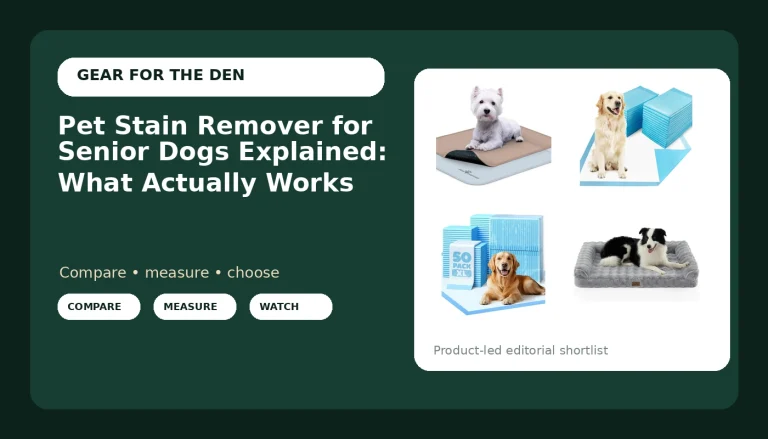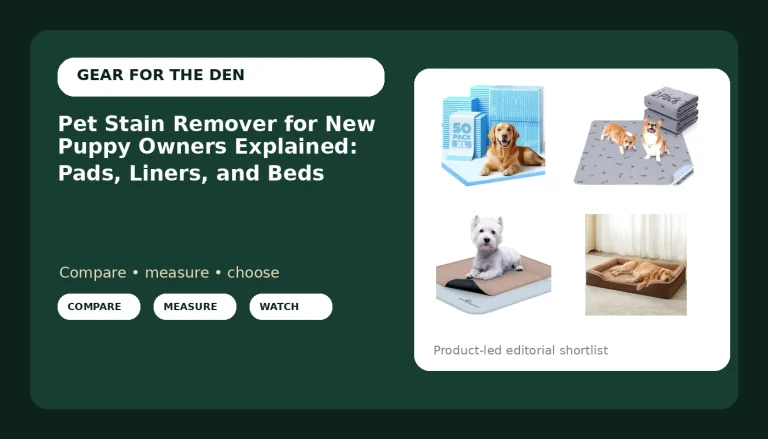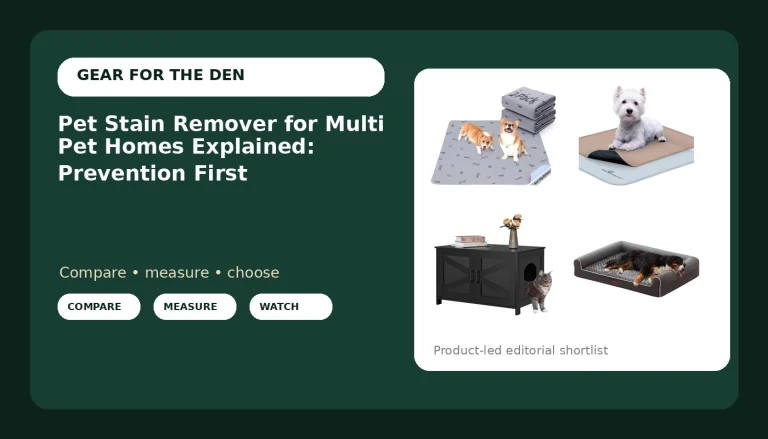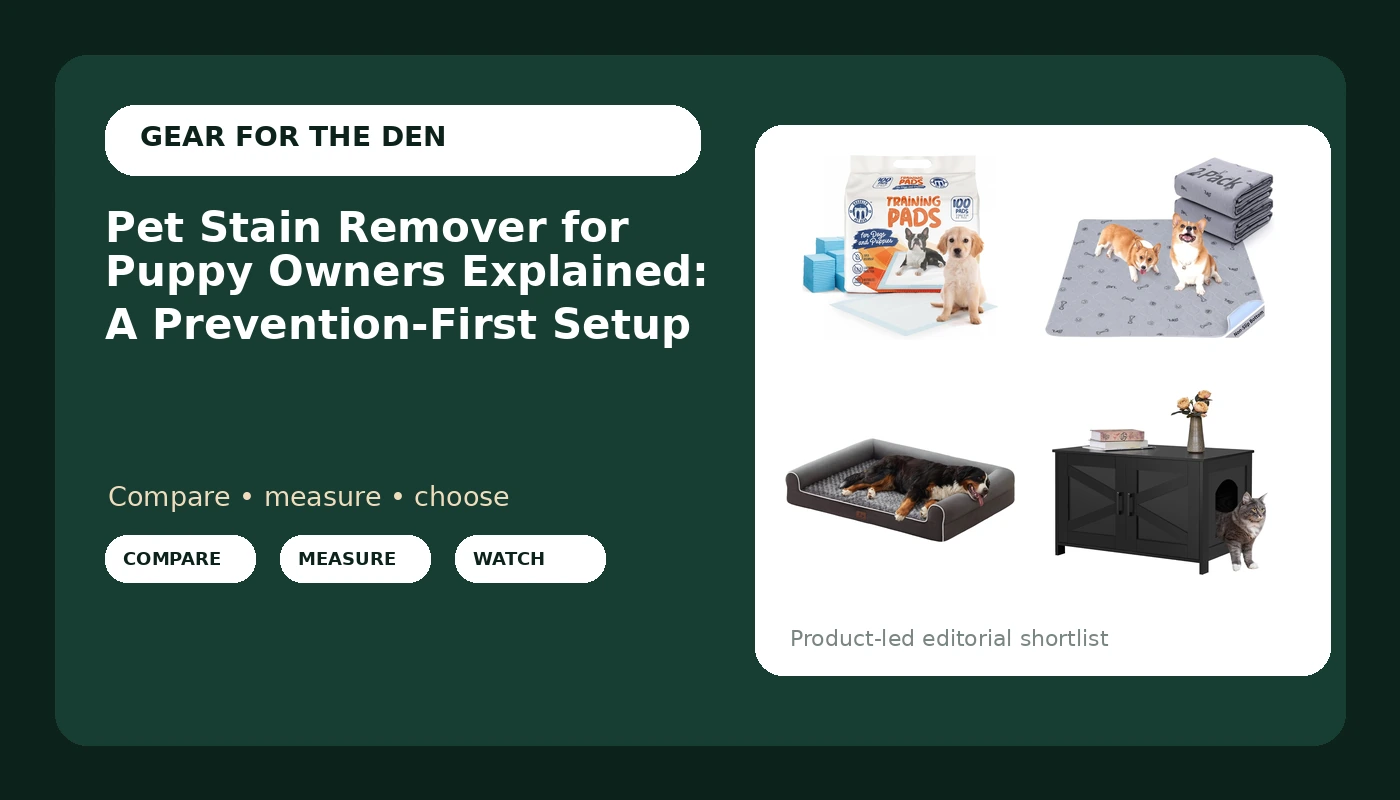
A new puppy turns a clean floor into a testing ground. Every puddle and pile leaves residue that soaks into carpet backing, grout, and upholstery, and the odor left behind is usually what draws the dog back to the same spot. Searching for a pet stain remover for puppy owners is the natural first move, but the bottle is the last step in a chain that starts with whatever sits between the puppy and the floor. The gear below is the part of that chain most new owners underbuy: absorbent pads for the accident zone, reusable pads for the daily routine, a washable bed that keeps accidents off upholstery, and containment for homes with more than one animal. Read it as pet stain remover for puppy owners explained in plain terms: control the source, protect the surface, then treat what is left.
Quick answer
Stain prevention is the cheaper half of stain removal. A workable puppy setup is a stack of absorbent disposable pads for the first weeks, reusable washable pads for the spots the puppy uses every day, a machine washable bed or cover that keeps accidents off fabric, and, in a multi-pet home, a contained potty or litter area that stops the mess from spreading. Any spot that still reaches carpet or upholstery gets treated with an enzyme product matched to that surface, then blotted rather than scrubbed.
Four useful options
| Model | Best fit | What stands out |
|---|---|---|
| BPG Ultra Absorbent Pet & Puppy Pads, 100 Count 22"x22" Pee Pads for Dogs, Disposable Leak Proof Dog Training Pads, Quick Drying Underpads, Puppy Essentials for House Training – Brooklyn Pet Gear | First weeks of house training | Disposable 100-count box; described as ultra absorbent, leak proof, and quick drying |
| Washable Pee Pads for Dogs, 2Pack Puppy Pads Washable with Bone Print,Absorbent Reusable Whelping Pads Non-Slip Dog Mats for Floor Protector, Couch Cover, Crate, Potty Training 31×36 | Daily accident zones | Two reusable 31 by 36 inch pads with a non-slip backing; machine washable |
| Warmrest Orthopedic Large Dog Bed,Washable Dog Couch for XL Senior Dogs | Large and senior dogs | Orthopedic couch-style bed with a washable cover, sized for XL dogs |
| Homhedy 31.5" L Cat Litter Box Enclosure with Barn Door, Black | Multi-pet homes | Enclosed 31.5 inch litter box cabinet with a barn door |
Accident-zone absorbency: BPG Ultra Absorbent Pet & Puppy Pads
Disposable pads earn their place in the first weeks because cleanup is one motion and the soiled pad leaves the house immediately. The trade-offs are ongoing cost, waste volume, and coverage limits: a 22 by 22 inch pad covers a single accident zone with little margin, so a puppy that moves before it finishes will still find the floor. Pad absorbency and pad size are the two specifications worth comparing, because a thin pad with a weak backing lets moisture wick to the edges and reach the carpet anyway. This is the option to buy in bulk for crate and pen coverage, then taper off as the puppy's schedule tightens.
Reusable coverage: Washable Pee Pads for Dogs, 2-Pack
Reusable pads change the cost structure from price per pad to price per wash, which favors them once the puppy has a predictable spot. The catch is maintenance. Liner waterproofing is the part that fails quietly: a backing that has stopped blocking moisture lets urine reach the floor while the top surface still looks and feels dry. Wash them on a normal cycle without fabric softener, check the backing every few washes, and keep a spare set in rotation so a wet pad never forces you back to the disposable box mid-week. Machine washable construction also matters for the next product, because a washable cover is the difference between a quick load of laundry and an upholstery cleaning bill.
Washable comfort for big dogs: Warmrest Orthopedic Large Dog Bed
Senior dogs and large breeds are where stain cleanup stops being a puppy problem. Older dogs leak, and a big dog that sleeps on the couch spreads whatever it is carrying across the whole cushion. A washable bed with an orthopedic build gives the dog a place it actually prefers, which is the only reliable way to keep it off the furniture. The limitation is size and laundering: a bed built for an XL dog takes up floor space and needs a machine large enough to handle the cover, so measure both the room and the washer before committing. Fabric safe cleaning still applies to the bed itself, since an enzyme product strong enough for carpet can dull or stain some upholstery fabrics.
Containment for multi-pet homes: Homhedy Cat Litter Box Enclosure
In a house with both a cat and a puppy, litter boxes are an underrated source of the mess you are trying to remove. A dog that raids the box spreads litter and waste across the floor, and tracked clay grinds into carpet fibers where a wet cleaner turns it into a paste. An enclosure does not clean anything, but it removes the easiest path to a much worse stain and gives the cat a quiet place to go. Check the interior dimensions against the box you already own, and remember that a closed cabinet concentrates odor, so pair it with a litter odor neutralizer and a scooping schedule rather than treating it as a sealed system.
Prices and availability may change. Product images, names, and retailer links are matched to verified listings. No current price, rating, stock status, or measured result is stated here without current evidence.
What pet stain remover for puppy owners actually has to do
There is no single ideal pet stain remover for puppy owners, because carpet, hardwood, grout, and upholstery each respond to different chemistry. What every surface shares is a two-part job: remove the visible residue, and remove the odor signal that tells the dog this is the bathroom.
The first part is mechanical. Urine and stool residue sits on the surface and in the fibers below it. Blotting lifts what is loose, while scrubbing pushes the rest deeper and can fray carpet backing. A pad placed under the puppy during the accident-prone weeks does the same job earlier, before the mess reaches the floor at all.
The second part is chemical. Enzyme concentration is the number that matters on a cleaner label, because enzymes break down the uric acid crystals that keep producing odor after the surface looks clean. A product that only masks smell with perfume leaves the marker in place, and the puppy keeps returning to it. Look for a formula that names the enzymes it uses and the surfaces it is rated for, since a carpet safe product is not automatically fabric safe, and a formula made for hardwood can leave a film on grout.
The correct pet stain remover for puppy owners is therefore a sequence, not a bottle: absorb first, neutralize the odor, then treat the fibers with something labeled for that surface. Owners who get the sequence right tend to use far less product, because most of the mess never reaches the material that needs treating.
Matching gear to the surface and the training stage
Gear choices follow the same logic. A puppy in its first two weeks needs volume and speed, which is why a 100-count box of disposable pads makes sense: pad size and pad absorbency are the two numbers that decide whether a puddle stays put, and a 22 by 22 inch pad covers one accident zone with little margin. Once the puppy has a routine, reusable pads replace most of the disposables, and the math shifts from cost per pad to cost per wash.
For pet stain remover for puppy owners, the stage of training matters as much as the surface. Early weeks are about coverage and fast removal. Middle weeks are about shrinking the pad footprint and moving the puppy toward the door. Late weeks are about protecting the furniture the puppy can now reach, which is where a washable bed or cover earns its place.
- Identify the surfaces at risk: carpet, area rug, hardwood, tile grout, upholstery, or a mattress.
- Match pad size to the accident zone, keeping a smaller pad in the crate and a larger one in the pen.
- Use disposable pads for the volume weeks and washable pads for the daily routine rather than choosing one or the other.
- Check cleaner labels for enzyme concentration and for a surface rating that matches where you will use it.
- Protect the furniture the puppy can reach with something machine washable, so one accident does not become an upholstery job.
Practical guidance that keeps the routine from falling apart
- Test any cleaner on a hidden corner of carpet or fabric before treating a visible spot, and let it dry fully before judging the result.
- Blot from the outside of the stain inward with a clean cloth, and change cloths often, since a dirty cloth spreads residue instead of lifting it.
- Check liner waterproofing on reusable pads every few washes, because a backing that has stopped blocking moisture lets urine reach the floor while the top still looks dry.
- Wash reusable pads and bed covers on a normal cycle without fabric softener, which coats fibers and reduces absorbency over time.
- Keep an odor neutralizer in the rotation even after a spot looks clean, and swap out a damp disposable pad instead of leaving it under the puppy.
Which option should you choose?
Choose the BPG Ultra Absorbent Pet & Puppy Pads when you are in the first weeks of house training and want cleanup to be a single motion in a crate or pen. Choose the Washable Pee Pads for Dogs two-pack when the puppy already uses a regular spot and you would rather run a load of laundry than rebuy pads every month. Choose the Warmrest Orthopedic Large Dog Bed when a large or senior dog spends hours on the floor and the couch is taking the damage. Choose the Homhedy Cat Litter Box Enclosure when a cat shares the house and scattered litter or spray is adding to the cleanup load.
None of these replaces a cleaner for stains that have already soaked in. A pad, a bed cover, and an enclosure change how much mess reaches the surface, but they do not pull residue out of carpet that is already saturated, and old stains may need repeat enzyme treatments over several days. No listing here includes a measured absorbency, coverage, or wash-durability figure, so treat manufacturer descriptions as claims rather than test results, and match any cleaner to the specific material you are treating.
The bottom line
Most puppy stain problems are coverage problems before they are chemistry problems. The four options above cover four jobs: disposable absorbency for the first weeks, reusable pads for the daily routine, a washable bed for the furniture, and containment in a multi-pet home. Get those in place, keep an enzyme product rated for each surface on hand, and the bottle of cleaner becomes the exception rather than the routine.