A raised dog bowl for heavy dogs is less about style than about geometry. A big dog that has to fold its neck down to the floor is eating in a posture its frame was not built for, and a stand that slides when a heavy dog leans into it turns every meal into a chase. The right setup matches three things to the dog: how high the rim sits, how much the bowl holds, and how firmly the whole station stays put.
The catch is that heavy and tall are not the same measurement. A 70 pound bulldog and a 110 pound Great Dane can need very different rim heights, and a dog that inhales its food needs a different bowl shape than one that simply needs the dish lifted off the floor. This raised dog bowl for heavy dogs explained guide works through the hardware that solves those problems, using four current products as concrete examples instead of generic advice.
Quick answer
For most heavy dogs, the answer is one elevated bowl on a stand that does not move, set so the rim lands around the lower chest instead of at the floor, with a bowl that holds a full meal. A raised dog bowl for heavy dogs fixes reach and stability. It does not slow a dog that bolts its food, and it does not protect the floor under a sloppy drinker. If your dog inhales meals, add a slow feed bowl. If your dog leaves a puddle behind, add a mat with raised edges. Those are three separate jobs, and the four options below split them cleanly. Buying one product and expecting it to cover all three is the most common way this purchase goes wrong.
Four useful options
| Model | Best fit | What stands out |
|---|---|---|
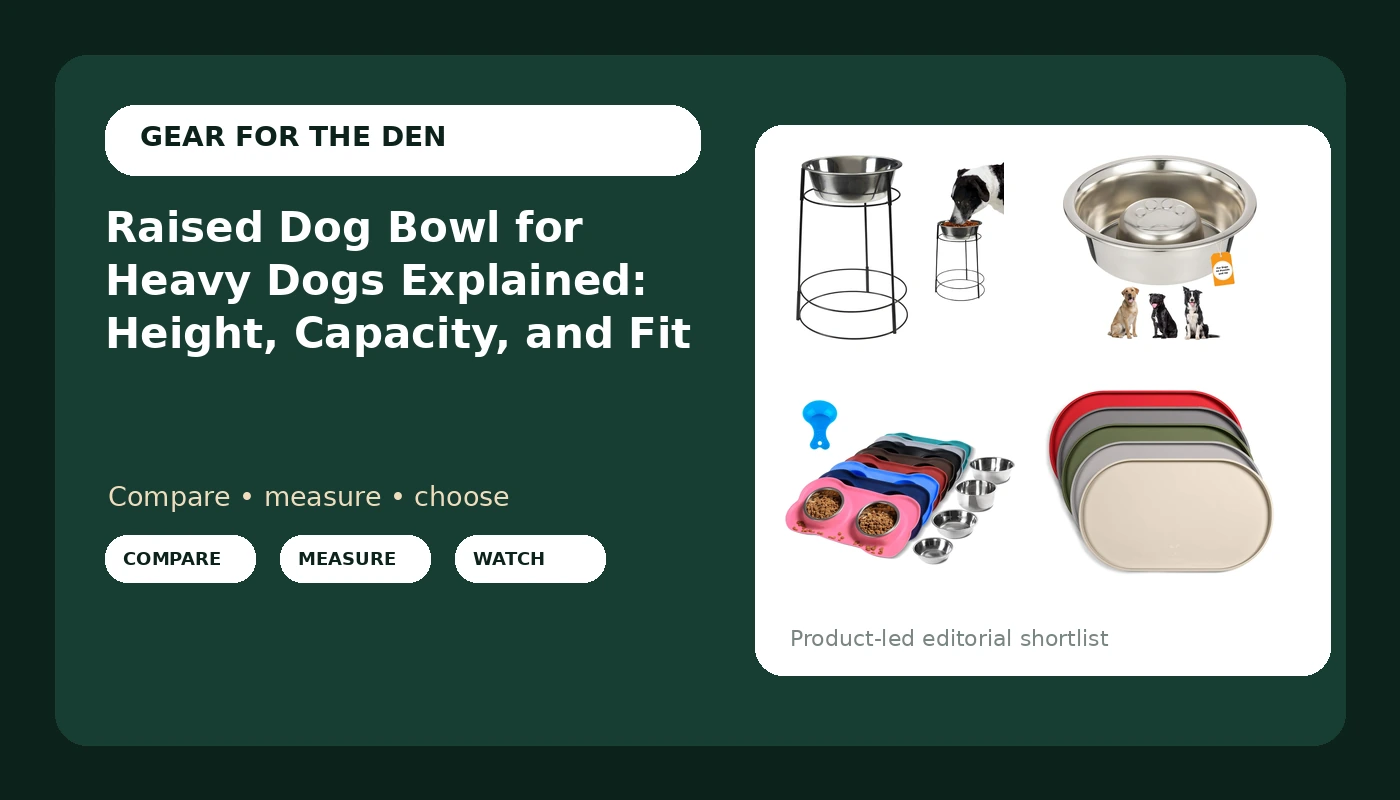
| SPOT Hi Rise Single Diner Elevated Dog Feeder, 2qt Stainless Steel Bowl | Tall and heavy dogs that need the dish lifted off the floor | A 2qt stainless bowl in a wire stand listed at 14.25 inches and aimed at medium and large breeds |
| Neater Pet Brands Stainless Steel Slow Feed Dog Bowl | Dogs over 40 lbs that eat too fast | Stainless slow feeder with a 3 cup food capacity, sized to fit large Neater feeders |
| Hubulk Pet Dog Bowls with No Spill Non-Skid Silicone Mat | A compact two-bowl station bought in one box | Two stainless bowls, a non-skid silicone mat, and a food scoop in a single set |
| DogBuddy Dog Food Mat | Protecting floors under a heavy dog's water bowl | Waterproof silicone mat with raised edges in a small size |
The elevated option: SPOT Hi Rise Single Diner Elevated Dog Feeder
A single-bowl stand is the most direct fix for reach, and it is the piece most owners picture when they start searching. This one pairs a 2 quart stainless steel bowl with a wire frame listed at 14.25 inches, which puts the rim well above floor level for a medium or large dog. The 2qt bowl is the useful part for a heavy dog, since it holds a full meal without a mid-meal refill, and stainless steel is the material most owners already prefer for odor and stain resistance. The trade-off is fixed geometry. The stand sets one height, it holds one bowl, and it does nothing about a dog that eats too fast. If you want food and water side by side, plan on a second station or a different design entirely.
The slow feed option: Neater Pet Brands Stainless Steel Slow Feed Dog Bowl
Slow feeding and elevated feeding solve different problems, and this bowl is aimed squarely at the first one. The slow feed ridges break a meal into small pockets, so a dog that normally finishes in under a minute has to work around the pattern to reach the food. The 3 cup food capacity is sized for dogs over 40 lbs, and because it is built to fit large Neater feeders, it can drop into an elevated base you already own rather than adding another stand to the floor. The trade-off is that it raises nothing on its own. It is a bowl, and without a stand behind it the dog still eats at floor level. It is also worth supervising the first few meals, since not every dog takes to eating around a maze of ridges.
The matched set option: Hubulk Pet Dog Bowls with No Spill Non-Skid Silicone Mat
If you would rather buy the whole floor setup at once, this set covers the basics without a stand. The mat is the piece that matters for a messy eater, since it gives both bowls a stable footprint and keeps them from wandering between meals. The bowls are stainless, which is the easy-to-clean choice for daily feeding, and the scoop is a small convenience rather than a portioning system. The honest limitation for a heavy dog is size: this listing is the small size in pink, so the bowls suit a smaller dog, a cat, or a secondary station better than they suit a 100 pound dog's full dinner. Check the bowl dimensions against your dog's actual meal size before you commit.
The floor protection option: DogBuddy Dog Food Mat
A mat does not raise anything, and it is not supposed to. Its job is the ring of floor around the bowls, which is where heavy drinkers do the most damage. This one is a waterproof silicone mat with raised edges, so spilled water and stray kibble sit on the mat instead of soaking into a hardwood seam or a rug. The non slip base keeps it from sliding when a dog noses the bowls around, and silicone wipes clean rather than absorbing odors the way some fabric mats can. It is listed in a small size, so measure your stand and both bowls before assuming it will catch everything. Pair it with a raised stand rather than instead of one.
Prices and availability may change. Product images, names, and retailer links are matched to verified listings. No current price, rating, stock status, or measured result is stated here without current evidence.
What a raised dog bowl for heavy dogs actually changes
Elevation is about the angle of the neck, not about luxury. When a tall dog eats from the floor, the front legs carry more of the load and the neck stays bent through the whole meal. Lifting the bowl to roughly chest height lets the neck sit closer to level, which is why owners of tall, senior, and heavy dogs often reach for a stand first. For a heavy dog there is a second benefit that has nothing to do with posture: a stand with a wide footprint and a bowl seated in a ring is harder to tip than a bowl sitting loose on tile, and a tipped bowl means a full meal on the floor.
There is a real caveat, and it deserves to be stated plainly. Research on elevated feeding and bloat in large, deep-chested breeds has been mixed over the years, and some guidance warns against raising bowls for dogs in high-risk groups. That is a conversation for your veterinarian, not a product page. A raised stand is a practical answer to reach and stability. It is not a medical treatment, and it is not automatically better for every heavy dog. If your dog has a diagnosed condition, the feeding position should come from your vet's instructions, and the gear should follow those instructions rather than lead them.
Measuring feeding height and bowl capacity before you buy
Start with the dog, not the shelf. Have the dog stand normally on the floor where the bowls will live, then measure from the floor to the point of the shoulder or the lower chest. Many owners use that number as the target rim height and adjust from there by watching the dog eat: the neck should stay close to level, with no hunching and no reaching up. Two inches of difference matters more than it sounds, especially for a dog with a deep chest and a short back. If the dog backs away, paws at the bowl, or coughs while eating, the height or the bowl is wrong for that dog.
Then size the bowl. Bowl capacity should cover one full meal with a little headroom, and water capacity should be enough that you are not refilling a heavy dog's bowl three times a day. Check whether the listing calls the bowl dishwasher safe, because hand washing a large stainless bowl twice a day gets old quickly. Look for a non slip base or a stand with a stable footprint, and if your dog gulps, look for slow feed ridges rather than a deeper bowl. Two features get mixed into bowl shopping but do not belong on this list: a filter cartridge belongs to a circulating water fountain, and an airtight seal belongs to a food storage bin. Neither one changes how a heavy dog reaches its dinner.
- Measure floor to lower chest with the dog standing, and treat that as your starting rim height.
- Pick a bowl capacity that holds one full meal, then check the water capacity you actually refill each day.
- Decide whether the dog needs elevation, slow feeding, or both, since they are separate purchases.
- Check the stand or mat footprint against the space and confirm a non slip base or a stable frame.
- Watch the first few meals and adjust height or bowl choice if the dog hunches, gulps, or pushes the station around.
Practical guidance for a heavy dog's feeding station
- Put the stand in a corner or against a wall; a heavy dog leaning sideways is what tips a stand, not the bowl itself.
- Give the water bowl a mat with raised edges, and check the mat size against the stand footprint.
- Wash stainless bowls often, and use the dishwasher only when the listing says the bowl is dishwasher safe.
- Keep water capacity generous; a large dog drinks more than most owners expect, especially in warm weather.
- If you add a slow feed bowl, supervise the first meals and switch back if the dog gets frustrated or eats less.
- Mention any coughing, regurgitation, or obvious discomfort around meals to your vet instead of adjusting gear to work around it.
Which option should you choose?
Choose the SPOT Hi Rise Single Diner Elevated Dog Feeder when your main problem is reach and you want one large stainless bowl at a fixed height. Choose the Neater Pet Brands Stainless Steel Slow Feed Dog Bowl when the dog eats too fast and you either own a large Neater feeder or plan to add a stand. Choose the Hubulk Pet Dog Bowls with No Spill Non-Skid Silicone Mat when you want a compact two-bowl station with a mat and scoop in one box, and the small bowl size suits your dog. Choose the DogBuddy Dog Food Mat when the floor is the thing you are trying to save and you already have bowls you like.
There is no single ideal raised dog bowl for heavy dogs, because the correct raised dog bowl for heavy dogs depends on which of those three problems your dog actually has. Nothing in these listings states a measured posture outcome, a verified height recommendation, or a tested anti-tipping result, so treat the numbers here as product specifications and use your own dog's measurements to decide. For more on feeding large dogs well, see our guide to elevated feeding stations for large dogs.
The bottom line
Elevation, slow feeding, and floor protection are three separate jobs, and heavy dogs often need two of them. Start by measuring your dog rather than guessing at a height, pick a bowl capacity that covers a full meal, and put a stable stand or mat under whatever you choose. The SPOT diner handles reach with a 2qt stainless bowl and a wire stand, the Neater slow feeder handles speed for dogs over 40 lbs, the Hubulk set covers a compact two-bowl station with a mat, and the DogBuddy mat handles the floor. Buy for the problem in front of you, and ask your vet about anything that looks like a health issue rather than a gear issue.