I have spent more evenings than I care to admit on my hands and knees with a towel, cleaning up after two dogs who treat a water bowl like a splash toy. One is a 90 pound shepherd mix who leaves a small lake behind him every time he lifts his head. The other is a terrier who digs in the water for fun. That is the experience I bring to the raised dog bowl vs no spill dog bowl question, and it is why I care about unglamorous details like bowl capacity, feeding height, and whether the base actually grips a hardwood floor.
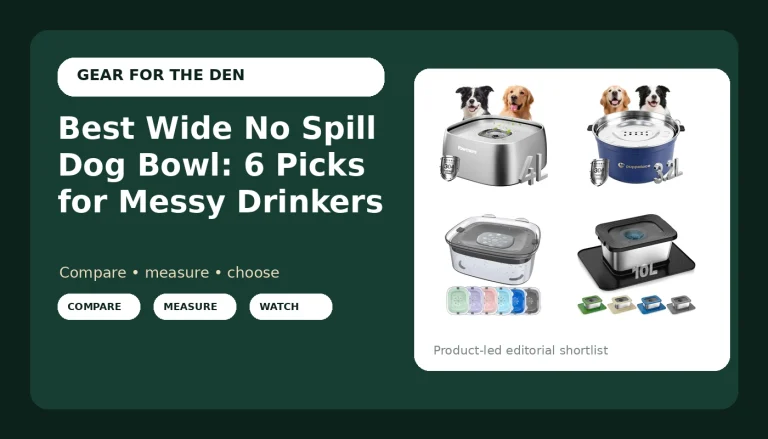
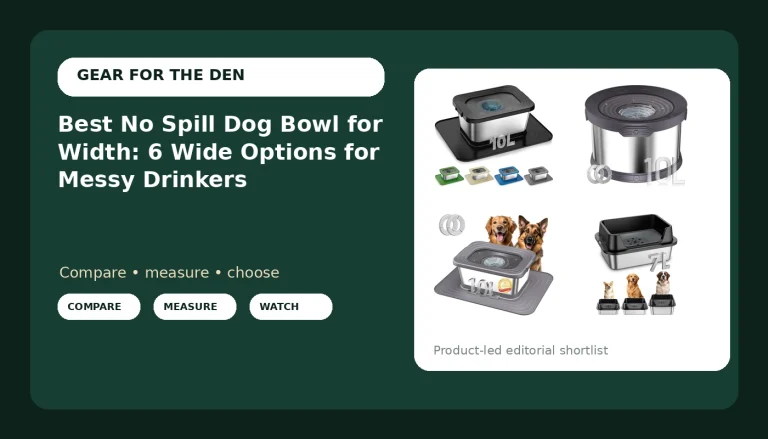
The short version: if the problem is water on your floor, buy a large no spill bowl with a floating disk. If the problem is how your dog stands while he eats, buy an elevated feeding station. Those are two different jobs, and none of the four products below does both perfectly.
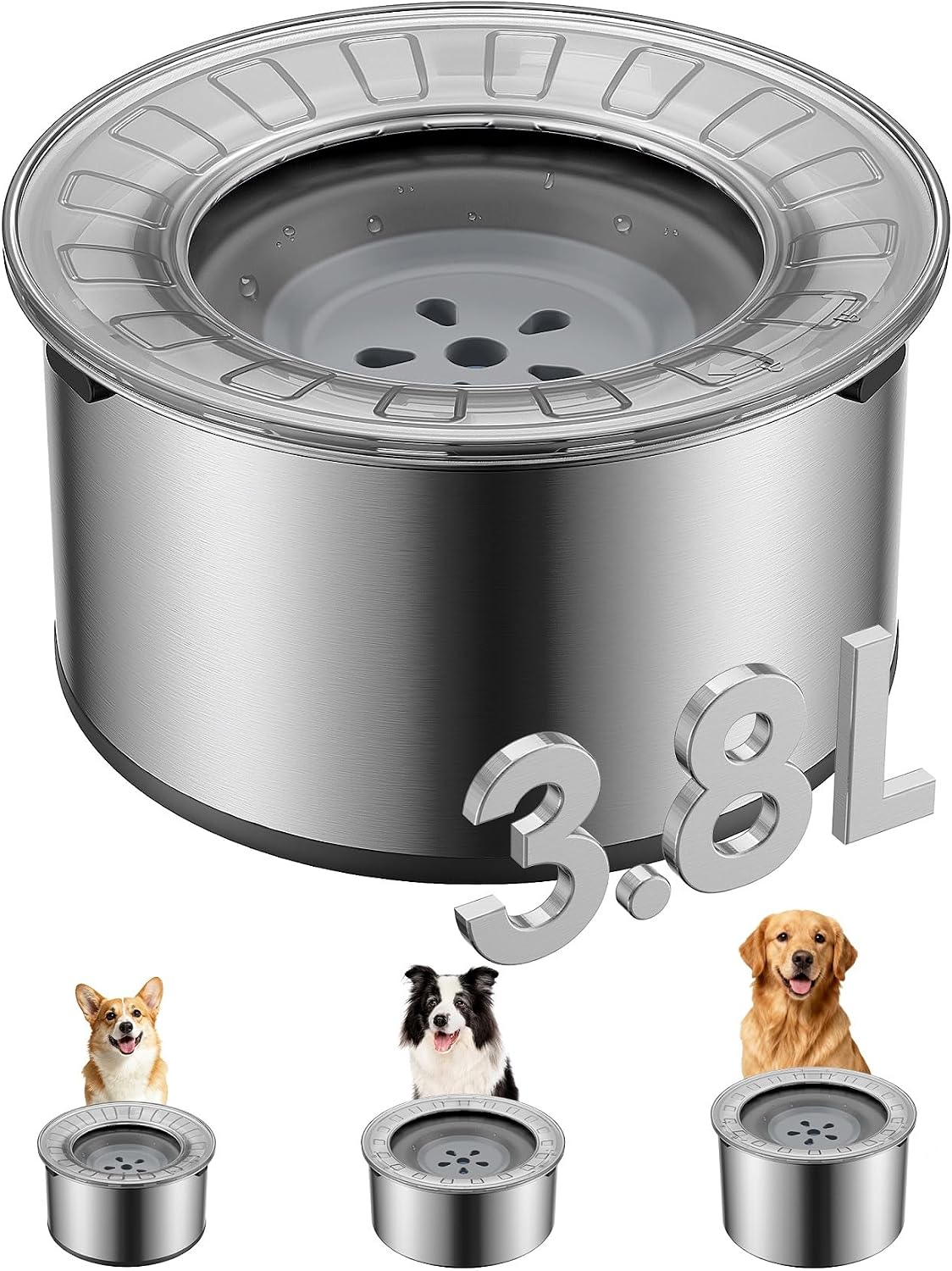
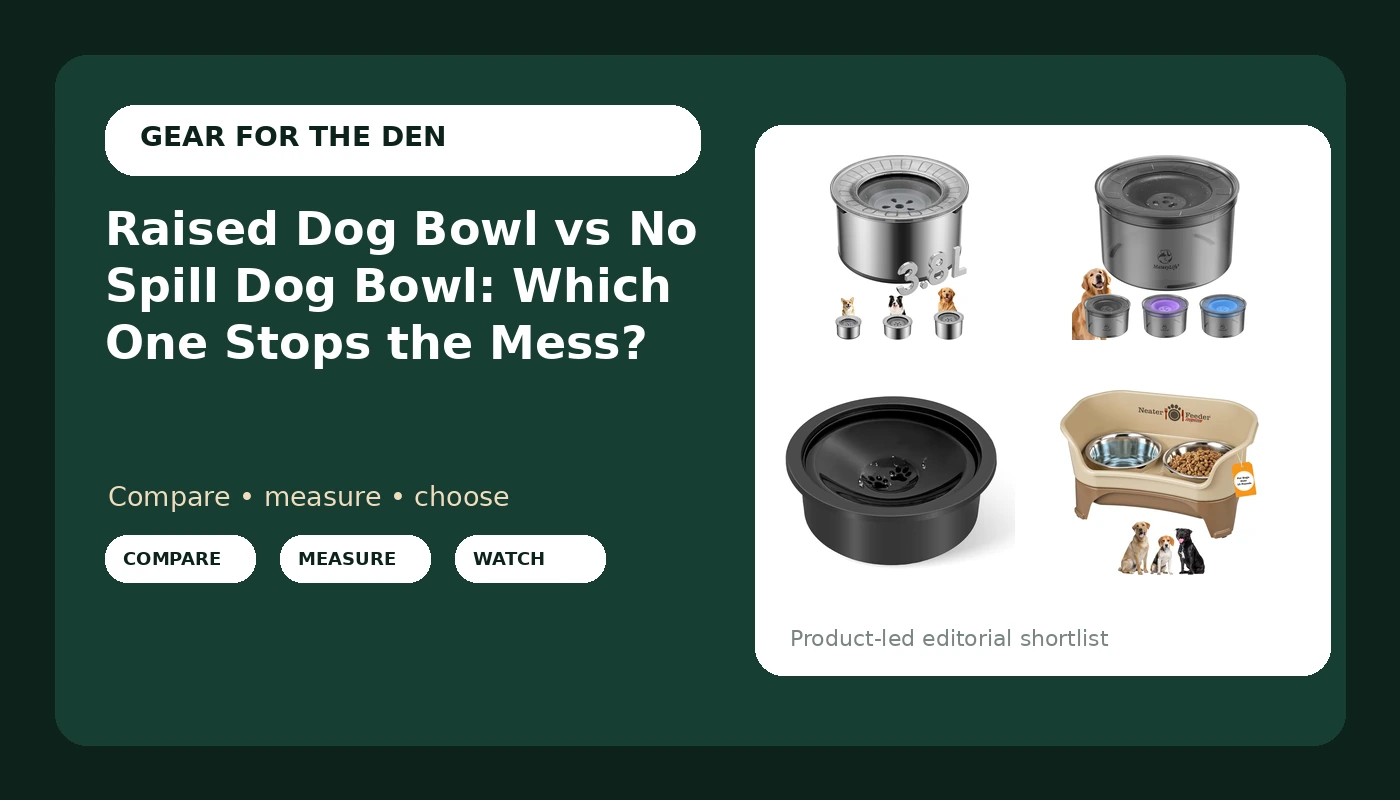
Heouvo 1 Gallon No Spill Dog Water Bowl with Slow Drink Floating Disk (Gray)
A full gallon plus a floating disk, so it covers a large dog and still slows the gulp
Big footprint, and the disk adds one more part to wash
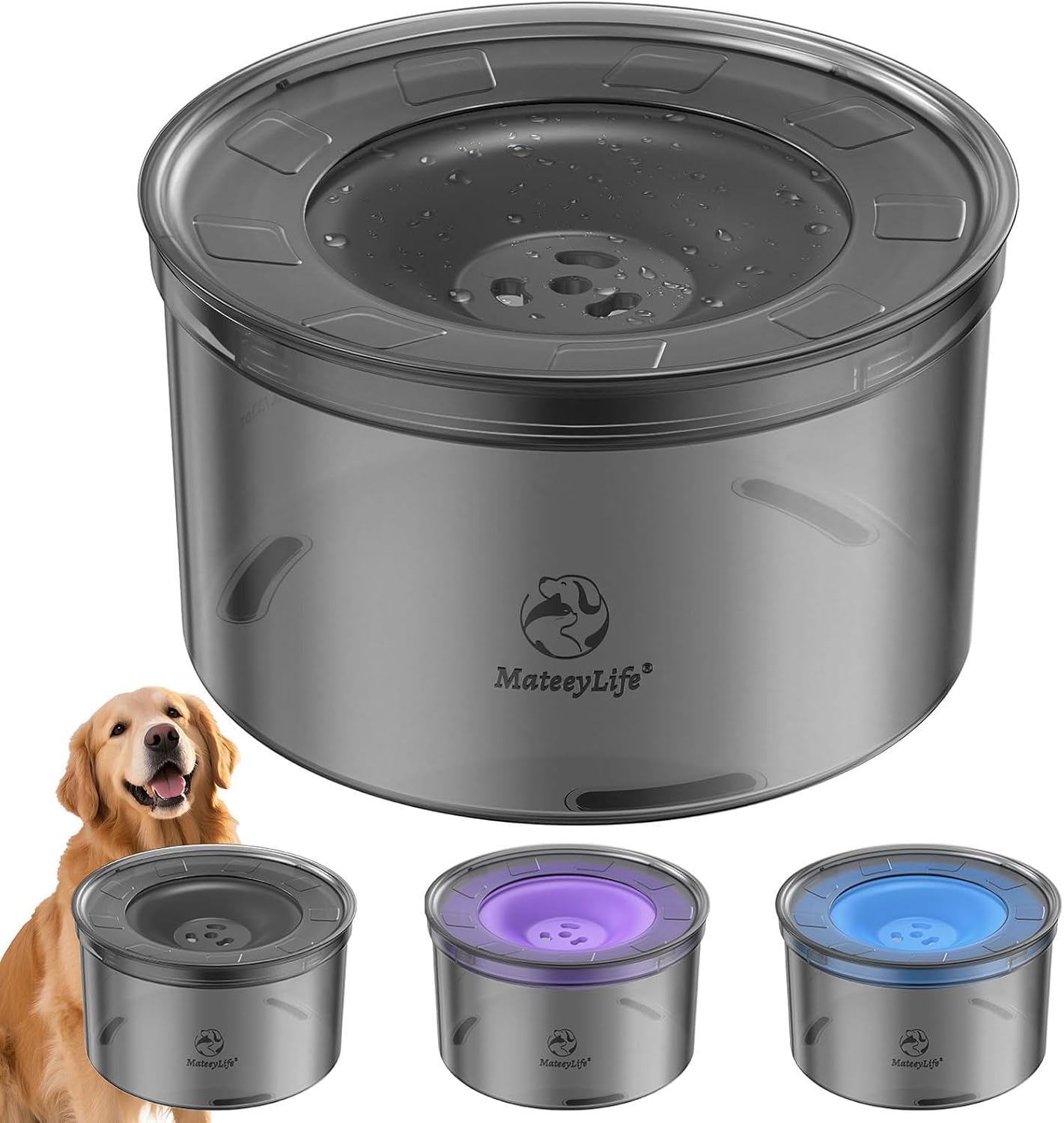
MateeyLife 1 Gallon Dog Water Bowl No Spill 3.8L Large Capacity Slow Feeder
Same gallon of water, framed as a slow feeder, and the cheapest of the large bowls
Less detail about splash control than a floating disk design
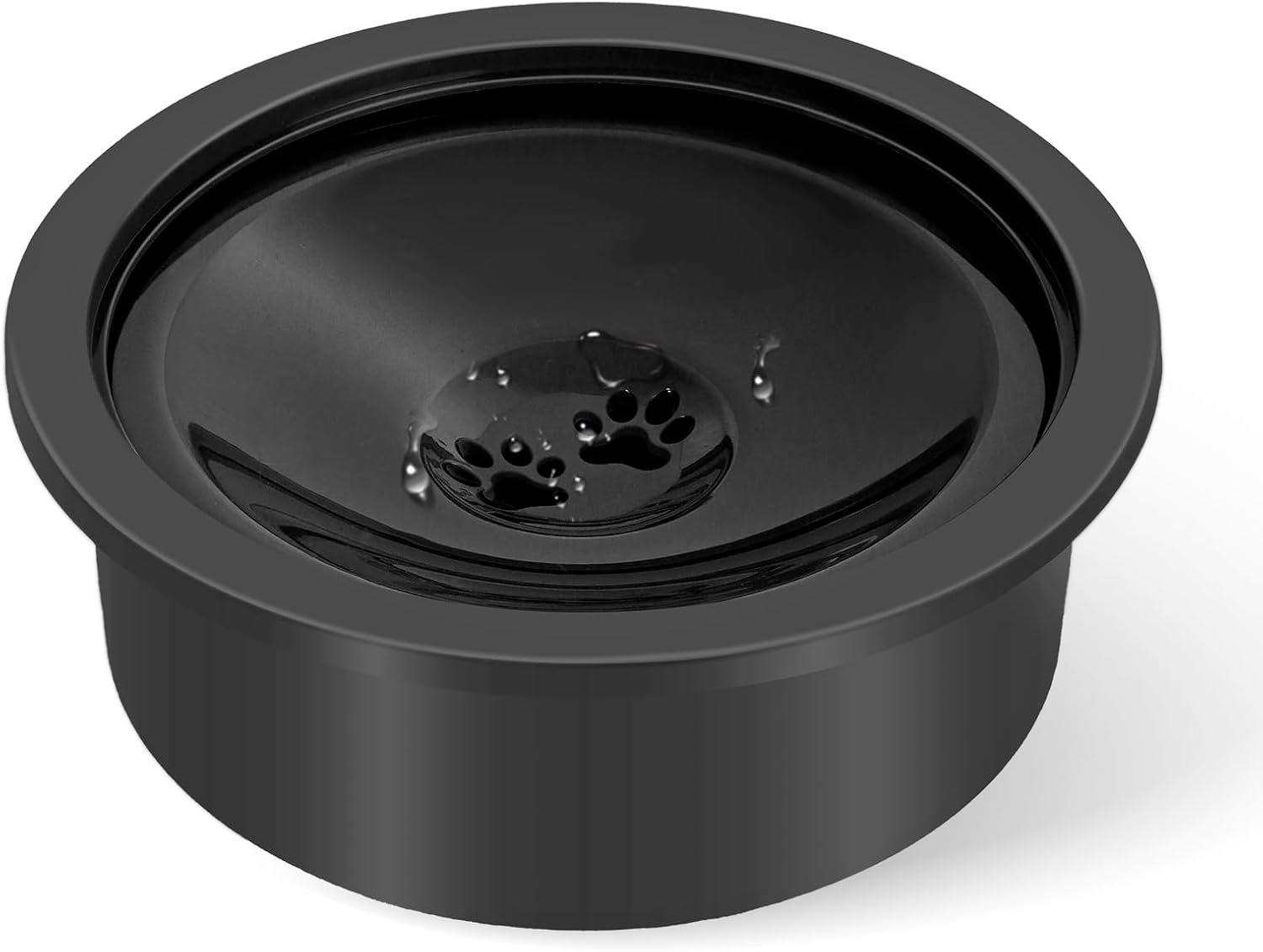
No Spill Water Bowl for Dogs, 30oz Slow Drinking Dog Slobber Stopper, Non Spilling Messy Splash or Drip
Small, cheap, and aimed squarely at slobber and drip
30 ounces is a twice a day refill for a big dog
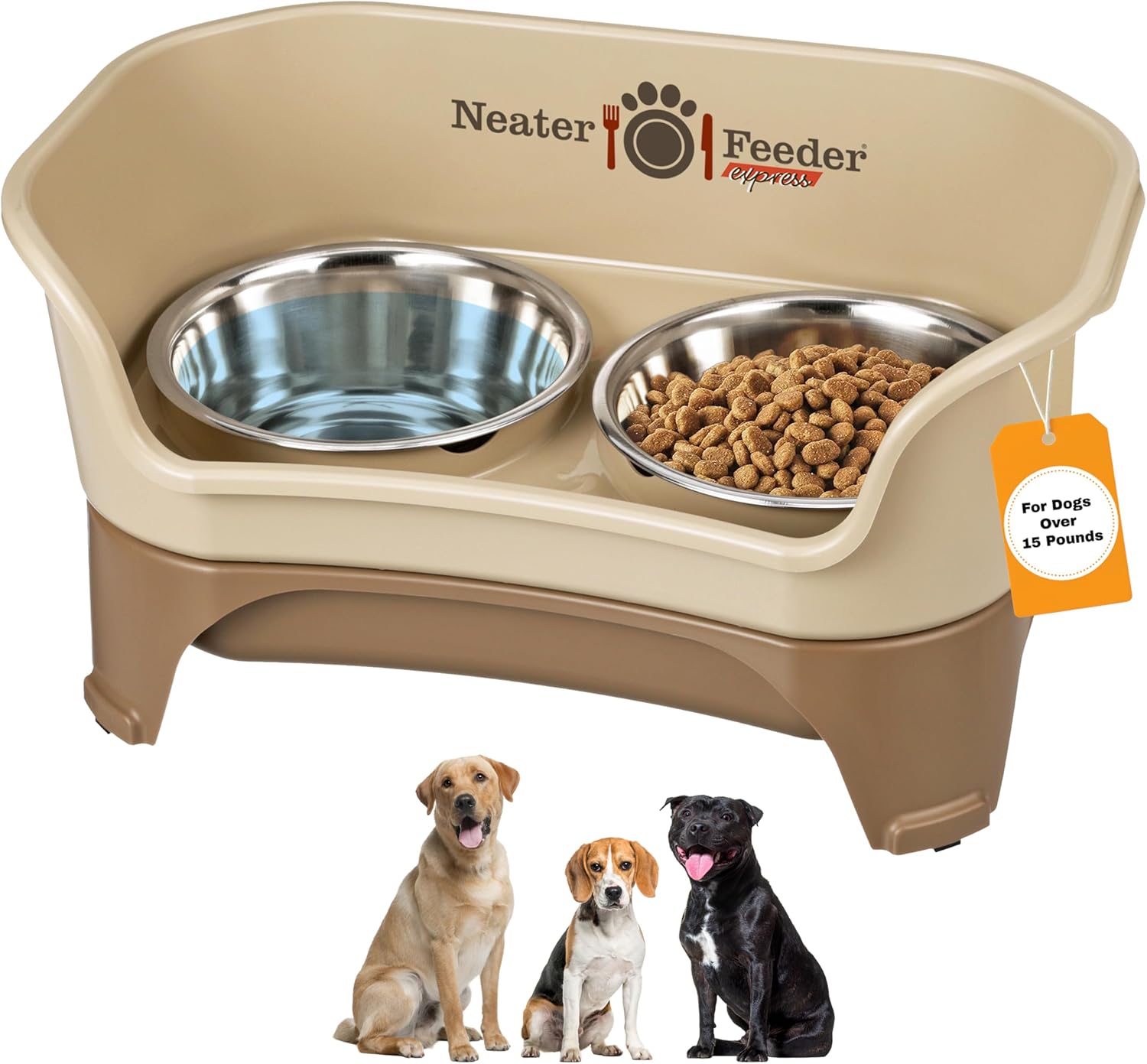
Neater Feeder Express Mess Proof Dog Bowls Elevated for Medium to Large Sized Breed, Stainless Steel Food and Water Bowl Set, Cappuccino
Elevated stand with a stainless food and water set, and it catches mess a flat bowl cannot
Highest cost here, and it will not slow a fast drinker
Prices and availability may change.
How I judge dog feeding gear
Every bowl in my house gets judged on the same five things, and none of them are the adjectives on the box.
First, what problem does it solve? A bowl that stops splash and a bowl that raises food off the floor answer different questions. Second, how much does it hold? A 30 ounce bowl and a 1 gallon bowl are not interchangeable in a house with a large dog. Third, how stable is it? A wide non slip base matters more than a pretty finish when a big dog leans into his water. Fourth, what happens to the mess that already occurred? A raised station with a rim and a catch area does something a flat bowl simply cannot do. Fifth, how miserable is it to clean? If a bowl is not dishwasher safe and has narrow crevices, it will sit in the sink for a week.
I also pay attention to what a listing does not say. If a product page talks about splash control and never mentions capacity, that tells me something. If it mentions a floating disk and never explains how the disk comes apart for washing, that tells me something too. The gap between the features a brand lists and the features you actually need is usually where disappointment lives.
There is a sixth thing, and it is the one that decides most purchases: does the dog accept it? Some dogs drink from a floating disk like they were born doing it. Others spend a week trying to flip the bowl. No spec sheet predicts that, and no review can tell you, because your dog is not the reviewer's dog.
What the raised dog bowl vs no spill dog bowl debate actually comes down to
The difference between raised dog bowl and no spill dog bowl is mostly about which half of the meal you are trying to fix.
A raised bowl, sometimes sold as an elevated bowl or a feeding station, lifts food and water to a height that suits your dog's body. The point is posture. A tall dog should not have to fold his neck down to the floor for every bite, and a dog with a long back or stiff joints often does better when the bowl meets him partway down. Raised setups usually include a base, a rim, or a catch tray, which is why brands call them mess proof. They catch the kibble a dog drops and the water he dribbles, but they do not stop a dog from splashing while he drinks.
A no spill bowl attacks the drinking problem directly. Most of them use a floating disk or a baffle that rests on the surface of the water. The dog presses the disk down with his tongue to drink, and it floats back up when he stops. That cuts the splash a dog makes when he pulls his head out, and it slows a dog who gulps. Some add slow feed ridges or a slobber stopper around the rim to catch the drips on the way out.
If you have been searching no spill dog bowl vs raised dog bowl, the honest answer is that these are two different tools. One changes where the bowl sits. The other changes what happens at the surface of the water. Plenty of homes need both, and no single product below does a perfect job of each.
Raised and elevated bowls: what feeding height changes
The Neater Feeder Express Mess Proof Dog Bowls Elevated is the only product in this group that is a complete feeding station instead of a single water bowl. It pairs a stainless steel food and water bowl set with a raised stand, it is sized for medium to large breeds, and it is finished in cappuccino rather than the usual stainless and black.
That combination is the reason it costs more than the water bowls here. You are buying the stand and the bowls together, and you are buying a design built around the mess a big dog makes. The raised stand puts the water at a height a large dog can reach without crouching, and the station format is what contains the overflow that a bowl sitting directly on the floor just spreads around. If your dog is the type who walks away from the bowl with a dripping muzzle and then shakes, this is the style that keeps the damage in one place instead of across three rooms.
The trade-off is that elevation does not fix a fast drinker. A raised bowl is still an open bowl. If your dog laps water like he is trying to beat a clock, the water still moves, and a stand will not slow him down at all. It changes his posture, not his technique. Visit on Amazon to see how the current listing describes the setup.
One more thing worth saying about feeding height: it is not automatically better for every dog. A short legged breed does not need a raised station, and a dog who is comfortable on the floor does not gain anything from elevation except a taller thing to knock over. Raised bowls are a fix for a specific problem, the same way a floating disk is.
No spill bowls: floating disks, splash, and slow feed ridges
The Heouvo 1 Gallon No Spill Dog Water Bowl is the middle of the road option among the drinkers here. A full gallon of water capacity is enough for a large dog for a day, and the slow drink floating disk is the same basic mechanism used across this category: the dog pushes the disk down to reach water, and the disk rises back to cover the surface when he stops. The gray finish hides water spots better than a bright stainless bowl, which is a small thing that matters more than it sounds when the bowl lives in a hallway.
The MateeyLife 1 Gallon Dog Water Bowl takes a slightly different angle on the same idea. It is also a full gallon, described as 3.8 liters, and it is marketed as a large capacity slow feeder. In practice that means the bowl is built to make a gulper work a little harder for each mouthful rather than letting him take one long pull. For a dog who drinks too fast and then brings it back up, that is the more useful feature of the two.
The third option, the No Spill Water Bowl for Dogs with the 30 ounce capacity, is the smallest and the cheapest of the three drinkers. It is aimed at slobber, splash, and drip rather than at capacity, and the listing describes it as a slow drinking bowl with a slobber stopper. Thirty ounces is fine for a small dog or a cat, and it is fine as a second bowl in a bedroom or next to a crate. For a 90 pound shepherd it is a refill twice a day, which is the whole argument against buying small when you have big.
All three rely on the same physics. Water that is covered moves less than water that is open, and water a dog has to work for moves less than water he can attack. The floating disk and the slow feeder approach are two versions of that same idea, and the slow feed ridges you see on some models are a third.
Capacity, seals, and cleaning
Capacity is the spec that decides whether a bowl fits your dog, and it is also the spec most people get wrong. One gallon is roughly 128 ounces. That is the difference between filling a bowl once a day and filling it before work and again after. If more than one dog shares a station, capacity matters even more, because the second dog always arrives after the first one has already disturbed the surface.
Then there is everything around the edges. A non slip base is not glamorous, but it is the difference between a bowl that stays put and a bowl that slides across the kitchen when a dog nudges it. Dishwasher safe parts matter if you have ever scrubbed a water bowl with a bottle brush because the opening was too narrow for your hand. And a floating disk that does not come apart is a floating disk that grows a film you cannot see and cannot reach.
Two features you will see advertised on other bowls, and on none of these four: a filter cartridge and an airtight seal. A filter cartridge is common on circulating fountains rather than on standing bowls, and an airtight seal shows up mostly on travel and crate bowls. If either one is on your must have list, none of the products here is the right answer, and that is worth knowing before you order.
Cleaning is where the raised station earns its keep, by the way. A catch tray and a stainless bowl set rinse fast, and the food bowl comes out of the stand entirely. That is a real advantage over a one piece design you have to carry to the sink whole.
What the specs say
Stripped down, the raised dog bowl vs no spill dog bowl choice looks like this. Three of the four products are water bowls built around splash control: one gallon from Heouvo, one gallon from MateeyLife, and 30 ounces from the slobber stopper bowl. One is a feeding station: the Neater Feeder Express, with an elevated stand and a stainless food and water set for medium to large dogs.
If you rank them by how much water they hold, the two gallon bowls win. If you rank them by how much mess they prevent in total, the elevated station wins, because it is the only one dealing with food as well as water. If you rank them by footprint and by cost, the 30 ounce bowl wins and the station loses. None of that is a measurement I can hand you in grams or decibels. It is what the listings promise, sorted by the problem each one solves.
The one number that matters most is not on any of these pages. It is how much your dog drinks in a day. Watch that for a week and the capacity question answers itself.
Should you buy the cheap bowl first?
Yes, if you are not sure your dog will tolerate a floating disk. Some dogs take to it in a day. Some spend a week trying to flip the bowl over. The 30 ounce bowl is the lowest risk way to find out, because you are not committing to a gallon of water and a large footprint before you know whether the mechanism works for your dog.
If you already know your dog drinks like a machine and you have a big breed, skip the experiment and go straight to a gallon. Refilling a small bowl twice a day for a large dog gets old fast, and a bowl that is too small for the dog is the bowl that gets knocked over.
And if your actual complaint is not water at all, if it is the ring of kibble and drool around the food bowl and the wet trail your dog leaves across the kitchen, then the answer is the elevated station. That is the one product here built around the whole meal rather than just the drink.
What I'm testing next
Two things are on my list for the colder months. The first is a raised stand paired with a no spill water bowl, because I want to know whether combining the two actually solves both problems or just doubles the cleaning. The second is a wider, heavier bowl for the yard, where wind and mud do more damage than any dog.
I will also be watching how the floating disks hold up over a winter of daily washing, since that is the part of this design that tends to fail first in most homes. If a disk warps or stops floating, the bowl becomes an ordinary bowl with an extra piece to clean.
If you are still deciding between a raised dog bowl or no spill dog bowl, start with the mess you have right now rather than the one you are worried about. Water on the floor points to a no spill bowl. A dog who eats in an awkward position points to a raised stand. The homes that end up happy are the ones that bought for the problem in front of them.