Most reptile heating advice starts with a wattage chart, and that is the wrong place to start. You are not really buying a lamp. You are building a temperature gradient and then defending it against a cold room, a warm afternoon, and a thermostat that drifts while you are at work. Get the gradient right and everything else in the enclosure gets easier: appetite, digestion, shedding, and how much the animal actually moves.
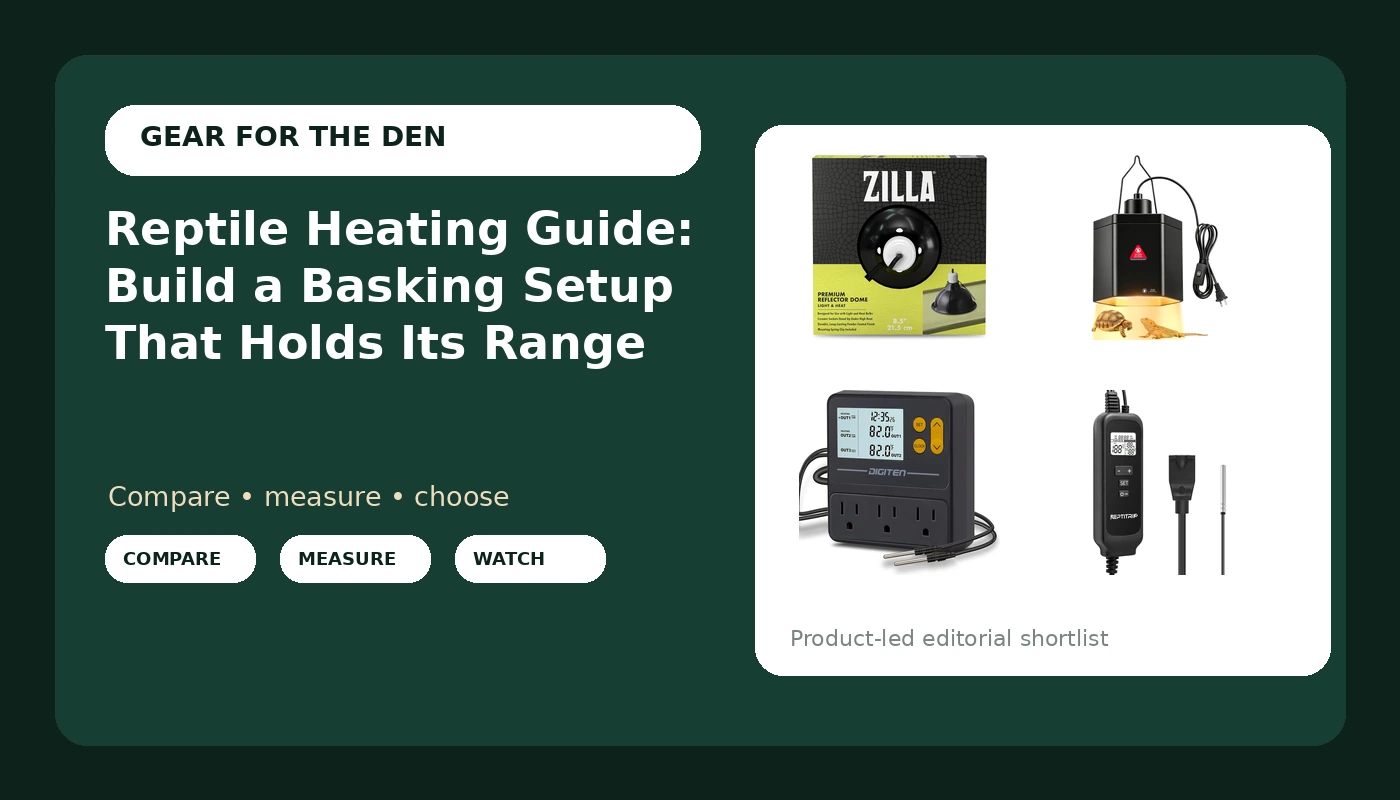
This reptile heating guide covers the four pieces of gear that do most of the work in a typical setup: two reflector fixtures, one day and night controller, and one dimming thermostat. The order matters. Fixture first, because it shapes the beam. Control second, because it keeps the beam honest. Everything else is decoration.
Best Overall: Zilla Premium Reflector Dome Reptile Heat Lamp Fixture, 8.5 Inches
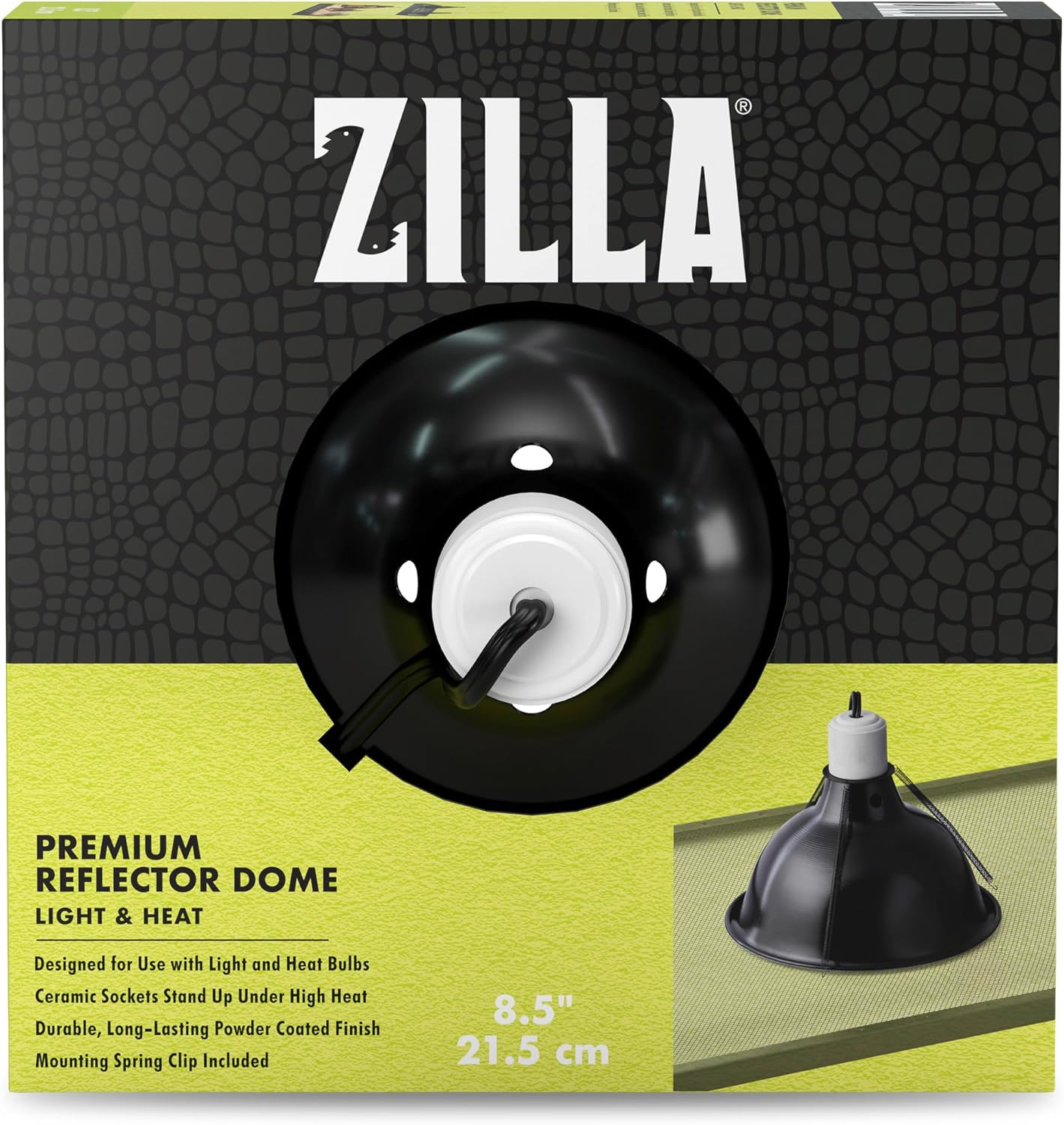
If you are heating one basking spot through a screen top, this is the fixture to build around. An 8.5 inch reflector dome does the thing cheap clamp lamps do not: it aims heat down instead of spraying it sideways into the glass. That matters more than wattage. A focused beam gives you a real basking spot and a real cool end, and the gradient between them is the entire point of reptile heating.
The dome is built around a screw-in heat source, so you can run a basking bulb through the day and swap to a ceramic heat emitter for night heat without buying a second fixture. Look for a ceramic socket and a metal reflector when you buy any dome. Plastic housings and plastic sockets cook themselves over a few months of daily use, and a socket that has gone brittle is a fire risk, not a warranty claim.
Where it earns the top spot is depth. A deep dome sits the bulb farther from the screen, which spreads the beam slightly and stops the hot spot from becoming a coin sized dot that only one toe can reach. In a 40 gallon breeder, a 100W bulb behind a dimming thermostat has enough headroom to hold a mid 90s basking temperature without running flat out all day.
The knock is that it is a fixture, not a system. You still need a stand, a clamp, or a hook, and you still need a thermostat. If you mount it inside the enclosure, use a guard, because a bare bulb plus a climbing reptile is a burn waiting to happen. And check the screen top: fine mesh eats uvb output and slows heat transfer, so a fixture that runs hot on an open tank can read low under mesh.
Best Value: 5.9" Reptile Heat Lamp Fixture, 150W Hexagonal Reflector with Hook
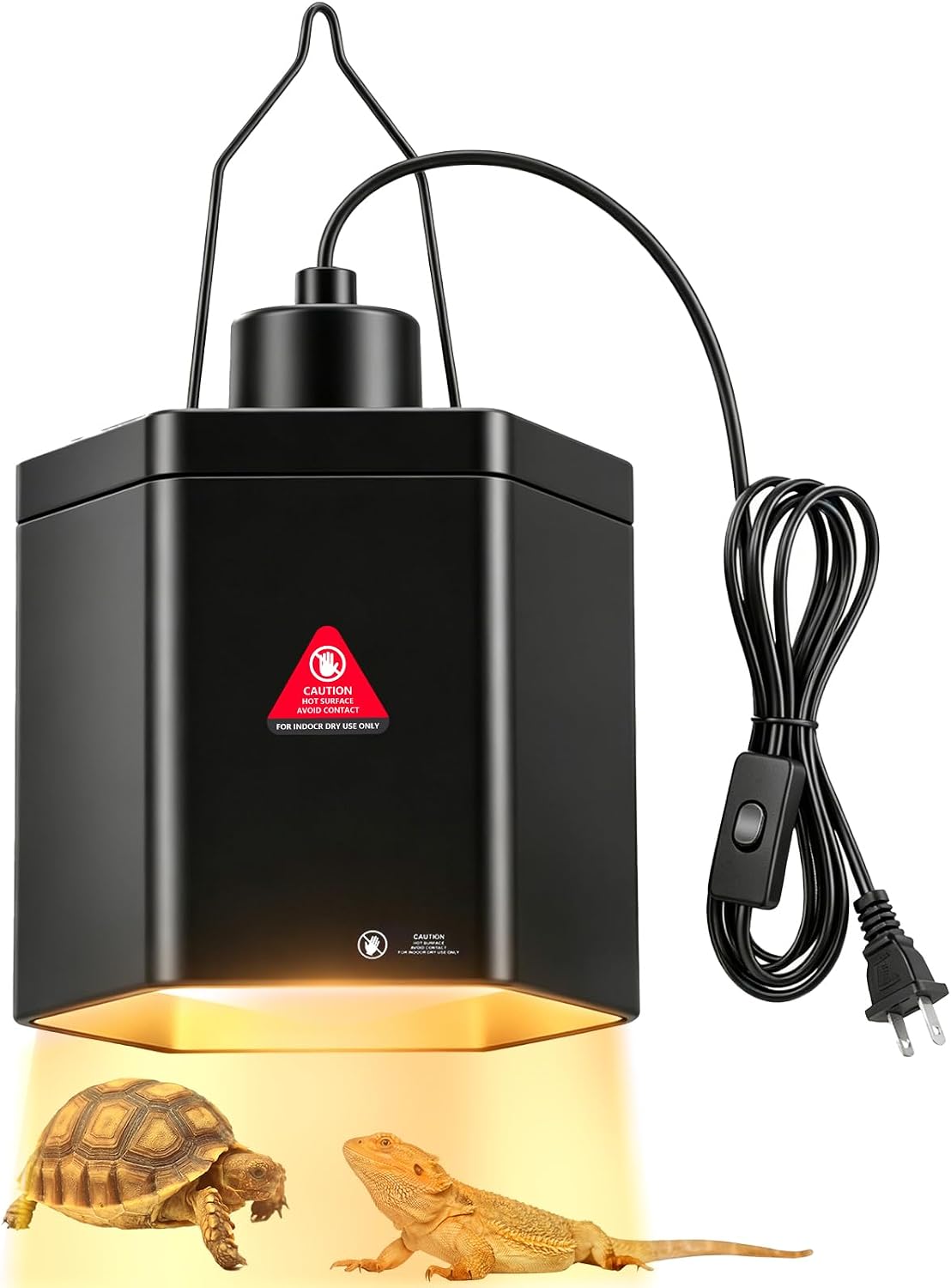
Small, simple, and rated to 150W, this is the fixture for a hatchling tank, a quarantine bin, or a hospital setup you keep folded in a closet. The hook is the useful part. It lets you hang the fixture from a screen frame or a shelf edge instead of clamping it to the rim of a glass tank, which is where cheap clamps eventually let go at two in the morning.
The trade off is reflector size. At 5.9 inches it throws a tighter beam than the Zilla dome, so the hot spot is smaller and the drop to the cool end is steeper. In a 20 gallon long or a plastic bin, that is exactly what you want. In a 4x2x2 adult enclosure you will spend the evening sliding it around trying to cover the floor, and you will still have a cold corner.
Because it is a fixture only, the control is on you. A 150W bulb on a dimming thermostat is easy to dial in. The same bulb on an on/off thermostat swings several degrees as it cycles, and in a small enclosure the animal feels every one of those swings. If you are buying this as a spare, buy the dimming thermostat with it.
How I tested
There is nothing glamorous about correct reptile heating: same three checks, same way, every time the seasons change.
The probe check. A digital probe thermometer sits on the surface directly under the beam, not taped to the back glass and not clipped to the rim where it reads air instead of rock. The gun check. An infrared thermometer sweeps the basking rock, the tile, or the branch, plus the cool end and the inside of the warm hide. The clock check. The thermostat gets watched through a full day and a full night, because a setup that holds its number at noon can fall apart at 3 a.m. when the house drops ten degrees.
Then the same gear gets moved around: a bigger tank, a smaller tank, a screen top, a solid top, a bulb swap, a ceramic heat emitter swap. What I am looking for is not the number on the thermostat display. It is whether the basking temperature, the cool end, and the humidity range stay where they should when the room changes around them.
Anything that needs babysitting fails. A controller that has to be reset after every power blip, a fixture that runs hot at the plug, a dimmer that buzzes loudly enough to annoy you at night: all of it goes in the reject pile.
Analysis and test results
What ideal reptile heating looks like is a range, not a number. A basking spot that reads right while the cool end sits five degrees under the room temperature is not a gradient, it is a hot box. The fixture shapes the beam, the thermostat holds the beam, and the enclosure decides how much of that beam actually reaches the animal.
Dome size is the variable most keepers underrate. Deep domes and wide reflectors spread heat. Small hexagonal reflectors concentrate it. Neither is better on its own. A wide beam suits a large enclosure with a big basking platform, and a narrow beam suits a small tank where you cannot afford to heat the whole lid. The mistake is buying a narrow fixture for a big tank and then cranking the wattage to compensate, which cooks the hot spot and leaves the rest of the floor cold.
Dimming versus on/off is the second split. An on/off thermostat is a switch. It cuts power, waits for the temperature to fall, then fires again. That is fine for a heat mat under a heavy layer of substrate, because the mass smooths the cycle out. It is not fine for a ceramic heat emitter over a screen top, where the heat is instant and the swing is instant with it. Dimming control trims power instead of cutting it, which is why it holds a tighter thermostat range on the same bulb.
Placement matters as much as gear. Substrate depth changes how a heat mat behaves: an inch of loose substrate over the mat is a barrier, and the same mat under a thin tile is a contact heater. Hide size changes it too, because a hide that is too small traps heat and turns a warm retreat into an oven. A thermostat probe belongs on the surface the animal touches, and it belongs there permanently, not moved to the middle of the tank because the reading looked nicer.
Two things people forget. A screen top steals uvb output and heat, so a fixture that runs perfectly on an open tank can read twenty degrees low under mesh. And heat dries air, so raising the basking temperature usually means fixing the humidity range in the same week, not the same month.
The reptile heating setup chart
This is the reference I keep next to the enclosures. It is a starting point, not a care sheet: confirm every number against a current guide for your exact species, then adjust for your room.
| Gear or setup | Basking spot | Cool end | Control | Notes |
|---|---|---|---|---|
| Zilla Premium Reflector Dome, 8.5 Inches | Mid 90s to low 100s for basking species | 75 to 85 | Dimming thermostat | Deep dome, focused beam; use a guard inside the tank |
| 5.9″ Hexagonal Reflector with Hook | Same target, smaller footprint | 75 to 85 | Dimming thermostat | Rated to 150W; best in a 20 gallon or a bin |
| DIGITEN Day-Night Temperature Controller with Timer | Day target, then a lower night target | 75 to 82 | Built in day and night timer | Use it when the room runs warm overnight |
| Reptile Thermostat, Dimming with Day-Night Timer | Holds the set point instead of cycling | 75 to 85 | Dimming with a night setting | The right control for a ceramic heat emitter |
| Heat mat plus on/off thermostat | Belly heat, high 80s to low 90s | Room temperature | On/off thermostat | Probe on the surface over the mat, not under the substrate |
Two notes on the chart. First, the cool end numbers assume a room in the low 70s. If your house runs colder, the whole setup has to be rechecked, because no thermostat can fix an enclosure that loses heat faster than the bulb can make it. Second, heat mat wattage is not a spec you scale with tank size. A small mat under a hide is a warm pocket. The same wattage spread across half of a 4 foot floor is nothing. Match the mat to the footprint of the hide, then let the thermostat do the rest.
DIGITEN Day-Night Reptile Temperature Controller with Timer
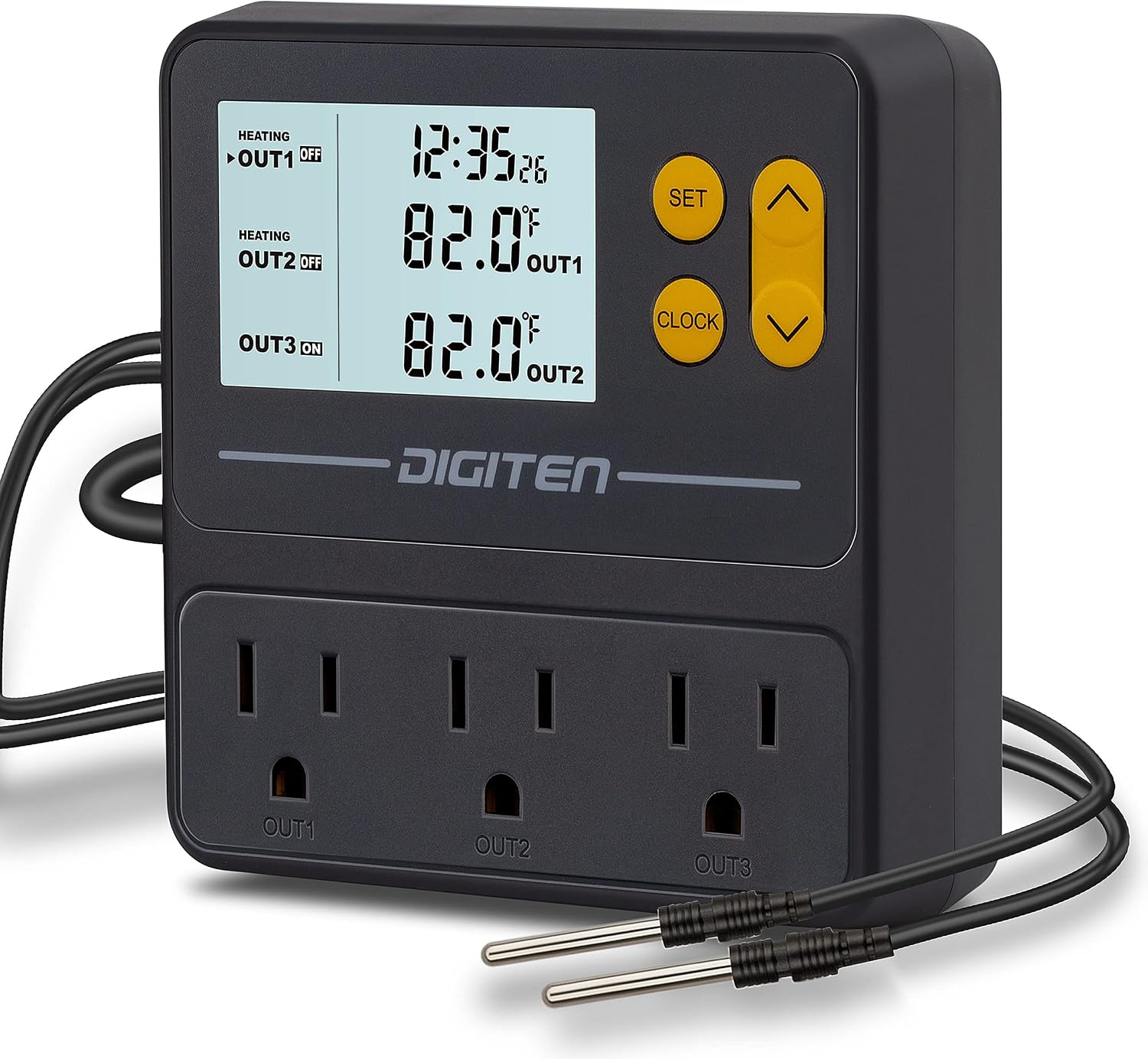
Most keepers do not need a night drop, and most keepers do not need to fight one either. This controller is for the setups in the middle: a room that stays warm after the lights go out, or a species that wants a few degrees of cooling overnight without the heat going off completely.
The day and night settings plus a timer mean you can hold one temperature through the day and a lower one after lights out, without touching a dial twice a day. That is the difference between a setup that runs itself and a setup that runs you. It suits a ceramic heat emitter or a heat mat that has to keep working overnight, which is exactly the case where a plain on/off thermostat gets noisy and imprecise.
Set the night temperature first, then the day temperature, and give the enclosure a full week before you change anything. Chasing a number daily is how people end up with a sick animal and a drawer full of thermostats.
Dimming thermostats for ceramic heat emitters
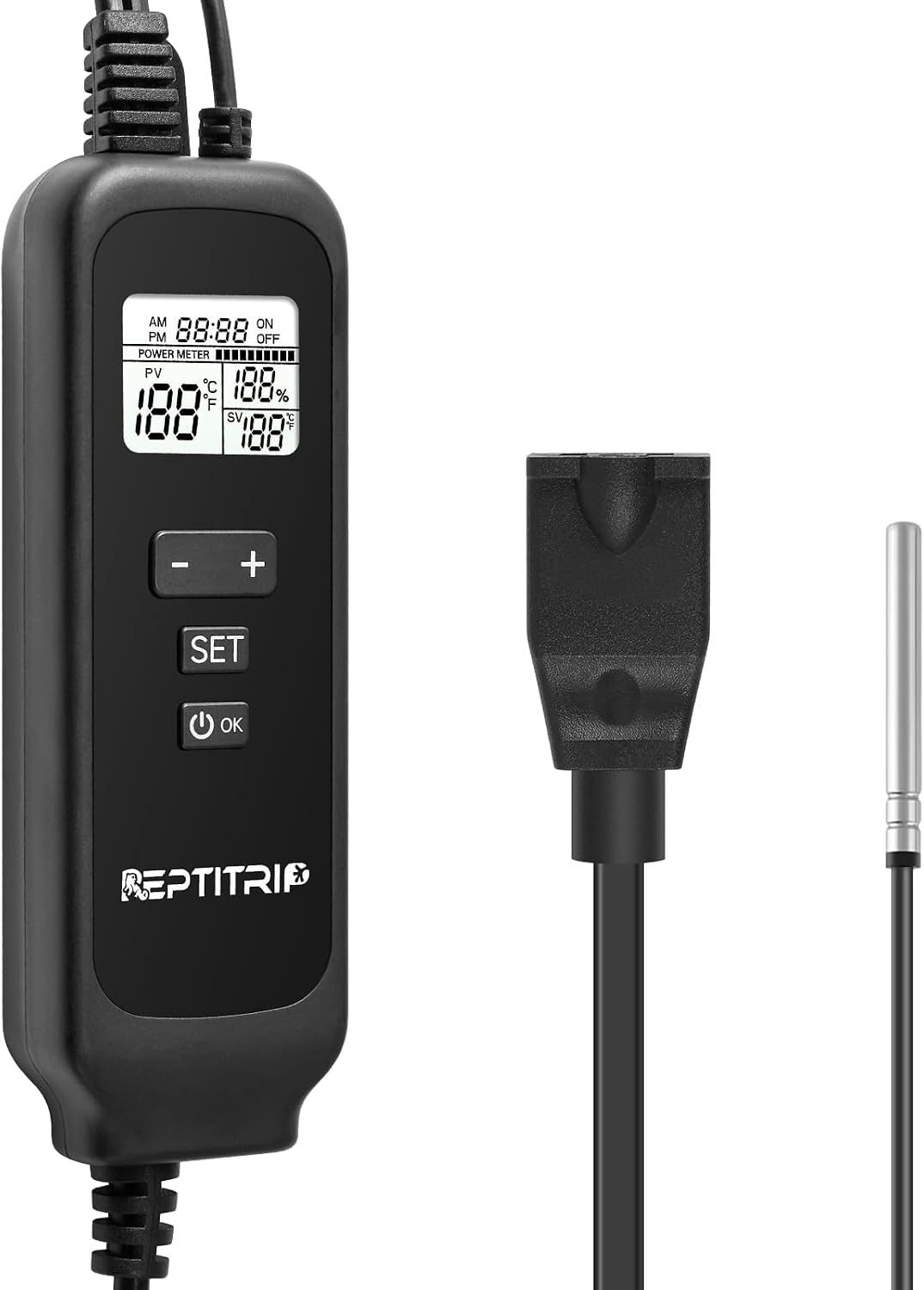
A dimming thermostat with a day and night timer is the control to buy if you run a ceramic heat emitter or a deep heat projector. Dimming control trims power to hold the set point instead of cutting and restoring it, so the basking surface stays stable instead of pulsing between two temperatures all day.
The day and night timer setting matters for the same reason as above: a steady warm spot overnight, a slightly warmer one during the day, and no manual intervention. Pair it with either fixture in this guide and the rest of the setup gets easier to read, because when the temperature moves you know it was the room and not the gear.
One habit: keep the probe where the animal basks, and cross check it with a second thermometer once a month. A thermostat is only as good as the reading it trusts.
Should you buy the Zilla Premium Reflector Dome Reptile Heat Lamp Fixture, 8.5 Inches?
Yes, if you are heating one basking area through a screen top and you want a fixture that will still be doing it in three years. The 8.5 inch reflector dome focuses the beam, takes a bulb or a ceramic heat emitter, and gives you enough depth to spread the hot spot instead of burning a single coin sized patch of rock. It is the fixture to build a first enclosure around.
It is not a complete answer. You still need a stand or a hook, a thermostat, and a guard if it lives inside the tank. But as the piece that shapes the heat, it does the job without the buzzing, the wobble, or the brittle plastic socket that ends most budget clamp lamps.
Should you buy the 5.9" Reptile Heat Lamp Fixture, 150W Hexagonal Reflector with Hook?
Yes, for a small enclosure or a spare. It is rated to 150W, it hangs from a hook instead of fighting a clamp, and in a 20 gallon tank or a plastic bin the narrow beam is an advantage rather than a limitation.
Buy it knowing what it is not. It will not cover a 4 foot floor, it will not give you a wide basking platform, and it comes with no control of its own, so a dimming thermostat is part of the purchase rather than an upgrade later. As a hatchling fixture, a quarantine fixture, or the light you keep on the shelf for the day the main one dies, it earns its place.