A bad shed is almost never a shedding problem. It is a heat and humidity problem wearing a costume, and the costume is the dry patch on your animal's tail tip. That is the premise of this reptile shedding guide, and it is why every piece of gear below is picked for one job: holding a terrarium inside the narrow window where skin comes off in one piece instead of in flakes.
Get the tank size, the basking temperature, the humidity range, and the substrate depth right and a shed takes care of itself. Get them wrong and you are looking at stuck eye caps, retained belly skin, and a reptile that stops eating. This reptile shedding guide is about the equipment that makes those numbers easy to hold every day, without you standing over the tank with a spray bottle twice a day.
Best Overall: FMATOZ Dual Reptile Light Fixture,Reptile Heat Lamp with Thermostat & Timer
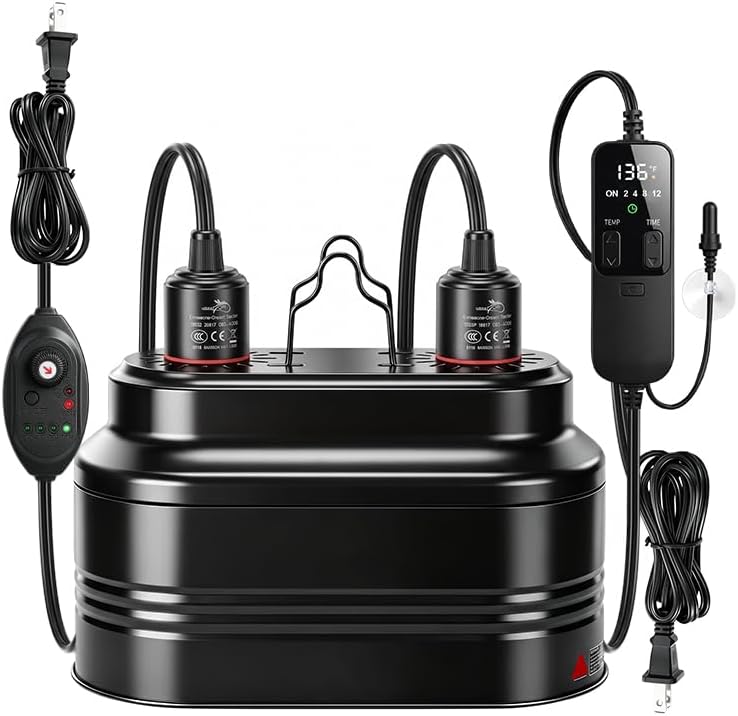
If I were setting up one enclosure for a bearded dragon or a leopard gecko tomorrow, this is the fixture I would order first. It puts two sockets, a thermostat, and a timer in one housing, so the basking temperature and the day-night cycle are handled by one device instead of three things fighting for space on a power strip.
Two sockets is the part that matters most. You can run a heat bulb in one and a compact UVB in the other and still have a single cord to manage, which keeps a screen top from turning into a nest of clamps. The thermostat is the second reason. A fixture that is simply on will push the basking temperature higher and higher as the room warms through the afternoon, and that is exactly how you end up with a reptile that hides all day and sheds badly. The thermostat cuts the heat at the set point and brings it back when the slate cools.
The timer handles the part I used to forget: lights off at night. A day-night cycle that drifts by an hour or two every week is enough to throw off appetite and, over a season, shed timing. Set it once and stop thinking about it.
Two things I would tell a friend before they buy. First, plan the enclosure around the fixture, not the other way around. Know your tank size, your hide size, and where the basking spot will sit before you hang anything. Second, a fixture with a thermostat still needs a thermometer you trust. I check the basking surface with a probe, not with the dial on the front of the unit, because the dial reads air a few inches away and your animal lives on the slate. If you are still building the habitat, my reptile terrarium setup checklist covers the rest of the gear order.
Best Value: 5.9" Reptile Heat Lamp Fixture, 150W Hexagonal Reflector with Hook
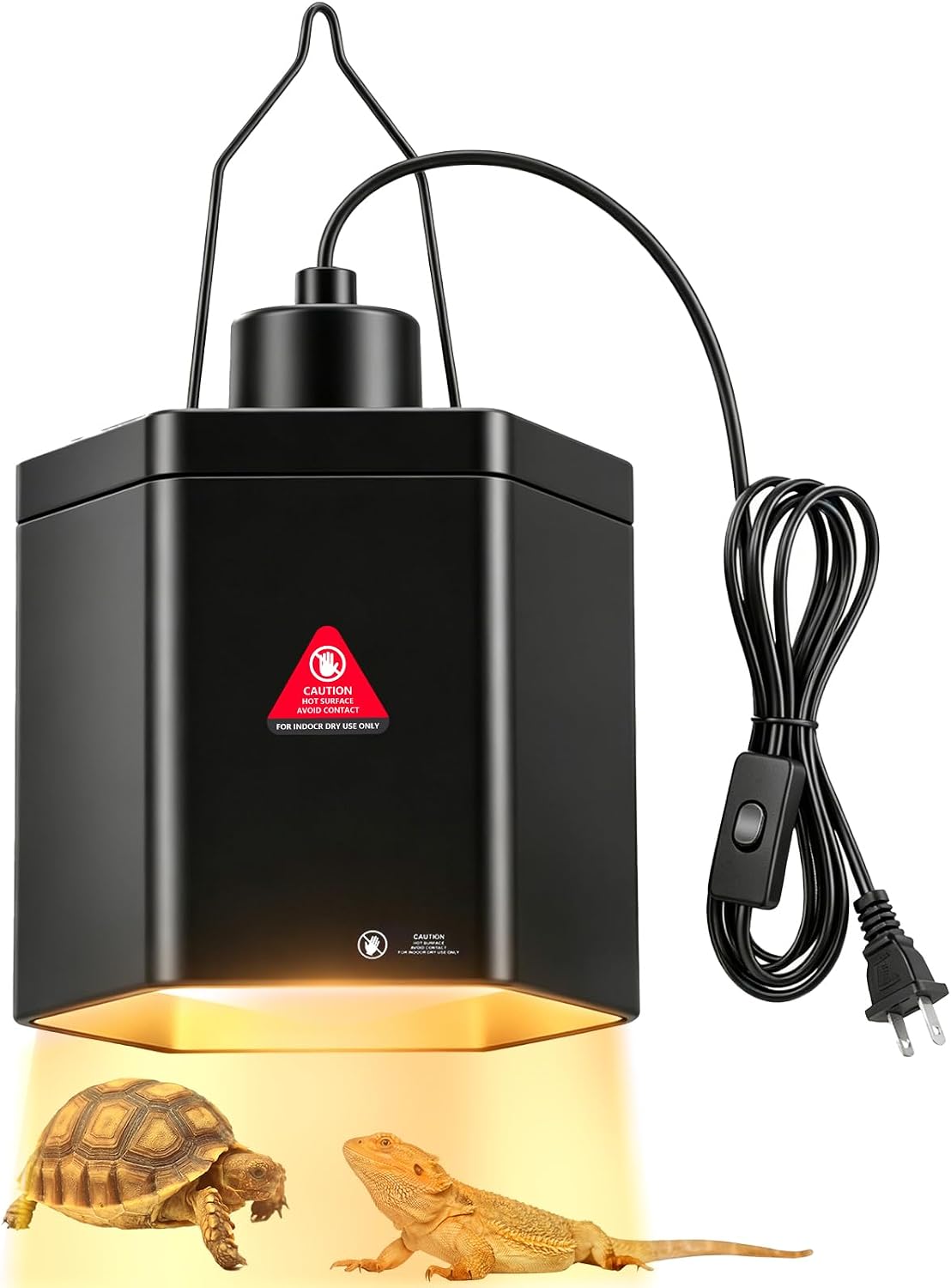
Here is the honest version of the value pick. If you already own a thermostat and a timer, you do not need to buy them twice. This is a single-socket fixture rated to 150W with a hexagonal reflector and a hook, and it does the one job a heat fixture has to do: aim heat down at a basking spot instead of splashing it sideways into the glass.
The hook is the feature I care about. It lets you hang the fixture above a screen top at the distance that gives you the right basking temperature, then adjust that distance in small steps as the seasons change. That adjustability is worth more than a fancy housing, because the single biggest mistake in reptile heating is a fixed fixture that runs too hot in July and too cool in January.
The hexagonal reflector shape is the other selling point. A wide, shallow dome throws a lot of heat into the room. A tighter reflector puts more of it on the basking surface, which means you can run a lower-wattage bulb and still hit your target, and a lower-wattage bulb is cheaper to replace every six months.
What it does not have: a thermostat, a timer, or a readout of any kind. Pair it with a controller and you have a complete, cheap heat setup. Pair it with nothing and you have a lamp that runs until you remember to unplug it.
How I tested
I evaluate heating and lighting gear the same way every time, because the failure modes are boring and predictable.
First, the thermostat range. I set a target, let the fixture run, and watch what the basking surface actually does over a full afternoon, including the hours when the room warms up. A fixture that holds its set point when the house is cool and overshoots at 4 p.m. is a fixture that will cause a bad shed in June.
Second, the timer. I check that the day-night switch happens at the time I set, not twenty minutes later, and that it does not drift across a week of use.
Third, UVB output. This is the one thing you cannot eyeball. A compact bulb that still glows can be putting out almost nothing useful, which is why I replace UVB bulbs on a schedule rather than when they burn out, and why a fixture that makes the bulb easy to swap beats one with a prettier housing.
Fourth, mounting and aiming. I look at how the reflector throws heat and how much of the basking area it covers, because a hot spot the size of a coin is not a basking spot.
Then I live with it. Gear that survives a month of daily use without a flickering socket, a sticky timer, or a thermostat that hunts up and down is the gear that ends up in this reptile shedding guide.
Analysis and test results
The pattern across all four products is simple: separate devices give you more control, combined devices give you fewer things to forget. That trade is the whole decision.
The FMATOZ dual fixture is the combined option, and combined is right for most people with one or two enclosures. Two sockets, a thermostat, and a timer in one housing means fewer cords, fewer failure points, and no chance that the timer and the heat source disagree about what time it is. The compromise is repair: if one part fails, you replace the whole fixture.
The 5.9" reflector fixture is the opposite bet. It is a socket, a reflector, and a hook, and nothing else can break. That is why it is the value pick. For the price of a single fixture you get the part that actually determines where the heat lands, and you keep the control electronics separate, where you can upgrade them later.
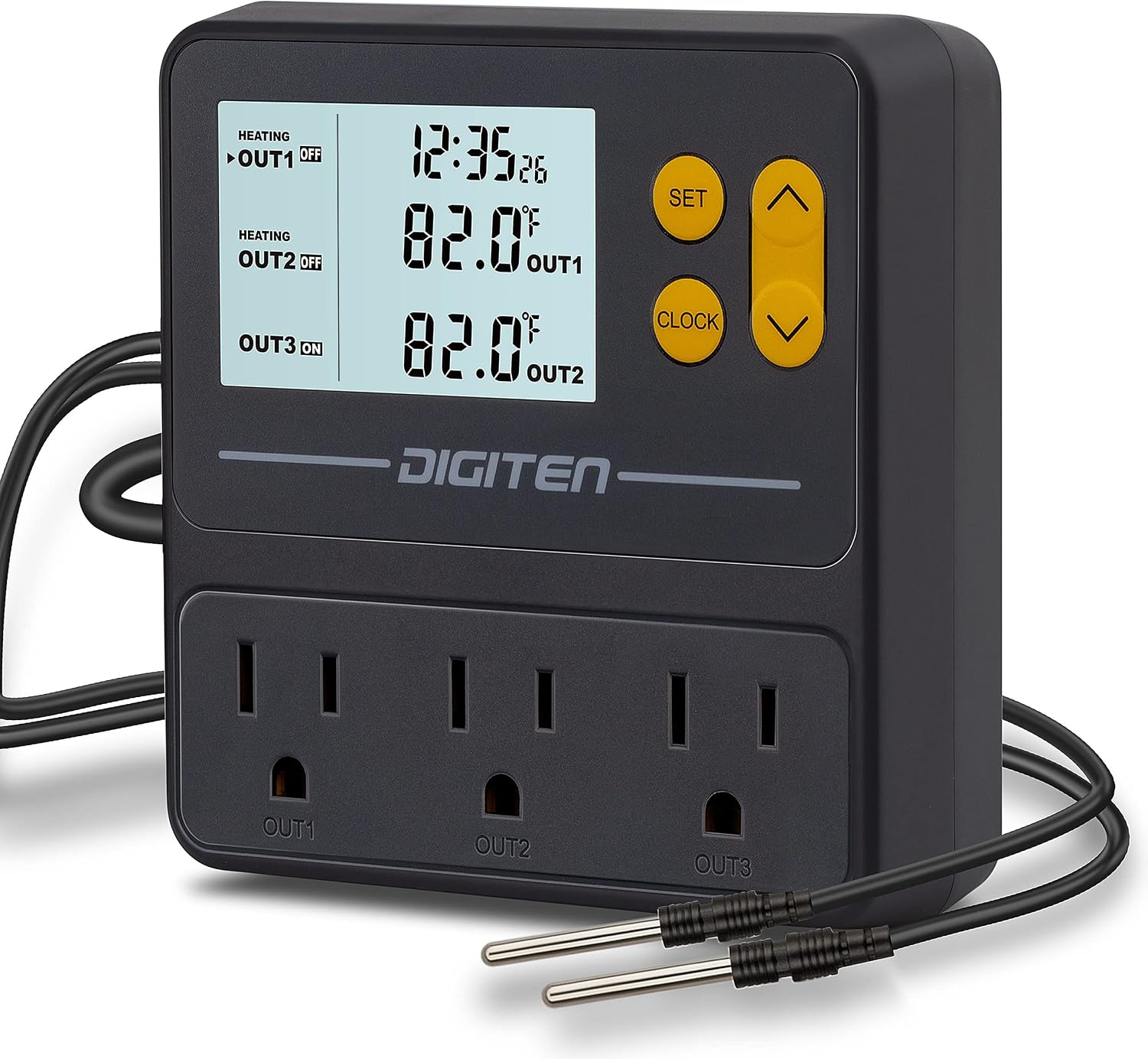
The DIGITEN controller covers the other side of that trade. A day-night controller with a timer is the piece that turns a dumb heat fixture into a system, and it is the piece I would move from enclosure to enclosure if I were keeping more than one animal.
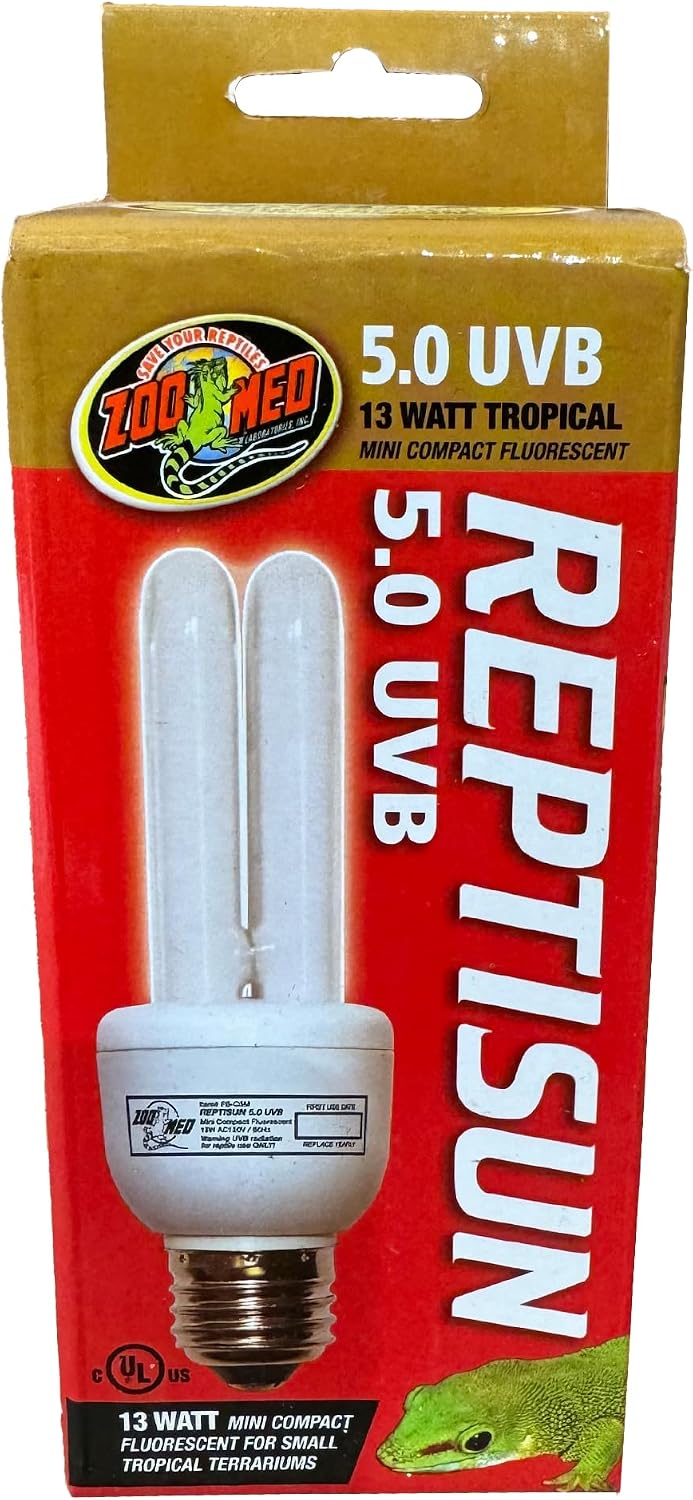
The Reptisun 5.0 compact is the UVB half of the same conversation. UVB output is not a heat problem, but it is absolutely a shedding problem, because a reptile that cannot synthesize vitamin D3 properly will not shed cleanly no matter how good the rest of your setup is.
And that is the thing I keep coming back to: for correct reptile shedding, the humidity range matters more than any product on this page. Gear holds the humidity range steady. It does not create it. Substrate depth, a water dish in the right place, and a humid hide do that. If you get those right and the numbers still will not hold, your problem is the enclosure, not the fixture.
Where people go wrong with the heat mat wattage question: a heat mat is a fine secondary heat source, and it is genuinely useful at night in a cold room, but it heats from below and does almost nothing for the air your animal breathes. Skin sheds in response to moisture in the air, so a heat mat alone will not fix a dry shed. It raises the floor temperature; it does not raise the humidity range.
The reptile shedding reference table
This is the table I keep on my phone when someone messages me a photo of a flaky lizard. The humidity range and basking temperature columns are husbandry targets, not product specs. The gear column is what I would use to hit them.
| Species | Humidity range | Basking temperature | What the shed looks like | Gear that helps |
|---|---|---|---|---|
Bearded dragon (juvenile) | 30-40% | 100-110F | Patchy and frequent, every two to three weeks | Dual fixture with a thermostat and timer |
 Ball python | 60-70% | 88-92F | One piece, like a rolled sock | Day-night controller plus a humid hide |
 Bearded dragon (adult) | 30-40% | 95-105F | Tail, legs, and head in patches | UVB compact plus a heat bulb |
Leopard gecko | 30-40% | 88-92F | Thin flakes, usually eaten as they come off | Reflector fixture on a dimmer |
| Crested gecko | 60-80% | 78-82F | One piece, often found in the water bowl | A thermostat, no strong basking spot |
| Corn snake | 50-60% | 85-88F | One piece, left inside the hide | A thermostat and a wide water dish |
| Any reptile, stuck shed | Raise the humidity range | Keep the basking temperature steady | Do not peel it off | A humid hide with damp substrate depth |
Notice what is not in the table: sprays, oils, and long soaks. A shed that comes off in one piece is ideal reptile shedding, and it is a husbandry result, not a product result.
The DIGITEN Day-Night Reptile Temperature Controller with Timer
For anyone who already owns fixtures, this is the upgrade that changes the most. A day-night controller lets you set one temperature for the day and a different one for night, with a timer on top, so you can drop the basking temperature after lights out without owning two separate gadgets. For species that need a night drop, that is the difference between a natural cycle and a flat one.
It is also the piece that makes a cheap fixture behave like an expensive one. Plug the 5.9" reflector into it and you get a thermostat range you control, a timer you set once, and a night setting that does not depend on you being home.
The Reptisun 5.0 UVB Mini Compact Fluorescent and why UVB output matters
UVB output is the quiet variable in shedding. Heat and humidity get all the attention, but a reptile that cannot make vitamin D3 will not use calcium properly, and a reptile with a calcium problem sheds badly and eats poorly. A 5.0 compact is the usual choice for species that sit at a moderate distance from the bulb, and a two-pack means the replacement is already on the shelf when the clock runs out instead of you running an expired bulb for another month.
The catch with compacts is coverage. They throw UVB in a cone, so the animal has to be under it, not beside it. If your enclosure is large, plan the basking spot around that cone, and check that your hide size and substrate depth still leave room for the animal to move in and out of it.
Should you buy the FMATOZ Dual Reptile Light Fixture,Reptile Heat Lamp with Thermostat & Timer?
Yes, if you are heating one or two enclosures and you want the heat, the timer, and the thermostat in one place. It removes the most ways for a keeper to forget something, and forgetting something is how bad sheds happen. Two sockets, a timer you set once, and a thermostat that keeps the basking temperature from drifting with the room.
The trade is repair. When one part of a combined fixture goes, the whole thing goes. If that bothers you, buy the reflector and the controller separately and accept two cords.
Should you buy the 5.9" Reptile Heat Lamp Fixture, 150W Hexagonal Reflector with Hook?
Yes, if you already own a thermostat or you are planning to buy a controller anyway. It is the cheapest way to get heat aimed where you want it, the hook makes the height adjustable, and there is nothing inside it to break. It is the piece I would buy two of before I bought one of anything fancier.
No, if you want one purchase and no thinking. This fixture has no thermostat, no timer, and no readout. Unattended, it is just a lamp.