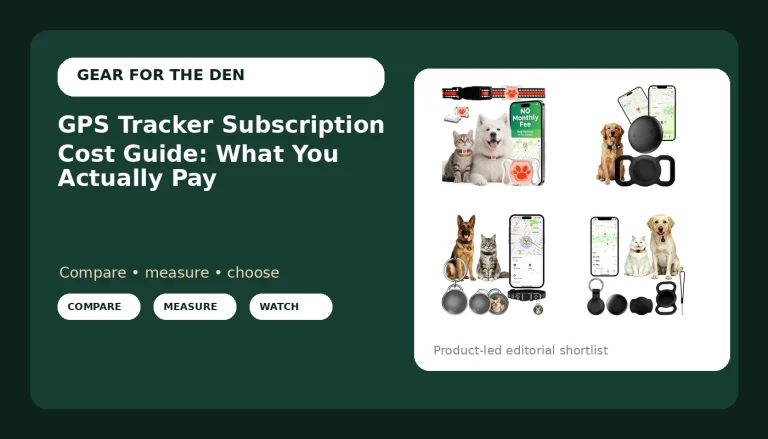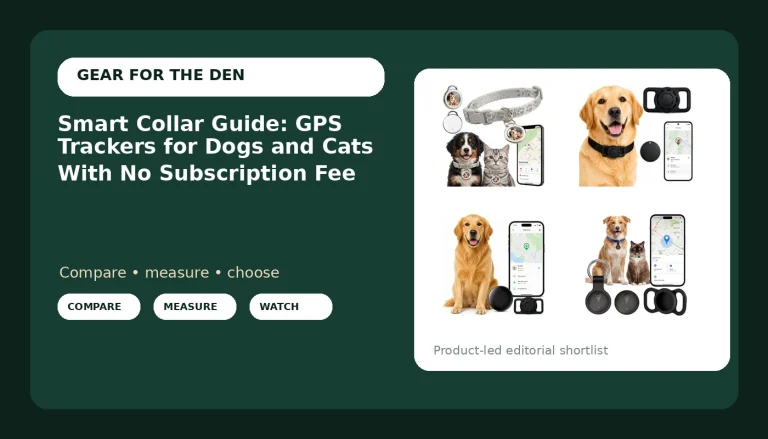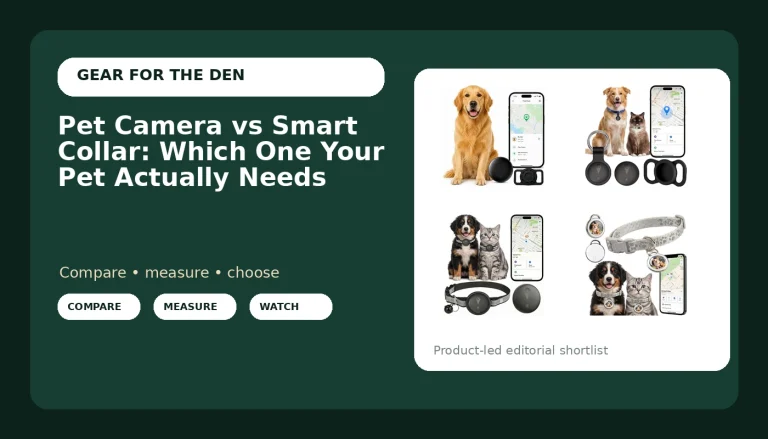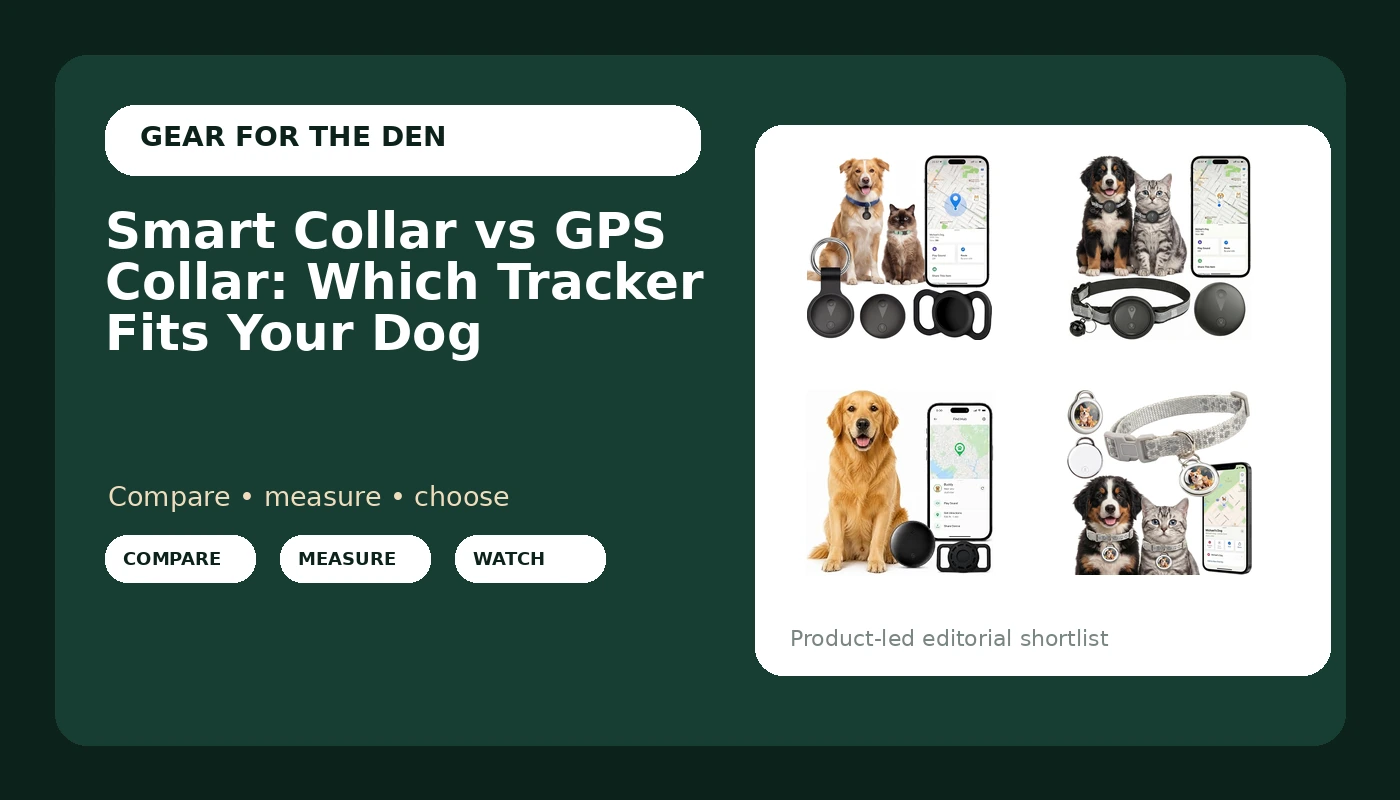
The smart collar vs gps collar question sounds academic until the afternoon your dog slips a gate and you spend forty minutes calling a name into an empty street. Both categories promise the same thing, a dot on a map with your pet's name attached, and both get there through completely different plumbing. One leans on an app, a Bluetooth handshake, and a platform you already carry in your pocket. The other leans on its own receiver and a network somebody has to pay for. The hardware looks similar in photos. The ownership experience is not similar at all.
For most households the deciding factor is not the tracker hardware but who pays for the network: a no-monthly-fee collar that rides on a platform you already own beats a sleeker collar that bills you every month for the same dot on the same map.
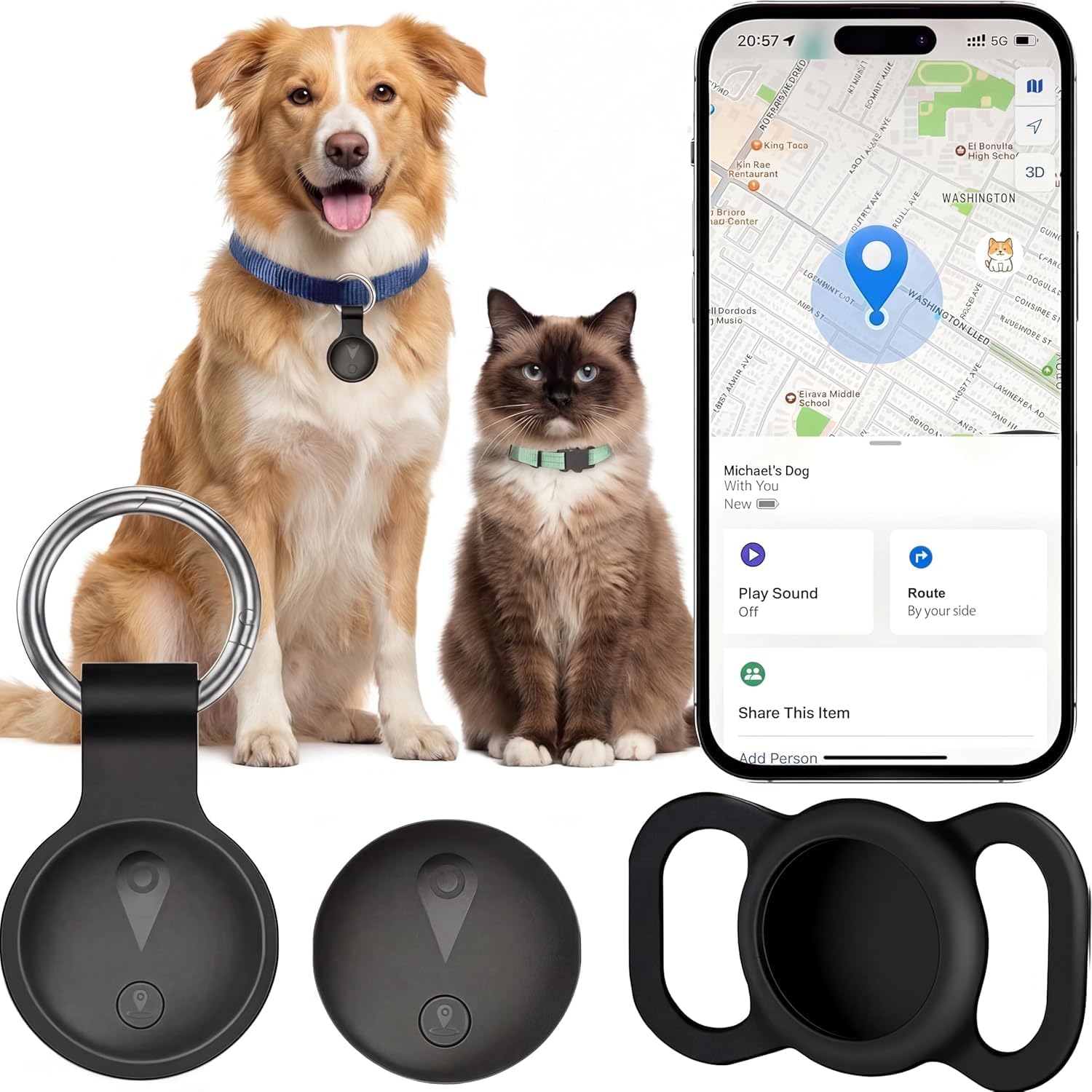
GPS Tracker for Dogs, Smart Collar with Real-Time Locator with Holder
Ships with a holder, so the tracker mounts on a strap you already own, and real-time locating is the headline feature
No platform partnership or waterproof rating advertised
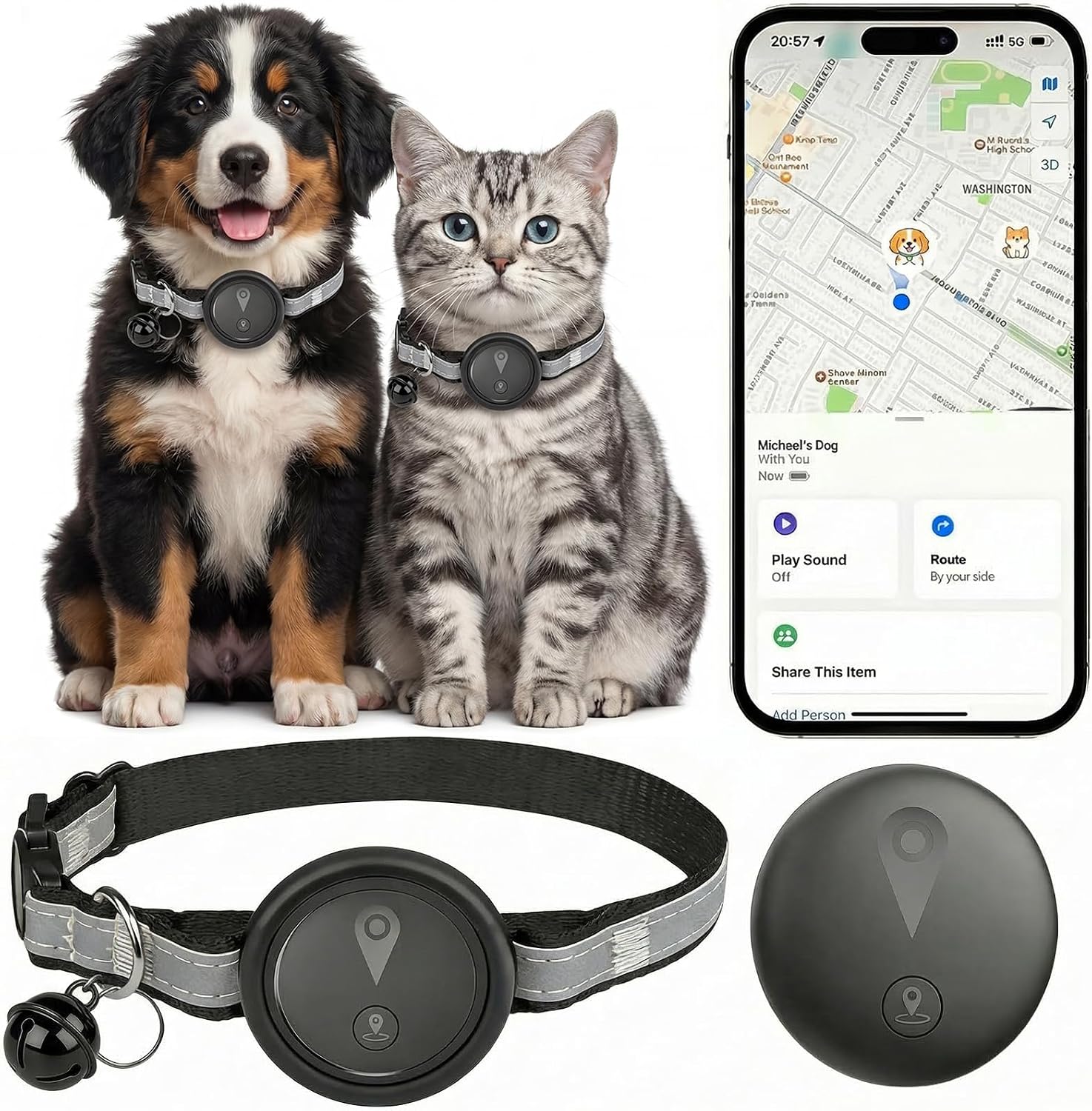
GPS Pet Tracker for Dogs & Cats, Smart Collar with Real-Time Location
Listed for cats as well as dogs, which is rare in this price band, with real-time location as the core feature
Tracking depends entirely on the companion app, and no subscription terms are spelled out
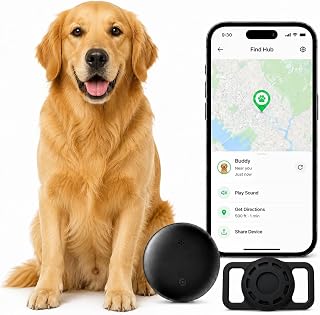
GPS Collar for Dogs, Pet Tracker (Android Only) Smart tag, Waterproof Compatible with Google Find My, No Monthly Fee, Advanced Tracking Solution Smart Collar for Pet Safety Ideal Small Large Dogs
The most specific listing here: Android only, Google Find My compatible, waterproof, no monthly fee, sized for small and large dogs
Android only, so iPhone households are locked out entirely
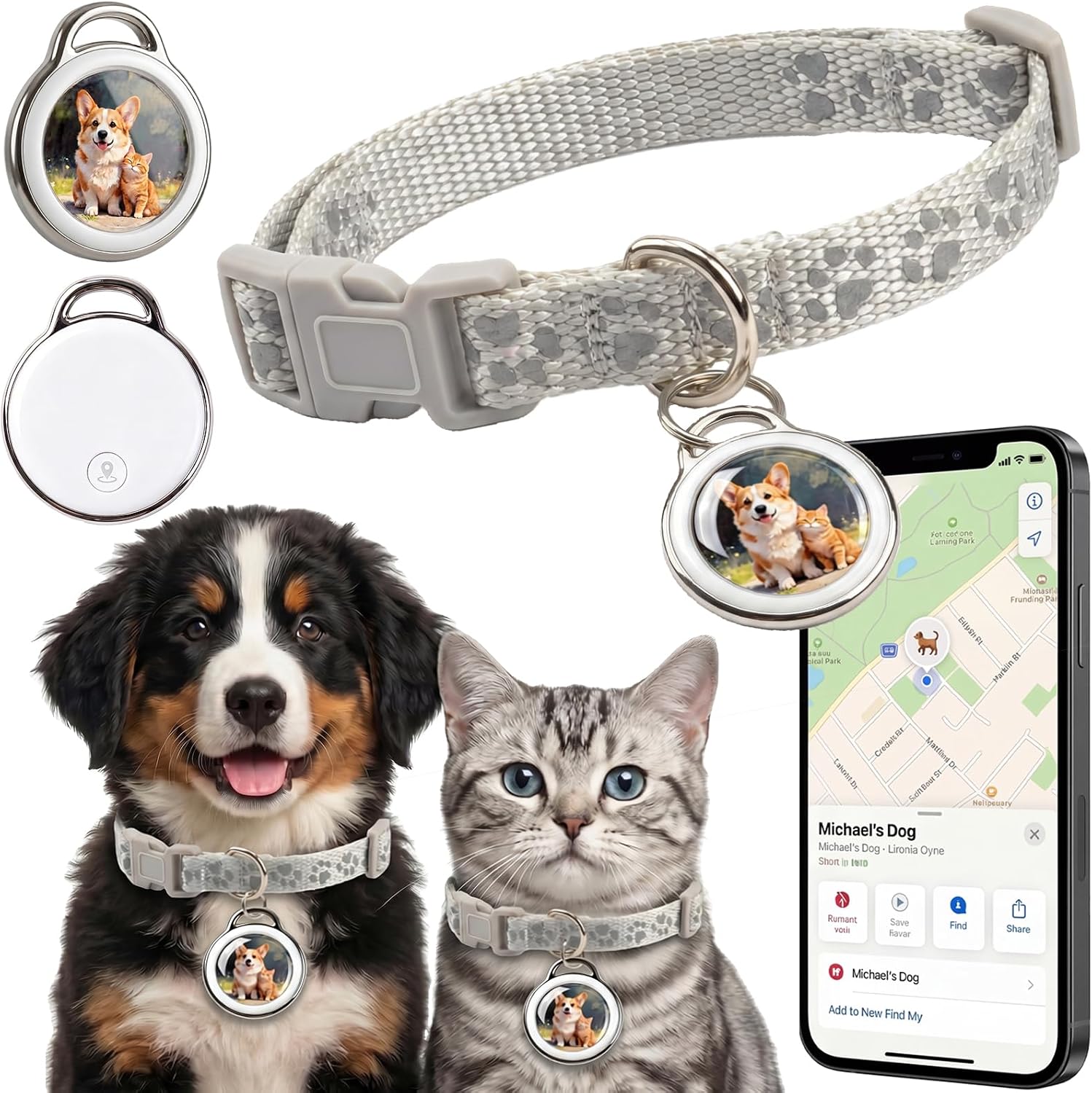
GPS Tracker for Dogs & Cats Smart Collar Real-Time Tracking No Monthly Fee
Real-time tracking for dogs and cats with no monthly fee, which is the whole point of buying in this tier
Platform compatibility and water resistance are not stated
Prices and availability may change.
How I judge a collar listing
Every tracker in this category gets read the same way, against five questions, and the answers matter far more than the marketing adjectives.
- How does it find the pet? Satellite fix, a Bluetooth handshake, or a crowd-sourced network of strangers' phones.
- What does it cost after purchase? A subscription is the single largest cost of ownership over three years, and it is the one line item a listing tends to bury.
- How long does it run? Battery life is where cheap trackers fail first, and a dead collar is a paperweight on a walk.
- How far does the link reach? Signal range decides whether a tracker is a garden tool or a neighborhood tool.
- Will it survive the dog? Water resistance and a housing that shrugs off mud, rain, and one ill-advised swim.
I do not score a collar on the features printed in the largest font on the box. I score it on the features that still matter in month six, which are almost always the boring ones: charge cycles, pairing stability, and whether the app still opens without a firmware tantrum. A tracker is a tool you use on the worst day of your pet's life, and tools get judged by whether they work when you are not calm.
Smart collars: tracking that lives in your phone
A smart collar is the app-first branch of this family. The collar itself is mostly a radio and a battery; the intelligence sits on the phone. App pairing is the entire setup ritual, and once it is done the collar reports a position that the app draws on a map.
The strength of this design is cost and coverage. Because the collar borrows the location services and the network of the phone it is paired with, there is often no monthly subscription, and there is no second account to babysit. The weakness is range. A Bluetooth-class link is a house-and-yard tool, not a county-wide tool. Step behind a stone wall or leave the phone on the kitchen counter and the dot stops moving.
For a cat that patrols three gardens and a dog that has never left a fenced acre, that trade is a good one. If you are weighing a smart collar or gps collar for an indoor cat with a habit of bolting through an open door, the smart side usually wins on price alone. The companion reading here is Cat Trackers for Indoor Cats That Bolt, which goes deeper on the cat-sized end of this market.
GPS collars: the ones that carry their own receiver
The classic GPS collar carries its own receiver and its own way of reporting the fix, which is why it can keep working while your phone sits on the charger in another room. That independence is what people are actually buying when they pay more.
It also comes with strings. A collar that reports over a cellular network needs a data plan, and that plan is the subscription. A collar that reports over a low-power radio needs a base station in the house. A collar that reports through a crowd-sourced find-my network needs a phone in the crowd, though it does not have to be yours. When people argue gps collar vs smart collar, this is the argument: independence versus cost, and there is no version of the answer where you get both for free.
In the budget band these four products sit in, the word GPS is doing a lot of work. Read the listing carefully to see whether the collar fixes its own position or relies on a phone nearby to do it, because that single detail decides whether it is useful at the park or only in the garden.
What the smart collar vs gps collar split really means
Strip the branding away and the smart collar vs gps collar difference is a question of who owns the network and who pays for it.
A smart collar borrows a network. A GPS collar either pays for one or builds its own. Everything else, the app layout, the map colors, the activity graphs, the little battery icon in the corner, is downstream of that one decision. If the listing mentions a monthly plan, you are looking at the paid-network branch. If it advertises no monthly fee and pairs to your phone, you are looking at the borrowed-network branch.
If you want the one-sentence version of the difference between smart collar and gps collar, it is this: a smart collar is only as good as the phone next to it, and a GPS collar is only as good as the plan behind it. That also tells you what to expect from battery life. A collar that talks to your phone over a short link can run for weeks on a small cell. A collar that maintains its own connection to a wider network spends power constantly, and the honest listings say so.
Battery life, signal range, and app pairing
These three specs decide whether a tracker becomes a daily habit or a drawer ornament.
Battery life is the first thing to check and the easiest to overestimate. A week of standby is not a week of tracking. Live tracking drains a small battery quickly, and a collar that pings a network constantly will empty itself in a day or two. Look for a stated runtime under active tracking rather than standby, and treat a power backup or low-battery alert as a genuinely useful feature instead of a bonus.
Signal range is the second. Short-range collars are honest about being yard tools. Long-range collars are honest about needing a subscription. The dishonest ones use GPS as a synonym for long range when the radio inside is Bluetooth.
App pairing is the third, and it is where the cheapest products lose people. A collar that pairs once and stays paired is worth more than a collar with a prettier map. Re-pairing every time the phone restarts is the kind of flaw that never shows up in a product photo and shows up constantly in daily use.
Water resistance, fit, and specs that do not apply
Water resistance is not optional for anything that goes on a dog. A collar rated for splashes will survive a rainy walk and a paw in the water bowl. It will not survive a Labrador and a lake. If your dog swims, look for an explicitly waterproof housing, which the Android-friendly model on this list advertises.
Then there are the specs copied onto collar listings from entirely different products. Camera resolution belongs to pet cameras, not collars. Portion accuracy belongs to automatic feeders, not collars. Neither number tells you anything about finding a dog, and a listing that leads with them is padding the spec sheet. The same goes for the term smart tag, which describes a form factor rather than a tracking technology.
Fit deserves a line too. A tracker that hangs off a collar is only as good as the collar it hangs from, and a holder that keeps the unit flat against the strap is less likely to snag on brush than one that dangles. Small dogs and cats need a light unit. Large dogs can carry a bigger battery, and a bigger battery is the only honest way to buy more runtime.
Which of these four collars fits which household
Four collars, four different answers, and none of them is a bad product in the abstract.
The GPS Tracker for Dogs, Smart Collar with Real-Time Locator with Holder is the straightforward collar-mounted option. It ships with a holder, so the tracker mounts on a strap you already own instead of forcing you onto a proprietary collar, and real-time locating is the headline. What it does not advertise is a platform partnership or a waterproof rating, so treat it as an everyday tracker for a dog that stays close to home.
The GPS Pet Tracker for Dogs & Cats, Smart Collar with Real-Time Location is the cat-friendly pick. It is listed for both dogs and cats, which matters because most trackers in this tier are sized and marketed for dogs only. Real-time location is the core feature and no subscription is mentioned. The trade-off is the same as the first collar: no named platform, so tracking lives and dies with the companion app.
The GPS Collar for Dogs, Pet Tracker (Android Only) Smart tag, Waterproof Compatible with Google Find My, No Monthly Fee is the most specific product here, and the specifics are exactly why you would buy it or skip it. It is Android only, it pairs with Google Find My, it is advertised as waterproof, and it carries no monthly fee. On Android, that combination is the best-defined deal in this group, and it is sized for small and large dogs alike. On an iPhone it is a non-starter, which is why the listing says so up front.
The GPS Tracker for Dogs & Cats Smart Collar Real-Time Tracking No Monthly Fee is the pick when the recurring bill is the dealbreaker. Real-time tracking, dogs and cats, no monthly fee, and the trade is a one-time price instead of a monthly one, which is the usual bargain in this category. What the listing does not spell out is platform compatibility or water resistance, so if either is a hard requirement, ask before you buy.
Should you buy a tracker before you need one?
Yes, for the same reason people buy a fire extinguisher before the fire. A tracker is only useful if it is already on the collar and already paired when the gate swings open. Buying one after a pet goes missing means buying one while you are panicking, which is the worst possible moment to compare app pairing and battery life.
The counterargument is that a cheap tracker gives false confidence. That is fair, and it is why signal range matters so much. A yard-range collar on a dog that hikes off-leash is a comfort object, not a safety device. Match the collar to the territory: short range for cats and fenced yards, wider range and a paid network for dogs that travel. And if the smart collar vs gps collar call still feels close after all of that, buy the cheaper one, live with it for a month, and let the battery life tell you whether you picked right.
What I'm keeping an eye on next
Two things. The first is how many of these budget collars quietly become subscription products after the first year, because a free app today is not a promise about a free app in three years. The second is battery chemistry. Every improvement in runtime at this price point makes the short-range, no-fee collars more useful, and the day a no-fee collar runs a full week of live tracking on a single charge is the day the subscription argument gets a lot harder to make.
Until then, the choice comes down to the same fork: borrow a network and pay nothing, or own a network and pay monthly. Pick the version that matches where your pet actually goes, not where you imagine it going.