I have kept freshwater tanks in apartments, basements, and one dorm room where the desk was the only flat surface, and the sponge filter vs power filter question is the one I get asked most by people setting up their first small tank. Both options are cheap, both are sold everywhere, and neither one is a mistake. What actually decides it is the tank you put them in: its volume, its lid, how much current your fish tolerate, and whether you want equipment hidden behind plants or sitting in plain view.
For most beginners in a 10 gallon tank, a sponge filter is the safer first choice. A power filter earns its place once you move past 20 gallons, keep fish that produce a lot of waste, or want the water polished rather than just biologically stable.
That is the short version. The longer version is about matching filtration to a specific tank, because the four products below are not four filters. They are two starter kits, one bare rimless tank, and one stand, and each one changes the filtration decision in a different way.
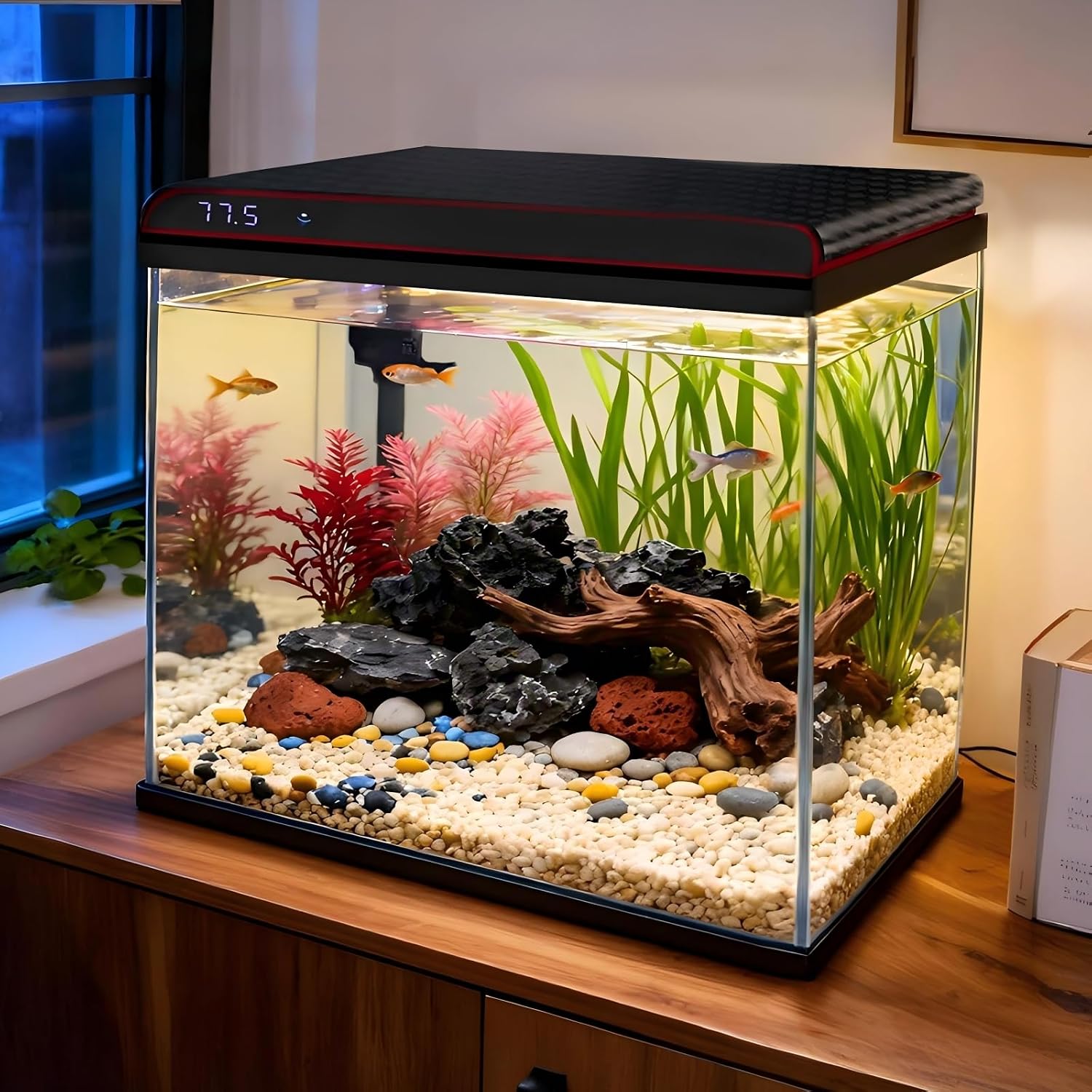
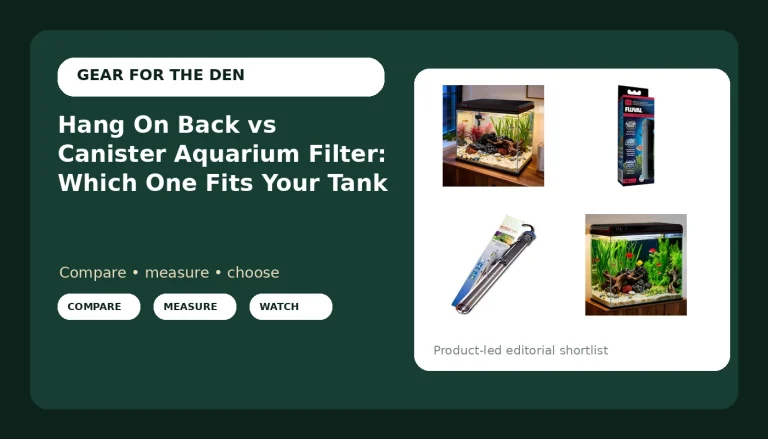
Coospider 10 Gallon Starter Kit
Ships with a quiet filter pump, 3-color LED lighting, and temperature monitoring, and its small tank volume suits gentle sponge filtration
The included pump is not a sponge filter, so you run it as shipped or add air-driven filtration yourself
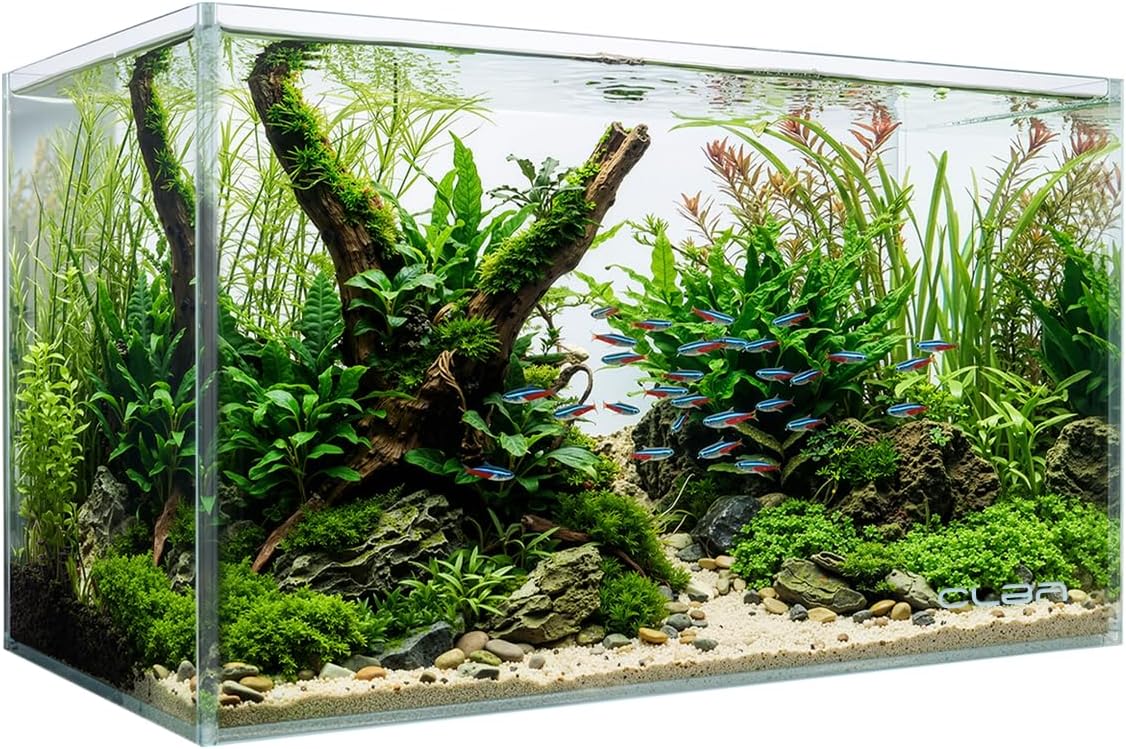
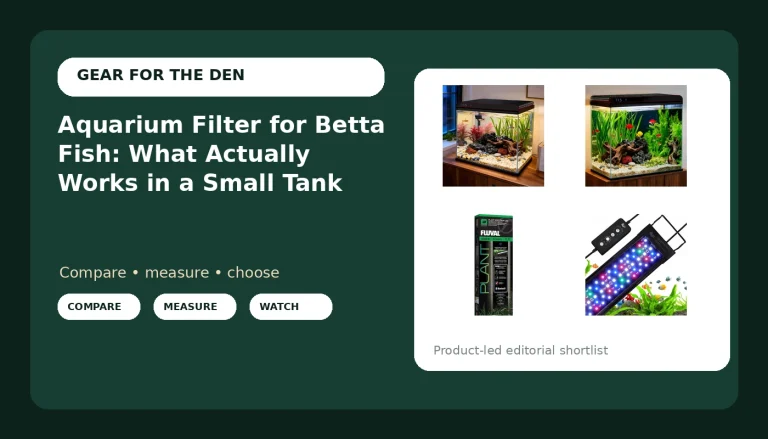
10 Gallon Rimless Ultra Clear Nano Aquarium
A bare tank lets you choose every filtration stage yourself, and the open rim makes a sponge filter easy to hang and service
No pump, no lid, and no temperature monitoring in the box, so the total cost climbs fast
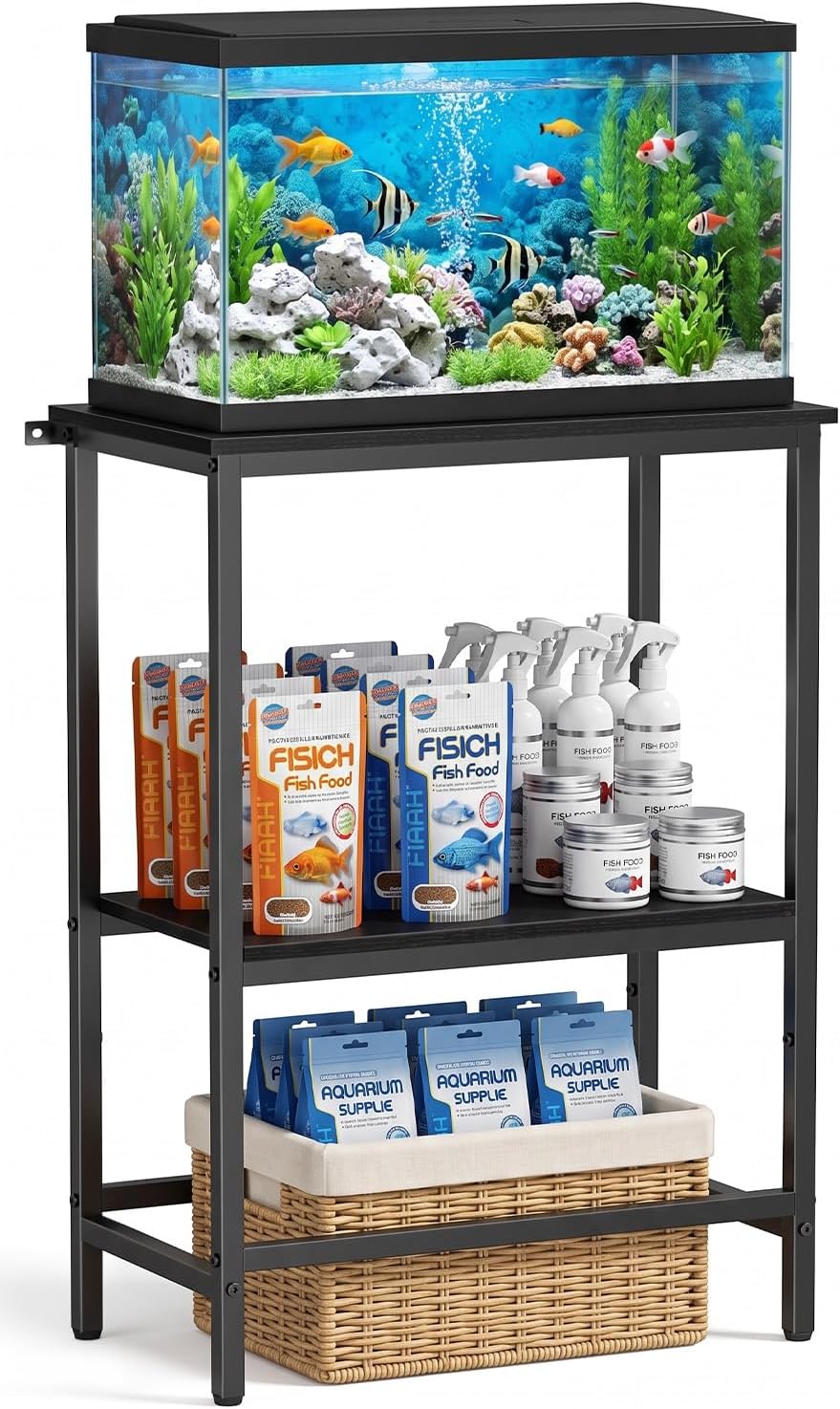
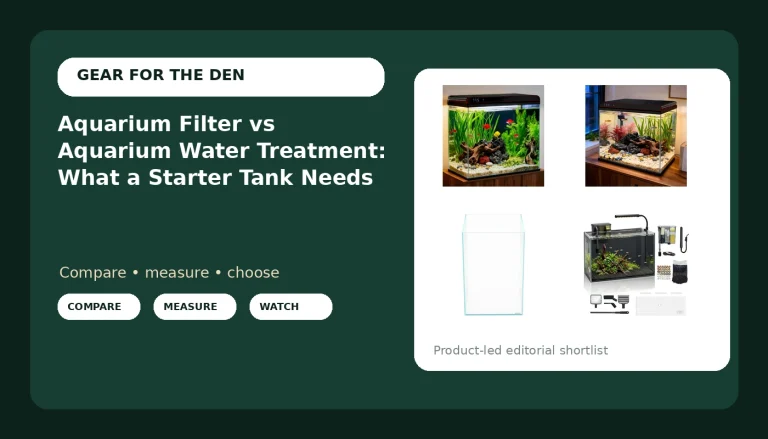
Rymeera 5 & 10 Gallon Fish Tank Stand
Gets a small tank off a desk and leaves room underneath for an air pump or filter plumbing
It holds the tank, not the water quality, and adds nothing to filtration
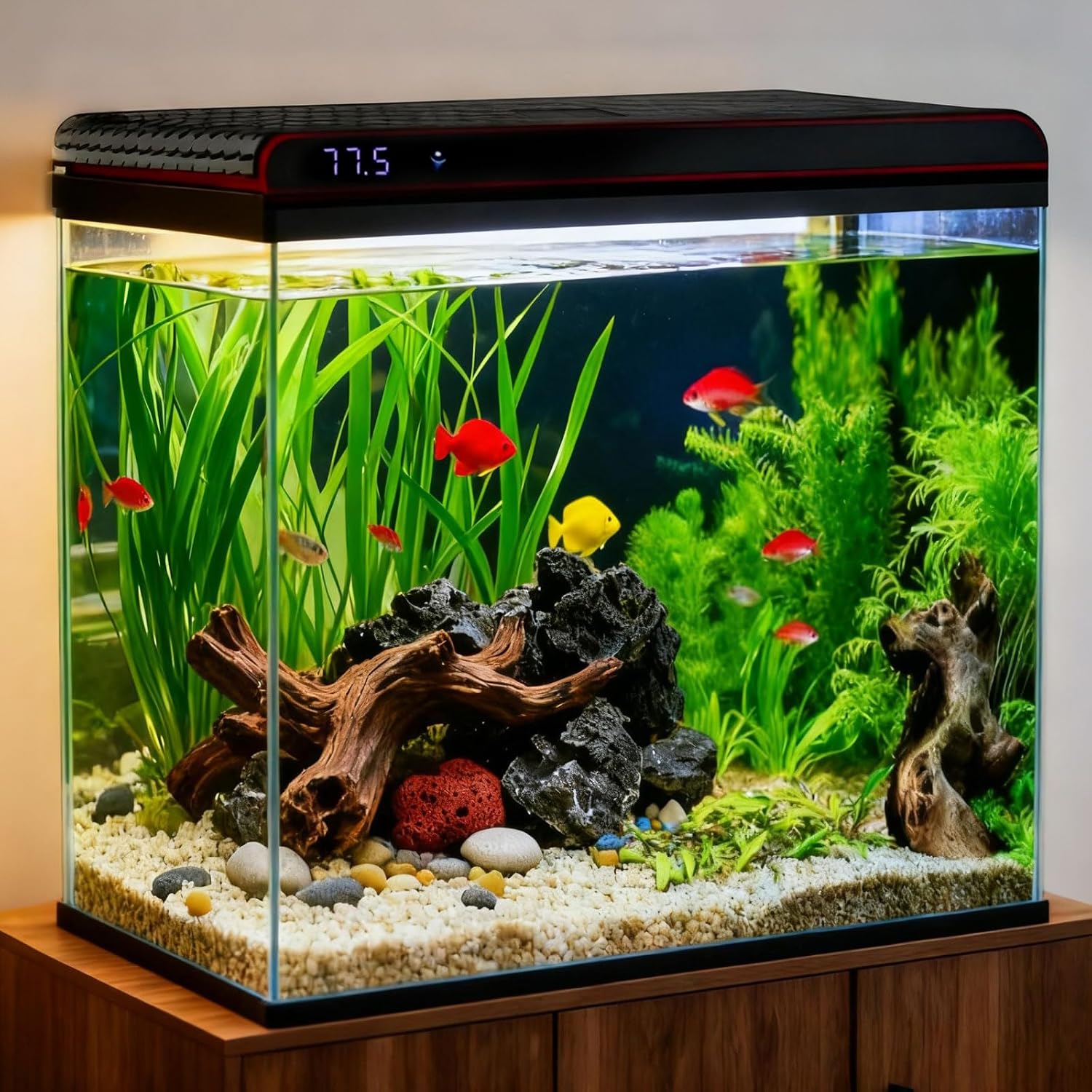
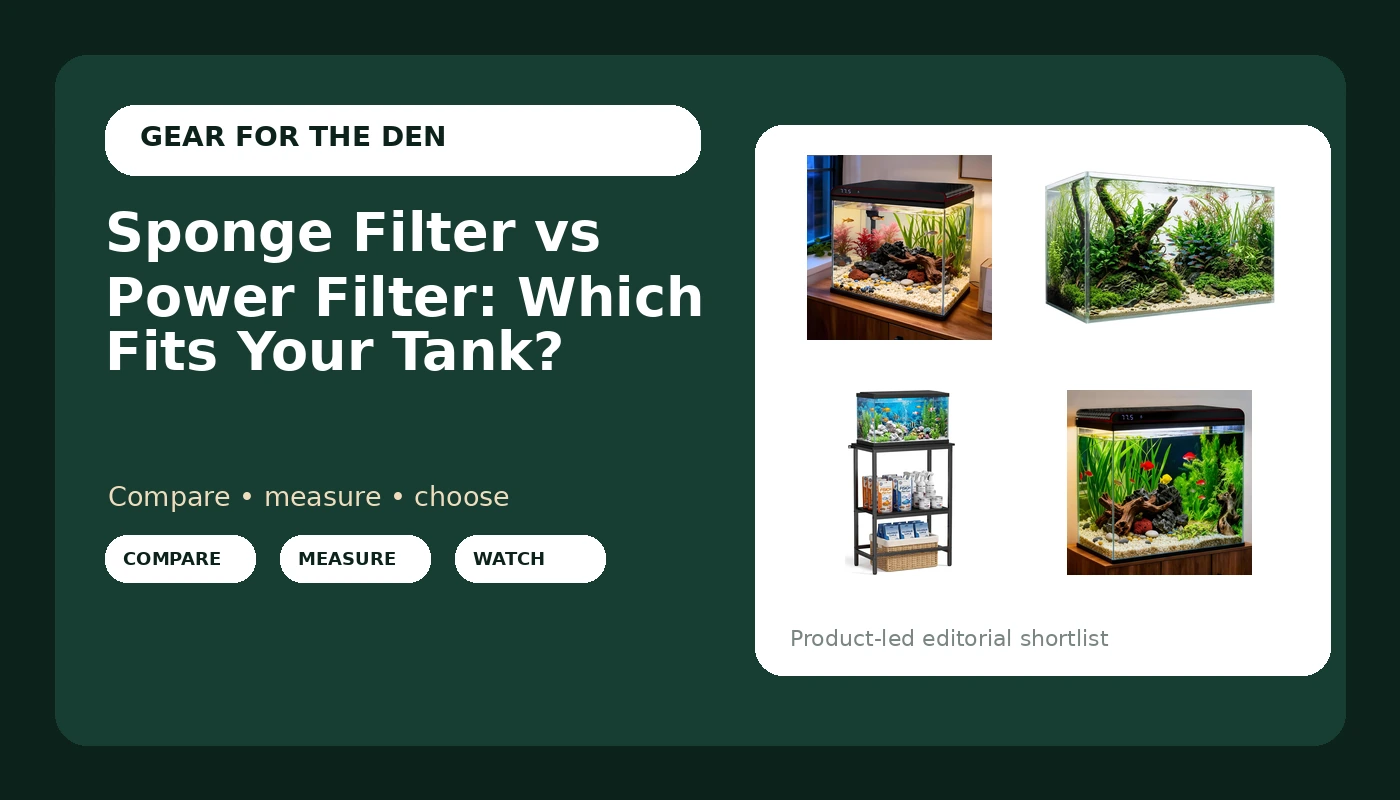
Coospider 20 Gallon Starter Kit
The larger tank volume gives a power filter room to work without blasting the whole tank, and the kit includes a pump and temperature monitoring
More water means more waste, so the stock pump may be more current than shrimp or a long-finned betta want
Prices and availability may change.
How I judge these four setups
I am not going to pretend I ran a lab test on four aquariums. What I can do is read a listing the way someone who has rinsed a lot of sponges reads it, and the details that matter for filtration are visible before you buy: tank volume, whether a pump is included, whether the rim leaves room to hang an air-driven filter, and how much water surface stays open for gas exchange. A molded hood with a cartridge slot pushes you toward one answer. A bare rimless box pushes you toward the other.
The other thing I check is what comes in the box. A kit that ships with a filter pump and temperature monitoring is a different starting point than a tank that ships as glass and nothing else. Neither is better in the abstract, but the second one costs more once you add a pump, a heater, a lid, and a light.
The sponge filter vs power filter decision, in plain terms
A sponge filter is a block of open-cell foam with a tube running through the middle. An air pump pushes air up that tube, water gets drawn through the foam, and the foam itself becomes the biological media. Flow is gentle, the intake cannot swallow a shrimp or a fry, and there is no cartridge to buy. The trade-off is that mechanical and biological filtration happen in the same place, so a sponge full of debris needs rinsing in tank water every couple of weeks, and a clogged sponge is a slow problem rather than a loud one.
A power filter uses a motor-driven impeller to pull water out of the tank, push it through media, and return it. Most hang on the back rim, though some sit inside the tank. You get a higher flow rate, real mechanical filtration that pulls floating particles out of the water column, and usually room for a chemical stage such as carbon. The trade-offs are the intake, the hum of the motor, and cartridges that keep costing money long after the initial purchase.
Neither design filters a tank by itself. Both are one filtration stage in a system that also includes your substrate, your plants, and your water change routine.
Where a sponge filter wins
Small tanks. A sponge filter in a 10 gallon tank is close to ideal, because the gentle flow suits the fish people keep at that size: bettas, shrimp, guppies, and fry that would be pulled against a power filter intake. The same reasoning applies to a quarantine or hospital tank, where you want biological filtration that is already seeded and cannot injure a sick fish.
Cost and simplicity run in the sponge filter's favor too. An air pump draws very little wattage compared with the motor in a power filter, which matters if the tank lives somewhere you care about the plug load, and there is nothing to disassemble. You pull the sponge, squeeze it in a bucket of tank water, and put it back. No impeller to clear, no cartridge to match.
The honest downside is appearance. A sponge filter with a lift tube is visible equipment, and in a rimless tank with no lid, it is the first thing a visitor notices. It also does nothing for water clarity beyond biological stability, so suspended particles keep circulating until a water change removes them.
Where a power filter wins
Bigger water volumes. Once you are past 20 gallons, a sponge filter has to be large or numerous to move enough water, and a single power filter handles the job with less clutter. The power filter vs sponge filter debate usually turns into a noise argument, and noise is the least important variable. The real difference is mechanical removal: a power filter pulls floating waste into a pad you throw away, while a sponge filter lets that waste settle into the substrate.
Messy fish are the other argument for a power filter. Goldfish, plecos, and anything that shreds food produce waste faster than a sponge can process it, and a filter with a mechanical stage keeps the water from turning cloudy between water changes. Surface movement is a bonus, since a return flow agitates the surface and helps gas exchange in a warm tank.
The costs are real: cartridges, a motor that eventually wears, and an intake that needs a pre-filter sponge if you keep shrimp or fry.
Tank volume, flow rate, and gallons per hour
Manufacturers publish gallons per hour, and that figure only means something next to your tank volume. A filter rated for a large tank will push a small one around like a washing machine. A filter rated for a small tank will not keep up in a big one, no matter how often you rinse the media.
This is where the sponge filter vs power filter choice stops being about preference and starts being about arithmetic. Match the flow rate to the water volume first, then decide which design delivers it with the least disruption to your fish.
Turnover is the shorthand: how many times per hour the filter moves the entire tank volume past the media. Community tanks generally want several turnovers an hour, and tanks with long-finned or delicate fish want fewer. If a pump's output is adjustable, that adjustability is worth more than a higher maximum number.
The real difference between sponge filter and power filter upkeep
Maintenance is where the two designs diverge most. A sponge filter has one consumable, and it is the sponge. Rinse it in tank water, never under the tap, and replace it only when it falls apart. That is a five minute job with no shopping involved.
A power filter has media you buy, an impeller you clean, and an intake you inspect. It fails loudly: the motor gets noisy, the flow drops to a trickle, and you notice. A sponge filter fails quietly, by slowing down over weeks until the water quality slips. Quiet failures are more dangerous, which is why a sponge needs a schedule rather than a reaction.
Matching these four setups to the right filtration
Coospider 10 Gallon Starter Kit. The listing includes 3-color LED lighting, a quiet filter pump, and temperature monitoring, so the tank arrives ready to run rather than as a glass box. For filtration that means you can run the included pump as shipped, or treat it as a placeholder and add a sponge filter on the opposite wall. At this tank volume, a sponge filter alone carries the biological load for a light stocking list, and the included pump gives you the option of running both while the sponge seeds. Coospider 10 Gallon Starter Kit
10 Gallon Rimless Ultra Clear Nano Aquarium. A bare tank is the cleanest way to test the sponge filter vs power filter question on your own terms, because nothing is decided for you. The open rim makes a sponge filter easy to hang and easy to pull for rinsing, and there is no hood to fight when you reach in. Budget for the pump, the heater, the light, and a lid if you keep jumpers. 10 Gallon Rimless Ultra Clear Nano Aquarium
Rymeera 5 & 10 Gallon Fish Tank Stand. The stand does not filter anything, and pretending otherwise would be silly. What it does is get a small tank to a height where you can actually reach the media, and it leaves space underneath for an air pump, tubing, and a bucket. Hiding the air pump removes the main aesthetic objection to sponge filtration. Rymeera 5 & 10 Gallon Fish Tank Stand
Coospider 20 Gallon Starter Kit. At this volume the arithmetic shifts. The larger tank volume gives a power filter room to work without turning the whole tank into a current, and the kit includes a quiet filter pump plus temperature monitoring. The flip side is waste: more water means more fish, more food, and more debris, and the stock pump may move more water than shrimp or a long-finned betta enjoy. Running the included pump alongside a sponge filter is a reasonable middle path here. Coospider 20 Gallon Starter Kit
The specs people forget: lighting, substrate, heat
Filtration gets all the attention, but three other numbers decide how well it works.
The kelvin rating of an LED strip tells you how white or blue the light looks, and plants care about that more than fish do. The 3-color LED lighting in the starter kits is there for viewing and for low-demand plants, not for a high-light carpet.
Substrate grain controls where waste ends up. Fine grain holds debris at the surface where a siphon can reach it, while coarse gravel lets waste sink between the pieces and out of reach. A power filter's mechanical stage compensates for coarse gravel. A sponge filter does not, so substrate choice matters more in a sponge-only tank.
The thermostat range on a heater tells you what temperature band you can hold, and a small tank swings faster than a large one. Temperature monitoring in the kit is a convenience, not a substitute for a separate thermometer when you are dialing in a new setup.
What I would set up first
For a first 10 gallon tank, the Coospider 10 Gallon Starter Kit plus a sponge filter is the combination I would hand to a beginner. The kit supplies light, a pump, and temperature monitoring; the sponge supplies gentle, cheap, shrimp-safe biological filtration. Whether you go sponge filter or power filter after that is a decision you can make later, once you know what you want to keep.
For a 20 gallon tank, I would run the Coospider 20 Gallon Starter Kit with its included pump and add a sponge filter for backup biofiltration. For someone who wants to choose every component, the rimless nano tank and a stand is the honest starting point, as long as you price the missing pieces before you commit.
What I am watching next
I am curious how the current generation of small air pumps holds up on noise over a year, because that is the one thing that pushes people away from sponge filtration in a bedroom tank. I am also watching how the self-cleaning claims on starter kits hold up once real fish waste is involved, since a tidy listing photo and a stocked tank are very different tests.
Until then, the practical answer stays the same: match the filtration to the tank volume you actually own, not to the one you plan to buy later.