Choosing between a tall aquarium vs long aquarium is really a decision about surface area, viewing height, and how much gear you want to hide. Both shapes can work, but they push your equipment list in different directions. A tall tank gives you a dramatic vertical view and fits into narrow spaces, while a long tank spreads water across a wider footprint, which changes everything from light spread to heater placement. This comparison looks at the gear that makes each shape practical, with a focus on heaters and LED lights, because those two categories cause the most frustration when the tank dimensions are wrong for the equipment.
For most freshwater keepers, the long aquarium is the easier shape to heat, light, and filter, especially if you want live plants. The tall aquarium vs long aquarium debate usually comes down to surface area: a long tank has more of it, which helps gas exchange and keeps the water column more even. But the best choice for you depends on your stand, your hood, and the fish you want to keep. If you are building a first tank, the long shape gives you more margin for error.
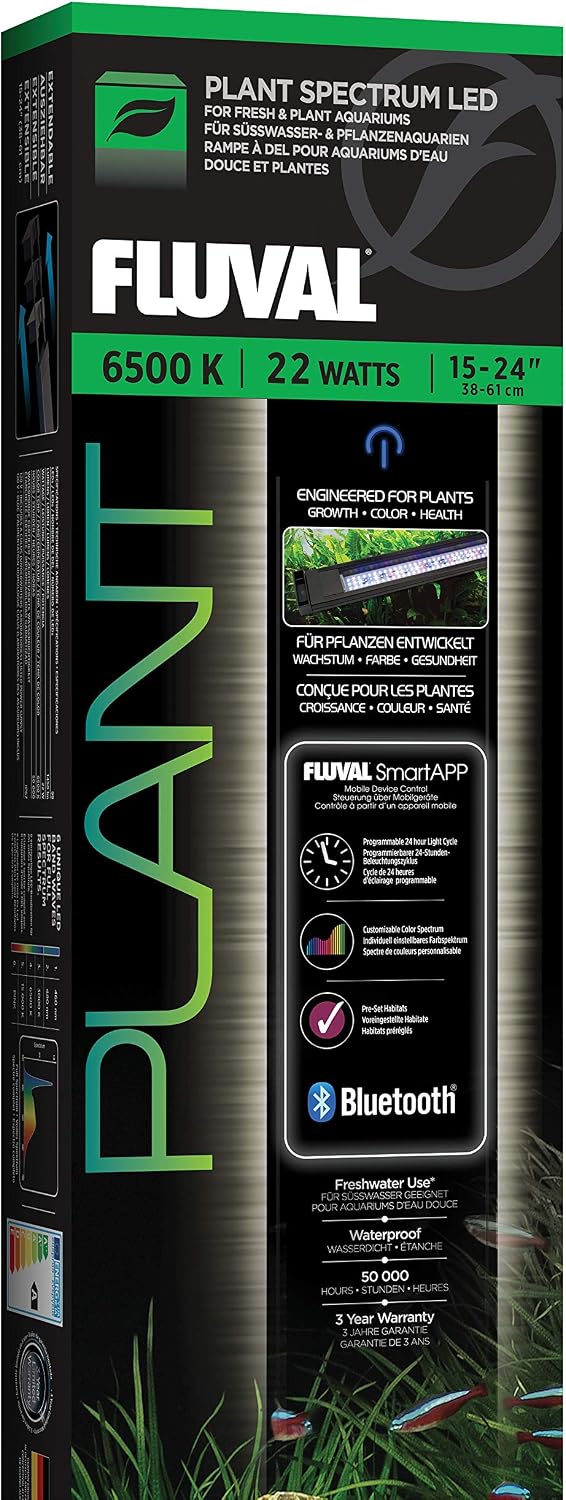
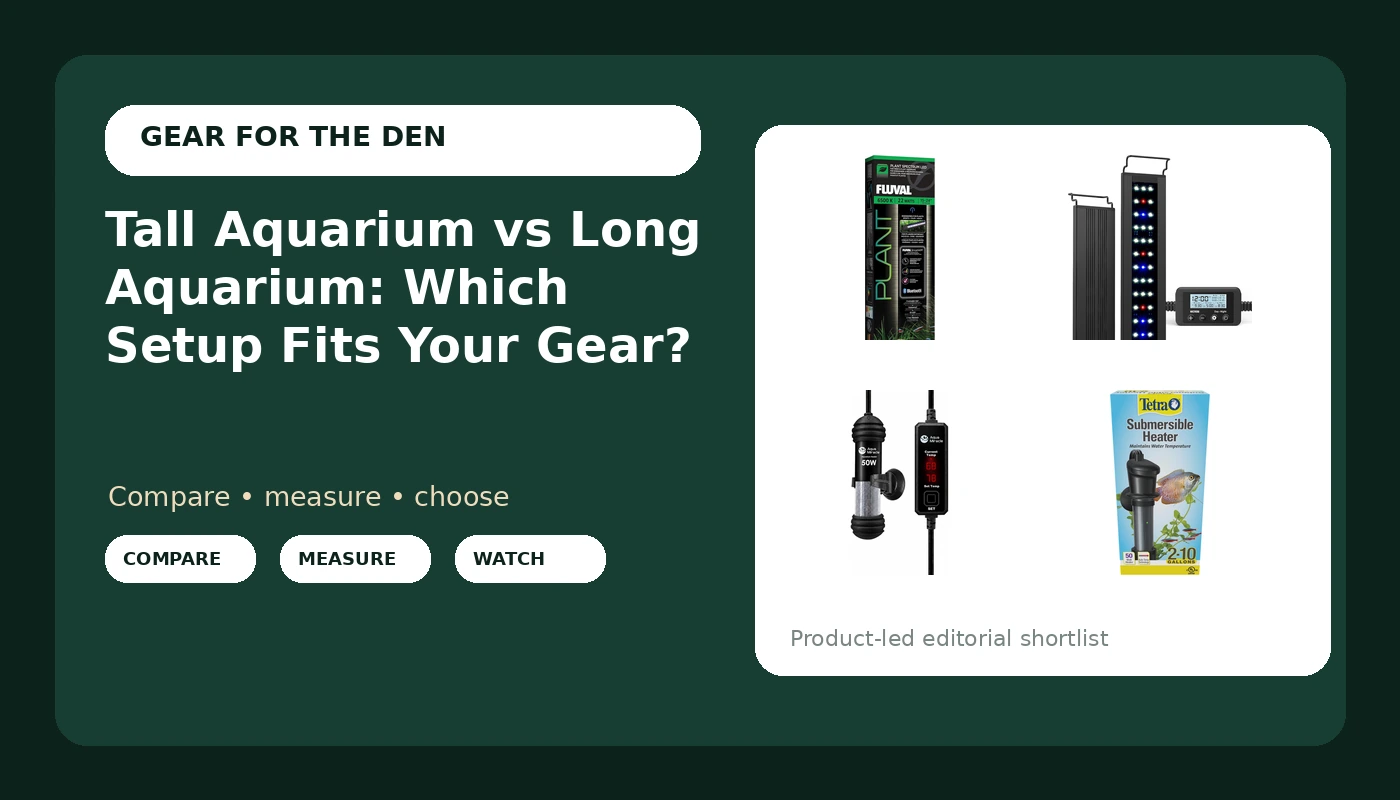
Fluval Plant 3.0 LED Planted Aquarium Lighting, 22 Watts, 15-24 Inches
Best for a long, planted tank because the 22-watt output and 15-24 inch spread cover more surface area, and the fixture is designed for planted aquariums where light spread matters as much as raw output
Costs more than the budget options and may be overkill for a narrow tall tank where the light cannot spread across a wide footprint
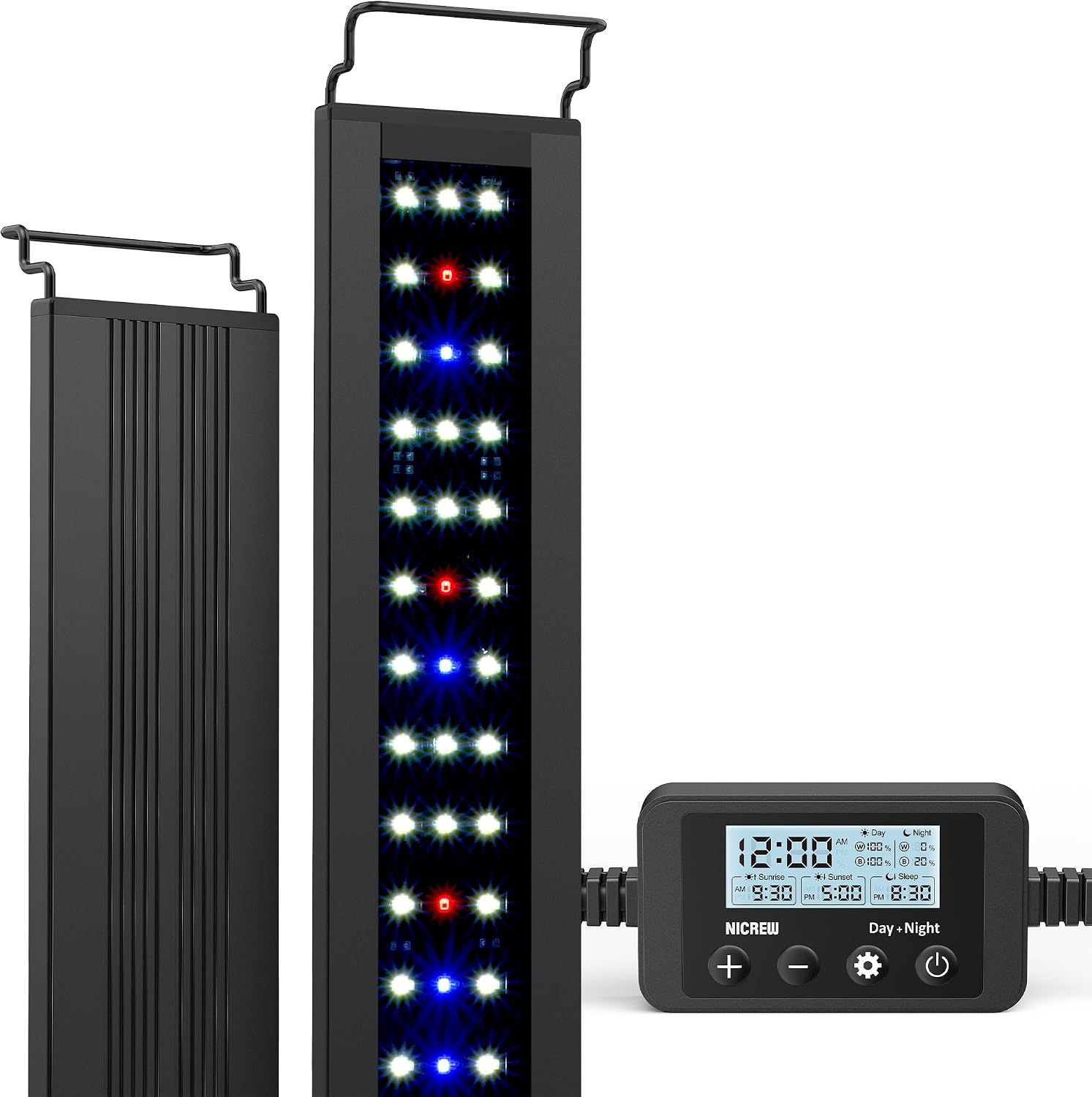
NICREW C10 Plant Aquarium Light, 12-18 in, 9W, Full Spectrum with Timer
The built-in timer and 12-18 inch fit make it a strong budget pick for low-light plants, and the full-spectrum output is enough for easy species like anubias and java fern
Lower output than the Fluval and less coverage for deeper tanks, so it is not the best match for a tall tank with plants near the substrate
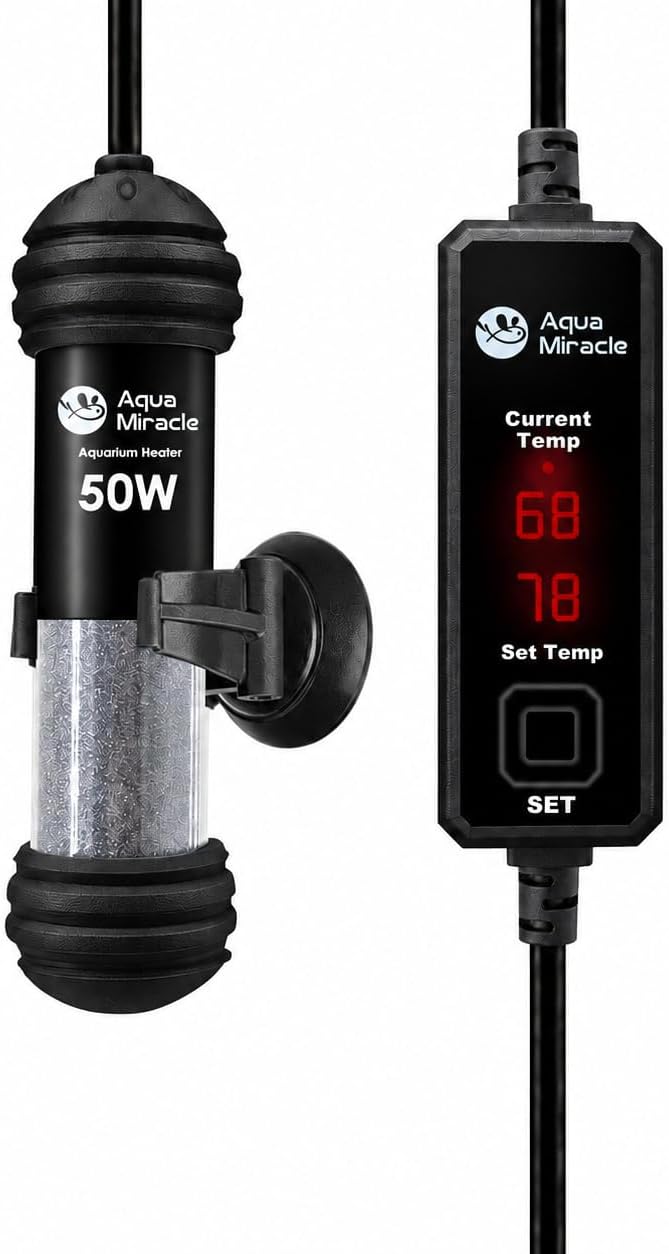
AquaMiracle 50W Small Aquarium Heater Dual LED Display for 5-10 Gal Tanks
Dual LED display makes it easy to read the temperature, and 50 watts suits small 5-10 gallon tanks where a compact heater is easier to hide
The display and controls are more useful in a long tank where you can see them without reaching into the water, and the 5-10 gallon rating is narrower than the Tetra
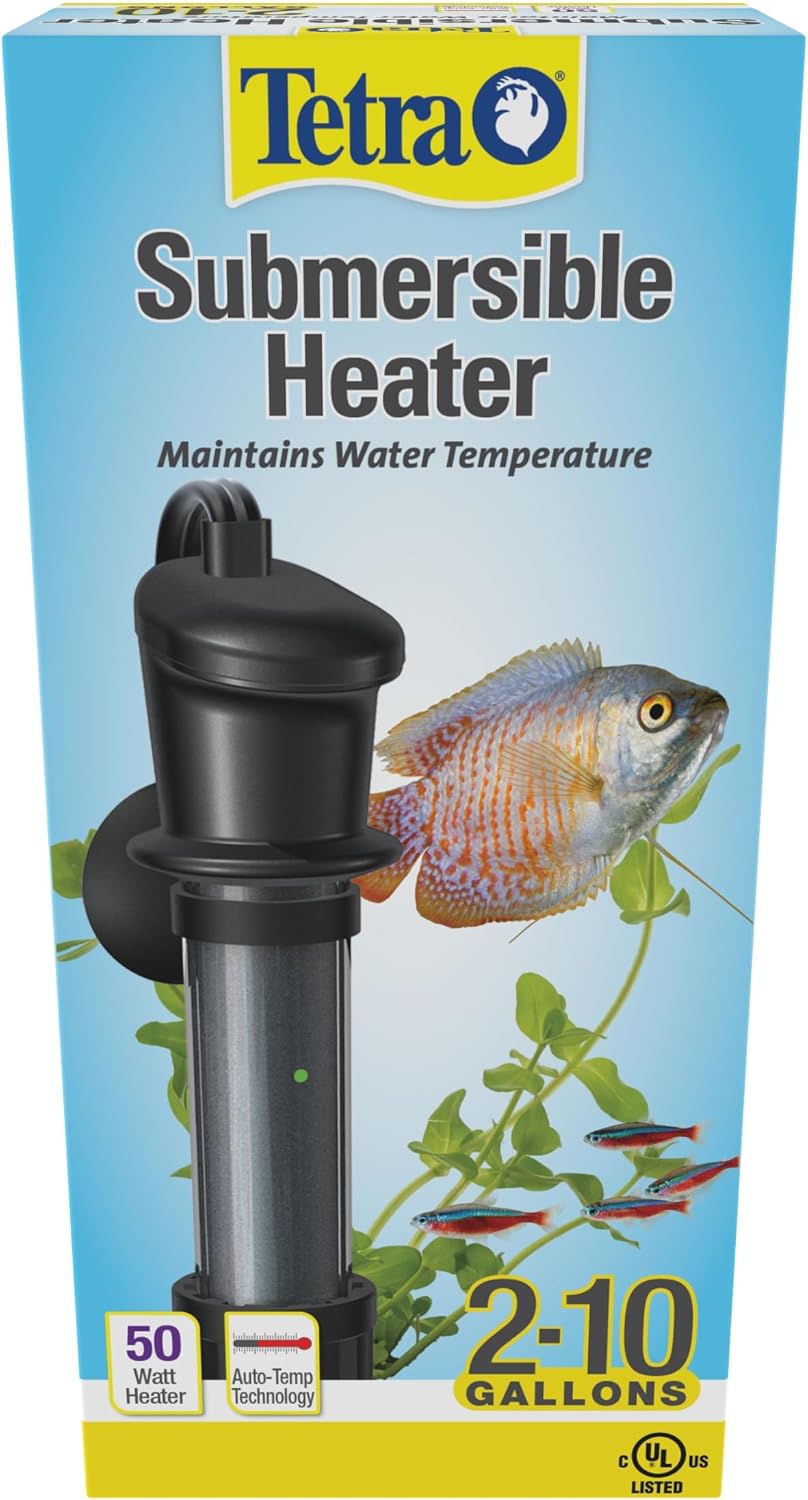
Tetra HT Submersible Aquarium Heater With Electronic Thermostat, 50-Watt, 2-10 Gallon
Electronic thermostat and a 2-10 gallon rating make it a flexible choice for small tanks, including nano setups and quarantine tanks
No LED display, so you have less visual feedback than the AquaMiracle, and the wider rating does not help if your tank is outside the 2-10 gallon range
Prices and availability may change.
How tall aquarium vs long aquarium changes your equipment list
The shape of your tank decides where equipment can go and how well it works. A tall aquarium has less surface area for the same tank volume, so gas exchange is slower and the water column can stratify. That means your filter media and heater placement matter more, and you may need to think harder about cycle time because the biological filter has less oxygen to work with. A long aquarium, by contrast, gives you a wider surface, which makes it easier to run a hang-on-back filter, a sponge filter, or a canister without fighting the tank's proportions.
The practical difference between tall aquarium and long aquarium setups shows up in three places: light penetration, heater placement, and hood fit. In a tall tank, light has to travel farther to reach the substrate, so a low-output LED may only grow plants near the top. In a long tank, the challenge is spread rather than depth. A light that covers 15-24 inches, like the Fluval Plant 3.0, can illuminate a long, shallow tank evenly, while a 12-18 inch fixture like the NICREW C10 is better suited to a smaller footprint. Neither fixture is better in a vacuum; each one solves a different shape problem.
Substrate depth also changes with shape. A tall tank often needs a deeper substrate bed to create visual balance and to give rooted plants enough room. That extra substrate adds weight, which brings stand load into the conversation. A long tank can use a thinner, more even substrate layer, which keeps the stand load lower for the same tank volume. If you are comparing a tall aquarium or long aquarium for a small apartment, the long shape usually gives you more usable space for fish and plants without pushing your stand to its limit. It also makes water changes and planting less of a stretch.
Heaters: wattage, placement, and tank shape
Heater wattage is one of the few specs that scales predictably with tank volume. For small tanks in the 5-10 gallon range, a 50-watt heater is a common match. The Tetra HT Submersible Aquarium Heater is rated for 2-10 gallons and uses an electronic thermostat, which is the feature to look for if you want stable temperatures without constant fiddling. The AquaMiracle 50W Small Aquarium Heater is rated for 5-10 gallons and adds a dual LED display, which makes it easier to check the set temperature at a glance. Both are submersible, so you can place them horizontally or vertically depending on the tank shape.
In a tall tank, the heater usually needs to sit lower in the water column, and you have to be careful that it does not rest against the substrate. In a long tank, you have more horizontal room to place the heater near the filter outflow, where heat distributes more evenly. That placement difference is one reason the long aquarium vs tall aquarium question matters even if you buy the same wattage. A 50-watt heater that works perfectly in a long 10-gallon tank can struggle in a tall 10-gallon tank if the water is not circulating well. The fix is not always a bigger heater; sometimes it is a better filter or a small powerhead.
Neither of these heaters is a substitute for a filter, and neither will fix a tank that is too cold because the room temperature swings. But for a small freshwater setup, they are the two most sensible starting points in this comparison. If you are building an equipment list, put the heater on it before you buy plants, because cycle time and temperature stability come first. A heater that cannot hold a steady temperature will make every other part of the setup harder.
LED lights: spread matters more than watts
The Fluval Plant 3.0 LED Planted Aquarium Lighting is the premium pick here. It is a 22-watt fixture rated for 15-24 inches, which makes it a natural fit for a long, planted tank. The wider spread means you can grow plants across more of the substrate instead of concentrating light in the center. If your goal is a carpeting plant or a densely planted long tank, this is the fixture that gives you the most room to work with. It is also the better choice if you want to grow plants that need more intensity, because 22 watts gives you more headroom than a 9-watt fixture.
The NICREW C10 Plant Aquarium Light is the budget pick. It is a 9-watt fixture rated for 12-18 inches, and it includes a full-spectrum output with a timer. The timer is a genuinely useful feature because it takes one variable out of your daily routine. For a low-light planted tank or a fish-only tank with a few easy plants, the NICREW C10 can be enough. The trade-off is output and coverage: 9 watts will not penetrate as deeply as 22 watts, so a tall tank with plants at the bottom may need a stronger light. If you keep only floating plants or low-light species, the NICREW C10 is a sensible way to save money for a better filter.
This is where the tall aquarium vs long aquarium choice becomes a lighting decision. A tall tank needs more intensity to reach the lower third of the water column. A long tank needs more spread to cover the left and right ends. The Fluval Plant 3.0 is built for spread, while the NICREW C10 is built for smaller, shallower footprints. Neither is universally better; they solve different problems.
Budget vs premium: where the money goes
The two lights in this comparison sit at opposite ends of the planted-tank market. The Fluval Plant 3.0 costs more because it puts out more light and covers a wider area. The NICREW C10 costs less because it puts out less light and covers a smaller area. If you are setting up a long, low-tech tank with easy plants like anubias or java fern, the NICREW C10 can do the job and leave more of your budget for filter media and substrate. If you want a high-tech planted tank with demanding plants, the Fluval Plant 3.0 is the safer investment.
The heaters follow a similar pattern, but the differences are smaller. Both the Tetra HT and the AquaMiracle are 50-watt heaters for small tanks. The Tetra HT uses an electronic thermostat and has a broad 2-10 gallon rating. The AquaMiracle adds a dual LED display and is rated for 5-10 gallons. If you like seeing the temperature without opening an app or checking a separate thermometer, the AquaMiracle is the more convenient choice. If you want the flexibility to use the heater in a 2-gallon tank, the Tetra HT has the wider range. Neither heater is a luxury item, but the small feature differences matter in daily use.
The lesson for a tall aquarium vs long aquarium build is that premium gear does not automatically fix a shape mismatch. A high-output light on a tall, narrow tank can still leave the bottom dim. A budget light on a long, shallow tank can still cover the whole footprint if the spread matches. Match the specs to the shape before you match the price to your budget.
Hood fit and stand load: the forgotten specs
Hood fit is the spec that ruins more aquarium plans than any other. Long aquariums come in standard widths and lengths, so replacement hoods, glass tops, and LED fixtures are easy to find. Tall aquariums are more likely to have unusual dimensions, which means you may need a custom hood or a hanging light kit. Before you buy a tall tank, measure the opening and check whether the light you want can actually sit on top of it. The Fluval Plant 3.0 and NICREW C10 both have specific length ranges, so a tank that falls outside those ranges will need a different mounting solution.
Stand load is the other quiet factor. A tall aquarium concentrates the same volume of water into a smaller footprint, which can put more pressure on a small stand. A long aquarium spreads the weight across a wider area, which is usually easier on furniture. If you are using a repurposed cabinet or a desk, the long shape is the lower-risk choice. Add substrate depth to the calculation: a deep substrate bed in a tall tank can add significant weight, and that weight sits on the same stand. Check the stand's rating before you fill the tank, not after.
Cycle time is not a spec you can measure in a store, but it is affected by shape. A long tank with more surface area supports more oxygen exchange, which helps the beneficial bacteria in your filter media establish. A tall tank with less surface area may take longer to stabilize, especially if you stock it heavily at the start. This is not a reason to avoid tall tanks, but it is a reason to be patient and to test your water before adding fish. A longer cycle time is easier to manage when you plan for it.
What the specs say
If you line up the four products in this comparison, the pattern is clear. The heaters are both 50-watt units aimed at small tanks, with the Tetra HT covering 2-10 gallons and the AquaMiracle covering 5-10 gallons. The lights are split by output and coverage: the Fluval Plant 3.0 is a 22-watt, 15-24 inch fixture for planted tanks, and the NICREW C10 is a 9-watt, 12-18 inch fixture with a timer. None of these products cares whether your tank is tall or long, but their specs determine which shape they serve best. That is why the equipment list should follow the tank, not the other way around.
For a long aquarium, the Fluval Plant 3.0 and the NICREW C10 both make sense depending on your plant load. For a tall aquarium, the Fluval Plant 3.0 has the better chance of reaching the lower water column, while the NICREW C10 is better reserved for low-light setups or shallow tanks. On the heating side, either 50-watt heater can work in a small tank, but the AquaMiracle's dual LED display is easier to live with in a tall tank where you may not want to reach into the water to check a dial. The Tetra HT's electronic thermostat is the simpler, more traditional option.
The bigger point is that tank shape should drive your equipment list, not the other way around. Buy the tank that fits your room and your stand, then choose a heater wattage and light spread that match its dimensions. If you do that, the tall aquarium vs long aquarium decision becomes much less stressful. You will also spend less time returning gear that never had a chance to fit.
Should you buy the gear before the tank?
No. Buy the tank first, or at least decide on the dimensions before you order a light or heater. The reason is hood fit. A light that is perfect for a 20-gallon long tank may not fit a 20-gallon tall tank, even though the tank volume is the same. The same goes for heaters: a 50-watt heater that hides easily behind a long tank's filter may be awkward to place in a tall tank with a smaller footprint. If you buy gear first, you are guessing at the most important spec.
Once you know the tank shape, the rest of the equipment list falls into place. Choose a filter that matches the tank volume and the surface area, pick a heater wattage that suits the room temperature and the tank size, and select a light whose spread covers the footprint. Then plan your cycle time, add substrate to the depth you want, and stock slowly. The gear in this comparison is a starting point, not a complete setup. You will still need a filter, a test kit, a water conditioner, and a plan for maintenance.
If you are still undecided between a tall aquarium or long aquarium, think about maintenance. A long tank is easier to reach into for water changes, planting, and cleaning. A tall tank looks dramatic but requires longer tools and more careful planning. For most first-time freshwater keepers, the long shape is the more forgiving choice.
What to compare next
The next comparison in this series will look at filter media and substrate depth for planted tanks, because those two choices affect cycle time and plant health as much as the light and heater. A future comparison will also look at hoods and glass tops for standard long aquariums versus taller custom builds, since hood fit is the most common reason people return equipment. Those topics deserve their own breakdown because the details change with tank volume and shape.
For now, the takeaway is simple. The tall aquarium vs long aquarium decision is a shape decision, and shape determines which gear works. A long tank rewards you with surface area, easier access, and more predictable light spread. A tall tank rewards you with vertical presence and a smaller footprint, but it asks more of your heater placement, your light output, and your patience during cycle time. Match the gear to the shape, and either tank can be a great freshwater setup.