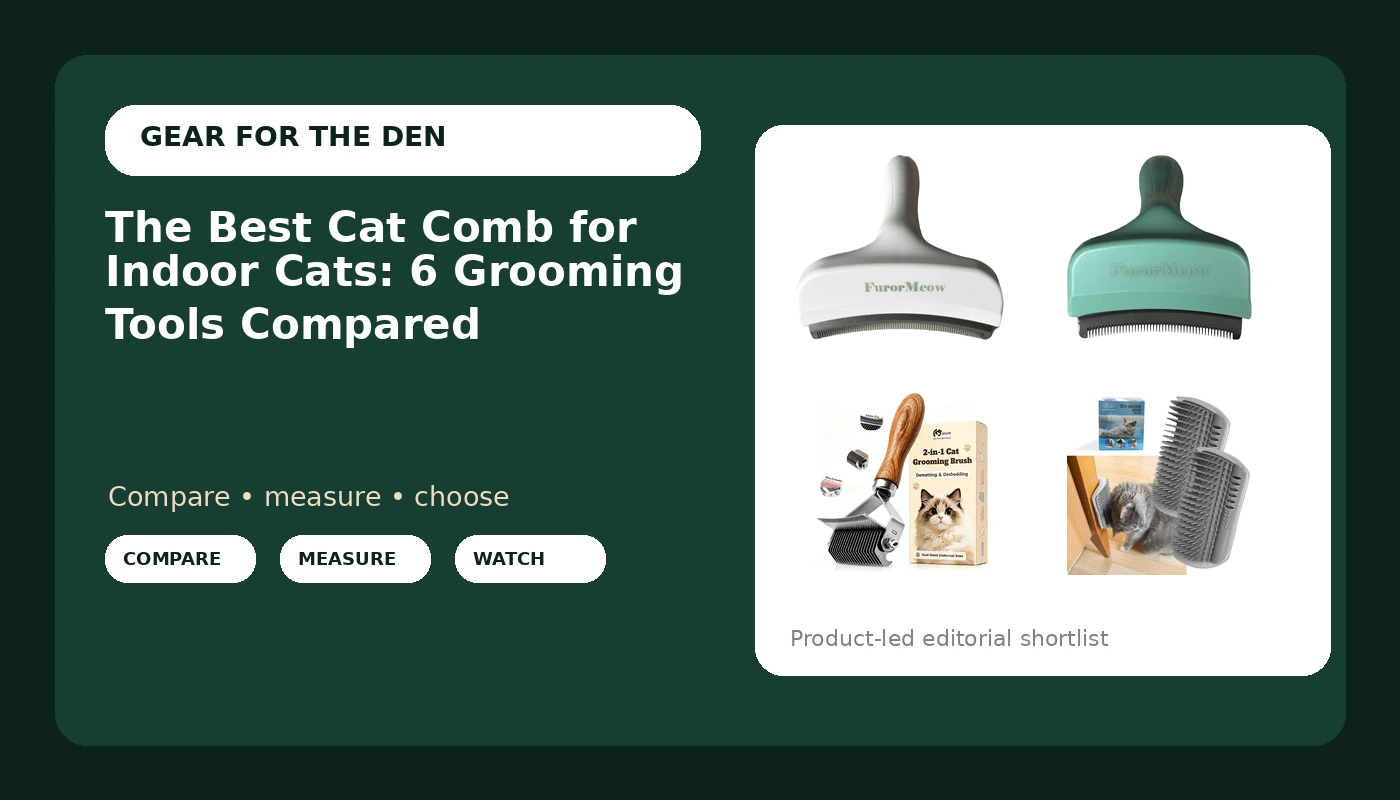
Indoor cats shed all year, and most of that hair ends up on upholstery, bedding, and dark clothing rather than on a lawn. That is why the best cat comb for indoor cats is rarely the tool with the most teeth or the loudest discount sticker. The right choice comes down to comb spacing, bristle type, and whether the tool has a deshedding edge that reaches the undercoat without scraping skin.
This roundup covers six grooming tools sold for cats: two sizes of the same V-shaped deshedding comb, a two-in-one dematting and deshedding comb, a wall-mounted self groomer, a compact brush and comb tool, and a stainless steel nail clipper for the parts of grooming a comb cannot handle. The notes below come from the product listings themselves, matched so that every card points to the exact item described. Nothing here is a hands-on test result, and prices move, so use the retailer link on each card to confirm current details.
Quick answer
The FurorMeow Pet Deshedding Tool with Curve Blade (White, Large) is the strongest fit for indoor cats with a dense undercoat because its tight V-shaped teeth and curved blade are built to work under the topcoat and lift loose hair. Choose the 2 Pack Softer Self Groomer with Catnip Wall Corner Massage Comb Scratcher instead when your cat will not sit still for a hand-held tool. If the coat is long enough to mat, start with the Cat Brush for Long Haired Cats, 2-in-1 Dematting & Deshedding Comb.
What is worth comparing in a cat comb for indoor cats
Not every tool sold as a cat comb does the same job, and a roundup is only useful if it separates the jobs. The products below fall into four groups: full-size deshedding combs, a two-in-one dematting and deshedding comb for long coats, a self-service wall groomer, and a compact brush and comb tool for weekly upkeep. The clipper sits alongside them because a complete indoor grooming routine covers claws as well as coat.
The differences that matter most are comb spacing, coat length, and how much of the undercoat a tool can reach. Wide, widely spaced teeth glide through a long coat but leave loose undercoat behind. Tight teeth catch more hair per pass but can tug on mats. A curve-bladed deshedding edge is designed to follow the body rather than dig in. Bristle type and handle shape decide whether the tool is comfortable for a ten-minute session or a two-minute one, and for many indoor cats the two-minute version is the one that actually gets used.
Top pick
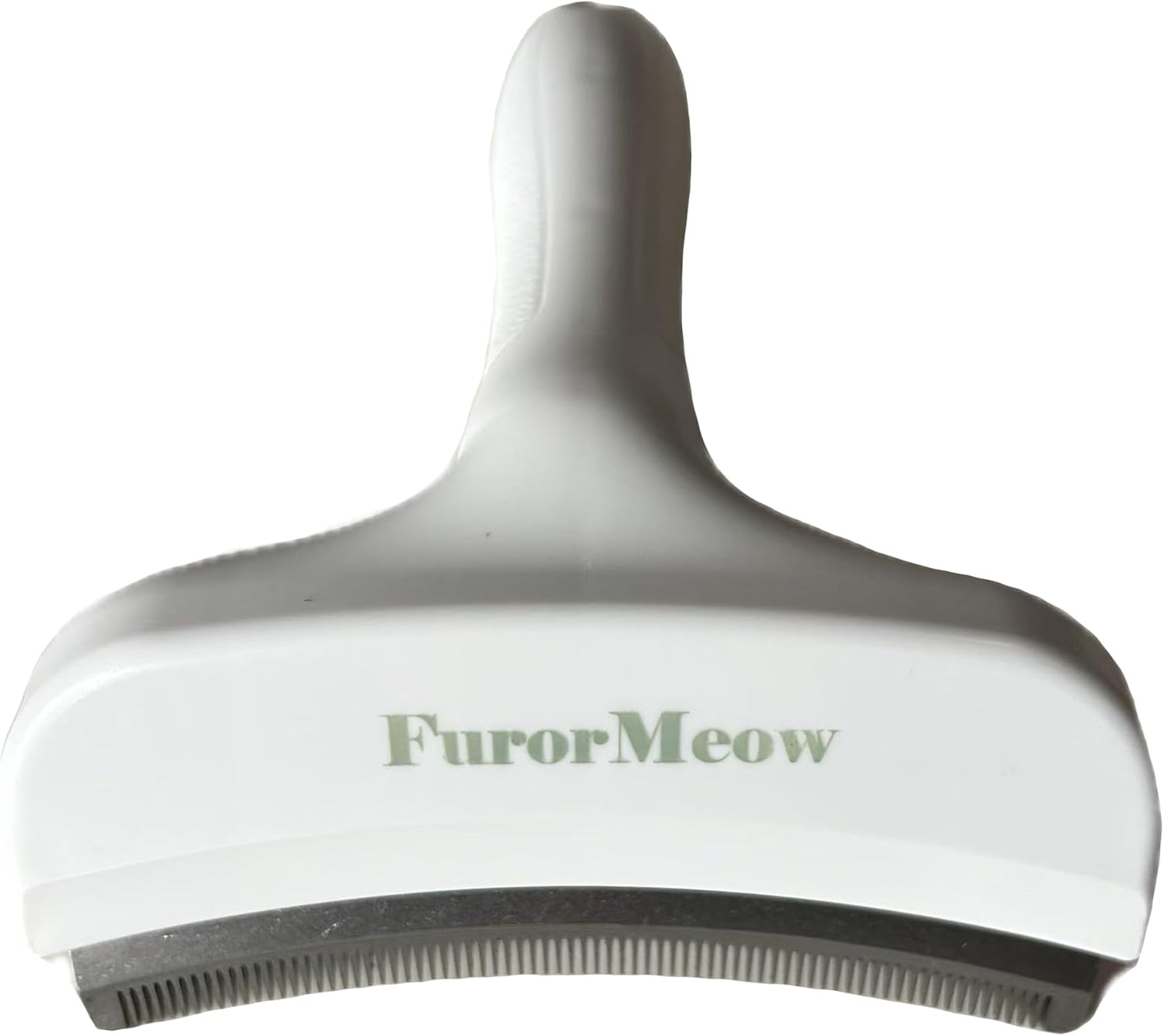
FurorMeow Pet Deshedding Tool with Curve Blade, Cat Grooming Brush, Tight V-shaped Teeth Shedding Comb for Cats and Dogs (White, Large)
A large curve-blade deshedding tool with tight V-shaped teeth, listed for both cats and dogs. The size suits a full-grown cat with a thick coat.
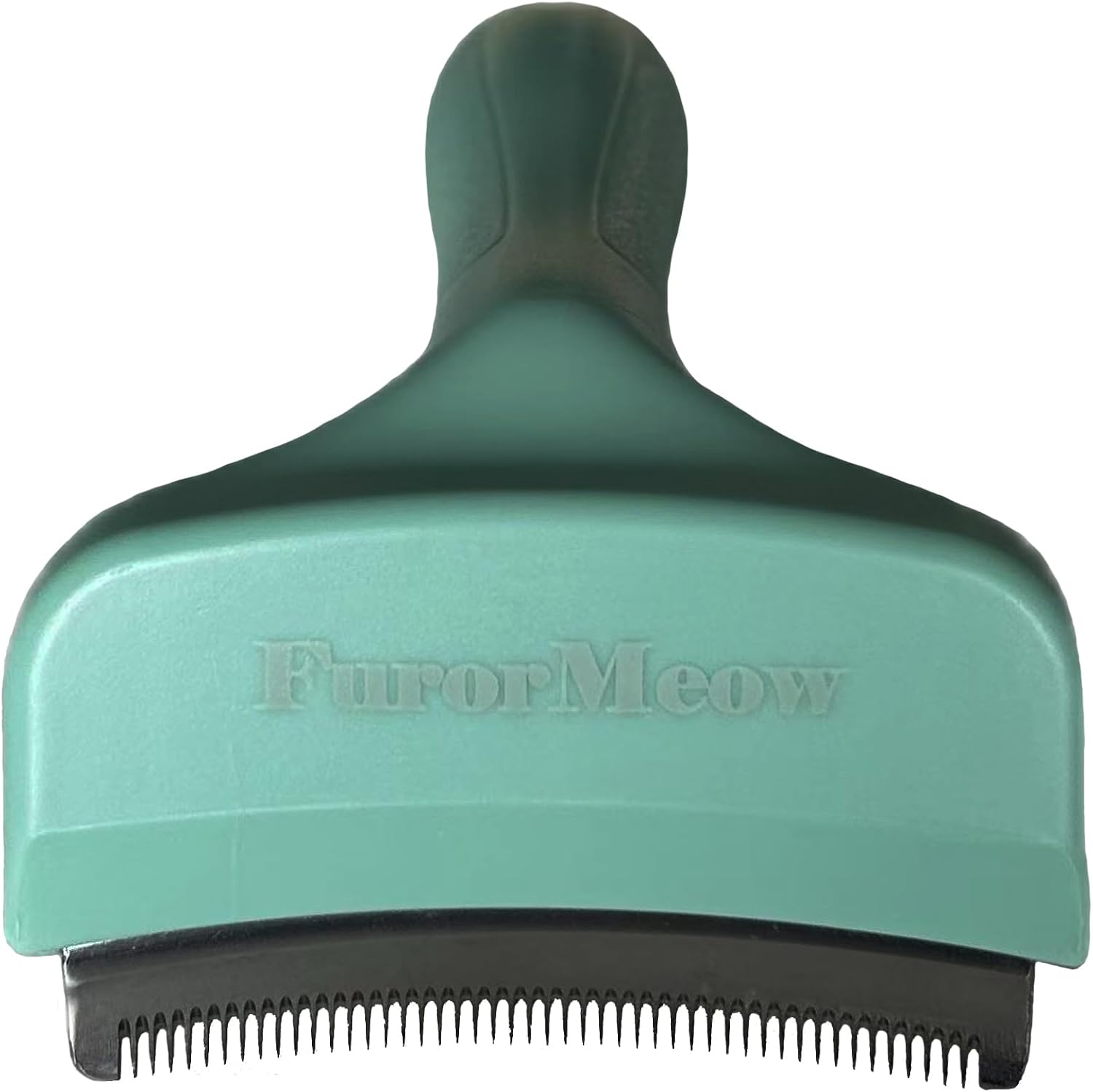
FurorMeow Pet Deshedding Tool with Curve Blade, Cat Grooming Brush, Tight V-shaped Teeth Shedding Comb for Cats and Dogs (Green, Small)
The same curve-blade design in a small green body, which suits kittens, smaller cats, and shorter grooming sessions.
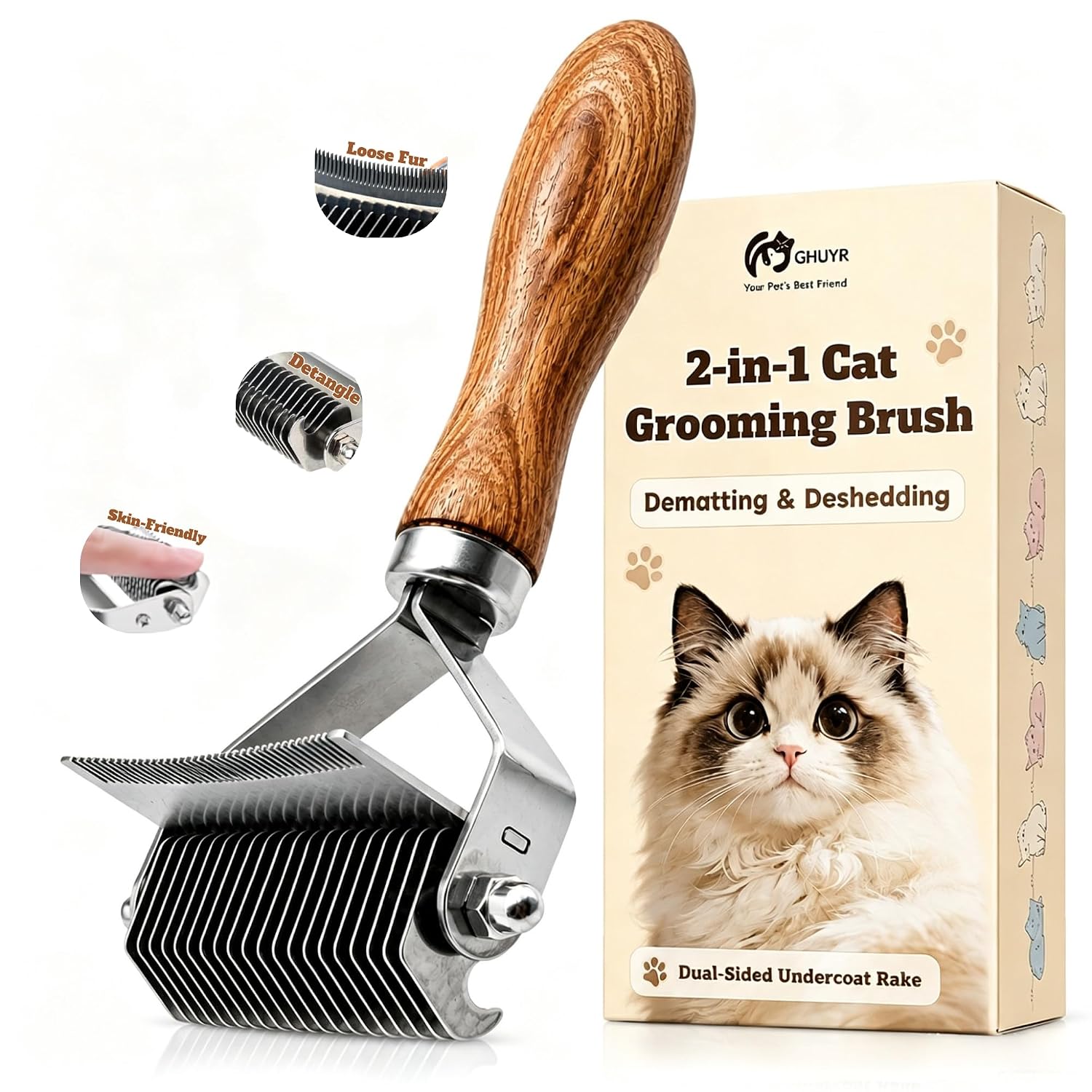
Cat Brush for Long Haired Cats, 2-in-1 Dematting & Deshedding Comb
A two-in-one comb the listing presents as both a dematting and a deshedding tool, aimed at long coats where tangles form.
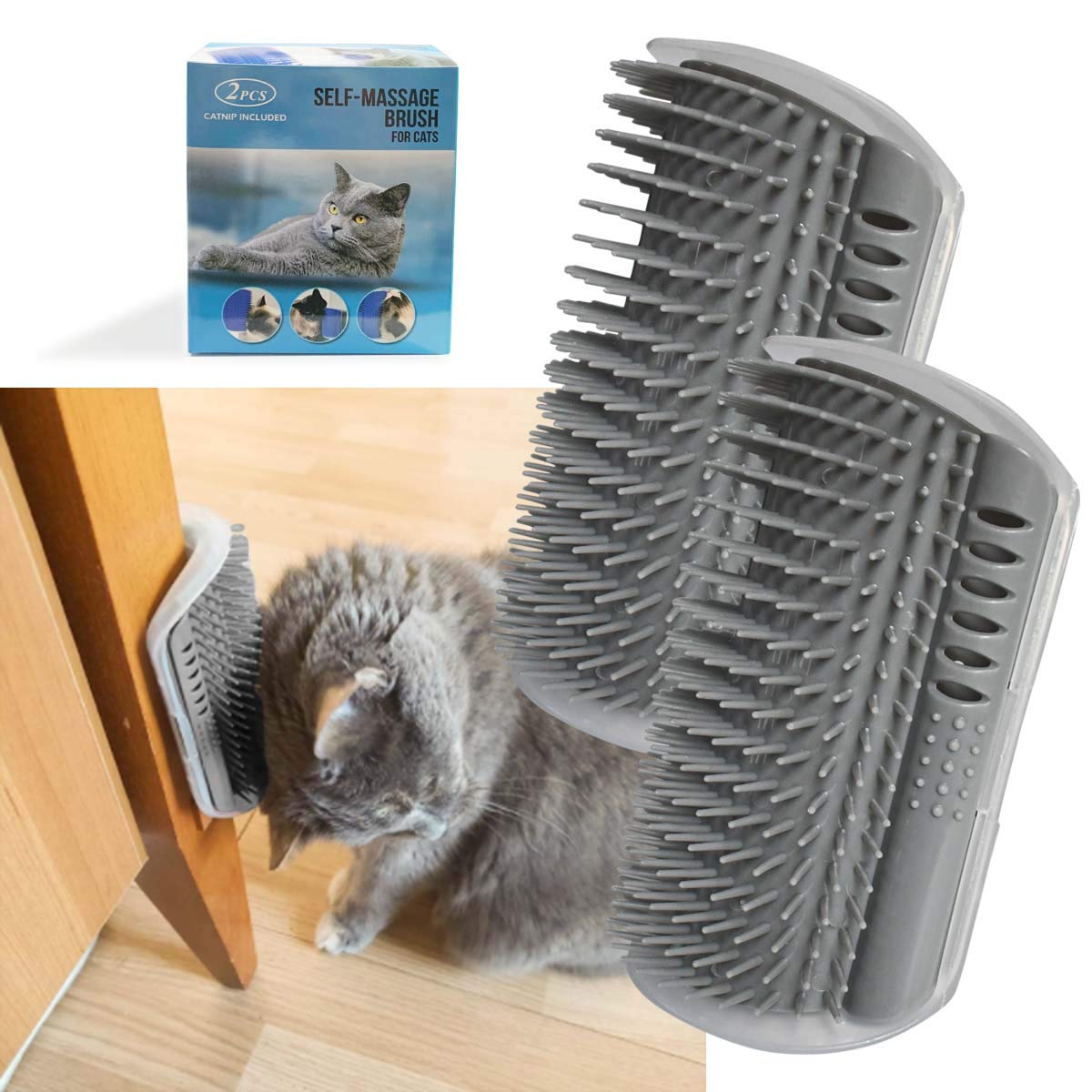
2 Pack Softer Self Groomer with Catnip Wall Corner Massage Comb Scratcher Grooming Brush Tool for Long & Short Fur Kitten Cats Dogs (Gray)
Two gray corner groomers with a catnip element, so a cat can rub against the brush on its own schedule. Listed for long and short fur.
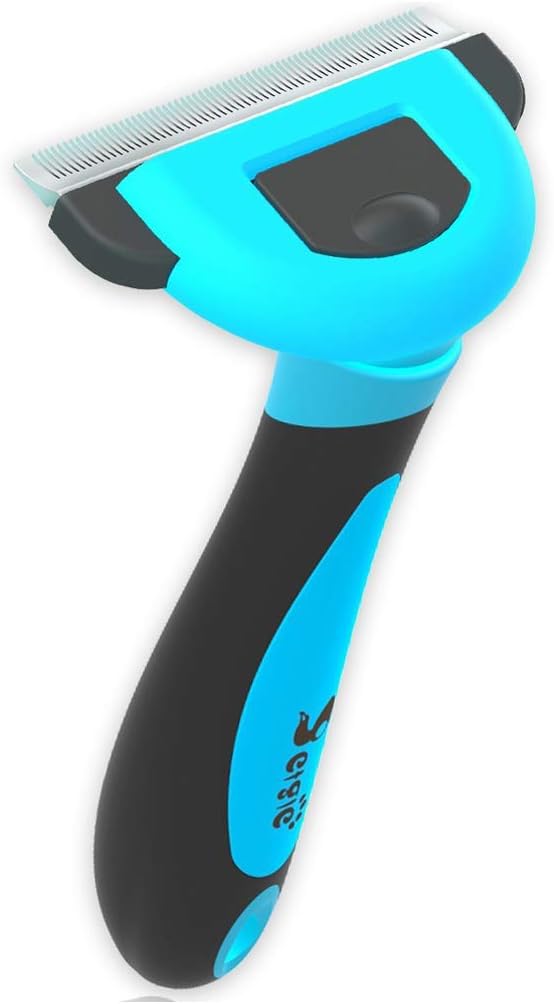
Petgle Cat Brush & Cat Comb for Shedding, 2.5inch Blue – Hair Brush for Long Hair and Short Hair, Pet Grooming Tool for Small to Medium Dogs and Cats, Detangle, Eco Friendly, Weekly Grooming
A compact blue brush and comb tool described for long and short hair, detangling, and weekly grooming on small to medium dogs and cats.
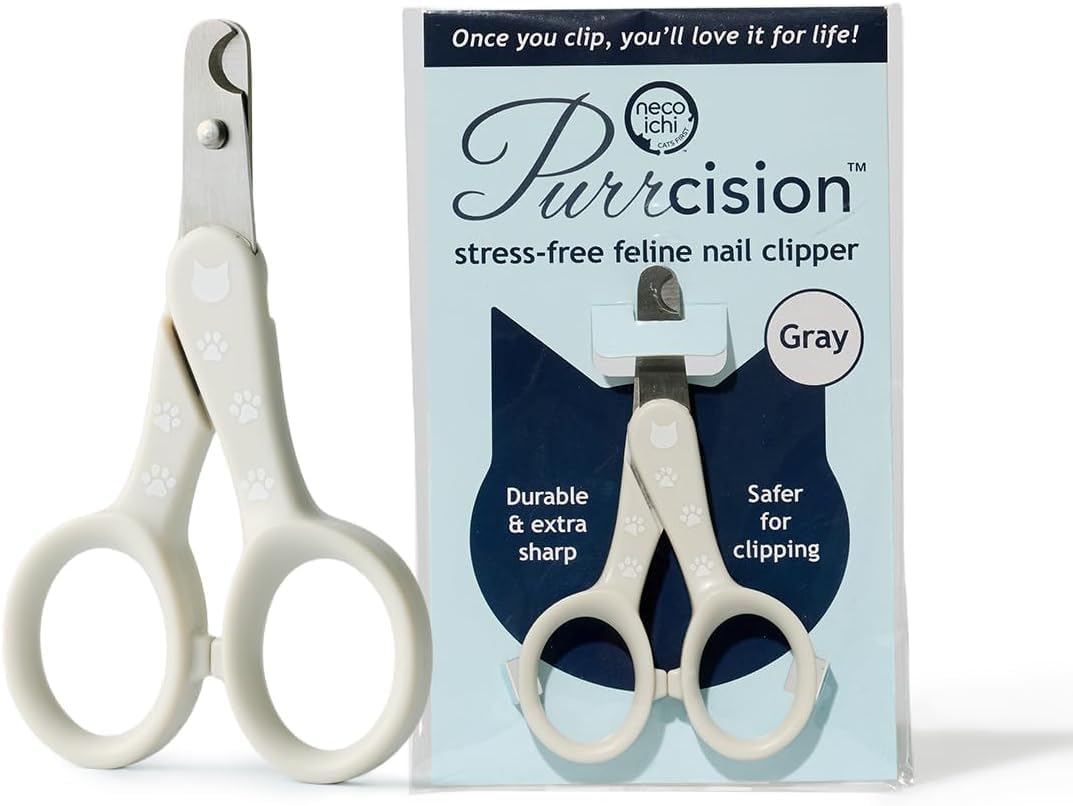
Necoichi Purrcision Stainless Steel Cat Nail Clipper, Made in Japan (Gray)
A stainless steel clipper made in Japan and sold in gray, included because coat care is only part of the routine. Claws still need attention.
How these products were compared
This guide compares comb spacing, coat length suitability, undercoat reach, handle and grip, and ease of cleaning. Product names, images, and retailer links are matched to the same listing so that every card points to the product shown. No tool here was tested by us, no ratings or review counts are reproduced, and no measurements are estimated. Where a claim appears, it reflects the wording of that product's listing, such as the size, color, and stated purpose in the title.
How to choose the right cat comb for indoor cats
Start with coat length, not with brand. A short, dense coat sheds loose hair that sits close to the skin, so a tool with tight teeth and a deshedding edge does more work than a wide-tooth comb. A long, silky coat tangles more easily, so the priority shifts to a comb that separates strands without pulling. That is where a two-in-one dematting and deshedding comb earns its place, and where tight teeth used too aggressively can do harm. The ideal cat comb for indoor cats is the one that matches the coat in front of you, which is why a single tool rarely covers a multi-cat household.
Comb spacing is the next decision. Wide spacing moves through a long coat and lifts debris, but it leaves undercoat behind. Narrow spacing catches more loose hair per pass and works well on short coats, provided you keep strokes short and light. Bristle type matters in the same way: stiffer bristles lift more hair from a dense coat, while softer bristles suit cats that find grooming uncomfortable. If you are unsure, start with the tool built for the coat you can see and add a second tool later.
The undercoat is where most indoor shedding problems live. A deshedding edge that follows the curve of the body can reach under the topcoat and pull out loose hair that would otherwise end up on the sofa. That is the reasoning behind the two FurorMeow tools here, which use tight V-shaped teeth and a curved blade, and behind the compact Petgle tool, described for detangling and weekly grooming on both long and short hair.
Your cat's tolerance decides as much as the coat does. Some cats accept a hand-held comb for a few minutes and then walk away; for those cats, a wall-corner self groomer the cat uses on its own can cut down on loose hair without a struggle, and a two-pack lets you place one low and one higher. Glove-style groomers, which rely on glove fit and a palm covered in soft nubs, suit cats that dislike a rigid tool, though they remove less undercoat per pass.
Two more items round out the kit. A roller adhesive picks up what the comb leaves on fabric, and a nail guard or safety stop on a clipper keeps the cut away from the quick. Neither replaces a comb, but both make the routine easier to keep up with. If your cat's coat is changing because of age or diet, our guide to senior cat skin and coat care covers the non-tool side of the problem.
FurorMeow Pet Deshedding Tool with Curve Blade (White, Large)
The top pick is the large white version of the FurorMeow curve-blade deshedding tool. Its listing describes tight V-shaped teeth paired with a curved blade, a combination intended to comb through the topcoat and lift loose undercoat hair from cats and dogs. The large size is the one to consider for a full-grown indoor cat with a thick coat, and the same design is sold in a small green version for smaller animals.
What makes it the default recommendation is the match between the tool and the most common indoor problem: year-round shedding from a dense undercoat. Tight teeth catch more hair per pass than a wide-tooth comb, and the curve is meant to keep the working edge in contact with the body instead of poking at it. Used in short strokes along the back, flanks, and hindquarters, a tool like this is designed to pull loose hair out of a coat that already looks tidy.
The trade-off is real. Tight V-shaped teeth are not a detangling tool, and a curved blade is not the right choice for a cat with mats, thin skin, or a coat that has not been brushed in months. In those cases, start with a comb that separates hair, work through the tangles, and only then switch to a deshedding tool. Size is the other consideration: the large body is comfortable on a big cat and awkward on a kitten, which is exactly what the small green version is for.
Alternatives to consider
The FurorMeow Pet Deshedding Tool with Curve Blade (Green, Small) is better suited to kittens and smaller cats, or to anyone who wants the same curve-blade design in a lighter body, while the Cat Brush for Long Haired Cats, 2-in-1 Dematting & Deshedding Comb is a stronger fit when the coat is long enough to mat and you want one tool that claims both jobs.
The 2 Pack Softer Self Groomer with Catnip Wall Corner Massage Comb Scratcher, the Petgle Cat Brush & Cat Comb for Shedding, 2.5inch Blue, and the Necoichi Purrcision Stainless Steel Cat Nail Clipper cover the rest of the routine. The self groomer is for cats that will not be combed by hand and can be mounted in a corner at the cat's own height. The Petgle tool is a compact blue option described for long and short hair and for weekly grooming on small to medium dogs and cats, which makes it a reasonable second-room or travel tool. The Necoichi clipper is the claw-care item: stainless steel, made in Japan, and sold in gray, with the usual caveat that you should check the listing for whether a guard is included.
Day-to-day use and maintenance
A comb only helps if it gets used, so the routine matters as much as the tool. Short sessions of a few minutes, a couple of times a week, are easier on an indoor cat than one long session at the weekend. Work in the direction the coat grows, keep the strokes light, and stop before the cat starts to pull away. Pay attention to where hair collects: along the back, down the flanks, around the hindquarters, and under a collar or harness. If you hit a tangle, switch to a comb designed to separate hair rather than pulling harder with a deshedding edge.
Cleaning is the part most owners skip. Loose hair should come out of the teeth after every session, and most tools here can be cleared by hand or with a second comb. Check each listing for whether the item can be rinsed, and let anything with a blade or a spring dry fully before it goes back in the drawer. A roller adhesive kept near the sofa handles the hair that reaches fabric before it becomes part of the upholstery.
Claws are the other half of the job. Even an indoor cat that never goes outside needs claws checked, and a stainless steel clipper is easier to control than household scissors. Trim small amounts at a time, keep the cut away from the quick, and ask a vet or groomer to demonstrate the first time if you are unsure. Grooming is also a chance to notice changes in skin and coat, which is often how small problems get caught early.
Buying checklist
- Measure the tool against your cat: a large deshedding comb suits a full-grown cat, while kittens and small cats do better with a small body.
- Choose comb spacing and bristle type based on your cat's normal coat, not on the worst tangle you have ever seen.
- Confirm that the exact model includes the feature you need, such as a curve-blade deshedding edge, a two-in-one dematting head, or a guard on the clipper.
- Read the cleaning and maintenance instructions before the first session.
- Verify the current retailer price, availability, and return terms.
Final recommendation
Choose the FurorMeow Pet Deshedding Tool with Curve Blade (White, Large) when you have a full-grown indoor cat with a dense undercoat and you want one tool that reaches beneath the topcoat. Choose the 2 Pack Softer Self Groomer with Catnip Wall Corner Massage Comb Scratcher when your cat will not sit for a hand-held comb, and the Cat Brush for Long Haired Cats, 2-in-1 Dematting & Deshedding Comb when the coat is long enough to tangle.
Reading the coat in front of you, rather than the marketing on the package, is how you land on the correct cat comb for indoor cats. Match comb spacing to coat length, add a self groomer if your cat prefers to work alone, and keep a clipper on hand for claws. Prices and availability change, so confirm both through the retailer link before you buy.