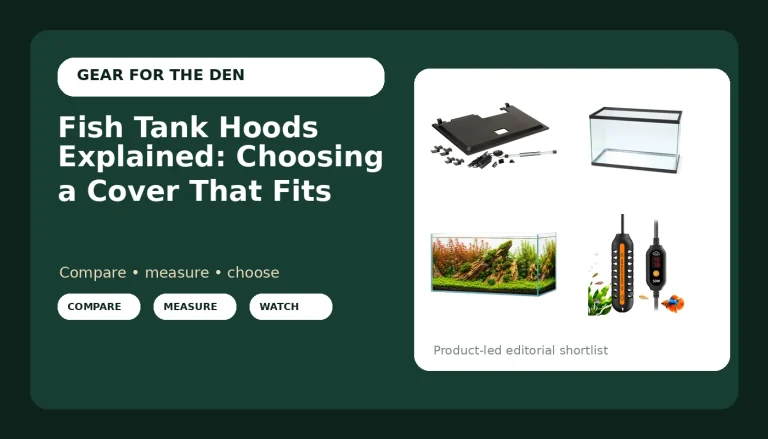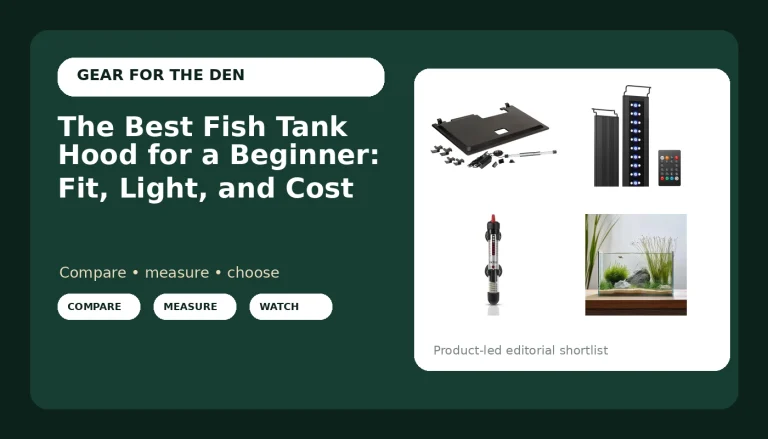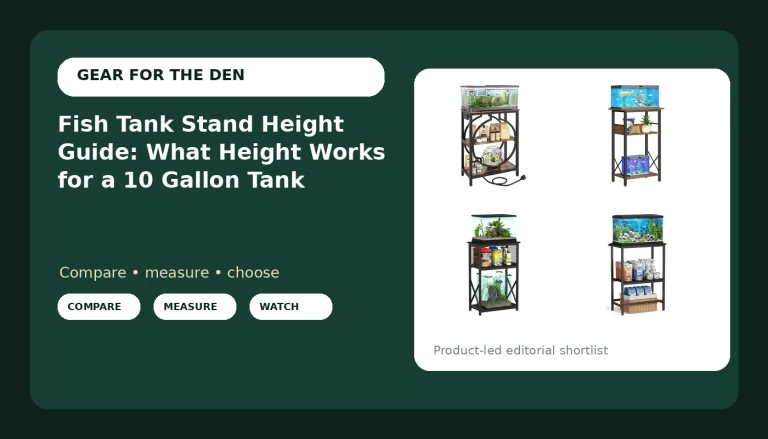
Anyone who searches for betta fish tank setups explained usually arrives with the same problem: four glass boxes that all look reasonable and no clear way to choose between them. The tank is only the first line of an equipment list. Tank volume sets how much water you have to work with, and that number drives heater wattage, filter media choice, and how forgiving the whole build is when something drifts. Get the glass right and the rest of the setup gets easier. Get it wrong and you spend the next year working around a shape that does not fit your room, your stand, or your fish.
Quick answer
A 10 gallon tank is a reasonable starting point for a single betta, and a 20 gallon long is a sensible step up when you want more water and a wider footprint. Match the tank to the stand and the wall space you actually have, decide how you will cover a rimless top before you buy, and budget for a heater, a filter, a test kit, and a lid alongside the glass. Betta fish tank setups come down to four numbers lining up: tank volume, heater wattage, substrate depth, and cycle time.
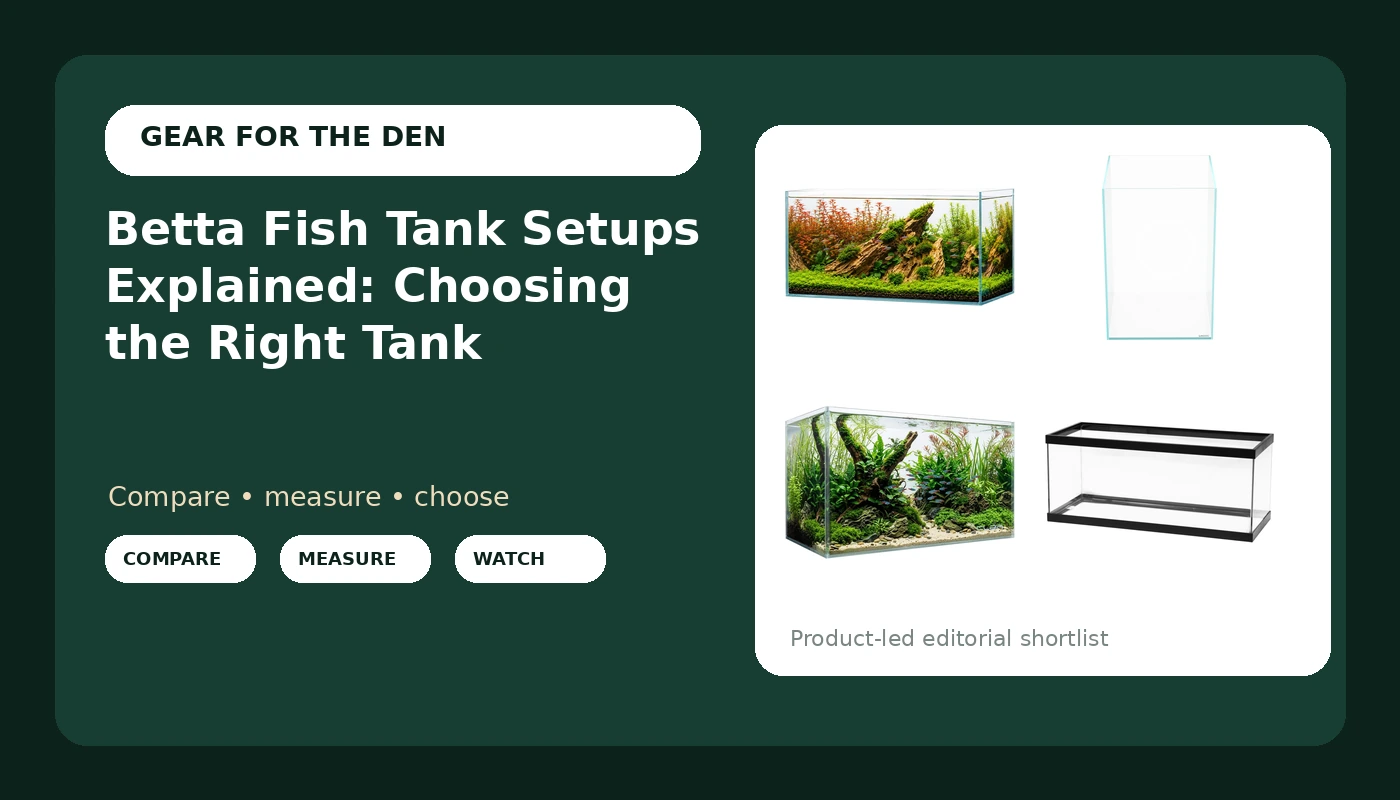
Four tank options for a betta build
Every option below is a glass tank rather than a kit, so treat the heater, filter, and lid as separate decisions. None of these listings is described as including filtration or heating.
| Model | Best fit | What stands out |
|---|---|---|
| Hjarta 10 Gallons Fish Tank, Ultra-Clear Rimless Aquarium | A first 10 gallon betta tank | Listed as a 10 gallon aquarium in ultra-clear rimless glass |
| LANDEN Aquarium Tall 10 Gallon Ultra Clear Glass Rimless Fish Tank 30T | A narrow spot that needs vertical room | Tall 10 gallon proportions with the same rimless ultra-clear glass |
| 10 Gallon Rectangular Fish Tank, Rimless Ultra Clear Nano Aquarium | A flat, even top opening | Rectangular 10 gallon footprint described as a nano aquarium |
| Aqueon Glass 20 Gallon Long Tank for Aquariums & Terrariums | More volume in a low, long shape | Listed as a 20 gallon long glass tank |
The straightforward 10 gallon: Hjarta 10 Gallons Fish Tank, Ultra-Clear Rimless Aquarium
The case for starting here is simplicity. A 10 gallon rimless tank in ultra-clear glass gives a single betta a defined territory without taking over a wall, and the footprint leaves space beside it for a filter and a small heater. The trade-off is the rimless part. There is no molded lip to hold a hood, so hood fit becomes a measurement job: check the outside dimensions of the tank and buy a lid or screen that matches, or accept an open top and plan to top off for evaporation. A tank this size also swings in temperature faster than a larger one, which makes a reliable heater more important than it sounds.
The tall 10 gallon: LANDEN Aquarium Tall 10 Gallon Ultra Clear Glass Rimless Fish Tank 30T
A tall 10 gallon holds the same volume as a standard 10 gallon but stands higher, which changes two practical things. It takes up less length on a counter or stand, which helps in a tight spot, and it gives a betta more vertical swimming room for the same water volume. The trade-off is surface area and light penetration. A tall column has a smaller water surface at the top for gas exchange, and light has further to travel before it reaches plants near the substrate. Heater wattage stays in the same range as any other 10 gallon, because wattage follows volume rather than height.
The rectangular nano: 10 Gallon Rectangular Fish Tank, Rimless Ultra Clear Nano Aquarium
A rectangular shape is easy to place against a wall, easy to cover with a flat lid, and easy to light evenly because the top opening is uniform. That even opening matters more than it sounds: a lid that sits flush across a rectangle keeps evaporation down and keeps a betta from finding a gap. The same rimless caveats apply here. There is no molded rim for a standard hood to clip onto, so measure the top edge before ordering a cover, and decide early whether you are running an open top. If you are, plan for the water level dropping between changes and for a fish that can jump.
The larger option: Aqueon Glass 20 Gallon Long Tank for Aquariums & Terrariums
Twenty gallons long is the option to consider when you want more water volume without more height. The long footprint gives more horizontal swimming room, more surface area for gas exchange, and more water to dilute waste between water changes, which makes the whole setup more forgiving of small mistakes. The cost is space and stand load. A filled 20 gallon long is heavy, it needs a stand that supports the full span rather than four corners, and it claims a length of wall that a 10 gallon does not. Heater wattage and filter size both step up with the volume, so the equipment list grows with the tank.
Prices and availability may change. Product images, names, and retailer links are matched to verified listings. No current price, rating, stock status, or measured result is stated here without current evidence.
What correct betta fish tank setups have in common
Three things separate a setup that runs quietly for years from one that becomes a weekly chore: enough water, a stable temperature, and a stand that can carry the load.
Tank volume is the first number to fix. A 10 gallon tank holds roughly ten gallons before substrate and decor displace some of it, and a 20 gallon long holds more than double that across a much wider footprint. More water dilutes waste between water changes and holds heat more steadily, which is why a larger tank is often more forgiving for a beginner than a small one. A betta in a 10 gallon has a reasonable territory. The same fish in a 20 gallon long has room to move.
Stand load follows directly from volume. Water weighs a little over eight pounds per gallon, so a filled 10 gallon tank plus glass, substrate, and rock is a load that a lightweight side table may not handle. A 20 gallon long spreads that weight across a longer top, so the stand needs support along the whole span rather than only at the corners. Check the stand before you check the tank.
Hood fit is the detail that catches people who buy rimless glass. A rimless tank has no molded rim for a standard hood to clip onto, so any lid, screen, or glass top has to match the tank's outside dimensions. Measure the top edge, including glass thickness, before ordering a cover, or decide in advance that you are running an open top and plan for evaporation and for fish that jump.
Planning ideal betta fish tank setups: the numbers that matter
Cycle time is the part of the schedule you cannot rush. A new filter needs several weeks to grow the bacteria that convert ammonia into nitrite and then into nitrate, and the only reliable way to know where you are is a test kit that reads ammonia and nitrite. Bottled bacteria products can shorten the wait, but the tank is ready when the tests read zero, not when the calendar says so. Betta fish tank setups that skip this step are the ones that end with a sick fish a week later.
Substrate depth affects both plants and bacteria. Two to three inches of gravel or sand gives rooted plants something to hold and adds surface area for the bacteria that keep the water clean. A thin layer is easier to vacuum but supports less planting. For a betta tank, a modest planted setup with about two inches of substrate is a reasonable middle ground, and it gives the fish places to rest near the bottom.
Heater wattage tracks volume and the gap between tank temperature and room temperature. The common starting rule is roughly five watts per gallon for a tank in a normally heated room, which points to a small adjustable heater for a 10 gallon and a larger one for a 20 gallon long. An adjustable heater with its own thermostat is easier to verify than a preset model, and a separate thermometer in the tank tells you whether the setting is doing what it claims.
Filter media is the last piece. Sponge and ceramic media host the bacteria. Carbon and floss polish the water and get replaced. On a betta tank, gentle, adjustable flow matters more than raw turnover, because long fins do not do well in a strong current. A sponge filter or an adjustable hang-on-back unit is usually easier to tune than a high-flow power filter. For more on that trade-off, see our freshwater aquarium heater and filter sizing guide.
- Measure the wall space, the stand top, and the height clearance before you look at any tank, because volume is the one specification you cannot adjust later.
- Pick tank volume first. A 10 gallon suits one betta, and a 20 gallon long gives more margin if the space allows.
- Buy the heater, filter, test kit, and lid together with the tank so the equipment list is complete on day one.
- Add substrate, plants, and water, start the filter and heater, and begin the cycle.
- Test ammonia and nitrite until both read zero after a full cycle, then add the betta and keep testing weekly.
Practical guidance before you buy
- Choose a lid or screen that matches the rimless tank's measured outside dimensions, since there is no rim to clip a standard hood onto.
- Size the heater for the tank volume and the room temperature, not for the tank alone.
- Keep the tank out of direct sun and away from heating vents and cold windows, because a betta tank that swings in temperature is harder to manage than one that stays steady.
- Plan the water change routine before the fish arrives: a marked bucket, a siphon, and a place to pour old water.
- Write down test results and the date of each water change, since cycle time and maintenance trends are easier to see on paper than in memory.
Which option should you choose?
Choose the Hjarta 10 Gallons Fish Tank, Ultra-Clear Rimless Aquarium when you want a plain 10 gallon rectangle in ultra-clear rimless glass and you are prepared to source a lid. Choose the LANDEN Aquarium Tall 10 Gallon Ultra Clear Glass Rimless Fish Tank 30T when floor or counter space is short and you would rather build upward. Choose the 10 Gallon Rectangular Fish Tank, Rimless Ultra Clear Nano Aquarium when you want a nano footprint with an even, flat top opening. Choose the Aqueon Glass 20 Gallon Long Tank for Aquariums & Terrariums when you have the wall space and a stand that can carry the weight, and you want more water volume for a single betta.
The specifications here come from the product listings, not from hands-on testing, and listings change. Confirm the actual dimensions, glass thickness, and what is included on the retailer page before you order, and measure your stand and your available space first.
The bottom line
The tank is the decision that constrains every other one. A 10 gallon is enough for one betta, and a 20 gallon long is more forgiving if you have the room and a stand that can take the load. Whichever you pick, settle the heater wattage, filter media, substrate depth, and cycle time before the fish goes in, and sort out hood fit for a rimless tank before it arrives rather than after.