The betta tank vs community tank question usually starts with a fish and ends with a spreadsheet. One path points to a single flashy fish in a 10 gallon cube, the other to a mixed community of tetras, corydoras, and shrimp in a larger, more stable system. The difference between betta tank and community tank is not just fish temperament. It is tank volume, equipment list, cycle time, stand load, hood fit, filter media, heater wattage, and substrate depth. Get those wrong and you will spend more time fighting algae, temperature swings, and equipment upgrades than watching fish.
For most first-time fish keepers, the best starting point is a 10 gallon betta tank with an adjustable 50W heater and a plant-friendly LED, because it keeps the equipment list short and the cycle time manageable. But if you want a community tank vs betta tank comparison that actually helps, you need to see how each piece of gear scales. The four products below cover the tank, heater, and two light options that decide how the rest of the build comes together.
| Product | Price | Why it won | Why it lost |
|---|---|---|---|
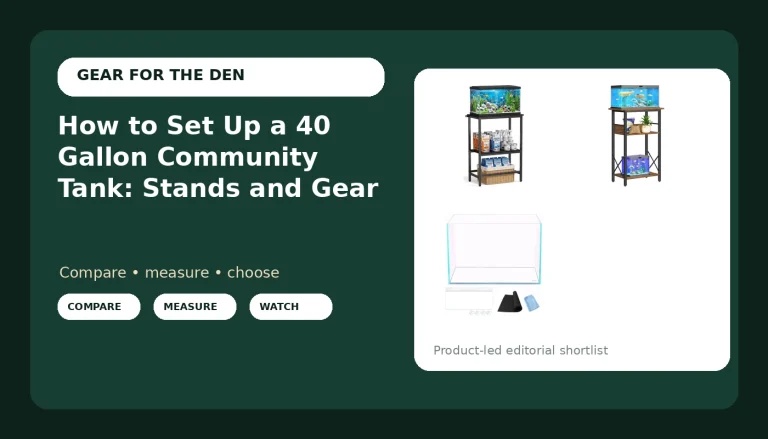
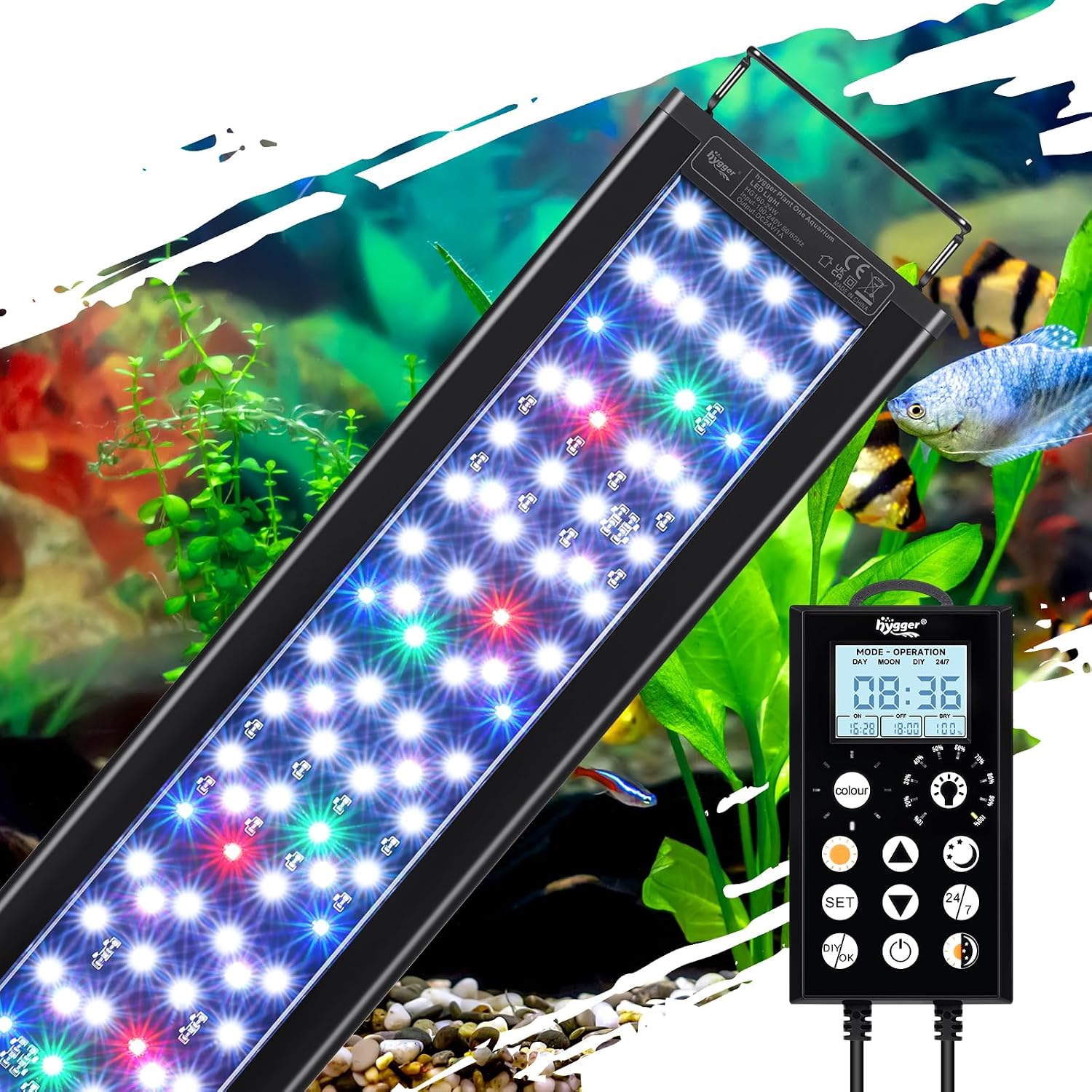 hygger LED Aquarium Light for Plants, 24/7 & DIY Mode Fish Tank Light, 24W | Check current Amazon price | Built-in 24/7 and DIY scheduling, 24W output for low to medium light plants, and a compact size that suits a 10 gallon betta tank | Not sized for a 30 inch or larger community tank, and it does not include a filter or heater |
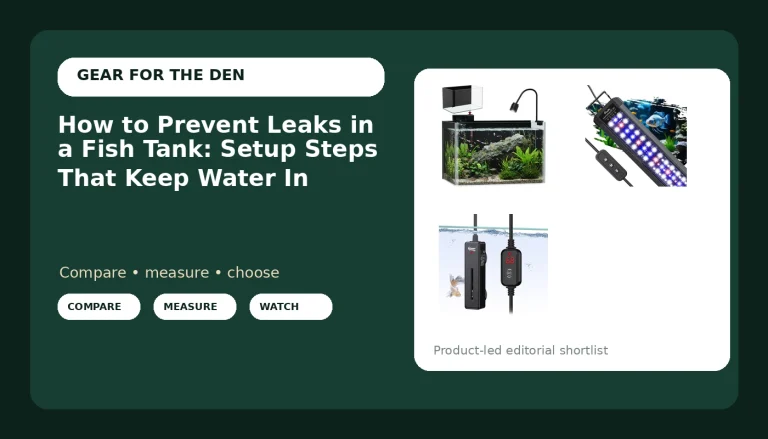
 DaToo 50 Watt Aquarium Heater Submersible Adjustable Temperature Fish Tank Heater 50W | Check current Amazon price | Adjustable thermostat and submersible body, with 50W that matches a small betta tank in a normal room | Too little heater wattage for a 40 gallon community tank in a cold room, and it has no separate controller |
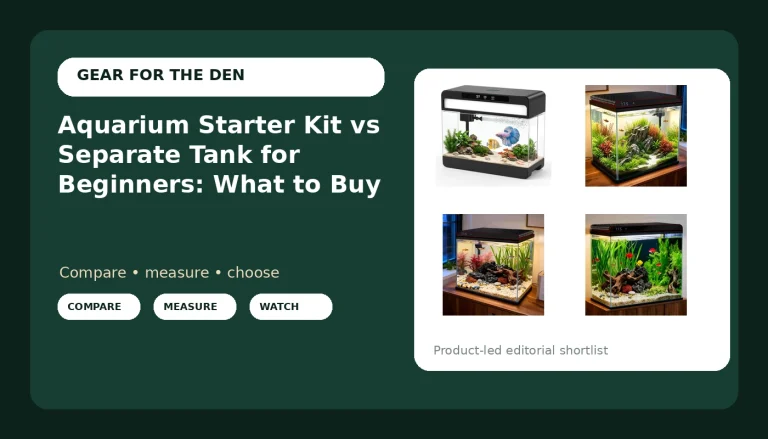
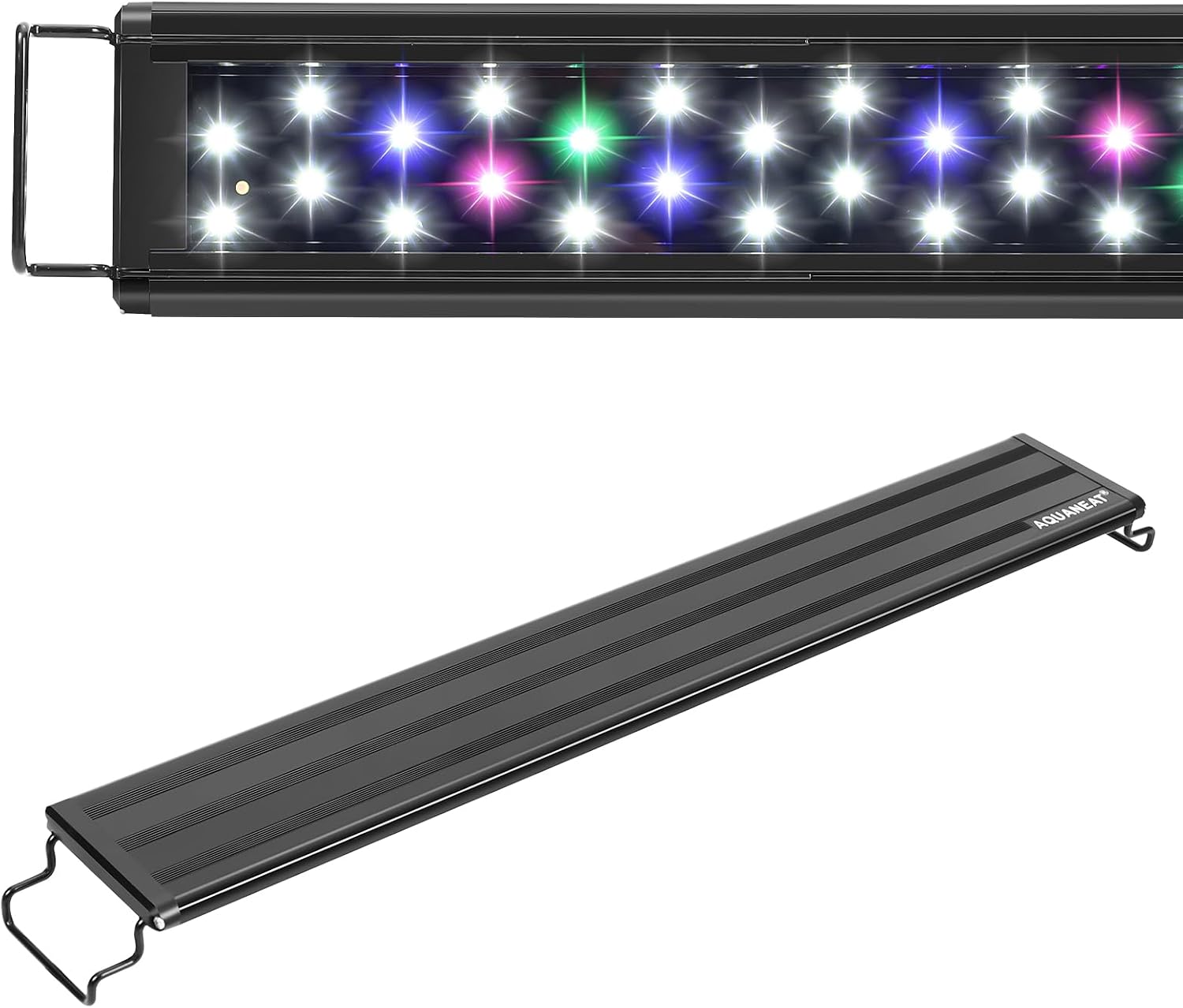 AQUANEAT LED Aquarium Light Full Spectrum for 30 Inch to 38 Inch Fish Tank Light Fresh Water | Check current Amazon price | Full spectrum coverage for a 30 to 38 inch tank, which fits a 29 gallon or 40 gallon breeder community setup | Too long for a 10 gallon betta tank, and the fixed schedule may still need a separate timer |
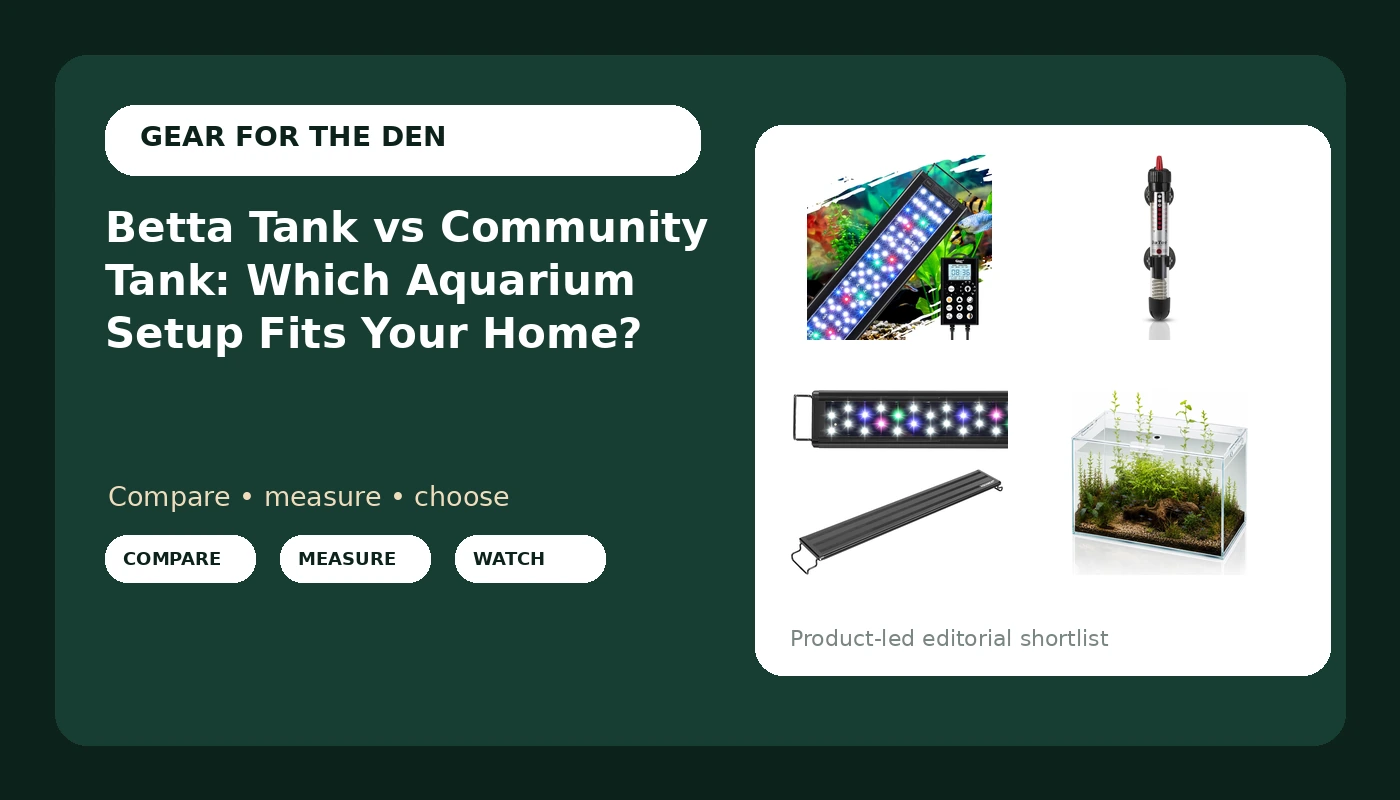
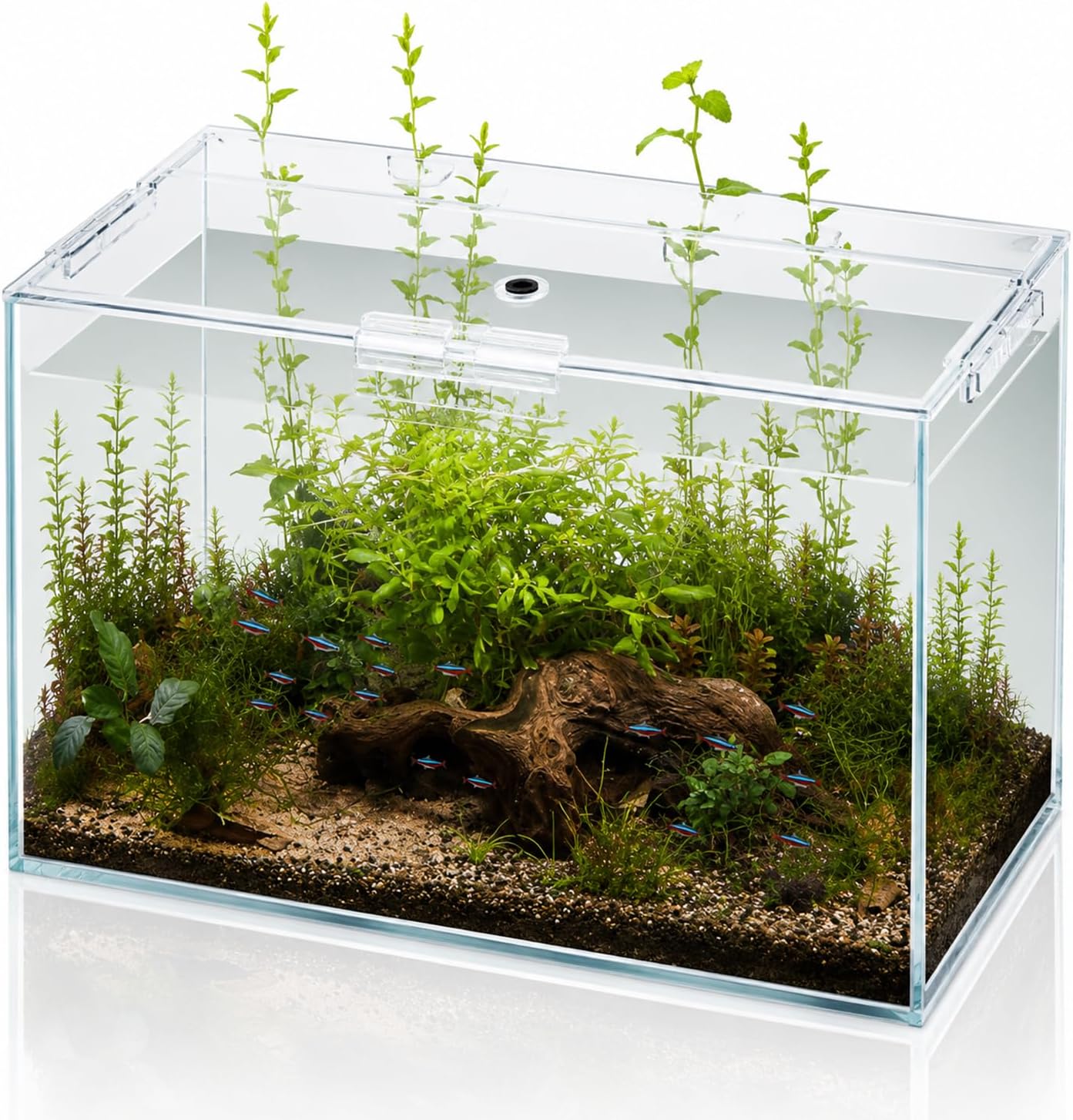 10 Gallon Glass Fish Tank Open-Back Lid, Aquarium Fish Bowl Cube for Betta Goldfish Snails Shrimp Aquatic Planting, Ultra Clear Rimless Low Iron | Check current Amazon price | Rimless low-iron glass with an open-back lid, a clean look for a betta or nano community tank, and easy cord routing | No filter, heater, or light included, and the open-back lid limits hood fit options |
The betta tank vs community tank equipment list
A betta tank is a single-fish setup, but that does not make it a bare-bones bowl. A proper betta build still needs a filter, a heater, a light, a lid, and a place to put it. The equipment list is shorter because tank volume is smaller. A 5 to 10 gallon tank is common. That size is easier to fit on a desk or dresser, and it is easier to keep in a room where you actually sit. A community tank usually starts at 20 gallons, because a mixed group of fish needs swimming room, territories, and a larger water volume to dilute waste.
The betta tank vs community tank choice also changes how you stock the tank. A betta can live alone, or with a few carefully chosen tank mates in a larger tank. A community tank is built around a group of species that share water parameters. That means more research before you buy, not more equipment necessarily. The gear overlaps: filter, heater, light, lid, substrate, test kit, and a siphon. The difference is in the sizes and the number of backups you keep. Whether you choose a betta tank or community tank, the first purchase should be the tank, not the fish.
A 10 gallon rimless tank like the one in the table gives you a modern look, but it also forces you to think about the lid. Rimless tanks usually have no hood, so evaporation is faster and cats have easier access. A community tank with a standard black frame is less stylish, but it accepts a glass lid and a standard light more easily. That is the kind of trade-off that does not show up in fish store marketing.
How tank volume and stand load change the plan
Tank volume is the first spec that separates the two paths. A 10 gallon tank is about 11 to 12 pounds per gallon when filled with water, substrate, and rock, so a 10 gallon setup can weigh over 100 pounds once you add a stand, filter, and light. That is a stand load question, not a fish question. A 20 gallon long or 29 gallon tank can weigh 200 to 300 pounds filled. If you live in an apartment, check the lease and put the tank on a stand rated for the load. Do not trust a particleboard bookshelf.
For a betta tank, a 10 gallon cube or a 10 gallon rimless tank is a sweet spot. It gives you enough water volume to forgive small mistakes, but it is still easy to do a water change with a bucket. For a community tank, a 20 gallon long gives bottom dwellers more floor space. A 29 gallon or 40 gallon breeder gives you more options for mid-water fish. The bigger the tank, the longer the cycle time, because you are growing more filter media surface area. But the bigger tank is also more stable. That is the trade-off.
Stand load is also about where the tank sits. A 10 gallon betta tank can go on a sturdy dresser if the top is flat and the stand does not wobble. A 40 gallon community tank needs a real stand with a center brace. If you put a large tank on a cheap stand, the seams will tell you about it later. That is one of the few aquarium failures that can flood a room.
Heater wattage, filter media, and cycle time
Heater wattage is where a lot of beginners get burned, sometimes literally. The old rule is 2.5 to 5 watts per gallon, adjusted for room temperature. A 50W heater is a sensible match for a 10 gallon betta tank in a normal room. It is not enough for a 40 gallon community tank in a cold basement. If you keep the room at 68°F and the tank at 78°F, a 50W heater will run more often. That is fine for a small tank, but it shortens the heater's life. For a community tank, buy a heater with an adjustable thermostat and a guard. Better yet, buy two smaller heaters and set them a degree apart. If one fails, the other keeps the tank from crashing.
Filter media matters more than filter brand. A betta tank can use a small sponge filter or a hang-on-back filter with a prefilter sponge. The sponge keeps the betta's long fins from getting sucked against the intake. A community tank needs more biological media because there are more fish producing waste. Ceramic rings, bio balls, and coarse sponges all work. The key is surface area and flow that does not blow the fish around. Cycle time is usually 4 to 8 weeks for a new tank, no matter the size. You can speed it up with bottled bacteria, but you cannot skip the test kit.
A betta tank can sometimes run with a single sponge filter and an air pump, which is cheap and quiet. A community tank usually needs a canister filter or a larger hang-on-back unit. The filter media volume should match the fish load, not the tank volume alone. A heavily stocked 29 gallon tank needs more media than a lightly stocked 40 gallon tank. That is why the equipment list should be built after you decide on fish, not before.
Hood fit, substrate depth, and lighting
Hood fit is the boring spec that ruins more builds than fish disease. A rimless 10 gallon tank with an open-back lid looks great, but it may not accept a standard hood or a glass lid without modification. Measure the tank's outside dimensions and the lid opening before you buy a light. If you want a clean look, an open-top tank with a hanging or clip-on light is easier. If you have cats, a lid is not optional. Cats drink from tanks, bathe in them, and sometimes sit on them. A secure lid protects the fish and the cat.
Substrate depth is another small number with a big effect. A betta tank with live plants needs 2 to 3 inches of substrate for root growth. A community tank with corydoras needs a soft sand substrate, because gravel can damage their barbels. If you want a planted community tank, a nutrient-rich base layer under a sand cap works well. But deep substrate can trap waste. Keep it under 3 inches unless you are running a dirted tank with a clear plan.
For lighting, a full-spectrum LED is the safe choice. The hygger 24W light and the AQUANEAT full-spectrum light are both aimed at freshwater plants, but they fit different tank lengths. The hygger is a 24W unit for smaller tanks, while the AQUANEAT is sized for 30 to 38 inch tanks. That length difference matters more than the wattage difference. A light that is too short leaves the ends of a community tank dim, and a light that is too long will not fit a 10 gallon betta tank at all.
What the specs say about these four picks
The table above gives the quick version. Here is the longer read.
The 10 Gallon Glass Fish Tank Open-Back Lid is the anchor for a betta build. It is a rimless, low-iron cube with an open-back lid. Low-iron glass gives you clearer viewing, and the open-back design makes it easier to route a filter or heater cord. It is also the most expensive single item here, which is normal for a rimless tank. If you want a budget betta tank, a standard 10 gallon kit will cost less. But if you want the tank to look good in a living room, this is the piece that sets the tone.
The DaToo 50 Watt Aquarium Heater is the matching heater for a 10 gallon betta tank. It is submersible and adjustable, which are the two features I would not compromise on. A preset heater is cheaper, but you cannot tune it to your room. A 50W heater is also small enough to hide behind plants. For a community tank, you would need a higher wattage heater, or two of these in a larger tank. That is the main limitation.
The hygger LED Aquarium Light for Plants is the light I would pick for a planted betta tank. It has 24/7 and DIY modes, which means you can set a schedule without buying a separate timer. The 24W output is plenty for low to medium light plants in a 10 gallon tank. It is not a reef light, and it will not grow demanding carpeting plants without CO2. For a betta tank with anubias, java fern, and crypts, it is more than enough.
The AQUANEAT LED Aquarium Light is the community tank light. It is full spectrum and sized for 30 to 38 inch tanks, so it fits a 29 gallon or 40 gallon breeder. The length is the point. A 24W light on a 36 inch tank will leave the ends dim. The AQUANEAT spreads light across the full length, which matters for plants and for viewing. It is not adjustable in the same way as the hygger, so you may still want a timer. But for a larger community tank, it is the better fit.
Should you buy a kit or build piece by piece?
A kit is the fastest way to start, but it often includes a weak light, a preset heater, and a filter that is too small. If you want a betta tank, a kit can work if you replace the heater and light. If you want a community tank, a kit is rarely the right call, because the included filter is usually rated for a smaller bioload. Building piece by piece costs more upfront, but you get gear that fits the tank volume and the fish you actually want. The four products here are not a complete kit. They are the pieces that are hardest to upgrade later: tank, heater, and light. You still need a filter, substrate, test kit, water conditioner, and a siphon. Budget for those before you buy fish.
The betta tank vs community tank decision also affects the long-term cost. A betta tank uses less water, less substrate, and less filter media. A community tank uses more of everything, and it usually needs a bigger stand. But a community tank can be more forgiving because the water volume is larger. A betta tank can swing temperature and water quality faster. If you travel for work, a 20 gallon community tank is easier to leave for a week than a 5 gallon betta tank. If you want one fish with a big personality, a betta tank is the better fit.
There is also the maintenance rhythm. A betta tank needs a small water change every week, maybe 20 to 25 percent. A community tank needs a similar percentage, but the bucket count is higher. A 10 gallon tank is two buckets. A 40 gallon tank is eight. That is the real difference between the two setups after the first month. The fish are the fun part. The buckets are the commitment.
What I'm watching next
The freshwater side of the hobby is moving toward rimless tanks, adjustable LED lights, and heaters with external controllers. The 10 gallon rimless tank in this comparison is part of that trend. It looks less like a fish tank and more like furniture, which is why it sells. The trade-off is that rimless tanks often need a lid aftermarket if you keep cats or jumpy fish.
I am also watching the price gap between kit lights and standalone plant lights. A 24W light with a built-in 24/7 mode can replace a timer and a cheap hood light, which simplifies the equipment list. For a betta tank, that is a real win. For a community tank, the longer AQUANEAT fixture still makes more sense because it covers the full tank length.
The last thing to watch is heater wattage. As more people keep tanks in apartments with variable room temperatures, a single 50W heater may not hold a stable temperature in winter. If you are building a community tank, plan for two smaller heaters instead of one large one. That is the safest path, and it is the one I would take if I were setting up a 40 gallon breeder today.