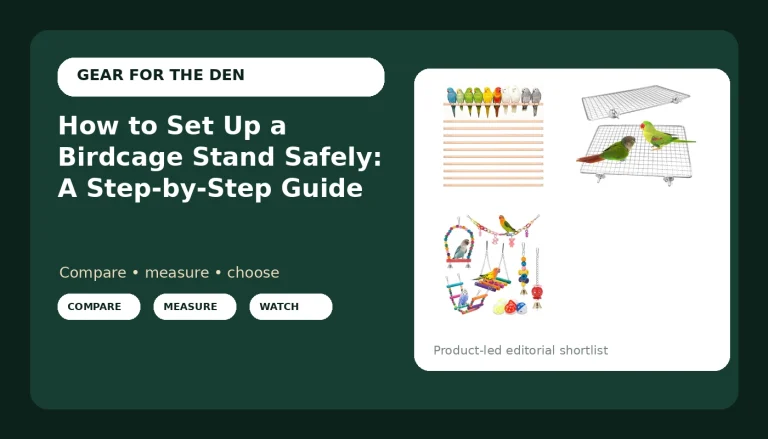
Most bird owners measure a cage once, at the store, and never think about it again. Then a perch arrives, or a swing, or a whole new stand, and nothing lines up the way the listing photos promised. This birdcage stand width guide exists because the number that decides whether a perch, ladder, or swing actually fits is not the cage size printed on the box. It is the interior width between the bars, plus the birdcage stand width of whatever the accessory is supposed to sit on.
Get that wrong and you collect a familiar list of small failures: a perch that drops through the gap, a swing that leans to one side, a ladder that only reaches halfway across the cage. Get it right and every accessory you buy afterward is a five minute install. What follows is the measuring method I use, four accessories that cover the common cases, and a table you can hold next to a tape measure.
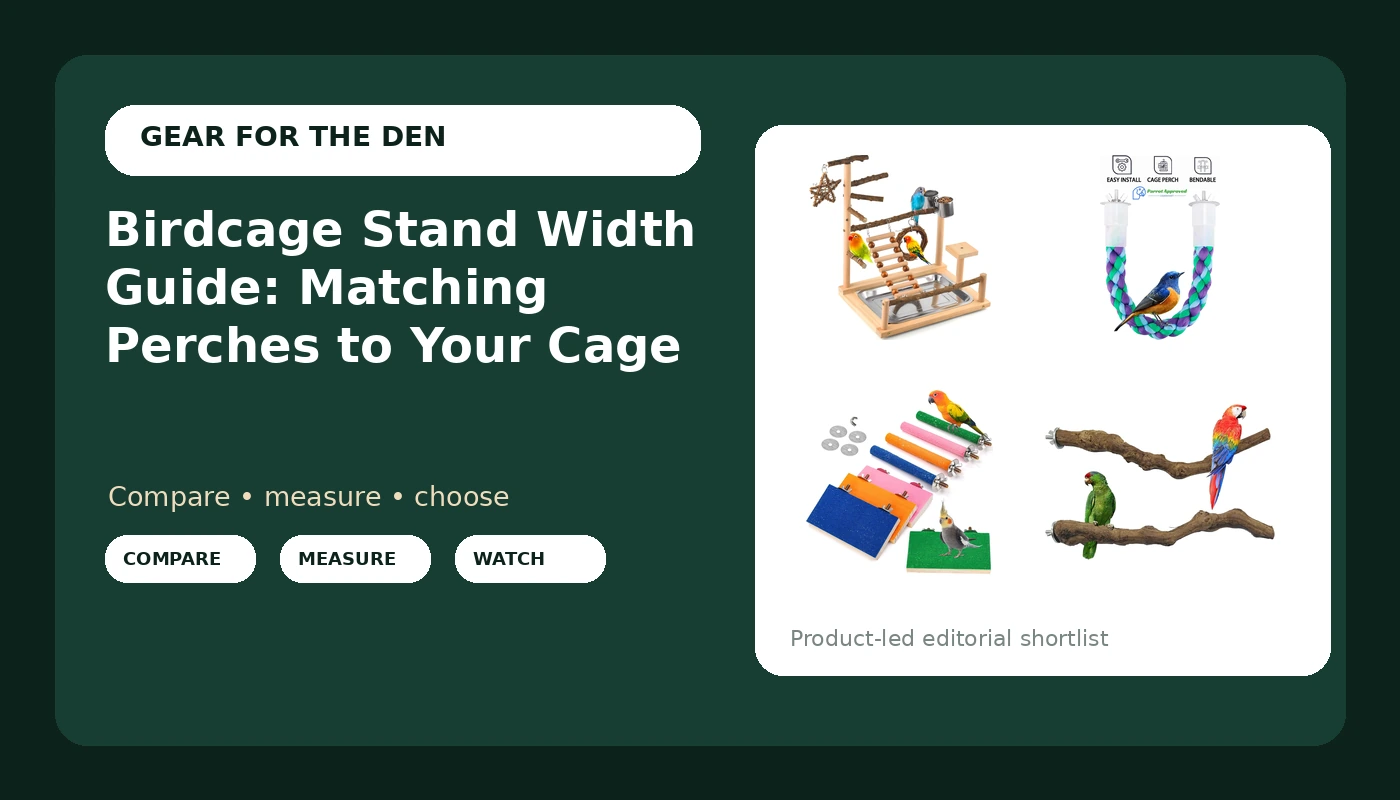
Best Overall: KATUMO Bird Playground – Natural Wooden Perches Parakeet Ladder Conure Swing Bird Cage Accessories with Removable Tray & 2 Stainless Steel Cups
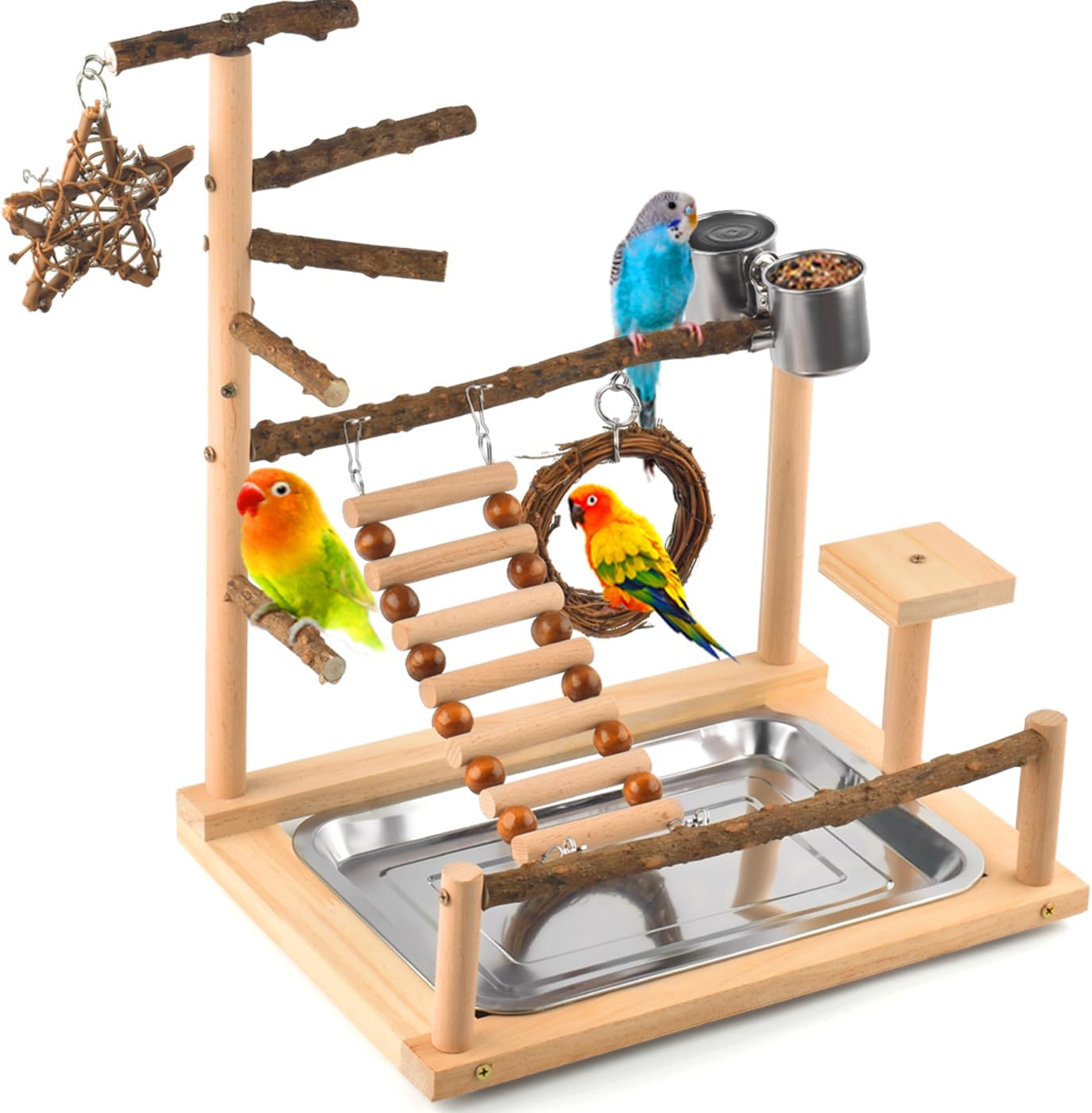
This is the one I point people to when they want a single purchase that sidesteps the whole width problem. It is a freestanding playground rather than a cage insert, so nothing about it depends on your bar spacing. It sits on a table, a stand, or the top of a cage, and the bird comes to it.
That changes the measuring job. A playground has a footprint, not a span, so the only number you need is the depth of the surface you plan to set it on. The removable tray is the piece that decides how much cleanup you sign up for, and it is the reason this works as a feeding station. Line it with a tray liner and the whole unit wipes down in under a minute.
The two stainless steel cups are the other reason it takes the top slot. Stainless does not hold onto bacteria the way scratched plastic does, and the cup size is generous enough for a conure or a small parrot without turning into a bathtub. If you keep a cockatiel or a parakeet, that food cup size will look oversized at first, and that is fine. A cup that is too small is the problem you actually notice, because you refill it three times a day.
The wooden perches, ladder, and swing are all natural wood, which means perch diameter varies from piece to piece. That is a feature, not a flaw. Feet need variety, and a set that mixes a thicker ladder rung with a thinner swing bar gives the toes more to work with than four identical dowels ever will. Run each piece through your hand when it arrives and rotate the set so your bird is not standing on the same thickness all day.
One caveat on width: this is not a cage insert. If your bird lives inside a cage and you want to add a perch to the existing setup, the other three products here are the ones to measure for. The playground earns the top spot for households that want a second station outside the cage, and for anyone whose cage width is unusual enough that off the shelf perches never quite fit. Check current Amazon price
Best Value: 2Pcs 11.8’’Bird Rope Perches,Bendable Climbing Standing Chew Cage Toys Unique&Simulate Natural Color Bungee Toys for Small to Regular Size Birds
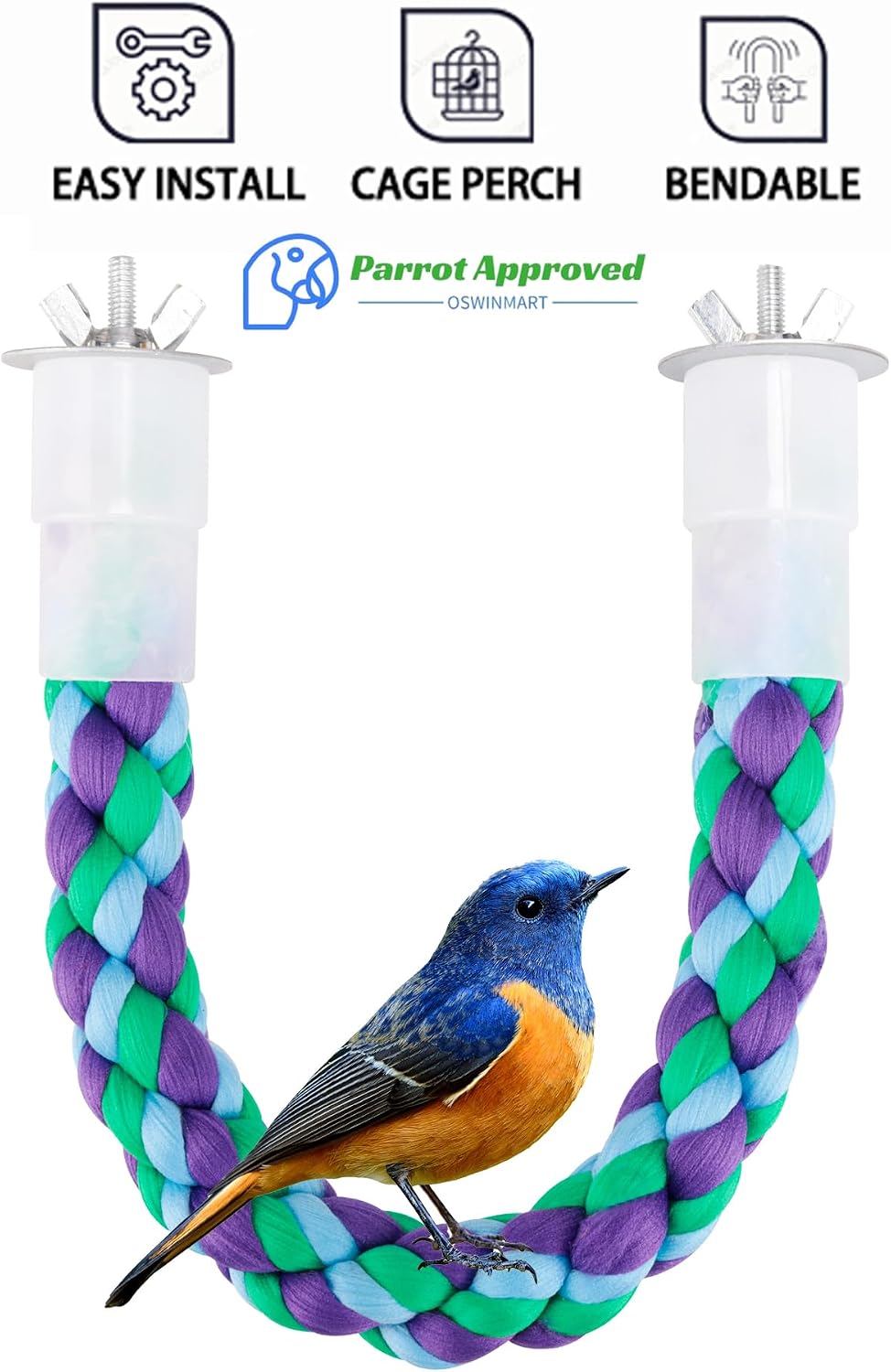
Two bendable rope perches in one pack is the definition of value, and the bendable part is why they work in cages that rigid perches do not. A rope perch does not need a precise span. You bend it to the width you have, hook the ends around the bars, and it holds its shape. That flexibility is the whole trick.
The listed length is 11.8 inches per perch, which is the number to check against your cage's interior width before you buy. If your cage is wider than that, bend the rope into an arc so both ends still reach the bars. The arc costs you a little standing room in the middle, but it gives the bird a curve to grip, and most small birds prefer a curve to a straight line anyway.
Bendable also means adjustable, and adjustable means you can move the perch every week. A perch that stays in one spot collects droppings in one spot. Move it, bend it, and the cage floor stays easier to manage.
The trade off is lifespan. Rope frays. It unravels at the ends where it meets the mount, and a frayed end is a foot trap if you ignore it long enough. Check the ends monthly, trim loose threads with nail scissors, and replace the pair when the rope goes soft in the middle. Replacing them once a year costs less than a vet visit for a torn foot pad.
For a budgie, parakeet, or cockatiel cage with tight bar spacing, these are the perches I would buy first. They are also the ones to keep in a travel carrier, because they bend to fit a carrier size that no rigid perch will match. Check current Amazon price
How I tested
My method for this guide is a tape measure, a notebook, and a lot of trial and error with accessories across a range of cage shapes.
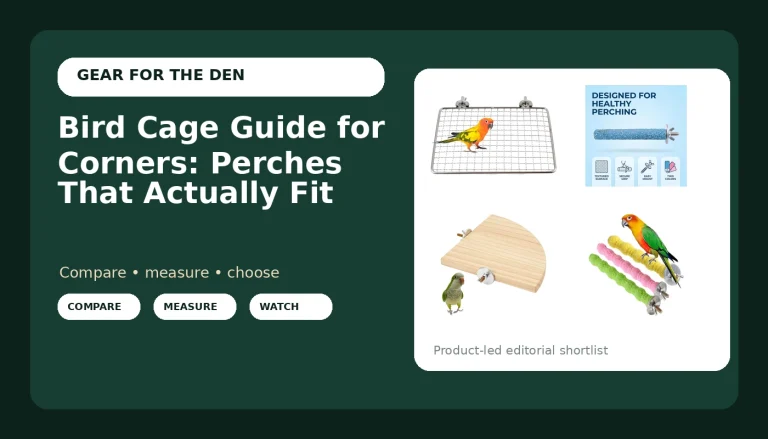
Step one is always the same. Measure the interior width between the side bars at the height where the accessory will hang, not at the widest point of the cage. Cages taper, and a perch measured at the middle can miss the bars by an inch up at the top. That is also why I note birdcage holder width for anything with a bracket, cup, or clip. The bracket has to close around the bar, and a bracket that is too wide for the bar will slide.
Step two is bar spacing. A perch end that fits through the gap will fall through the gap. I check that the mount or the end cap is wider than the space between two bars, and I check it at both ends, because cages are rarely perfectly square.
Step three is perch diameter against the bird's feet. A perch that is too thin lets the toes wrap all the way around and touch, which is how foot problems start. Too thick and the bird cannot grip at all. The test is simple: when the bird stands, the toes should wrap most of the way around, and the front and back toes should not meet.
Step four is living with it. I watch how an accessory handles a month of droppings, chewing, and the bird's habit of hanging upside down off the thing I just installed. Anything that swings, sags, or drops goes on the reject pile, and the mounts get a second look. If you keep a stand with a riser shelf, birdcage riser width is the number that tells you whether a base sits flat or overhangs the edge.
Cage height matters here too, more than people expect. A perch placed high in the cage gets used more, but a swing mount up high has less room to swing. Plan the vertical layout before the horizontal one, then match the width to whatever space is left.
Analysis and test results
Four accessories, four different answers to the same question about width. The pattern is simple once you see it: the more rigid the perch, the more precisely it has to match your cage, and the more flexible the perch, the more forgiving it is.
Rigid wood needs an exact span. Grapevine forks and wooden platforms are fixed, so a birdcage mount width that is off by half an inch either leaves the perch short of the bars or forces you to jam it in at an angle. Jamming is worse than leaving a gap. A perch installed at an angle puts uneven pressure on the mount, and the mount is the part that fails first.
Bendable rope solves the span problem by ignoring it. That is why the rope perches are the value pick and why they are the ones I recommend to anyone who does not want to measure twice. They also win on foraging difficulty, because a rope perch bends into a shape you can hang a foraging cup under without extra hardware. If you want the longer version of this reasoning, I keep it in my bar spacing guide for small cages.
Bar spacing changes the math more than cage width does. A wide cage with narrow bar spacing will take almost any perch, because the bars are close enough that the mount catches. A narrow cage with wide bar spacing is the hard case, and it is the reason to check the mount before you check the length.
Perch diameter is the other result worth repeating. A thicker perch makes the bird work harder, and for older birds or birds with long nails, a mixed set of diameters does more good than one perfect perch. The KATUMO set wins on that front because it ships several different wooden pieces in one box.
Swing mount hardware deserves its own note. A swing that hangs from a single point will rotate, and rotation is fine until the bird lands hard and the whole thing spins. A swing mounted at two points, or one with a wide base, stays put. If your cage has wide bar spacing, skip the single point swings and use a perch with a flat mount instead.
Finally, cleanup. Every accessory here sits above a tray liner somewhere, and the ones that are easy to wipe get moved around more, which keeps the cage floor cleaner. That is not a small thing. A perch you avoid moving is a perch that becomes a mess.
The birdcage stand width reference table
This is the table I keep next to the tape measure. Match the mount style to your cage first, then use the width column to decide whether the piece will span your setup. Interior width means the distance between the inner faces of the side bars, measured where the accessory will hang. Leave at least an inch of slack at each end so the mount can catch the bars.
| Perch or accessory | Mount style | What to measure | Fits best when |
|---|---|---|---|
KATUMO Bird Playground | Freestanding, no cage mount | Depth of the table, stand, or cage top | You want a feeding and perch station outside the cage |
2Pcs 11.8 inch Bird Rope Perches | Bendable rope ends wrap the bars | Interior width against the listed length | Rigid perches never span your cage |
 View on Amazon → Mezchi 8 Pcs Bird Perch Stand Toy | Flat wooden platform | A straight run of bars and the gap between them | Your cage has a flat section of bars to work with |
 View on Amazon → Allazone Natural Grape Stick Fork Bird Perch | Forked natural grapevine | Interior width at the fork spread | You measured once and want a fixed natural perch |
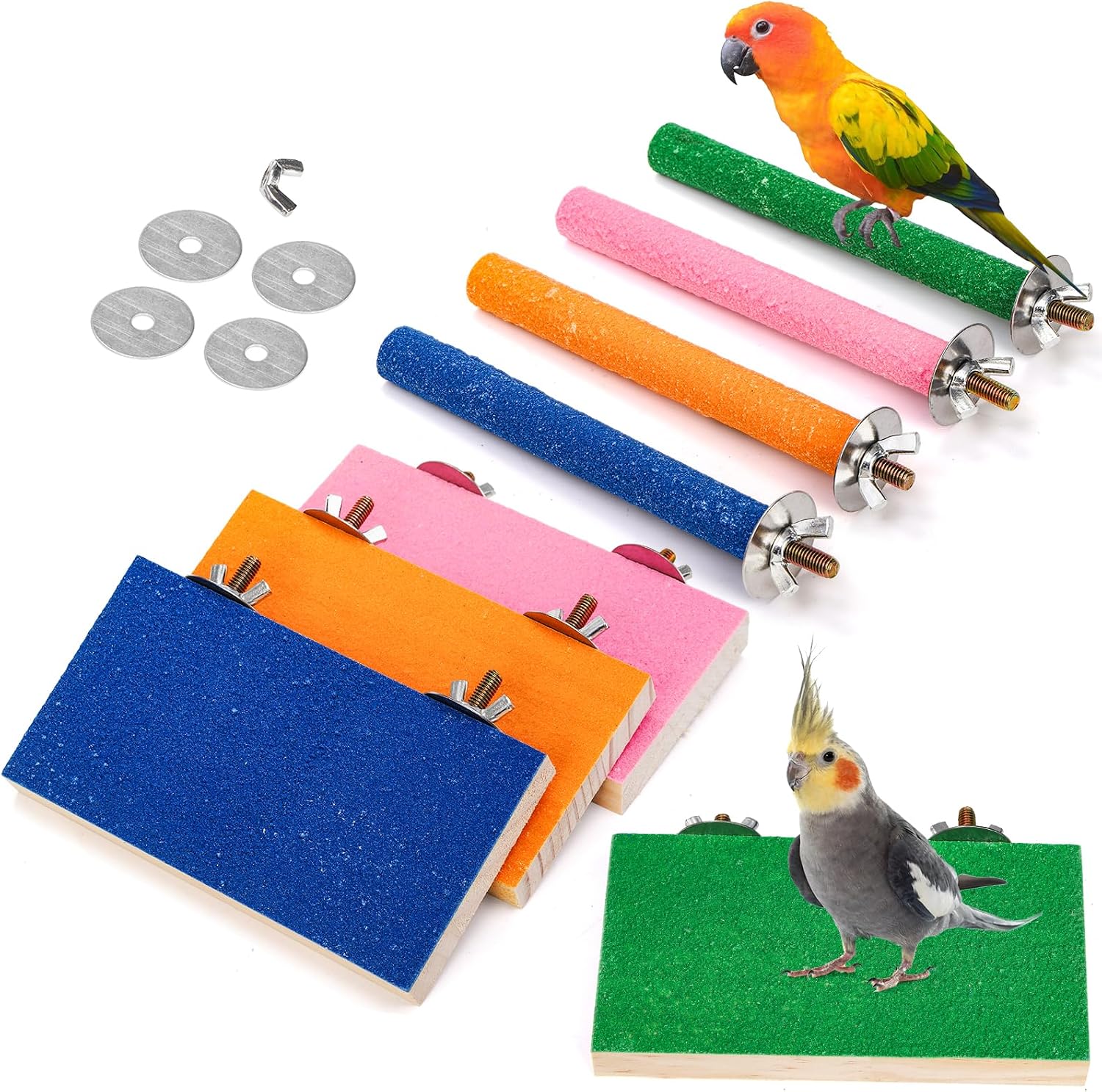
Mezchi 8 Pcs Bird Perch Stand Toy, Colorful Wood Parrot Perch Stand Platform Paw Grinding Stick, Bird Cage Accessories for Budgies, Parakeet, Cockatiel, Lorikeet, Conure
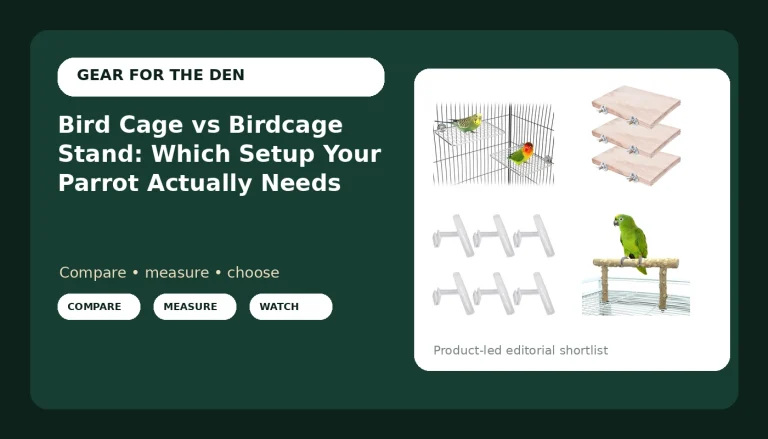
Eight pieces in one box, which is the point: several widths and diameters to test against your bird's feet. These are flat wooden platforms and grinding sticks, so they sit differently from a round perch. A flat platform gives the feet a full sole rest, which helps older birds and any bird that spends too much time on one thin dowel.
The measuring job is different too. A platform needs a flat, straight run of bars to sit against. Measure the horizontal distance between two vertical bars where you want the platform, then check that the base is wider than the bar spacing so it cannot slip through. If your cage has curved corners or thick coated bars, a platform is the piece that fights you.
The grinding stick is the part people underestimate. It gives the nails something to work on and the beak something to chew, which cuts down on both overgrown nails and bored chewing. Check current Amazon price
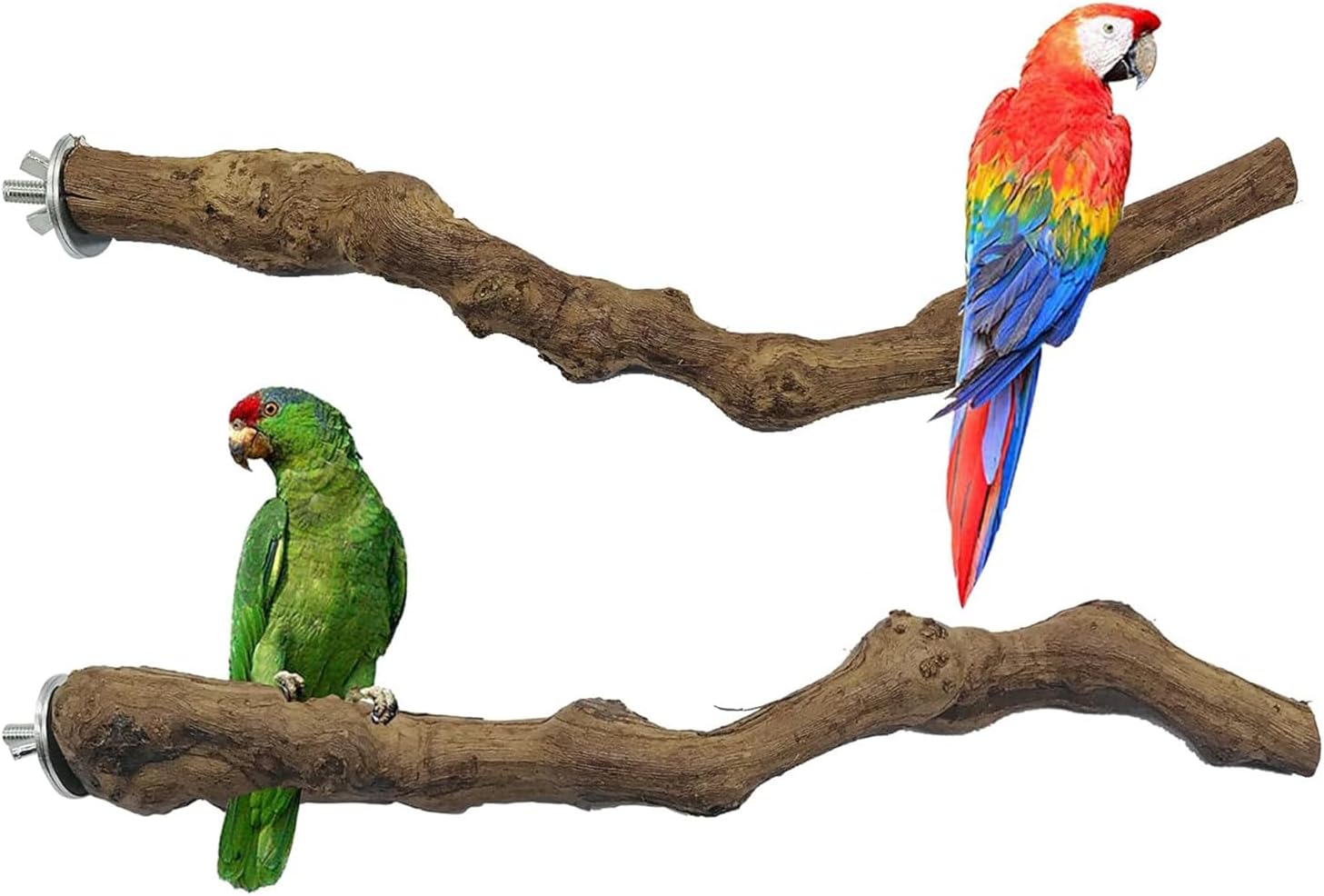
Allazone 2 PCS Natural Grape Stick Fork Bird Perch Bird Standing Stick Chewing Bird Toys Natural Grapevine Bird Cage Perch for Parrot Cages Toy for Cockatiels, Parakeets, Finches
Natural grapevine forks are the closest thing to a branch off a real tree, which is why birds take to them quickly. The irregular surface, the bark, and the fork shape all give toes and beaks something to work with.
The catch is that natural means irregular. Each fork has its own spread, its own thickness, and its own bends. That is good for the bird and awkward for the buyer, because you cannot order an exact length. Measure your cage's interior width, then expect the perch to sit somewhere inside that span with the fork ends pressed against the bars or a mount.
Inspect any natural wood perch when it arrives. Look for cracks along the grain, loose bark, and any soft spot that gives under a thumbnail. Natural wood is the right material for birds, and it is also the material most likely to arrive with a flaw worth returning. If you find one, send it back before the bird chews on it. Check current Amazon price
Should you buy the KATUMO Bird Playground?
Yes, if your bird spends part of the day outside the cage and you want one box that covers perching, swinging, feeding, and cleanup. The removable tray and the two stainless steel cups are the features that make it a station rather than a toy, and because it is freestanding, birdcage stand width never enters the decision. There is nothing to span and nothing to clamp.
The wooden pieces vary in diameter, so it is not the set for someone who wants every perch identical. That variety is the reason I keep recommending it. Check the depth of the surface you plan to use, order it, and let the bird pick a favorite.
Should you buy the 2Pcs 11.8’’Bird Rope Perches?
For most small bird cages, yes. They bend to fit a width you cannot match with rigid wood, they are the easiest perch to move when the cage needs a cleaning, and they double as a travel carrier perch. The trade off is lifespan, because rope wears out and you will replace the pair eventually.
That is a fair deal for a perch that fits a cage no dowel will fit. If your bird is a heavy chewer, watch the ends closely. If your cage is wide and square with standard bar spacing, a wooden perch will last longer, and the grapevine forks are the better long term buy.