The bird cage vs birdcage stand argument sounds like a hardware debate, but it is really a question about how much of your bird's day happens behind bars. A cage gives you containment, a predictable sleep space, and a frame that holds food cups, toys, and a tray liner. A stand gives you access, which is a different thing entirely: a spot at eye level where a conure or a budgie can sit while you work, eat dinner, or watch television. Most households with a small parrot end up needing both, and the part people get wrong is rarely the frame itself. It is the perch hardware inside it, which is what this comparison actually covers.
If you can only buy one thing, buy the cage first and add a stand later, because a stand cannot contain a bird when you are not in the room. If you already own a cage, the fastest improvement you can make is better perching, and the four perch and platform products below are the ones worth comparing before you spend anything else.
The difference between bird cage and birdcage stand is mostly about containment versus access, and that single distinction decides almost everything else. Containment sets your bar spacing, cage height, and carrier size for vet trips. Access sets your training routine, your foraging difficulty, and where the bird spends its evenings. If you have typed birdcage stand vs bird cage into a search bar, you were probably hoping a stand could replace a cage. It cannot. A stand has no walls, no tray, and no way to keep a bird away from a hot pan or an open window.
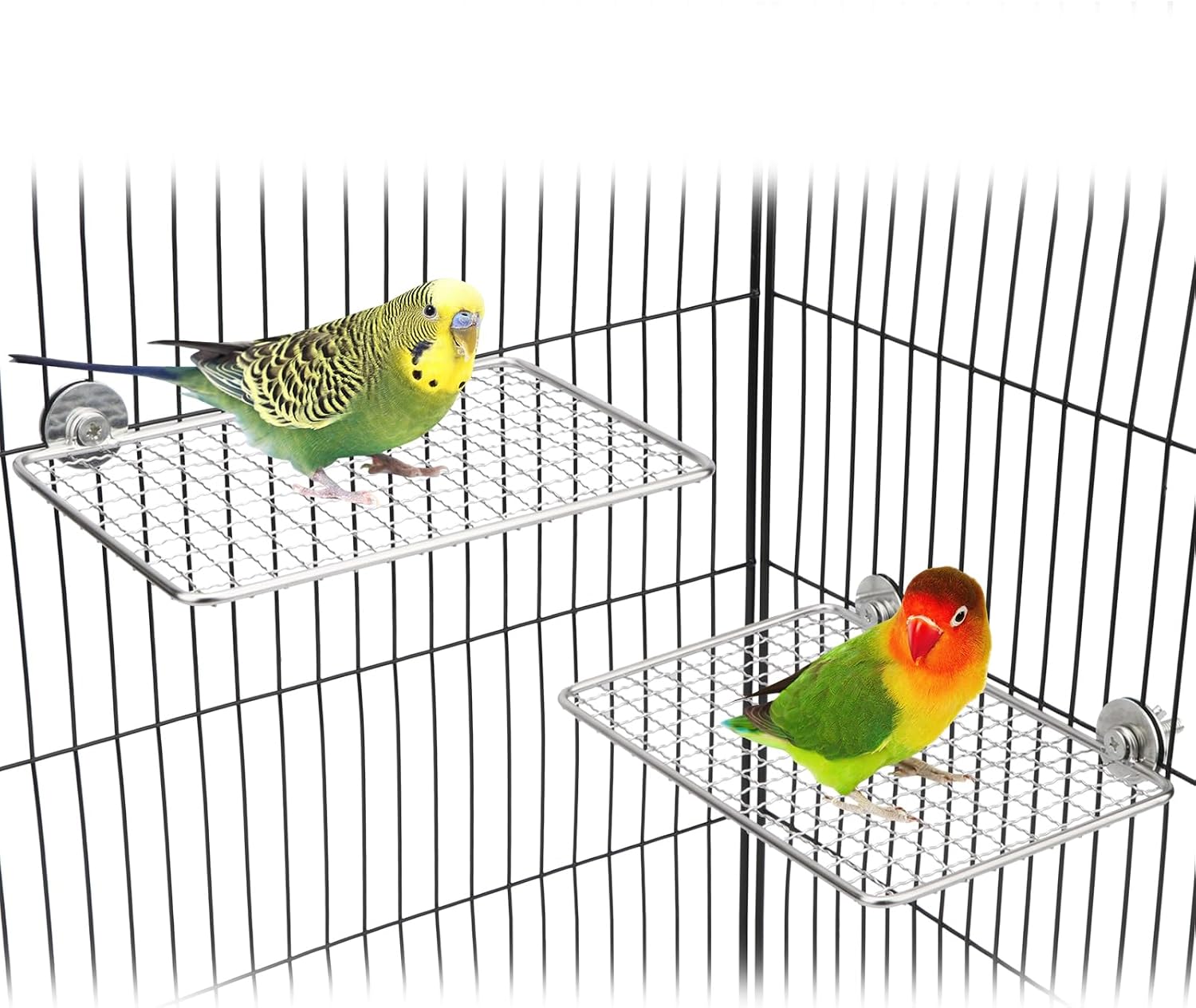
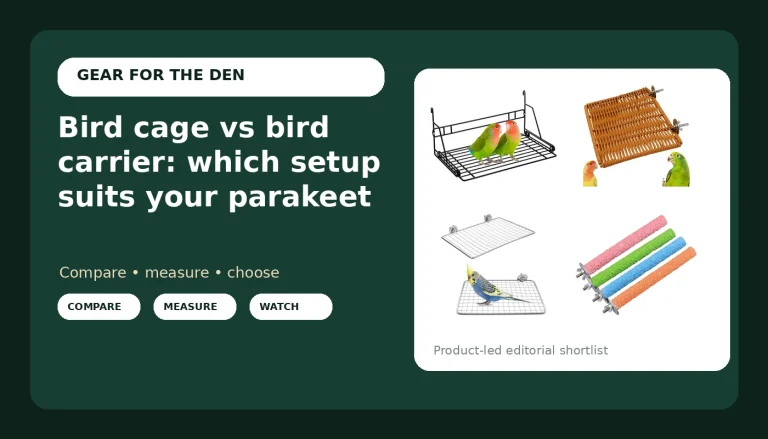
Hypeety Open-Grid Bird Perches for Cage Stainless Steel Flat Bird Platform
Flat stainless platform that mounts where a wood branch will not fit, and the open grid lets droppings fall through instead of puddling
Bare metal has no grip texture and nothing to chew, so some birds ignore it until you place food on top
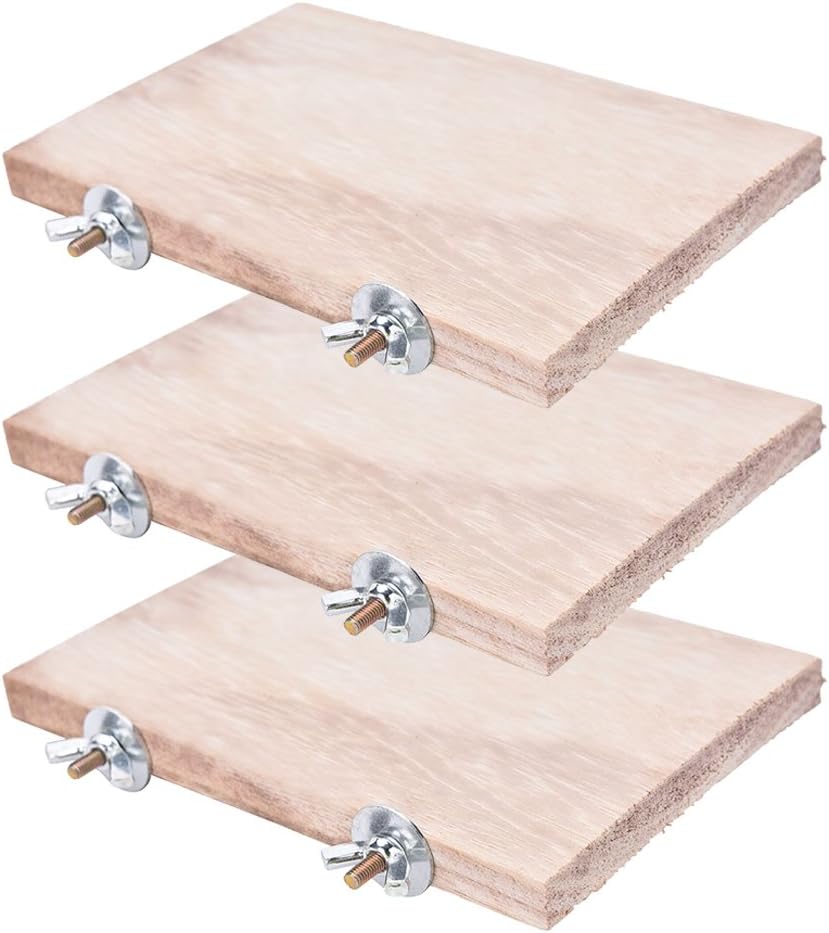
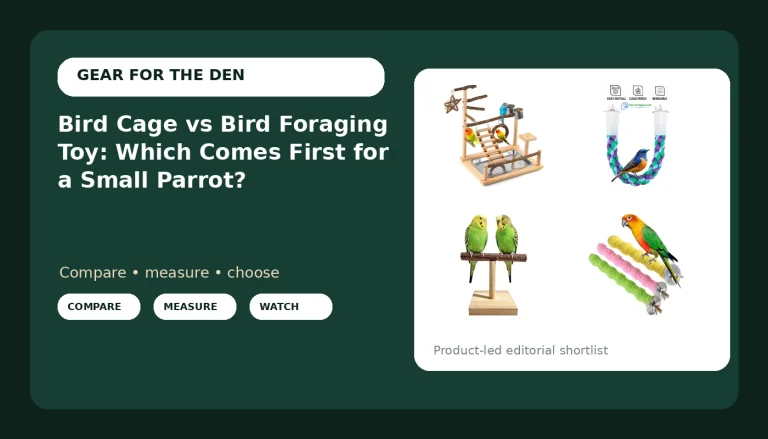
CoscosX 3Pcs Pet Parrot Bird Cage Perches Square Wooden Stand Platform Budgie Toys Bird Tree Perches for Parakeets
Three pieces give you placement flexibility in one purchase, and wood doubles as a chewing outlet for budgies
Wood needs more frequent inspection and scrubbing than metal, and square edges do not vary in diameter the way a branch does
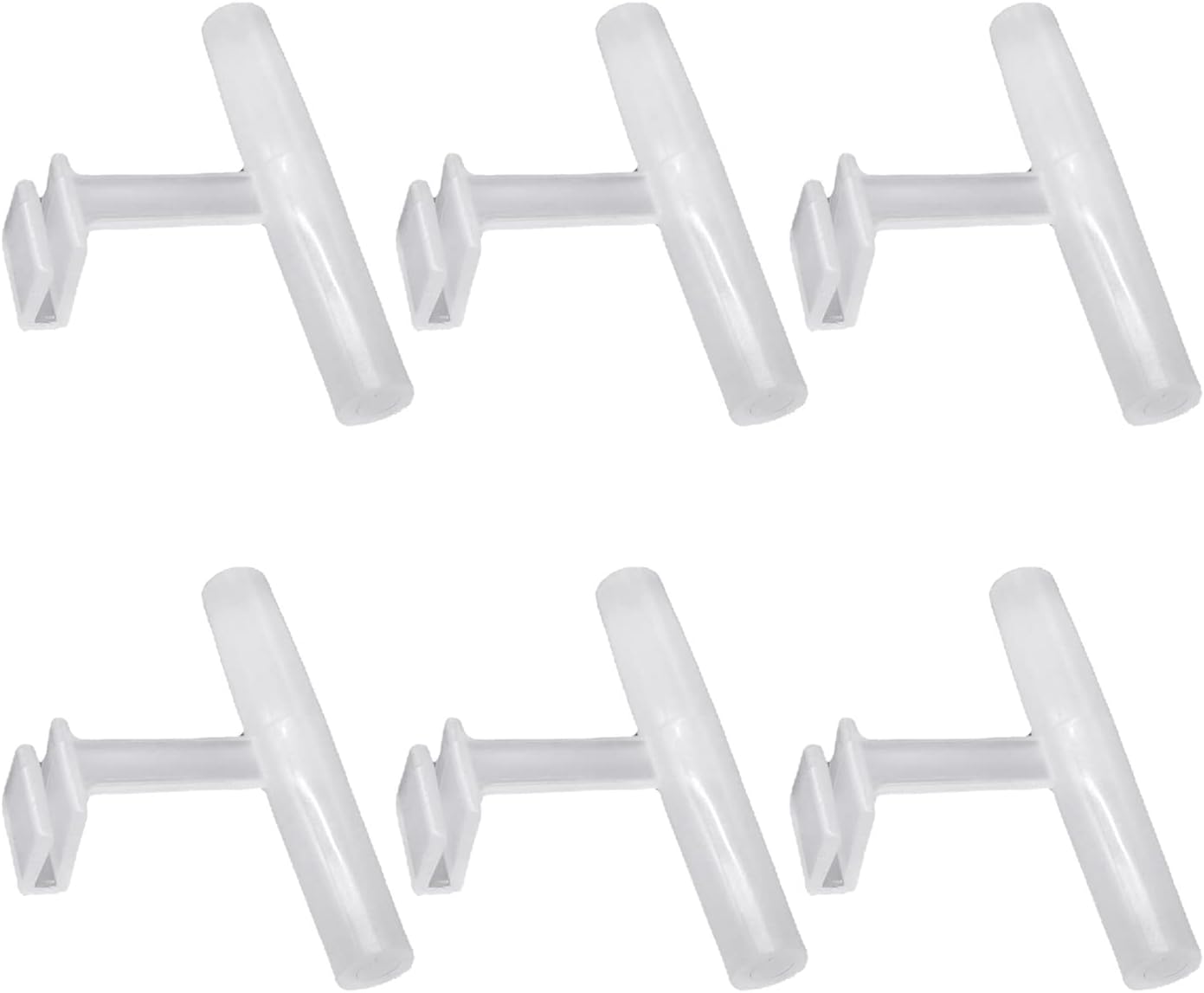
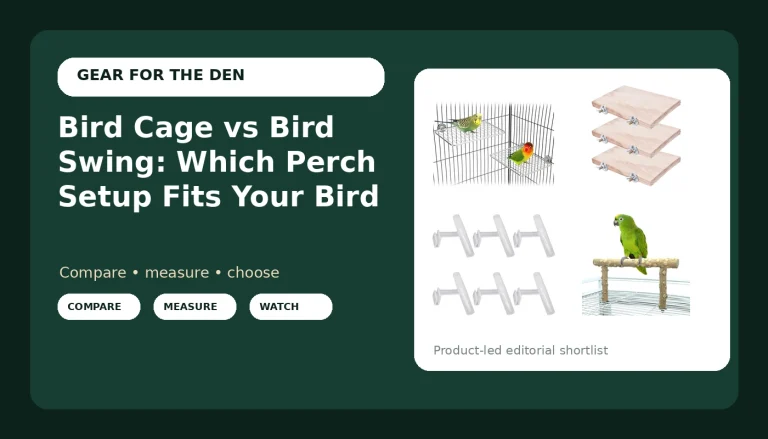
BOGEEL Bird Stand 6 Pieces Perches Clip to Window Feeders Training Tool Toy for Small Parrots Conures Cage Accessories
Clip mounts move perching onto a window feeder, a carrier, or a training station, and six pieces means you keep spares
The clips depend on a surface that fits them, and the scale suits small parrots rather than a large bird's feet
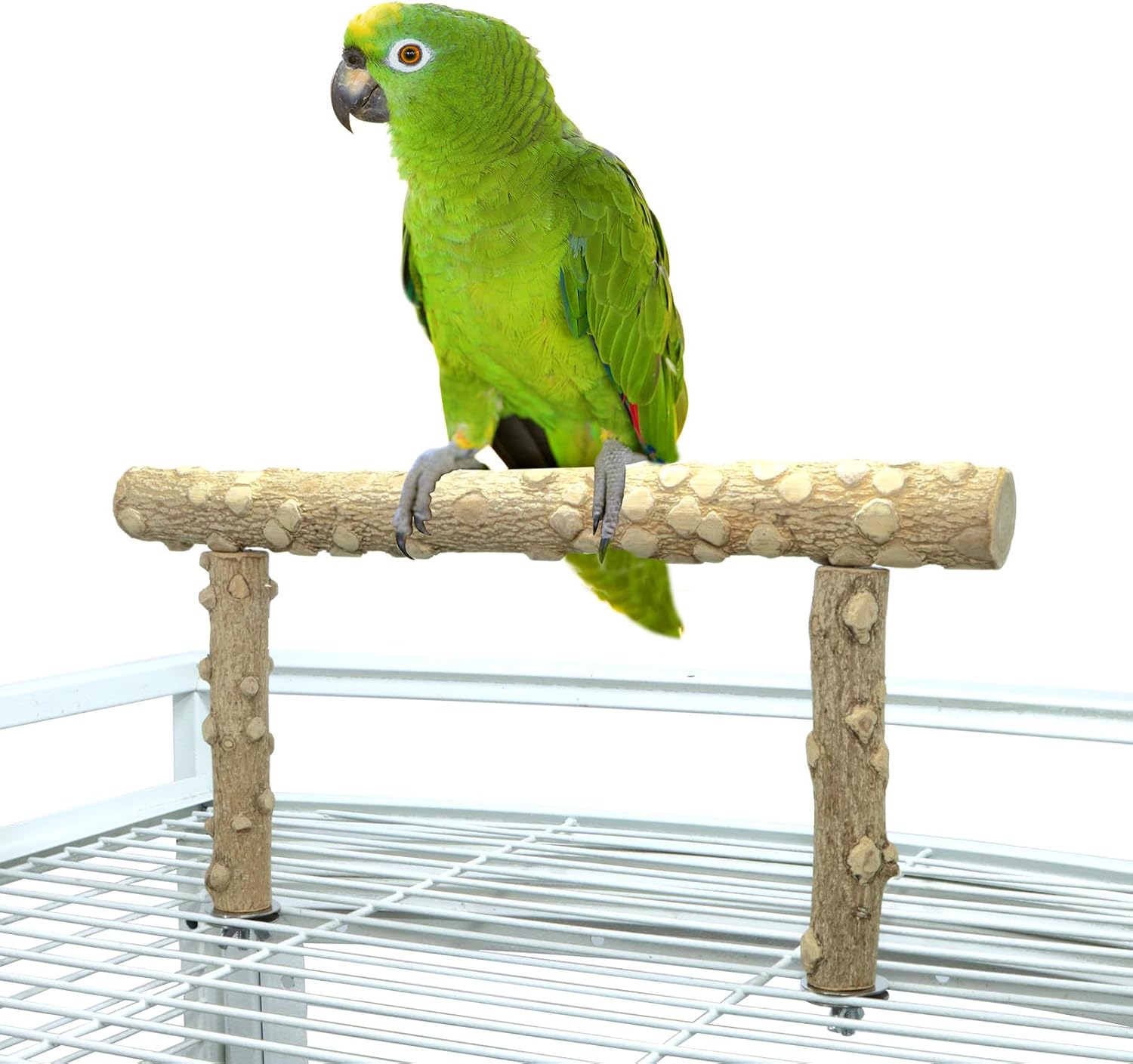
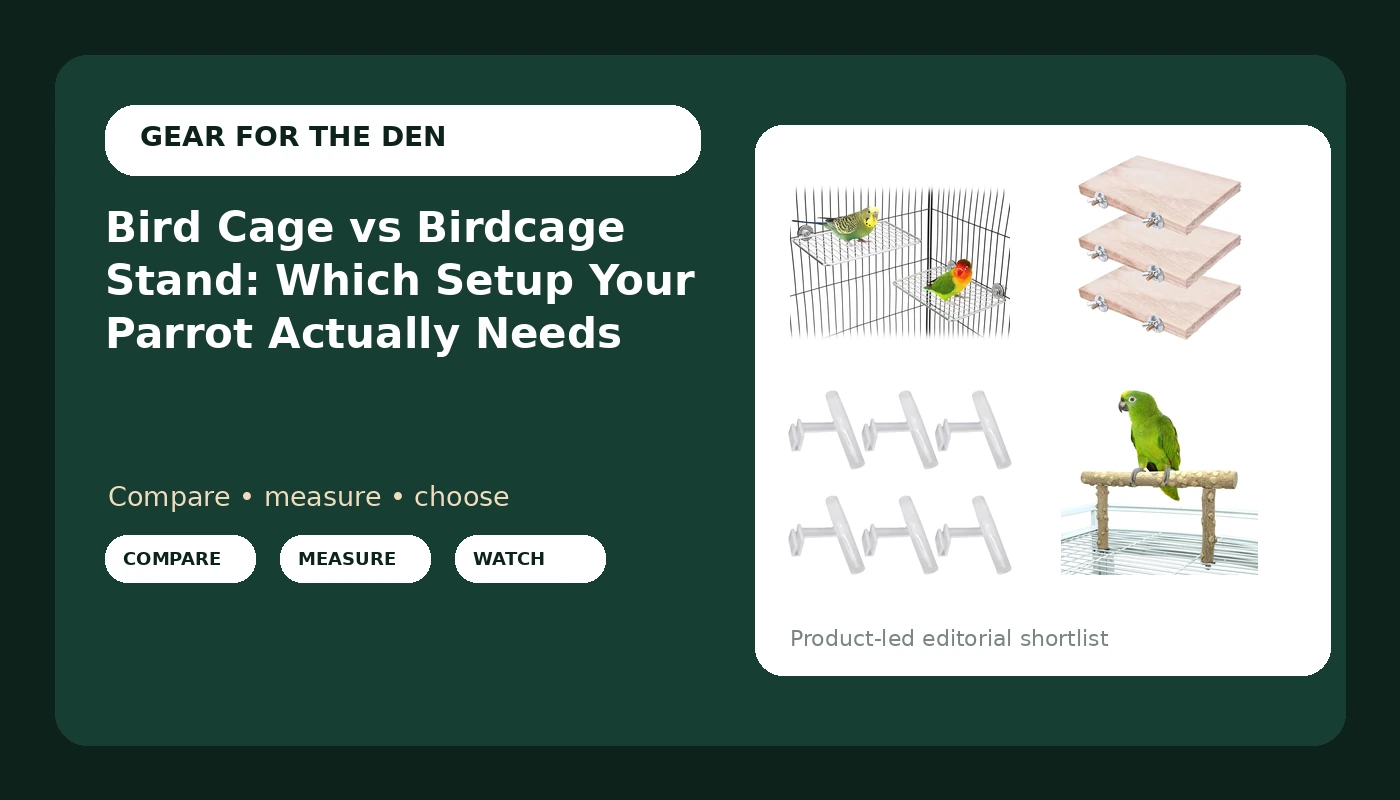
Bird Perch Stand,Natural Wood Cage Gym Toy Branch for Small Large Parrot
A natural branch shape gives feet something to wrap around and something to gnaw, which is closer to how a bird perches in the wild
Natural wood is porous, so it is harder to sanitize fully, and branch shapes vary so you cannot predict the fit
Prices and availability may change.
What bird cage vs birdcage stand changes about your daily routine
The bird cage vs birdcage stand question shows up most clearly at feeding time. In a cage, you refill a food cup through a door and the mess stays inside a tray liner. On a stand, the bird eats at your table height and half the seed ends up on the floor. That is not a reason to skip the stand. It is a reason to plan where the stand lives, ideally over a hard floor you can sweep rather than carpet you cannot.
Mornings belong to the cage. You uncover it, swap the food cup, check the water, and confirm the bird made it through the night. Evenings belong to the cage too, because most small parrots need a long, quiet dark period to avoid hormonal behavior and feather problems. Ten to twelve hours of covered sleep is the usual guidance for budgies, cockatiels, and conures.
The middle of the day is where the stand earns its place. Out-of-cage time on a stand lets a bird stretch, climb, and interact with you without you having to reach into a cage. If your bird gets bored on the stand, the fix is usually foraging difficulty, not more space: wrap a treat in paper, thread it through a perch, and let the bird work for it.
Cleaning is the part nobody plans for. A cage means a tray liner change every day or two and a perch scrub on a rotation. A stand means wiping down whatever is underneath it. Either way, the perch material decides how much scrubbing you do, which is why the four options below matter so much.
The four perch options, in detail
Hypeety Open-Grid Bird Perches for Cage Stainless Steel Flat Bird Platform. This is the option for the bird that has outgrown dowels. The flat stainless platform gives a stable landing area, and the open grid means droppings drop through instead of sitting on the surface where feet rest. It mounts inside a cage where a branch would be awkward, and it wipes clean in seconds. The trade-off is that metal offers no grip and nothing to destroy, so a bird that likes to chew will treat it as furniture rather than a toy. Pair it with something wooden.
CoscosX 3Pcs Pet Parrot Bird Cage Perches Square Wooden Stand Platform Budgie Toys Bird Tree Perches for Parakeets. Three wooden platform perches in one pack is the practical choice for a budgie or parakeet setup, because you can place one high for sleeping, one near the food cup, and one lower for climbing without buying three separate products. The square profile gives a flat standing surface, and the wood is chewable, which matters for a species that gnaws constantly. The honest downside is maintenance: wood absorbs what lands on it, so it needs more frequent scrubbing and a closer eye for wear than stainless steel does.
BOGEEL Bird Stand 6 Pieces Perches Clip to Window Feeders Training Tool Toy for Small Parrots Conures Cage Accessories. This pack is the flexible one. Clip mounts let you put perching on a window feeder, on a travel carrier, or on a training perch away from the cage entirely, and six pieces means you always have a spare when one is drying after a wash. It is aimed at small parrots and conures, so if you keep a larger species, the scale of the perches is the thing to check before you commit. For a conure owner who wants a window station for foraging and a second perch for carrier trips, this is the most useful set here.
Bird Perch Stand, Natural Wood Cage Gym Toy Branch for Small Large Parrot. A natural branch is the closest thing to what a parrot grips in the wild, and the varying diameter along a branch is what exercises foot muscles and helps keep nails from overgrowing. It is described for both small and large parrots, which is a wide range, so measure your bird's foot against the actual branch thickness before you rely on it as the main perch. The other caveat is hygiene: porous wood is harder to fully sanitize than metal, so plan to replace it rather than scrub it forever.
Bar spacing, cage height, and perch diameter
Three numbers decide whether a cage works, and none of them are about the frame's color. Bar spacing is the first. The bars should be close enough that your bird cannot push its head between them, because a bird that gets its head through will try to follow with its body. Small species need tighter spacing than a conure or a cockatiel.
Cage height is the second, and it is the most overrated. Most small parrots use horizontal space far more than vertical space, so a wide cage with a modest height beats a tall narrow cage every time. Height still matters for climbing and for keeping the highest perch away from anything directly above it.
Perch diameter is the third, and it is where most starter cages fail. A dowel that comes with the cage is usually one uniform diameter, which means the bird's feet grip the same way all day. The rough guideline is that a bird's toes should wrap most of the way around the perch, and you want at least two different diameters available so the feet change position.
Food cup size, tray liner, and the cleaning loop
Food cup size is a small decision with a daily cost. A cup that is too small means refilling twice a day and more chances for a bird to dump it. A cup that is too large means stale food sitting in the bottom. Either way, the cup belongs near a perch, not on the floor, because a bird will not eat comfortably from a bowl it has to stand in.
Tray liner choice is the unglamorous half of cage ownership. Paper you can swap daily beats a liner you have to scrape. If your bird is a seed flinger, a deeper tray with a liner you can lift out will save you more time than any other upgrade.
The cleaning loop itself is what keeps a bird healthy. Perches get scrubbed on a rotation, food and water get refreshed daily, and anything wooden gets inspected for soft spots. Stainless steel and plastic survive this cycle for years. Wood does not, which is a reason to treat wood perches as consumables.
Carrier size, swing mount, and foraging difficulty
Carrier size matters more than most owners expect, because the carrier is where the perch problem gets worst. A bird that travels on a smooth floor slides around. A small clip-on perch, like the ones in the BOGEEL set, gives a travel carrier a proper grip point.
A swing mount is the classic toy for small parrots, but it is not a substitute for a perch. Swings move, and a bird needs at least one still, stable surface to sleep on. Add a swing alongside a fixed perch, never instead of one.
Foraging difficulty is the last piece and the one that turns a boring setup into a busy one. Flat platforms like the Hypeety piece are excellent foraging stations because you can hide treats on them and the bird has to work the grid. Branch shapes like the Bird Perch Stand encourage climbing and gnawing instead. Between the two, a bird gets both problem solving and exercise.
How to decide: bird cage or birdcage stand
Whether you pick bird cage or birdcage stand, the answer is usually both, but in a specific order. Start with a cage that meets the bar spacing and width requirements for your species. Add two or three perches of different diameters and materials so the feet are not doing the same thing all day. Then, once the cage is right, add a stand for out-of-cage time.
The reason for that order is safety. A stand cannot contain a bird, so it only works while you are present. That makes the cage the foundation and the stand the luxury. A household with a well-perched cage and a simple stand will have a healthier bird than one with an expensive stand and a bare cage.
Once you frame bird cage vs birdcage stand as containment plus access rather than one against the other, the shopping list gets simple. Cage first, perch variety second, stand third, and a carrier perch for vet trips last.
What I would buy first
For a budgie or parakeet in a starter cage, the CoscosX three-pack is the cheapest way to replace a single dowel with three perches at different heights and positions. For a conure that spends evenings on a window perch, the BOGEEL clip-on set adds training and travel stations in one purchase. For a cage that needs a wipe-clean station near the food cup, the Hypeety platform is the practical pick. And for the bird that destroys everything wooden, the natural wood branch is the one to keep replacing.
None of these four products is a cage and none of them is a stand. They are the layer that makes either one work, and that is the part of the bird cage vs birdcage stand decision most buyers skip. Get the perching right and the rest of the setup gets easier to live with.