If you are searching for a cat brush for cat hair on furniture, you are probably dealing with two problems at once: a cat that sheds more than you expected, and upholstery, blankets, and carpet that seem to hold every loose hair. The right tool depends on your cat's coat length, how much undercoat it carries, and how much handling your cat tolerates. A brush that works on a short, single coat may not reach the dense undercoat of a longhaired cat, and a tool your cat dislikes will not get used no matter how well it is designed. This explainer walks through the roles different tools play, from a traditional brush and comb to a self-groomer, a grooming glove, and a furniture-focused hair removal tool, so you can match the tool to the job instead of buying blindly.
Quick answer
The best tool is the one that matches your cat's coat and your cat's tolerance. For most homes, a brush with fine, closely spaced pins or bristles plus a comb for the undercoat does the heavy lifting, while a self-groomer, glove, or furniture tool handles the hair that reaches soft surfaces. This cat brush for cat hair on furniture explained guide treats those tools as a system, not a single purchase. No single tool is universally best, and no tool replaces regular grooming and surface cleaning. Start with the coat, then add the cleanup tool that fits your furniture and your routine.
Four useful options
| Model | Best fit | What stands out |
|---|---|---|
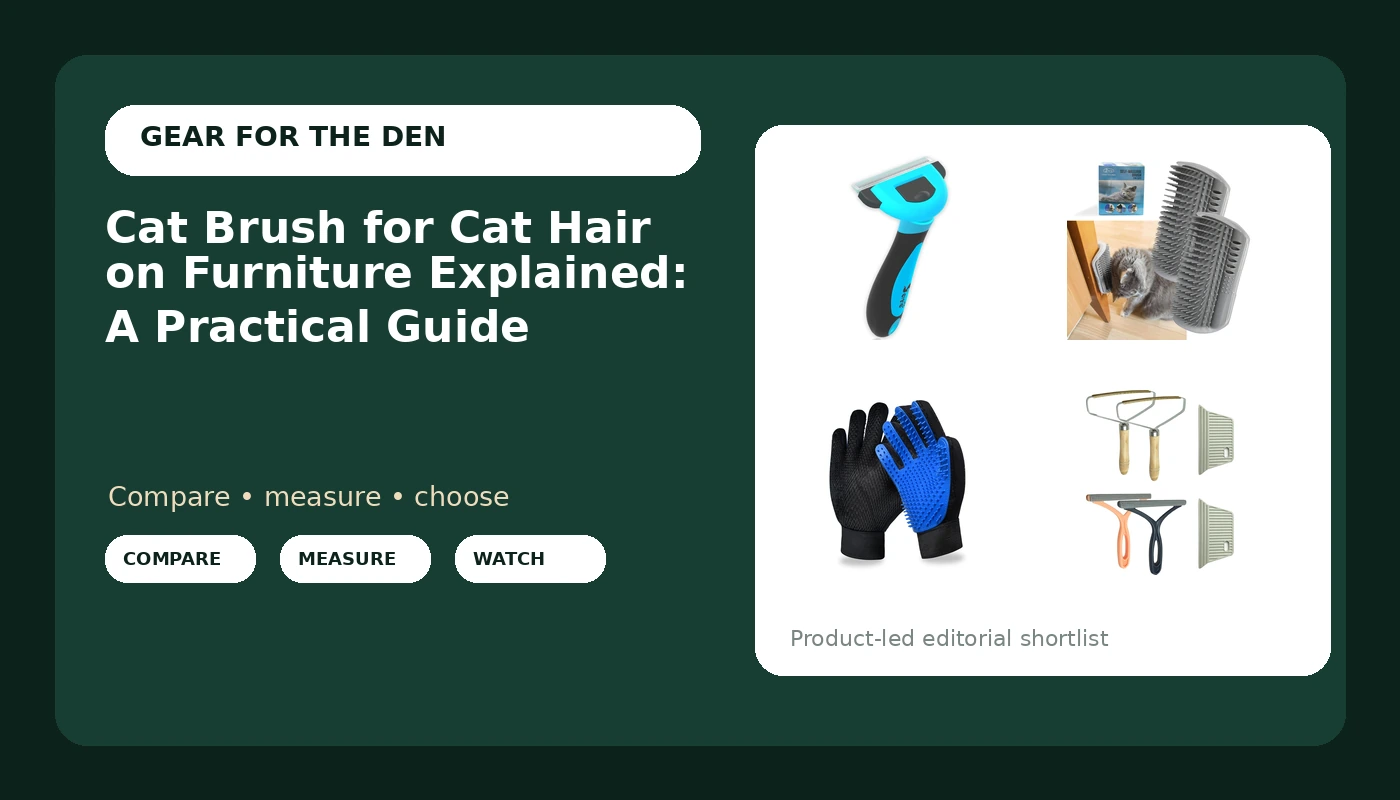
| Petgle Cat Brush & Cat Comb for Shedding, 2.5inch Blue | Cats that accept a traditional brush and comb | Two-piece set with brush and comb for long and short hair |
| 2 Pack Softer Self Groomer with Catnip Wall Corner Massage Comb Scratcher Grooming Brush Tool for Long & Short Fur Kitten Cats Dogs (Gray) | Cats that prefer to rub against a fixed groomer | Wall-corner mounting and catnip included |
| GJEASE Cat Grooming Glove Brush 2-Pack, Pet Hair Remover Tool | Hands-on sessions with cats that dislike brushes | Glove format with two mitts |
| 6-Pack Pet Hair Removal Tool, Cat Hair Remover Furniture | Cleaning hair from furniture and fabric | Six reusable tools for furniture surfaces |
The core brush and comb: Petgle Cat Brush & Cat Comb for Shedding, 2.5inch Blue
A traditional brush and comb set gives you direct control over pressure and direction. The brush can lift loose hair from the surface of the coat, while the comb helps you check the undercoat and work through small tangles. The trade-off is that this style requires your cat to accept handling, and it does not remove hair that has already settled into a sofa cushion. For that second job, you still need a separate furniture tool or a vacuum attachment. Think of the brush and comb as the front end of the system, where you reduce the amount of loose hair before it spreads. The comb spacing and bristle type matter because they determine whether the tool glides through the coat or catches on it. On a long coat, a comb can reveal mats before they tighten. On a short coat, the brush may be enough for a quick weekly pass.
The self-groomer: 2 Pack Softer Self Groomer with Catnip Wall Corner Massage Comb Scratcher Grooming Brush Tool for Long & Short Fur Kitten Cats Dogs (Gray)
A self-groomer is useful when your cat enjoys rubbing against objects but resists being brushed. You install it at a height your cat already uses, and the cat chooses when to interact. The trade-off is less control: you cannot direct the tool around the neck, belly, or tail base the way you can with a handheld brush. The catnip may encourage initial interest, but not every cat responds to it. This tool works best as a supplement, not as the only way you manage undercoat during a heavy shed. It can also help a multi-cat home because one cat can use it while another is being groomed by hand. Check the mounting height and stability, because a self-groomer that moves or falls will not earn repeat visits.
The grooming glove: GJEASE Cat Grooming Glove Brush 2-Pack, Pet Hair Remover Tool
A grooming glove can lower the pressure of a grooming session because it feels more like petting. That matters for cats that tolerate touch but panic at the sight of a brush. The trade-off is coverage and control. A glove may not reach through a dense undercoat the way a comb or deshedding edge can, and the fit matters because a loose glove is awkward while a tight one is uncomfortable. Use the glove for short sessions, then follow with a comb if you find that loose hair remains near the skin. The glove is also handy for cats that only accept contact when they initiate it, since you can keep the glove nearby and put it on without a formal grooming setup. It will not replace a furniture tool, but it can reduce how much hair reaches the sofa in the first place.
The furniture cleanup tool: 6-Pack Pet Hair Removal Tool, Cat Hair Remover Furniture
A furniture tool addresses the hair you see after a grooming session, when loose strands have woven into upholstery, blankets, or car seats. The trade-off is that it does nothing for the cat. It does not reduce shedding at the source, and it will not replace a brush, comb, or glove for coat care. Its value is in the cleanup stage, especially if you want a manual option that does not require power or adhesive refills. Keep one near the sofa and one near the bed so the tool is available when you notice hair. A pack of six makes it easier to place a tool in each room instead of carrying one around the house.
Prices and availability may change. Product images, names, and retailer links are matched to verified listings. No current price, rating, stock status, or measured result is stated here without current evidence.
What the right cat brush for cat hair on furniture actually does
A cat brush for cat hair on furniture works on two fronts. First, it removes loose hair from the coat before that hair falls onto fabric. Second, it helps you understand your cat's coat so you can choose the right companion tools for the surfaces in your home. The brush itself does not make furniture repel hair. It reduces the supply of loose hair, and the cleanup tool removes what still gets through.
The details that matter are practical. Bristle type affects how the tool feels on the skin and how well it grabs surface hair. A comb with appropriate spacing can reach deeper into the undercoat without scraping. A deshedding edge may remove more loose undercoat, but it also requires more care because it works closer to the skin. Coat length changes everything: a short coat may only need a gentle brush and a quick pass with a furniture tool, while a long coat can benefit from a comb plus a brush plus more frequent cleanup. A nail guard or covered edge can add a layer of safety on tools that work near the skin, but technique still matters more than any single feature.
Matching the tool to coat length and undercoat
Coat length and undercoat density are the two variables that decide whether a tool is pleasant or pointless. A cat with a short, single coat often does well with a soft brush or a glove, because the goal is surface hair and loose debris. A cat with a dense undercoat may need a comb or a tool with a deshedding edge to reach the hair that stays trapped near the skin. A long coat adds tangle risk, so comb spacing and a gentle technique matter more than force.
Safety details deserve attention. A nail guard on a self-groomer or a covered blade on a deshedding tool can reduce the chance of skin irritation, but no tool should be pressed hard against the body. Glove fit should be snug enough to control but not restrictive. For furniture, a roller adhesive or a reusable manual tool can lift hair from fabric, while a vacuum attachment may handle larger areas. None of these tools replaces regular veterinary care if you notice bald patches, itching, or skin changes.
- Identify your cat's coat length and whether it has a dense undercoat.
- Start with the least invasive tool, such as a glove or soft brush, and observe your cat's response.
- Add a comb or deshedding edge only if loose undercoat remains after the first pass.
- Choose a separate furniture tool for upholstery, blankets, and car seats.
- Clean the tools after each session and store them where you can reach them quickly.
Practical grooming and cleanup routine
- Groom in short sessions and stop before your cat becomes restless.
- Use light pressure and let the tool do the work rather than pressing into the skin.
- Work in the direction your cat tolerates, and switch tools if you meet resistance.
- Keep a furniture hair removal tool near the areas where your cat sleeps.
- Wash or rinse reusable tools according to the maker's instructions, and replace them if they stop lifting hair.
For a related look at managing hair around the home, see how to reduce cat hair on bedding and blankets.
Which option should you choose?
Choose the Petgle Cat Brush & Cat Comb for Shedding, 2.5inch Blue when you want a traditional brush and comb set for weekly grooming and your cat accepts handling. Choose the 2 Pack Softer Self Groomer with Catnip Wall Corner Massage Comb Scratcher Grooming Brush Tool for Long & Short Fur Kitten Cats Dogs (Gray) when your cat prefers to rub against a fixed tool and you want an option that works without you holding a brush. Choose the GJEASE Cat Grooming Glove Brush 2-Pack, Pet Hair Remover Tool when your cat enjoys petting more than brushing and you want to collect hair during contact. Choose the 6-Pack Pet Hair Removal Tool, Cat Hair Remover Furniture when the main problem is hair already embedded in furniture and you want a dedicated cleanup tool.
If you are unsure what the ideal cat brush for cat hair on furniture is for your home, start with the coat and the cat's tolerance, not the label. The correct cat brush for cat hair on furniture is the one your cat allows you to use consistently, paired with a cleanup method for the surfaces you cannot protect.
Product listings describe intended use and included parts, not measured performance on every coat. A tool that works well for one cat may be rejected by another, and the best routine is the one you can repeat without stress for the cat.
The bottom line
There is no single cat brush for cat hair on furniture that fits every cat, because coat length, undercoat, and temperament vary. A traditional brush and comb set gives you the most control, a self-groomer suits cats that prefer to initiate contact, a glove helps with cats that dislike brushes, and a dedicated furniture tool handles the hair that reaches upholstery. Build a small system: reduce loose hair at the coat, then remove what lands on fabric. Check current Amazon price and availability for each option, and choose based on the job each tool is designed to do.