Nobody adopts a cat while planning to think hard about the grooming glove vs brush question, and then the couch turns gray and it becomes the only thing on your mind. The two tool families look interchangeable in a product photo and behave nothing alike on a living animal. A glove is a contact tool, working on the hair your hand can reach. A brush is a depth tool, working on the hair trapped inside the coat. Which one you need depends on coat length, undercoat density, and how much handling your cat will tolerate before the session ends.
The short answer for most households: a deshedding brush does the shedding work, and a grooming glove does the cat-wrangling work. If you are buying one tool and your cat carries a real undercoat, buy the brush. If your cat bolts the moment it sees a handle, buy the glove and add the brush later. That is the short version. The long version involves bristle type, comb spacing, and why a glove can feel more productive than a brush while removing less fur.
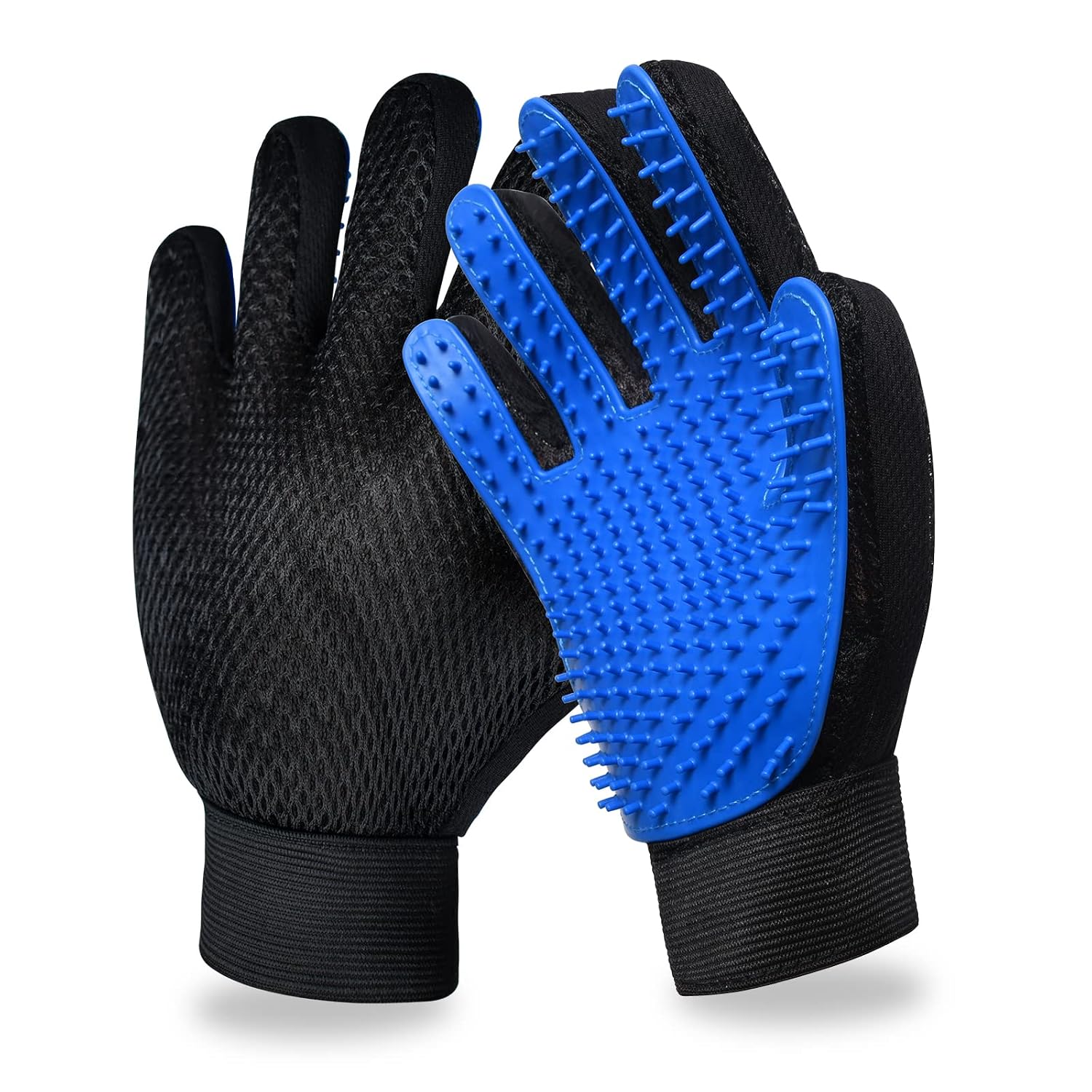
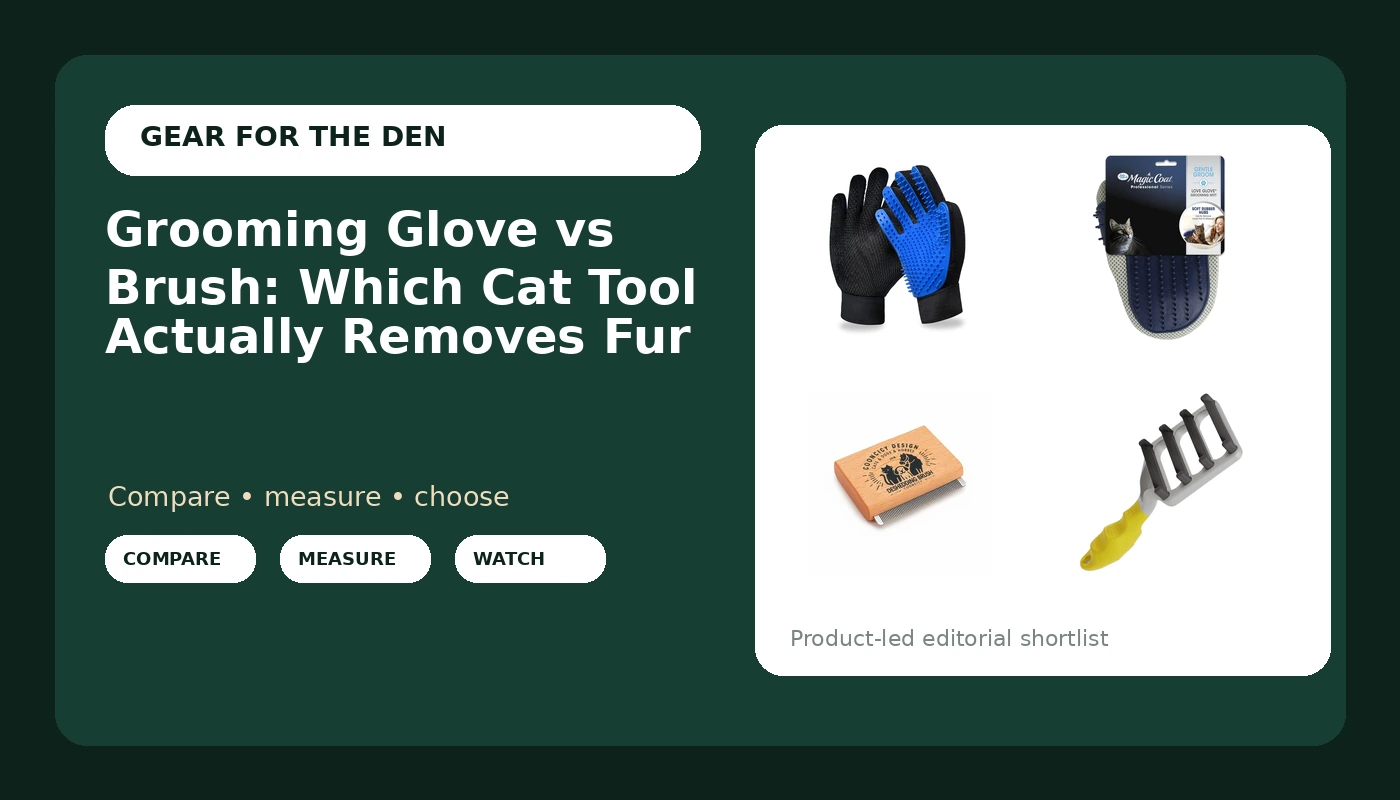
GJEASE Cat Grooming Glove Brush 2-Pack, Pet Hair Remover Tool
Two gloves in the box, so there is a spare hand, a spare glove, or one for a second cat
Silicone nubs sit on the surface, so a dense undercoat barely notices them
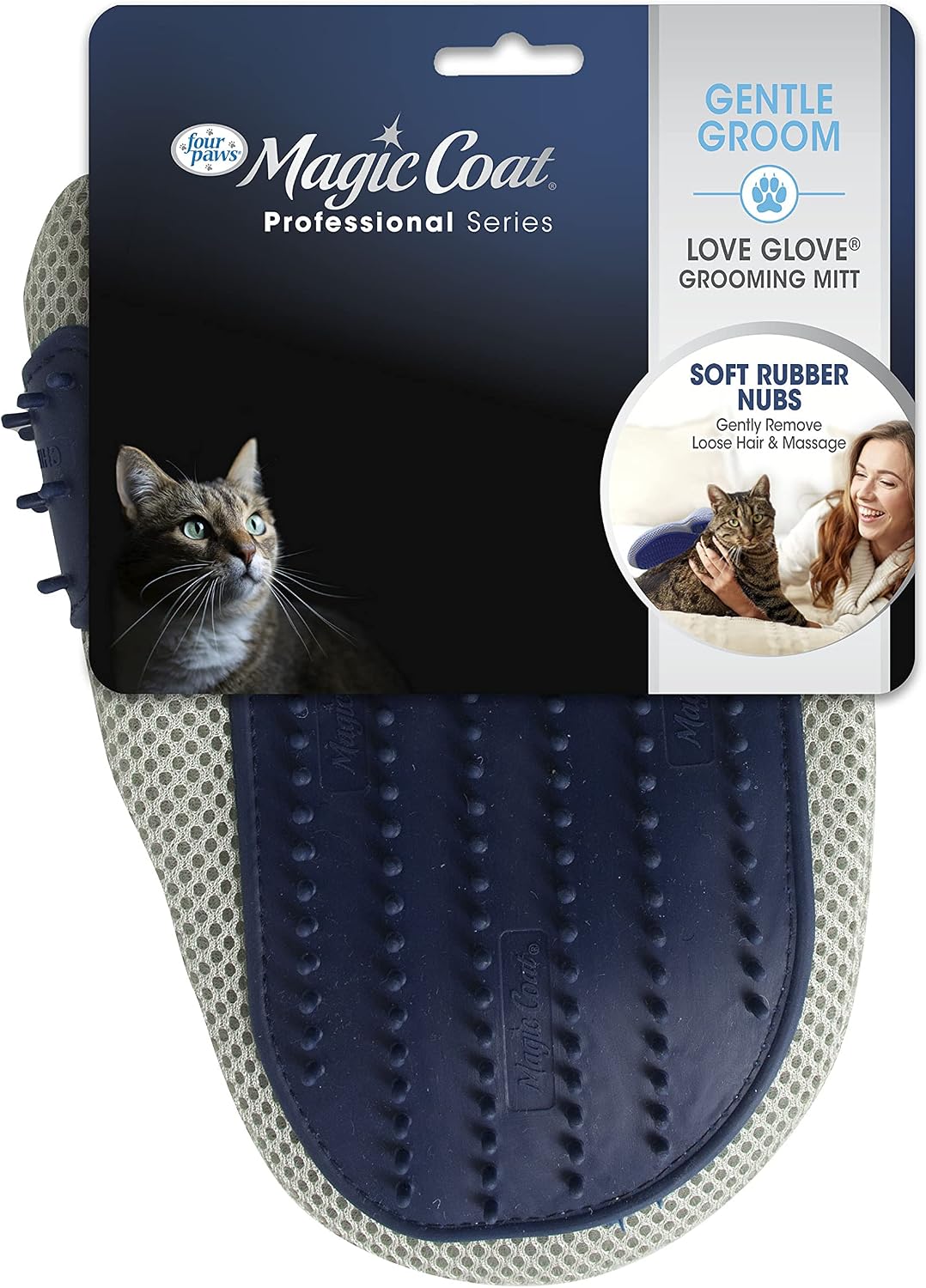
Four Paws Love Glove Cat Grooming Glove
The classic five-finger shape most cats accept because the session feels like being petted
Small coverage area, and the hair it lifts has to be peeled off by hand
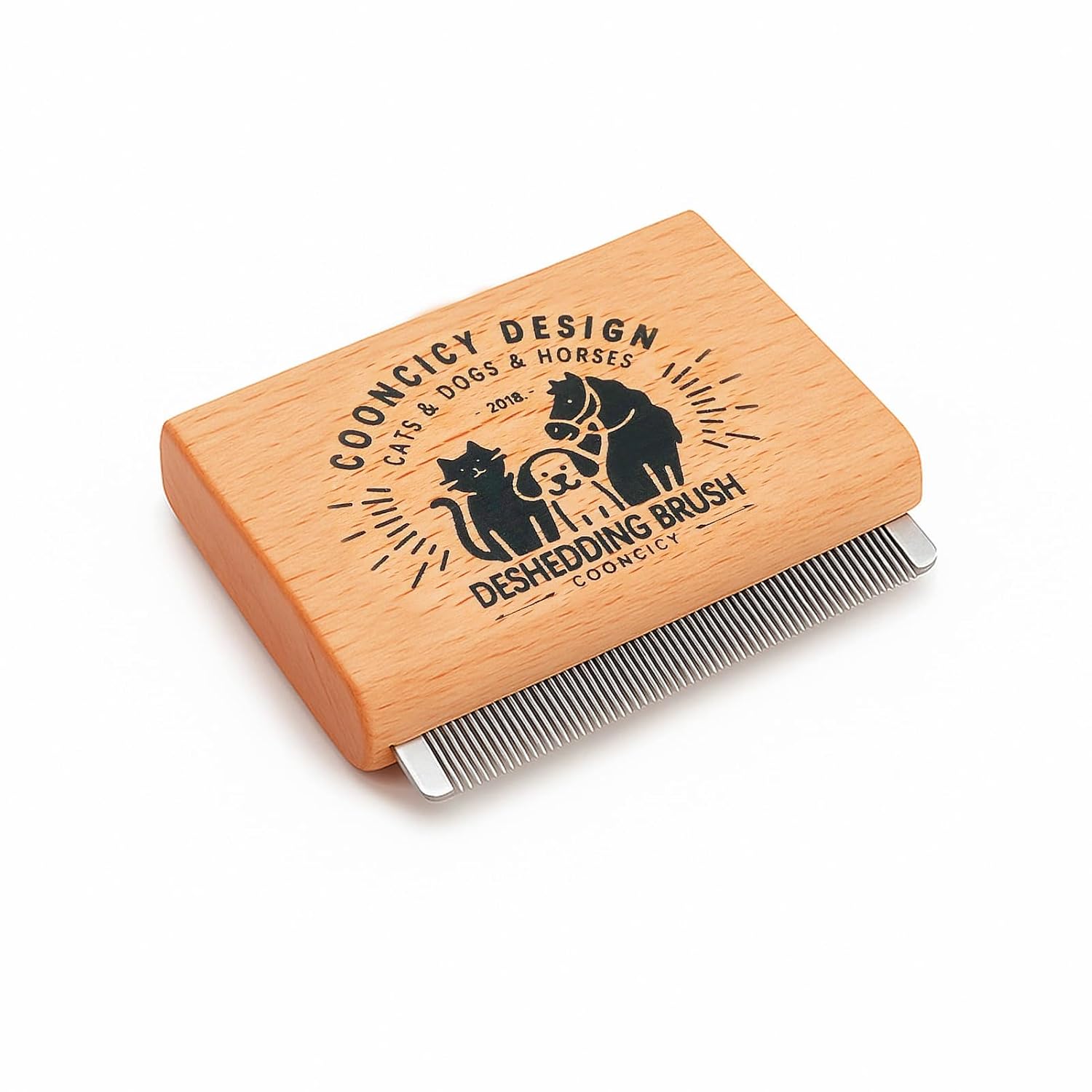
Cooncicy Deshedding Brush for Cat & Small Pets
Compact head that reaches the tail base, hind legs, and chin on cats and small pets
A smaller working area means more passes over a heavy shedder
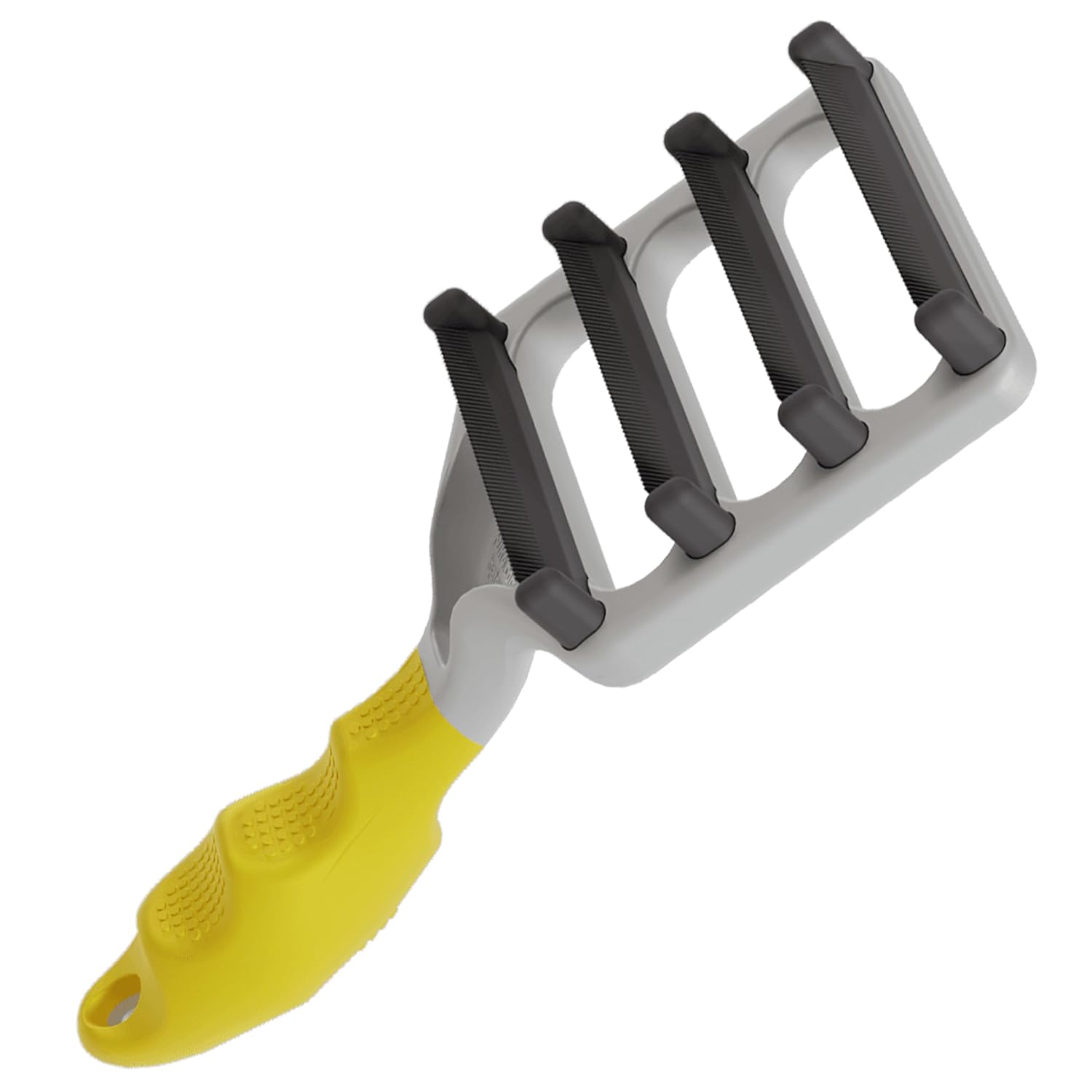
FUR4 deShedding Cat Brush for Short Hair Cats, Pet Hair Brush with 4 Carbon Fiber Edges, deShedding Tool Removes Loose Fur, Gentle & Effective Cat Grooming Brush for Shedding
Four carbon fiber edges are built to catch loose fur on short coats without raking the skin
Purpose-built for short hair, so it is the wrong instrument for a long-haired or double-coated cat
Prices and availability may change.
How we compare these grooming tools
Every tool here is judged on the same short list, and none of it needs a lab.
Bristle type comes first. Silicone nubs grab loose hair and hold it on the surface. Metal tines and a fine deshedding edge reach past the topcoat into the layer where shedding actually starts. Neither approach is better in the abstract. Each one is better or worse for a specific coat.
Comb spacing is next, and it is the spec buyers overlook most often. Tight spacing pulls more hair per stroke and demands more care around thin skin. Wide spacing is gentler and slower. On a cat with a dense undercoat, spacing changes the result far more than the shape of the handle ever will.
Coverage area sets how many passes a full session takes. A palm-sized glove and a compact brush head both mean more strokes, which matters a great deal when your cat's patience is measured in minutes rather than in coats.
Glove fit decides whether the tool stays on your hand when the cat twists away. An adjustable wrist strap is the difference between a tool that works and one that rotates mid-stroke and startles the animal.
Edge design tells you whether a tool can safely work the belly, the legs, and the tail base, where a rounded profile does the same job a nail guard does on a pair of clippers.
Cleanup gets its own line, because it decides whether the tool survives past week three. A roller adhesive sheet or a peel-off layer of hair turns a chore into a two-second motion, and a tool you dread cleaning is a tool that ends up in a drawer.
Price sits in the table as a link rather than a number, because listings move and a stale figure helps nobody.
One caveat worth stating plainly: this is a comparison of what each tool is designed to do, based on how each product describes its own construction. It is not a claim about one afternoon with a borrowed cat.
The grooming glove vs brush difference comes down to depth
Strip away the packaging and the difference between grooming glove and brush tools is reach. A glove's silicone nubs sit on the surface of the coat. They collect the loose hair that has already worked its way out of the undercoat, and they do it while your cat believes it is being petted, which is the entire appeal. A brush with metal tines, a slicker head, or a deshedding edge goes deeper. It combs through the topcoat, catches the looser hairs sitting in the undercoat, and removes them before they end up on the couch.
That gap explains the results people describe. Gloves feel more productive than they are, because every pass produces a visible mat of fur on your palm. Brushes feel less productive, because a single stroke may only pick up a few strands, yet they pull hair from deeper in the coat and cut shedding over days instead of minutes.
The brush vs grooming glove argument usually reduces to one question: does the tool need to reach the undercoat, or is lifting surface hair enough? On a dense double coat, only one of those answers actually reduces shedding. On a short, single coat, the surface is most of the problem, and a glove gets closer to sufficient.
Gloves: silicone nubs, glove fit, and nervous cats
Gloves win the introduction. A cat that hides from a brush will often sit still for a hand, and both gloves in this comparison lean hard on that fact.
The GJEASE Cat Grooming Glove Brush 2-Pack, Pet Hair Remover Tool arrives as a pair, which matters more than it sounds. Two gloves mean a spare for a second hand, a spare for the day one disappears behind the couch, or a second glove for a second cat. The working surface is silicone nubs on a five-finger shape, so you can work the cheeks, chin, and chest the way you would pet a cat anyway. Cleanup is the weak point. Hair clings to the nubs and has to be peeled or rolled off, which is exactly where a roller adhesive sheet earns its place in the routine.
The Four Paws Love Glove Cat Grooming Glove is the older, simpler version of the same idea. It is the glove most people picture when they picture a grooming glove, and its reputation comes from the same trick: the cat reads the session as affection rather than as grooming. Coverage is modest. A glove covers a palm, not a flank, so a heavy shedder takes longer to work over from nose to tail.
Where both gloves fall short is depth. Silicone nubs do not separate the coat, so the undercoat stays untouched. If your cat's shedding comes from a dense undercoat, a glove will keep the surface tidy and leave the source of the problem alone. Glove fit is the other variable. A glove that shifts on your hand turns a gentle stroke into a tug, and a tug ends the session. Look for an adjustable wrist strap, and size to a snug hand rather than a loose one.
There is also a coat length ceiling. On a long coat, nubs skim the top layer and leave the deeper tangles for someone else. A glove is a fine finisher on a long-haired cat and a poor primary tool.
Deshedding brushes: comb spacing and the deshedding edge
Brushes do the part gloves cannot, which is why the difference between grooming glove and brush tools shows up hardest in spring and fall, when the undercoat turns over and the house turns fuzzy.
The Cooncicy Deshedding Brush for Cat & Small Pets is the compact option. A smaller head reaches places a wide brush cannot, including the tail base, the hind legs, and the chest of a cat that only tolerates short sessions. The trade-off is arithmetic. A narrow head covers less coat per stroke, so a full-body pass on a large shedder takes longer. For a small cat, a kitten, or a nervous adult, that is still the better deal, because finishing the job matters less than being allowed to start it.
The FUR4 deShedding Cat Brush for Short Hair Cats is built around four carbon fiber edges, and the design intent is clear from the name. Short coats shed differently from long ones. The hair is finer, it sits closer to the skin, and a stiff rake can scratch where a fine edge glides. Four edges spread contact across the coat instead of concentrating it in a single line, which is also why the listing leans on the word gentle. The limit is equally clear. This is a short-hair tool. On a long-haired cat or a dense double coat, it is the wrong instrument, and no amount of careful technique fixes that.
Comb spacing is the number to think about with any deshedding edge. Close spacing grabs more hair per stroke and demands more care around thin skin, the belly, and the armpits. Wider spacing is gentler and slower. Neither is wrong, but they suit different cats, and the wrong match is how a calm grooming session turns into a chase under the bed.
Matching the tool to coat length
Coat length decides most of this, and it decides it before brand enters the conversation.
Short, single coats: a deshedding brush with fine edges does the work, and a glove is a pleasant extra. The FUR4 short-hair brush is aimed squarely at this cat.
Short coats with a dense undercoat: comb spacing matters more than edge material. A brush that reaches the undercoat is the only tool that changes how much hair lands on your furniture.
Long coats: no glove will manage a long coat alone, and a short-hair deshedding brush will skate over the top of it. This is comb territory, with a glove used as a finishing pass on the legs, the chest, and the face.
Sensitive or senior cats: the gentler edge wins, and short sessions win again. A compact head like the Cooncicy brush lets you stop before the cat decides it has had enough, which is the single best predictor of whether the tool gets used again next week.
Whichever you pick, the technique is the same. Work with the coat rather than against it, keep pressure light enough that the skin does not tent, and stop while the cat is still relaxed. Whether you end up choosing a grooming glove or brush, the tool you use twice a week beats the better tool that stays in the drawer.
Should you buy both?
Yes, if you have a cat with an undercoat, and the pairing tends to cost less than most people assume.
Use the glove for the daily, low-stakes sessions: the chin, the cheeks, the back, and the moments when your cat is already on your lap. Use the brush once or twice a week for the deeper pass, when you can work the flanks and the tail base without a struggle. The glove handles the surface and the social side of grooming. The brush handles the undercoat and the shedding. If you are still weighing the grooming glove vs brush purchase as an either-or decision, remember that they are solving two different problems, not competing for the same one.
Cleanup is where the pair separates. Gloves hold hair on the nubs until you peel it, so a roller adhesive sheet or a damp hand speeds that up considerably. Most deshedding brushes release hair from the head in one piece, which is a two-second job over a trash can. Neither cleanup is a reason to skip the other tool.
The one case for buying a single tool is a cat that genuinely will not tolerate a brush. In that house, the GJEASE two-pack or the Four Paws Love Glove is not a compromise, it is the only option that gets used at all. Add a brush later if the cat relaxes, and start with short passes on the shoulders rather than the belly.
What to watch next
The category keeps drifting toward tools that combine both jobs: gloves with stiffer pins, brushes with glove-style grips, and hand tools with adjustable straps that stay put through a wriggle. Undercoat rakes and grooming vacuums are the other direction, and both solve a problem that neither a glove nor a brush touches, which is the hair that has already left the cat. If you are still deciding between brush shapes rather than between tool families, the brush types guide linked above walks through the difference between a slicker, a rake, and a bristle brush, and where each one fits in a weekly routine.