The cat brush vs cat comb question lands in my inbox about once a week, usually right after someone has spent twenty minutes with a slicker and watched a cloud of fur settle onto the couch anyway. Both tools remove loose hair. They remove it from different depths of the coat, at different points in the shedding cycle, and with very different amounts of control. That is why the argument never resolves on its own: a cat brush vs cat comb comparison only means something once you know your cat's coat length and how much undercoat is sitting under the guard hairs. Below are four tools that cover the main jobs, sorted by what each one actually does well.
For most short and medium coats, a dual brush and comb set is the best first purchase, because it lets you test both tool types on your own cat without buying twice. That answer changes the moment you have a long-haired cat with a dense undercoat, or a cat that will not sit still for a full session. Those two situations need different tools, and they are the reason a single recommendation never holds.
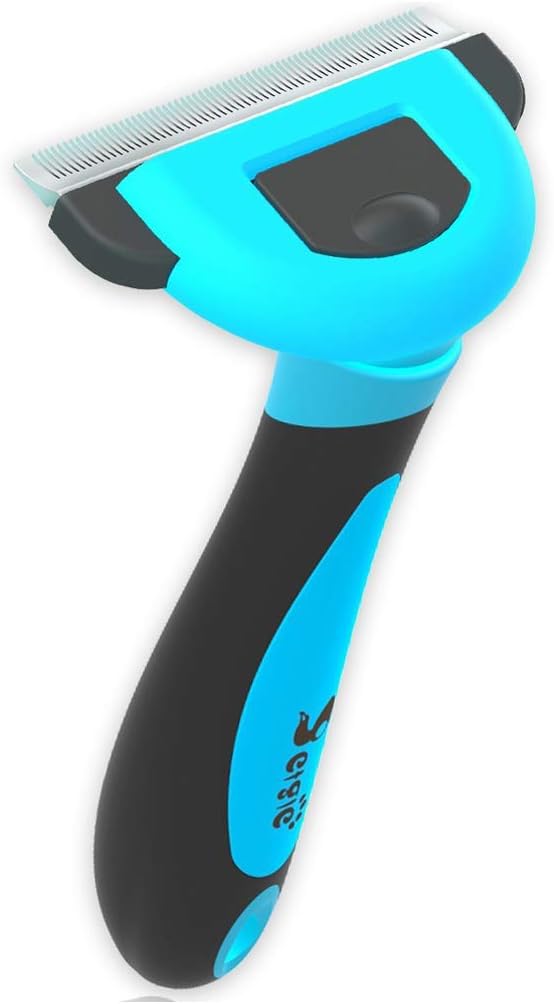
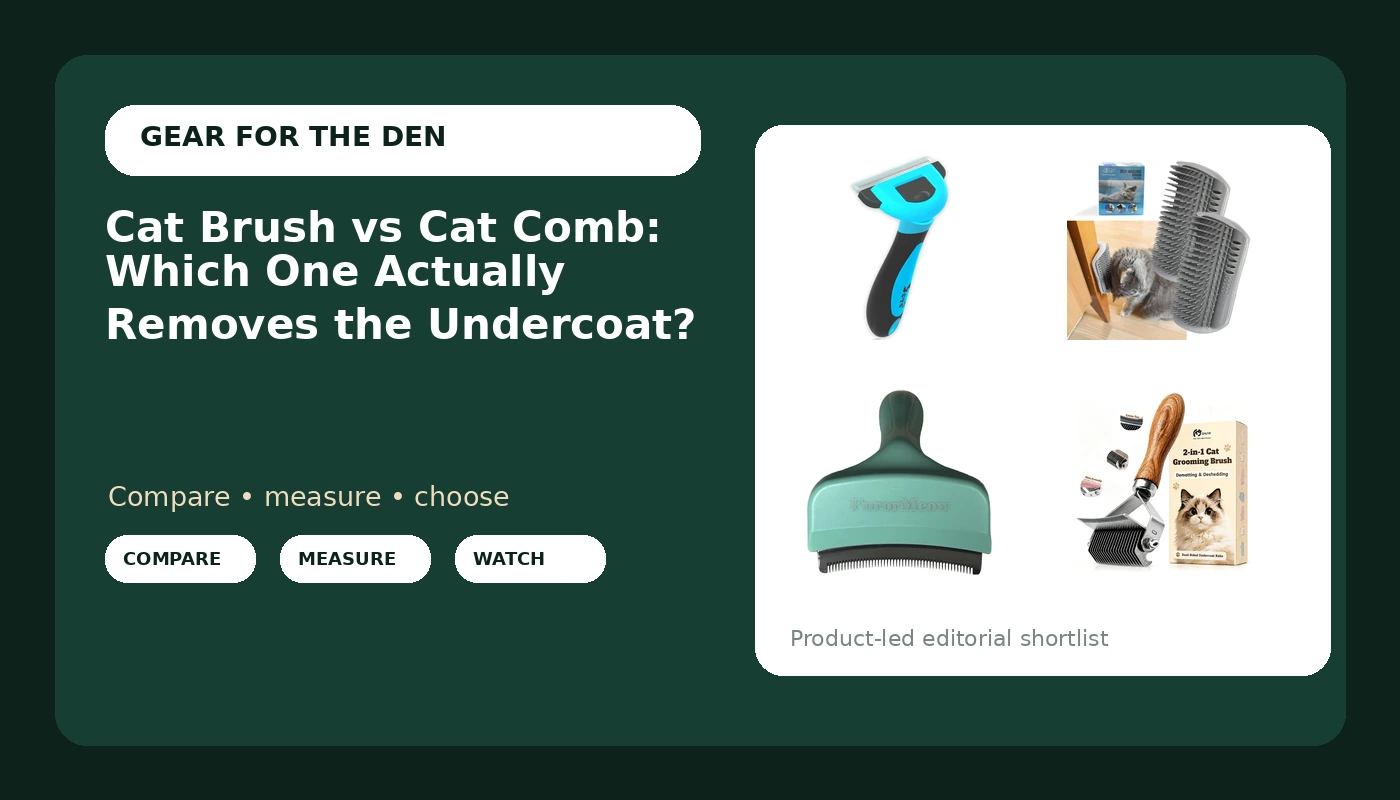
Petgle Cat Brush & Cat Comb Set
Brush and comb in one tool, so you can switch mid-session without buying twice; small 2.5 inch head suits kittens and medium cats
The gentle bristle type lifts surface hair better than deep undercoat, so heavy shedders still need a second tool
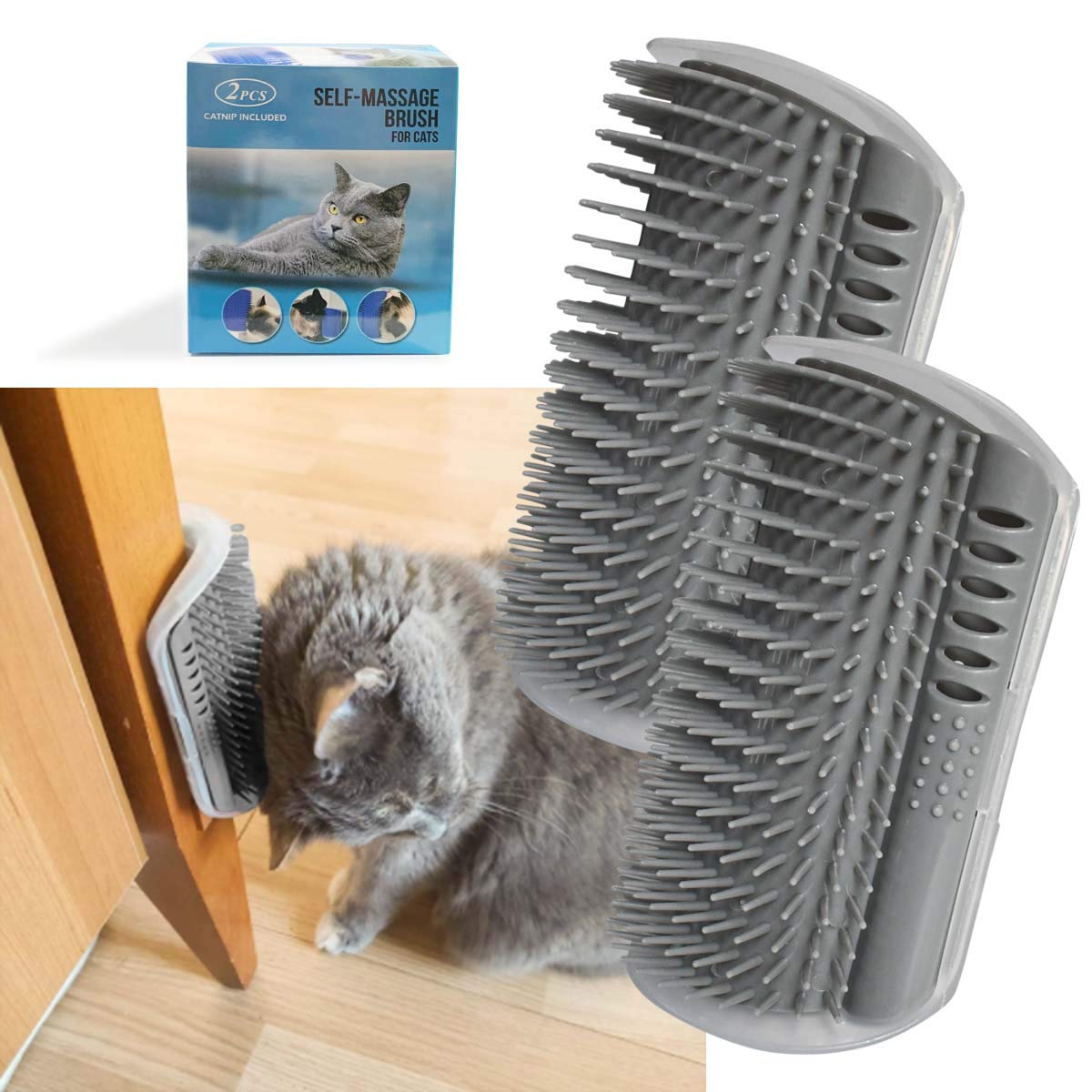
Self Groomer Wall Corner Massage Comb, 2 Pack
Two wall-corner units let the cat groom on its own schedule; catnip included to make the corner interesting
Zero control over where it works, and it will never touch a mat or reach a dense undercoat
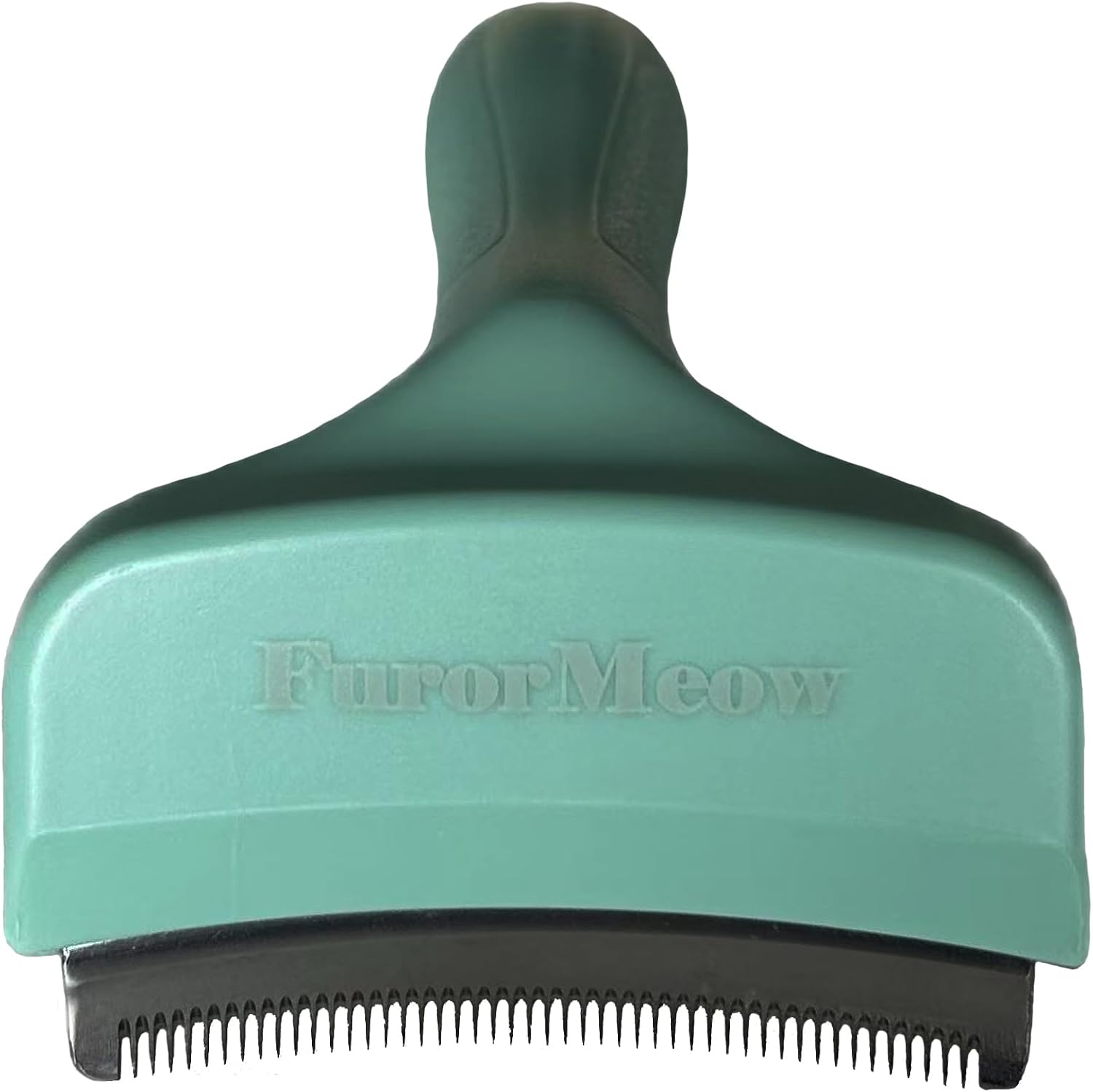
FurorMeow Pet Deshedding Tool with Curve Blade
Curve blade and tight V-shaped teeth reach undercoat on short and medium coats; small head is easier to steer on a cat
Not a detangler, and the deshedding edge punishes a heavy hand on thin-skinned cats
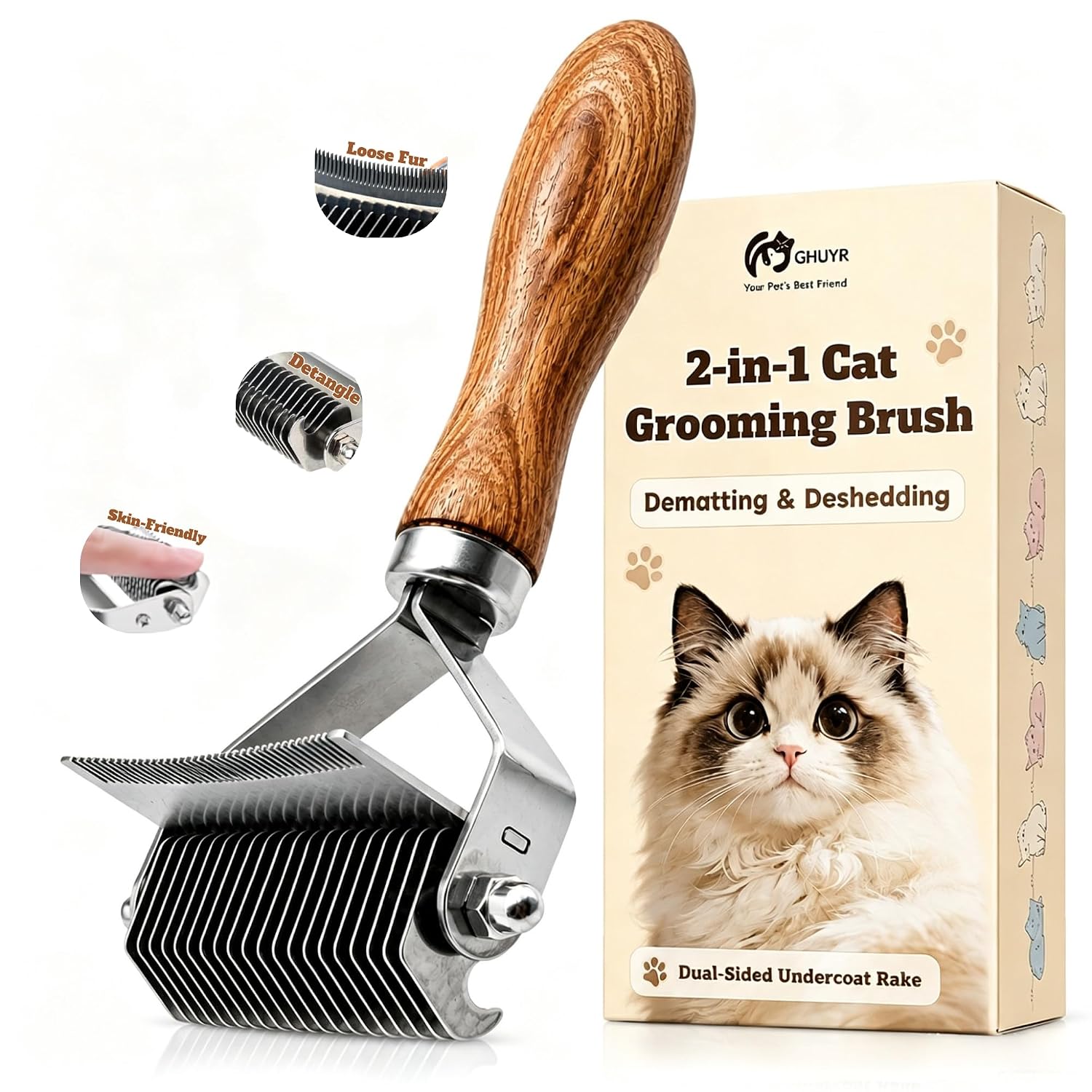
Cat Brush for Long Haired Cats, 2-in-1 Dematting & Deshedding Comb
Dematting side and deshedding side on one head, aimed squarely at the coat length that mats
The most expensive pick here, and overkill for a short-haired cat
Prices and availability may change.
How I sort these tools
There is no single best cat grooming tool, only a tool that matches the coat in front of you. I weigh four things: where the tool reaches in the coat, how much control the user has over pressure and direction, how the cat reacts after the first thirty seconds, and how much loose fur ends up on the floor instead of in the tool.
Bristle type is the first filter. Soft bristles glide across the topcoat and pick up dust and loose surface hair. Stiffer bristles and metal pins get closer to the skin. A deshedding edge goes deeper still, and that is the point where a tool either solves the problem or irritates the skin.
Comb spacing is the second filter. Wide-spaced teeth pass through a long coat without yanking. Tight spacing catches more fur, but it also catches tangles, and a comb that pulls is a comb your cat will not tolerate twice.
The third filter is temperament. A tool that removes a lot of fur but ends the session early is worth less than a gentler tool used three times a week. Anyone who has watched a cat leave the room mid-brush already knows this. The tool that gets used is the tool that wins.
Cat brush vs cat comb: where the fur actually sits
The difference between cat brush and cat comb comes down to depth and control. A brush works across the surface of the coat and through the top layer of the undercoat, spreading natural oils as it goes. A comb works in lines, tooth by tooth, and it tells you exactly where the coat stops being smooth.
That feedback is the real argument for a comb. Run a comb through a long coat and you feel the first tangle before it becomes a mat. A brush glides over that same spot and hides the problem until it is a solid knot against the skin, which is how a five-minute grooming session turns into a vet visit.
Framed as cat comb vs cat brush, the practical split looks like this: brushes are faster and better tolerated, combs are slower and more informative. Neither is more advanced than the other. They answer different questions about the same coat.
Coat length decides which question matters. A short, dense coat sheds constantly and mostly needs a brush with a deshedding edge to lift dead undercoat before it lands on the furniture. A long coat sheds less visibly because the fur stays trapped in the coat until it mats, which makes comb spacing and a fine-toothed finish more important than raw pulling power. Short coat, brush first. Long coat, comb first and brush second.
Brushes and self-groomers for daily upkeep
Two of the four tools here are built for cats that will not sit through a formal grooming session, and they solve that problem in opposite ways.
The Petgle set pairs a brush head with a comb in a single tool, which is the practical answer to the cat brush vs cat comb question for a household with more than one coat type. The bristle type is gentle enough for a kitten's first sessions, and the small 2.5 inch head reaches around legs and under the chin without a wrestling match. It is also the tool I would hand to someone who is not sure their cat will cooperate at all. What it does not do is dig into a dense undercoat, so a cat in a heavy shed still needs a second pass with something more aggressive.
The wall-corner self groomer takes the opposite approach. Two units mount at cat height, catnip is included to make the corner worth investigating, and the cat does the work on its own schedule. For a cat that avoids hands but loves a good cheek rub, that is a genuine solution rather than a gimmick. The trade-off is total loss of control: the tool grooms wherever the cat chooses, which is rarely the spot where the undercoat is thickest, and it will never touch a mat.
There is a third daily-upkeep option worth mentioning because people ask about it constantly: grooming gloves. Gloves live or die on glove fit. A glove that gaps at the wrist slides instead of catching, and a glove that is too tight is a glove you stop wearing. Gloves are excellent for cats that accept petting but not tools, and useless for anything that needs a comb.
Combs, deshedding edges, and tight V-shaped teeth
The FurorMeow tool is the specialist of this group. Its curve blade and tight V-shaped teeth are built to ride along the body and lift undercoat from short and medium coats without scraping skin. The small size is a real advantage on a cat, because a wide deshedding blade on a small animal is hard to steer and easy to press too hard with.
The trade-off is that a deshedding edge is not a detangler. Used on a long coat with existing mats, it skips across the surface and pulls at the mat instead of working through it. The edge also rewards a light hand: several short passes in one direction, a break, then another pass. Steady pressure is what turns a deshedding session into a skin irritation, and a cat that associates the tool with discomfort is a cat you will not groom again this month.
The long-haired 2-in-1 comb takes the opposite approach. It combines a dematting side with a deshedding side in one head, which is a sensible design for a coat that needs both jobs done at once. The dematting teeth work the knot, the deshedding side clears the loose fur behind it, and the comb spacing is tight enough to give the line-by-line feedback that long coats demand. It is the most expensive tool in this comparison, and it is aimed at a specific cat: long-haired, densely undercoated, and prone to mats behind the front legs and under the collar.
Neither of these tools includes a nail guard, and that is worth saying plainly, because the phrase shows up in grooming search results. A nail guard is a clipper feature. It has nothing to do with coat tools, and no brush or comb replaces nail trimming.
One more piece of the routine sits outside the tool itself: a roller adhesive sheet or two near the couch. Grooming moves fur from the cat into the air, and the air always wins. A roller picks up what lands, which keeps the whole routine from feeling pointless.
Comb spacing, coat length, and the mats problem
Comb spacing is the spec most buyers ignore and most cats care about.
On a short coat, tight spacing is fine and useful. The teeth reach the skin, the undercoat comes up, and the session is over in a few minutes.
On a medium coat, medium spacing does the work. Teeth that are too tight grab at the topcoat and pull, which is the fastest way to end a grooming session early.
On a long coat, spacing has to be matched to the density of the undercoat rather than to the length of the fur. A long, thin coat tolerates wide spacing. A long, dense coat needs tighter teeth to separate the layers, plus a final pass with a fine comb to catch what the wider teeth missed.
Coat length also changes where the mats form. Long coats mat where fur rubs against itself: behind the front legs, under the collar, along the belly, and around the base of the tail. Those are the spots to comb first, while the cat is still patient, and the spots to check with your fingers before you put a tool anywhere near them. A mat that is already tight against the skin is a job for scissors or a groomer, not for a brush.
The cat brush vs cat comb decision gets easier once you accept that most cats need both, and that the order matters. Brush first to lift and loosen, comb second to check the result and find what the brush skipped. Doing it the other way around means the comb finds tangles the brush then drags through.
What the shedding pattern tells you
Shedding is not evenly distributed. Indoor cats under artificial light often shed year-round instead of in two hard seasonal pushes, which means a weekly routine beats a spring and fall blitz. A cat that sheds steadily all year needs a gentler tool used often, not a harsh tool used rarely.
What comes up in the tool tells you whether you are working at the right depth. Fine, dusty hair is topcoat and dead skin. Soft, dense fluff is undercoat, and it means the tool is reaching the layer that matters. Whole tufts that come up with a slight drag are usually the edge of a mat coming apart, and they are the clearest signal that comb spacing is right for that coat.
If a session produces almost nothing on a cat that sheds heavily, the tool is riding the surface. If it produces a lot but the cat is twitchy and the skin looks pink afterward, the tool is too aggressive for that coat. Both are tool problems, not cat problems, and both are fixable by changing what you are holding.
Should you buy a cheap comb first?
If you are unsure whether your cat will tolerate grooming at all, start with the least expensive tool that matches the coat and find out. The self groomer is the lowest-risk option for a cat that avoids hands, and a basic comb is the lowest-risk option for a cat that tolerates them.
The mistake is buying a full kit before you know what your cat's coat actually does. Most cat owners overestimate how much undercoat they are dealing with until they see it come up in a tool, and underestimate how much a cat's patience limits the session.
There is one more consideration: if you already own a brush that works, the missing piece is usually a comb, not another brush. That is the whole cat brush or cat comb question in one line. Buy the tool you do not have, use it in the spots the other one skips, and stop buying duplicates.
What I'm watching next
Two things are worth tracking in cat grooming gear right now. The first is the move toward curved blades and tight V-shaped teeth on small, cat-sized heads, which is a genuine improvement over the dog-sized deshedding rakes people used to buy and then abandon in a drawer. The second is self-grooming hardware, which keeps getting better and keeps solving the same narrow problem: cats that will not sit still.
The cat brush vs cat comb debate will not be settled by either trend. It gets settled on the couch, one coat at a time, by whichever tool your cat lets you finish with.