Most shedding problems in a house with a cat are not shedding problems at all. They are cat comb size problems. A comb with teeth set too fine skims the topcoat and leaves the undercoat packed against the skin, which is exactly where mats begin. A comb with teeth set too wide and too long scratches straight down to the skin and teaches your cat that grooming is a fight. This cat comb size guide is about matching the tool to the coat in front of you, not about buying the biggest box on the shelf.
The size of a cat comb is never one number. It is comb spacing, tooth length, tooth shape, and the width of the head that has to travel over a wiggly animal. A short dense coat and a long fine coat want opposite tools, and a double coat wants a third thing entirely. Get the size right and a five minute session stays five minutes. Get it wrong and you are chasing a cat under the bed with a comb in your hand.
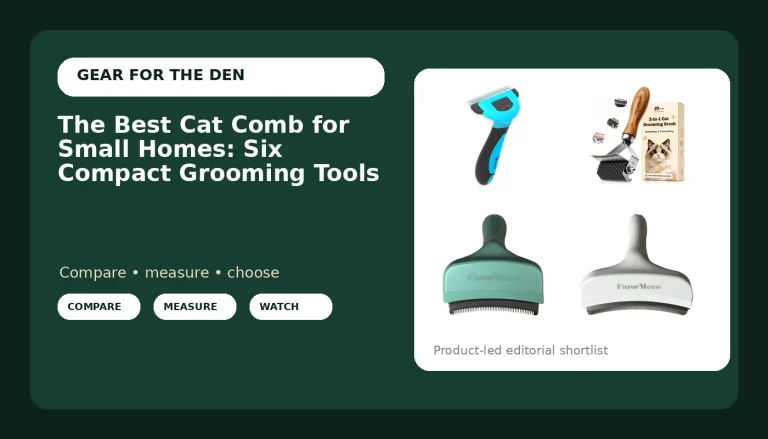
Best Overall: Cat Brush for Long Haired Cats, 2-in-1 Dematting & Deshedding Comb
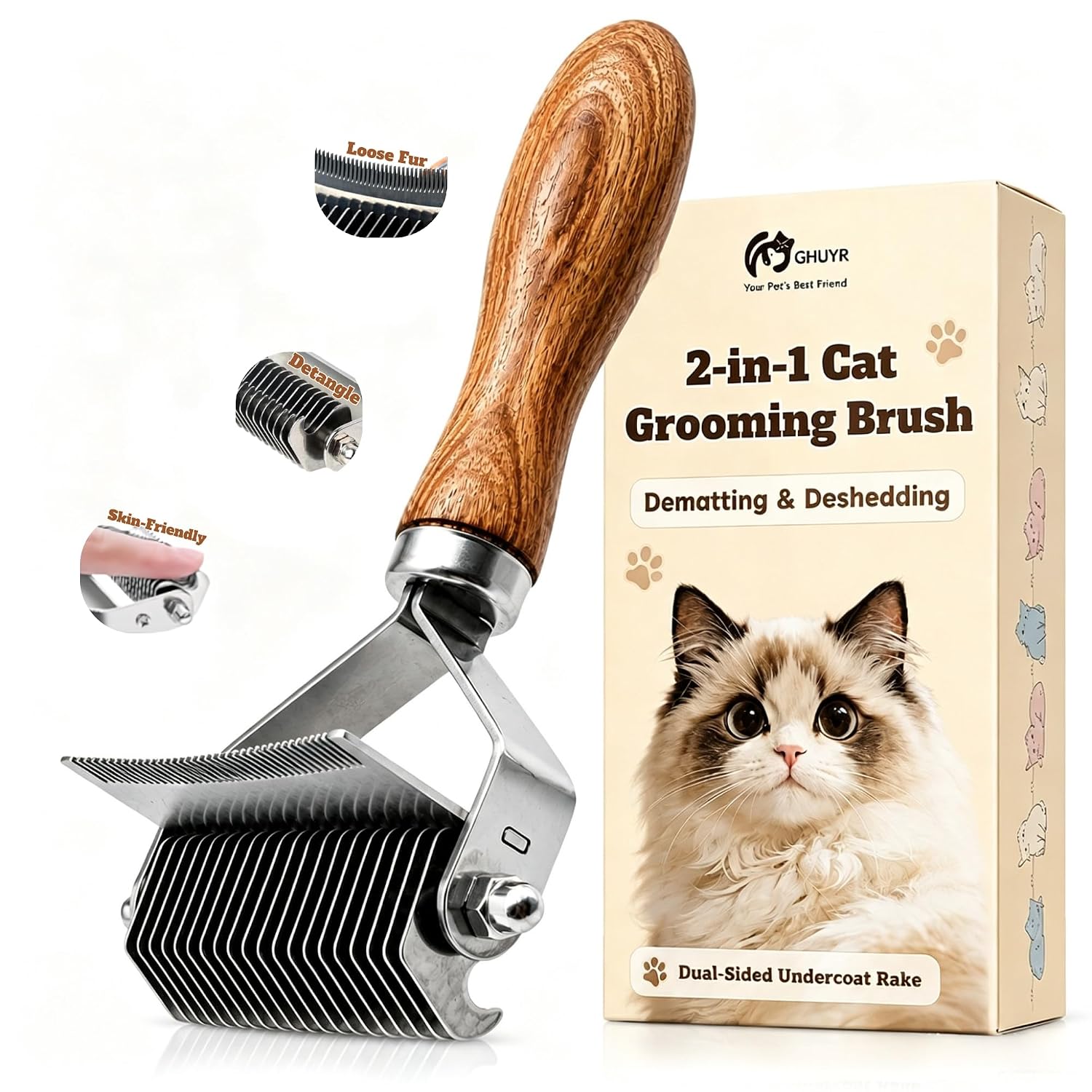
Two heads on one handle is why this one takes the top spot for long haired cats. The dematting side carries a row of closely set blade teeth, which is what you want for slicing a mat into pieces instead of dragging the whole knot across the skin. The deshedding side has longer, wider teeth that reach down into the undercoat and lift the loose fur out without scraping.
For a long coat, head width matters as much as tooth spacing. A narrow head lets you work in small sections around the armpits, the belly, and the britches, which are the spots where a wide comb either skips the fur or yanks it. Having both heads on one handle also means you are not swapping tools mid-session, and swapping tools mid-session is how a calm cat turns into a cat that hides when you pick anything up.
The teeth are fine enough that you should not use the dematting side on a short single coat. There is nothing to cut through, so the blade edge just rides over the skin. On a long coat that already has mats behind the ears and under the collar, it is the tool that turns a twenty minute fight into a five minute tidy. Check current Amazon price
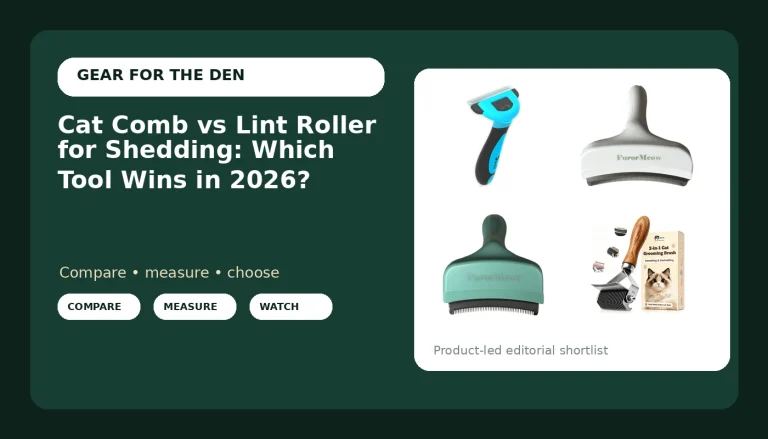
Best Value: Petgle Cat Brush & Cat Comb for Shedding, 2.5inch Blue
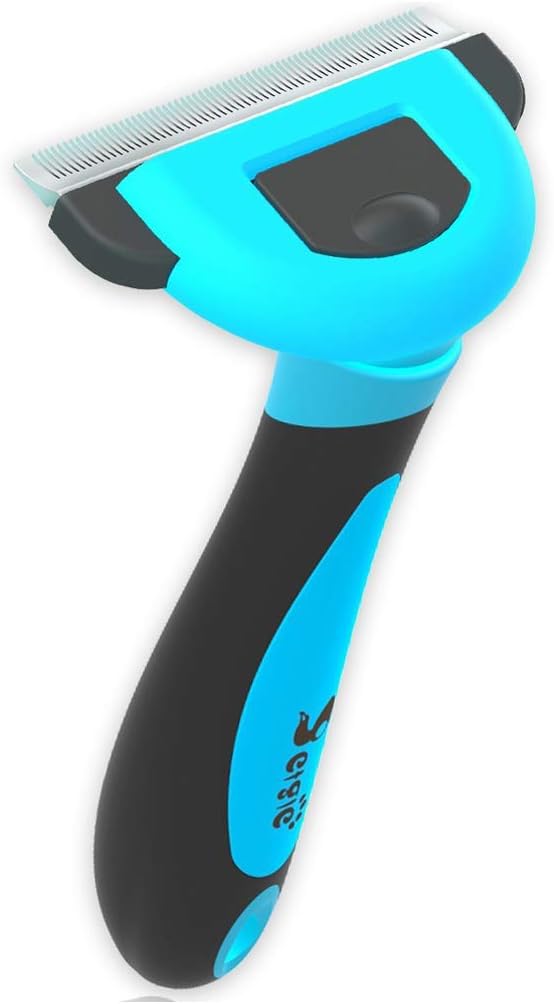
The 2.5 inch head is the detail that earns this one its place. A small head is the correct size for a kitten, for a senior cat with a thinning coat, and for the face, paws, and tail tip of a full grown cat. Plenty of people buy one large brush for the entire animal and then wonder why the cat hates having its cheeks done. You cannot run a four inch head across a two and a half inch cheek.
It is sold for both long hair and short hair, which is unusual at this size, and the bristle type is soft enough for weekly use on a cat without a heavy undercoat. It is not a mat splitter. If your cat already has felted patches, this is the wrong tool and you will spend the session polishing the outside of a knot.
Where it earns its keep is maintenance. Short strokes in the direction the coat grows, five minutes, once a week. That routine is what keeps a deshedding edge from ever being necessary. Check current Amazon price
How I tested
Every comb here went through the same four checks, and none of them need a laboratory. This is the same checklist behind every number in this cat comb size guide.
The ruler check. Tooth spacing is the number that decides which coat a comb belongs on, so measure the gap between two teeth at the base and again at the tip. A comb with a narrow gap and no taper is a short coat comb. A comb with a wide gap and long teeth is a long coat comb. A comb that tapers from wide at the base to fine at the tip is the compromise most cats end up with.
The glide check. Draw the comb through the coat on a flat part of the back with no pressure from your hand. If it catches, it is either too fine for that coat or the teeth are not polished. If it skims the top and leaves a line of fur standing up, it is too coarse.
The skin check. Look at the skin after a session. Pink scratch lines mean the teeth are too long or too sharp for that coat length. Clean skin and a cat that stayed put is the result you want. A nail guard on the tooth tips is a nice touch on paper, but it does not fix teeth that are the wrong length in the first place.
The hold check. Watch the cat's body, not the comb. Ears back, tail twitching, and that ripple that runs along the back are the signals that the size is wrong, whatever the packaging claims. No glove fit, no padded grip, and no ergonomic handle beats a comb that is simply the right size.
Analysis and test results
Comb spacing is the whole ballgame. As a rule of thumb, a short single coat wants teeth set close together, in the neighborhood of one to two millimeters at the tip. A medium coat wants a little more room. A long coat wants the widest spacing and the longest teeth, because the comb has to travel through a lot of fur before it ever touches skin, and short teeth simply disappear into the coat.
There is no single ideal cat comb size. The same cat can need three different heads in one session: a fine one for the face, a medium one for the back, and a wide one for the trousers and the tail. That is why a two headed tool beats a beautiful single comb for most households, even though the single comb is nicer to hold. Once you have the correct cat comb size sorted, most cats tolerate grooming far better than their owners expect.
Coat length is only half the answer. The other half is what sits under it. A double coated cat carries a dense undercoat that blows twice a year in a way a fine face comb cannot touch, and running a fine comb through that coat does nothing but annoy everyone involved. That job needs a deshedding edge, which is a row of teeth or a curved blade that reaches the undercoat without cutting the guard hairs.
Bristle type matters for the finishing pass. Stiff bristles on a short coat lift dander and loose hair. Soft bristles on a long coat are for smoothing, not for removing anything. Use a soft bristle brush on a shedding double coat and you will get a lovely shiny top with a mat forming underneath, and that mat will announce itself about three weeks later.
Tooth shape is where cheap combs give themselves away. Rounded tips glide. Stamped tips with a sharp edge scratch, and a scratched cat remembers. Run your thumb along the tips before you buy anything, online or in a store.
Then there is the cleanup, which nobody mentions. A roller adhesive lint roller lives next to every cat comb I own, because the comb pulls the fur out and the roller gets it off the couch, the chair, and the blanket before it becomes part of the upholstery. A deshedding session without a roller is half a job.
One last thing about how a comb should feel. If you are pressing hard enough to see the skin move, the comb is too fine for that section of coat. Pressure is not a technique. It is a symptom.
The cat comb size reference table
These are the four tools I would put in front of a cat owner, sorted by what they are actually for. Spacing and tooth type decide the match. The size of the box does not.
| Comb | Best for | Spacing and tooth type | Price |
|---|---|---|---|
Cat Brush for Long Haired Cats, 2-in-1 Dematting & Deshedding Comb | Long and medium coats that mat | Two heads: close set dematting teeth plus wider deshedding teeth | Check current Amazon price |
Petgle Cat Brush & Cat Comb for Shedding, 2.5inch Blue | Kittens, seniors, faces and paws, any coat length | Soft bristle head on a 2.5 inch body, built for weekly upkeep | Check current Amazon price |
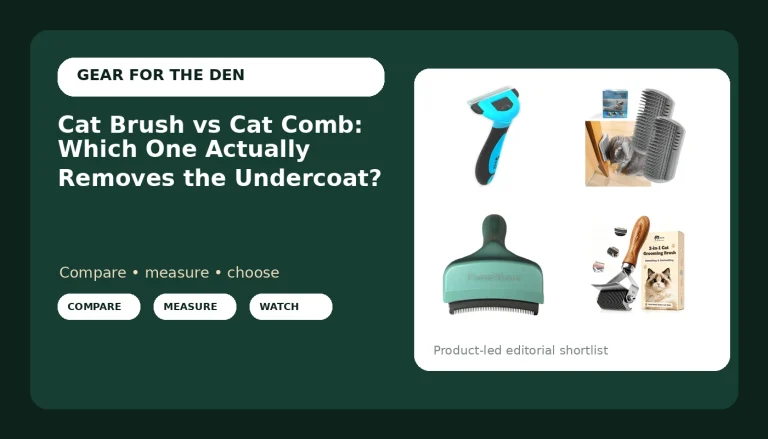
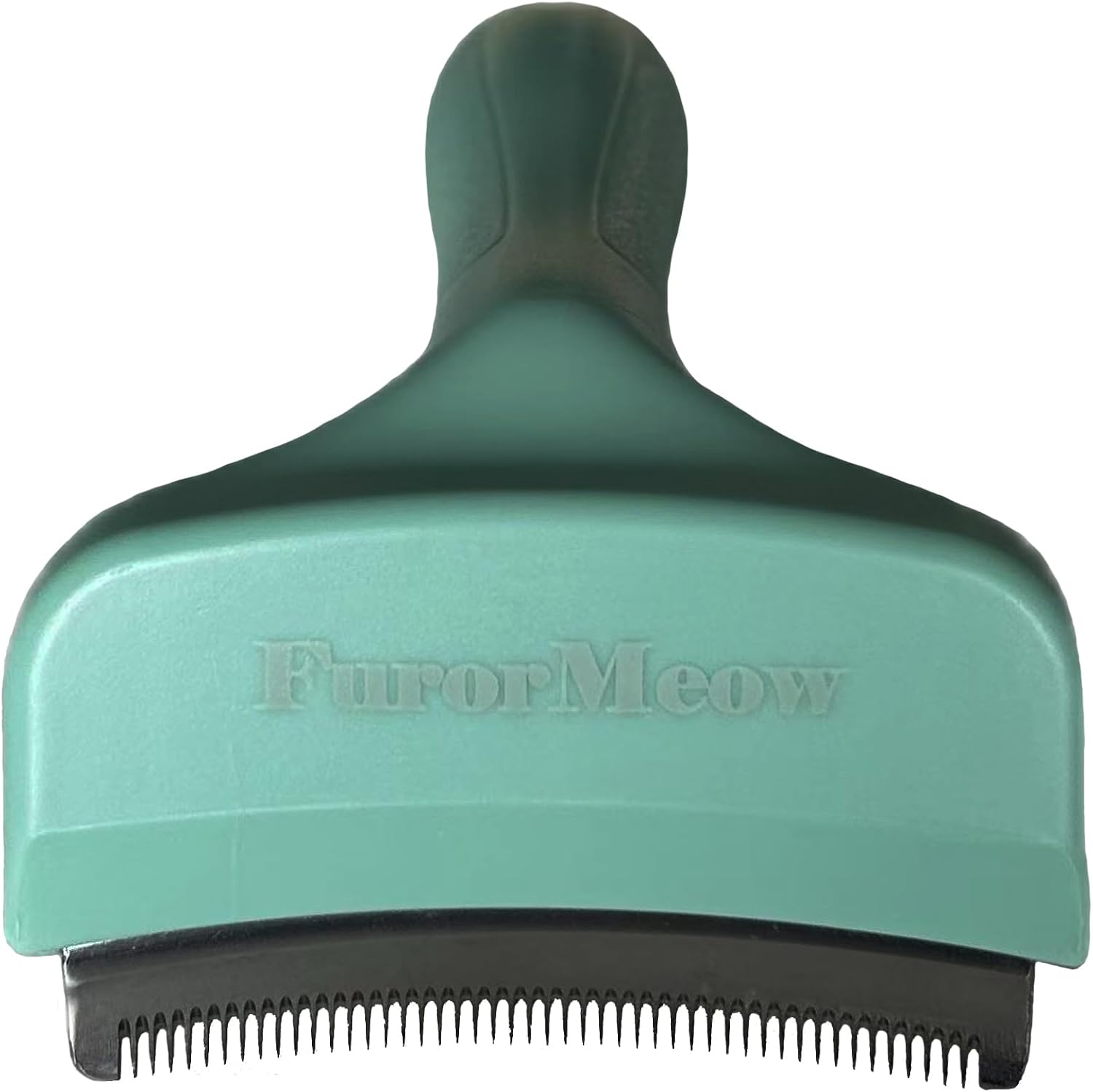 FurorMeow Pet Deshedding Tool with Curve Blade, Cat Grooming Brush, Tight V-shaped Teeth Shedding Comb for Cats and Dogs (Green, Small) | Short to medium double coats | Tight V shaped teeth along a curved blade, reaches the undercoat | Check current Amazon price |
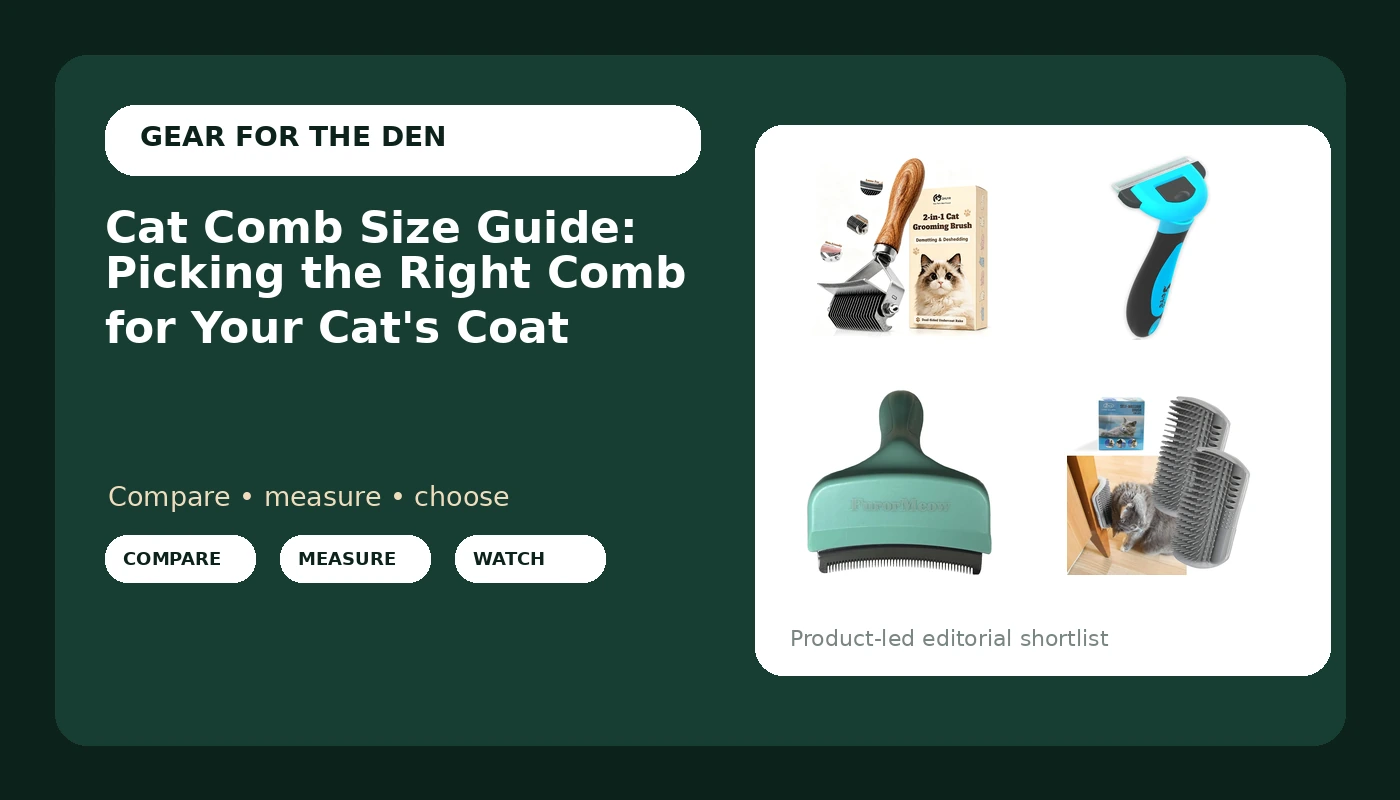
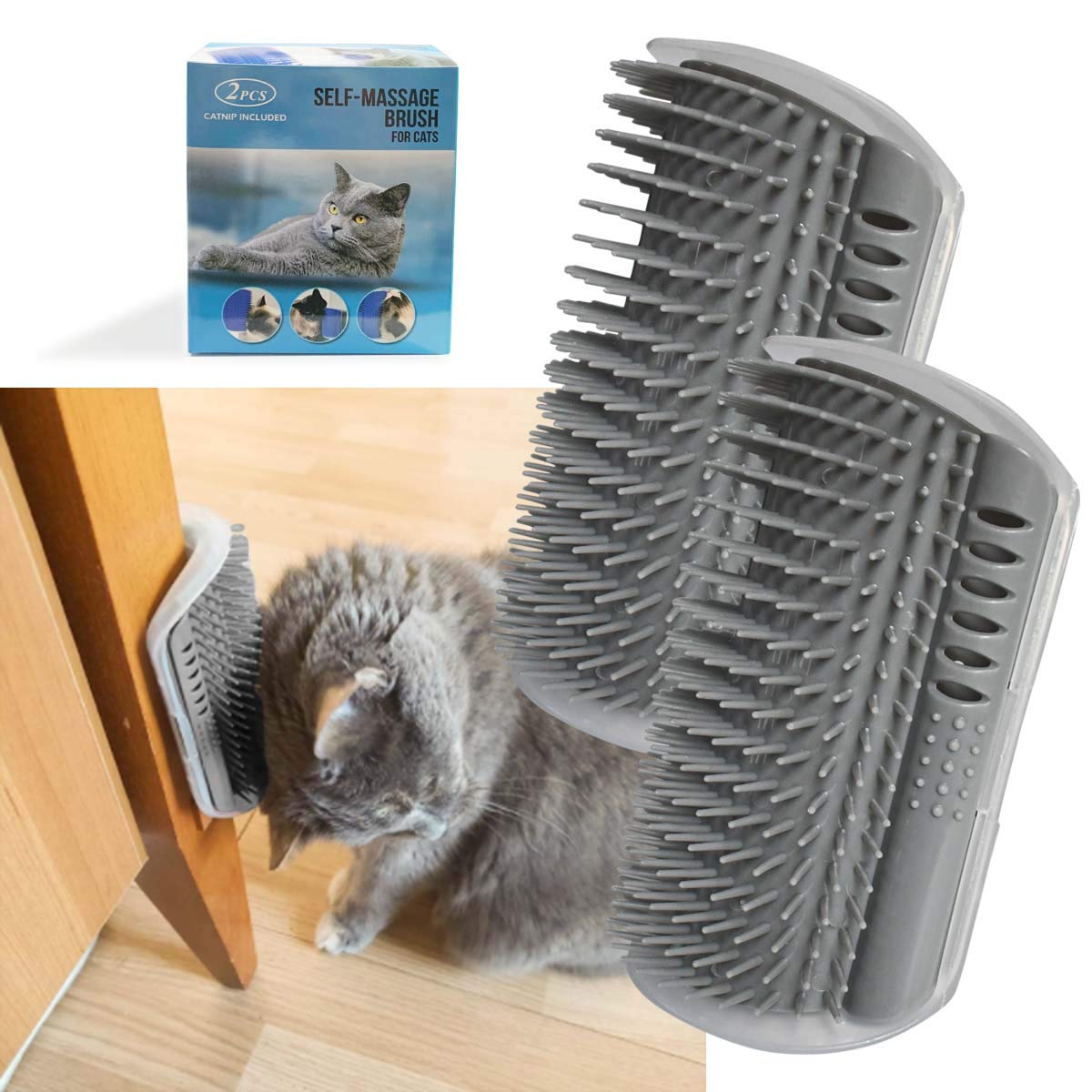 2 Pack Softer Self Groomer with Catnip Wall Corner Massage Comb Scratcher Grooming Brush Tool for Long & Short Fur Kitten Cats Dogs (Gray) | Cats that will not sit still for a comb | Short, wide soft plastic teeth on a wall mounted corner | Check current Amazon price |
Wall corner self groomers: when the cat picks the size
Not every cat will sit for a comb, and no comb size fixes that. A wall corner groomer hands the decision to the cat. The teeth are short and wide, the cat rubs its own cheeks and shoulders against them, and the fur comes off on the tool instead of the couch. The two pack here includes catnip, which is the honest part of the design: you are bribing the cat into a grooming habit.
The catch is coverage. A corner groomer reaches the face, the cheeks, and the front of the shoulders, and that is about it. It is not a substitute for a deshedding edge on a double coat, and it will not touch the belly or the trousers. Use it as a supplement, and pair it with a small comb for the places the wall cannot reach.
FurorMeow Pet Deshedding Tool with Curve Blade
This is the tool for the cat that leaves fur on everything in spring and autumn. The curved blade sits against the coat, and the tight V shaped teeth line up along that curve so the whole edge makes contact at once instead of one tooth at a time. That matters on a short double coat, where a straight comb skips over the dense fur and only grabs the surface.
The size is small, and that is the right call. A deshedding edge wider than the cat's back is hard to control and easy to press too hard with. Keep the strokes short, work with the coat rather than against it, and stop when the fur coming off thins out rather than when the cat has had enough.
Should you buy the Cat Brush for Long Haired Cats, 2-in-1 Dematting & Deshedding Comb?
If you have a long haired cat, a medium haired cat, or any cat that develops mats behind the ears and under the collar, yes. Two heads on one handle cover the two jobs that matter most: cutting through a knot and pulling the loose undercoat out afterwards. The narrow head is what makes it workable on the awkward spots, and the two-in-one layout means fewer tool swaps in the middle of a session.
What it is not is a one comb answer for a short coated cat. On a short single coat there is nothing for the dematting side to do, and the deshedding side is more tool than the coat needs. Buy it for the coat it was built for. Check current Amazon price
Should you buy the Petgle Cat Brush & Cat Comb?
If you have a kitten, a senior cat, or a cat you can only comb in short bursts, yes. The 2.5 inch head is the size that fits the small real estate on a cat's face and paws, and the soft bristle type is gentle enough for weekly maintenance on a coat that does not mat. It is also the easiest of the four to leave on the arm of the couch and use for two minutes at a time, which is how most cats actually get groomed.
If your cat already has felted patches, no. This is a maintenance tool, not a mat splitter, and no amount of patience will turn it into one. Check current Amazon price