The cat deshedding tool vs cat brush question usually arrives in the third week of spring, when the couch turns gray, the lint roller runs dry, and every black shirt you own picks up a second cat's worth of fur on the walk to the car. I have shared a house with a long-haired cat who sheds in soft clumps and a short-haired cat whose fur behaves like a fine spray of needles, and those two animals need completely different tools. This comparison is the version of that argument I wish I had read before four brushes ended up in a drawer.
The best pick for most short-haired cats is the FUR4 deShedding Cat Brush, and the best pick for most medium and long coats is the SleekEZ Cat Brush for Shedding. That short answer hides the real rule, though: a deshedding edge and a brush do different jobs, and most cat owners end up owning one of each rather than choosing between them.
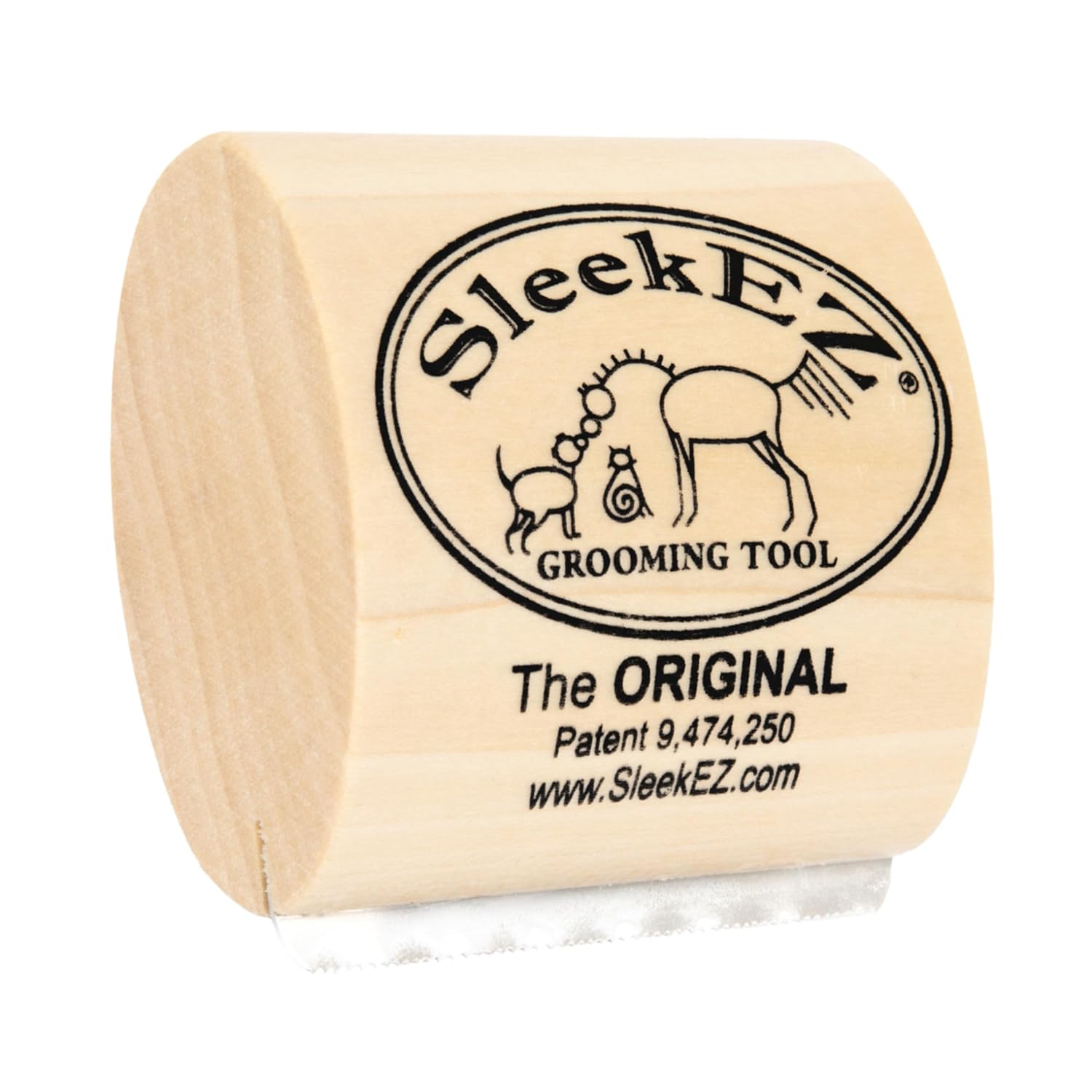
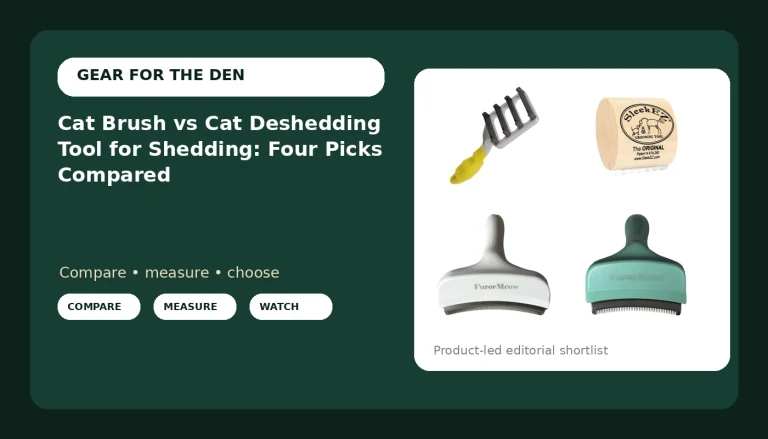
SleekEZ Cat Brush for Shedding
Patented edge marketed for short, medium, and long coats, and the only one here made in the United States
One working edge and nothing else, so it does no finishing or topcoat work
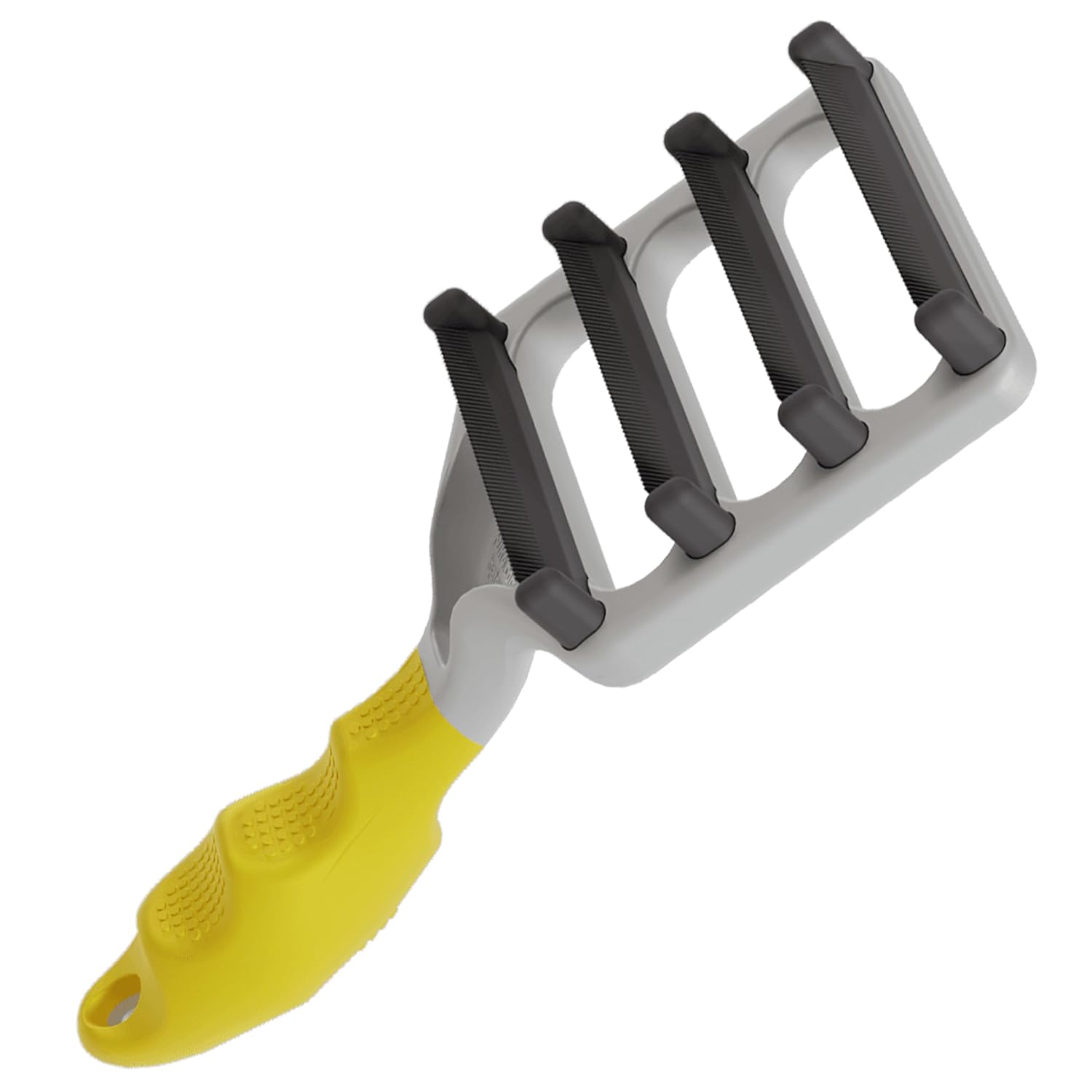
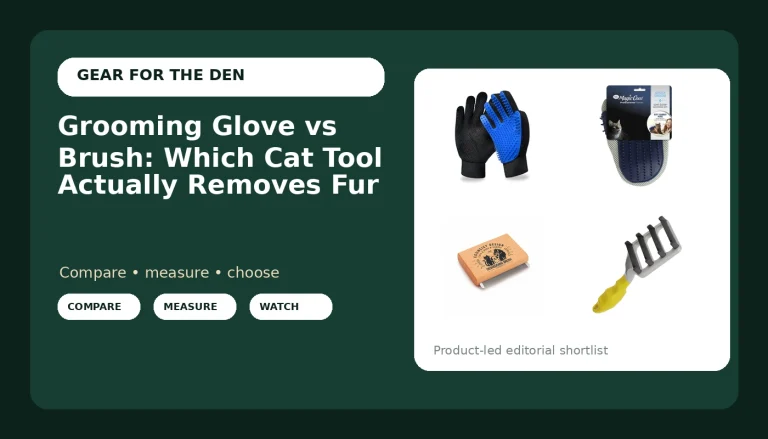
FUR4 deShedding Cat Brush for Short Hair Cats
Four carbon fiber edges built specifically around short, dense coats
The most expensive tool of the four, and a poor match for a long coat
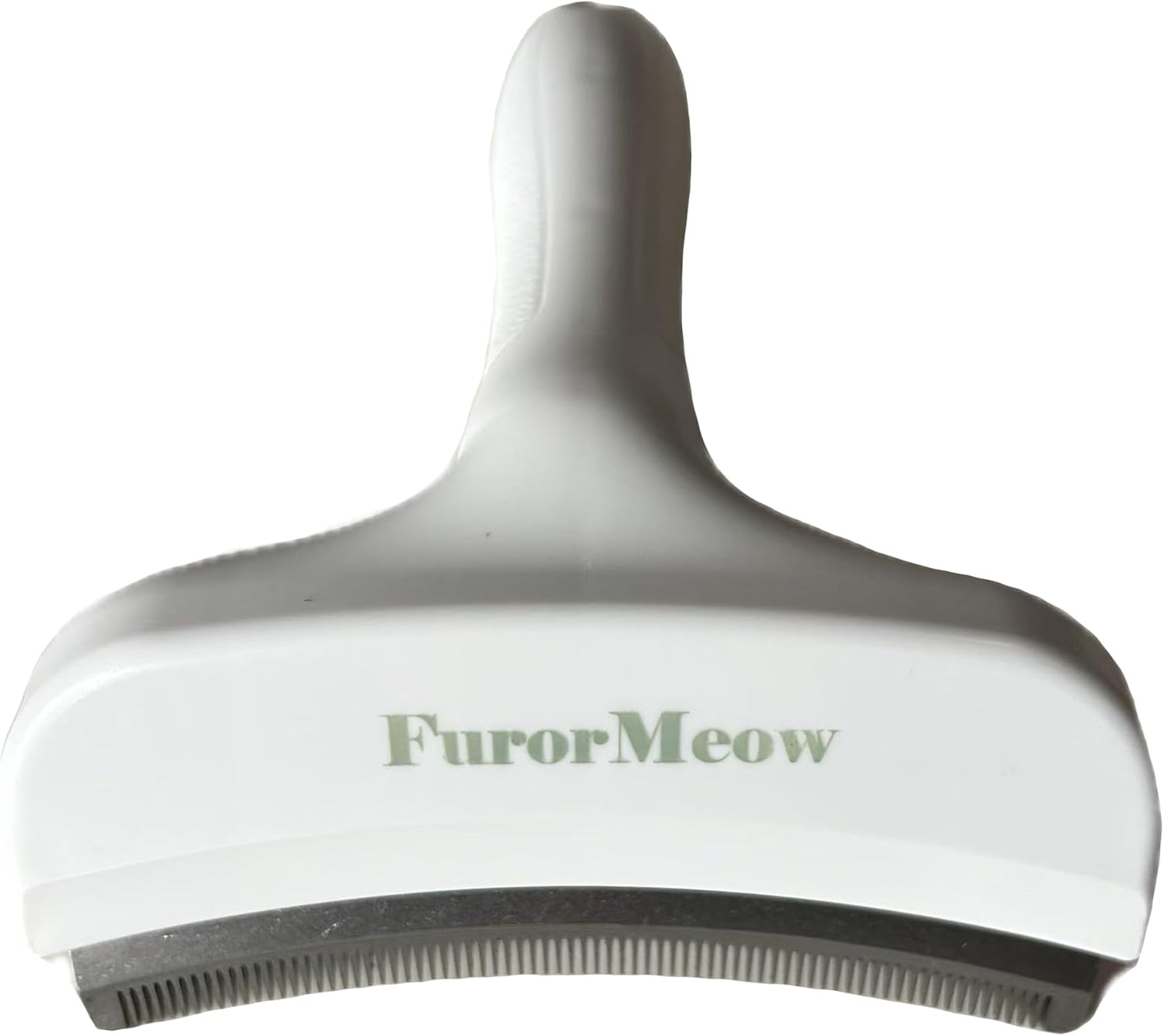
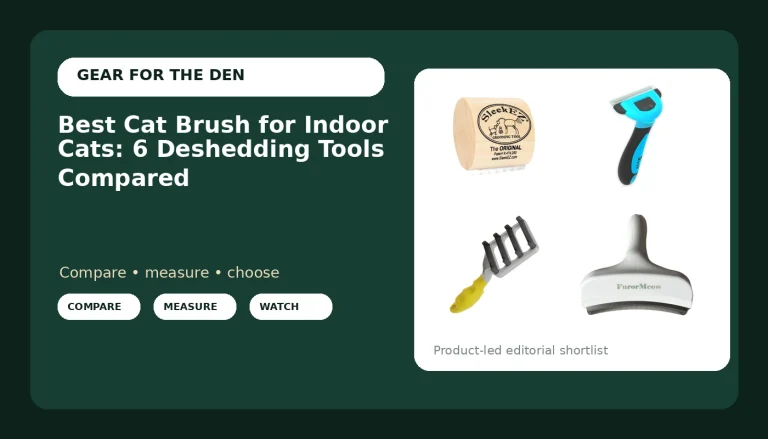
FurorMeow Pet Deshedding Tool with Curve Blade (White, Large)
Curved blade and tight V-shaped teeth in a large head, sized for a big cat or a small dog
Too much tool for a petite cat, and the size is the whole reason to buy it
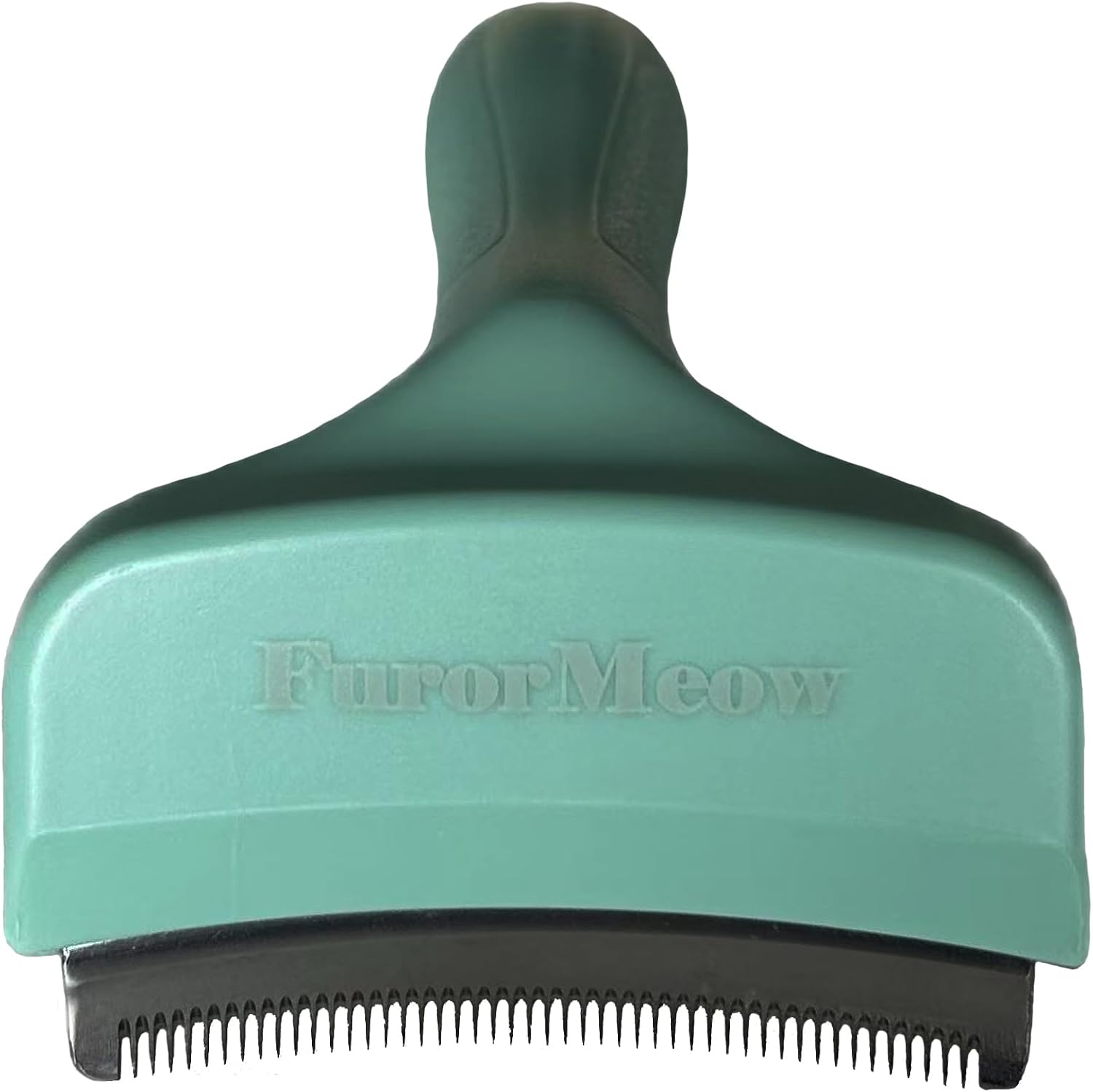
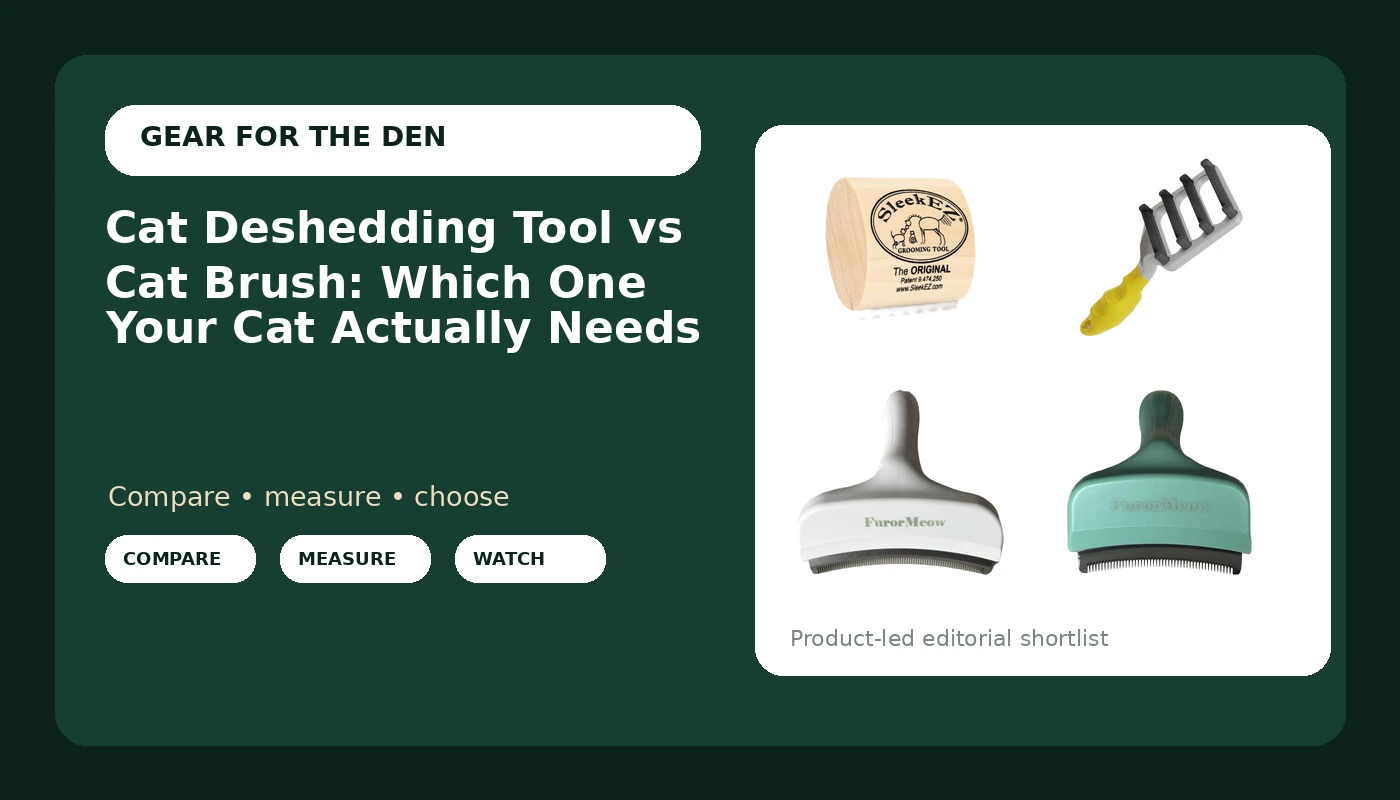
FurorMeow Pet Deshedding Tool with Curve Blade (Green, Small)
Same curved blade geometry as the large version in a small head, at the lowest price here
A small head means more passes on a large cat, which some cats will not tolerate
Prices and availability may change.
How I evaluate a shedding tool
Every tool in this comparison gets judged against the same short list, and none of it needs a lab. First, what it actually removes. A deshedding edge is built to pull loose fur out of the undercoat, while a brush is built to lift surface hair and spread skin oils along the coat. Those are different jobs, and a tool that does one badly does not accidentally do the other well.
Second, how it behaves in the hand on a cat that would rather be somewhere else. This is where a nail guard on the trimmer, a rounded tooth profile, or a smooth blade back matters more than any line on a spec sheet. A tool that scrapes gets noticed immediately, and a cat that notices will end the session for you.
Third, how easy it is to clean. A grooming tool that clogs every thirty seconds turns a two-minute session into a ten-minute negotiation, and a tool you dread cleaning is a tool you quietly stop using by week three.
Then there is the cat's side of the transaction. Some cats tolerate a firm, slow pull down the spine and hate anything that tickles. Others are the reverse. You learn that in about ninety seconds of a first session, and it should shape what you buy next. I do not put much weight on words like gentle or professional grade. I put weight on coat length, comb spacing, and whether the tool leaves a smooth line instead of a scratch.
What the cat deshedding tool vs cat brush choice comes down to
The difference between cat deshedding tool and cat brush is not marketing. It is a difference in what the teeth are built to reach.
A brush works the topcoat. Its bristle type decides whether it is lifting loose hair, smoothing the coat, or just massaging skin. A deshedding tool works the undercoat. Its deshedding edge or its tight comb teeth slide below the topcoat and pull out the loose, dead fur that would otherwise become hairballs or felt on your sofa.
That is why the two tools do not replace each other, and it is why the framing of the cat deshedding tool vs cat brush debate so often goes wrong. If you search cat brush vs cat deshedding tool hoping for one winner, you are asking a question with no single answer. The useful question is which one your cat's coat needs more often.
Short-haired cats, the ones whose fur sticks straight into upholstery like it was applied with glue, usually get more value from a deshedding tool used once or twice a week. Long-haired cats usually need both: a brush to keep the topcoat from matting and a deshedding tool to clear the undercoat before it turns into a felted mat behind the front legs. Whether you reach for a cat deshedding tool or cat brush first on any given day depends on how much loose fur you can pinch out of the coat with your fingers.
Deshedding tools: curved blades and tight teeth
Everything in this comparison belongs to the deshedding tool family, which says something about how the category has converged. The SleekEZ Cat Brush for Shedding is the one that markets itself as a single tool for short, medium, and long coats, and it is the only one here made in the United States. Its reputation rests on a patented working edge rather than a traditional bristle type, a stainless blade that drags loose fur out of the coat instead of raking over the top of it.
The FurorMeow pair takes a different approach. Both the white large and the green small use a curved blade with tight V-shaped teeth, and both are sold for cats and dogs. The curve matters more than it sounds like it should: it lets the blade follow the barrel of a ribcage instead of digging in at the shoulder or the hip. The tight V-shaped teeth are the reason the comb spacing on these two is so aggressive, and that is exactly what makes them good at catching fine undercoat without raking skin.
The FUR4 deShedding Cat Brush for Short Hair Cats is the outlier. It uses four carbon fiber edges rather than a single blade, and it is aimed squarely at short-haired cats. Carbon fiber is stiff, which is a real advantage when the fur is dense and short and you need the edge to grab rather than glide. That same stiffness is why it is the wrong tool for a long coat, where the fur needs to slide off the edge instead of being gripped by it.
Brushes: bristle type, glove fit, and daily upkeep
A plain cat brush is still worth owning, and this is where the rest of the grooming drawer earns its space. Bristle type decides the job. Soft natural bristles give a glossy finish, stiffer synthetic bristles lift loose hair off the topcoat, and rubber nubs are for cats who will only tolerate a massage. If you own one brush, a medium synthetic bristle is the safest single choice.
Tools that are not brushes at all solve adjacent problems. A grooming glove lives or dies on glove fit, because a loose glove means the cat feels the seams rather than the nubs and the whole session is over. Roller adhesive handles the fur that already left the cat, which is a genuinely different job from removing fur that is still attached. A nail guard belongs to the claw trimmer rather than the brush, but if you are doing a full grooming session anyway, it is the thing that keeps a squirming cat from ending the session early.
The honest summary is that brushes are maintenance and deshedding tools are extraction. You want extraction during a seasonal blowout and maintenance the rest of the year. Most people buy them in the wrong order, starting with a brush, then wondering why the fur keeps coming.
Comb spacing and coat length are non-negotiable
If you take one thing from this comparison, take this: match the tool to coat length, not to the photo on the box.
Fine comb spacing with short, tight teeth is for short and medium coats and for cats carrying a dense undercoat. Wide spacing is for long coats, where tight teeth snag and pull instead of gliding through. The FurorMeow small is the right shape for a kitten or a petite adult, and the FurorMeow large is the same geometry scaled up for a big domestic cat or a small dog. Buying the large for a seven-pound cat is how you end up with a cat that hides under the bed whenever you pick up anything with teeth.
Coat length also changes how often you should use a deshedding edge. On a short coat, once or twice a week is plenty and more than that just irritates skin. On a long coat, a couple of minutes every other day beats a marathon session on Sunday, because the undercoat you leave in place is the undercoat that mats.
There is a ceiling on all of this. No tool removes fur a cat has already swallowed, and no tool replaces brushing your cat's teeth, checking ears, or trimming claws. Grooming tools manage the coat. That is the whole job, and it is enough of a job.
What the design details say
Price does not predict much in this category. The FUR4 carries the highest price of the four and the FurorMeow green small carries the lowest, and both are aimed at the same basic problem: loose fur on a short-haired cat. What separates them is the shape of the working edge and how much tool you get for the money.
Country of manufacture shows up in the SleekEZ listing and nowhere else in this group, which is a real differentiator if that matters to you. It says nothing, however, about how a cat will react to the blade, and the cat's reaction is the only review that counts in the long run.
The strongest predictor of whether a grooming tool gets used is how quickly it fills up and how easy it is to empty. A tool that holds a respectable pile of fur lets you finish the back and both sides before you stop to clean it. A tool that needs clearing every few strokes teaches your cat that grooming is a series of interruptions, and cats remember that sort of thing.
Should you buy a cheap brush first?
Yes, with a caveat. A basic brush costs very little and tells you a lot about your cat's tolerance. If your cat hates being touched along the spine, no deshedding tool on this list will fix that, and you will have saved yourself the money and the return shipping.
The caveat is that a cheap brush cannot tell you whether a deshedding tool works on your cat's undercoat, because that is the exact job a plain brush is not built to do. If your cat tolerates brushing and still leaves fur on everything, the problem is undercoat, and a brush will not solve it no matter how many passes you make.
The better experiment: start with the tool that matches your cat's coat length, use it for two weeks at a sensible pace, and judge it by the size of the fur pile and by whether your cat still shows up when you pick the tool up. A cat that walks toward the drawer is the only five-star rating that matters.
What I'm watching next
The category keeps drifting toward single-blade tools with a curve, and the FurorMeow pair is the clearest example of that trend. The interesting question for the next round is whether carbon fiber edges, which the FUR4 leans on, become the default for short-haired cats or stay a premium niche that only makes sense at the top of the price range.
The other thing worth tracking is size. Most deshedding tools ship in one size and expect the buyer to guess, which is how people end up with a tool that is either too big to be gentle or too small to finish the job. A line that offers a small and a large of the same head, which is exactly what FurorMeow does here, removes a guess that a lot of cat owners get wrong on the first purchase.
The short version
If your cat has a short, dense coat, the FUR4 is built for precisely that job, and its four carbon fiber edges are the reason. If your cat has a medium or long coat, the SleekEZ is the safer bet because its edge is marketed across all three coat lengths. If the curved blade design appeals to you and you are unsure about size, the FurorMeow small covers kittens and petite adults while the FurorMeow large covers the big ones.
Whichever you pick, buy one tool, use it on a consistent schedule, and let the fur pile tell you whether it is working. That is a more useful test than any spec sheet, including this one.