Long haired cats are a different grooming project from the short haired cat asleep on most people's windowsills. A thick coat means daily comb spacing decisions, a dense undercoat that blows out twice a year, and claws that stay buried in fur until you hear them catch on the couch cushion. So when someone asks me about the cat deshedding tool vs cat nail clipper for long haired cats, I usually stop the question right there, because those two tools never compete with each other. One handles the coat, the other handles the claws, and a long haired cat needs both. What you can actually shop for on this page is the claw half of the job: four cat nail clippers, weighed on the features that matter when the cat has a deep coat, a low tolerance for being held, and claws that grow fast because they never touch pavement.
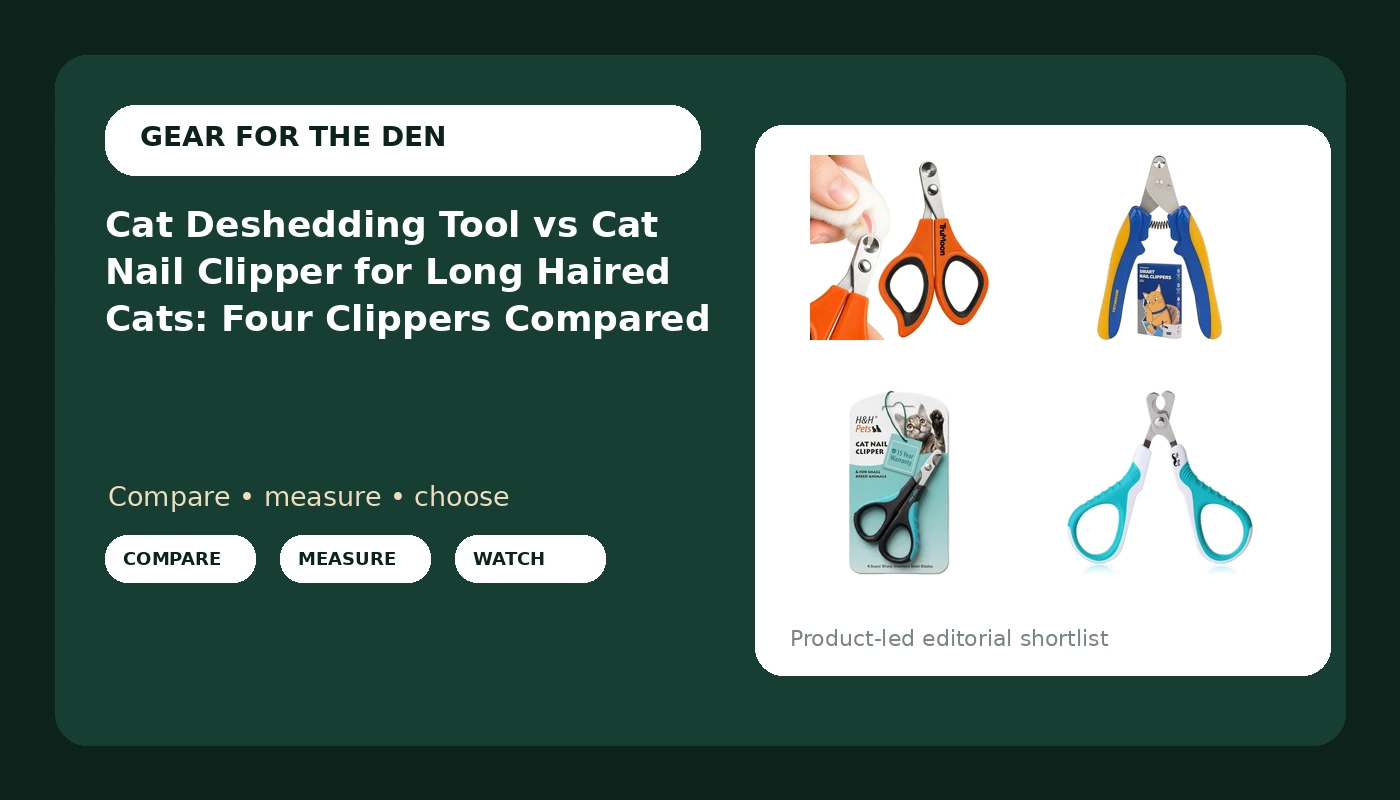
The safest pick for most long haired cats is the PETHROOM Cat Nail Clipper Trimmer, because its 2mm circular cut hole holds the claw tip in a fixed opening so you trim a little instead of guessing. The Trumoon Cat Nail Clipper is the runner up, since its circular hole safety guard does the same job with the guard as the headline feature. The H&H Pets and Mr. Pen stainless trimmers are the simple, budget options for a cat that already sits still for you.
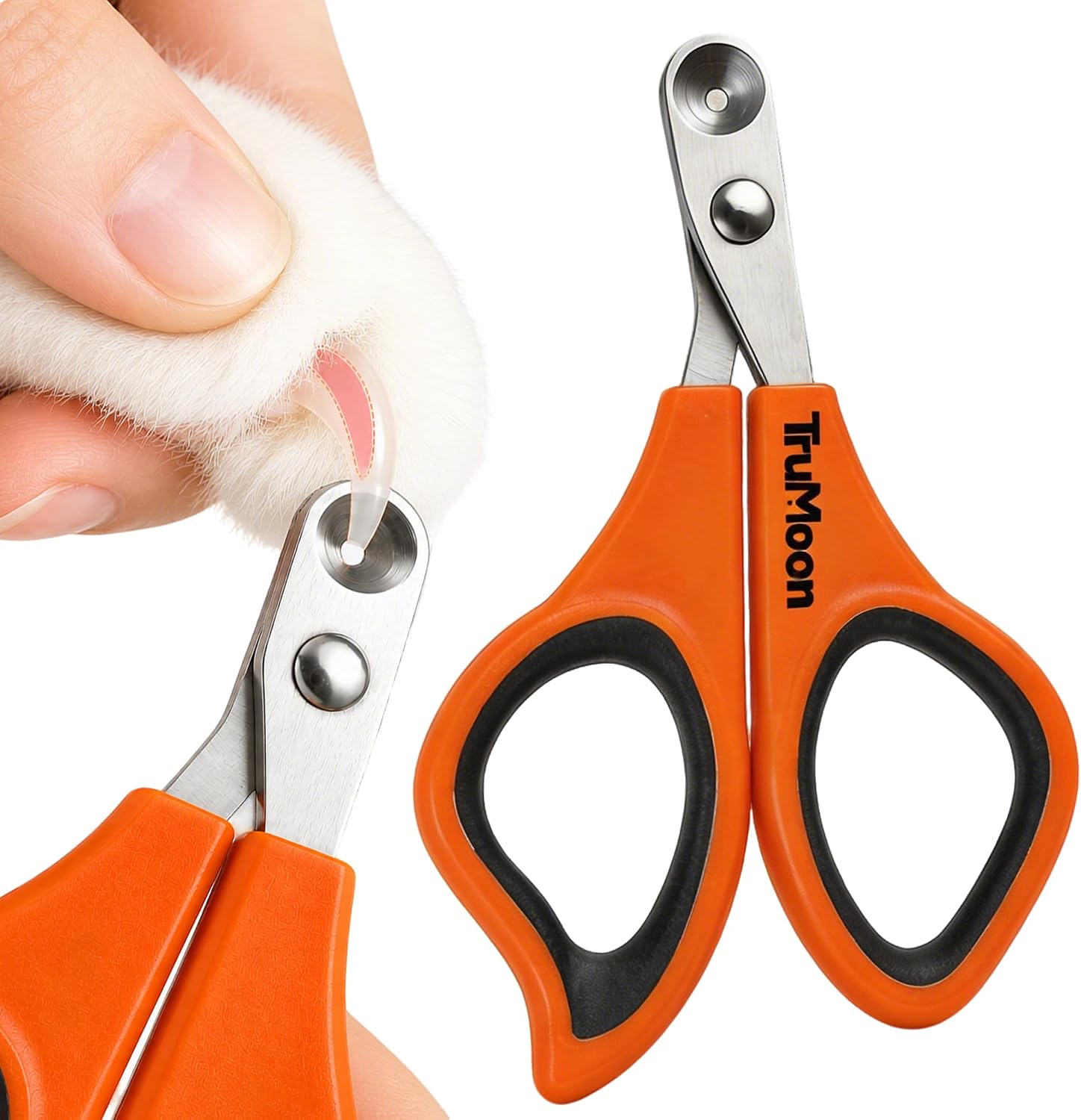
Trumoon Cat Nail Clipper with Circular Hole Safety Guard for Indoor Cat
Built around a circular hole safety guard, so the claw sits in a fixed opening instead of sliding along an open blade
The guard is the whole story; there is no handle or grip upgrade to pay for
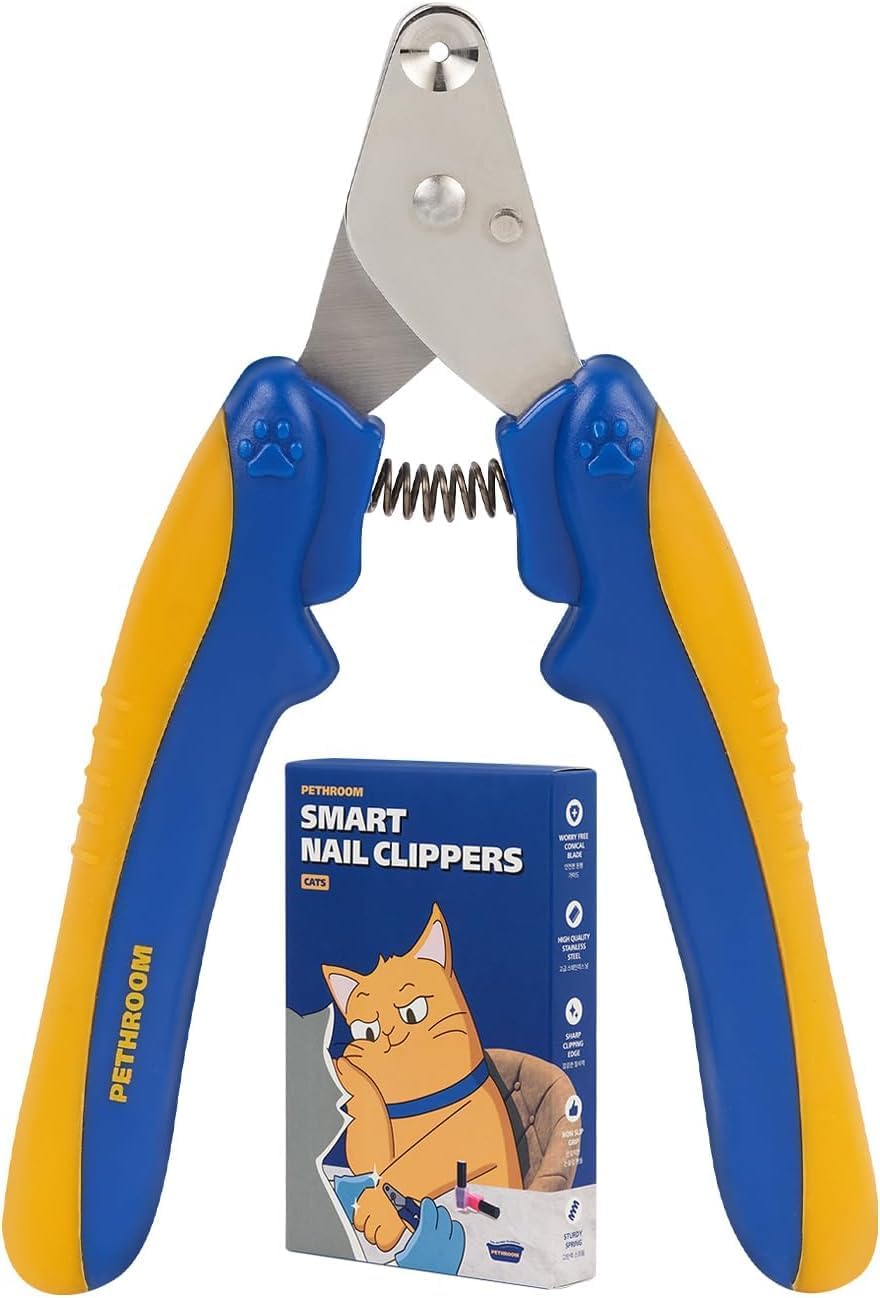
PETHROOM Cat Nail Clipper Trimmer for Indoor Cats, 2mm Circular Cut Hole
The 2mm circular cut hole takes only the tip of the claw, which suits a long haired cat whose nails are usually buried in fur
A tip-only opening means you place the claw deliberately, which is slow work on a squirmy cat
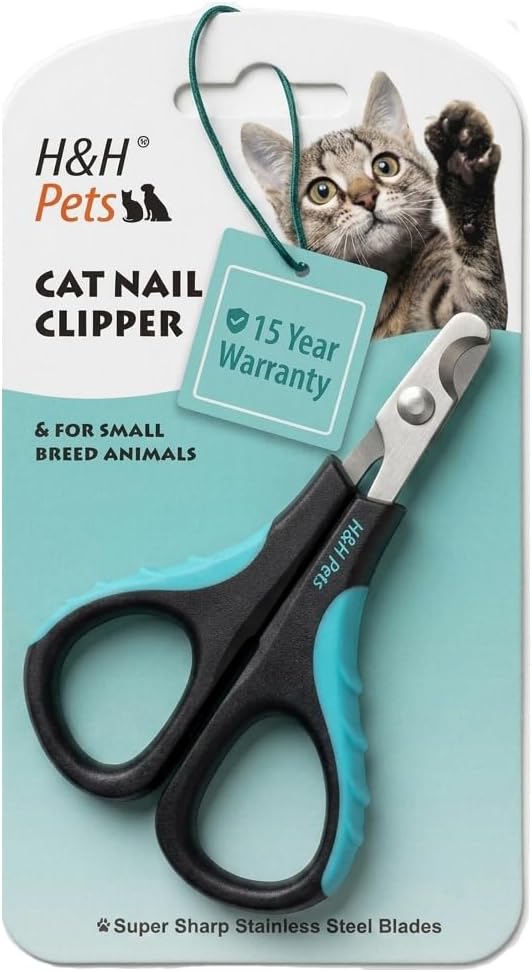
Cat Nail Clipper by H&H Pets, Professional Sharp Stainless Steel Claw Clipper Trimmer with Sturdy Non Slip Handles
Stainless steel cutting head with sturdy non slip handles, and it is listed for cats and small animals
A plain trimmer with no nail guard, so nothing stops you from cutting too far down the claw
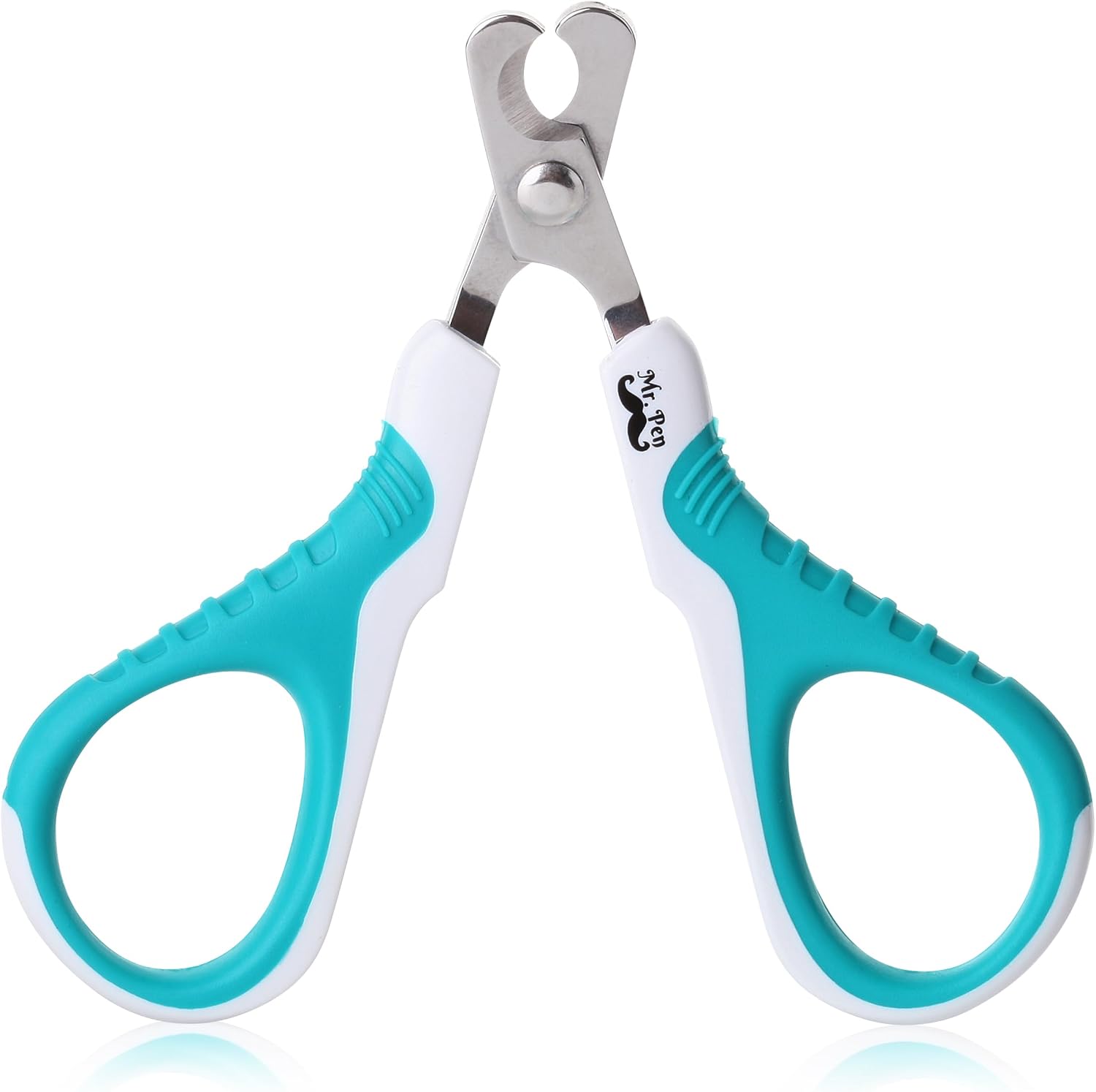
Mr. Pen Cat Nail Clipper, Stainless Steel, Sharp Cat Claw Trimmer
Sharp stainless steel trimmer and the budget entry of the group, cheap enough to keep a spare in another room
The least featured clipper here: no circular hole, no guard, nothing to help you aim
Prices and availability may change.
Nail guard, cut hole, and grip: what actually matters
Three features decide whether a cat clipper is a pleasant tool or a wrestling match.
The first is the nail guard. A circular hole gives the claw one place to sit, so you are not chasing a moving blade across a moving paw. On a long haired cat this matters more than on a short haired one, because the fur between the paw pads hides the claw and you are often working by feel. A guard turns "find the tip" into "push the tip into the hole."
The second is the size of the opening. The PETHROOM clipper is built around a 2mm circular cut hole, which makes it a tip-only design. That is exactly what you want when you are taking a small amount off each claw and stopping well short of the quick. A wider opening takes more claw per squeeze, which is faster but far less forgiving.
The third is the handle. The H&H Pets Cat Nail Clipper is listed with sturdy non slip handles, and that is not a marketing detail. Any session with a long haired cat involves one hand on the paw and one hand on the clipper, and a handle that rotates under a little sweat or a little fur means a crooked cut. Mr. Pen and PETHROOM both ship as stainless steel trimmers, so the cutting head is not what separates these four. What separates them is everything around the blade.
The cat deshedding tool vs cat nail clipper for long haired cats question, answered
Here is the honest version. The difference between cat deshedding tool and cat nail clipper for long haired cats comes down to which part of the cat you are working on, not which tool is better made.
A deshedding tool works the coat. You are dealing with the undercoat, the soft, dense layer beneath the longer guard hairs, and the tools built for it are designed around a deshedding edge, comb spacing that matches the coat length, and sometimes a bristle type chosen for the topcoat. Glove style mitts trade precision for the ability to work on a cat that will not stand for a rake, and the glove fit either suits your hand or it does not. A roller adhesive handles whatever ends up on the couch after the session. None of that does anything for claws.
A cat nail clipper works the claws. It does nothing for mats, nothing for shedding, and nothing for the hairball your cat coughs up on a Tuesday. If your goal is less fur on the furniture, no clipper on this page will help you. If your goal is that the claws stop snagging the carpet, a deshedding tool is irrelevant.
That is why the framing of cat deshedding tool or cat nail clipper for long haired cats as a choice is misleading. It is a sequence, not a choice. You deshed on the weekend, and you trim claws every two to three weeks. Two tools, two jobs, one cat. The people who frame it as cat nail clipper for long haired cats vs cat deshedding tool are usually asking a budget question: if I can only buy one thing this month, which one? Buy the clipper first. Overgrown claws cause pain and get caught in fabric, and a cat with sore paws is a harder cat to brush anyway.
Circular hole clippers: Trumoon and PETHROOM
These two matter most in the cat deshedding tool vs cat nail clipper for long haired cats conversation, because the guard is what makes a trim possible when you cannot fully see the claw. They are the guard-first designs, and they are the ones I would hand to someone clipping a long haired cat for the first time.
The PETHROOM Cat Nail Clipper Trimmer is built around a 2mm circular cut hole and is aimed at indoor cats, which is the right audience. An indoor cat's claws never wear down on pavement, so they grow long, curl, and stay sharp. A 2mm hole takes the tip only, which is the part you can safely remove when you cannot see the quick through the fur. Visit on Amazon
The Trumoon Cat Nail Clipper takes the same idea and calls it a circular hole safety guard. In practice the claw goes into a fixed opening and the blade closes behind the guard, so a cat that jerks its paw mid squeeze is less likely to end up with a nick. That makes it a good fit for a nervous cat and for a long haired cat whose paws you are handling with limited visibility. Visit on Amazon
The trade off between them is small. The PETHROOM version is the more specific tool, sold on the size of the cut it makes. The Trumoon version is the same philosophy with the guard as the headline. Neither has the handle story the H&H Pets clipper has, and neither is trying to be a general purpose trimmer for a multi pet household.
Open blade trimmers: H&H Pets and Mr. Pen
The H&H Pets Cat Nail Clipper is the most conventional tool in this group: a sharp stainless steel claw clipper with sturdy non slip handles, listed for cats and small animals. If you also trim a rabbit or a small dog, that small animal listing is worth noting, because one clipper can cover more than one pet. The handles are the reason to pick it over the Mr. Pen clipper. What it does not have is a nail guard, so on a long haired cat you are aiming freehand, and freehand trimming through fur is how people nick the quick. Visit on Amazon
The Mr. Pen Cat Nail Clipper is the budget entry: stainless steel, sharp, and the least expensive item in this comparison. It is also the least featured. There is no circular hole, no safety guard, and no handle upgrade in the product description. That does not make it bad, it makes it basic. Buy it if your cat holds still and you already know where the quick sits, or buy two and leave one in the bathroom drawer and one beside the couch, which is what I would do with a clipper this inexpensive. Visit on Amazon
How coat length changes the clipping job
Coat length is the variable most clipper shoppers ignore, and it is the one that decides how the session goes.
With a short haired cat the claw is visible. You part nothing, you look, you cut. With a long haired cat the fur between the toes covers most of the claw, and the claws often stay retracted until the cat relaxes. So you work in stages: press the paw gently, wait for the claw to extend, push the tip into the opening, and cut. Every stage gives the cat another chance to pull away, which is why guard designs earn their place on this list.
A longer coat also means more friction on the tool. Fur gets between the blades, hair wraps around the pivot, and a clipper that closed cleanly at the start of the session starts catching by the end of it. Wiping the blade between paws, and trimming after a brushing session rather than before one, solves most of that. Trim when the coat is combed out and the cat is calm, and you will get through four paws instead of two.
One more coat length rule: if you find mats behind the front legs, do not clip them out with a nail clipper. Work them loose with the right brush or a deshedding tool, or hand the cat to a groomer. Nail clippers are for nails, and putting a nail clipper into a mat is a good way to cut skin.
Quick control, and why a nail guard is not optional for beginners
The quick is the blood supply inside the claw, and on a long haired cat it is usually the part you cannot see. A nail guard does not make you an expert, but it limits how deep the blade can travel, and that is the difference between a trim and a vet visit.
For a beginner the rule is simple: take less than you think you need, aim for the clear hook at the tip, and stop. Trim every two to three weeks instead of trying to fix a long claw in one long session, because a cat that has had enough will remember the experience next time. If you do nick the quick, styptic powder and steady pressure are the standard response, then give the cat a few days before you try again.
This is where the budget clippers give ground for new owners. When you are confident and the cat is calm, the Mr. Pen stainless steel trimmer does the job for very little money. When you are nervous and the cat is a long haired wriggler, the guard on the PETHROOM clipper or the Trumoon clipper is doing real work.
Should you buy a deshedding tool first?
If you came here with the cat deshedding tool vs cat nail clipper for long haired cats question and only enough budget for one, buy the clipper. Claws that are too long change how a cat walks, snag on carpet, and catch during scratching. Shedding is a mess, not an injury, and most of it can be managed with a comb and a roller adhesive until you can afford the tool you actually want.
The exception is a coat that is already matting. Mats pull at the skin, and they get worse rather than better. In that case the coat wins, because a matted cat is uncomfortable and often cranky about being touched at all, which makes clipping harder too. A basic undercoat tool with comb spacing that matches the coat length will do more good in a week than another month of the wrong brush.
If you can afford both, the order still depends on the season. During a shed, do the coat first and the claws the next day. Outside a shed, keep the claws on a fixed schedule and use the deshedding tool once or twice a week to stay ahead of the undercoat.
What I'd look at next
The interesting shift in cat clippers is that the guard is becoming the selling point rather than an accessory. Two of the four tools here are built around a circular opening, and both are aimed at indoor cats, which tells you who is buying them: people with cats whose claws never wear down on their own.
The next thing I want to spend time with is not a clipper at all. It is the undercoat side of the routine, where the right comb spacing and a deshedding edge matched to coat length do more for a long haired cat than any single gadget. That is a comparison for another week.