Most litter box complaints are not behavior problems. They are geometry problems. In practice, cat litter dimensions decide whether your cat walks in without hesitating, whether the scatter lands on a mat or on your floor, and whether you spend ten minutes a day sweeping. Get the box size, the entry height, and the litter depth right and a large share of the accidents people blame on their cat simply stop happening.
I keep a tape measure in the laundry room for exactly this reason. This cat litter dimensions guide covers the numbers I check before I buy anything: the interior footprint of the box, the footprint of the mat under it, the depth of the litter bed, and how those three fit together in a real room. If the mess is already your main complaint, start with how to keep litter from tracking across the house and come back here for the measurements.
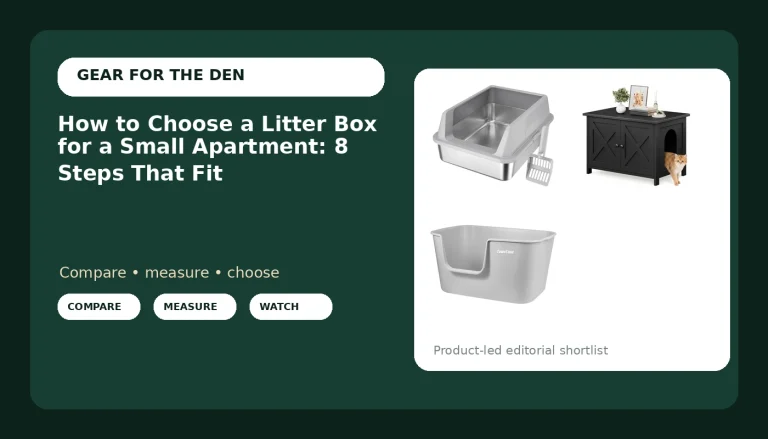
Best Overall: Self Cleaning Cat Litter Box, Automatic Litter Box for Multiple Cats, Integrated Safety Protection with Open-Top Design
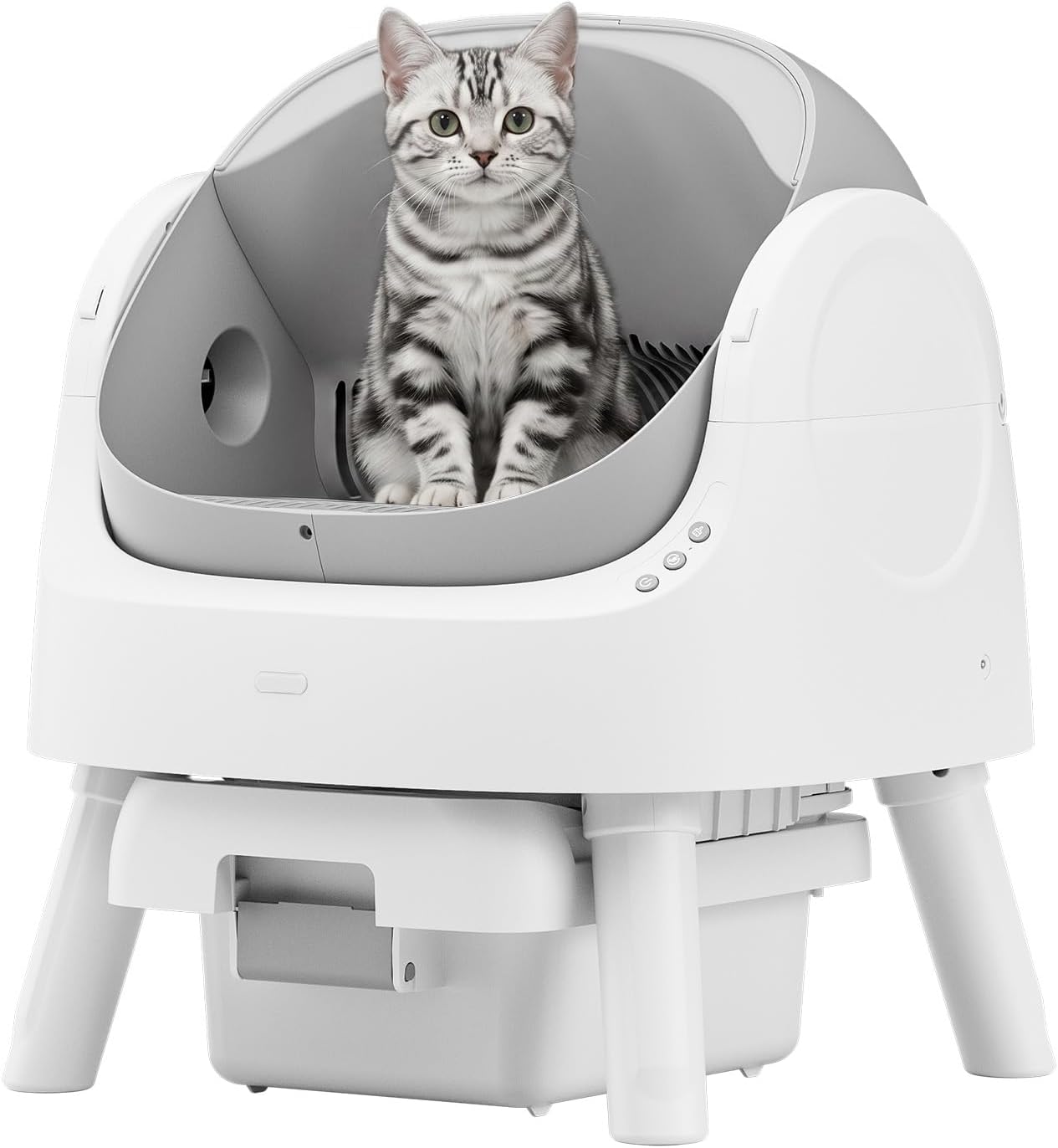
This is the pick when the box itself is the bottleneck. An automatic box earns its place in a multi-cat home because it resets the litter bed after each visit, so the second and third cat in line are not digging through someone else's business. The open-top design matters more than it sounds. An open ceiling gives a large cat room to stand and turn, and it keeps the entry height low enough that an older cat does not have to climb into the pan.
Three numbers decide whether an automatic unit works in your space. The first is the interior footprint, which is almost always smaller than the exterior shell suggests, so measure the floor you actually have and then measure the inside of the box. The second is the entry height, because a tall lip is the most common reason a senior cat stops using a box at all. The third is the waste drawer, which sets how often you empty it. A small drawer in a busy house means daily work, and daily work is the part of an automatic box that people quit on.
Sensor range and safety protection are the other two specs to read carefully. A unit that only notices a cat once it is fully inside can cycle at the wrong moment, so look for one that watches the entry area as well as the interior. This box is built for multiple cats and carries integrated safety protection, which is the feature I would not compromise on in any automatic design.
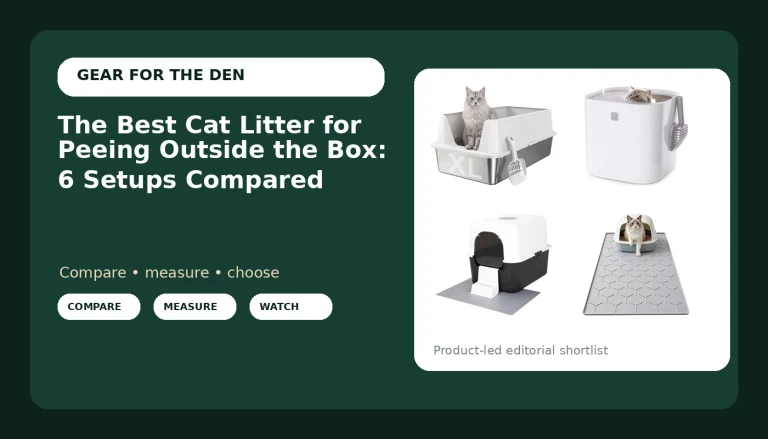
Best Value: Naturally Fresh Cat Litter Made from Walnut Shells, Quick-Clumping, Unscented, Upcycled, Easy Scooping, Sustainable, 30 Lbs
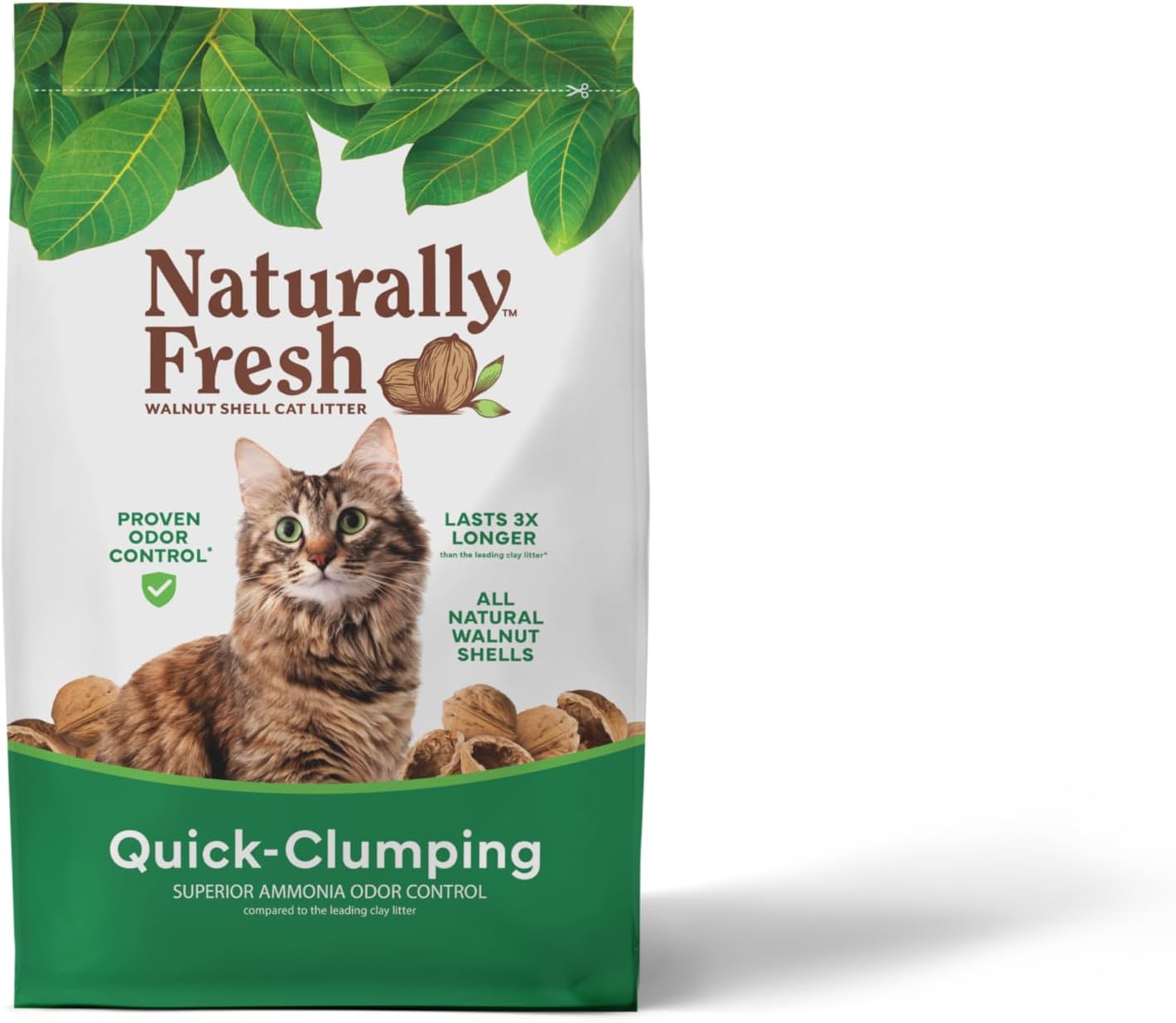
Litter is the half of the dimensions question people skip. The depth of bed you can build depends on how the litter clumps. A quick clumping litter lets you run a shallower bed, scoop cleanly, and keep the box usable without a full dump every few days. Walnut shell litter is the version of this I point people toward when they want odor control without a perfume smell, since an unscented litter keeps you honest about what the box actually smells like.
A 30 pound bag is the other practical dimension. Bulk litter means you can top the bed off to the right depth instead of stretching a thin layer to make it last, and a thin layer is where most tracking and odor complaints start. This one is upcycled from walnut shells and listed as quick clumping, unscented, easy scooping, and sustainable, which is the combination that makes a two to three inch bed practical rather than wasteful.
If you have ever poured a dusty clay litter and watched a cat refuse the box for a day, a lighter unscented material is worth testing. Buy one bag, run it at the correct depth, and judge it after a week.
How I tested
I measure litter setups the same way every time, because the marketing copy almost never matches the floor. The tape measure comes out first: interior length and width of the box, not the exterior, then the height of the lowest entry point. A box advertised as large can lose two or three inches to a thick rim, a hood, or a raised lip, and the space that is left is the space the cat actually feels.
Then the litter bed. I fill to a marked depth, usually two to three inches for a clumping litter, and watch how the clump forms on the first few uses. Clumping speed tells you whether the bed will hold its shape between scoopings or turn into a sticky layer at the bottom of the pan. A slow clump means deeper litter and more frequent scooping, which is a dimensions problem wearing a behavior costume.
The mat comes next. I check the mat footprint against the box footprint, the mat texture under a paw, and how far litter actually travels after a cat exits. A mat the same size as the box catches almost nothing, because the cat lands past the edge. I also check whether the mat slides on hard flooring, since a mat that skates across the room stops doing its job the first time a cat launches out of the box at speed.
Finally, the room. Door clearance, wall clearance, and the path a cat takes to reach the box matter as much as the box itself.
Analysis and test results
The rule I keep coming back to is length: the box should be at least one and a half times the length of your cat, measured from the base of the tail to the tip of the nose. For an average adult cat that lands near 24 inches of interior length, and for a big Maine Coon it pushes past 30. That single number rules out a surprising share of the boxes sold as large.
Box size is where most people under-buy. A covered box that measures 24 inches on the outside may offer only 20 inches inside once you subtract the walls and the hood, and a cat that cannot turn around without stepping in its own waste will find somewhere else to go. There is no single set of ideal cat litter dimensions, because a 20 pound cat and a 6 pound kitten do not need the same pan. If you are shopping for a senior cat, entry height matters more than length: a lip under three inches is easy, a lip over six is a wall.
Litter depth is the number people guess at. Two to three inches of clumping litter is the working range for most cats. Shallower than that and urine reaches the plastic, which is how a box starts to smell permanently no matter how often you scoop. Deeper than that and you are paying for litter the cat pushes aside, plus you are lifting heavier pans on cleaning day. Kittens and cats recovering from surgery often do better with a shallower bed, and that is one case where a second box at a different depth earns its floor space.
Odor control is downstream of all of it. Depth, clumping speed, and how often you scoop decide the smell. No box design fixes a bed that is too thin. If the box still smells after you have fixed the depth, the litter material is the next variable, which is why an unscented option is useful: it lets you smell the box instead of the perfume covering it.
On the mat side, mat texture matters more than size for tracking, but size decides where the scatter lands. The mat needs to be wider than the box by a comfortable margin on the exit side, not just centered underneath it.
For automatic boxes, add two more numbers. Sensor range decides whether the unit waits until the cat is clear, and waste drawer volume decides how often you are handling a bag. Both are worth reading before you buy, and neither is printed on the front of the box. Write your three numbers down, interior length, entry height, and litter depth. Those are the cat litter dimensions that matter, and the short version of the correct cat litter dimensions for most homes is simply: measure the cat, then measure the box, then measure the floor.
The cat litter dimensions reference table
Here are the four products I keep coming back to for this setup, with the size each one brings to the floor. Every size in this cat litter dimensions guide is the manufacturer's listed dimension. None of them is a measurement of the floor footprint after the box is in place, and none of them is a substitute for measuring your own room.
| Product | Listed size | Job in the setup | Price |
|---|---|---|---|
Self Cleaning Cat Litter Box, Automatic Litter Box for Multiple Cats | Not given in the product details | Automatic box for multi-cat homes, open-top, integrated safety protection | Check current Amazon price |
Naturally Fresh Cat Litter Made from Walnut Shells, Quick-Clumping, Unscented, Upcycled | 30 lb bag | Quick clumping, unscented walnut shell litter for a two to three inch bed | Check current Amazon price |
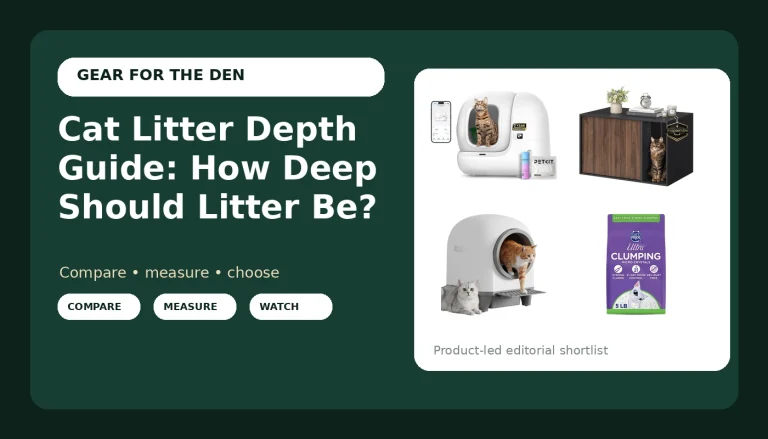
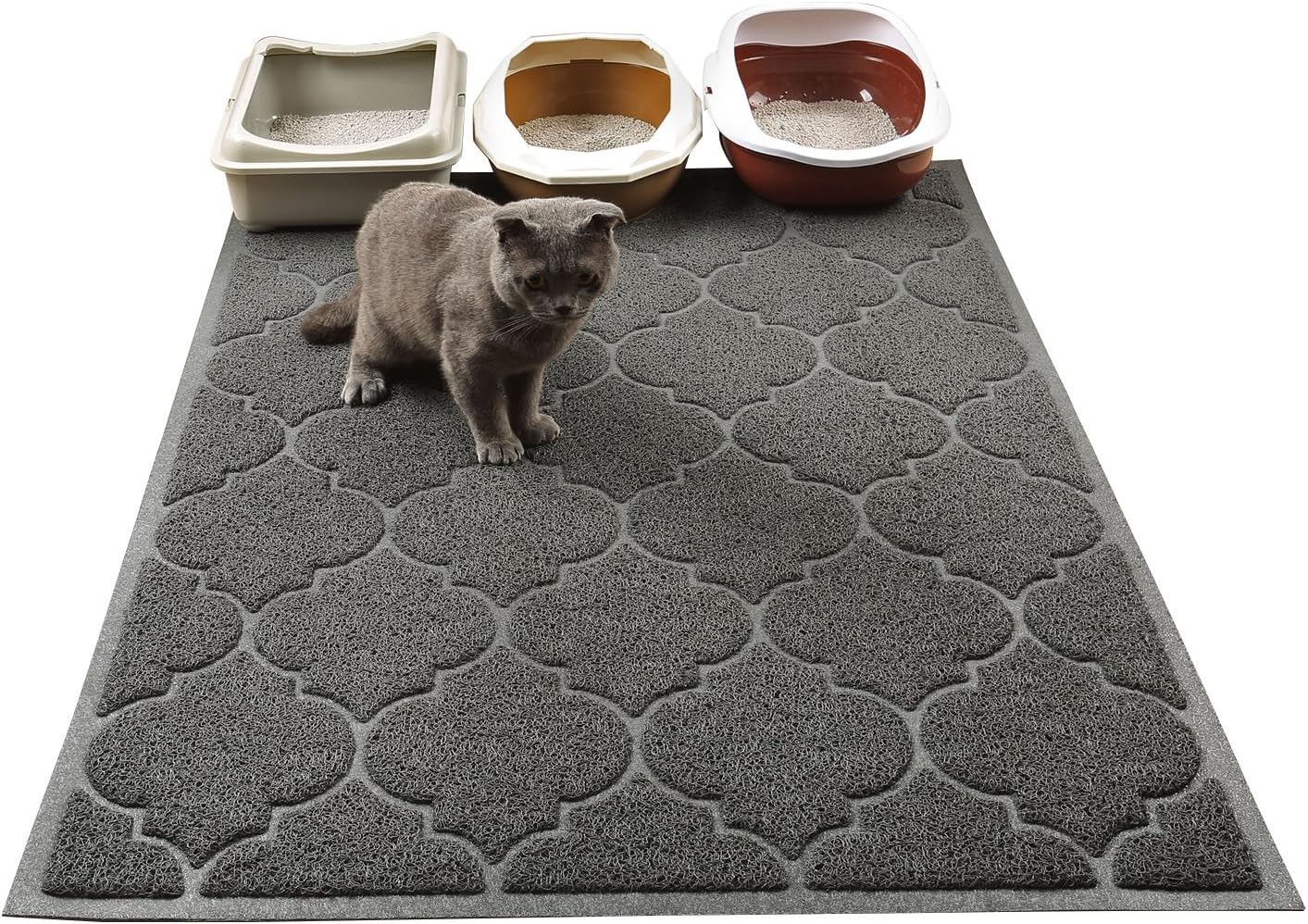 LittleTiger Cat Litter Mat, XL Super Size, Phthalate Free, Easy to Clean | 46 x 35 in | XL mat that gives the exit a long runway | Check current Amazon price |
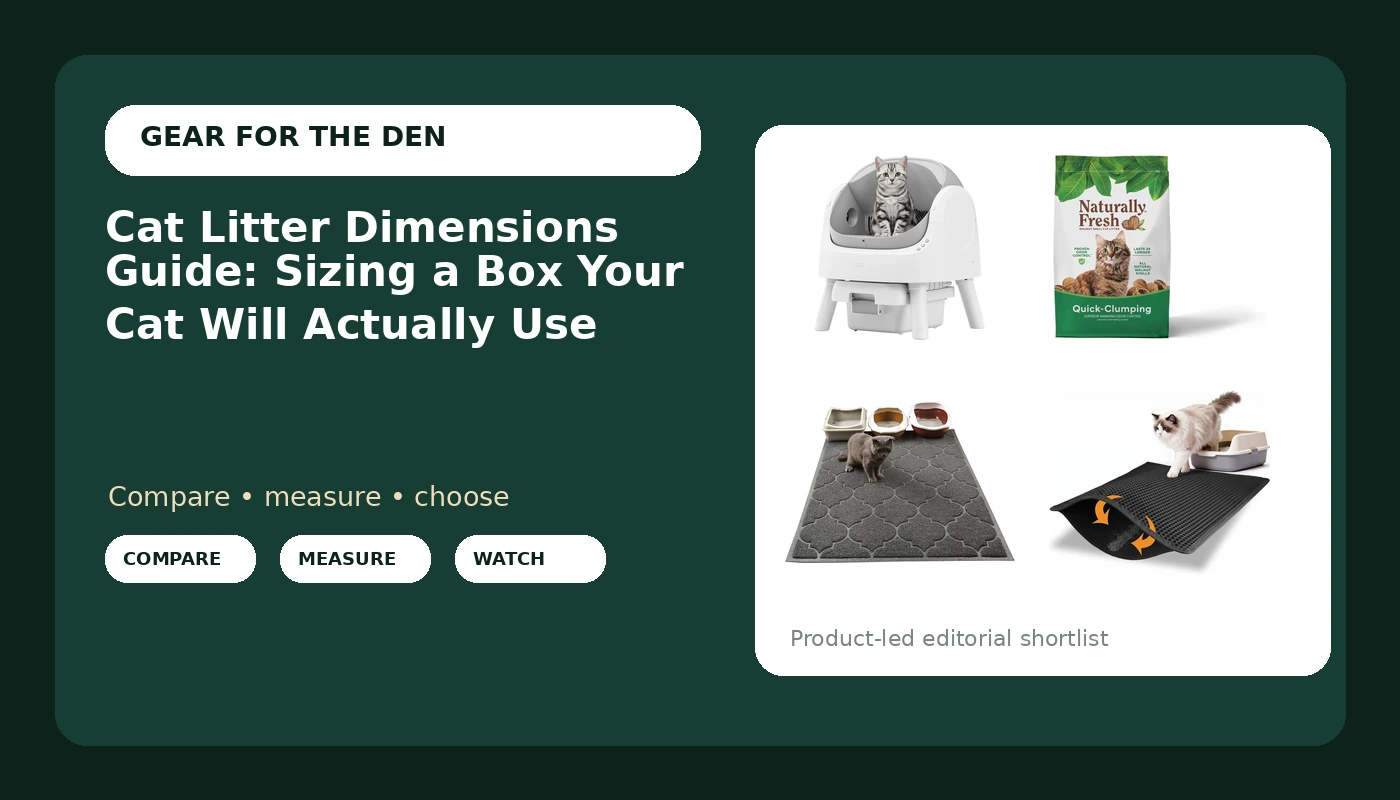
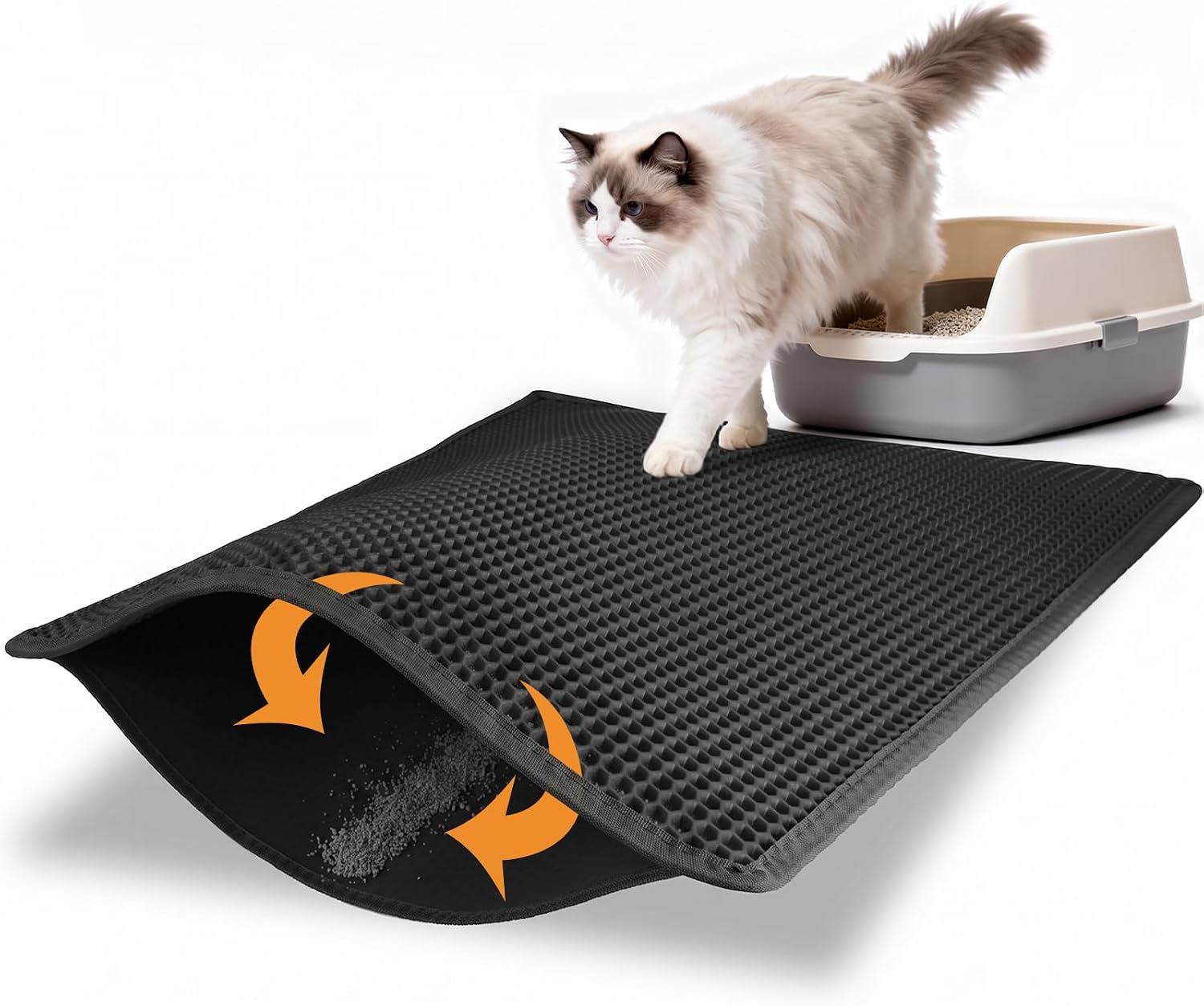 Pieviev Kitty Litter Mat, Double-Layer Waterproof Design, Black | 30 x 24 in | Double-layer waterproof mat for tighter floors and second boxes | Check current Amazon price |
The table is a starting point, not a shopping list. Match the mat to the box, and match the box to the cat.
LittleTiger Cat Litter Mat, XL Super Size, 46×35 Inches
The 46 by 35 inch footprint is the reason this one is my default for a large box. If your box is about 24 inches wide, the 46 inch side leaves roughly 11 inches of runway beyond the edge, which is where a cat actually lands when it hops out. The shorter side covers the front and a bit of both flanks, so litter that gets kicked sideways still has somewhere to fall.
The mat is phthalate free, soft on paws, and easy to clean, which matters more than it sounds at this size: a big mat that is hard to clean ends up staying dirty. A soft texture is also the reason cats tolerate walking on it, and a mat a cat avoids is a mat that catches nothing. It is durable enough that you are buying the size once rather than replacing it every season.
Pieviev Kitty Litter Mat, Double-Layer Waterproof Design, 30" x 24" Black
This is the compact answer. At 30 by 24 inches it is smaller than the XL option, so it fits a hallway, a closet floor, or the space beside a second box where a 46 inch mat would block a door. The double-layer design is the interesting part: litter falls through the top surface and collects in the layer below instead of sitting on top of the mat, and the waterproof build means a spill or an overflow does not soak into the backing.
The trade off is coverage. On a 30 inch side, a 24 inch box leaves only a few inches of runway, so this mat works best with a smaller pan or as a secondary mat at the front of a large one. Pair it with a bigger mat if your cat is a kicker.
Should you buy the Self Cleaning Cat Litter Box?
Yes, if the box is the weak point in your setup and you have more than one cat. The open-top design keeps the entry height friendly and gives a large cat room to turn, the integrated safety protection covers the one risk that matters with an automatic unit, and the fact that it is built for multiple cats means it is designed around traffic rather than a single quiet animal.
Measure first. Automatic boxes need clearance, and the waste drawer sets your routine. If you have the floor space and scooping is what breaks down in your house, this is the upgrade that changes the daily job. If you have one calm cat and a small bathroom floor, a simple large pan with the right litter depth will do the same work for less.
Should you buy Naturally Fresh Cat Litter?
Yes, if you want odor control without a scent and you are tired of stretching a thin layer of litter to make a bag last. It is unscented, quick clumping, upcycled from walnut shells, and sold in a 30 pound bag, which is the size that lets you keep a proper two to three inch bed. Scooping is easier when the clump forms fast and holds together, and that is the whole reason a deeper bed stays clean.
The one thing to watch is the transition. Cats can be fussy about texture, so mix it into the old litter over a week rather than swapping overnight, and keep the litter depth steady while you do. If the box smells better after a week at the correct depth, you have your answer.